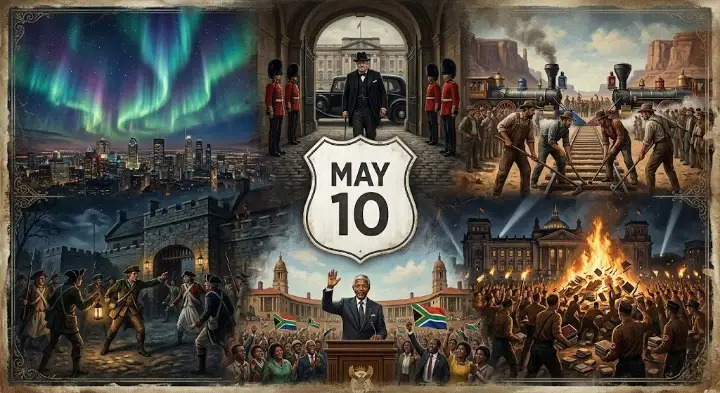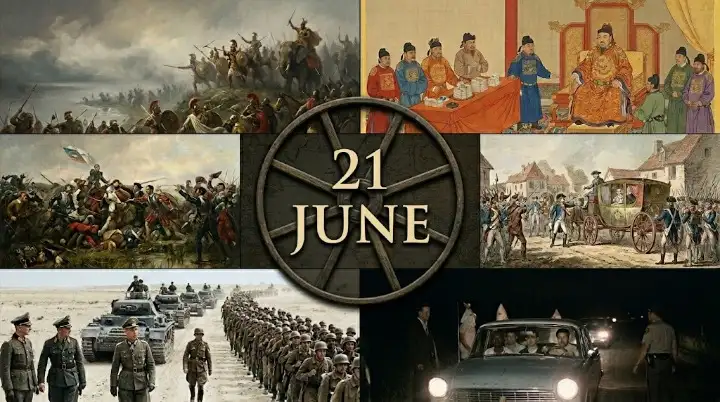
In the pre-dawn darkness of April 27, 1994, millions of South Africans queued for hours — some overnight — to cast a vote for the very first time. For decades the apartheid state had told them their opinion did not count. On this morning, it did. That single date also holds Magellan’s death in the Philippines, the fall of Mussolini, and the day a Soviet city woke up and had no idea it would never go home. Here is everything that happened on April 27 in history.
🗳️ Quick Facts — April 27 in History
| 📌 Category | 📖 Event / Detail |
|---|---|
| 🌟 Most Significant Event | South Africa’s first democratic election (1994) |
| 🏆 Top 10 Key Events |
• Moorish invasion of Iberia begins at Gibraltar — 711 • Ferdinand Magellan killed at Battle of Mactan — 1521 • John Milton sells Paradise Lost for £10 — 1667 • US Marines attack Derna — “shores of Tripoli” — 1805 • Lincoln suspends habeas corpus — 1861 • Mussolini arrested by Italian partisans — 1945 • Chernobyl: Pripyat evacuated — 1986 • Betty Boothroyd elected first female Speaker of House of Commons — 1992 • South Africa holds first fully democratic election — 1994 • Panmunjom Declaration signed between North and South Korea — 2018 |
| ⚔️ Key Battles This Day | Battle of Mactan (1521), Battle of Dunbar (1296), Battle of Bicocca (1522), Battle of Carbisdale (1650), Battle of York (1813) |
| 👤 Key Figures | Ferdinand Magellan, Lapulapu, Benito Mussolini, Nelson Mandela, Betty Boothroyd, John Milton, Tariq ibn Ziyad |
| 🌍 Observances | Freedom Day (South Africa), Independence Day (Togo, 1960), Independence Day (Sierra Leone, 1961), King’s Day (Netherlands), National Veterans’ Day (Finland), Flag Day (Moldova), Day of the Uprising Against Occupying Forces (Slovenia) |
Story of the Day: The Death of Ferdinand Magellan
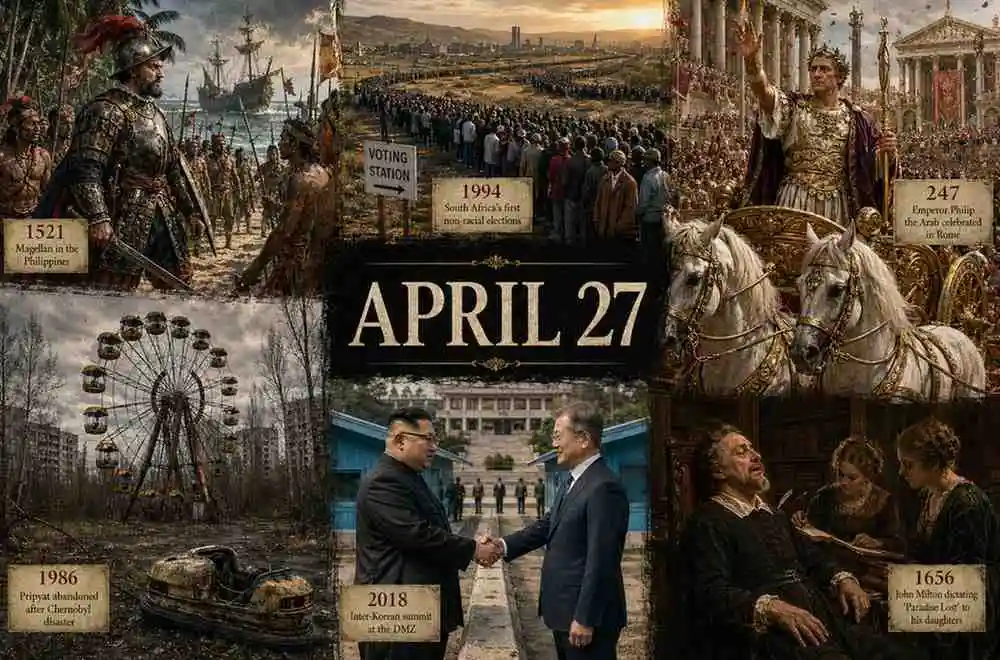
Ferdinand Magellan believed his armor and muskets made him invincible against the warriors of Mactan. He was wrong. On April 27, 1521, the Portuguese explorer waded into shallow water with just a handful of men, hoping to intimidate Chief Lapulapu into submission. Instead, the local defenders swarmed the Europeans, using bamboo spears and poisoned arrows to bypass their metal breastplates. Magellan fell in the mud, never completing the circumnavigation he started. Today, Lapulapu is a Philippine hero, a symbol of resistance against the first wave of European colonialism.
Important Events That Happened On April 27 In History
247 – Rome’s Millennium Celebration
Emperor Philip stood before the citizens of Rome to open the most expensive party the world had ever seen. The city was celebrating its 1,000th birthday with the ludi saeculares, featuring thousands of gladiators and exotic beasts. Rome’s elite forgot their political woes for three days of blood and spectacle. This celebration marked the peak of the empire before the chaotic “Crisis of the Third Century” nearly tore it apart.
395 – Marriage of Arcadius and Eudoxia
Emperor Arcadius married Aelia Eudoxia in a lavish ceremony that shifted the power dynamics of the Eastern Roman Empire. While Arcadius was often seen as weak, Eudoxia quickly established herself as a force to be reckoned with in the imperial court. She controlled her husband and challenged the authority of the powerful church leaders in Constantinople. Her reign proved that the empress’s chair held just as much weight as the emperor’s throne.
711 – The Landing at Gibraltar
Tariq ibn Ziyad watched from the deck of his ship as 7,000 Moorish soldiers scrambled onto the rocky shores of Gibraltar. He ordered his men to burn the boats, leaving them with only two choices: victory or death on the Iberian Peninsula. Visigothic resistance crumbled quickly under their advance, beginning eight centuries of Islamic influence in Spain. This landing changed the language, architecture, and culture of Western Europe forever.
1296 – Battle of Dunbar
John de Warenne led his English knights into a valley near Dunbar, catching the disorganized Scottish army off guard. King Edward I had demanded total submission from Scotland, and this battle was his brutal way of enforcing it. The Scottish resistance shattered within hours, leading to the capture of King John Balliol and the removal of the Stone of Destiny to London. This defeat sparked the long, bloody Wars of Scottish Independence led by figures like William Wallace.
1509 – Pope Julius II Interdicts Venice
Pope Julius II issued a decree that effectively excommunicated the entire city of Venice, cutting them off from the spiritual life of the Church. The “Warrior Pope” was furious that the Venetian Republic was seizing papal lands and ignoring his authority. This interdict was a political weapon designed to cripple Venice’s trade and social order by turning its neighbors against it. It forced the Republic to eventually back down, proving the Vatican could still humble the wealthiest merchant states.
1521 – Death of Ferdinand Magellan
Ferdinand Magellan waded into the surf at Mactan, expecting his steel armor to terrify the local tribesmen. Chief Lapulapu and his warriors refused to bow, instead swarming the outnumbered Spanish force with bamboo spears. The explorer died in the shallows, his dream of finishing the first voyage around the globe ending in the Philippine mud. Lapulapu became a national icon for being the first to successfully repel a European invasion.
1522 – Battle of Bicocca
Swiss mercenaries charged across a ditch at Bicocca, confident their pikes would crush the Spanish and Imperial lines. They were met by a devastating wall of fire from Spanish arquebusiers, who used portable firearms to shred the advancing ranks. This massacre proved that traditional heavy infantry could no longer survive against the rising power of gunpowder. The age of the knight and the pikeman began to fade, replaced by the era of the musketeer.
1539 – Founding of Bogotá
Three rival expeditions led by Federmann, Belalcázar, and Quesada met in the high Andes, each claiming the right to rule the region. Rather than fighting a bloody civil war, the leaders agreed to formally establish the city of Bogotá as the capital of New Granada. This compromise secured Spanish control over the heart of what is now Colombia. Today, the city stands as a massive high-altitude metropolis and a primary cultural hub for South America.
1565 – Establishment of Cebu
Miguel López de Legazpi planted a Spanish flag in the soil of Cebu, marking the first permanent European settlement in the Philippines. Unlike Magellan’s failed attempt decades earlier, this expedition came prepared to build a colony that would last for centuries. Cebu became the initial base for the Spanish galleon trade, linking the riches of Asia to the markets of the Americas. This moment turned the archipelago into the Spanish Empire’s most distant and enduring outpost.
1595 – Incineration of Saint Sava’s Relics
Sinan Pasha watched as the flames consumed the sacred relics of Saint Sava on a plateau overlooking Belgrade. The Ottoman Grand Vizier hoped that destroying the patron saint’s remains would break the spirit of the rebellious Serbs. Instead, the act of desecration made Sava a martyr of even greater importance to the national identity. Centuries later, the massive Church of Saint Sava was built on that exact spot as a symbol of endurance.
1650 – Battle of Carbisdale
James Graham, the Marquess of Montrose, led his small Royalist army into a trap set by Covenanter forces in the Scottish Highlands. He hoped to raise a rebellion for the exiled King Charles II, but his troops were cut down before they could gain any momentum. Montrose fled the field only to be betrayed, captured, and eventually executed in Edinburgh. His defeat effectively ended the Royalist cause in Scotland for the remainder of the civil wars.
1667 – Milton Sells Paradise Lost
John Milton sat in a small London house, blind and nearly penniless, as he signed over the rights to his epic poem for just ten pounds. He had spent years dictating the verses of Paradise Lost to his daughters, unsure if anyone would ever care to read it. The printer took the risk, registering the work and giving the world one of the most influential pieces of literature ever written. Milton never lived to see the poem’s massive success, but his words reshaped the English language.
1805 – Attack on Derna
Presley O’Bannon and eight U.S. Marines led a ragtag group of mercenaries across 500 miles of North African desert to attack the city of Derna. They charged the city’s defenses under heavy fire, eventually raising the American flag over a foreign fortress for the first time. This victory forced the Pasha of Tripoli to stop his pirate attacks on American merchant ships. The daring desert trek is still immortalized in the opening lines of the Marines’ Hymn.
1813 – Battle of York
American soldiers stormed the shores of Lake Ontario and captured York, the capital of Upper Canada, during a chaotic day of fighting. As the British retreated, they blew up their own gunpowder magazine, killing dozens of Americans in a massive explosion. The Americans responded by burning the parliament buildings and public archives before withdrawing. This act of destruction provoked the British to retaliate a year later by burning Washington, D.C.
1861 – Habeas Corpus Suspended
Abraham Lincoln signed an executive order suspending the writ of habeas corpus along the rail lines between Washington and Philadelphia. He feared that pro-Confederate saboteurs would cut off the capital from the rest of the Union during the early days of the Civil War. Military commanders could now arrest and hold citizens without a trial, sparking a massive legal battle over presidential power. This remains one of the most debated uses of executive authority in American history.
1906 – First Meeting of the Duma
Russian deputies filed into the Winter Palace to meet for the first time as a national parliament, hoping to check the power of the Tsar. Nicholas II had only agreed to the Duma’s creation to stop the 1905 Revolution from toppling his throne. The tension in the room was thick as the Tsar made it clear he had no intention of actually sharing his absolute rule. This failure to reform the government fueled the anger that eventually led to the 1917 Bolshevik Revolution.
1909 – Overthrow of Sultan Abdul Hamid II
Soldiers from the “Army of Action” marched into Istanbul to remove Sultan Abdul Hamid II from his throne after 33 years of absolute rule. The Young Turk movement wanted to restore a constitutional government and modernize the fading Ottoman Empire. They replaced him with his brother, Mehmed V, who served largely as a figurehead for the new military leaders. This coup set the stage for the empire’s entry into World War I and its eventual collapse.
1911 – Second Canton Uprising
Huang Xing led a group of 120 revolutionaries into the streets of Guangzhou, hoping to spark a nationwide rebellion against the Qing Dynasty. The uprising was quickly crushed by imperial troops, and most of the rebels were captured and executed. Their sacrifice, however, galvanized the Chinese public and turned the tide against the monarchy. Within months, the Xinhai Revolution broke out, ending thousands of years of imperial rule in China.
1927 – Creation of Carabineros de Chile
Carlos Ibáñez del Campo signed the decree that merged the colonial-era police and the gendarmerie into a single national force. The Carabineros were designed to bring order to a country struggling with political instability and rising crime. They became one of the most disciplined and powerful institutions in Chilean society, often playing a role in the nation’s political shifts. Today, they remain the primary face of law enforcement across the diverse landscapes of Chile.
1936 – UAW Gains Autonomy
Labor leaders in South Bend, Indiana, voted to break away from the conservative American Federation of Labor to seek true independence. The UAW wanted the power to organize entire factories rather than just small groups of skilled tradesmen. This autonomy allowed them to launch the famous sit-down strikes that forced giant companies like General Motors to the bargaining table. Their victory transformed the American middle class by securing better wages and safer working conditions.
1941 – German Troops Enter Athens
German motorcycle troops roared through the streets of Athens, pulling down the Greek flag from the Acropolis to replace it with the swastika. The Greek army had fought bravely against the Italians, but they could not stop the weight of the Nazi war machine. King George II fled to Crete as the city fell into a dark period of occupation and famine. This victory gave Hitler control of the Balkans, but it tied up troops he would soon need for the invasion of Russia.
1945 – End of World War II in Finland
Finnish soldiers gathered at the Three-Country Cairn to raise their flag, marking the moment the last German soldier crossed the border into Norway. Finland had fought a brutal “war within a war” to push out their former allies and satisfy the terms of their peace deal with the Soviets. The Lapland War left much of the northern region in ruins as the retreating Germans burned everything in their path. This flag-raising symbolized the official end of World War II for the Finnish people.
1945 – Mussolini Arrested
Italian partisans stopped a German convoy near the village of Dongo and found a man huddled in a soldier’s coat and helmet. They pulled off the disguise to reveal Benito Mussolini, the “Il Duce” who had ruled Italy with an iron fist for two decades. He was trying to flee to Switzerland with his mistress and a stash of gold as the Allied lines closed in. His arrest marked the final collapse of Italian Fascism and led to his execution just one day later.
1953 – Operation Moolah Launched
American generals launched a psychological warfare campaign by dropping leaflets over North Korea, offering a massive cash prize for a defecting pilot. They were desperate to get their hands on a Russian-made MiG-15 jet to study its advanced technology. While no pilot defected before the war ended, a young North Korean later flew his plane to the South, unaware of the reward. The jet provided the West with vital secrets that changed the future of aerial combat.
1967 – Expo 67 Opens
Pierre Trudeau stood before a crowd in Montreal to open the International and Universal Exposition, a massive celebration of Canada’s 100th birthday. The fair featured futuristic pavilions, including a giant geodesic dome, and welcomed millions of visitors from around the globe. It was a moment of immense national pride that showcased Canada as a modern, optimistic, and multicultural nation. Expo 67 remains the most successful world’s fair of the 20th century.
1974 – Pulkovo Airport Crash
An Il-18 passenger plane took off from Leningrad only to have an engine burst into flames minutes into the flight. The pilots fought to return to the airport, but the aircraft lost control and slammed into a field near the runway. All 109 people on board were killed instantly in the fire and wreckage. The disaster led to stricter safety inspections for the Soviet Union’s aging fleet of civilian airliners.
1976 – Flight 625 Crash
The pilots of an American Airlines Boeing 727 realized too late that they had touched down too far along the short runway in Saint Thomas. The plane smashed through a perimeter fence and hit a gas station, erupting into a fireball that killed 37 people. It was a terrifying reminder of the dangers posed by Caribbean airports with limited space and difficult approaches. The crash forced airlines to limit the types of aircraft allowed to land on the island’s narrow strip.
1978 – John Ehrlichman Released
John Ehrlichman walked out of a federal prison in Arizona, having served a year and a half for his role in the Watergate scandal. As a top advisor to Richard Nixon, he had been convicted of conspiracy and perjury in the cover-up that brought down the presidency. His release marked the end of the legal saga for one of the most powerful men in Washington. He spent the rest of his life as a writer, far removed from the political halls he once dominated.
1978 – Saur Revolution in Afghanistan
Afghan fighter jets roared over Kabul, bombing the presidential palace to support a communist coup led by the People’s Democratic Party. President Mohammed Daoud Khan refused to surrender and was killed along with his family during the overnight assault. This violent takeover installed a pro-Soviet government that immediately faced massive internal resistance. The revolution triggered a cycle of conflict and foreign intervention that has haunted Afghanistan for nearly fifty years.
1978 – Willow Island Disaster
Construction workers on a massive cooling tower in West Virginia felt the scaffolding give way beneath them as 51 men plunged to their deaths. Wet concrete had failed to set properly, causing the entire structure to collapse in a heap of twisted metal and rubble. It remains the deadliest construction accident in the history of the United States. The tragedy led to a total overhaul of federal safety regulations for high-rise building projects.
1986 – Evacuation of Pripyat
Buses lined the streets of Pripyat as officials told residents they needed to leave their homes for just a few days due to a “minor accident.” In reality, the Chernobyl reactor was melting down, and the city was being showered with invisible, deadly radiation. People left their pets and dinners on the table, never realizing they would never be allowed to return. Today, Pripyat is a ghost town, a frozen monument to the world’s worst nuclear disaster.
1987 – Kurt Waldheim Barred
United States officials placed the President of Austria on a “watch list,” banning him from ever setting foot on American soil. Investigations revealed that Kurt Waldheim had hidden his past as a Nazi intelligence officer who helped coordinate the deportation of Jews during the war. The scandal shocked the international community and forced Austria to confront its own role in the Holocaust. Waldheim served out his term as a pariah, largely ignored by the Western world.
1989 – Tiananmen Square Demonstrations
Thousands of students in Beijing broke through police lines to march toward Tiananmen Square, chanting for democracy and freedom of the press. They were responding to a government editorial that had labeled their movement as an illegal conspiracy. This march was a massive show of defiance that proved the protests were growing beyond the state’s control. It set the stage for the hunger strikes and the eventual military crackdown that horrified the world.
1992 – Proclamation of New Yugoslavia
Leaders in Belgrade officially proclaimed the birth of the Federal Republic of Yugoslavia, consisting only of Serbia and Montenegro. The once-diverse nation had been torn apart by ethnic wars and declarations of independence from its other republics. This new, smaller state claimed to be the legal successor to the old Yugoslavia, but it faced immediate international sanctions. The declaration was a desperate attempt to hold onto power as the Balkans spiraled into further violence.
1992 – Betty Boothroyd Elected Speaker
Members of the British Parliament broke centuries of tradition by electing Betty Boothroyd as the first female Speaker of the House of Commons. A former dancer with no university degree, she brought a firm but fair style to the often-rowdy debating chamber. She refused to wear the traditional wig, signaling a shift toward a more modern and accessible legislature. Her tenure proved that the highest roles in British government were finally open to everyone.
1992 – Post-Soviet States Join IMF
Russia and 12 other former Soviet republics were officially accepted into the International Monetary Fund and the World Bank. This move marked the formal end of the Cold War economic divide as the East began the painful transition to capitalism. The new members hoped for massive loans to stabilize their collapsing currencies and rebuild their crumbling industries. It was the beginning of a chaotic decade of “shock therapy” that reshaped the global economy.
1993 – Zambia National Team Disaster
A Zambian military plane carrying the national football team crashed into the Atlantic Ocean shortly after taking off from a refueling stop in Gabon. All 30 people on board died, wiping out a generation of the country’s most talented athletes who were on their way to a World Cup qualifier. The tragedy devastated the nation but also inspired a new team to reach the African Cup of Nations final a year later. It remains one of the darkest days in the history of international sports.
1994 – First Multi-Racial Election in South Africa
Millions of South Africans stood in lines that stretched for miles, waiting hours for their first chance to cast a ballot in a democratic election. For the first time in the country’s history, black citizens were allowed to vote, signaling the final, formal end of the brutal apartheid system. Nelson Mandela, who had spent 27 years in prison, emerged as the clear frontrunner to lead the nation. This day transformed South Africa from a global pariah into a “Rainbow Nation” of hope.
2005 – First Flight of the Airbus A380
The world’s largest passenger airliner roared down the runway in Toulouse, France, and lifted gracefully into the sky for its first test flight. With two full decks and room for over 800 passengers, the A380 was designed to revolutionize long-haul travel between major global hubs. Thousands of spectators cheered as the “Superjumbo” proved that such a massive machine could actually fly. While it eventually struggled with changing market demands, it remains a marvel of modern engineering.
2006 – Freedom Tower Construction Begins
Construction crews in Lower Manhattan began pouring concrete for the foundations of the Freedom Tower at the site of the original World Trade Center. After years of emotional debate over how to honor the victims of the 9/11 attacks, the city finally started building the skyscraper that would reclaim the skyline. The tower was designed to be the tallest in the Western Hemisphere, a symbol of resilience and rebirth. Today, it stands as One World Trade Center, a beacon of strength in the heart of New York.
2007 – Removal of the Bronze Soldier
Estonian authorities used cranes to remove a Soviet-era war memorial from the center of Tallinn under the cover of darkness. The move sparked two nights of violent rioting by the city’s Russian-speaking minority and triggered a massive cyberattack against the Estonian government. Estonia saw the statue as a symbol of occupation, while Russia viewed its removal as an insult to the soldiers who fought the Nazis. The event highlighted the deep, lingering scars left by the Soviet Union in Eastern Europe.
2007 – Tomb of Herod Discovered
Israeli archaeologists cleared away centuries of dust at the Herodium site to reveal the long-lost tomb of King Herod the Great. Though the sarcophagus was shattered, the location matched historical descriptions of where the biblical figure had been buried. Herod was known as a master builder and a ruthless ruler who had ordered the construction of the Second Temple and the fortress at Masada. The discovery solved one of the greatest mysteries of biblical archaeology.
2011 – The Super Outbreak
Sirens wailed across the Southeastern United States as a record-breaking 205 tornadoes touched down in a single day of atmospheric violence. Entire towns in Alabama and Mississippi were leveled by winds that reached speeds of over 200 miles per hour. Over 300 people lost their lives as the storms tore through homes, schools, and businesses. It remains the deadliest and most costly tornado outbreak in American history, changing how we track and prepare for extreme weather.
2012 – Dnipropetrovsk Explosions
Four bombs hidden in trash cans exploded in quick succession along a busy street in the Ukrainian city of Dnipropetrovsk. The blasts injured 27 people and sent a wave of panic through the country just weeks before it was set to host the Euro 2012 football tournament. Authorities struggled to find a motive for the attacks, which seemed designed to cause chaos rather than target specific individuals. The incident highlighted the fragile security situation in the region long before the current conflict.
2018 – Panmunjom Declaration Signed
South Korean President Moon Jae-in and North Korean leader Kim Jong-un met at the border village of Panmunjom — the first time a North Korean leader had set foot in South Korea since the 1953 armistice. They signed the Panmunjom Declaration, committing to work toward denuclearisation and formally declaring their intention to end the Korean War, 65 years after fighting stopped. While progress has since stalled, the meeting remains a rare symbol of potential reconciliation.
Famous People Born On April 27
| Name | Description | Date |
|---|---|---|
| Henri II d’Orléans, duke de Longueville | French rebel in the Fronde civil wars | April 27, 1595 – May 11, 1663 |
| Claudine-Alexandrine Guérin de Tencin | French author and literary patroness | April 27, 1682 – December 4, 1749 |
| Charles Emmanuel III | King of Sardinia–Piedmont, skilled soldier | April 27, 1701 – February 20, 1773 |
| Josef Gottlieb Kölreuter | German botanist, pioneer of plant hybrid studies | April 27, 1733 – November 12, 1806 |
| María Cristina de Borbón | Queen consort and regent of Spain | April 27, 1806 – August 23, 1878 |
| Henry Willis | British organ builder, meticulous craftsman | April 27, 1821 – February 11, 1901 |
| Edward Whymper | English mountaineer, first to climb the Matterhorn | April 27, 1840 – September 16, 1911 |
| Douglas Freshfield | British mountaineer and explorer | April 27, 1845 – February 9, 1934 |
| Charles Joseph Van Depoele | Belgian-born American inventor, electric railway pioneer | April 27, 1846 – March 18, 1892 |
| Otto | King of Bavaria (reigned 1886–1913) | April 27, 1848 – October 11, 1916 |
| Alice Morse Earle | American writer and antiquarian | April 27, 1851 – February 16, 1911 |
| Jules Lemaître | French critic and dramatist | April 27, 1853 – August 4, 1914 |
| Tongzhi | Emperor of the Qing dynasty | April 27, 1856 – January 12, 1875 |
| Charles Townsend Copeland | American educator and mentor of writers | April 27, 1860 – July 24, 1952 |
| Pencho Petkov Slaveykov | Bulgarian writer, modern literary language之父 | April 27, 1866 – May 28, 1912 |
| Vladimir Germanovich Bogoraz | Russian anthropologist of the Chukchi people | April 27, 1865 – May 10, 1936 |
| Maurice Baring | British man of letters | April 27, 1874 – December 14, 1945 |
| Maurice, 6th duke de Broglie | French physicist, X-ray studies | April 27, 1875 – July 14, 1960 |
| Frank Gotch | American professional wrestler, world champion | April 27, 1878 – December 16, 1917 |
| Jessie Redmon Fauset | African American novelist and editor of Harlem Renaissance | April 27, 1882 – April 30, 1961 |
| Arnulf Øverland | Norwegian poet, inspired resistance movement | April 27, 1889 – March 25, 1968 |
| Dragoljub Mihailović | Yugoslav Chetnik leader during WWII | April 27, 1893 – July 17, 1946 |
| Norman Bel Geddes | American theatrical and industrial designer | April 27, 1893 – May 8, 1958 |
| Prince Paul Karadjordjević | Regent of Yugoslavia before WWII | April 27, 1893 – September 14, 1976 |
| Nicolas Slonimsky | Russian-born U.S. musicologist and conductor | April 27, 1894 – December 25, 1995 |
| Rogers Hornsby | American baseball player, .358 career batting average | April 27, 1896 – January 5, 1963 |
| Wallace Hume Carothers | American chemist, invented nylon | April 27, 1896 – April 29, 1937 |
| Walter Lantz | American animator, creator of Woody Woodpecker | April 27, 1899 – March 22, 1994 |
| Philip Hauge Abelson | American physical chemist, co-discovered neptunium | April 27, 1913 – August 1, 2004 |
| Casey Kasem | American disc jockey, host of American Top 40 | April 27, 1932 – June 15, 2014 |
Famous People Died On April 27
| Name | Description | Date |
|---|---|---|
| Philip II (the Bold) | Duke of Burgundy (1363–1404) | January 17, 1342 – April 27, 1404 |
| Isidore of Kiev | Greek Orthodox patriarch, cardinal, theologian | c.1385 – April 27, 1463 |
| Leo XI | Pope for 27 days in April 1605 | June 2, 1535 – April 27, 1605 |
| Wolfgang Ratke | German educational reformer | October 18, 1571 – April 27, 1635 |
| Gerrit van Honthorst | Dutch painter, Utrecht Caravaggisti | November 4, 1590 – April 27, 1656 |
| Jan van Goyen | Dutch landscape painter and etcher | January 13, 1596 – April 27, 1656 |
| John George IV | Elector of Saxony (1691–94) | October 18, 1668 – April 27, 1694 |
| Simon Foucher | French Cartesian philosopher | March 1, 1644 – April 27, 1696 |
| Jean Bart | French privateer and naval officer | October 21, 1650 – April 27, 1702 |
| William Charles Macready | English actor and manager | March 3, 1793 – April 27, 1873 |
| Thomas Stothard | British painter and book illustrator | August 17, 1755 – April 27, 1834 |
| James Bruce | Scottish explorer of the Blue Nile headstream | December 14, 1730 – April 27, 1794 |
| Sir William Jones | British Orientalist and jurist | September 28, 1746 – April 27, 1794 |
| Sir Isaac Lyon Goldsmid, 1st Baronet | British financier, Jewish emancipation activist | January 13, 1778 – April 27, 1859 |
| Dominique Vivant, Baron Denon | French artist, first director of the Louvre | January 4, 1747 – April 27, 1825 |
| Charles Felix | King of Sardinia–Piedmont (1821–31) | April 6, 1765 – April 27, 1831 |
| John Ballance | Prime minister of New Zealand (1891–93) | March 27, 1839 – April 27, 1893 |
| Sigismond Thalberg | Swiss virtuoso pianist, rival of Liszt | January 8, 1812 – April 27, 1871 |
| Émile de Girardin | French journalist, “Napoleon of the press” | June 21, 1806 – April 27, 1881 |
| Ludwig August, Ritter von Benedek | Austrian field marshal, defeated at Königgrätz | July 14, 1804 – April 27, 1881 |
| H.H. Richardson | American architect, Romanesque Revival pioneer | September 29, 1838 – April 27, 1886 |
| Frederick Barnard | American educator, president of Columbia College | May 5, 1809 – April 27, 1889 |
| Charwe | Shona spiritual leader, resistance to white rule | 1862? – April 27, 1898 |
| Emil von Sauer | German pianist, teacher, and composer | October 8, 1862 – April 27, 1942 |
| Albert J. Beveridge | U.S. senator and historian | October 6, 1862 – April 27, 1927 |
| Hart Crane | American poet, The Bridge | July 21, 1899 – April 27, 1932 |
| Karl Pearson | British statistician, founder of modern statistics | March 27, 1857 – April 27, 1936 |
| William S. Knudsen | Danish-born American industrialist, president of General Motors | March 25, 1879 – April 27, 1948 |
| Maud Gonne | Irish patriot and feminist, muse of W.B. Yeats | December 21, 1866 – April 27, 1953 |
| Kwame Nkrumah | First president of Ghana, pan-African leader | September 1909 – April 27, 1972 |
Observances on April 27
- Freedom Day (South Africa): Commemorates the first post-apartheid elections held in 1994.
- King’s Day (Netherlands): A national holiday celebrating the birthday of King Willem-Alexander.
- Independence Day (Togo): Marks the country’s liberation from French rule in 1960.
- Independence Day (Sierra Leone): Celebrates the end of British colonial rule in 1961.
- National Veterans’ Day (Finland): Honors the veterans of World War II and marks the end of the Lapland War.
- Flag Day (Moldova): A day dedicated to the national flag and its history.
- Day of Russian Parliamentarism (Russia): Commemorates the first meeting of the State Duma in 1906.
- Day of the Uprising Against the Occupying Forces (Slovenia): Remembers the resistance during WWII.
🗳️ Frequently Asked Questions — April 27 in History
South Africa held its first fully democratic general election. For the first time in the country’s history, citizens of all races could vote. The African National Congress won with 62 percent of the vote, and Nelson Mandela became president. The Interim Constitution came into force the same day, formally ending apartheid as the legal structure of South African governance.
South Africa’s first democratic election in 1994 is the most broadly significant. It ended decades of apartheid, brought Nelson Mandela to the presidency, and sent a signal across the world about the possibility of peaceful political transformation. The evacuation of Pripyat in 1986 and Mussolini’s arrest in 1945 are also among the most consequential events tied to this date.
Notable figures born on April 27 include Ulysses S. Grant (1822), 18th US President and Civil War general; Mary Wollstonecraft (1759), author of A Vindication of the Rights of Woman; and Samuel Morse (1791), inventor of the telegraph and Morse code.
Tariq ibn Ziyad landed at Gibraltar beginning the Moorish conquest of Iberia in 711. Ferdinand Magellan was killed at the Battle of Mactan in 1521. US Marines stormed the Tripolitan port of Derna in 1805. American troops captured York (Toronto) in the War of 1812. German forces entered Athens in 1941. And 205 tornadoes struck the American South in the 2011 Super Outbreak.
Freedom Day marks April 27, 1994 — the date of South Africa’s first democratic election, when black citizens could vote for the first time under the newly enacted Interim Constitution. It is a national public holiday. The day is remembered because it represented the formal end of apartheid and the beginning of the democratic era. Nelson Mandela, who had been imprisoned for 27 years, voted in that election and became president.
In 2018, North Korean leader Kim Jong-un crossed into South Korea for the first time, meeting President Moon Jae-in at Panmunjom. They signed the Panmunjom Declaration, pledging to work toward ending the Korean War and achieving denuclearisation. It was a historic moment that briefly raised hopes of a breakthrough — though negotiations have since stalled.