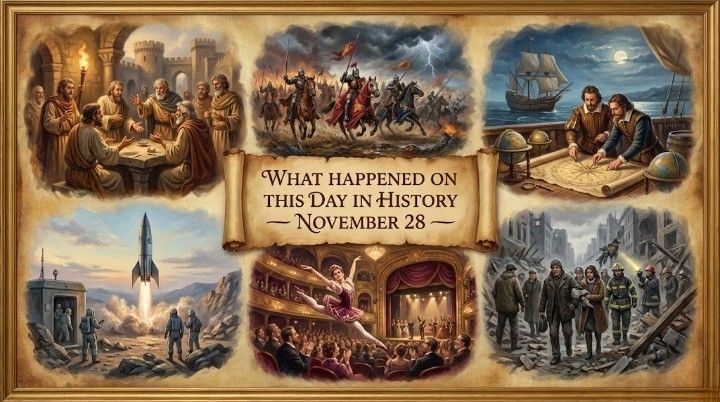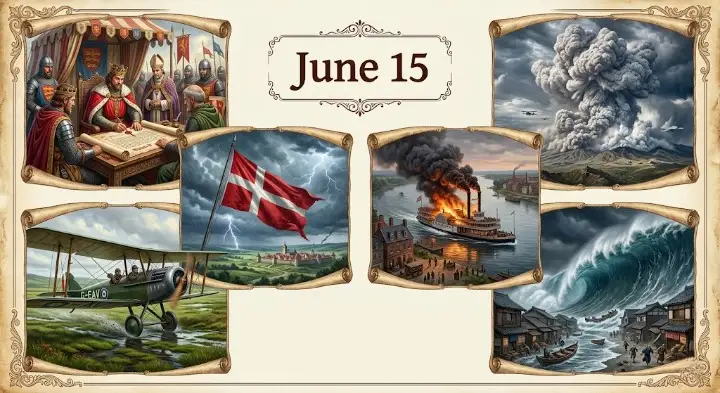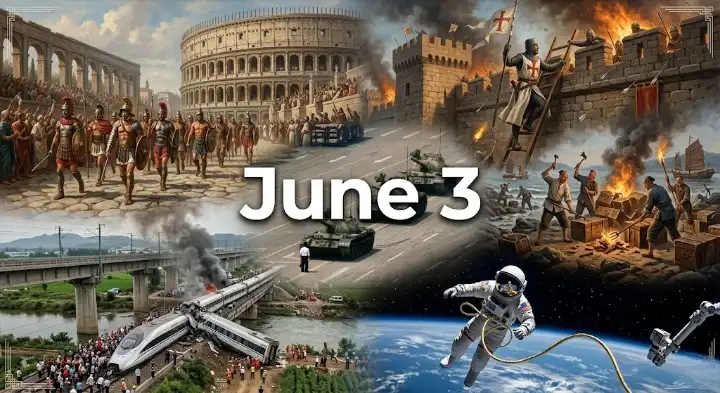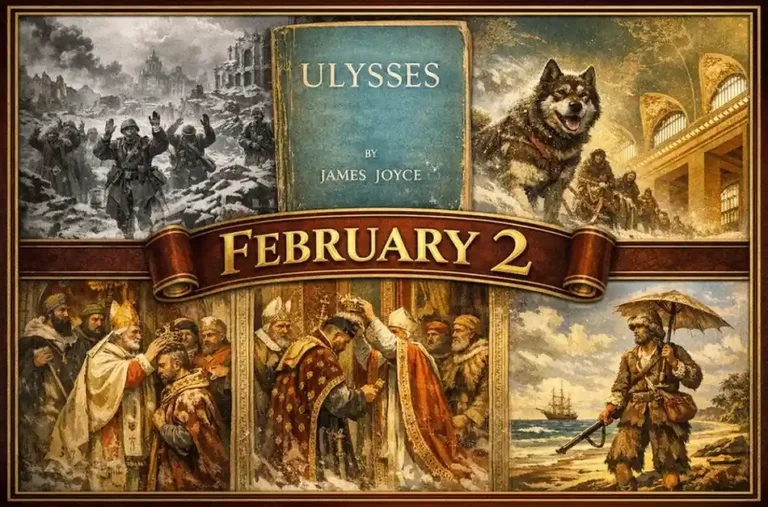
Across centuries, October 14 has often been a hinge between battlefields, inventions and dramatic public moments that reshaped nations and daily life. In the middle of that sweep — What happened on this day in history October 14 — you find a patchwork of Norman conquest and medieval power struggles, aviation firsts, nuclear-era crises and modern civil movements. These episodes — some triumphant, some tragic — show how the calendar can gather memory, innovation and political rupture.
Quick sections
Earlier history
1066 — Battle of Hastings:
1322 — Robert the Bruce defeats Edward II at Old Byland, reinforcing Scottish independence.
1586 — Mary, Queen of Scots goes on trial for alleged conspiracy against Elizabeth I.
1656 — Massachusetts Bay Colony passes the first punitive laws against Quakers.
1773 — Poland creates the Commission of National Education, an early ministry of education.
Exploration & foundations
1792 — First Columbus Day celebration held in New York City.
1799 — Jeanne Geneviève Labrosse becomes the first woman to parachute from a balloon.
1808 — Republic of Ragusa annexed by France during Napoleonic reorganizations.
1852 — University of Sydney inaugurated, Australia’s oldest university.
1825 — Restauration arrives in New York—first organized Norwegian immigration to the U.S.
Wars & politics
1758 — Frederick the Great suffers defeat at the Battle of Hochkirch (Seven Years’ War).
1774 — First Continental Congress denounces the Intolerable Acts, escalating colonial resistance.
1806 — Napoleon defeats Prussia at Jena–Auerstedt, reshaping Central Europe.
1915 — Bulgaria joins the Central Powers in World War I.
1962 — Cuban Missile Crisis begins when U-2 photos reveal Soviet missiles in Cuba.
1973 — Thammasat student uprising in Thailand triggers mass violence and political change.
2024 — Islamabad put on tight security and local holidays declared ahead of SCO leaders’ meetings.
2024 — Continued cross-border strikes reported amid Israel–Lebanon/Gaza regional escalation.
Arts & culture
1888 — Louis Le Prince films the first motion picture (Roundhay Garden Scene).
1926 — A. A. Milne publishes Winnie-the-Pooh.
1910 — Claude Grahame-White lands an aircraft near the White House, a public spectacle for early aviation.
1943 — Second Philippine Republic inaugurated (Japanese-era puppet state).
1979 — First National March on Washington for Lesbian and Gay Rights draws large crowds.
Science, technology & media
1840s–1880s — (industrial and transport advances across the century reflected in later milestones).
1884 — George Eastman receives a patent for paper-strip photographic film.
1947 — Chuck Yeager breaks the sound barrier in level flight.
1968 — Apollo 7 performs the first live TV broadcast by American astronauts in orbit.
1958 — Pioneer 1 launched (U.S. deep-space probe; failed to achieve stable orbit).
Disasters & human rights
1654 — Delft Explosion devastates the Dutch city, killing over 100.
1913 — Senghenydd colliery disaster kills 439 miners—the UK’s worst mining accident.
1940 — Balham underground station disaster kills 66 during the London Blitz.
1943 — Sobibor uprising: prisoners revolt and stage a mass breakout from the extermination camp.
2013 — Migrant boat sinks in the Channel of Sicily, with hundreds drowning.
2018 — Hurricane Michael strikes Florida as a major storm, causing catastrophic damage.
Major events on October 14
1066 — Battle of Hastings: William of Normandy defeats King Harold II
On October 14, 1066 William’s Norman forces routed King Harold II’s army at Hastings, a decisive victory that began Norman rule over England. The conquest reorganized English aristocracy, law and landholding and infused Anglo-Norman culture into the kingdom. Its consequences include major shifts in language, governance and medieval property systems. Hastings is a recurring reference-point in English historical memory.
1322 — Robert the Bruce defeats Edward II at Old Byland
Robert the Bruce’s victory forced Edward II to concede space and contributed to Scotland’s defence of its autonomy. The win bolstered Bruce’s legitimacy and helped consolidate nascent Scottish independence movements. Old Byland is one of several engagements that undermined English dominance in the region. The battle reinforced the military reputation of Bruce’s kingship.
1586 — Mary, Queen of Scots, goes on trial for conspiracy
Mary Stuart was tried on charges of conspiring against Elizabeth I — a dramatic legal and political event that foreshadowed her execution. The trial exposed dynastic rivalries and religious divides within and beyond Britain. It tightened Elizabethan security and deepened Protestant-Catholic conflict narratives. Mary’s fate remains a potent symbol of succession politics and confessional strife.
1656 — Massachusetts Bay Colony passes punitive laws against Quakers
The General Court enacted harsh measures targeting Quaker practices, reflecting colonial resistance to religious dissent. Penalties included fines, imprisonment and banishment, showing limits to tolerated diversity in early New England. These laws illustrate colonial authority’s approach to social order and religion. The repression fed later arguments for broader religious liberty.
1758 — Battle of Hochkirch: Frederick the Great suffers a defeat
At Hochkirch Frederick II of Prussia was surprised and pushed back by Austrian forces, a rare tactical setback for the famed commander. While not fatal to Prussia’s war aims, the defeat revealed operational vulnerabilities and the costs of 18th-century continental warfare. Hochkirch affected coalition calculations in the Seven Years’ War. It remains a studied episode in Frederick’s military career.
1773 — Commission of National Education formed (Poland)
The Polish–Lithuanian Commonwealth created a government body often regarded as the world’s first ministry of education to reform schooling and curricula. The commission reflected Enlightenment ideals of rationalized, state-directed education. It sought to secularize and modernize instruction beyond clerical control. The reform influenced later public-education models.
1774 — First Continental Congress protests the Intolerable Acts
Delegates met in Philadelphia to coordinate colonial responses to British punitive measures, marking a key step toward united resistance. The Congress drafted petitions and economic measures that strengthened intercolonial organization. Its proceedings accelerated the move from protest to revolutionary action. The meeting helped crystallize common grievances across the colonies.
1791 — United Irishmen formed in Belfast
The United Irishmen organized to pursue parliamentary reform and Catholic-Protestant unity, drawing inspiration from revolutionary ideas abroad. Their activism culminated in the 1798 Rebellion and long debates about Irish national identity. The group’s formation is a landmark in Irish radical and nationalist histories. Their program reshaped subsequent movements for reform.
1805 — French forces at Ulm encircle Austrian army (Ulm campaign)
Napoleon’s rapid envelopment at Ulm forced Austrian surrender and set the stage for further French dominance in Central Europe during the 1805 campaign. The tactical maneuver showcased Napoleonic operational speed and strategic coordination. Ulm’s outcome accelerated diplomatic and military realignments across the continent. It remains a classic example of encirclement strategy.
1806 — Battle of Jena–Auerstedt: Napoleon defeats Prussia
Napoleon’s twin victories broke Prussian military power and reconfigured German political order, leading to sweeping reforms in the defeated states. The defeats underscored the dramatic shifts caused by Napoleonic warfare and institutional change. Prussia’s military and civil structures underwent later modernization as a response. The battles deeply affected 19th-century European geopolitics.
1808 — Annexation of the Republic of Ragusa by France
Napoleonic expansion absorbed the Republic of Ragusa (Dubrovnik), ending its centuries-old independence and inserting Napoleonic administration into the Adriatic. Local governance, trade networks and legal regimes were transformed under French rule. The annexation is one example of how Napoleonic restructuring dissolved older polities. It altered the region’s political geography.
1809 — Treaty of Schönbrunn signed
The Treaty of Schönbrunn rearranged Central European borders after conflict with Austria and furthered Napoleon’s continental system. The treaty imposed territorial and financial penalties that reshaped Habsburg power and influence. It reflected the era’s regular diplomatic redrawing following military defeats. Schönbrunn marks an important step in Napoleonic reordering.
1843 — Daniel O’Connell arrested in Ireland
Irish nationalist Daniel O’Connell’s arrest for alleged conspiracy highlighted tensions between British authorities and reform movements. O’Connell’s campaign for Catholic emancipation and parliamentary reform made him a symbol of mobilized mass politics. His detention mobilized supporters and provoked public debate about political dissent and legal procedure. The episode is part of 19th-century Irish nationalist struggles.
1863 — Confederate troops under A. P. Hill fail to dislodge Union forces in Virginia
A. P. Hill’s unsuccessful operations illustrate the tactical ebb-and-flow of Civil War fighting in the Eastern theater. Local clashes like these affected morale and shaped the attritional character of the conflict. They contributed to the strategic mosaic that culminated in larger campaigns. The engagement reflects the war’s intense localized combat.
1884 — George Eastman receives U.S. patent on paper-strip photographic film
Eastman’s patent made photography more accessible and portable, paving the way for mass-market cameras and later motion-picture film. Roll film transformed amateur and professional picture-making and underpinned the visual culture of the 20th century. The technological shift lowered barriers to image capture and distribution. It’s foundational for modern photography and cinema.
1888 — Louis Le Prince films the Roundhay Garden Scene (first motion picture)
Le Prince’s brief filmed clip is one of the earliest surviving motion pictures, anticipating cinema’s development as an entertainment medium. The Roundhay Garden Scene demonstrates primitive yet foundational techniques of sequential photography. Though short, the film is historically significant for the birth of moving images. It foreshadowed the global film industry.
1898 — SS Mohegan sinks off the Lizard peninsula (Cornwall)
The steamship Mohegan’s wreck claimed over 100 lives and highlighted hazards of coastal navigation and the need for improved safety measures. Shipwrecks provoked investigations into signalling, charting and life-saving procedures. Mohegan remained a local maritime tragedy remembered for its sudden violence. Such incidents influenced future maritime policy.
1908 — Chicago Cubs clinch the 1908 World Series (their last title until 2016)
The Cubs won the World Series in 1908, beginning an enduring narrative about the team’s long championship drought and baseball folklore. The 1908 victory became culturally resonant as fans and media later framed the subsequent decades as a “curse.” The team’s eventual 2016 win only deepened the historical arc. The 1908 win is a touchstone in American sports history.
1910 — Claude Grahame-White lands his aircraft near the White House
Grahame-White’s landing on Executive Avenue was a striking public demonstration of aviation’s novelty and lethality, capturing popular and official attention in the U.S. The stunt forced discussion about airspace, ceremonial use of flight and aviation regulations. Such demonstrations helped popularize powered flight and moved it into the diplomatic and civic realm. The landing remains a colorful early-aviation anecdote.
1912 — Theodore Roosevelt shot in Milwaukee but continues to speak
After being wounded by an assassin’s bullet, Roosevelt insisted on delivering his scheduled speech, famously continuing with the bullet still in him. The episode bolstered Roosevelt’s legendary public image and demonstrated political theatre’s dangerous edge. It also influenced campaign security practices and captured public attention. The incident is one of the era’s memorable political dramas.
1913 — Senghenydd colliery disaster kills 439 miners (Britain’s worst mining accident)
The explosion at Senghenydd devastated a Welsh mining community and focused attention on mine safety and labor conditions. The scale of the loss intensified pressure for regulatory reform, ventilation standards and safety protocols in the mining industry. Senghenydd is a landmark in industrial catastrophe history, remembered for its human toll. It amplified labor and safety movements in Britain.
1915 — Bulgaria joins the Central Powers in World War I
Bulgaria’s decision to side with the Central Powers altered Balkan alignments, opening new fronts and complicating Allied strategy. The entry reflected national calculations about territory, alliances and regional ambitions. Bulgaria’s participation influenced the conduct and consequences of the Balkan theatre during WWI. The move shaped subsequent postwar settlements in the region.
1920 — Treaty of Tartu between Finland and Soviet Russia
The Treaty of Tartu settled border disputes and affirmed Finnish sovereignty in the post-World War I order, shaping early Finnish independence. The agreement established frontiers and diplomatic recognition necessary for stabilization after empire collapse. It became a milestone in Finland’s consolidation as a modern state. The treaty influenced Nordic and Baltic geopolitics.
1923 — Irish hunger strikes after the Civil War begin
Large-scale hunger strikes by Irish republican prisoners protested internment without trial, underscoring ongoing tensions after the Civil War. The strikes pressured authorities and raised questions about political imprisonment and reconciliation. They form an essential part of Ireland’s post-independence political memory. The events affected public opinion and detention policies.
1930 — President K. J. Ståhlberg kidnapped by far-right Lapua Movement (Finland)
The abduction of Finland’s first president by extremists exposed the threat of paramilitary politics to democratic institutions in interwar Europe. The incident galvanized legal and political responses to protect constitutional order. It is a stark example of how domestic radicalism challenged democracies between the world wars. The episode is a cautionary tale in Finnish political history.
1933 — Germany withdraws from the League of Nations and the Disarmament Conference
Germany’s exit signalled the collapse of interwar multilateral security efforts and foreshadowed escalating militarization under the Nazi regime. The withdrawal weakened collective security institutions and removed a key forum for negotiation. It reshaped diplomatic relations and increased tensions that contributed to later war. The act is often cited as a turning point in 1930s international relations.
1936 — First trainees for the International Brigades arrive in Albacete (Spanish Civil War)
Volunteers organized for the Republican cause began arriving, marking international mobilization in the Spanish Civil War. The brigades symbolized transnational leftist solidarity and drew combatants from many countries. Their arrival intensified both military and ideological dimensions of the conflict. Albacete became a key organizational hub for international volunteers.
1926 — A.A. Milne publishes Winnie-the-Pooh (note: order preserved)
A.A. Milne’s Winnie-the-Pooh entered popular culture as a defining children’s book, introducing enduring characters and shaping 20th-century children’s literature. The work’s gentle humor and imaginative world remain internationally beloved. Pooh’s publication influenced subsequent children’s storytelling and merchandising. The date is a cultural landmark in literature for young readers.
1939 — U-47 sinks HMS Royal Oak at Scapa Flow
German U-boat U-47 penetrated Scapa Flow and torpedoed the battleship Royal Oak, killing many sailors and exposing vulnerabilities in British naval anchorage. The attack was a psychological blow early in WWII and prompted security reassessments of home waters. Royal Oak’s sinking exemplified the reach of submarine warfare. It remains a grim wartime maritime memory.
1940 — Balham underground station disaster during the London Blitz
A bomb struck near Balham station, causing a roadway collapse and the deaths of dozens sheltering below, symbolizing civilian risk in the Blitz. The tragedy highlighted the limits of wartime civil defense and the vulnerability of urban shelters. It became a potent local and national memory of wartime suffering. Balham is emblematic of civilian endurance and loss.
1942 — German submarine U-69 sinks SS Caribou near Newfoundland
The sinking of the Canadian passenger ferry SS Caribou by U-69 cost civilian lives and underscored dangers in Atlantic waters during wartime. Attacks on civilian and coastal vessels raised public outrage and intensified convoy and patrol measures. The tragedy is part of the broader tale of North Atlantic maritime peril in WWII. It had a strong local impact on Newfoundland communities.
1943 — Sobibor extermination camp prisoner revolt and mass escape
Prisoners at Sobibor staged a covert uprising, killed many SS personnel and effected a large-scale breakout—one of the few successful revolts in Nazi extermination camps. Although many escapees were later recaptured or killed, the revolt disrupted operations and hastened the camp’s closure. Sobibor’s resistance is a significant act of courage under genocidal conditions. It remains a key episode in Holocaust resistance histories.
1943 — Second Raid on Schweinfurt: heavy USAAF bomber losses
In missions targeting German ball-bearing production, Allied bomber forces suffered severe losses over Schweinfurt, demonstrating the high cost of strategic daylight bombing without adequate fighter cover. The raid prompted tactical reassessments of bomber doctrine and escort requirements. Schweinfurt’s losses underscored the perilous nature of early strategic bombing campaigns. The operation influenced subsequent air-war strategy.
1943 — Second Philippine Republic inaugurated (Japanese occupation)
Japan established a puppet state in the Philippines under José P. Laurel, part of its effort to legitimize occupation and administer the archipelago. The inauguration had deep implications for collaboration, resistance and postwar political reckonings. The puppet government complicated later narratives of sovereignty and wartime accountability. Its existence is central to Philippine occupation history.
1944 — Erwin Rommel forced to take his own life after alleged involvement in July plot
Field Marshal Rommel was implicated (or perceived to be implicated) in the July 20 plot; given a poisoned option to protect his family and reputation, he took his life. Rommel’s death ended a complicated career as a celebrated commander tied to the Wehrmacht’s elite and the regime’s plots. The event exposed fissures in Germany’s military elite and the Nazi regime’s ruthlessness. Rommel’s legacy remains contested.
1947 — Chuck Yeager breaks the sound barrier in the Bell X-1
Yeager’s supersonic flight was a technical milestone proving controlled flight beyond Mach 1 was viable, accelerating aeronautics research. The achievement became a celebrated symbol of postwar engineering and pilot bravery. Yeager’s success paved the way for advanced high-speed flight programs during the Cold War. It is a foundational moment in aviation history.
1949 — Smith Act trials convict U.S. Communist Party leaders
Courts found Communist Party leaders guilty under the Smith Act for conspiring to advocate overthrow of the U.S. government, reflecting Cold War domestic security priorities. The trials raised constitutional and civil-liberties debates about free speech and association. They set precedents that influenced later jurisprudence and political discourse. The convictions are emblematic of early-Cold War political tension.
1952 — Battle of Triangle Hill (Korean War)
Fighting at Triangle Hill was among the Korean War’s bloodiest engagements in 1952, illustrating attrition and the limited gains that characterized late-war operations. The battle’s high casualties for modest territorial change frustrated both sides and influenced armistice thinking. Triangle Hill remains a study in costly offensives under stalemate conditions. It shaped military and political calculations during armistice negotiations.
1956 — B. R. Ambedkar converts to Buddhism with thousands of followers
Ambedkar’s mass conversion to Buddhism was a major act of political and religious protest against caste oppression, reshaping Dalit identity politics. The conversion movement sought dignity and social equality outside caste-based Hindu structures. Ambedkar’s act had enduring influence on Indian social reform and communal identity. It remains a landmark in modern Indian history.
1957 — Queen opens Canada’s 23rd Parliament (rare royal opening)
Queen Elizabeth II personally opened the Canadian Parliament—the only such direct royal opening for that session—symbolizing constitutional ties within the Commonwealth. The ceremony reflected Canada’s parliamentary traditions and ties to the Crown. It was a notable ceremonial moment in Canadian political life. The event underscored monarchical pageantry’s continuing role in Commonwealth politics.
1957 — Devastating flood in Valencia, Spain
A catastrophic flood struck Valencia causing many deaths and widespread damage, emphasizing urban vulnerability to extreme weather and the need for improved flood defenses. The disaster prompted local and national recovery efforts and later infrastructure improvements. The event is a major entry in Valencia’s modern disaster history. It influenced river management and emergency planning policies.
1962 — U-2 photos reveal Soviet missiles in Cuba (start of Cuban Missile Crisis)
On October 14 U-2 reconnaissance imagery first clearly showed Soviet medium- and intermediate-range ballistic missiles in Cuba, precipitating the Cuban Missile Crisis. The discovery triggered blockade, intense diplomacy and nuclear brinkmanship between the superpowers. The episode transformed Cold War crisis management and highlighted the role of surveillance intelligence in international politics. It remains a critical case in deterrence history.
1964 — Martin Luther King Jr. receives the Nobel Peace Prize
King was awarded the Nobel for nonviolent resistance to racial injustice, bringing international attention and moral authority to the U.S. civil-rights movement. The prize amplified demands for civil and voting rights and symbolized global sympathy for equality struggles. King’s recognition had both symbolic and practical effects on activism and policy debates. It remains a high point in civil-rights history.
1964 — Nikita Khrushchev retires from Soviet leadership posts
Khrushchev’s removal (presented as “retirement”) marked a major shift in Soviet leadership and policy orientation during the Cold War. His exit ended a volatile era of de-stalinization and unpredictability and ushered in a new collective leadership. The change altered Soviet domestic politics and foreign policy calculations. It’s a consequential transition in Soviet political history.
1966 — Montreal Metro opens (urban transit milestone)
Montreal inaugurated its underground rapid-transit system, a major civic infrastructure achievement that transformed urban mobility. The metro reflected mid-20th-century urban modernization and planning priorities. Its opening improved commuter life and reshaped city development. The system remains central to Montreal’s transport network.
1966 — Night of Schmelzer: Dutch Cals cabinet falls
The Cals cabinet collapsed after a parliamentary motion by Norbert Schmelzer, an event that revealed the fragility of coalition governments and parliamentary maneuvering in the Netherlands. The episode, known as the Night of Schmelzer, had long-term political ramifications and contributed to Dutch party politics’ evolution. It illustrates the volatility of parliamentary coalitions.
1968 — Apollo 7 performs first live television broadcast by American astronauts in orbit
Apollo 7’s live broadcast was a milestone linking spaceflight with mass media and expanding public engagement with crewed space missions. Televised space coverage deepened popular interest in NASA achievements and human spaceflight. The mission paved the way for later ambitious Apollo missions and public visibility. It was an important step in space–media relations.
1968 — Meckering earthquake in Western Australia (Meckering)
A powerful earthquake struck Meckering, causing significant damage and injuries, drawing attention to seismic hazard preparedness in Australia. The quake prompted rebuilding, seismic studies and changes in building codes. Meckering remains a landmark event in Australian natural-disaster history. It influenced national approaches to earthquake resilience.
1968 — Jim Hines runs 9.95s (first electronic sub-10s 100m)
Jim Hines became the first man officially timed below ten seconds in the 100-metre dash (electronic timing), a landmark moment in track athletics. The achievement represented human performance progression and athletic training advances. Hines’s run became a historic benchmark in sprinting. It reshaped standards and inspired subsequent athletic performance efforts.
1973 — Thammasat student uprising in Thailand (massive protests and violent crackdown)
Large student-led protests against the military government resulted in a brutal crackdown with many killed and wounded, precipitating political upheaval and governmental change. The events highlighted polarizations between authoritarian rule and popular movements. Thammasat became a symbol of resistance and the perils of political suppression. The uprising reshaped Thailand’s subsequent political landscape.
1975 — Avro Vulcan bomber explodes and crashes over Żabbar, Malta
A Vulcan bomber crashed after an aborted landing attempt, killing crew and one on the ground—an infamous peacetime military aviation accident. The crash raised questions about operational safety and emergency procedures. It was a tragic event that affected both military communities and local Maltese residents. The incident prompted inquiries and memorials.
1979 — First National March on Washington for Lesbian and Gay Rights
Around 100,000 people marched to demand civil rights and visibility for LGBT Americans, marking a major milestone in U.S. LGBT political organization. The march built national networks, public awareness and advocacy infrastructure for later policy fights. It signalled the movement’s growing scale and political ambition. The event remains foundational in LGBT activism history.
1980 — North Korean Congress anoints Kim Jong Il as successor (6th Congress)
Party organs and the 6th Congress moved to formalize succession for Kim Il Sung’s son, shaping the hereditary leadership model that came to define North Korea’s politics. The step institutionalized dynastic succession norms within a communist state, central to later regime continuity. It had long-term implications for governance and regional stability. The event is key in DPRK political history.
1981 — Hosni Mubarak elected President of Egypt
Following Anwar Sadat’s assassination, Vice President Hosni Mubarak became president, marking a new chapter in Egyptian governance and regional diplomacy. Mubarak’s long rule subsequently shaped Egyptian domestic policy and foreign relations for decades. His presidency influenced Middle Eastern geopolitics and internal political trajectories. The succession followed a turbulent and violent moment in Egypt’s history.
1982 — U.S. President Ronald Reagan proclaims a “War on Drugs”
Reagan’s public declaration intensified federal drug-enforcement priorities, funding and criminal-justice responses that shaped U.S. policy for decades. The campaign influenced sentencing laws, incarceration rates and social debates about addiction and enforcement. The War on Drugs remains a contested legacy in American criminal justice discussions. Its policies had broad social and political effects.
1991 — Aung San Suu Kyi awarded the Nobel Peace Prize
Aung San Suu Kyi’s Nobel recognized her nonviolent struggle for democracy in Myanmar and elevated international solidarity with pro-democracy movements. The award brought global attention and moral support to her cause, although later developments complicated the long-term narratives around her. The prize reflected international human-rights recognition during the late Cold War/post-Cold War era. It highlighted the global reach of civil-liberties advocacy.
1994 — Yasser Arafat, Yitzhak Rabin and Shimon Peres receive the Nobel Peace Prize (Oslo Accords)
The trio’s award recognized the Oslo peace process efforts to negotiate Israeli-Palestinian frameworks and symbolized international support for negotiated settlement. The prize highlighted diplomacy’s possibilities but also foreshadowed the fragility of such accords. Oslo’s mixed legacy continues to shape peacemaking debates and regional politics. The award was a high-profile endorsement of negotiated compromise.
1998 — Eric Rudolph charged in connection with multiple bombings
Authorities charged Eric Rudolph with several bombings, including the Centennial Olympic Park attack, marking a major step toward accountability in domestic terrorism investigations. The prosecution followed a complex manhunt and legal process and raised public concerns about security at mass events. Rudolph’s case influenced how law enforcement approached politically motivated domestic violence. The charges were a milestone in the long legal pursuit.
2003 — Steve Bartman incident at Wrigley Field (Chicago)
A fan’s attempted catch disrupted a foul ball during a pivotal playoff game, becoming a cultural moment tied to team fortunes and fan superstition. The incident catalyzed intense media scrutiny, scapegoating and later public reconciliation efforts. It illustrates how sports drama can create lasting folklore around single public moments. Bartman’s episode entered modern sports mythology.
2004 — MK Airlines Flight 1602 crashes on takeoff (Halifax); Pinnacle Airlines Flight 3701 crash (Missouri)
Two fatal aviation incidents occurred separately: MK Airlines Flight 1602 crashed in Halifax, and the Pinnacle flight crashed in Missouri killing its two pilots — tragedies that prompted investigations into safety, maintenance and pilot procedures. Each accident renewed attention to airworthiness standards and airline oversight. The crashes had regulatory and legal follow-ups addressing systemic risk. They remained somber reminders of aviation’s hazards.
2012 — Felix Baumgartner’s record stratospheric skydive
Baumgartner’s jump from the stratosphere pushed human limits of freefall and drew global spectatorship, combining engineering risk, physiology and spectacle. The mission revealed insights into high-altitude human performance and emergency procedures. It became a media event that showcased private-sector extreme experimentation. The feat remains a hallmark of extreme-sports engineering.
2014 — Himalayan avalanche and cyclone-related losses (Nepal)
A violent storm-triggered avalanche in the Himalayas killed dozens, highlighting the lethal combination of extreme weather, fragile mountain infrastructure and climate-related risk. The catastrophe mobilized rescue and relief responses and underscored vulnerabilities in high-altitude communities. The event fed ongoing discussions about disaster preparedness and climate resilience. It was part of a broader pattern of intense weather impacts.
2014 — Serbia vs Albania UEFA qualifier canceled amid political incidents
A match in Belgrade between Serbia and Albania was abandoned after on-field and off-field incidents tied to nationalist tensions and political provocations. The cancellation reflected how sports can become entangled with geopolitics and identity conflicts. The episode led to sanctions, investigations and broader diplomatic fallout between the countries. It showed sport’s capacity to inflame existing political rifts.
2015 — Suicide bomb attack in Tonsa, Pakistan
A suicide bombing killed and injured several people, highlighting ongoing security challenges and militant violence in the region. The attack increased pressure on national counterterrorism policies and local emergency responses. It was one of many tragic incidents during a period of intense security threats in South Asia. The event had human and political costs for local communities.
2017 — Massive truck bombing in Somalia kills hundreds
A devastating truck bomb in Mogadishu caused massive casualties and injuries, representing one of the deadliest attacks in Somalia’s recent history. The strike underscored the ongoing instability and threats posed by extremist groups in the Horn of Africa. It prompted national mourning and international condemnation. The blast deepened concerns about urban security and counterterrorism capacity.
2018 — Lorry crash kills at least 22 migrants in Turkey
A lorry carrying migrants plunged off a road in Turkey, killing many and spotlighting the perils migrants face during irregular journeys. The tragedy prompted renewed attention to trafficking networks, border controls and humanitarian protection. It was one among many migration disasters underscoring the human cost of displacement. The incident increased calls for safer, legal avenues and rescue capacity.
2019 — Kurdish-led forces hand over Tabqa and base to Syrian Army (Syria)
Territorial arrangements in north-eastern Syria saw shifts as forces negotiated handovers of strategic sites, illustrating the fluid frontlines and complex alliances in the Syrian conflict. The changes reflected external pressures, local negotiations and the war’s ongoing reconfiguration. Tabqa’s control affected military logistics and civilian governance in the region. The handover was part of a larger pattern of territorial realignments.
2019 — Prince William and Catherine visit Pakistan (royal tour)
A high-profile royal visit aimed to strengthen bilateral ties and showcase development and cultural projects, reflecting diplomatic soft-power engagements through state visits. The tour sought to highlight UK-Pakistan relations and charitable partnerships. Royal visits often blend ceremony with policy messaging and public diplomacy. The visit generated extensive media coverage and local receptions.
2020 — Amy Coney Barrett Supreme Court confirmation hearings continue (U.S. politics)
High-stakes hearings on a Supreme Court nomination dominated national debate over judicial appointments, health care and social issues, reflecting the polarized legal and political climate. The confirmation process influenced public perception of the judiciary and partisan strategy. The hearings were a focal point in election-year politics and debates about institutional norms. They had lasting implications for the Court’s composition.
2021 — John Deere workers strike (major U.S. labor action)
About 10,000 employees walked out in one of the largest recent U.S. manufacturing strikes, highlighting labor bargaining power and industry pressures. The action centered on wages, job security and workplace conditions and reflected wider labor activism trends. The strike affected production and supply-chain conversations and attracted national attention. It illustrated contemporary labor-management dynamics.
2021 — Australia approves rapid antigen self-tests for home use (TGA)
Australia’s regulator authorized rapid antigen home tests, expanding testing capacity and shifting public-health strategies during the COVID-19 pandemic. The approval enabled broader community testing and self-monitoring, affecting public-health logistics and policy. It reflected evolving pandemic responses and diagnostic technology deployment. The decision influenced testing access and societal management of the virus.
2022 — Exchange of fire after Israeli raid in Jenin (West Bank)
Hostile clashes following an Israeli raid killed and injured several people, reflecting continuing tensions in the West Bank and the fraught security environment. Such exchanges affect local civilian life, spark wider political reactions and influence international diplomatic attention. The incident is one among repeated flashpoints in the Israeli–Palestinian conflict. It underscores the persistent volatility in occupied territories.
2023 — Hezbollah fires on Israeli positions in Shebaa Farms amid wider regional escalation
Cross-border attacks formed part of a regional escalation tied to broader Israel–Gaza/Lebanon tensions, inflaming security concerns and prompting military responses. The exchanges complicated de-escalation efforts and added humanitarian strain in border regions. Such escalations affect regional diplomacy and civilian safety. They exemplify how localized incidents can feed larger conflicts.
2023 — Australians vote to reject a constitutional amendment for an Indigenous Voice to Parliament
A national referendum defeated a proposed constitutional change designed to establish an advisory Indigenous Voice, reflecting a contentious national debate about recognition and reconciliation. The result had political and social consequences for Indigenous policy and the movement for constitutional recognition. The vote sparked reflection on approaches to representation, reform and national identity. It remains a pivotal moment in Australia’s ongoing constitutional conversation.
2024 — Islamabad placed on tight security ahead of SCO leaders’ meetings
Pakistani authorities imposed heightened security measures, declared local holidays and restricted movement in the capital as Islamabad prepared to host leaders attending the Shanghai Cooperation Organisation summit. The precautions aimed to ensure safety and smooth logistics for visiting delegations amid regional tension and public-safety concerns. Such large diplomatic gatherings often trigger significant security, transport and public-order planning. The measures affected daily life in the city during the lead-up to the event.
2024 — Continued cross-border strikes amid Israel–Lebanon/Gaza regional escalation
On October 14, 2024, armed clashes and cross-border strikes were reported as part of a broader escalation involving Israel, Lebanon and Gaza-area actors. The exchanges included rocket fire and aerial responses that added to regional instability and civilian risk in border areas.
These incidents are part of a wider series of incidents that have produced humanitarian and diplomatic repercussions across the region. The day’s fighting underscored how localized exchanges can quickly contribute to wider regional crises.
You Can Check Here: What Happened On This Day In History October 13
Notable births — October 14
- Dwight D. Eisenhower — 34th U.S. president & WWII Allied commander — born 1890.
- J. Craig Venter — geneticist & genomics entrepreneur — born 1946.
- Katherine Mansfield — short-story writer — born 1888.
- Ferdinand VII — king of Spain — born 1784.
- Bahādur Shah I — Mughal emperor — born 1643.
- John Dean — White House counsel (Nixon era) — born 1938.
- George Grenville — British prime minister — born 1712.
- Heinrich Lübke — president of West Germany — born 1894.
- Alexander Zemlinsky — composer & conductor — born 1871.
- Raymond Davis, Jr. — Nobel-winning physicist — born 1914.
- Jack Arnold — film director — born 1916.
- Masaoka Shiki — Japanese poet reformer — born 1867.
- Elwood Haynes — automobile pioneer — born 1857.
- Miles Franklin — Australian novelist — born 1879.
- Sir Roland Penrose — artist & curator — born 1900.
- Lala Har Dayal — Indian revolutionary & scholar — born 1884.
- Bernd Rosemeyer — racing driver — born 1909.
- Ray C. Ewry — Olympic track athlete — born 1873.
- Oscar Charleston — baseball legend — born 1896.
- Joseph Duveen, Baron Duveen — art dealer — born 1869.
Notable deaths — October 14
- Benoit Mandelbrot — mathematician, “father of fractals” — died 2010.
- Arlen Specter — U.S. senator (Pennsylvania) — died 2012.
- Douglas Mawson — Antarctic explorer & geologist — died 1958.
- Hugh Capet — king of France; founder of Capetian dynasty — died 996.
- John Marshall Harlan — U.S. Supreme Court justice — died 1911.
- Zhang Xueliang — Chinese warlord — died 2001.
- Dame Edith Evans — English stage actress — died 1976.
- David Kellogg Lewis — philosopher — died 2001.
- Niẓām al-Mulk — Seljuq vizier and theorist — died 1092.
- Emil Gilels — Soviet concert pianist — died 1985.
- Richard Wilbur — American poet — died 2017.
- Ellis Peters — British novelist — died 1995.
- Josh Billings — American humorist — died 1885.
- Sir Martin Ryle — radio astronomer, Nobel laureate — died 1984.
- Paul W. Taylor — environmental ethicist — died 2015.
- Randall Jarrell — poet & critic — died 1965.
- Jacques Arcadelt — madrigal composer — died 1568.
- Marcel Aymé — novelist/playwright — died 1967.
- Moktar Ould Daddah — first president of Mauritania — died 2003.
- Yambo Ouologuem — Malian novelist — died 2017.
Observances & institutional dates
- Intercession of the Theotokos (Orthodox).
- Day of the Cathedral of the Living Pillar (Georgian Orthodox).
- Mother’s Day (Belarus).
- National Education Day / Teachers’ Day (Poland).
- Nyerere Day (Tanzania).
- Second Revolution Day (Yemen).
- World Standards Day (International).
Frequently asked questions (FAQs)
Why is the Battle of Hastings (1066) considered so important?
Hastings decisively replaced Anglo-Saxon elite structures with Norman rule, altering landholding, aristocratic language and law. That transformation affected governance, culture and the English language over the long term—shaping everything from legal institutions to literary forms. The battle therefore appears as a foundational watershed in English medieval history.
What made the Cuban Missile Crisis start on October 14, 1962?
October 14 is the date U-2 reconnaissance photography first clearly revealed Soviet ballistic missile installations in Cuba. The photographic evidence transformed a strategic suspicion into a public crisis, setting in motion diplomatic and military responses that would peak in a tense naval blockade and negotiations over removal and assurances.
Why is Chuck Yeager’s 1947 flight still celebrated?
Yeager’s Mach-1 flight proved controlled supersonic flight was feasible and safe enough to be developed further, enabling subsequent military and eventual civilian high-speed aeronautics. The achievement symbolized postwar technical daring and helped accelerate aeronautical research during the Cold War.
What was the impact of the Senghenydd colliery disaster (1913)?
The mine explosion’s huge death toll focused public attention on mining safety and labor conditions, prompting later reforms in regulation, ventilation standards and worker protections. It became a touchstone in British industrial history about the human cost of energy extraction and industrial growth.