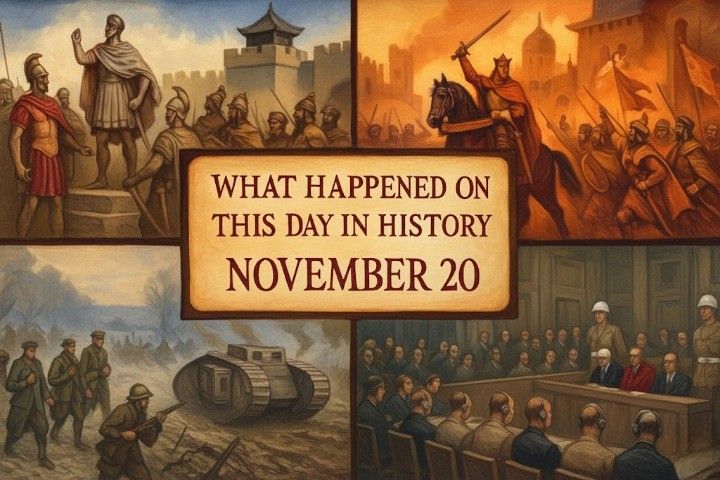
By weaving together turning points across centuries, this date shows how empires fractured, institutions hardened, and ideas leapt forward. What happened on this day in history November 20 sits naturally within this sweep of political upheavals, cultural milestones and scientific shifts — a compact reminder of how law, conflict, memory and discovery continually reshape the world.
Important Events That Happened On November 20 In History
284 — Diocletian is acclaimed Roman emperor
On this day Diocletian was proclaimed emperor by his troops, a decisive moment that launched a career of sweeping administrative reform. His rise marked the end of a chaotic succession and the start of a new imperial order that would reshape Rome’s government, taxation and military structure over decades.
Diocletian’s later actions — including the Tetrarchy and economic measures — trace their origin to this soldier-led acclamation.
762 — Tang dynasty retakes Luoyang during the An Shi Rebellion
Tang forces, aided by the Huihe (Uyghur) cavalry, recaptured Luoyang after years of violent upheaval, regaining a principal eastern capital. The retaking represented a critical step in restoring Tang authority following one of medieval China’s most destructive internal wars.
The recovery of Luoyang helped stabilize central administration, though the dynasty never fully regained its former strength.
1194 — Palermo falls to Henry VI, Holy Roman Emperor
Henry VI’s conquest of Palermo consolidated his hold over southern Italy and strengthened imperial claims in the Mediterranean. The capture of the Sicilian capital tightened Hohenstaufen influence and had lasting implications for the political map of Italy.
This seizure set the stage for later tensions between the empire and local Sicilian nobility as well as papal rivals.
1407 — Truce between Burgundy and Orléans; murder follows
John the Fearless, Duke of Burgundy, and Louis of Valois, Duke of Orléans, briefly agreed a truce that dissolved within days when Burgundy arranged for Orléans’s assassination. The killing deepened dynastic rivalries in France, polarizing noble factions and accelerating the internecine violence of the Armagnac–Burgundian feud.
Consequences rippled through royal politics, weakening centralized authority during a critical phase of the Hundred Years’ War.
1441 — Peace of Cremona ends Venice–Milan hostilities
The Peace of Cremona closed a period of pitched conflict between the Republic of Venice and the Duchy of Milan after Venice’s innovative engineering feat — the galeas per montes — proved strategically decisive. The agreement restored a tense balance of power in northern Italy and allowed both polities to refocus resources on trade and internal consolidation.
In practice, the treaty highlighted how military ingenuity and diplomacy shaped Renaissance-era Italian statecraft.
1695 — Zumbi executed, Quilombo dos Palmares leader falls
Zumbi, symbol and ruler of the maroon community at Palmares in Brazil, was killed after Portuguese bandeirante forces captured the settlement. His execution ended the armed resistance of one of the largest fugitive slave polities in the Americas, but his memory endured as a symbol of Afro-Brazilian resistance against slavery and colonial violence.
Palmares’ fall signalled a hardening of colonial slave regimes, yet Zumbi’s legacy later inspired abolition and cultural movements.
1739 — Battle of Porto Bello begins (War of Jenkins’ Ear)
British naval forces attacked Spanish holdings at Porto Bello (now in Panama), aiming to disrupt treasure routes and assert maritime pressure on Spain’s Americas empire. The engagement was celebrated in Britain as a bold strike against Spanish commerce and became a rallying point in a wider imperial rivalry that fed into later wars.
Porto Bello’s capture underscored the era’s naval geopolitics—commercial prize, national prestige and colonial contestation intertwined.
1776 — British forces capture Fort Lee; Continental retreat across New Jersey
British and Hessian troops pressed across the Hudson, taking Fort Lee and forcing American forces into a difficult retreat. This episode marked a low point for the Continental Army after the fall of New York, underscoring tactical superiority of British regulars and the precariousness of the revolutionary cause in late 1776.
The retreat set the scene for Washington’s later surprise counterattacks across the Delaware that would revive Patriot fortunes.
1789 — New Jersey first U.S. state to ratify the Bill of Rights
New Jersey’s ratification of the first ten amendments underscored early state-level support for constitutional protections and helped ensure the Bill of Rights’ adoption across the union. The move reflected political compromise between federalists and those who demanded explicit civil liberties protections.
Taken together with other state ratifications, this step shaped the constitutional framework that governs American civil rights.
1805 — Premiere of Beethoven’s Fidelio in Vienna
Beethoven’s only opera, Fidelio, opened amid Vienna’s vibrant musical culture; though initial reception was mixed, the work has since been celebrated for its humanistic themes and expressive music. The opera’s emphasis on liberty and personal sacrifice resonated with contemporary political currents in Napoleonic Europe.
Fidelio remains a milestone in the composer’s output and in the evolution of German opera.
1815 — Second Treaty of Paris signed, post-Napoleonic settlement refined
The 1815 treaty revised borders and imposed indemnities on France after Napoleon’s final defeat, reaffirming a conservative settlement by the great powers and prolonging foreign occupation. It embodied the allies’ intent to secure a lasting, managed peace through collective guarantees and reparations.
The treaty’s terms shaped European diplomacy during the Restoration and the Concert of Europe.
1820 — Essex sinks after whale attack; echoes in maritime lore
An 80-ton sperm whale rammed and sank the whaler Essex far from the South American coast, an event that later inspired Herman Melville’s Moby-Dick. The disaster exposed the hazards of 19th-century whaling and the precariousness of oceanic life, producing gripping accounts of survival, navigation and human endurance.
The Essex’s wreck entered cultural memory as a cautionary and epic maritime tale.
1845 — Battle of Vuelta de Obligado, Anglo-French blockade of Río de la Plata
Argentine forces attempted to resist an Anglo-French naval advance seeking navigational and commercial influence on the Plata; despite heavy resistance the allied fleets forced passage, demonstrating European maritime predominance in the region’s affairs.
The clash highlighted the friction between local sovereignty claims and great-power economic activism in 19th-century Latin America.
1861 — Kentucky’s Confederate government files secession ordinance
A Confederate-aligned rump government in Kentucky filed an ordinance of secession even while a Unionist government controlled much of the state. The action illustrated Kentucky’s bitter internal divisions and the broader complexity of border-state politics which complicated military and political calculations during the American Civil War.
Kentucky’s split loyalties influenced troop deployments, supply lines and wartime governance in the trans-Appalachian theater.
1873 — French Garnier Expedition captures Hanoi
Lieutenant Francis Garnier’s forces seized Hanoi, initially as part of a local intervention that escalated into full-scale French engagement with Vietnam. This episode presaged deeper colonial involvement and the eventual establishment of French Indochina, reshaping Southeast Asian geopolitics and local societies over the following decades.
The capture exposed how ostensibly limited interventions could transform into sustained imperial projects.
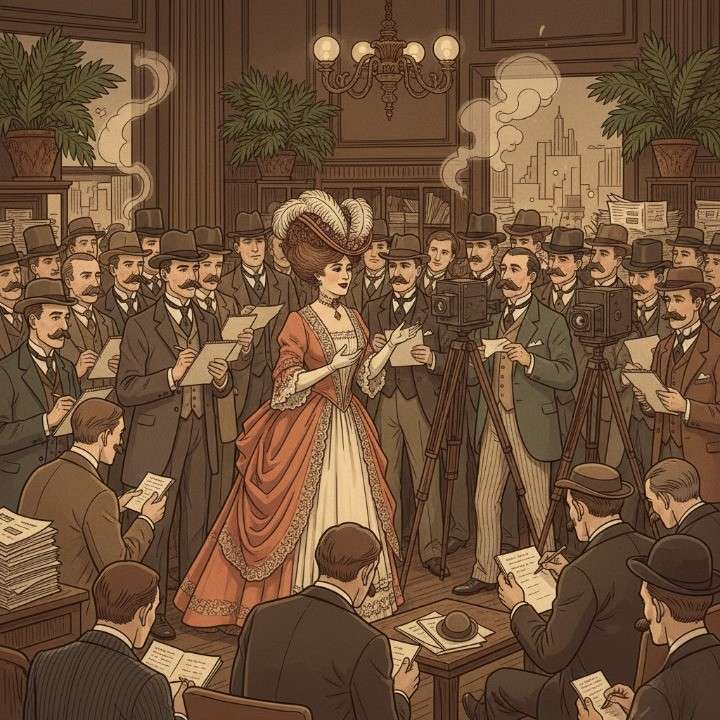
1900 — Sarah Bernhardt’s New York press reception
Sarah Bernhardt, the celebrated French actress, addressed the American press ahead of a major tour; her celebrity drew transatlantic attention and reflected the international mobility of performing arts at the turn of the century. Bernhardt’s prominence illustrated how theatrical stardom combined artistry and public spectacle in the modern era.
Her New York appearance signalled cultural exchange and the global reach of leading artists.
1910 — Plan de San Luis Potosí: Mexico’s revolutionary call
Francisco I. Madero issued the Plan de San Luis Potosí, repudiating Porfirio Díaz and calling for an armed uprising; the proclamation effectively launched the Mexican Revolution by framing political reform as a popular imperative. Madero’s appeal catalyzed regional insurrections and remade Mexican politics over the next decade.
The plan combined denunciation of dictatorship with a program for constitutional change that influenced subsequent revolutionary leaders.
1917 — Tanks used effectively at the Battle of Cambrai
At Cambrai British forces demonstrated improved armoured tactics, using massed tanks to break portions of the Hindenburg Line. The engagement revealed the evolving power of mechanized warfare and the potential for armored doctrine to alter trench-bound battlefields, even if follow-up operations faltered.
Cambrai stands as an early instance where combined arms and armor coordination presaged later mechanized war.
1936 — José Antonio Primo de Rivera killed by a republican squad
The founder of the Falange, José Antonio Primo de Rivera, was executed during the Spanish Civil War-era turmoil; his death made him a martyr figure for Francoist and falangist narratives and complicated the ideological memory of the conflict.
The killing deepened polarisation and was later used for political symbolism by competing postwar interpretations.
1940 — Hungary joins the Tripartite Pact, enters Axis orbit
Hungary’s accession to the Tripartite Pact aligned it formally with Germany, Italy and their allies, tying Budapest more tightly to Axis strategy while shaping Hungary’s wartime diplomacy and eventual military commitments. The decision reflected a mix of security calculations, territorial revisionism hopes and regional coercions.
Later wartime turns would produce fraught consequences for Hungary’s population and politics.
1943 — Battle of Tarawa begins—Amphibious assault and heavy losses
U.S. Marines launched a brutal amphibious assault on Tarawa Atoll; fierce Japanese resistance, logistical problems and close-range fire produced high casualty rates and an intense learning experience for future Pacific operations. Tarawa signalled both the brutality of atoll warfare and the strategic cost of island-hopping.
The battle accelerated improvements in landing doctrine, pre-landing bombardment and medical evacuation procedures.
1945 — Nuremberg trials begin against major Nazi figures
International tribunals opened at Nuremberg to prosecute senior Nazi leaders, establishing legal precedent for crimes against peace, war crimes and crimes against humanity. The trials marked a new phase in international justice—combining moral judgment, legal innovation and the documentation of systematic atrocity.
Their legacy informed later tribunals and the development of modern international criminal law.
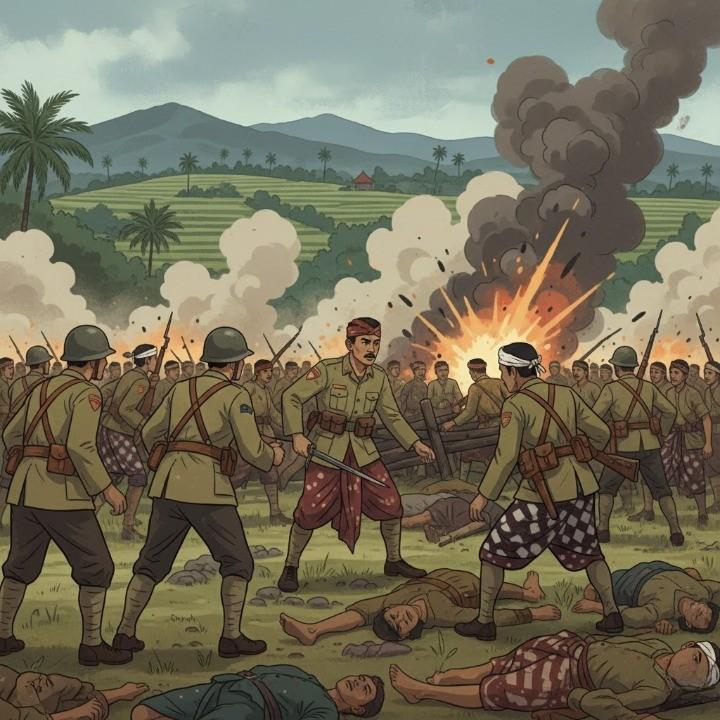
1946 — Battle of Margarana: mass casualties in Indonesian revolution
Dutch forces clashed with Indonesian nationalists; the fighting at Margarana cost dozens of Indonesian lives including nationalist leader I Gusti Ngurah Rai. The battle symbolised the intense and often bloody struggle for Indonesian independence that followed Japanese occupation and the collapse of Dutch colonial rule.
Such clashes underscored the human cost of decolonization and the determination of local movements.
1947 — Princess Elizabeth marries Philip Mountbatten at Westminster Abbey
The wedding of Princess Elizabeth and Philip Mountbatten became a global media event and a symbolic moment of postwar civic optimism in Britain. The union strengthened a modern royal image and inaugurated a partnership that would play a long role in the monarchy’s 20th-century renewal.
Beyond pomp, the marriage had diplomatic and dynastic resonance during a period of imperial transition.
1959 — United Nations adopts the Declaration of the Rights of the Child
The UN’s adoption affirmed a global commitment to protecting children’s welfare and dignity, articulating principles that would shape humanitarian law, social policy and child advocacy worldwide. The declaration catalyzed national reforms and international programs focused on health, education and child protection.
Though non-binding, the text influenced later treaties and operational priorities for child welfare agencies.
1962 — Cuban Missile Crisis ends; U.S. quarantine lifted
Following Soviet agreement to withdraw missiles from Cuba, President Kennedy ended the naval quarantine, defusing the immediate nuclear brinkmanship. The resolution revealed the narrow margins of Cold War crisis management while prompting later measures—hotlines, treaties and diplomatic channels—aimed at preventing similar near-catastrophes.
The episode reshaped superpower relations and nuclear strategy going forward.
1968 — Farmington Mine disaster kills 78 miners in West Virginia
An explosion at Consolidated Coal Company’s No. 9 mine near Farmington claimed 78 lives, drawing attention to mine safety standards and sparking regulatory changes. The tragedy deepened public concern about industrial risks and contributed to later reforms in mining oversight and worker protections.
The disaster’s social impact was felt across coal communities and policymaking circles.
1969 — My Lai photographs published; public reaction to Vietnam War intensifies
Graphic images of the My Lai massacre were printed in The Plain Dealer, bringing stark evidence of wartime atrocities into American living rooms and intensifying debate over the Vietnam War. The photographs catalyzed public outrage, contributed to antiwar sentiment and complicated military and political narratives about the conflict.
The disclosure reinforced demands for accountability and shifted public perceptions of the war.
1969 — Occupation of Alcatraz begins; Native American activists assert rights
Native activists occupied Alcatraz Island, asserting treaty claims and drawing attention to Indigenous rights, treaty obligations and federal Indian policy. The dramatic protest lasted until 1971 and helped catalyze a broader movement for Native self-determination and policy reform in the 1970s.
Alcatraz became a potent symbol for Indigenous activism and cultural resurgence.
1974 — U.S. DOJ files final antitrust suit against AT&T
The Department of Justice’s suit targeted AT&T’s monopoly over telephone service, initiating legal and structural actions that would eventually dismantle the Bell System. The case reshaped the telecommunications industry, encouraging competition, innovation and regulatory rethinking of networked utilities.
The breakup later altered pricing, technology adoption and market structure across communications.
1974 — Lufthansa Flight 540: first fatal Boeing 747 crash
A Boeing 747 attempting takeoff at Nairobi’s Jomo Kenyatta Airport crashed and caught fire, killing 59 people and marking the first fatal accident for the new jumbo jet. The disaster raised questions about crew training, airport infrastructure and the safety of large passenger aircraft in developing-airport environments.
Investigations led to operational and design lessons for next-generation wide-body operations.
1977 — Anwar Sadat visits Israel—historic Arab-Israeli breakthrough
Egyptian President Anwar Sadat’s visit to Jerusalem and meeting with Israeli leaders was the first by an Arab head of state and signalled a dramatic pivot toward diplomacy. The rapprochement opened a pathway to the Camp David Accords and an eventual peace treaty, albeit one that produced regional controversy and internal backlash.
Sadat’s initiative reshaped Middle Eastern diplomacy and redefined Egypt’s regional role.
1979 — Grand Mosque seizure in Mecca shocks the Islamic world
A militant takeover of Islam’s holiest site at Mecca by armed insurgents produced a weeks-long crisis, hostages and a government response that involved religious and foreign technical assistance. The episode raised questions about Islamic militancy, Saudi governance and the legitimacy of state religious authority in the modern era.
The seizure prompted legal and security reforms across the kingdom.
1980 — Lake Peigneur disaster: mine and drilling catastrophe in Louisiana
An errant oil-drilling operation breached a salt mine beneath Lake Peigneur, causing a massive whirlpool that drained the lake into the mine and sank drilling rigs and barges. The extraordinary industrial accident revealed the hazards of resource extraction where geology and human engineering intersect.
Though human casualties were limited, the event remains a striking case study in industrial risk.
1985 — Microsoft ships Windows 1.0, a new GUI arrives for personal computers
Microsoft’s debut of Windows 1.0 brought a graphical user interface to IBM-compatible PCs, introducing menus, windows and mouse interactions to a broader market and initiating a long arc of software competition and standardization. The release accelerated the consumerization of computing and set the foundation for later desktop ecosystems.
While primitive by later standards, Windows 1.0 signalled a turning point in personal-computer usability.
1989 — Velvet Revolution swells: Prague crowds multiply to a half-million
A wave of demonstrations in Czechoslovakia erupted into mass protest as Prague’s populist movement grew dramatically, hastening the collapse of communist rule in the country. The surge showed how nonviolent mobilization and civic dissent could dismantle authoritarian structures in the Eastern Bloc.
The Velvet Revolution became an emblem of democratic transition across Central and Eastern Europe.
1990 — Serial killer Andrei Chikatilo arrested in the Soviet Union
Chikatilo’s arrest ended a gruesome run of murders that had terrorized regions of the USSR. The case exposed failures in law enforcement and forensic practice under late Soviet systems, prompting reforms in investigations and sparking widespread public horror and debate over criminal pathology.
The trial and conviction illuminated systemic blind spots in policing and social care.
1991 — Azerbaijani peacekeeping helicopter shot down in Khojavend
A Mi-8 helicopter carrying international peacekeepers and journalists was downed, killing all aboard and reflecting the brutal intensification of the Nagorno-Karabakh conflict. The incident underscored the hazards faced by neutral observers and the fragility of ceasefire mechanisms in contested zones.
It deepened humanitarian and diplomatic urgency around the regional war.
1992 — Windsor Castle fire damages royal heritage and triggers restoration
A major blaze devastated parts of Windsor Castle, damaging historic rooms and priceless art. The catastrophe prompted a national conversation about heritage conservation, insurance, and the public role in funding restoration, leading to extensive repair initiatives and renewed attention to fire safety in historic structures.
Restoration efforts combined conservation science, craft skills and ceremonial remembrance.
1993 — Senate Ethics censure of Alan Cranston amid savings and loan scandal
A stern rebuke by the Ethics Committee over dealings linked to Charles Keating highlighted congressional entanglements with financial actors and spurred reforms in oversight and campaign finance scrutiny. The episode fed public distrust in institutions and helped catalyze later regulatory tightening.
The censure illustrated how personal conduct and political finance can intersect with systemic risk.
1993 — Avioimpex Flight 110 crashes near Ohrid, North Macedonia
The Yak-42 passenger jet crashed approaching Ohrid, killing all 116 aboard and becoming the country’s deadliest aviation disaster. The tragedy highlighted concerns about aviation standards, maintenance and air traffic procedures in newly independent states of the post-Yugoslav space.
Investigations focused on technical, human factors and regulatory oversight issues.
1994 — Lusaka Protocol signed between Angola and UNITA
An agreement in Lusaka sought to end nearly two decades of civil war by arranging ceasefire terms and political integration, though localized fighting later resumed. The accord attempted to establish frameworks for disarmament, demobilization and reconstruction in a deeply fractured country.
The protocol was an important step toward negotiated settlement even as challenges persisted.
1996 — Hong Kong office building fire kills 41, injures dozens
A fatal blaze in an office tower exposed problems in building fire safety, emergency response and regulatory enforcement during Hong Kong’s growth era. The loss of life prompted policy reviews, improvements in fire codes and public debate about urban safety measures.
The incident contributed to urban planning and safety reform discussions.
1998 — Taliban court declares Osama bin Laden “a man without a sin” in bombings case
A Taliban-administered tribunal exonerated bin Laden for charges connected to embassy bombings, reflecting the legal and political insulation he enjoyed under certain regimes. The decision underscored the international tensions around terrorism accountability that prefigured later global counterterrorism drives.
The ruling complicated diplomatic attempts to pursue suspects through recognized judicial processes.
1998 — Zarya module launched, the first ISS component lifts off
Russia launched the Zarya module, the initial element of the International Space Station, establishing a functional core for later assembly and multinational collaboration in orbit. Zarya’s deployment embodied post-Cold War cooperation and technical partnership in long-duration human spaceflight.
The module’s arrival enabled decades of scientific research and international logistics in low Earth orbit.
1998 — Major tobacco settlement with U.S. states reached
U.S. tobacco companies agreed to a massive settlement with state governments to reimburse Medicaid costs for smoking-related illness, marking a watershed in public-health litigation and corporate accountability. The agreement reshaped industry economics and funded anti-smoking campaigns and public health programs.
It also produced regulatory and marketing constraints with long-term public health impact.
2003 — Second day of Istanbul bombings; major city violence and aftermath
Coordinated attacks devastated Istanbul’s transport and diplomatic infrastructure, killing and injuring many and heightening alarm about transnational terrorism in Europe and the Near East. The bombings prompted security overhauls, forensic investigations and strained diplomatic relations as governments sought to trace perpetrators.
The events became a focal point for counterterrorism cooperation and domestic resilience measures.
2015 — Hostage siege in Bamako kills at least 19 people
A violent siege at a hotel in Mali’s capital, claimed by extremist groups, highlighted persistent regional instability and the threat posed by insurgent networks across the Sahel. The attack underscored vulnerabilities in urban security and the need for coordinated counterterrorism operations in fragile states.
International responses focused on intelligence sharing, crisis response and stabilisation aid.
2016 — Jimmie Johnson wins seventh NASCAR Cup title, ties all-time record
By securing his seventh championship Johnson joined an elite racing pantheon alongside Richard Petty and Dale Earnhardt, marking a career milestone and a landmark in modern NASCAR competitiveness. The achievement reflected sustained team performance, technological excellence and driver consistency.
The title confirmed Johnson’s place among the sport’s most successful figures.
2022 — FIFA World Cup opens in Qatar, first in the Middle East
The 2022 tournament’s launch marked the World Cup’s debut in the Middle East, provoking debates about scheduling, labor conditions and geopolitics while delivering a global spectacle. The event’s staging reflected football’s cultural reach and raised questions about mega-event governance, infrastructure and rights protections.
The tournament inaugurated an intense season of sporting drama and diplomatic attention.
Read Also: What Happened On This Day In History November 19
Famous People Born On November 20
Edwin Hubble — American astronomer. (Nov 20, 1889 – Sep 28, 1953)
Benoit Mandelbrot — Polish-born French-American mathematician (father of fractals). (Nov 20, 1924 – Oct 14, 2010)
Don DeLillo — American novelist. (Nov 20, 1936 – )
Albert Kesselring — German field marshal. (Nov 20, 1885 – Jul 16, 1960)
Wilfrid Laurier — Prime minister of Canada. (Nov 20, 1841 – Feb 17, 1919)
Kenesaw Mountain Landis — American federal judge and baseball commissioner. (Nov 20, 1866 – Nov 25, 1944)
Selma Lagerlöf — Swedish novelist, Nobel laureate. (Nov 20, 1858 – Mar 16, 1940)
Emilio Pucci — Italian fashion designer and politician. (Nov 20, 1914 – Nov 29, 1992)
Alistair Cooke — British-American journalist and broadcaster. (Nov 20, 1908 – Mar 30, 2004)
Timothy Gowers — British mathematician, Fields Medalist. (Nov 20, 1963 – )
Pius VIII — Pope. (Nov 20, 1761 – Nov 30, 1830)
Meredith Monk — American performance artist and composer. (Nov 20, 1942 – )
Norman Thomas — American socialist leader and political activist. (Nov 20, 1884 – Dec 19, 1968)
Thomas Chatterton — British poet (precocious Romantic precursor). (Nov 20, 1752 – Aug 24, 1770)
Otto von Guericke — Prussian physicist and inventor (air pump). (Nov 20, 1602 – May 11, 1686)
Karl von Frisch — Austrian zoologist, Nobel laureate (bee communication). (Nov 20, 1886 – Jun 12, 1982)
James Michael Curley — American politician (Boston mayor). (Nov 20, 1874 – Nov 12, 1958)
Josiah Royce — American philosopher. (Nov 20, 1855 – Sep 14, 1916)
Louis-Alexandre Berthier, prince de Wagram — Marshal of France. (Nov 20, 1753 – Jun 1, 1815)
Ichikawa Kon — Japanese film director. (Nov 20, 1915 – Feb 13, 2008)
Chester Gould — American cartoonist (creator of Dick Tracy). (Nov 20, 1900 – May 11, 1985)
Earnest A. Hooton — American anthropologist. (Nov 20, 1887 – May 3, 1954)
Eero Mäntyranta — Finnish Olympic skier. (Nov 20, 1937 – Dec 30, 2013)
Zinaida Nikolayevna Gippius — Russian Symbolist poet. (Nov 20, 1869 – Sep 9, 1945)
Alexandra Danilova — Russian-American ballerina. (Nov 20, 1903 – Jul 13, 1997)
Rudolf Koch — German calligrapher and type designer. (Nov 20, 1876 – Apr 9, 1934)
Eduard Rüppell — German naturalist and explorer. (Nov 20, 1794 – Dec 10, 1884)
Patrick Joseph Hayes — Archbishop of New York, Cardinal. (Nov 20, 1867 – Sep 4, 1938)
Joseph Samuel Bloch — Austrian rabbi, politician, and journalist. (Nov 20, 1850 – Oct 1, 1923)
William Blackwood — Scottish publisher (William Blackwood & Sons). (Nov 20, 1776 – Sep 16, 1834)
Famous People Died On November 20
Alexandra — Queen consort of Great Britain (wife of Edward VII). (Dec 1, 1844 – Nov 20, 1925)
Ian Smith — Prime minister of Rhodesia. (Apr 8, 1919 – Nov 20, 2007)
Thomas Tallis — English composer. (c.1505 – Nov 20, 1585)
John Prescott — British politician, deputy PM (Tony Blair era). (May 31, 1938 – Nov 20, 2024)
Edmund — King of East Anglia (Christian martyr tradition). (c.841/842 – Nov 20, 869)
Trofim Lysenko — Soviet agronomist and controversial biologist. (1898 – Nov 20, 1976)
Caroline of Brandenburg-Ansbach — Queen of Great Britain (wife of George II). (Mar 1, 1683 – Nov 20, 1737)
Sir John Harington — Elizabethan courtier and inventor (flush toilet). (1561 – Nov 20, 1612)
Anton Rubinstein — Russian composer and pianist. (Nov 28, 1829 – Nov 20, 1894)
David Dacko — President of the Central African Republic. (Mar 24, 1930 – Nov 20, 2003)
José Antonio Primo de Rivera — Spanish political leader, founder of the Falange. (Apr 24, 1903 – Nov 20, 1936)
John Rushworth Jellicoe, 1st Earl Jellicoe — British admiral (Battle of Jutland). (Dec 5, 1859 – Nov 20, 1935)
Benedetto Croce — Italian philosopher and historian. (Feb 25, 1866 – Nov 20, 1952)
Amintore Fanfani — Italian prime minister and statesman. (Feb 6, 1908 – Nov 20, 1999)
Leonardo Sciascia — Italian novelist and essayist. (Jan 8, 1921 – Nov 20, 1989)
Manasseh ben Israel — Dutch Hebraic scholar and community leader. (1604 – Nov 20, 1657)
Wolfgang Borchert — German writer (post-WWII literature). (May 20, 1921 – Nov 20, 1947)
Clyde Vernon Cessna — American aviator and aircraft manufacturer. (Dec 5, 1879 – Nov 20, 1954)
Francis William Aston — British chemist and Nobel laureate (isotopes). (Sep 1, 1877 – Nov 20, 1945)
Willem de Sitter — Dutch mathematician, astronomer, and cosmologist. (May 6, 1872 – Nov 20, 1934)
Ennio Flaiano — Italian screenwriter, novelist and critic. (Mar 5, 1910 – Nov 20, 1972)
Henry Draper — American astronomer and astrophotography pioneer. (Mar 7, 1837 – Nov 20, 1882)
Mountstuart Elphinstone — British colonial official in India and education advocate. (Oct 6, 1779 – Nov 20, 1859)
Francesco Cilea — Italian opera composer. (Jul 26, 1866 – Nov 20, 1950)
Thomas Tompion — English clockmaker and instrument maker. (Jul 25, 1639 – Nov 20, 1713)
Augustine Birrell — British politician and writer. (Jan 19, 1850 – Nov 20, 1933)
Harriot Eaton Stanton Blatch — American suffragist and reformer. (Jan 20, 1856 – Nov 20, 1940)
Sir John Fowler, 1st Baronet — British civil engineer (London Metropolitan Railway, Forth Bridge). (Jul 15, 1817 – Nov 20, 1898)
Trygve Bratteli — Prime minister of Norway. (Jan 11, 1910 – Nov 20, 1984)
Stefan Żeromski — Polish novelist and social commentator. (Oct 14, 1864 – Nov 20, 1925)
Observances & Institutional Dates — November 20
Africa Industrialization Day (International)
A UN observance promoting industrial development across Africa, the day focuses on policy, investment and technological initiatives to strengthen manufacturing, create jobs and support sustainable economic transformation. Each year highlights different industrial priorities for member states.
Advent (Roman Catholic Church)
Advent begins the liturgical preparation for Christmas, a four-week season of reflection and anticipation in many Christian traditions. Communities mark the period with special prayers, liturgies and symbolic rituals like the Advent wreath.
National Sovereignty Day (Argentina)
Commemorating Argentina’s assertion of political autonomy, the observance reflects national history and civic rituals that honour institutional independence and national identity. Ceremonial events, parades and educational programs mark the date.
20-N (Spain)
An informal commemorative day linked to the deaths of two controversial figures in Spanish history, the date often provokes reflection and debate about memory, dictatorship and historical legacies in Spain’s public life. Occasional ceremonies and commentaries revisit the country’s twentieth-century conflicts.
Day of the Mexican Revolution (Mexico)
A national holiday marking the start of the armed struggle that overthrew long-standing power structures and reshaped Mexican political life; the day is observed with parades, civic speeches and remembrances of revolutionary ideals and social reform.
Royal Thai Navy Day (Thailand)
A celebration recognizing the navy’s service and historical milestones, Royal Thai Navy Day combines ceremonial reviews, official addresses and public displays of maritime capability and heritage.
Teachers’ Day / Ngày nhà giáo Việt Nam (Vietnam)
A day to honour educators, Students and communities express gratitude through gifts, performances and school ceremonies, emphasising the social role and cultural esteem of teaching.
Black Awareness Day (Brazil)
An observance focused on Afro-Brazilian history, culture and the struggle against racism; public events and educational programs promote recognition of African contributions to Brazilian society and call for racial equality.
Saint Verhaegen (Brussels)
A university-related festivity celebrated in Brussels with student parades and historic ceremonies, Saint Verhaegen commemorates the founding of the Free University of Brussels and remains a colorful academic tradition.
Transgender Day of Remembrance (International)
A solemn observance remembering transgender people killed in acts of anti-transgender violence, the day combines vigils, public education and advocacy to highlight vulnerabilities and press for legal protections and social inclusion.
Children’s Day / World Children’s Day (various)
A collection of observances celebrating children’s rights, welfare and education—marked by activities, policy promotions and initiatives aimed at improving child health, schooling and safety globally.
Frequently Asked Questions
What happened on November 20 that influenced decolonization movements?
Several post-World War II events on this date — such as independence struggles, battles in Indonesia and political shifts in colonized regions — underscore the day’s recurring link to anti-colonial struggles and the reconfiguration of empires.
Why is the Battle of Tarawa (1943) significant?
Tarawa exposed the brutality of Pacific island assaults and provoked improvements in amphibious doctrine, logistics and medical evacuation; it remains a key study in the costs of island warfare and the adaptation of amphibious forces.
How did the Nuremberg trials (1945) shape international law?
Nuremberg established legal categories for war crimes and crimes against humanity, created precedent for international tribunals and catalysed later institutions that pursue transnational justice and accountability.
What cultural or technological milestones fall on November 17?
Notable cultural and technological milestones include premieres and product launches (e.g., Fidelio’s premiere and Microsoft Windows 1.0 release) that reflect shifts in artistic practice and consumer technology over two centuries.