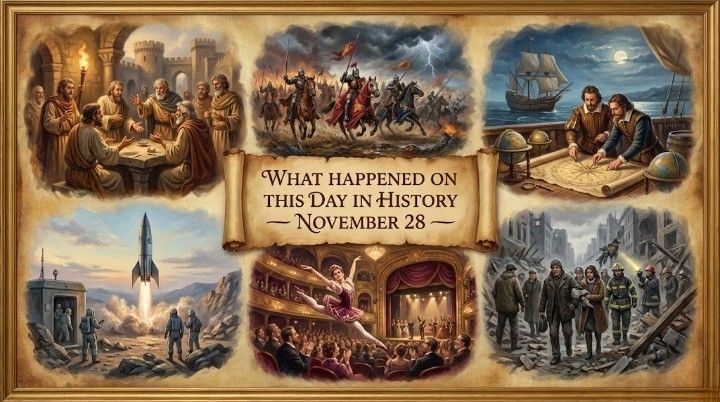
A cross-century mix of turning points where authority shifts, journeys expand horizons, and public life bends under pressure. In many eras the day carries episodes of negotiation, discovery, innovation and upheaval. What happened on this day in history November 28 sits within this arc, framing how these moments shaped the world’s long narrative.
Important Events That Happened On November 28 In History
587 — Treaty of Andelot: King Guntram recognises Childebert II
This compact settled dynastic claims in Frankish Gaul and secured Childebert II’s succession, binding regional rulers by oath and marriage. The treaty helped stabilise Burgundian–Neustria relations for a generation and shaped later Merovingian politics.
936 — Shi Jingtang enthroned as first Later Jin emperor
With backing from the Liao, Shi Jingtang replaced Later Tang rule and founded the Later Jin, underscoring the era’s fragmentary politics. His reliance on Khitan support set patterns of external influence over Chinese successor states during the Five Dynasties period.
1443 — Skanderbeg liberates Kruja; Albanian flag raised
Skanderbeg’s recapture of Kruja became a founding moment for Albanian resistance against Ottoman encroachment. Raising the banner there rallied disparate local forces and provided a symbolic centre for later resistance narratives.
1470 — Lê Thánh Tông launches campaign against Champa
The Đại Việt offensive in 1470 marks a decisive campaign in the region’s long Vietnamese–Champa rivalry. It presaged deeper territorial and cultural shifts across mainland Southeast Asia during the period.
1520 — Magellan’s expedition completes Strait of Magellan passage
After 38 days of difficult navigation, Magellan’s fleet emerged into the Pacific, opening a westward maritime route to Asia. The passage transformed global navigation, commerce and imperial competition by linking the Atlantic and Pacific oceans.
1582 — Shakespeare and Anne Hathaway pay bond in Stratford
The deposition enabling an immediate marriage for William Shakespeare and Anne Hathaway is a small personal note in cultural history. It anchors the playwright’s early biography in civic records and local legal practice of the Elizabethan era.
1627 — Battle of Oliwa: Polish–Lithuanian naval victory
The battle marked the high point of the Commonwealth’s brief naval assertion against Swedish forces. It demonstrated naval competence in the Baltic and had symbolic weight for Polish maritime ambitions.
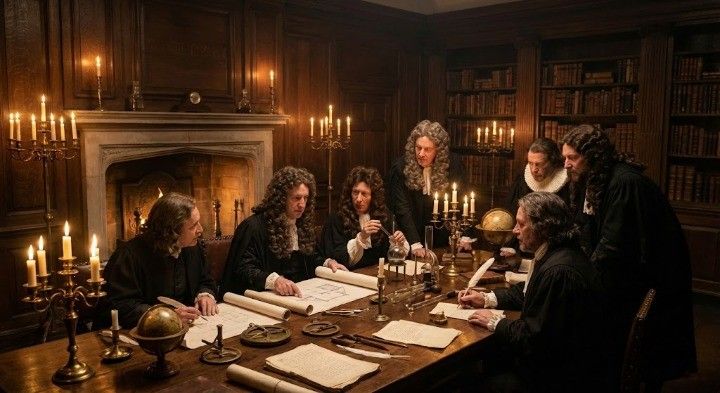
1660 — Founding meeting leading to the Royal Society at Gresham College
A meeting with Wren, Boyle, Wilkins and others laid the groundwork for what would become the Royal Society. That institutional founding helped formalize experimental science and public scientific exchange in England.
1666 — Battle of Rullion Green: Royal Scots defeat Covenanters
Tam Dalyell’s forces routed Covenanter insurgents, part of the era’s brutal religious and political conflicts. The battle reinforced royal authority but also deepened grievances that fuelled later unrest.
1720 — Trials of Mary Read and Anne Bonny (pirates)
The trial and postponed executions (because both women were pregnant) highlight gender, law and piracy in the early eighteenth century. Their stories became part of maritime folklore and the mythos of piracy.
1785 — First Treaty of Hopewell recognises Cherokee lands
This treaty formalised diplomatic relations and territorial acknowledgements between the U.S. and Cherokee leaders. Though presented as legal recognition, it presaged the fraught treaty politics and dispossession that followed.
1798 — U.S.–Uruguay trade begins with ship John Leamy’s arrival in Montevideo
Early commercial links opened transatlantic trade routes and signalled the expanding reach of American merchants into South America. Such voyages paved ways for later diplomatic and mercantile ties.
1811 — Premiere of Beethoven’s Piano Concerto No. 5 in Leipzig
Beethoven’s “Emperor” concerto debuted to immediate acclaim and later became a staple of the piano repertoire. The work’s scale and virtuosity reflect the composer’s mature command and the era’s evolving public musical culture.
1814 — The Times prints on a steam-powered press (Koenig & Bauer)
The introduction of steam-driven printing revolutionised newspaper production and information circulation. Faster, cheaper presses helped create mass newspaper markets and shaped public life in the industrial age.
1821 — Panama separates from Spain; joins Gran Colombia
Panama’s break with Spain and union with Gran Colombia placed the isthmus in a new post-colonial political order. That alignment affected regional trade routes and later the strategic importance of Panama.
1843 — Kingdom of Hawaii officially recognised by UK and France (Ka Lā Hui)
Recognition grounded Hawaiian sovereignty in international law and diplomacy for the period, allowing the kingdom to engage more fully with global commerce. It also marked a fragile moment before later pressures from imperial powers.
1861 — Confederate claim of Missouri as the 12th Confederate state
Leadership in the Confederacy accepted an alternative Missouri government, reflecting the Civil War’s contested loyalties and shadow governments. In practice, Union control and guerrilla warfare made the status highly contested.
1862 — Battle of Cane Hill: Union victory under General Blunt
Union forces routed Marmaduke’s Confederates in Arkansas, contributing to Federal control in the theatre and shaping the campaign that followed. The engagement was one of many that eroded Confederate operational depth in the trans-Mississippi.
1862 — Foundation of Notts County F.C., oldest professional football club
Notts County’s founding marks an early formalization of association football clubs in England. The club’s continuity embodies the sport’s steady institutional growth from local pastime to organized league play.
1872 — Wilhelm Reiss first to summit Cotopaxi volcano
Reiss’s climb on an active high-altitude volcano joined scientific curiosity with adventure travel in the 19th century. Such ascents contributed to geological and geographic knowledge alongside the era’s exploratory ethos.
1885 — Bulgarian victory at Slivnitsa preserves unification
The outcome solidified Bulgaria’s political project after unification and checked Serbian attempts to reverse it. The battle had lasting regional implications for Balkan statehood and alignments.
1893 — Women’s suffrage in New Zealand and the 1893 election
New Zealand’s move to enfranchise women and hold the 1893 election marks a global landmark in mass suffrage. It became an influential precedent for later reform movements worldwide.
1895 — First American automobile race (Chicago to Evanston)
Frank Duryea’s victory in a 54-mile contest showcased early automotive endurance and nascent public interest in motor transport. The long, slow race illustrated technical limits and spurred engineering improvements.
1899 — Battle of Modder River (Second Boer War)
Boer forces inflicted heavy casualties despite yielding ground, showing the war’s costly, mobile nature. The action underscored Boer tactical resilience and British logistical challenges.
1905 — Arthur Griffith founds Sinn Féin
Sinn Féin’s establishment gave an institutional vehicle to Irish nationalist aims and later republican politics. The party’s evolving role would be central to twentieth-century Irish constitutional change.
1908 — Marianna mine explosion kills 154 men
One of the era’s deadliest U.S. mining disasters, the blast revealed systemic safety hazards in industrial extraction. The catastrophe intensified calls for improved mine regulation and worker protections.
1912 — Albania declares independence from the Ottoman Empire
Albania’s declaration marked a key chapter in Balkan nation-building and the disintegration of Ottoman rule in Europe. Independence set in motion complicated border, ethnic and diplomatic issues in the region.
1914 — New York Stock Exchange reopens for bond trading after wartime closure
Reopening marked a return of financial normality amid global war disruptions and underscored transatlantic capital flows’ importance for wartime economies.
1917 — Estonian Provincial Assembly declares sovereign power
That assertion initiated Estonia’s path to independence from Russia and laid foundations for its later statehood after World War I.
1918 — Soviet forces strike at Narva: Estonian War of Independence begins
The attack marked a violent contest over the Baltic region’s postwar future and launched Estonia’s armed defence that culminated in recognized independence.
1919 — Lady Astor becomes first woman to sit in the British House of Commons
Astor’s seating broke a powerful symbolic barrier in British parliamentary life, following Countess Markievicz’s earlier election (who had not taken her seat). Her presence reshaped debates on gender in politics.
1920 — FIDAC (Interallied Federation of War Veterans Organisations) established
The organisation aimed to coordinate veterans’ groups across former Allied nations, shaping postwar memory, benefits and transnational veteran advocacy.
1920 — Kilmichael Ambush (Irish War of Independence)
The ambush was a significant IRA action against Auxiliaries, intensifying the guerrilla phase of the conflict and altering British counterinsurgency responses.
1925 — Grand Ole Opry begins broadcasting (WSM Barn Dance)
The programme launched a national platform for country music and rural popular culture in the United States, helping create stars and a durable broadcast tradition.
1942 — Cocoanut Grove fire in Boston kills 492 people
One of the USA’s deadliest nightclub fires, the blaze led to reforms in public-venue safety, egress standards, and fire codes that transformed building regulations.
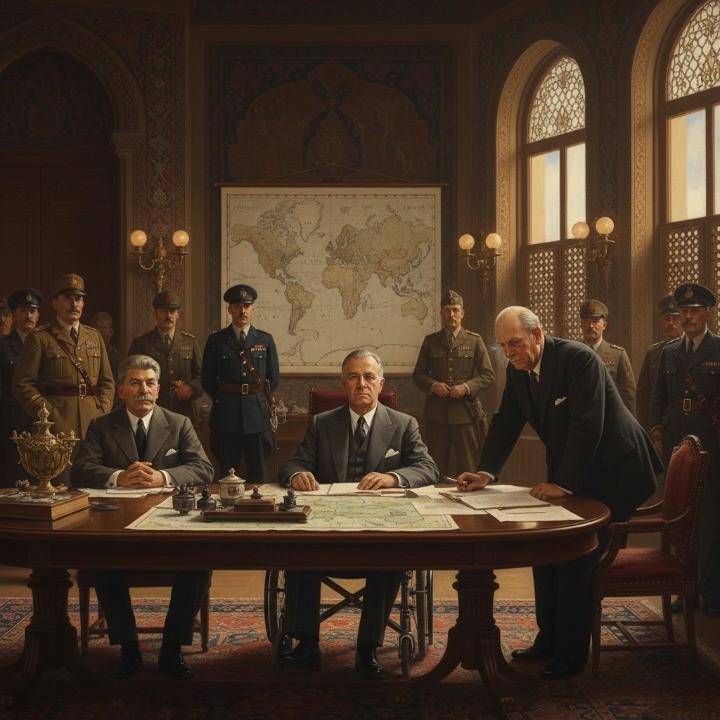
1943 — Tehran Conference: Roosevelt, Churchill and Stalin meet to plan strategy
The summit set Allied priorities for the European and Pacific theatres and discussed postwar arrangements, shaping wartime coalition strategy and the map of post-war institutions.
1958 — Chad, Republic of the Congo and Gabon become autonomous republics within French Community
These transitions represented steps in decolonisation, granting internal autonomy while remaining tied to France under a new constitutional framework.
1958 — First successful flight of SM-65 Atlas (first operational ICBM)
The Atlas flight marked a milestone in strategic rocketry and deterrence, inaugurating a family of boosters that would later serve civilian space launch roles.
1960 — Mauritania becomes independent of France
Mauritania’s independence completed another strand of French decolonisation in Africa and initiated state-building under international recognition.
1961 — Ernie Davis wins the Heisman Trophy (first African American recipient)
Davis’s award was a landmark in American sports and civil-rights progress, symbolizing expanding opportunities and recognition for Black athletes.
1964 — NASA launches Mariner 4 toward Mars
Mariner 4 would return the first close-up photos of Mars, transforming planetary science and public imagination about the Red Planet.
1964 — U.S. national-security planners recommend escalation in Vietnam (NSC discussions)
Policy shifts in 1964 framed the larger U.S. military commitment and signalled the political calculus behind stepped-up operations that followed.
1965 — Philippines announces troop contribution to Vietnam after U.S. call for “more flags”
Philippine alignment with U.S. policy reflected Cold War solidarities in Asia and sub-regional security calculations.
1966 — Michel Micombero overthrows Burundi monarchy; becomes first president
Micombero’s coup inaugurated a republican era in Burundi and set off decades of political turbulence rooted in state formation and ethnic politics.
1967 — First pulsar detected (PSR B1919+21) by Bell Burnell and Hewish
The discovery opened a new astronomical field, revealing neutron stars and precise cosmic clocks that have become invaluable probes of extreme physics.
1971 — Fred Quilt injured; dies two days later (Tsilhqot’in First Nation case)
The incident highlighted tensions between Indigenous communities and policing institutions in Canada, later shaping legal and human-rights discussions.
1971 — Wasfi al-Tal assassinated by Black September
The killing of Jordan’s prime minister underscored the reach of Middle East political violence in the 1970s and contributed to regional instability.
1972 — Last guillotine executions in Paris (Claude Buffet, Roger Bontems)
The executions closed a chapter in French penal history and accelerated public debates that eventually led to abolition of the death penalty in France.
1975 — Timor-Leste declares independence from Portugal (briefly)
The declaration followed decolonisation shifts but was quickly followed by Indonesian invasion; the episode foreshadowed decades of conflict over East Timor’s status.
1979 — Air New Zealand Flight 901 crashes into Mount Erebus; 257 fatalities
The disaster became a case study in navigational error, flight-planning procedures and airline crisis response, leading to aviation safety reforms.
1980 — Operation Morvarid (Iran–Iraq War): Iraqi navy largely destroyed
The strike neutralised much of Iraq’s naval capacity and affected maritime control in the Persian Gulf early in the long regional war.
1983 — Space Shuttle Columbia launches on STS-9 with Spacelab (first carrying ESA’s module)
The mission advanced international cooperation in space science, carrying European payloads and demonstrating shuttle versatility.
1987 — South African Airways Flight 295 crashes into the Indian Ocean
The fatal in-flight fire and crash prompted extended investigations and scrutiny of airline safety and cargo procedures.
1989 — Velvet Revolution: Communist Party of Czechoslovakia abandons monopoly on power
The decision effectively ended one-party rule and accelerated democratic transitions in Czechoslovakia, part of the broader collapse of communist regimes in 1989.
1990 — Margaret Thatcher resigns as UK Prime Minister; John Major succeeds her
Thatcher’s resignation ended a transformational and polarising era in British politics; the leadership change reshaped Conservative strategy and public debate.
1991 — South Ossetia declares independence from Georgia
The declaration deepened ethno-territorial tensions in the Caucasus and foreshadowed protracted conflicts over autonomy and state borders.
2002 — Mombasa attacks:
Suicide bombers destroyed an Israeli-owned hotel in Mombasa, Kenya, killing and injuring civilians, while a coordinated attempt to shoot down Arkia Flight 582 with surface-to-air missiles narrowly failed.
2014 — Kano mosque bombings:
Armed militants detonated multiple explosives at the central mosque in Kano, Nigeria, unleashing a devastating attack that left more than 120 people dead during Friday prayers.
2016 — LaMia Flight 2933 crash:
A charter plane carrying the Brazilian football team Chapecoense crashed near Medellín, Colombia, killing 71 people and prompting global grief and major reforms in regional aviation safety practices.
2020 — Aksum massacre:
In Ethiopia’s Tigray conflict, hundreds of civilians were killed in Aksum during mass attacks attributed to the Ethiopian National Defense Force and Eritrean troops, later documented as one of the war’s gravest atrocities.
Read this: What Happened On This Day In History November 27: Powerful Stories
Famous People Born On November 28
| Name | Role / short note | Dates |
|---|---|---|
| Stefan Zweig | Austrian writer (novels, essays, biographies) | Nov 28, 1881 – Feb 23, 1942 |
| John Galliano | British fashion designer | Nov 28, 1960 – |
| Gary Hart | U.S. senator & presidential candidate | Nov 28, 1936 – |
| Eric K. Shinseki | U.S. Army general (four-star) | Nov 28, 1942 – |
| Alfonso XII | King of Spain | Nov 28, 1857 – Nov 25, 1885 |
| Michael Bennet | U.S. senator (Colorado) | Nov 28, 1964 – |
| Nancy Mitford | British novelist & wit | Nov 28, 1904 – Jun 30, 1973 |
| Manuel I Comnenus | Byzantine emperor | Nov 28, 1118 – Sep 24, 1180 |
| Barbara Morgan | Teacher & astronaut | Nov 28, 1951 – |
| Carol Gilligan | Psychologist (moral development) | Nov 28, 1936 – |
| Alberto Moravia | Italian novelist & critic | Nov 28, 1907 – Sep 26, 1990 |
| Abahai | Manchurian leader (early Qing ancestor) | Nov 28, 1592 – Sep 21, 1643 |
| Anton Rubinstein | Russian composer & pianist | Nov 28, 1829 – Nov 20, 1894 |
| Maximilian II | King of Bavaria | Nov 28, 1811 – Mar 10, 1864 |
| Michael Ritchie | American film director | Nov 28, 1938 – Apr 16, 2001 |
| Aleksandr Blok | Russian poet (Symbolist) | Nov 28, 1880 – Aug 7, 1921 |
| José Iturbi | Pianist, conductor & actor | Nov 28, 1895 – Jun 28, 1980 |
| Russell A. Hulse | Physicist; Nobel Prize (1993) | Nov 28, 1950 – |
| Henry Bacon | American architect (Lincoln Memorial) | Nov 28, 1866 – Feb 16, 1924 |
| Victor Cousin | French philosopher & educator | Nov 28, 1792 – Jan 13, 1867 |
| Arthur M. Okun | American economist | Nov 28, 1928 – |
| John Wesley Hyatt | Inventor (celluloid) | Nov 28, 1837 – May 10, 1920 |
| Dawn Powell | American novelist & playwright | Nov 28, 1896 – Nov 15, 1965 |
| Louis Ginzberg | Judaic scholar | Nov 28, 1873 – Nov 11, 1953 |
| William Froude | British engineer & naval architect | Nov 28, 1810 – May 4, 1879 |
| Dennis Brutus | South African poet & activist | Nov 28, 1924 – Dec 26, 2009 |
| Shimazu Hisamitsu | Japanese feudal lord | Nov 28, 1817 – Dec 6, 1887 |
| Hans Werner Grosse | German glider pilot (record setter) | Nov 28, 1922 – Feb 18, 2021 |
| Genevieve Taggard | American poet | Nov 28, 1894 – Nov 8, 1948 |
| Carl Jonas Love Almqvist | Swedish author | Nov 28, 1793 – Sep 26, 1866 |
Famous People Died On November 28
| Name | Role / short note | Dates |
|---|---|---|
| Rosalind Russell | American actress (stage & film) | Jun 4, 1907 – Nov 28, 1976 |
| Richard Wright | American novelist & essayist | Sep 4, 1908 – Nov 28, 1960 |
| Wilhelmina | Queen of the Netherlands | Aug 31, 1880 – Nov 28, 1962 |
| Fernand Braudel | French historian (Annales school) | Aug 24, 1902 – Nov 28, 1985 |
| Chespirito (Roberto Gómez Bolaños) | Mexican actor & writer | Feb 21, 1929 – Nov 28, 2014 |
| Eleanor of Castile | Queen consort of England | 1246 – Nov 28, 1290 |
| Frédéric Bazille | French Impressionist painter | Dec 6, 1841 – Nov 28, 1870 |
| Louis de Buade, comte de Frontenac | Governor of New France | May 22, 1622 – Nov 28, 1698 |
| Karl Ernst von Baer | Embryologist (mammalian ovum discovery) | Feb 28, 1792 – Nov 28, 1876 |
| Francis Rawdon-Hastings | British colonial administrator | Dec 9, 1754 – Nov 28, 1826 |
| Nicolae Iorga | Romanian historian & prime minister | Jun 18, 1871 – Nov 28, 1940 |
| Robert Morris | American sculptor & conceptual artist | Feb 9, 1931 – Nov 28, 2018 |
| George Henry Lewes | English philosopher & critic | Apr 18, 1817 – Nov 28, 1878 |
| Johann Wilhelm Hittorf | German physicist (ion transport) | Mar 27, 1824 – Nov 28, 1914 |
| Sir Charles Thomas Newton | British archaeologist | Sep 16, 1816 – Nov 28, 1894 |
| Erich M. von Hornbostel | Austrian musicologist & ethnologist | Feb 25, 1877 – Nov 28, 1935 |
| Rudolf Bauer | German-born abstract artist | Feb 11, 1889 – Nov 28, 1953 |
| Sir John Eliot | English Parliamentarian & orator | Apr 11, 1592 – Nov 28, 1632 |
| Dirk Jan de Geer | Prime minister of the Netherlands | Dec 14, 1870 – Nov 28, 1960 |
| Kobayashi Kiyochika | Japanese printmaker | Sep 10, 1847 – Nov 28, 1915 |
| Dwight F. Davis | Athlete & politician; donor of Davis Cup | Jul 5, 1879 – Nov 28, 1945 |
| Marthinus Theunis Steyn | President, Orange Free State | Oct 2, 1857 – Nov 28, 1916 |
| Léon M’ba | President of Gabon | Feb 1902 – Nov 28, 1967 |
| Otto Brahm | German theatre critic & director | Feb 5, 1856 – Nov 28, 1912 |
| Manuel Antônio de Almeida | Brazilian novelist | Nov 17, 1831 – Nov 28, 1861 |
| George Sanger | British circus impresario | Dec 23, 1825 – Nov 28, 1911 |
| Enid Blyton | British children’s author | Aug 11, 1897 – Nov 28, 1968 |
| Virgil Abloh | Fashion designer & creative director | Sep 30, 1980 – Nov 28, 2021 |
| Jeffrey Dahmer | American serial killer | May 21, 1960 – Nov 28, 1994 |
| Enrico Fermi | Physicist (nuclear age pioneer) | Sep 29, 1901 – Nov 28, 1954 |
Observances & Institutional Dates — November 28
Bedfordshire Day (United Kingdom)
A county celebration honouring local history and civic life tied to John Bunyan’s birth. Events typically include heritage walks, exhibitions and community gatherings.
Bukovina Day (Romania)
Commemorates the historical and cultural identity of Bukovina within Romania, observed with cultural programmes and regional remembrance. Local institutions often highlight music, literature and archive displays.
Heroes’ Day (Sri Lanka)
A day remembering those who sacrificed during national struggles; commemorations blend official ceremonies with community remembrances. Ceremonies commonly feature wreath-laying and public reflections.
Hōonkō (Japan)
A Jōdo Shinshū Buddhist observance honouring founder Shinran; temples hold memorial services and gatherings of followers. The day emphasises gratitude and family remembrance rites.
Independence Day (Mauritania)
Marks national sovereignty from France in 1960 with official ceremonies and civic events. Celebrations typically include speeches, parades and cultural presentations.
Navy Day (Iran)
Commemorates naval achievements including Operation Morvarid; official displays, ceremonies and naval demonstrations underline maritime pride. The day reinforces naval identity and historical remembrance.
Independence Day (Panama)
Marks separation from Spain in 1821 and Panama’s integration into Gran Colombia; civic festivals celebrate national identity and historical founders. The date is used for patriotic ceremonies and educational programmes.
Republic Day (Chad) / Proclamation of Independence Day (Timor-Leste) / Republic Day (Burundi)
These entries mark each nation’s constitutional or independence milestones; observances range from official addresses to cultural festivals. They anchor national narratives and readings of recent history.
Frequently Asked Questions
What significant events happened on November 28th throughout history?
Notable moments include Magellan’s passage into the Pacific (1520), the founding meeting that led to the Royal Society (1660), the Cocoanut Grove fire (1942), advances in space and planetary science (Mariner/Atlas milestones), and many state-forming and political crises across centuries.
Which landmark disasters are associated with this date?
The Cocoanut Grove nightclub fire (1942) killed 492 and triggered major safety reforms; several air and rail tragedies and bombings listed for later years also fall on this date in various years.
What scientific firsts occurred on November 28?
Key items include the Royal Society’s founding meeting (1660), Mariner 4’s 1964 launch toward Mars, and the first successful flight of the Atlas ICBM in 1958—each advancing experimental science and rocketry.
Which nation-building or independence events are tied to November 28?
Panama’s separation and joining of Gran Colombia (1821) and Albania’s independence (1912) are among the major sovereignty events observed on this date.
How did the Cocoanut Grove fire change public policy?
Its vast death toll led to stricter building codes, egress rules, occupancy limits and fire-safety standards in the U.S., reshaping public-venue regulation nationwide.