
A fast arc of history links ancient turmoil to modern upheaval. What happened on this day in history November 29 anchors the sweep, connecting disasters, power struggles, pioneering exploration and sharp political shifts. Across eras, this date marks shocks, breakthroughs and decisive institutional change.
Important Events That Happened On November 29 In History
528 — Antioch struck by a catastrophic earthquake
Antioch suffers a devastating earthquake that destroys much of the city and kills thousands, marking one of the late antique Mediterranean world’s great urban disasters. The quake intensifies social and economic strain in the region and forces large-scale rebuilding and relief efforts. Contemporary accounts emphasise ruined churches, collapsed walls and the heavy civilian toll.
561 — Frankish kingdom divided after Chlothar I’s death
On Chlothar I’s death the Frankish realm is partitioned among his four sons — Charibert I, Guntram, Sigebert I and Chilperic I — reshaping power across Merovingian Gaul. The division intensifies dynastic rivalry and sets the scene for decades of shifting alliances and internecine conflict. Local elites and bishops find themselves managing new courts and competing royal demands.
618 — Tang victory at Qianshuiyuan consolidates power
The Tang dynasty wins a decisive battle over Xue Rengao at Qianshuiyuan, strengthening Tang claims across northern China. This victory helps the fledgling Tang consolidate control after years of fragmentation and rebellion. The military success accelerates political stabilization that underpins the Tang golden age.
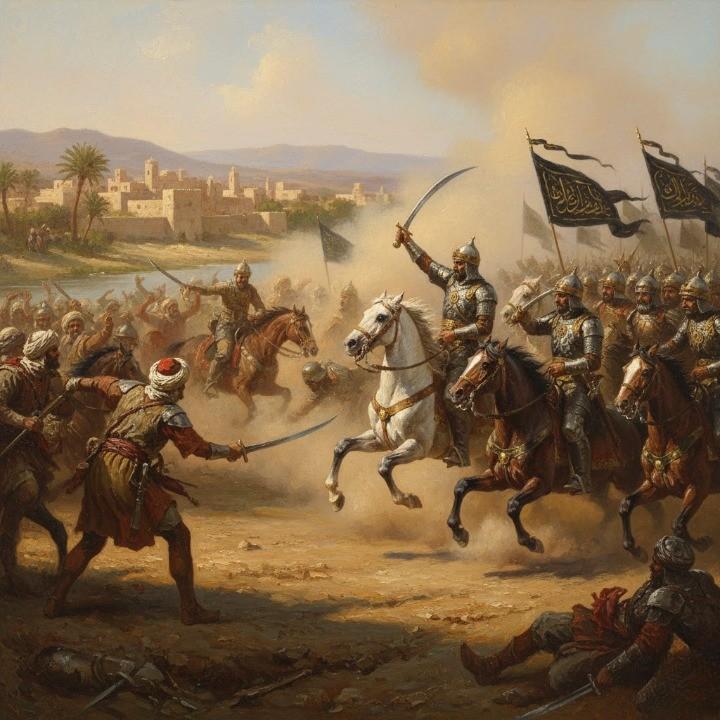
903 — Abbasid forces defeat the Qarmatians at Hama
An Abbasid army under Muhammad ibn Sulayman al-Katib defeats the Qarmatian insurgents at the Battle of Hama, reasserting central authority in Syria. The battle weakens the Qarmatian challenge in the region and buys the Abbasid court temporary breathing room. Local urban and rural orders slowly return to uneasy stability.
1114 — Large earthquake damages Crusader-held cities
A powerful earthquake damages Antioch and nearby Crusader towns — Mamistra, Marash and Edessa — exacerbating hardship in the Levant amid ongoing military and political tensions. Fortifications and ecclesiastical buildings are reported as severely affected, complicating logistics for both Latin and local rulers. Relief and reconstruction efforts are strained by the warlike environment.
1549 — Papal conclave of 1549–50 opens
Cardinals assemble for the conclave that will elect a pope after the death of Paul III; the proceedings open amid factional jockeying and questions over French and imperial influence. The conclave’s length and disputes reflect broader European political rivalries and the church’s central diplomatic role. Outcomes will influence ecclesiastical policy during a turbulent Reformation era.
1612 — Battle of Swally shifts maritime power in India
The naval clash at Swally loosens Portugal’s hold on Indian coastal trade and signals the rising challenge of other European powers. English involvement in the region increases after the battle, which contributes to a long-term reshaping of maritime competition on the subcontinent. Local rulers recalibrate relations with new and older seafaring powers.
1729 — Natchez attack at Fort Rosalie results in heavy deaths
Natchez attackers assault Fort Rosalie, killing many French settlers and igniting an extended period of violence on the lower Mississippi. The massacre destroys a fragile local accommodation and triggers punitive expeditions that reshuffle colonial power. The incident underscores the lethal friction of colonial expansion and indigenous resistance.
1732 — Irpinia earthquake devastates southern Italy
A magnitude ~6.6 quake in the Irpinia region kills roughly 1,940 people and severely damages towns in the Kingdom of Naples. The disaster prompts large-scale rebuilding and intensifies debates over urban planning and relief in the Bourbon domains. Long-term demographic and economic effects linger in affected districts.
1776 — British reinforcements end the Battle of Fort Cumberland
In Nova Scotia the arrival of British forces breaks the rebel attempt at Fort Cumberland, halting an insurrection linked to the wider American Revolutionary crisis. The action demonstrates Loyalist resilience in certain Atlantic colonies and curtails rebel ambitions in that theatre. Local militias and communities are left to manage the aftermath.
1777 — Pueblo de San José de Guadalupe founded (modern San Jose, California)
José Joaquín Moraga establishes San José as the first civilian pueblo in Alta California, laying a civic foundation separate from mission and military sites. The new settlement will grow into a regional agricultural and administrative centre under Spanish—and later Mexican and American—rule. San José’s civic origin marks an early moment in California’s urban history.
1781 — Zong massacre exposes the limits of insured human cargo
Crew of the British slave ship Zong throw 54 enslaved Africans overboard to claim insurance for “lost” cargo, an atrocity that later fuels British abolitionist outrage. The legal and moral fallout helps galvanize public debate about the slave trade and insurance practices, contributing to mounting pressure for reform. The episode remains a stark reminder of commodified human life under slavery.
1783 — Earthquake in New Jersey recorded (minor regional quake)
A moderate seismic event registers in New Jersey; local reports note shaking and minor damage consistent with a 5.3 magnitude event. The tremor is recorded in early American seismic accounts and becomes part of colonial-era natural-history observations. It highlights the vulnerability of settlements even in regions not usually noted for strong earthquakes.
1807 — Portuguese court transfers to Brazil as Napoleonic forces approach
King John VI of Portugal flees Lisbon for Brazil, relocating the royal court to Rio de Janeiro and establishing the colony as an imperial seat. The move preserves Portuguese sovereignty but also accelerates structural changes in Brazil’s economy and institutions. The transfer reshapes Atlantic political geography and colonial administration.
1830 — Polish uprising against Russian rule begins
An armed rebellion erupts in Poland, inaugurating the November Uprising as Poles resist Imperial Russian domination and seek national autonomy. The revolt initially mobilises broad segments of society but will face a brutal imperial response in ensuing months. It becomes a defining episode in Polish national memory and exile politics.
1847 — Sonderbund defeated and Swiss federal order strengthened
Federal forces under Dufour crush the Sonderbund alliance of conservative cantons, ending that civil war and paving the way for a unified Swiss federal constitution. The victory ends a centrifugal phase of Swiss politics and consolidates modern Swiss state structures. National reconciliation and institutional reform follow in the aftermath.
1847 — Whitman massacre sparks the Cayuse War in the Pacific Northwest
Missionaries Marcus and Narcissa Whitman and others are killed by Cayuse and Umatilla people, an event that ignites prolonged conflict between settlers and indigenous communities. The incident reveals frontier tensions over land, disease and sovereignty as U.S. expansion advances. Retaliatory campaigns and trials follow, with long regional consequences.
1850 — Punctation of Olmütz confirms Austrian leadership of German confederation
Prussia concedes leadership to Austria at Olomouc, reversing earlier ambitions and affirming the Austrian-dominated German Confederation. The agreement shapes mid-19th-century German politics and delays Prussian-driven unification. Diplomatic realignments continue to evolve in the decades ahead.
1863 — Union victory at Fort Sanders defends Knoxville
General Ambrose Burnside’s forces successfully hold Fort Sanders in Knoxville against Longstreet’s Confederate assault, preserving Union control of eastern Tennessee. The victory secures strategic rail lines and strengthens Union posture in the western theatre. It represents part of a broader campaign balancing operations around Chattanooga.
1864 — Sand Creek Massacre kills Cheyenne and Arapaho civilians
Colorado volunteers under Colonel John Chivington attack a Cheyenne and Arapaho encampment at Sand Creek, killing many noncombatants in a notorious massacre. The atrocity provokes national outrage, investigations and long-term bitterness, and it marks a dark chapter in U.S.–Native American relations. The event reshapes military and political debates over western policy.
1864 — Battle of Spring Hill: Confederate missed opportunity in Franklin–Nashville campaign
The Confederate Army of Tennessee fails to trap Union forces at Spring Hill, allowing General Schofield to withdraw and later fortify at Franklin. The missed chance contributes to Confederate setbacks culminating at Franklin and Nashville. Command and coordination problems are widely criticised in post-battle assessments.
1872 — Modoc War begins with the Battle of Lost River
Hostilities between Modoc people and U.S. forces flare at Lost River, opening a bitter and costly conflict in the lava beds of northern California and southern Oregon. The war reflects contested reservation policy and settler encroachment, producing protracted violence and painful removals. Guerrilla actions by Modoc fighters complicate U.S. military campaigns.
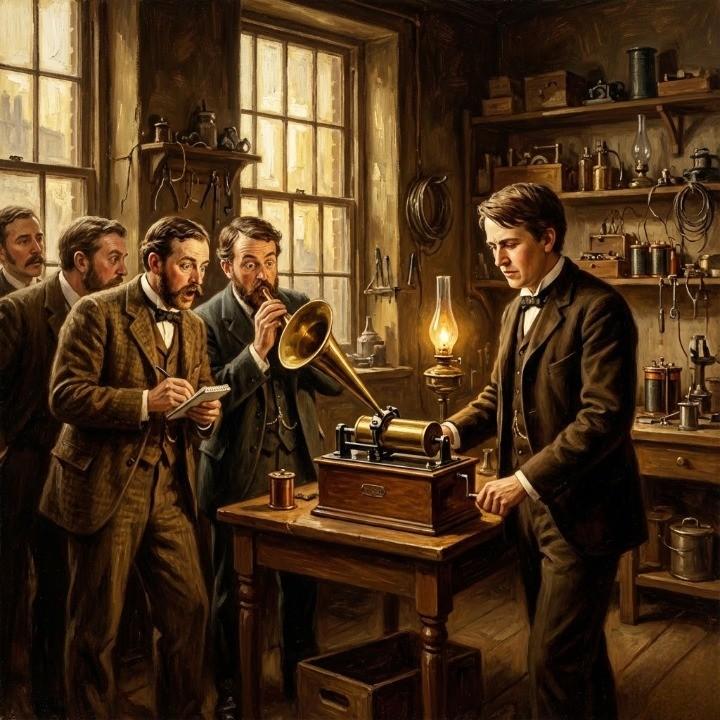
1877 — Edison demonstrates the phonograph for the first time
Thomas Edison unveils a machine that can record and reproduce sound, the phonograph, astonishing contemporaries and launching new possibilities for communication and culture. The invention rapidly spawns commercial and artistic applications and transforms how sound is preserved. Edison’s demonstration presages an audio century.
1890 — Meiji Constitution takes effect; first Diet convenes in Japan
Japan formally enacts the Meiji Constitution and convenes the first Diet, marking a central institutional step in the country’s rapid modernization and constitutional turn. The new political framework blends imperial authority with nascent parliamentary mechanisms. This constitutional shift accelerates Japan’s entry among modern nation-states.
1899 — Football Club Barcelona is founded
FC Barcelona is established by Catalan and foreign founders, beginning the history of a club that will grow into a major sporting, social and cultural institution in Spain and beyond. From modest roots the club develops deep regional identity and international recognition through sport and civic engagement. Its foundation is a key moment in the global spread of association football.
1920 — Armenia declared a Soviet Socialist Republic
The Armenian Revolutionary Committee proclaims Armenia a Soviet Socialist Republic, initiating Soviet rule that will last for much of the 20th century. This change radically alters Armenian governance, alignments and social policy. Soviet incorporation reshapes borders, culture and economic structures in the South Caucasus.
1929 — Byrd leads first flight over the South Pole
Admiral Richard E. Byrd pilots an expeditionary flight across the South Pole, a landmark of polar exploration and aviation. The achievement enhances scientific knowledge of Antarctica and cements Byrd’s status as a pioneering aviator. The flight inspires subsequent polar research and national prestige.
1943 — AVNOJ second session concludes in Jajce, shaping postwar Yugoslavia
The second AVNOJ session outlines federal structures for postwar Yugoslavia, asserting partisan leadership and prefiguring the federation that emerges after WWII. Decisions there reconfigure political authority and inter-ethnic administration in the Balkans. The session becomes a foundational moment for Tito’s state.
1944 — Partisan liberation of Albania
Partisan forces drive German and collaborating troops from Albania, effectively liberating the country and enabling new political arrangements under communist leadership. Liberation ushers in rapid social and political transformation, with far-reaching consequences for postwar governance. Reconstruction and political consolidation follow.
1945 — Federal People’s Republic of Yugoslavia declared
Yugoslavia is proclaimed a federal people’s republic, consolidating partisan gains into a new communist state under Josip Broz Tito. The declaration institutionalises wartime coalitions and starts a distinct socialist experiment in the Balkans. Yugoslavia’s postwar path will balance nonalignment with internal federal tensions.
1947 — UN General Assembly approves Partition Plan for Palestine
The UN approves a plan to partition the British Mandate into separate Jewish and Arab states, a decision that triggers immediate political conflict and shapes the long postwar history of the region. The resolution’s legal and moral consequences produce wars, displacement and enduring international controversy. Implementation and rejection by parties make it a pivotal turning point.
1947 — Massacre at Mỹ Trạch during the First Indochina War
French forces carry out a massacre at Mỹ Trạch in Vietnam, part of the violent colonial repression during the early stages of the First Indochina War. The atrocity deepens anti-colonial resistance and hardens Vietnamese resolve for independence. It becomes one of many incidents that galvanise wider mobilization.
1952 — Eisenhower visits Korea to assess the war situation
President-elect Dwight D. Eisenhower travels to Korea to study the stalemated conflict and to explore options for ending hostilities, fulfilling a campaign pledge to seek peace. The visit signals shifting U.S. policy attention and helps shape later armistice negotiations. Public optimism about a negotiated end rises following his observations.
1961 — Chimpanzee Enos orbits Earth twice and returns safely
Enos, a chimpanzee, completes two orbits in a U.S. Mercury flight and splashes down near Puerto Rico, providing vital biomedical and operational data for human orbital missions. The successful mission contributes confidence toward sending human astronauts into orbit. Enos’s flight stands as a key step in early human spaceflight.
1963 — Warren Commission established to investigate Kennedy assassination
President Lyndon B. Johnson creates the Warren Commission to examine President John F. Kennedy’s assassination and offer findings on responsibility and motive. The commission’s work will produce a definitive report but also spawn ongoing debate and conspiracy theories. Its formation marks a national attempt at official closure after a traumatic event.
1963 — Trans-Canada Air Lines Flight 831 crashes, heavy loss of life
A Trans-Canada Air Lines flight crashes after takeoff from Montreal, killing all 118 people aboard and triggering air-safety investigations. The tragedy prompts renewed attention to aircraft maintenance, crew procedures and regulatory oversight in Canadian aviation. Families and communities are left to mourn extensive losses.
1963 — Beatles release “I Want to Hold Your Hand” in UK
The Beatles issue “I Want to Hold Your Hand,” a single whose popularity ignites Beatlemania and helps usher British pop music onto a global stage. The release accelerates the group’s ascent to international stardom and reshapes youth culture and the music industry. The song’s success signals a new era of mass pop influence.
1967 — Robert McNamara resigns as U.S. Secretary of Defense
Robert McNamara announces his resignation amid growing controversy over the Vietnam War and policy disagreements within the administration. His departure marks a turning point in public and official assessments of the war’s conduct. McNamara’s tenure and exit remain central to debates about strategy and accountability.
1972 — Atari releases Pong, the first major commercial video game
Atari launches Pong, a simple table-tennis simulation that becomes the first commercially successful video game and catalyses the arcade and home gaming industries. Pong’s success demonstrates the market potential for interactive electronic entertainment. The release initiates decades of technological and cultural development in gaming.
1982 — Michael Jackson releases Thriller, a record-breaking album
Michael Jackson’s Thriller appears and quickly becomes the best-selling album of all time, reshaping pop, music video and global celebrity culture. Its production values, hit singles and ambitious videos raise commercial and artistic benchmarks across the industry. Thriller’s influence endures in music, dance and media.
1986 — Moiwana massacre: Surinamese military attack kills civilians
Surinamese forces attack Moiwana village during the guerrilla war, killing dozens of civilians and producing long-term trauma and international condemnation. The incident highlights the civil violence and human-rights costs of the conflict. Survivors and the diaspora continue to seek redress and memory.
1987 — Korean Air Flight 858 destroyed by secret agents
A terrorist bomb planted by North Korean agents brings down Flight 858, killing all 115 aboard and heightening regional security fears. The atrocity intensifies diplomatic and intelligence efforts to trace responsibility and prevent similar attacks. It remains one of the deadliest acts of commercial-air terrorism in the region.
2007 — Philippine military lays siege after Trillanes mutiny
Armed elements led by Senator Antonio Trillanes briefly seize parts of Manila in a mutiny; government forces respond and lay siege to regain control. The episode reveals fissures within the military and political tensions in the Philippines. Trials, amnesties and political fallout follow.
2009 — Maurice Clemmons kills four police officers in Lakewood, Washington
Maurice Clemmons shoots four officers inside a coffee shop, shocking the local community and provoking a nationwide manhunt and debate about criminal justice and public safety. The killings provoke legislative and prosecutorial responses in multiple states. The case becomes a tense public-legal flashpoint.
2013 — LAM Mozambique Airlines Flight 470 crashes in Bwabata National Park
The aircraft crash is later characterised as a pilot mass murder–suicide, killing all 33 on board and devastating families and the small airline community. Investigations into motives and procedures follow, and aviation safety discussions are renewed. The tragedy underscores ongoing concerns about cockpit security and mental-health screening.
2022 — Pakistan’s Military Transition as General Asim Munir Assumes Command
On Nov 29, 2022, Pakistan underwent a major leadership shift when General Asim Munir was appointed Chief of Army Staff, one of the country’s most influential positions. The transition drew strong public and political attention, highlighting the military’s central role in national security and governance. Analysts noted the moment as strategically significant amid economic pressures and regional threats.
2023 — Israel–Hamas War Headlines and Hostage/Diplomacy Developments
In late November 2023, global coverage focused intensely on the Israel–Hamas war, with Nov 29 marked by rapid diplomatic activity and high-stakes negotiations. Hostage releases, international mediation, and discussions around temporary pauses in fighting shaped the day’s narrative. Governments worldwide issued statements urging restraint and humanitarian access, reflecting the conflict’s far-reaching impact.
Missed the earlier dates? See what happened on November 28
Famous People Born On November 29
| Name | Role / short note | Dates |
|---|---|---|
| Margaret Tudor | Queen of Scotland | Nov 29, 1489 – Oct 18, 1541 |
| Jean-Baptiste Lully | French composer | Nov 29, 1632 – Mar 22, 1687 |
| Billy Strayhorn | American composer & musician | Nov 29, 1915 – May 31, 1967 |
| Gaetano Donizetti | Italian opera composer | Nov 29, 1797 – Apr 8, 1848 |
| Madeleine L’Engle | American author | Nov 29, 1918 – Sep 6, 2007 |
| Busby Berkeley | Film director & choreographer | Nov 29, 1895 – Mar 14, 1976 |
| Jean-Martin Charcot | French neurologist | Nov 29, 1825 – Aug 16, 1893 |
| Minnie Miñoso | Cuban baseball player | Nov 29, 1925 – Mar 1, 2015 |
| Merle Travis | American musician (Travis picking) | Nov 29, 1917 – Oct 20, 1983 |
| George Brown | Canadian journalist & politician | Nov 29, 1818 – May 9, 1880 |
| Katsu Shintarō | Japanese actor (Zatoichi) | Nov 29, 1931 – Jun 21, 1997 |
| Marcel Lefebvre | French archbishop | Nov 29, 1905 – Mar 25, 1991 |
| James Rosenquist | American pop artist | Nov 29, 1933 – Mar 31, 2017 |
| António Egas Moniz | Portuguese neurologist; Nobel laureate | Nov 29, 1874 – Dec 13, 1955 |
| Bronson Alcott | Philosopher & educator (Transcendentalist) | Nov 29, 1799 – Mar 4, 1888 |
| John Ray | English naturalist | Nov 29, 1627 – Jan 17, 1705 |
| Christian Doppler | Austrian physicist (Doppler effect) | Nov 29, 1803 – Mar 17, 1853 |
| Sir John Ambrose Fleming | Engineer & inventor | Nov 29, 1849 – Apr 18, 1945 |
| Wendell Phillips | American abolitionist & orator | Nov 29, 1811 – Feb 2, 1884 |
| Theobald von Bethmann Hollweg | German statesman (Chancellor) | Nov 29, 1856 – Jan 1, 1921 |
| Gertrude Jekyll | English landscape architect | Nov 29, 1843 – Dec 8, 1932 |
| Gustav, Ritter von Kahr | Bavarian politician | Nov 29, 1862 – Jun 30, 1934 |
| William V. S. Tubman | President of Liberia | Nov 29, 1895 – Jul 23, 1971 |
| Gottfried Semper | German architect & writer | Nov 29, 1803 – May 15, 1879 |
| Morrison R. Waite | 7th Chief Justice, U.S. Supreme Court | Nov 29, 1816 – Mar 23, 1888 |
| Andrés Bello | Poet, scholar & statesman (Latin America) | Nov 29, 1781 – Oct 15, 1865 |
| Pierre-André Latreille | French zoologist (entomology) | Nov 29, 1762 – Feb 6, 1833 |
| Susan Athey | American economist | Nov 29, 1970 – |
| Carlo Levi | Italian author & painter | Nov 29, 1902 – Jan 4, 1975 |
| Guido Pontecorvo | Geneticist | Nov 29, 1907 – Sep 24, 1999 |
Famous People Died On November 29
| Name | Role / short note | Dates |
|---|---|---|
| Ralph Bellamy | American actor | Jun 17, 1904 – Nov 29, 1991 |
| Dorothy Day | Journalist & Catholic social activist | Nov 8, 1897 – Nov 29, 1980 |
| Claudio Monteverdi | Italian composer (early opera) | May 15, 1567 – Nov 29, 1643 |
| Graham Hill | British racing driver | Feb 15, 1929 – Nov 29, 1975 |
| Jørn Utzon | Danish architect (Sydney Opera House) | Apr 9, 1918 – Nov 29, 2008 |
| Horace Greeley | American newspaper editor & politician | Feb 3, 1811 – Nov 29, 1872 |
| Charles IV | Holy Roman Emperor | May 14, 1316 – Nov 29, 1378 |
| Roger Mortimer, 1st Earl of March | English noble & king-maker | 1287? – Nov 29, 1330 |
| Frederick V | Elector Palatine; “Winter King” of Bohemia | Aug 26, 1596 – Nov 29, 1632 |
| Erich W. Korngold | Composer (opera & film scores) | May 29, 1897 – Nov 29, 1957 |
| Peng Dehuai | Chinese military leader | Oct 24, 1898 – Nov 29, 1974 |
| Emilio Pucci | Italian fashion designer | Nov 20, 1914 – Nov 29, 1992 |
| ʿĀlamgīr II | Mughal emperor | Jun 6, 1699 – Nov 29, 1759 |
| H. L. Hunt | American oil industrialist | Feb 17, 1889 – Nov 29, 1974 |
| Coleman Young | First African-American mayor of Detroit | May 24, 1918 – Nov 29, 1997 |
| Elliott Erwitt | Photographer & filmmaker | Jul 26, 1928 – Nov 29, 2023 |
| Dan Flavin | Minimalist artist (fluorescent light installations) | Apr 1, 1933 – Nov 29, 1996 |
| Mark Strand | Poet & essayist | Apr 11, 1934 – Nov 29, 2014 |
| John Knowles | Author (A Separate Peace) | Sep 16, 1926 – Nov 29, 2001 |
| Maurice Wilkes | Computer science pioneer | Jun 26, 1913 – Nov 29, 2010 |
| Gordon Douglas | Film director | Dec 15, 1907 – Nov 29, 1993 |
| Bella Akhmadulina | Russian poet | Apr 10, 1937 – Nov 29, 2010 |
| Sir George Robey | British music-hall comedian | Sep 20, 1869 – Nov 29, 1954 |
| Giambattista Bodoni | Italian printer & typographer | Feb 16, 1740 – Nov 29, 1813 |
| Frank Yerby | American novelist | Sep 5, 1916 – Nov 29, 1991 |
| Anthony Wood | English antiquarian | Dec 17, 1632 – Nov 29, 1695 |
| Leonard Freed | Photojournalist | Oct 23, 1929 – Nov 29, 2006 |
| John Goodlad | Educator & reformer | Aug 19, 1920 – Nov 29, 2014 |
| Luigi Capuana | Italian writer & critic | May 28, 1839 – Nov 29, 1915 |
| Marcus Whitman | Missionary & pioneer | Sep 4, 1802 – Nov 29, 1847 |
Observances & institutional dates — November 29
Republic Day (Yugoslavia) — commemorates the federal reconstitution and founding moments that led to the post-1945 Yugoslav state; observed with civic ceremonies and historical remembrances.
International Day of Solidarity with the Palestinian People (UN) — an annual United Nations observance highlighting support for Palestinian rights and humanitarian needs, marked by briefings, statements and advocacy events.
Unity Day (Vanuatu) — national celebrations emphasising political unity and nationhood following independence-era developments; local ceremonies and official messages are typical.
William Tubman’s Birthday (Liberia) — a day noting the birthday of a key Liberian president; typically observed with historical reflection on his policies and national development.
Liberation Day (Albania) — commemorates liberation events and national struggle; public ceremonies and memorials recall wartime resistance and the postwar political order.
Frequently Asked Questions
What major turning points happened on November 29?
Several: seismic catastrophes (Antioch), decisive military victories and defeats across Asia and Europe, major exploratory flights (Byrd), and landmark political decisions (UN partition plan and postwar state formations). These events together mark political, scientific and humanitarian turning points.
Which notable flights or polar milestones occurred on this date?
Admiral Richard E. Byrd led the first flight over the South Pole on Nov 29, 1929 — an aviation landmark that broadened polar science and exploration.
What landmark cultural inventions or releases happened on November 29?
Thomas Edison demonstrated the phonograph in 1877, and in the 20th century the Beatles released “I Want to Hold Your Hand” (1963) and Michael Jackson released Thriller (1982), each changing sound, media and popular culture.
Were there major UN or international decisions on this date?
Yes — on Nov 29, 1947 the UN General Assembly approved the Partition Plan for Palestine, a pivotal and controversial decision shaping Middle Eastern politics.
How has November 29 been associated with both exploration and violence?
The date juxtaposes courage and discovery (Byrd’s polar flight, early naval and overland expeditions) with massacres, wartime atrocities and modern terror incidents — illustrating the complex and often contradictory sweep of history.