A broad glance at a date shaped by royal authority, scientific advances and civic transformation across eras. Woven through these turning points is What happened on this day in history December 1, a reminder of how political transitions, exploratory feats, legal reforms and deeply felt crises have long converged on this day.
Important Events That Happened On December 1 In History
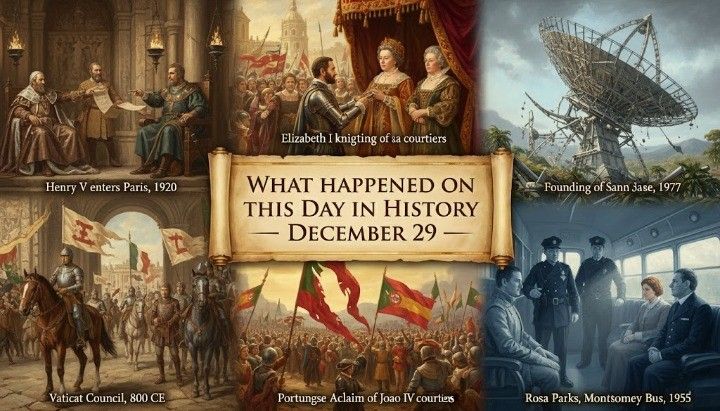
800 — Charlemagne’s Vatican council
A council is convened in the Vatican for Charlemagne to hear charges against Pope Leo III. The proceedings expose the delicate balance between imperial power and papal authority in early medieval Europe. This episode helps set the stage for the later close alliance between crown and church that defined Carolingian politics.
1420 — Henry V enters Paris
Henry V of England rides into Paris alongside King Charles VI, asserting English influence after the Treaty of Troyes. The entry is a vivid symbol of English power in northern France during the later phases of the Hundred Years’ War. For contemporaries it signalled both triumph and the fragile, contested nature of dynastic claims.
1577 — Hatton and Heneage knighted
Christopher Hatton and Thomas Heneage receive knighthoods from Queen Elizabeth I, a ritual that bound elites to the crown. Such honours at court cemented personal loyalties and opened doors to patronage and office. In Elizabethan politics these gestures mattered as much as policy: they shaped whose voices counted.
1640 — Portugal proclaims João IV (End of the Iberian Union)
Portugal acclaims João IV as king, ending nearly six decades of Habsburg rule and restoring Portuguese autonomy. The Braganza restoration transforms Iberian relations and revives Portugal’s independent imperial agenda. The move reshaped colonial rivalry and domestic politics across the Atlantic.
1662 — Skating at St James’s Park (Evelyn’s note)
John Evelyn records Charles II and Queen Catherine watching skaters on a frozen park lake — a small scene that humanizes Restoration court life. Evelyn’s diary gives us everyday color: weather, leisure and the spectacle of royal observation. These domestic glimpses help historians feel the period’s texture.
1768 — Fredensborg sinks
The former slave ship Fredensborg sinks off Tromøya, a wreck that recalls the vessel’s grim involvement in the transatlantic slave trade. Shipwrecks like Fredensborg mark the physical and moral wreckage of the slave economy. The event is a maritime footnote with deep human and historical resonance.
1821 — José Núñez de Cáceres proclaims the Republic (Spanish Haiti)
José Núñez de Cáceres declares the short-lived Republic of Spanish Haiti as a step toward Dominican autonomy. The proclamation reflects the unstable map of post-colonial Caribbean politics and competing visions for governance. Although brief, the episode signals local agency amid regional upheaval.
1822 — Pedro I crowned Emperor of Brazil
Pedro I’s coronation formalizes Brazil’s transformation from Portuguese colony to constitutional empire under a domestic monarch. The event marks the birth of a new imperial polity in the Americas and sets Brazil on a different path from its Spanish-language neighbors. It is a founding moment for Brazilian statehood and identity.
1824 — House decides U.S. presidential election
Because no candidate won an Electoral College majority in 1824, the U.S. House of Representatives is tasked with choosing the president under the Twelfth Amendment. The contingent election exposes factional divisions and reshapes early American party alignments. The process highlights constitutional mechanisms for resolving electoral uncertainty.
1828 — Juan Lavalle’s coup in Argentina
General Juan Lavalle overthrows Governor Manuel Dorrego, launching violent political realignment in Buenos Aires and beyond. The coup marks the friction of post-independence politics where competing caudillos and factions vied for control. It helped entrench cycles of military intervention in Argentine public life.
1834 — Slavery abolished in the Cape Colony
The Cape Colony implements the Slavery Abolition Act, ending formal chattel slavery under British imperial law there. The legal change forces social and economic adjustments and foreshadows longer struggles over labor and rights in southern Africa. Emancipation’s uneven legacies persisted in local societies.
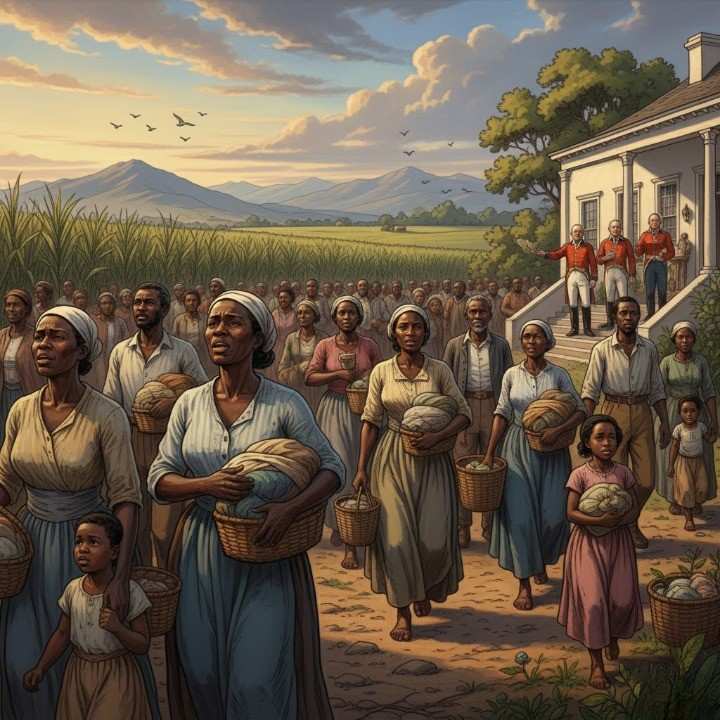
1862 — Lincoln reaffirms emancipation in State of the Union
In his second State of the Union Address Abraham Lincoln reinforces the necessity of ending slavery, reiterating the aims of the Emancipation Proclamation. His public framing links military policy and moral purpose, sharpening the Union’s ideological direction. The speech helped anchor emancipation as central to northern war aims.
1865 — Shaw University founded
Shaw University opens as the first historically Black university in the postwar southern United States, offering education and leadership training. Its founding is part of a broader surge of Black institution-building during Reconstruction. Schools like Shaw became vital centers for community advancement and political organization.
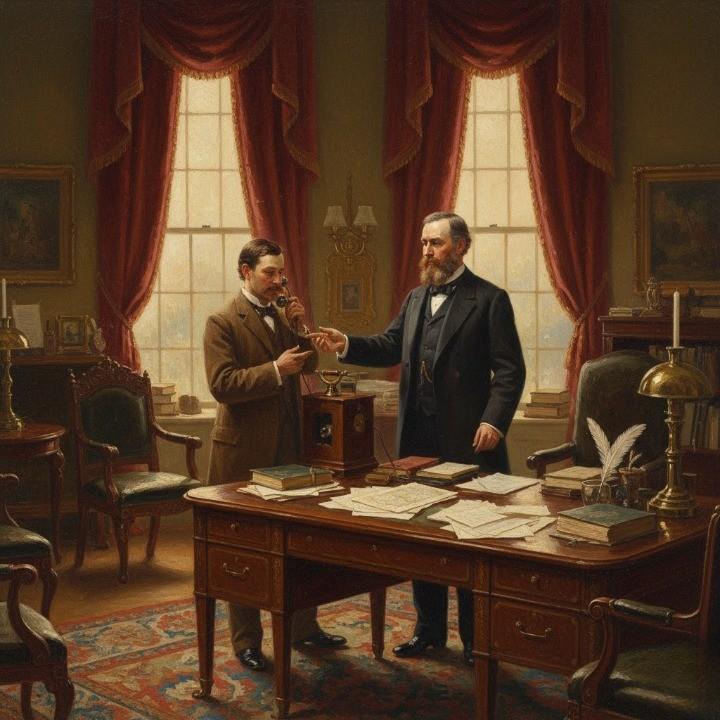
1878 — First telephone in the White House
President Rutherford B. Hayes installs the White House’s first telephone, a small but telling adoption of new technology at the heart of government. This innovation foreshadows how communications tech would reshape executive practice and news cycles. The moment reminds us that even modest inventions can change official life.
1900 — Nicaragua sells canal rights to the U.S. (failed agreement)
Nicaragua signs a canal-rights agreement with the United States that is later rejected by Britain and ultimately fails — part of the larger diplomatic contest over an interoceanic canal. The episode illustrates how canal diplomacy intertwined sovereignty, great-power rivalry, and economic ambition. It’s one step in the long saga that culminated in the Panama Canal.
1913 — Buenos Aires Metro opens; Crete annexed by Greece
Buenos Aires inaugurates Latin America’s first underground railway, signaling modern urban transformation and mass transit’s spread. At the same time Crete’s annexation by Greece reflects the continuing redrawing of borders after the Balkan wars. Both events show infrastructure and politics remaking national life.
1918 — Transylvania joins Romania; Iceland sovereign; Yugoslav kingdom proclaimed
A cluster of postwar realignments: Transylvania unites with Romania, Iceland gains sovereignty (still linked to Denmark), and the Kingdom of Serbs, Croats and Slovenes is proclaimed. These shifts exemplify how World War I reordered territory and produced new states across Europe and the North Atlantic.
1919 — Lady Astor takes her seat in the House of Commons
Viscountess Astor becomes the first woman to actually sit in the British House of Commons, a landmark moment for women’s parliamentary representation. Her presence symbolized expanding political inclusion, even as suffrage struggles continued. The step was both symbolic and practical in changing parliamentary culture.
1924 — Boston Bruins’ first U.S. NHL game; 1924 Estonian coup attempt noted
The Boston Bruins play the NHL’s first U.S.-based franchise match, helping hockey’s northward expansion into American public life. (Your notes also record a failed Soviet-backed Estonian coup in 1924 — a reminder of interwar ideological contests that unsettled new states.)
1934 — Sergei Kirov’s assassination
The killing of Sergei Kirov becomes the pretext for Stalin’s Great Purge; it accelerates political repression across the USSR. What might have been an internal party murder turned into justification for mass arrests, show trials and a deep purge of perceived opponents. The aftermath reshaped Soviet governance and society.
1939 — Finland reshuffles government; Terijoki puppet state created
As the Winter War begins, Finland forms a new cabinet and temporarily relocates Parliament for safety; the Soviet Union proclaims a puppet Finnish Democratic Republic in Terijoki. These moves mark the immediate political and territorial fallout of Soviet aggression and the grim choices small states faced in wartime.
1941 — Japan’s imperial war decision; U.S. Civil Air Patrol created
Japan’s imperial council tacitly approves moves toward war with the United States, a decisive turn in the Pacific conflict. Meanwhile, in New York Mayor Fiorello La Guardia signs the order creating the Civil Air Patrol, mobilizing civilian aviation for homeland defense — two very different wartime mobilizations on opposite sides.
1952 — Christine Jorgensen’s story breaks publicly
The New York Daily News reports Christine Jorgensen’s sex-reassignment surgery, launching public conversation about gender, medicine and identity. The coverage both sensationalized and humanized a complex medical and social story, pushing gender topics into the mid-century public sphere.
1955 — Rosa Parks arrested; Montgomery Bus Boycott ignites
Rosa Parks’ arrest for refusing to give up her bus seat sparks the Montgomery Bus Boycott, a sustained campaign that brought national attention to civil-rights organizing. The boycott showcased nonviolent mass protest and helped elevate leaders such as Dr. Martin Luther King Jr. It marks a decisive escalation in the U.S. movement for racial justice.
1958 — Central African Republic self-rule; Our Lady of the Angels fire
The Central African Republic attains self-rule within the French Community, an important step toward independence. On the same day the tragic Our Lady of the Angels School fire in Chicago kills 92 people, prompting major reforms in school safety and fire codes — a civic response to prevent future loss.
1959 — Antarctic Treaty opens for signature
The Antarctic Treaty is opened, designating the continent for peaceful scientific research and banning military activity — an unusual instance of multinational restraint and cooperation. The treaty established a framework that preserved Antarctica as a space for collective science rather than conflict.
1960 — Patrice Lumumba arrested
Patrice Lumumba is seized by forces loyal to Mobutu, an event that intensified Congo’s postcolonial crisis and presaged broader Cold War intervention. Lumumba’s arrest and later assassination became a touchstone for debates over decolonization, sovereignty, and great-power meddling in Africa.
1963 — Nagaland becomes India’s 16th state
Nagaland is incorporated as an Indian state, recognizing its distinct identity and attempting to stabilize a restive region. The change was part of India’s larger postcolonial process of integrating diverse peoples while managing local autonomy and conflict.
1964 — Vietnam War: bombing plans discussed by US leadership
President Lyndon B. Johnson and advisers review options for escalating bombing in North Vietnam, a policy moment that presaged wider military commitment. The deliberations reflect how intelligence, public opinion and strategic aims combined to shape a costly escalation.
1969 — First U.S. draft lottery since WWII
The United States holds a draft lottery to assign conscription order for the Vietnam War, changing how men were called to service and affecting public perceptions of fairness. The lottery system replaced earlier practices and became another focal point for antiwar sentiment.
1971 — Khmer Rouge advances; Karađorđevo purge begins
Khmer Rouge forces increase pressure in Cambodia, foreshadowing eventual regime takeover and catastrophe; simultaneously in Yugoslavia the purge of Croatian Spring leaders begins, signaling internal repression of dissent. Both events show how political violence reshaped national trajectories.
1973 — Papua New Guinea gains self-government
Papua New Guinea attains self-government from Australia, a step toward full independence and the end of a colonial administrative era. The transfer began the transition to sovereign governance and the construction of national institutions.
1974 — Two fatal 727 crashes (TWA 514 & Northwest 6231)
Two separate Boeing 727 crashes — one involving TWA Flight 514 and another Northwest Orient Flight 6231 — result in heavy fatalities and trigger investigations into safety and navigational procedures. Such disasters pushed regulators and airlines to tighten standards in the jet age.
1981 — Inex-Adria Flight 1308 crashes in Corsica
An Inex-Adria MD-80 crashes in Corsica with no survivors, a grim reminder of aviation risk and the human cost of errors or mechanical failure. Each accident contributes to incremental improvements in training and air-traffic coordination.
1984 — NASA’s Controlled Impact Demonstration
NASA intentionally crashes an airliner to gather data aimed at improving crash survivability — an experimental, somewhat controversial test that sought practical safety advances. The demonstration reflected a scientific approach to reducing fatalities through design and materials research.
1988 — World AIDS Day proclaimed; Benazir Bhutto named Pakistan PM
The UN proclaims World AIDS Day to focus global attention on the epidemic, an early institutional recognition of a major public-health crisis. In the same year Benazir Bhutto is named prime minister, becoming the first woman to lead a Muslim-majority country — a breakthrough in gender and political history.
1989 — Philippine coup attempt; East Germany ends party primacy
A violent coup attempt rattles the Philippines as insurgent factions try to seize power; in East Germany, parliament abolishes the constitutional provision giving the Communist Party a leading role — a clear sign of the Communist bloc’s unraveling. Both events capture political volatility at the close of the Cold War.
1990 — Channel Tunnel sections meet undersea
British and French tunnelling teams link the undersea sections of the Channel Tunnel, a major engineering and symbolic achievement connecting Britain to continental Europe. The breakthrough promised faster travel and new economic ties while also carrying political and cultural resonance.
1991 — Ukrainian independence referendum
Ukrainian voters overwhelmingly approve independence in a referendum, a decisive moment in the peaceful dissolution of the Soviet Union and the emergence of a modern Ukrainian state. The result reshaped Eastern Europe’s political map and set new national trajectories.
1997 — Ranvir Sena massacre; Michael Carneal school shooting
The Ranvir Sena’s brutal massacre and the Michael Carneal school shooting in Kentucky each left communities reeling and raised urgent questions about political violence and domestic gun safety. Both incidents prompted national soul-searching and policy debates.
1999 — Vicente Fox inaugurated in Mexico
Vicente Fox’s inauguration ends decades of single-party rule in Mexico, representing the first peaceful transfer of executive power to an opposition party in modern Mexican history. The change opened a new chapter for democratic competition and institutional reform.
2001 — United Russia party founded
United Russia is created and soon becomes the dominant political force, reshaping post-Soviet party politics and consolidating support structures around the presidency. Its rise influenced Russia’s political landscape for years to come.
2005 — Perm Krai created in Russia
The merger creating Perm Krai reorganizes regional administration in Russia, reflecting federal restructuring and changing governance arrangements at the subnational level. Administrative reforms like this affect local identity, budgets and political representation.
2006 — South Africa legalizes same-sex marriage
South Africa’s law recognizing same-sex marriage comes into force, the first African country to grant marriage equality and a major milestone for LGBT rights on the continent. The law underscored constitutional commitments to equality and dignity.
2009 — Treaty of Lisbon enters into force
The Lisbon Treaty takes effect, reforming EU institutions and decision-making to create a more coherent union framework. The treaty aimed to streamline governance and adapt the EU to a larger membership and complex global role.
2011 — Alma-Ata Metro opens
Alma-Ata Metro opens, marking investment in urban transit and modern infrastructure for the city (an item you included). New metros can change daily life, reduce congestion and symbolize urban modernity.
2018 — Oulu child-exploitation case revealed
Finnish authorities publicize the first known offense in a larger child sexual-exploitation investigation in Oulu, highlighting digital-era crimes and investigative challenges. The disclosure prompted law-enforcement scrutiny and public concern.
2019 — Arsenal Women record; Wuhan outbreak entry noted
Arsenal Women’s 11–1 victory became a record WSL match; your list also records the early days of the Wuhan coronavirus outbreak — two very different kinds of headlines that day, from sport to emerging global health alarm.
2020 — Arecibo Telescope collapses
After structural failures, the iconic Arecibo Telescope collapses, ending decades of radio-astronomy work at a landmark facility. Its loss was deeply felt in scientific communities and underscored vulnerabilities in maintaining large scientific infrastructure.
Continue your timeline journey: here’s what happened on November 30
Famous People Born On December 1
| Name | Role / short note | Dates |
|---|---|---|
| Alexandra | Queen consort of Great Britain | Dec 1, 1844 – Nov 20, 1925 |
| Mary Martin | American actress & singer | Dec 1, 1913 – Nov 3, 1990 |
| Takeda Shingen | Japanese daimyo / military leader | Dec 1, 1521 – May 13, 1573 |
| Medha Patkar | Indian social activist | Dec 1, 1954 – |
| Minoru Yamasaki | American architect | Dec 1, 1912 – Feb 6, 1986 |
| Lee Trevino | American golfer | Dec 1, 1939 – |
| Zhu De | Chinese military leader | Dec 1, 1886 – Jul 6, 1976 |
| Nicholas Negroponte | Architect / computer scientist | Dec 1, 1943 – |
| Ernst Toller | German writer & activist | Dec 1, 1893 – May 22, 1939 |
| Gary Peters | United States senator | Dec 1, 1958 – |
| Nikolay Lobachevsky | Russian mathematician (non-Euclidean geometry) | Dec 1, 1792 – Feb 24, 1856 |
| Rex Stout | American mystery author (Nero Wolfe) | Dec 1, 1886 – Oct 27, 1975 |
| James Wolfensohn | Banker; World Bank president | Dec 1, 1933 – Nov 25, 2020 |
| Charles Theodore | Elector of the Palatinate / Bavaria | Dec 1, 1724 – Feb 16, 1799 |
| Walter Alston | American baseball manager | Dec 1, 1911 – Oct 1, 1984 |
| Zoë Kravitz | American actress & director | Dec 1, 1988 – |
| Janelle Monáe | American singer & actor | Dec 1, 1985 – |
| Jen Psaki | Political commentator; former White House press sec. | Dec 1, 1978 – |
| Matthew Shepard | American student; hate-crime victim | Dec 1, 1976 – Oct 12, 1998 |
| Vaira Vike-Freiberga | President of Latvia (former) | Dec 1, 1937 – |
| Tahar Ben Jelloun | Moroccan-French novelist | Dec 1, 1944 – |
| Martin Rodbell | Biochemist; Nobel laureate | Dec 1, 1925 – Dec 7, 1998 |
| William Mahone | Confederate general & businessman | Dec 1, 1826 – Oct 8, 1895 |
| Sarah Fitz-Gerald | Australian squash champion | Dec 1, 1968 – |
| Victor Ambros | Developmental biologist (miRNA) | Dec 1, 1953 – |
| Étienne-Maurice Falconet | French sculptor | Dec 1, 1716 – Jan 24, 1791 |
| Christine Ladd-Franklin | American scientist & logician | Dec 1, 1847 – Mar 5, 1930 |
| Adam Kazimierz Czartoryski | Polish prince & patron | Dec 1, 1734 – Mar 19, 1823 |
| Gerard Swope | American business executive (GE) | Dec 1, 1872 – Nov 20, 1957 |
| S.E.K. Mqhayi | Xhosa poet & historian | Dec 1, 1875 – Jul 29, 1945 |
Famous People Died On December 1
| Name | Role / short note | Dates |
|---|---|---|
| Alfred Thayer Mahan | U.S. naval officer & historian | Sep 27, 1840 – Dec 1, 1914 |
| G. H. Hardy | English mathematician | Feb 7, 1877 – Dec 1, 1947 |
| Alvin Ailey, Jr. | American choreographer & dancer | Jan 5, 1931 – Dec 1, 1989 |
| J. B. S. Haldane | British geneticist & evolutionary theorist | Nov 5, 1892 – Dec 1, 1964 |
| Vijaya Lakshmi Pandit | Indian politician & diplomat | Aug 18, 1900 – Dec 1, 1990 |
| Prince Bernhard (of the Netherlands) | Dutch prince | Jun 29, 1911 – Dec 1, 2004 |
| Sir George Everest | British geodesist (survey of India) | Jul 4, 1790 – Dec 1, 1866 |
| Sergei Kirov | Soviet Communist leader (assassinated) | Mar 27, 1886 – Dec 1, 1934 |
| George J. Stigler | American economist; Nobel laureate | Jan 17, 1911 – Dec 1, 1991 |
| Vittorio Emanuele Orlando | Prime minister of Italy (WWI era) | May 19, 1860 – Dec 1, 1952 |
| Magnus II Eriksson | King of Sweden & Norway | 1316 – Dec 1, 1374 |
| St. Edmund Campion | English Jesuit martyr | Jan 25, 1540 – Dec 1, 1581 |
| Margaret of Austria | Regent of the Netherlands | Jan 10, 1480 – Dec 1, 1530 |
| Christa Wolf | German novelist | Mar 18, 1929 – Dec 1, 2011 |
| Fred Rose | American songwriter & publisher | Aug 24, 1897 – Dec 1, 1954 |
| Sandra Day O’Connor | U.S. Supreme Court Justice | Mar 26, 1930 – Dec 1, 2023 |
| Gaylord Perry | American Major League Baseball pitcher | 1938 – Dec 1, 2022 |
| Perry Wallace | Trailblazing college basketball player & lawyer | Feb 19, 1948 – Dec 1, 2017 |
| Nellie Fox | American MLB second baseman | Dec 25, 1927 – Dec 1, 1975 |
| David Ben-Gurion | Prime minister of Israel | Oct 16, 1886 – Dec 1, 1973 |
| James Baldwin | American novelist & essayist | Aug 2, 1924 – Dec 1, 1987 |
| Antonio Segni | President / Prime minister of Italy | Feb 2, 1891 – Dec 1, 1972 |
| Chaudhri Mohammad Ali | Prime minister of Pakistan | Jul 1905 – Dec 1, 1980 |
| Louis-Alexandre de Bourbon | Count de Toulouse; French admiral | Jun 6, 1678 – Dec 1, 1737 |
| Vincent d’Indy | French composer & teacher | Mar 27, 1851 – Dec 1, 1931 |
| Oliver Wolcott | U.S. statesman; signer of Declaration | Nov 20, 1726 – Dec 1, 1797 |
| Jeremiah Clarke | English composer (Trumpet Voluntary) | c.1674 – Dec 1, 1707 |
| Sir George Hubert Wilkins | Australian polar explorer | Oct 31, 1888 – Dec 1, 1958 |
| Eugenio Monti | Italian bobsledder; sportsman & sportsmanlike | Jan 23, 1928 – Dec 1, 2003 |
| Jean-François Vonck | Belgian revolutionary leader | Nov 29, 1743 – Dec 1, 1792 |
Observances & Institutional Dates — December 1
- Damrong Rajanubhab Day (Thailand) — commemorates the scholar and founder of Thai provincial administration reforms.
- Freedom and Democracy Day (Chad) — national observance marking political identity.
- Day Without Art — an international response to AIDS, pairing remembrance and cultural action.
- Great Union Day (Romania) — celebrates Transylvania’s 1918 union with Romania.
- Military Abolition Day (Costa Rica) — celebrates Costa Rica’s long-standing abolition of the military.
- Rosa Parks Day (Ohio & Oregon, US) — honors Rosa Parks and civil-rights activism.
- Self-governance Day (Iceland) — marks Iceland’s step toward sovereignty.
- Teachers’ Day (Panama) — national appreciation for educators.
- National Day (Myanmar) — national observance as listed.
- World AIDS Day — global commemoration and awareness day.
Frequently Asked Questions
What are the most notable events tied to December 1?
Several stand out: Charlemagne’s Vatican council, Brazil’s imperial coronation, Rosa Parks’ arrest and the Montgomery boycott, the Antarctic Treaty opening, and the Arecibo collapse — each reshaped institutions, rights or science.
Why is December 1 important in civil-rights history?
Rosa Parks’ 1955 arrest catalyzed the Montgomery Bus Boycott, forging mass nonviolent protest and national leadership in the U.S. civil-rights movement.
What major scientific milestones fell on December 1?
The Antarctic Treaty opened for signature in 1959, committing nations to peaceful scientific cooperation; the Arecibo collapse in 2020 marks the loss of a major research instrument.
Which notable political transitions are linked to this date?
Portugal’s 1640 restoration under João IV, the 1918 nation-building acts across Europe, and Vicente Fox’s 2000 peaceful transfer in Mexico are key examples.