Important Events That Happened On December 2 In History
Across centuries, December 1 carries stories of leadership, innovation and sudden shifts in public life. These events reflect how people adapted, challenged power and pushed new ideas forward.
Through it all, what happened on this day in history December 2 ties these chapters together.
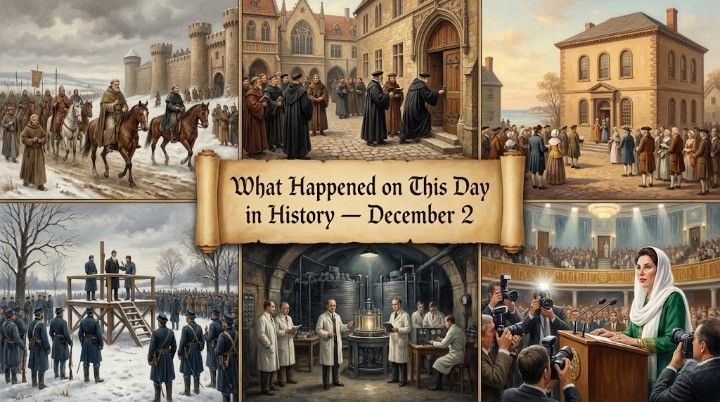
1244 — Pope Innocent IV arrives at Lyon for the First Council of Lyon
Pope Innocent IV’s arrival in Lyon set the stage for a major church council called amid conflict with the Holy Roman Emperor and internal reform debates. The council, held in 1245, addressed questions of papal authority, crusading policy and the future of church governance. Lyon became a temporary seat for papal diplomacy and juridical action.
1409 — University of Leipzig opens
The founding of the University of Leipzig established an important medieval center of learning in central Europe. It quickly became influential for law, theology and the arts, shaping the intellectual life of the Holy Roman Empire. Over centuries Leipzig grew into a major hub for publishing and scholarship.
1697 — St Paul’s Cathedral (Wren) is consecrated
St Paul’s, rebuilt to Sir Christopher Wren’s design after the Great Fire of London, was solemnly consecrated — a defining moment in London’s architectural recovery. The cathedral combined monumental Baroque form with civic symbolism, becoming the site for state services and national ceremonies. Its dome reshaped the city skyline and the image of Anglican prestige.
1763 — Dedication of Touro Synagogue, Newport
The dedication of Touro Synagogue in Newport marked the formal opening of what became the oldest surviving synagogue building in the United States. Its foundation expresses early American religious pluralism and the presence of an established Jewish community in colonial New England. The synagogue remains an important symbol of religious liberty in U.S. history.
1766 — Swedish Freedom of the Press Act adopted
Sweden’s 1766 law enshrined unprecedented legal protections for press freedom and public access to official documents. Long before many other nations, this act promoted transparency and limited censorship, shaping debates about free expression in Europe. It stands as an early legal milestone in the history of civil liberties.
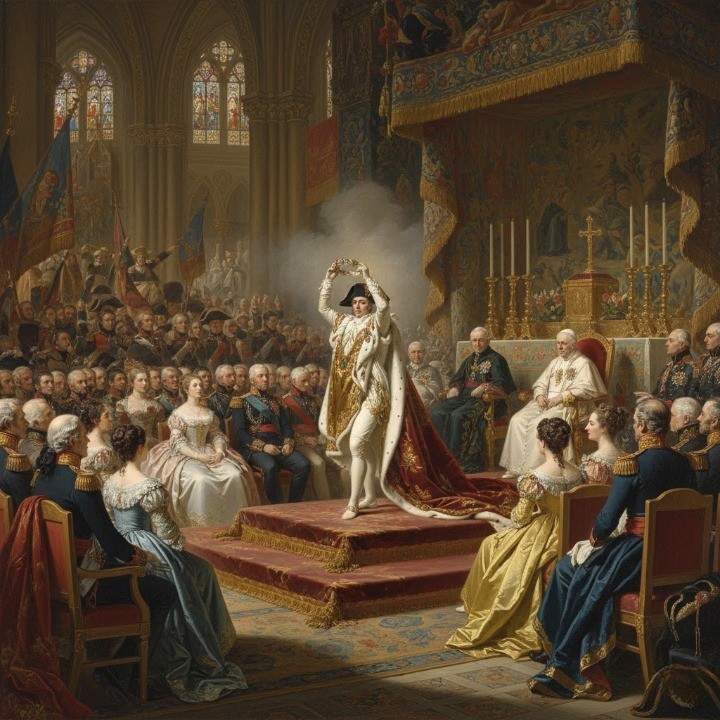
1804 — Napoleon crowns himself Emperor at Notre Dame
Napoleon’s self-coronation at Notre Dame in Paris was a theatrical assertion of political authority that reconfigured the map of post-revolutionary France. By placing the imperial crown on his own head, Napoleon signalled a new imperial legitimacy drawn from military success and revolutionary transformation. The ceremony also underscored the fragile mix of secular and religious symbolism in Napoleonic rule.
1805 — Battle of Austerlitz
At Austerlitz, Napoleon decisively defeated combined Russian and Austrian forces, producing one of his greatest battlefield triumphs. The victory shattered the Third Coalition, redrew political alignments in Europe and confirmed Napoleon’s dominance on the continent. Austerlitz reshaped diplomacy and territorial settlement for years afterward.
1823 — Monroe Doctrine proclaimed
President James Monroe’s message articulated a simple but consequential principle: European powers should no longer colonize or interfere in the Americas. The Monroe Doctrine asserted hemispheric interests and became a long-lived touchstone of U.S. foreign policy, cited repeatedly as the United States expanded its influence.
1845 — President Polk endorses Manifest Destiny in State of the Union
James K. Polk’s message to Congress framed continental expansion as the nation’s mission and political aim. Manifest Destiny provided ideological backing for territorial growth in the United States and influenced policy toward annexation, settlement and conflict with indigenous peoples and other states. The phrase captured a restless era of expansion.
1848 — Franz Joseph I becomes Emperor of Austria
Franz Joseph’s accession inaugurated a long Habsburg reign that would confront 19th-century nationalism and reform pressures. His government presided over conservative restoration and later, after the 1867 compromise, a restructured dual monarchy. The young emperor’s lengthy tenure shaped Central European politics for decades.
1851 — Louis-Napoléon Bonaparte overthrows the Second Republic
Louis-Napoléon’s consolidation of power ended the French Second Republic and set the path to his imperial restoration as Napoleon III. The coup reshaped France’s political institutions, centralizing authority and producing a more authoritarian regime with a program of modernization and imperial ambition abroad.
1852 — Louis-Napoléon becomes Emperor Napoleon III
The formal proclamation of Napoleon III completed the transformation begun by his 1851 seizure of power. His rule combined authoritarian control with state-driven economic modernization, an assertive foreign policy and major urban projects — notably the rebuilding of Paris under Haussmann.
1859 — John Brown is hanged for the Harpers Ferry raid
John Brown’s execution for the raid on Harpers Ferry made him a polarizing symbol in the struggle over slavery in the United States. For abolitionists he became a martyr; for pro-slavery forces he was a dangerous radical. Brown’s dramatic act and its violent aftermath intensified sectional tensions in the run-up to the American Civil War.
1865 — Alabama ratifies the 13th Amendment (followed by NC, GA)
The ratification process in late 1865 completed legal abolition of slavery across the United States with the 13th Amendment. Alabama’s and other states’ ratifications reflected the post-Civil War restructuring of American constitutional order and were pivotal to the legal end of chattel slavery.
1867 — Charles Dickens gives his first U.S. public reading at Tremont Temple
Charles Dickens’ Boston reading introduced American audiences to one of the era’s great novelists in a live, theatrical format. Dickens’ tours combined literary performance with social commentary and drew large crowds, influencing transatlantic literary tastes and public culture.
1899 — Battle of Tirad Pass (Philippine–American War)
The defense at Tirad Pass, often called the “Filipino Thermopylae,” became a symbol of Filipino resistance during the Philippine–American War. The engagement delayed U.S. forces and elevated local leaders into national memory, even as the broader conflict led to American control of the islands.
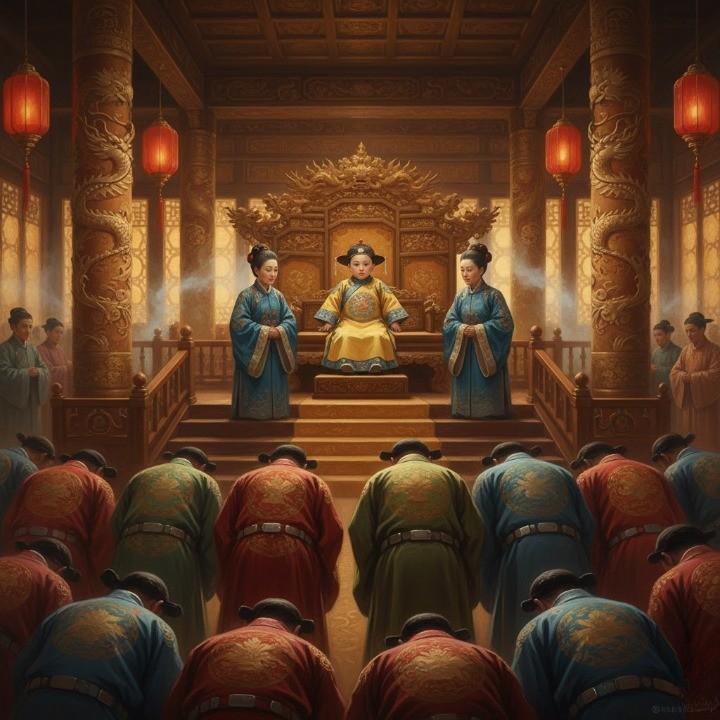
1908 — Puyi becomes Emperor of China at age two
The enthronement of the child Puyi continued the Qing dynasty’s last decade, amid rising internal unrest and foreign pressures. His symbolic accession reflected dynastic continuity even as republican and revolutionary currents gathered strength in China, culminating in the 1911 revolution.
1917 — Armistice at Brest-Litovsk; peace talks begin
The armistice and ensuing negotiations marked Russia’s exit from World War I after the Bolshevik seizure of power. Brest-Litovsk reshaped the eastern front through harsh territorial concessions and reflected the revolutionary state’s urgent need for peace, with wide geopolitical consequences.
1927 — Ford unveils the Model A after 19 years of Model T production
The Model A replaced the iconic Model T and signalled Ford Motor Company’s adaptation to changing consumer tastes and industrial methods. The new car embodied improvements in styling, engineering and mass production and helped sustain the automaker’s central role in U.S. manufacturing.
1930 — Hoover proposes $150m public works to fight the Depression
President Herbert Hoover’s public-works proposal sought to spur employment and economic activity during the early Great Depression. Though limited by later standards, the measure reflected growing recognition of federal responsibility for economic stabilization — a conversation that would expand under Franklin Roosevelt.
1939 — LaGuardia Airport opens (New York City)
LaGuardia’s opening provided New York with a modern municipal airport handling commercial passenger traffic and symbolized the rapid growth of civil aviation. The facility would become a key hub for domestic travel and the city’s connection to national air networks.
1942 — Fermi initiates the first self-sustaining nuclear chain reaction (Manhattan Project)
Enrico Fermi’s Chicago experiment achieved controlled criticality, proving that sustained nuclear fission could be harnessed — a pivotal scientific and technical breakthrough. The result advanced the Manhattan Project and changed the course of 20th-century warfare, energy research and geopolitics.
1943 — Bari harbor bombing and the SS John Harvey (mustard gas incident)
The Luftwaffe attack on Bari destroyed merchant shipping and, tragically, detonated a cargo of mustard gas on SS John Harvey, causing chemical injuries and complicating wartime medical responses. The incident revealed hazardous secret stores aboard Allied ships and influenced wartime secrecy and medical treatment protocols.
1947 — Jerusalem riots in response to the UN Partition Plan
Violence in Jerusalem followed the UN’s recommendation to partition Palestine, highlighting deep communal tensions and the collapse of calm as British mandate rule wound down. These riots foreshadowed the wider 1947–48 conflict surrounding the creation of Israel and Palestinian displacement.
1949 — Convention to suppress trafficking in persons adopted
The adoption of this international convention reflected growing postwar determination to combat exploitation and trafficking across borders. It established legal norms and frameworks for cooperation to protect victims and prosecute perpetrators — an important step in international human-rights law.
1950 — Battle of the Ch’ongch’on River (Korean War)
Chinese forces launched a powerful counteroffensive that drove UN troops from North Korea, marking a dramatic reversal in the war’s early months. The battle reshaped front lines and highlighted the conflict’s internationalization as China entered the fray in force.
1954 — U.S. Senate censures Joseph McCarthy; Sino-American Mutual Defense Treaty signed
The Senate’s censure curtailed McCarthy’s anti-communist campaign and signaled institutional rejection of his methods, while the Sino-American treaty formalized U.S. defense ties with Taiwan amid Cold War tensions. Both actions illustrate how the U.S. balanced domestic politics and strategic alliances in the 1950s.
1956 — Granma lands in Cuba, launching Castro’s insurgency
The Granma expedition brought Fidel Castro, Che Guevara and supporters back to Cuba, sparking a guerrilla insurgency that would topple Batista’s regime. The landing marks the practical beginning of the Cuban Revolution and a major shift in Caribbean politics.
1961 — Fidel Castro declares himself Marxist–Leninist
Castro’s public conversion to Marxism–Leninism defined the ideological course of the Cuban Revolution and intensified Cold War rivalry in the Western hemisphere. The declaration deepened Cuba’s alignment with the socialist bloc and shaped its domestic transformations and international posture.
1970 — U.S. Environmental Protection Agency begins operations
The EPA’s establishment centralized federal efforts to regulate pollution and protect public health, reflecting the environmental movement’s growing political influence. Its creation changed how the United States monitored air and water quality, chemical hazards and industrial impacts.
1971 — United Arab Emirates formed (six emirates; seventh joined in 1972)
The federation of six emirates into the UAE created a new, compact state in the Arabian Peninsula with shared institutions and a federal constitution. The union laid the groundwork for economic development and regional diplomacy in a strategically important oil-producing region.
1972 — Gough Whitlam elected Prime Minister of Australia
Whitlam’s electoral victory ended 23 years of conservative rule and launched an ambitious reform agenda in Australia, including changes in healthcare, education and foreign policy. His government reflected a generational political shift and a rapid program of institutional change.
1975 — Pathet Lao seize Vientiane; Lao People’s Democratic Republic proclaimed
The Pathet Lao’s takeover ended a protracted civil conflict and established a communist government in Laos. The change reconfigured regional alliances in Southeast Asia and accompanied wider Cold War dynamics in the aftermath of the Vietnam War.
1976 — Fidel Castro becomes President of Cuba
Castro’s formal elevation from revolutionary leader to head of state consolidated the revolution’s political structure and centralized executive authority. His presidency would shape Cuba’s domestic institutions, economy and long-term role in global Cold War politics.
1988 — Benazir Bhutto sworn in as Pakistan’s Prime Minister
Benazir Bhutto’s inauguration marked a historic moment: the first woman to head the government of a Muslim-majority nation. Her leadership symbolized democratic aspirations in Pakistan, though her tenure would be shaped by deep political challenges.
1993 — STS-61 Endeavour launched to repair the Hubble Space Telescope; Pablo Escobar killed
NASA’s Hubble servicing mission restored and upgraded the telescope’s optics, rescuing a flagship observatory that transformed astronomy. In the same year Colombian authorities killed Pablo Escobar, ending the era of his narco-power and altering Colombia’s internal security trajectory.
1999 — Devolution: Northern Ireland’s Executive established under Good Friday Agreement
The 1999 devolution of power restored local government institutions in Northern Ireland after decades of direct rule, representing a central achievement of the peace process. The Executive’s creation aimed to reconcile competing identities through power-sharing structures.
2001 — Enron files for Chapter 11 bankruptcy
Enron’s collapse was one of the largest corporate failures in U.S. history and exposed accounting fraud and governance failures. The bankruptcy triggered regulatory reforms, high-profile prosecutions and a public debate over corporate oversight and market transparency.
2015 — San Bernardino attack
An act of mass violence at the Inland Regional Center left communities grieving and renewed national debates over terrorism, public safety and civil liberties. The tragedy prompted investigations, policy discussions and support efforts for victims’ families.
2016 — Oakland warehouse fire kills 36 at an artist collective space
The fatal fire at a converted warehouse highlighted hazards in informal living and creative spaces, raising questions about building safety, zoning and the precarious conditions many artists face in rapidly changing cities. The incident spurred local policy reviews and conversations about affordable space.
2018 — U.S.–China G20 pause: a 90-day truce in the trade war
The December 2018 G20 meeting produced a temporary pause in tariff escalation between the United States and China, offering a narrow window for negotiations. The truce reflected intense economic competition and the political stakes of global trade policy.
2020 — UN Commission removes cannabis from most-dangerous drug list
The U.N. Commission on Narcotic Drugs adopted a decision altering long-standing international scheduling of cannabis, reflecting evolving scientific and policy views about medical use and criminalization. The change prompted renewed global debate over drug policy and regulation.
2023 — Ongoing war in Gaza (Dec 2 roundups highlighted humanitarian crises)
Recent December 2 media roundups emphasized the humanitarian consequences of the Gaza conflict, with international calls for ceasefires and aid access. The ongoing crisis shaped diplomatic activity and global public concern at the time.
explore key events from December 2
Famous People Born On December 2
| Name | Role / short note | Dates |
|---|---|---|
| Paul Watson | Canadian environmental activist | Dec 2, 1950 – |
| Otto Dix | German painter & printmaker | Dec 2, 1891 – Jul 25, 1969 |
| Gary S. Becker | American economist; Nobel laureate | Dec 2, 1930 – May 3, 2014 |
| Julie Harris | American actress (stage & film) | Dec 2, 1925 – Aug 24, 2013 |
| Ann Patchett | American novelist | Dec 2, 1963 – |
| Anna Comnena | Byzantine princess & historian | Dec 2, 1083 – c.1153 |
| Cardinal Tarcisio Bertone | Vatican official; cardinal | Dec 2, 1934 – |
| Marais Viljoen | President of South Africa (ceremonial) | Dec 2, 1915 – Jan 4, 2007 |
| William Burges | British Gothic Revival architect | Dec 2, 1827 – Apr 20, 1881 |
| Sir John Barbirolli | English conductor & cellist | Dec 2, 1899 – Jul 29, 1970 |
| John Breckinridge | American politician / lawyer | Dec 2, 1760 – Dec 14, 1806 |
| Peter Carl Goldmark | American engineer & inventor | Dec 2, 1906 – Dec 7, 1977 |
| Harry Thacker Burleigh | American composer & baritone | Dec 2, 1866 – Sep 12, 1949 |
| Robert Kajanus | Finnish conductor & composer | Dec 2, 1856 – Jul 6, 1933 |
| René Waldeck-Rousseau | French prime minister | Dec 2, 1846 – Aug 10, 1904 |
| Friedrich D. von Recklinghausen | German pathologist | Dec 2, 1833 – Aug 26, 1910 |
| Matthias A. Castrén | Finnish linguist & ethnologist | Dec 2, 1813 – May 7, 1852 |
| Otis Dudley Duncan | American sociologist | Dec 2, 1921 – Nov 16, 2004 |
| Carleton Washburne | American educator (Winnetka Plan) | Dec 2, 1889 – Nov 27, 1968 |
| Ludwig Knorr | German chemist | Dec 2, 1859 – Jun 5, 1921 |
| Ruth Draper | American monologist & actress | Dec 2, 1884 – Dec 30, 1956 |
| Francis Jammes | French poet & novelist | Dec 2, 1868 – Nov 1, 1938 |
| Agostino Agazzari | Italian composer & theorist | Dec 2, 1578 – Apr 10, 1640 |
| T. J. Cobden-Sanderson | English bookbinder & designer | Dec 2, 1840 – Sep 7, 1922 |
| Carlos Mérida | Guatemalan modernist artist | Dec 2, 1891 – Dec 22, 1984 |
| Ilia Malinin | American figure skater | Dec 2, 2004 – |
| Juice WRLD | American rapper | Dec 2, 1998 – Dec 8, 2019 |
| Aaron Rodgers | American NFL quarterback | Dec 2, 1983 – |
| Britney Spears | American singer | Dec 2, 1981 – |
| Monica Seles | Tennis player | Dec 2, 1973 – |
Famous People Died On December 2
| Name | Role / short note | Dates |
|---|---|---|
| Philip Larkin | British poet | Aug 9, 1922 – Dec 2, 1985 |
| Henry Clay Frick | American industrialist & philanthropist | Dec 19, 1849 – Dec 2, 1919 |
| Robert Cummings | American actor | Jun 10, 1908 – Dec 2, 1990 |
| Kliment Voroshilov | Soviet military & political leader | Feb 4, 1881 – Dec 2, 1969 |
| Philippe II, duc d’Orléans | French duke & regent | Aug 2, 1674 – Dec 2, 1723 |
| Filippo T. Marinetti | Founder of Futurism; writer | Dec 22, 1876 – Dec 2, 1944 |
| Ivan Illich | Austrian philosopher & critic | Sep 4, 1926 – Dec 2, 2002 |
| Odetta | American folk singer & activist | Dec 31, 1930 – Dec 2, 2008 |
| Romain Gary | French novelist & diplomat | May 8, 1914 – Dec 2, 1980 |
| Jean Béliveau | Canadian hockey great | Aug 31, 1931 – Dec 2, 2014 |
| Edmond Rostand | French dramatist (Cyrano) | Apr 1, 1868 – Dec 2, 1918 |
| Lawrence Weiner | American conceptual artist | Feb 10, 1942 – Dec 2, 2021 |
| Robertson Davies | Canadian novelist & critic | Aug 28, 1913 – Dec 2, 1995 |
| José Limón | Modern dancer & choreographer | Jan 12, 1908 – Dec 2, 1972 |
| Jane Pierce | First Lady of the United States | Mar 12, 1806 – Dec 2, 1863 |
| Piero di Cosimo de’ Medici | Ruler of Florence | 1416 – Dec 2, 1469 |
| Jan van Ruysbroeck | Flemish mystic & writer | 1293 – Dec 2, 1381 |
| Charles Seymour, 6th Duke of Somerset | British statesman | Aug 12, 1662 – Dec 2, 1748 |
| Christopher Logue | British poet & dramatist | Nov 23, 1926 – Dec 2, 2011 |
| Elizabeth Hardwick | American writer & critic | Jul 27, 1916 – Dec 2, 2007 |
| Valéry Giscard d’Estaing | President of France | Feb 2, 1926 – Dec 2, 2020 |
| Rafer Johnson | Olympic decathlete & actor | Aug 18, 1935 – Dec 2, 2020 |
| Aaron Copland | American composer | Nov 14, 1900 – Dec 2, 1990 |
| Donn Eisele | American astronaut (Apollo 7) | Jun 23, 1930 – Dec 2, 1987 |
| Desi Arnaz | Musician, actor & TV producer | Mar 2, 1917 – Dec 2, 1986 |
| Nordahl Grieg | Norwegian poet & activist | Nov 1, 1902 – Dec 2, 1943 |
| Josef Lhévinne | Russian pianist | Dec 13, 1874 – Dec 2, 1944 |
| L. E. J. Brouwer | Dutch mathematician & philosopher | Feb 27, 1881 – Dec 2, 1966 |
| Wallace K. Harrison | American architect (UN complex) | Sep 28, 1895 – Dec 2, 1981 |
| Simon Mayr | Italian-German composer (operas) | Jun 14, 1763 – Dec 2, 1845 |
Observances & Institutional Dates — December 2
- Lao National Day — national celebrations marking independence and statehood.
- International Day for the Abolition of Slavery (UN) — a global observance promoting abolition and remembrance.
- Armed Forces Day (Cuba) — national ceremonies honoring military service.
- National Day (United Arab Emirates) — marks the UAE’s federal founding and national unity.
Frequently Asked Questions
What major scientific milestone occurred on December 2?
Enrico Fermi’s team achieved the first self-sustaining nuclear chain reaction (Chicago, 1942), a crucial step in nuclear physics and the Manhattan Project.
Why is December 2 important in civil-rights history?
Rosa Parks’ 1955 arrest (in Montgomery) catalyzed the bus boycott that became a cornerstone event in the U.S. civil-rights movement. (You included the Parks entry in your earlier Dec 1 list.)
Which notable aviation or space firsts fall on this date?
LaGuardia Airport opened in 1939, and in 1971 the UAE formed (regionally significant for later aviation and development); Fermi’s experiment also underwrites later space-age developments.
What major international agreements relate to December 2?
The Monroe Doctrine (announced 1823) shaped hemispheric policy, and the U.N. convention against human trafficking was adopted in 1949 — both long-running diplomatic landmarks.
How has December 2 reflected technology and culture changes?
From the Model A’s unveiling to LaGuardia’s opening and the Hubble repair mission, December 1 recurs as a date for transport, industrial and scientific transitions affecting daily life and knowledge.