
From imperial throne rooms and bloody banquets to the signing of foundational human rights documents and the celebration of intellectual achievement, this date captures the profound duality of our history. As we explore what happened on this day in history December 10, we witness a panorama of power shifts, societal transformations, and the enduring quest for peace and dignity.
Important Events That Happened On December 10 In History
1041 — Michael V Calaphates Ascends the Byzantine Throne
Michael V ascended the throne of the Byzantine Empire following the death of his uncle, Michael IV. His short and unpopular reign, marked by his attempt to sideline the powerful Empress Zoe, would end in a violent uprising less than five months later. His ascent highlights the volatile and often perilous nature of imperial succession in Constantinople.
1317 — The Nyköping Banquet
In a brutal act of familial treachery, Birger, King of Sweden, seized his two brothers, Dukes Valdemar and Erik, during a banquet at Nyköping Castle. Thrown into the dungeon, the brothers were left to starve to death. This grim event intensified the internal conflicts that plagued the Swedish monarchy during the Middle Ages.
1508 — The League of Cambrai is Formed
Pope Julius II, Louis XII of France, Maximilian I, and Ferdinand II of Aragon formed the League of Cambrai, an alliance aimed at curbing the territorial power of the Republic of Venice. The pact reveals the complex, often shifting diplomatic landscape of Renaissance Italy, where political expediency frequently overrode religious unity.
1520 — Martin Luther Burns the Papal Bull
In a definitive act of defiance, Martin Luther publicly burned his copy of the papal bull Exsurge Domine outside Wittenberg’s Elster Gate. This symbolic burning of the document that demanded his recantation cemented his break with Rome and boldly advanced the Protestant Reformation.
1541 — Executions of Culpeper and Dereham
Thomas Culpeper and Francis Dereham were executed for their affairs with Catherine Howard, the fifth wife of Henry VIII. Their deaths were a stark episode in the Tudor court’s ruthless politics, underscoring the fatal dangers of crossing the mercurial king and the perilous position of those close to the throne.
1652 — Dungeness defeat forces English naval reform
A naval loss at Dungeness exposes the Commonwealth’s maritime weaknesses. The defeat triggers a program of reorganization and modernization for England’s fleet. Those reforms strengthen future naval performance and strategy.
1665 — Royal Netherlands Marine Corps founded
Michiel de Ruyter establishes a formal marine corps for the Dutch navy. The new force institutionalizes amphibious and shipborne infantry roles. It becomes a permanent element of Dutch naval power.
1684 — Newton’s Gravity Paper is Read
Edmond Halley presented Isaac Newton’s paper De motu corporum in gyrum to the Royal Society. In it, Newton derived Kepler’s laws of planetary motion from his own theory of universal gravitation. This moment was a cornerstone in the Scientific Revolution, fundamentally altering humanity’s understanding of the cosmos.
1768 — First Encyclopædia Britannica Published
The first edition of the Encyclopædia Britannica was published in Edinburgh. This pioneering work of the Scottish Enlightenment aimed to consolidate and disseminate knowledge, reflecting an 18th-century faith in reason and the systematization of learning.
1799 — France Adopts the Metre
France formally adopted the metre as its official unit of length, a key step in the development of the metric system. Born from the Enlightenment’s push for rationality and standardization, it represented a move away from regional variations toward a universal, decimal-based system of measurement.
1861 — Kentucky Claimed by the Confederacy
Despite its official neutrality, the Confederate States of America accepted a declaration from a pro-Confederate faction that proclaimed Kentucky as the 13th state of the Confederacy. This political maneuver highlighted the deeply divided loyalties within border states during the American Civil War.
1861 — Nguyễn Trung Trực sinks the French lorcha L’Esperance
Anti-colonial leader Nguyễn Trung Trực leads an attack that sinks the French lorcha L’Esperance. The action is an early episode of Vietnamese resistance to French encroachment. It enters local memory as a notable anti-colonial deed.
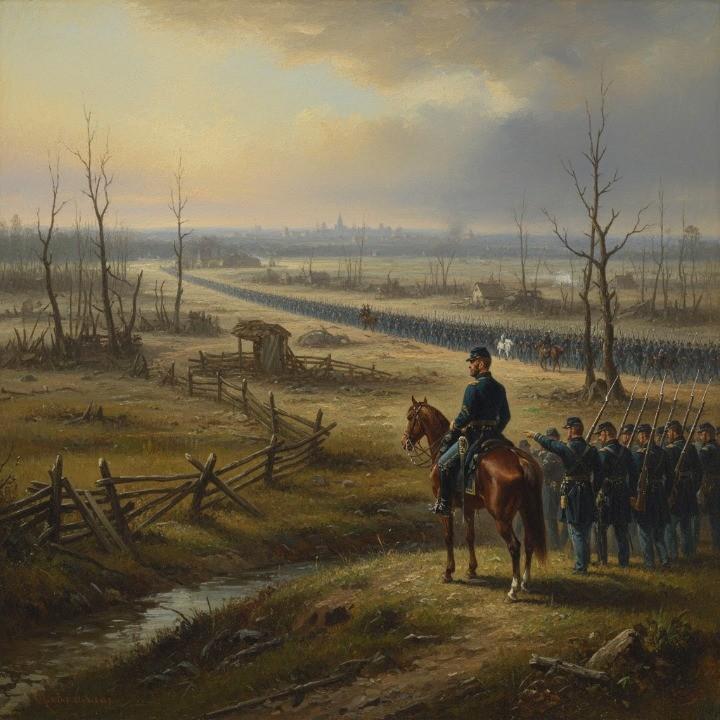
1864 — Sherman Reaches Savannah
Union General William Tecumseh Sherman’s army reached the outer defenses of Savannah, Georgia, culminating his devastating “March to the Sea.” This campaign of psychological and economic warfare crippled the Confederate heartland and brought the Civil War’s end palpably closer.
1877 — Russian capture of Plevna after a five-month siege
Russian troops take Plevna and accept surrender of its garrison after prolonged siege warfare. The victory proves decisive in the Russo-Turkish conflict and aids Bulgaria’s liberation. Plevna’s fall alters the balance in the Balkans.
1896 — Ubu Roi Premiere Sparks a Riot
Alfred Jarry’s absurdist play Ubu Roi premiered in Paris. The opening word—“Merdre!”—triggered an immediate scandal, leading to a riot in the theatre. The event is now legendary as a explosive birth of modernist drama, challenging all conventions of art and society.
1898 — Treaty of Paris Ends Spanish-American War
The Treaty of Paris was signed, formally ending the Spanish-American War. Spain ceded Puerto Rico, Guam, and the Philippines to the United States and relinquished sovereignty over Cuba. The treaty marked the emergence of the U.S. as a colonial power on the world stage.
1901 — The First Nobel Prize Ceremony
The first Nobel Prize ceremony was held in Stockholm on the fifth anniversary of Alfred Nobel’s death. This inaugural event established the preeminent award for contributions to physics, chemistry, medicine, literature, and peace, cementing a legacy for rewarding humanity’s greatest advancements.
1902 — Opening of the Aswan Dam reservoir in Egypt
The Aswan reservoir is officially opened, representing major irrigation and engineering work on the Nile. The project transforms water management and agricultural potential in Egypt. It becomes a landmark of modern infrastructure there.
1906 — Theodore Roosevelt Wins Nobel Peace Prize
U.S. President Theodore Roosevelt was awarded the Nobel Peace Prize for mediating the end of the Russo-Japanese War. He became the first American to win a Nobel Prize, and the award recognized the growing role of the U.S. in international diplomacy.
1907 — Brown Dog riots reach their worst night in London
Clashes erupt as roughly 1,000 medical students confront police over a vivisection memorial. The violent disturbances mark the highlight of protest and public outrage. The episode reflects deep divisions over animal experimentation.
1909 — Selma Lagerlöf Wins Nobel Prize in Literature
Selma Lagerlöf became the first female writer to receive the Nobel Prize in Literature. The Swedish author’s win was a milestone for women in the arts and acknowledged storytelling that drew deeply from folklore and moral imagination.
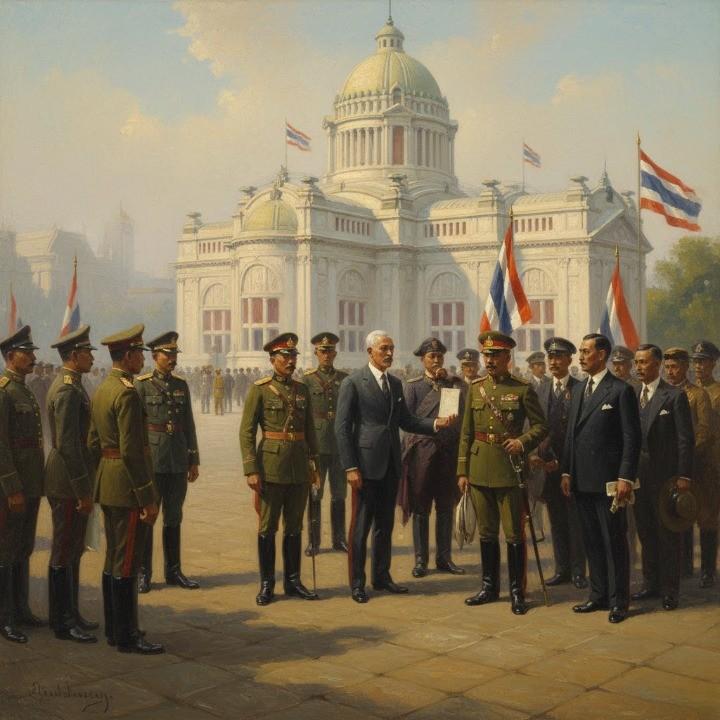
1932 — Thailand becomes a constitutional monarchy
Thailand shifts from absolute rule to constitutional government, curbing monarchical power. The change ushers in new political institutions and modern governance. It stands as a foundational moment in Thai modern history.
1932 — The End of the Emu War
After a month of a farcical military campaign against thousands of emus ravaging farmlands in Western Australia, the Australian government officially conceded defeat and withdrew its soldiers. The “Emu War” remains a humorous and poignant anecdote about humanity’s sometimes futile attempts to dominate nature.
1936 — Edward VIII Signs Instrument of Abdication
King Edward VIII signed the Instrument of Abdication, giving up the British throne to marry American divorcée Wallis Simpson. This unprecedented voluntary abdication triggered a constitutional crisis and reshaped the modern British monarchy.
1941 — Sinking of HMS Prince of Wales and Repulse
Imperial Japanese Navy torpedo bombers sank the British Royal Navy capital ships HMS Prince of Wales and HMS Repulse off the coast of Malaya. The loss, just days after Pearl Harbor, demonstrated the devastating effectiveness of air power against surface fleets and shattered British naval prestige in the Pacific.
1941 — Japanese troops land on Luzon, advancing the Philippines campaign
Imperial forces under General Homma make amphibious landings on Luzon, intensifying combat in the archipelago. The operation accelerates Japanese control of the Philippines in World War II. It deepens the Pacific theater’s conflict.
1942 — Raczyński’s Note notifies Allies of the Holocaust
Poland’s government-in-exile distributes Raczyński’s Note—the first formal report on mass extermination—to 26 Allied governments. The document attempts to alert the world to ongoing atrocities. It stands as an early diplomatic plea for attention and action.
1948 — The Universal Declaration of Human Rights is Signed
The United Nations General Assembly adopted and proclaimed the Universal Declaration of Human Rights in Paris. A foundational text of the modern human rights movement, it established, for the first time, fundamental human rights to be universally protected.
1949 — PLA begins siege of Chengdu as mainland falls to Communists
The People’s Liberation Army lays siege to Chengdu, driving the remaining Kuomintang government toward Taiwan. The siege helps conclude the Communist takeover of mainland China. It marks a crucial endpoint in the Chinese Civil War.
1953 — Winston Churchill awarded the Nobel Prize in Literature
Winston Churchill receives the Nobel Prize for his historical works and oratory, adding a literary honor to his political legacy. The award recognizes the breadth of his written influence. It enhances his global stature beyond statesmanship.
1963 — Zanzibar Gains Independence
Zanzibar gained independence from the United Kingdom as a constitutional monarchy under Sultan Jamshid bin Abdullah. This fragile independence would last only a month before a revolution overthrew the sultanate, leading to its union with Tanganyika to form Tanzania.
1963 — Assassination attempt in Aden kills and wounds many
An attack aimed at the British High Commissioner in Aden leaves two dead and dozens injured. The incident signals rising unrest and anti-colonial violence in the region. It intensifies pressure on Britain’s regional role.
1968 — Tokyo’s unsolved 300 million yen robbery carried out
Japan suffers its largest heist to date when thieves make off with 300 million yen in a still-unsolved crime. The audacious theft captures national attention and curiosity. It endures as a famous mystery in Japanese criminal history.
1978 — Begin and Sadat Awarded Nobel Peace Prize
Israeli Prime Minister Menachem Begin and Egyptian President Anwar Sadat were jointly awarded the Nobel Peace Prize for their efforts in negotiating the Camp David Accords. The award underscored the high hopes for a lasting peace in the Middle East following their historic agreement.
1979 — Kaohsiung Incident: pro-democracy demonstrations suppressed
KMT authorities brutally repress pro-democracy protesters in Kaohsiung, arresting organizers and dissenters. The crackdown becomes a pivotal episode in Taiwan’s democratic struggle. It galvanizes long-term reform movements.
1982 — Law of the Sea treaty signed by 117 nations
A major maritime convention codifying rights, zones and responsibilities is agreed by 117 countries. The treaty creates a comprehensive legal framework for ocean governance. It shapes resource claims, navigation, and marine law worldwide.
1983 — Democracy Restored in Argentina
Raúl Alfonsín was inaugurated as President of Argentina, marking the end of the brutal military dictatorship and the restoration of democratic rule. His inauguration began the difficult national process of reckoning with the human rights abuses of the “Dirty War.”
1984 — UN recognizes the Convention against Torture
The United Nations General Assembly formally recognizes the Convention against Torture, strengthening legal prohibitions on torture. The step provides tools for prevention, prosecution, and accountability. It advances international human-rights protection.
1989 — Mongolian Democratic Union Announced
At the country’s first open pro-democracy demonstration, Tsakhiagiin Elbegdorj announced the establishment of the Mongolian Democratic Union. This moment ignited the peaceful Mongolian Revolution, which would quickly lead to the end of decades of communist rule.
1991 — Nursultan Nazarbayev sworn in as Kazakhstan’s first president
Nazarbayev assumes the presidency as the Kazakh SSR is reconstituted as the Republic of Kazakhstan. The actions mark Kazakhstan’s emergence as an independent nation. They begin a new national and political chapter.
1993 — Wearmouth Colliery closes after 156 years of mining
Wearmouth Colliery’s final shift ends a long era of coal production in County Durham. The closure symbolizes the decline of traditional heavy industry and prompts local economic shifts. Communities face the challenge of post-industrial transition.
1994 — Recommendation that UNAMIR stand down during Rwandan genocide
Maurice Baril advises scaling down UNAMIR’s presence amid unfolding genocide in Rwanda. The recommendation contributes to a deeply criticized international inaction. It later factors in assessments of the world’s failure to prevent mass killings.
1995 — Israeli forces withdraw from Nablus under Oslo terms
Israeli troops pull back from Nablus as part of Oslo Accord implementation, transferring control to Palestinian authorities. The withdrawal is intended to advance the peace process and local autonomy. Its progress helps shape subsequent negotiations and tensions.
1996 — South Africa’s New Constitution Promulgated
President Nelson Mandela signed into law South Africa’s new post-apartheid constitution, one of the most progressive in the world. Its promulgation finalized the country’s transition to a constitutional democracy and entrenched a broad bill of rights.
1999 — Helen Clark sworn in as New Zealand’s Prime Minister
Helen Clark becomes New Zealand’s Prime Minister, the second woman to hold the role and the first after an election victory. Her administration ushers in policy shifts and a sustained leadership period. Clark’s tenure shapes national governance into the 2000s.
2005 — Sosoliso Airlines Flight 1145 crashes in Nigeria
Sosoliso Flight 1145 crashes at Port Harcourt, killing 108 people in a national aviation tragedy. The disaster prompts investigations and scrutiny of safety practices. It leaves a lasting impact on families and the aviation sector.
2014 — Palestinian minister Ziad Abu Ein killed after clash in Ramallah
Ziad Abu Ein dies following the suppression of a demonstration in Turmus’ayya, provoking regional tensions. His death intensifies protests and diplomatic attention to the incident. The event feeds into ongoing Israeli-Palestinian disputes.
2015 — Syrian Democratic Council formed in Dêrik (Rojava)
The Syrian Democratic Council establishes itself as the political arm of local forces in northeast Syria. Its formation aims to coordinate governance and represent the Syrian Democratic Forces. It becomes a key actor in the Rojava political framework.
2016 — Istanbul stadium explosions kill and wound dozens
Two blasts near a football stadium in Istanbul claim 38 lives and injure many more, shocking the city. The attacks trigger tightened security and investigations into perpetrators. They leave a painful mark on public life and sports events.
2017 — ISIL declared defeated in Iraq
Iraqi authorities announce the territorial defeat of ISIL within the country’s borders. The declaration signals the collapse of the group’s major territorial control. It represents a significant moment in the campaign against extremist rule.
2019 — Ostrava hospital attack results in multiple deaths
An attacker kills eight people at an Ostrava hospital, including the perpetrator, in a shocking violent incident. The attack rattles the local community and prompts security reviews. Authorities pursue investigations into motive and prevention.
2021 — Deadly Tornado Outbreak in the United States
A catastrophic and widespread tornado outbreak tore across multiple U.S. states. The most violent single tornado traveled over 165 miles through Kentucky, killing 57 people. The disaster, which included the collapse of an Amazon warehouse in Illinois, highlighted the increasing threat of extreme weather events.
Read Also: What Happened On This Day In History December 9: Wonderful Facts
Famous People Born On December 10
| Name | Role / Short Description | Dates |
|---|---|---|
| Olivier Messiaen | French composer | December 10, 1908 – April 27, 1992 |
| George Macdonald | British author | December 10, 1824 – September 18, 1905 |
| Victor McLaglen | American actor | December 10, 1886 – November 7, 1959 |
| César Franck | Belgian-French composer | December 10, 1822 – November 8, 1890 |
| Adolf Loos | Austrian architect | December 10, 1870 – August 23, 1933 |
| Harold Alexander, 1st Earl Alexander | British general | December 10, 1891 – June 16, 1969 |
| Michael Manley | Prime minister of Jamaica | December 10, 1924 – March 6, 1997 |
| Melvil Dewey | American librarian | December 10, 1851 – December 26, 1931 |
| Otto Neurath | Austrian philosopher & sociologist | December 10, 1882 – December 22, 1945 |
| Morton Gould | American composer & conductor | December 10, 1913 – February 21, 1996 |
| Thomas Hopkins Gallaudet | American educator (deaf education) | December 10, 1787 – September 10, 1851 |
| Nelly Sachs | German poet & dramatist (Nobel) | December 10, 1891 – May 12, 1970 |
| Anatoly Tarasov | Russian ice-hockey coach | December 10, 1918 – June 23, 1995 |
| John Boozman | United States senator | December 10, 1950 – |
| Lang Ping | Chinese volleyball player & coach | December 10, 1960 – |
| Howard M. Temin | American virologist (Nobel) | December 10, 1934 – February 9, 1994 |
| John Birt, Baron Birt | British broadcasting executive | December 10, 1944 – |
| Rumer Godden | British writer | December 10, 1907 – November 8, 1998 |
| László Bárdossy | Prime minister of Hungary | December 10, 1890 – January 10, 1946 |
| Felice Orsini | Italian revolutionary | December 10, 1819 – March 13, 1858 |
| Roger Brown | American artist | December 10, 1941 – November 22, 1997 |
| Ludwig Klages | German philosopher & psychologist | December 10, 1872 – July 29, 1956 |
| Lucy Boston | English children’s author | December 10, 1892 – May 25, 1990 |
| Wilhelm von Bode | German art historian & museum director | December 10, 1845 – March 1, 1929 |
| August Karl von Goeben | Prussian general | December 10, 1816 – November 13, 1880 |
| Thomas Holcroft | English dramatist & novelist | December 10, 1745 – March 23, 1809 |
| Edward Eggleston | American writer & historian | December 10, 1837 – September 4, 1902 |
| Albert Steffen | Swiss writer & poet | December 10, 1884 – July 13, 1963 |
| Battista Guarini | Italian poet & dramatist | December 10, 1538 – October 7, 1612 |
| Carolyn Kizer | American poet (Pulitzer) | December 10, 1924 – October 9, 2014 |
Famous People Died On December 10
| Name | Role / Short Description | Dates |
|---|---|---|
| Armand Hammer | American businessman & art collector | May 21, 1898 – December 10, 1990 |
| Charles Rennie Mackintosh | Scottish architect & designer | June 7, 1868 – December 10, 1928 |
| Eugene McCarthy | U.S. senator & politician | March 29, 1916 – December 10, 2005 |
| Leopold I | King of the Belgians | December 16, 1790 – December 10, 1865 |
| Red Cloud | Oglala Lakota chief | 1822 – December 10, 1909 |
| Sakamoto Ryōma | Japanese imperial reformer | January 3, 1836 – December 10, 1867 |
| Jascha Heifetz | Violinist | February 2, 1901 – December 10, 1987 |
| Damon Runyon | American journalist & short-story writer | October 1880? – December 10, 1946 |
| Luigi Pirandello | Italian playwright & novelist (Nobel) | June 28, 1867 – December 10, 1936 |
| Franjo Tudjman | President of Croatia | May 14, 1922 – December 10, 1999 |
| William Gilbert | English scientist (magnetism) | May 24, 1544 – December 10, 1603 |
| Adolph Rupp | American college basketball coach | September 2, 1901 – December 10, 1977 |
| Nicephorus II Phocas | Byzantine emperor | 912 – c. December 10, 969 |
| Henry Cowell | American composer | March 11, 1897 – December 10, 1965 |
| Paolo Uccello | Italian Renaissance painter | 1397 – December 10, 1475 |
| Algernon Henry Blackwood | British writer (supernatural fiction) | March 14, 1869 – December 10, 1951 |
| Michael IV | Byzantine emperor | — – December 10, 1041 |
| Paul Otlet | Belgian bibliographer & Mundaneum founder | August 23, 1868 – December 10, 1944 |
| Thomas Johann Seebeck | German physicist (Seebeck effect) | April 9, 1770 – December 10, 1831 |
| Józef Zachariasz Bem | Polish general | March 14, 1794 – December 10, 1850 |
| Franz Rosenzweig | German philosopher & theologian | December 25, 1886 – December 10, 1929 |
| Mark Van Doren | American poet & critic | June 13, 1894 – December 10, 1972 |
| Sir Mackenzie Bowell | Prime minister of Canada | December 27, 1823 – December 10, 1917 |
| Nikola Pašić | Prime minister of Serbia/Yugoslavia | December 31, 1845 – December 10, 1926 |
| Joseph Smith, III | Religious leader (RLDS Church) | November 6, 1832 – December 10, 1914 |
| Harry Crosby | American poet & publisher | June 4, 1898 – December 10, 1929 |
| Yury Luzhkov | Mayor of Moscow | September 21, 1936 – December 10, 2019 |
| John B. Fenn | American chemist (Nobel) | June 15, 1917 – December 10, 2010 |
| Theobald Smith | American pathologist & epidemiologist | July 31, 1859 – December 10, 1934 |
| Iajuddin Ahmed | President of Bangladesh | February 1, 1931 – December 10, 2012 |
Observances & Institutional Dates – December 10
Human Rights Day (International): Commemorates the adoption of the Universal Declaration of Human Rights in 1948. It is observed globally with events and advocacy to promote and protect fundamental freedoms and dignity for all people.
Nobeldagen / Alfred Nobel Day (Sweden): The anniversary of Alfred Nobel’s death, marked in Sweden with the grand Nobel Prize award ceremony in Stockholm and a celebration of intellectual and humanitarian achievement.
Constitution Day (Thailand): Honors the adoption of Thailand’s first permanent constitution in 1932, which transitioned the country from an absolute to a constitutional monarchy. It is a national holiday reflecting on the nation’s political development.
Frequently Asked Questions
Why is December 10 a pivotal day for human rights?
December 10 is International Human Rights Day, marking the 1948 signing of the Universal Declaration of Human Rights by the UN. This document is the bedrock of modern international human rights law, making the date a global symbol for the fight for dignity, equality, and justice.
What scientific and intellectual milestones are associated with December 10?
The day is deeply connected to the pursuit of knowledge. It includes Isaac Newton’s groundbreaking work on gravity being presented (1684), the publication of the first Encyclopædia Britannica (1768), and the first Nobel Prize ceremony (1901), which has since become the world’s most prestigious award for scientific and cultural advancement.
How does December 10 reflect political transformation?
The date captures moments of profound political change, from the end of absolute monarchy in Thailand (1932) and the abdication of a British king (1936) to the restoration of democracy in Argentina (1983) and the promulgation of South Africa’s post-apartheid constitution (1996). It serves as a recurring calendar point for shifts in governance and power.
Why is December 10 linked to the Nobel Prizes?
The first Nobel Prize ceremony took place on December 10, 1901, and Sweden continues to observe Nobeldagen on that date.