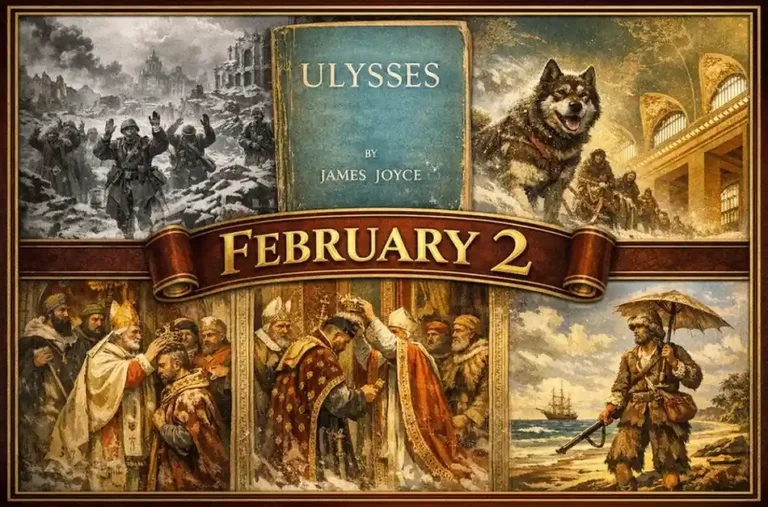

When we trace the arc of December 13, we encounter a profound duality of human spirit and action. What happened on this day in history December 13? It reveals a pope’s humble abdication and the launch of a globe-spanning voyage, a pattern of solemn reflection followed by daring exploration that echoes from the Council of Trent to the last footsteps on the Moon.
Important Events That Happened On December 13 In History
1294 – A Pope Returns to Solitude
In an act of startling humility, Pope Celestine V voluntarily resigned the papacy after only five months. He chose to return to his former life as an ascetic hermit, a decision so rare it contributed to his later canonization and highlighted a tension between spiritual calling and institutional power.
1545 – The Counter-Reformation Councils Begins
The Council of Trent convened in northern Italy, launching the Catholic Church’s defining response to the Protestant Reformation. This landmark council would span eighteen years, reforming doctrine and practice and shaping the spiritual and cultural landscape of Europe for centuries.
1577 – Drake Sets Sail to Circumnavigate the Globe
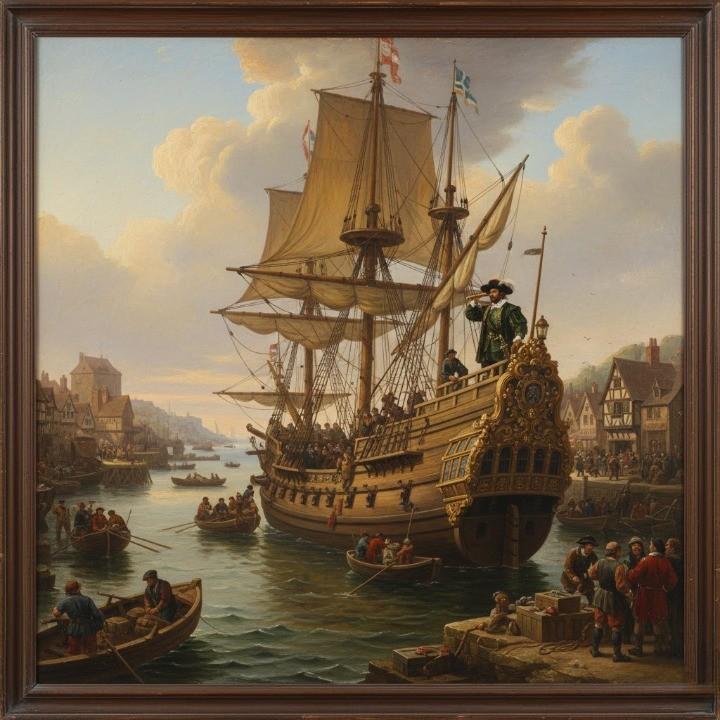
From Plymouth, England, Sir Francis Drake embarked on his historic voyage aboard the Pelican (later renamed the Golden Hind). His mission, a blend of exploration, piracy, and geopolitical maneuvering against Spain, would ultimately see him become the first English captain to successfully sail around the world.
1623 – A Pillar of Justice is Planted
In Plymouth Colony, a foundational legal precedent was set with the establishment of trial by a 12-man jury. This early adoption of a jury system embedded a core principle of English common law into the fabric of American colonial justice, emphasizing community judgment over arbitrary rule.
1636 – The National Guard’s Forge
The Massachusetts Bay Colony organized three militia regiments to defend against the Pequot. This act is now recognized as the founding of the oldest organized military force in the United States, the National Guard, linking colonial self-defense to a modern institution.
1642 – First European Sight of New Zealand
Dutch explorer Abel Tasman and his crew became the first recorded Europeans to sight the coast of New Zealand. He anchored near modern-day Golden Bay, an encounter with the Māori that turned fatal, and named the land Staten Landt, later Nieuw Zeeland.
1643 – A Bitter Fight at Alton
During the English Civil War, the Battle of Alton in Hampshire saw a brutal, close-quarters struggle in the town’s church and streets. Parliamentarian forces under Sir William Waller launched a surprise attack, leading to a decisive defeat for the outnumbered Royalist garrison and underscoring the war’s ferocious local impacts.
1758 – Tragedy in the North Atlantic
The English transport ship Duke William, carrying over 460 people, sank in the stormy, icy waters of the North Atlantic. Over 360 souls perished in the disaster, a grim reminder of the immense perils faced by vessels crossing the ocean in an age of sail and conflict.
1769 – Dartmouth College is Founded
With a royal charter from King George III, the Reverend Eleazar Wheelock established Dartmouth College in New Hampshire. Founded primarily for the education of Native American youth and English settlers, it became a vital institution in the American colonial landscape.
1818 – A Patriarch Bows to Pressure
Under intense political pressure from the Ottoman Empire, Ecumenical Patriarch Cyril VI of Constantinople was forced to resign from his spiritual leadership of Eastern Orthodoxy. His departure highlighted the fragile, often subordinate position of the church under Ottoman rule.
1862 – The Slaughter at Fredericksburg
During the American Civil War, the Battle of Fredericksburg reached its brutal climax. Confederate forces under Robert E. Lee, entrenched behind a stone wall on Marye’s Heights, repulsed wave after wave of Union troops under Ambrose Burnside, inflicting catastrophic casualties in one of the Union’s most lopsided defeats.
1864 – The Door to Savannah is Kicked In
As part of Sherman’s March to the Sea, Union forces under General William B. Hazen successfully stormed Fort McAllister. This capture of the formidable earthwork fortification opened a critical supply line for Sherman’s army and sealed the fate of Confederate-held Savannah, which fell days later.
1937 – The Fall of Nanjing
Japanese forces captured the Chinese capital of Nanjing, defended by General Tang Shengzhi. The city’s fall initiated the horrific Nanking Massacre, a period of weeks where Japanese troops committed widespread atrocities, resulting in the deaths of hundreds of thousands of soldiers and civilians.
1938 – Neuengamme Concentration Camp Opens
The Nazi regime opened the Neuengamme concentration camp in the Hamburg district. Initially a sub-camp of Sachsenhausen, it would become a major independent site of slave labor and death, part of the vast network of terror in the Holocaust.
1939 – First Naval Battle of World War II
The Battle of the River Plate erupted off Uruguay. The German pocket battleship Admiral Graf Spee was engaged by a trio of Allied cruisers—HMS Ajax, HMNZS Achilles, and HMS Exeter. The damaged German ship would later be scuttled in Montevideo harbor, an early Allied naval victory.
1943 – The Horror of Kalavryta
German occupying forces in Greece carried out a devastating reprisal in the town of Kalavryta. In what became one of the worst massacres on Greek soil, nearly all male residents over the age of 15 were executed and the town was looted and burned, an atrocity that left a deep and lasting wound.
1949 – Jerusalem Becomes Israel’s Capital
The Knesset, Israel’s parliament, voted to transfer the nation’s capital from Tel Aviv to Jerusalem. This declaration affirmed the ancient city’s central role in Jewish identity but set the stage for decades of international dispute over the city’s status.
1957 – A Devastating Quake in Iran
The Farsinaj earthquake, a powerful magnitude 6.5 tremor, struck northwestern Iran. Leveling villages and causing catastrophic damage, it killed at least 1,119 people and left thousands homeless, exposing vulnerabilities in regional construction and disaster response.
1959 – A President for Cyprus
Archbishop Makarios III, a pivotal figure in the struggle for Cypriot independence from British rule, was sworn in as the first President of the Republic of Cyprus. His election merged spiritual and political leadership in the fledgling nation’s challenging early years.
1960 – An Emperor Nearly Deposed
While Emperor Haile Selassie of Ethiopia was on a state visit to Brazil, members of his Imperial Bodyguard staged a coup at home, proclaiming his son emperor. The swift collapse of the attempt upon his return did not prevent the event from foreshadowing the unrest that would eventually end his reign.
1962 – Relay 1 Satellite Launches
NASA launched the Relay 1 communications satellite, an early pioneer in active signal repeating. Its successful operation demonstrated the practical potential of satellites for global television, telephone, and data transmission, helping to enable the modern connected world.
1967 – A King’s Failed Return
Deposed King Constantine II of Greece launched an unsuccessful counter-coup against the ruling military junta, the Regime of the Colonels. The failure of this royalist uprising solidified the junta’s power and ended any realistic chance of the monarchy’s restoration.
1968 – Democracy Suspended in Brazil
Brazilian President Artur da Costa e Silva signed the infamous Institutional Act Number Five (AI-5). This decree shuttered Congress, suspended habeas corpus, and ushered in the most oppressive period of the military dictatorship, marked by severe censorship and state terror.
1972 – The Final Moonwalk Begins
Apollo 17 astronauts Eugene Cernan and Harrison Schmitt began their third and final excursion on the lunar surface. As they completed their geological fieldwork, they cemented their place in history as the last humans, to date, to walk on the Moon.
1974 – Malta Becomes a Republic
Malta formally abolished its monarchy and became a republic within the Commonwealth of Nations, with a President as head of state. This marked the final step in its journey to full sovereignty after independence from Britain in 1964.
1977 – A Basketball Team Lost
Air Indiana Flight 216 crashed on approach to Evansville Regional Airport, killing all 29 on board. The tragedy claimed the lives of the entire University of Evansville basketball team, its coaching staff, and several boosters, devastating the community and the sports world.
1981 – Martial Law in Poland
Facing the rising power of the Solidarity trade union movement, Poland’s communist leader, General Wojciech Jaruzelski, declared martial law. Tanks appeared in the streets, communications were cut, and thousands were imprisoned in a drastic attempt to crush democratic opposition.
1982 – Earthquake Ravages North Yemen
A severe earthquake struck the Dhamar region of North Yemen. With a maximum intensity rated as “Severe,” it caused widespread destruction, killing approximately 2,800 people, injuring 1,500 more, and flattening countless homes in a predominantly rural area.
1988 – Arafat Speaks at the UN in Geneva
After being denied a visa to enter the United States, PLO Chairman Yasser Arafat addressed the UN General Assembly at its special session in Geneva. His speech, in which he renounced terrorism, was a significant diplomatic moment in the Palestinian quest for recognition.
1989 – An Attack in Northern Ireland
During the Troubles, the Provisional IRA mounted a heavy assault on a British Army checkpoint at Derryard using grenades and automatic fire. The attack killed two soldiers and wounded two others, a stark example of the conflict’s relentless violence.
1994 – A Crash Near Raleigh-Durham
Flagship Airlines Flight 3379, a small commuter plane, crashed in a wooded area near Morrisville, North Carolina, while approaching Raleigh–Durham airport. The accident claimed 15 lives, prompting investigations into pilot training and operational procedures for regional carriers.
1995 – Disaster Near Verona
Banat Air Flight 166, a chartered flight, crashed shortly after takeoff from Verona, Italy, in poor weather. The accident, which killed all 49 people on board, was attributed to wing icing, highlighting the dangers of winter conditions in aviation.
2001 – Terror Attacks India’s Parliament
In a major assault on Indian democracy, five terrorists attacked the Parliament building in New Delhi. A fierce gun battle with security forces ensued, resulting in the deaths of the attackers and eight security personnel and staff, severely escalating tensions between India and Pakistan.
2002 – The EU Announces a Historic Enlargement
The European Union officially announced its largest-ever expansion, welcoming ten new member states—most from Central and Eastern Europe—effective May 1, 2004. This momentous decision finally healed the Cold War division of the continent under a common European project.
2003 – Saddam Hussein Captured
In Operation Red Dawn, U.S. military forces discovered former Iraqi dictator Saddam Hussein hiding in a small, camouflaged “spider hole” on a farm near his hometown of Tikrit. His capture was a major symbolic moment in the Iraq War.
2007 – The Treaty of Lisbon is Signed
European Union member states signed the Treaty of Lisbon, designed to streamline EU institutions and processes following eastern enlargement. The treaty amended the Union’s constitutional basis and took effect in December 2009, shaping its modern governance.
2019 – InSight Detects Marsquakes
NASA’s InSight lander, stationed on the Martian surface, detected powerful seismic activity. These “marsquakes” provided scientists with unprecedented data about the Red Planet’s interior composition and geological activity, revolutionizing planetary science.
2022 – The Ongoing Toll in Ukraine
As the Russian-Ukrainian war continued into a harsh winter, widespread missile strikes targeted civilian infrastructure across Ukraine. Reports of severe power outages and growing civilian casualties dominated global news, underscoring the conflict’s escalating humanitarian cost.
2023 – Escalation in Gaza
The Israel-Hamas conflict saw a significant escalation, with intense hostilities leading to a surge in civilian casualties. Humanitarian agencies reported a drastic increase in internally displaced people within Gaza, drawing urgent international calls for de-escalation and aid.
Famous People Born On December 13
| Name | Role / Short Description | Dates |
|---|---|---|
| Heinrich Heine | German poet & essayist | December 13, 1797 – February 17, 1856 |
| Emily Carr | Canadian painter & author | December 13, 1871 – March 2, 1945 |
| Talcott Parsons | American sociologist | December 13, 1902 – May 8, 1979 |
| Ella Baker | American civil-rights organizer | December 13, 1903 – December 13, 1986 |
| Johann W. Döbereiner | German chemist (periodic precursors) | December 13, 1780 – March 24, 1849 |
| Curt Jürgens | German actor | December 13, 1915 – June 18, 1982 |
| Philip W. Anderson | American physicist (Nobel) | December 13, 1923 – March 29, 2020 |
| Gerlinde Kaltenbrunner | Austrian mountaineer | December 13, 1970 – |
| Ross Macdonald | American mystery author | December 13, 1915 – July 11, 1983 |
| Larry Doby | American baseball player (AL pioneer) | December 13, 1923 – June 18, 2003 |
| Phillips Brooks | American Episcopal clergyman | December 13, 1835 – January 23, 1893 |
| John Vorster | Prime minister of South Africa | December 13, 1915 – September 10, 1983 |
| James Wright | American poet | December 13, 1927 – March 25, 1980 |
| Drew Pearson | American journalist & columnist | December 13, 1897 – September 1, 1969 |
| Joseph Howe | Canadian statesman & publisher | December 13, 1804 – June 1, 1873 |
| Franz von Lenbach | German portrait painter | December 13, 1836 – May 6, 1904 |
| Fergie Jenkins | Canadian baseball pitcher | December 13, 1943 – |
| Trygve Haavelmo | Norwegian economist (Nobel) | December 13, 1911 – July 28, 1999 |
| Kaysone Phomvihan | President of Laos | December 13, 1920 – November 21, 1992 |
| Valery Bryusov | Russian poet & symbolist | December 13, 1873 – October 9, 1924 |
| Carlos Montoya | Flamenco guitarist | December 13, 1903 – March 3, 1993 |
| Vladimir Tretchikoff | Russian-born South African artist | December 13, 1913 – August 26, 2006 |
| Kenneth Patchen | American poet & artist | December 13, 1911 – January 8, 1972 |
| Sir William Hamilton | British diplomat & antiquarian | December 13, 1730 – April 6, 1803 |
| Franz M. U. T. Aepinus | German physicist (pyroelectricity) | December 13, 1724 – August 10, 1802 |
| John H. Patterson | American manufacturer (cash register pioneer) | December 13, 1844 – May 7, 1922 |
| A. Lawrence Lowell | President of Harvard University | December 13, 1856 – January 6, 1943 |
| Maximilien de Béthune, duc de Sully | French statesman | December 13, 1560 – December 22, 1641 |
| Carlo, Conte Gozzi | Italian dramatist (commedia defender) | December 13, 1720 – April 4, 1806 |
| Jean de Gerson | French theologian & church reformer | December 13, 1363 – July 12, 1429 |
Famous People Died On December 13
| Name | Role / Short Description | Dates |
|---|---|---|
| Richard Holbrooke | American diplomat (Bosnia peace broker) | April 24, 1941 – December 13, 2010 |
| Samuel Gompers | American labor leader (AFL) | January 27, 1850 – December 13, 1924 |
| Paul Samuelson | American economist (Nobel) | May 15, 1915 – December 13, 2009 |
| Thomas C. Schelling | American economist & game theorist (Nobel) | April 14, 1921 – December 13, 2016 |
| Grandma Moses (Anna R. Robinson) | American folk painter | September 7, 1860 – December 13, 1961 |
| Josef Kramer | Nazi concentration-camp commander | 1906 – December 13, 1945 |
| Nicholas Roerich | Russian painter & set designer | October 9, 1874 – December 13, 1947 |
| Gustave Le Bon | French social psychologist | May 7, 1841 – December 13, 1931 |
| António Egas Moniz | Portuguese neurologist (Nobel) | November 29, 1874 – December 13, 1955 |
| Russell Hoban | American writer (novels & children’s books) | February 4, 1925 – December 13, 2011 |
| Mahmud I | Ottoman sultan | August 2, 1696 – December 13, 1754 |
| François Viète | French mathematician (algebraic notation) | 1540 – December 13, 1603 |
| L. P. Hartley | British novelist & critic | December 30, 1895 – December 13, 1972 |
| Conrad Gesner | Swiss physician & naturalist | March 26, 1516 – December 13, 1565 |
| Victor Grignard | French chemist (Nobel, Grignard reagent) | May 6, 1871 – December 13, 1935 |
| Lew Grade, Baron Grade | British film & TV producer | December 25, 1906 – December 13, 1998 |
| Théo Van Rysselberghe | Belgian Neo-Impressionist painter | November 23, 1862 – December 13, 1926 |
| Friedrich Hebbel | German dramatist & poet | March 18, 1813 – December 13, 1863 |
| Antonio Maura y Montaner | Spanish statesman & prime minister | May 2, 1853 – December 13, 1925 |
| Charles de La Fosse | French painter | June 15, 1636 – December 13, 1716 |
| Ivan Vasilyevich Klyun | Russian artist & theorist | September 1, 1873 – December 13, 1943 |
| José Santos Chocano | Peruvian poet | May 14, 1875 – December 13, 1934 |
| Fabrizio Ruffo | Italian cardinal & politician | September 16, 1744 – December 13, 1827 |
| Stanisław Mikołajczyk | Polish statesman (post-WWII leader) | July 18, 1901 – December 13, 1966 |
| Arthur Wesley Dow | American artist & educator | April 6, 1857 – December 13, 1922 |
| Alice Marble | American tennis champion | September 28, 1913 – December 13, 1990 |
| Samuel Nelson | U.S. Supreme Court associate justice | November 10, 1792 – December 13, 1873 |
| Cao Yu | Chinese playwright (huaju pioneer) | September 24, 1910 – December 13, 1996 |
| Olga Nikolayevna Rubtsova | Russian chess world champion | August 20, 1909 – December 13, 1994 |
Observances & Institutional Dates – December 13
Saint Lucia Day (Scandinavia & Italy): A festival of light celebrating Saint Lucia, a Christian martyr, marking the beginning of the Christmas season in Sweden and other countries with processions and singing.
Republic Day (Malta): Commemorates the day in 1974 when Malta became a republic.
National Day (Saint Lucia): Celebrates the feast day of the island’s patron saint, Saint Lucy, and is also the country’s national day of celebration.
Nanking Massacre Memorial Day (China): A national day of remembrance for the victims of the 1937-38 massacre in Nanjing, also known as the National Memorial Day for the Victims of the Nanjing Massacre.
Acadian Remembrance Day (Acadians): Honors the memory of those who died during the Deportation of the Acadians, beginning in 1755.
Martial Law Victims Remembrance Day (Poland): Observed in memory of those killed and oppressed following the declaration of martial law in Poland on December 13, 1981.
Frequently Asked Questions
Why is December 13 significant in religious history?
The date features two pivotal Catholic events: Pope Celestine V’s unprecedented resignation (1294), emphasizing spiritual conscience over office, and the opening of the Council of Trent (1545), which launched the decades-long Counter-Reformation.
What explorations and foundations are tied to December 13?
It marks major ventures: Sir Francis Drake’s circumnavigation voyage began (1577), Abel Tasman first sighted New Zealand (1642), and Dartmouth College was founded by royal charter (1769).
How does December 13 reflect key moments in modern conflict?
The day is heavy with 20th-century warfare, including the Fall of Nanjing (1937), the first naval battle of WWII (1939), the imposition of martial law in Poland (1981), and the capture of Saddam Hussein (2003).