
December 17 is a day where ancient festivals give way to modern revolutions, where the first controlled flight shares the calendar with the spark that ignited the Arab Spring. Tracing what happened on this day in history December 17 reveals a narrative of human celebration, tragedy, and breakthrough—a journey from the pagan streets of Rome to the supersonic edge of space, marked by acts of both profound courage and devastating violence.
Important Events That Happened On December 17 In History
497 BC – The First Saturnalia
In ancient Rome, the first Saturnalia festival was celebrated in honor of the god Saturn. This holiday, characterized by role reversals, feasting, and gift-giving, would become one of the most beloved and influential Roman celebrations, its traditions eventually weaving into later winter solstice and Christmas customs.
546 – Rome is Sacked Again
During the Gothic War, Ostrogoth king Totila captured and plundered Rome after bribing the city’s Eastern Roman garrison. The sack was a devastating blow to Emperor Justinian’s campaign to reunify the Roman Empire and left the once-imperial city severely depopulated and weakened.
920 – A Co-Emperor is Crowned
Romanos I Lekapenos, an influential admiral, was crowned co-emperor alongside the underage Constantine VII in Constantinople. This move secured his position as the de facto ruler of the Byzantine Empire, beginning a lengthy period where he held power while preserving the Macedonian dynasty’s nominal line.
942 – A Norman Leader is Assassinated
William I, the Duke of Normandy known as “Longsword,” was assassinated by supporters of the Count of Flanders. His death plunged the duchy into a crisis, leaving his young son Richard under the guardianship of the French king and setting the stage for future Norman instability.
1297 – The Fall of the Pagan Kingdom
King Kyawswa of Pagan (in modern-day Myanmar) was overthrown by the three Myinsaing brothers, who had grown powerful as regional rulers. This coup marked the de facto end of the Pagan Kingdom, fragmenting central authority and ushering in a period of competing Shan states.
1354 – Peace Ends the Hook and Cod Wars
Margaret II, Countess of Hainaut and Holy Roman Empress, and her son William I, Duke of Bavaria, signed a peace treaty, finally ending the long and complex Hook and Cod wars. These conflicts had been a series of civil wars over succession and power in the counties of Holland, Zeeland, and Hainaut.
1398 – Timur Defeats the Delhi Sultanate
The armies of the Turco-Mongol conqueror Timur decisively defeated the forces of Sultan Nasir-ud-Din Mahmud of the Tughlaq Dynasty outside Delhi. This victory led to the infamous sack of Delhi, crippling the sultanate and leaving the city in ruins for over a century.
1538 – A King is Excommunicated
Pope Paul III formally excommunicated King Henry VIII of England, finalizing the irrevocable break between the English crown and the Roman Catholic Church over Henry’s divorce from Catherine of Aragon and his establishment of the Church of England.
1583 – The Siege of Godesberg Ends
In the Cologne War, a conflict over the Archbishopric of Cologne, forces under Prince-Elector Ernest of Bavaria defeated troops loyal to the deposed Archbishop Gebhard Truchsess von Waldburg at the Siege of Godesberg. The fall of this fortress was a key step in securing Bavarian Catholic control of the electorate.
1586 – A New Emperor in Japan
Prince Katahito ascended the Chrysanthemum Throne as Emperor Go-Yōzei, beginning a reign that would see the consolidation of Tokugawa power and the establishment of a long period of peace and isolation in Japan.
1663 – The Death of Queen Nzinga
Nzinga Mbande, the formidable Mbundu queen who resisted Portuguese colonization in Angola for decades, died in Matamba. Remembered as a skilled diplomat and warrior, she is revered today as the “mother of the nation” in Angola.
1665 – First Published Account of a Blood Transfusion
Physician Richard Lower documented the first successful blood transfusion between animals in a letter published in the Philosophical Transactions of the Royal Society. His experiments, transferring blood between dogs, laid the foundational principles for this life-saving medical procedure.
1718 – Britain Declares War on Spain
As part of the War of the Quadruple Alliance, Great Britain formally declared war on Spain. This conflict, largely fought over Italian territories and Spanish attempts to reclaim lost lands, saw a coalition of European powers contain Spanish ambitions.
1760 – Birth of Deborah Sampson
Deborah Sampson was born in Plympton, Massachusetts. She would later disguise herself as a man to enlist in the Continental Army during the American Revolution, becoming one of the first known American female soldiers and, later, one of the first women to lecture professionally in the United States.
1777 – France Recognizes the United States
In a turning point for the American Revolution, France formally recognized the independence of the United States. This diplomatic endorsement opened the door for critical French military and financial aid that would prove essential to the revolutionary cause.
1790 – Discovery of the Aztec Calendar Stone
Workers repairing Mexico City’s central plaza, the Zócalo, unearthed the massive Aztec Sun Stone, often called the Aztec Calendar Stone. This monumental basalt sculpture, buried after the Spanish conquest, became an iconic symbol of Mexico’s rich pre-Columbian heritage.
1807 – The Milan Decree Tightens the Continental System
Emperor Napoleon I of France issued the Milan Decree, strengthening the Continental System, an economic blockade aimed at crippling British trade. The decree authorized the seizure of any neutral ship that complied with British regulations, escalating economic warfare across Europe.
1812 – Battle of the Mississinewa
During the War of 1812, U.S. forces under Lieutenant Colonel John B. Campbell attacked a Lenape (Delaware) village along the Mississinewa River in Indiana Territory. The battle was part of a campaign to disrupt Native American confederacies allied with the British, resulting in significant casualties on both sides.
1819 – Bolívar Proclaims Gran Colombia
Speaking before the Congress of Angostura, Simón Bolívar formally declared the independence of the Republic of Colombia, known today as Gran Colombia. This visionary project aimed to unite much of northern South America, though it would dissolve within a decade.
1835 – The Second Great Fire of New York
A massive fire erupted in New York City’s Financial District, ultimately destroying 530 buildings across 13 acres. The disaster prompted major reforms in building codes and the establishment of a more professional fire department.
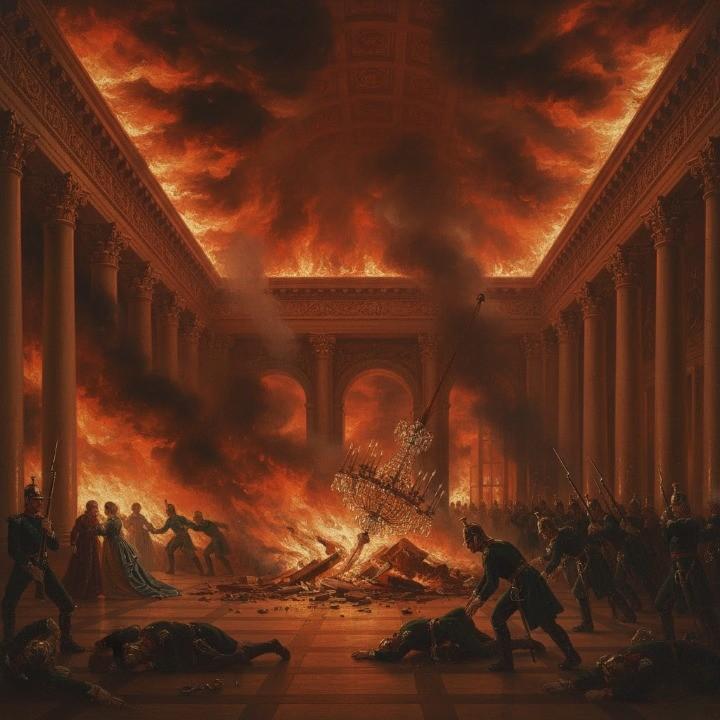
1837 – A Deadly Fire in the Winter Palace
A ferocious fire broke out in the Winter Palace of Saint Petersburg, the official residence of the Russian Tsars. While the imperial family escaped unharmed, the blaze killed 30 guards and caused extensive damage to the palace’s interior.
1862 – Grant’s Infamous Order
During the American Civil War, Union General Ulysses S. Grant issued General Order No. 11, expelling all Jews from areas under his control in Tennessee, Mississippi, and Kentucky. The order, a response to wartime smuggling, was a stark act of anti-Semitism later renounced and rescinded.
1865 – Premiere of Schubert’s “Unfinished” Symphony
Franz Schubert’s Symphony No. 8 in B minor, famously known as the “Unfinished Symphony,” received its first public performance in Vienna, over 37 years after the composer’s death. The work’s profound beauty secured its place as a cornerstone of the Romantic repertoire.
1892 – The First Issue of Vogue
The first edition of Vogue magazine was published in New York City as a weekly society journal. It would evolve into one of the world’s most influential fashion and lifestyle publications, defining trends for over a century.
1896 – The Schenley Park Casino Burns
Pittsburgh’s innovative Schenley Park Casino, notable for housing North America’s first artificial ice-making plant for a multi-purpose arena, was destroyed by fire. The loss halted the city’s early foray into year-round indoor ice sports and entertainment.
1903 – The Wright Brothers Take Flight
At Kill Devil Hills near Kitty Hawk, North Carolina, Orville Wright made the first controlled, sustained flight of a powered, heavier-than-air aircraft. The Wright Flyer traveled 120 feet in 12 seconds, inaugurating the age of human aviation.
1907 – A Kingdom is Crowned
Ugyen Wangchuck was crowned as the first hereditary King of Bhutan, unifying the country and establishing the Wangchuck dynasty that continues to rule, guiding the nation’s unique philosophy of Gross National Happiness.
1918 – The Darwin Rebellion
Up to 1,000 demonstrators, led by the radical unionist Harold Nelson, marched on Government House in Darwin, Australia. They protested the oppressive administration of the Northern Territory under John Gilruth, in one of the most significant acts of civil disobedience in Australian history.
1926 – A Coup in Lithuania
Following a military coup, Antanas Smetona assumed power as President of Lithuania, ending a period of democratic rule. His authoritarian regime would last until the Soviet occupation in 1940, marking a shift toward nationalism and strongman rule.
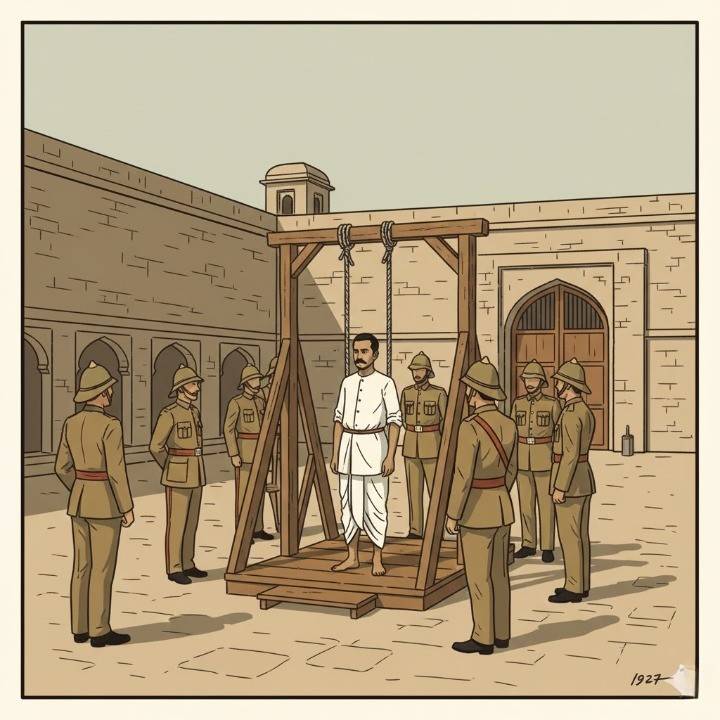
1927 – Execution of Rajendra Lahiri
Indian revolutionary Rajendra Lahiri was hanged at Gonda jail in Uttar Pradesh, two days ahead of schedule, for his role in the Kakori train robbery conspiracy against British rule. His execution galvanized the Indian independence movement.
1928 – Assassination of a British Officer
Indian revolutionaries Bhagat Singh, Sukhdev Thapar, and Shivaram Rajguru assassinated British police officer James Saunders in Lahore. They believed Saunders was responsible for the death of nationalist leader Lala Lajpat Rai, an act that galvanized the Indian independence movement.
1933 – The First NFL Championship Game
The Chicago Bears defeated the New York Giants 23–21 at Wrigley Field in the first-ever National Football League championship game. This contest marked the birth of the NFL’s title game tradition, which would evolve into the modern Super Bowl.
1935 – First Flight of the DC-3
The Douglas DC-3 airliner took its maiden flight. This revolutionary aircraft made air travel commercially viable for the first time, boasting reliability and comfort that transformed global transportation and became one of the most significant aircraft in history.
1938 – Discovery of Nuclear Fission
German chemist Otto Hahn discovered the nuclear fission of uranium, a breakthrough he achieved with physicist Lise Meitner. This revelation of splitting the atom unlocked the immense power within the nucleus, paving the way for both nuclear energy and atomic weapons.
1939 – Scuttling of the Admiral Graf Spee
Cornered by British cruisers in the Battle of the River Plate, the damaged German pocket battleship Admiral Graf Spee was scuttled by its captain, Hans Langsdorff, in the estuary off Montevideo, Uruguay. Langsdorff took his own life three days later.
1943 – Repeal of the Chinese Exclusion Act
The U.S. Congress repealed the 1882 Chinese Exclusion Act and instituted the Magnuson Act, ending 61 years of legal discrimination and allowing Chinese immigrants to become naturalized American citizens for the first time.
1944 – The Malmedy Massacre
During the Battle of the Bulge, Waffen-SS troops under Joachim Peiper executed 84 American prisoners of war from the 285th Field Artillery Observation Battalion at a crossroads near Malmedy, Belgium. The atrocity became one of the most infamous war crimes on the Western Front.
1945 – The Kurdish Flag is Raised
In the short-lived Republic of Mahabad in eastern Kurdistan, the modern flag of Kurdistan was officially raised for the first time. This act became a powerful symbol of Kurdish national identity, commemorated annually as Flag Day.
1947 – First Flight of the B-47 Stratojet
The Boeing B-47 Stratojet, America’s first swept-wing multi-engine bomber, made its maiden flight. This revolutionary jet became the backbone of the U.S. Strategic Air Command during the early Cold War, defining the era’s nuclear deterrence strategy.
1948 – Establishment of the Finnish Security Police
Finland established the Suojelupoliisi (Supo), or Security Police, to replace the previous State Police. Its mandate was to remove communist influence from the security apparatus and counter Soviet subversion during the tense post-war years.
1950 – The F-86 Sabre’s Combat Debut
The North American F-86 Sabre, the United States’ first swept-wing jet fighter, flew its first combat mission over Korea. It would soon engage in legendary dogfights with the Soviet-made MiG-15, defining jet-age aerial warfare.
1951 – “We Charge Genocide” at the UN
The American Civil Rights Congress presented a petition titled “We Charge Genocide” to the United Nations, documenting systematic racial violence and discrimination against Black Americans and framing it as a violation of the UN Genocide Convention.
1957 – First Atlas ICBM Launch
The United States successfully launched the first Atlas intercontinental ballistic missile from Cape Canaveral. This milestone in the Cold War arms race demonstrated the capability to deliver a nuclear warhead across continents, altering the calculus of global security.
1960 – The Ethiopian Coup is Crushed
Upon Emperor Haile Selassie’s return from Brazil, loyalist troops crushed the coup attempt that had begun in his absence. The emperor publicly absolved his son of involvement, but the event exposed deep fissures within the Ethiopian aristocracy and military.
1960 – Munich C-131 Crash
A U.S. Air Force C-131D Samaritan transport plane crashed shortly after takeoff from Munich-Riem Airport, plowing into a streetcar. All 20 people on board and 32 on the ground were killed in one of Germany’s worst peacetime aviation disasters.
1961 – The Niterói Circus Fire
A catastrophic fire erupted during a performance of the Gran Circus Norte-Americano in Niterói, Brazil. The tent, made of flammable paraffin wax, turned into an inferno, killing over 500 people, mostly children, in one of the world’s deadliest circus disasters.
1967 – A Prime Minister Vanishes
Australian Prime Minister Harold Holt disappeared while swimming in heavy surf at Cheviot Beach near Portsea. His body was never found, and he was presumed drowned, an event that stunned the nation and triggered a succession crisis.
1969 – The U.S. Air Force Closes Project Blue Book
The U.S. Air Force officially terminated Project Blue Book, its systematic study of UFOs. The project concluded there was no evidence of extraterrestrial threats or technological advancements beyond human understanding, though public fascination persisted.
1970 – The Gdynia Massacre
During protests against price hikes in Communist Poland, soldiers opened fire on workers emerging from trains at the Gdynia railway station. Dozens were killed, an event that deepened public anger and contributed to the rise of the Solidarity movement a decade later.
1973 – Terrorist Attack at Rome Airport
Palestinian terrorists attacked a Pan American Boeing 707 at Rome’s Leonardo da Vinci–Fiumicino Airport with grenades and machine guns before setting it ablaze. The attack killed 30 people and wounded dozens, part of a wave of aviation terrorism in the 1970s.
1981 – A General is Kidnapped
U.S. Army Brigadier General James L. Dozier was kidnapped from his apartment in Verona, Italy, by the left-wing terrorist group Red Brigades. He was rescued 42 days later in a dramatic police raid, a significant blow to the organization.
1983 – IRA Bombing at Harrods
The Provisional Irish Republican Army detonated a car bomb outside Harrods department store in London, killing three police officers and three civilians, and injuring 90. The attack, during the busy Christmas shopping season, was widely condemned for its civilian toll.
1989 – Romanian Revolution Escalates
Protests against the Ceaușescu regime intensified in Timișoara, Romania. Demonstrators broke into the local Communist Party headquarters, attempting to set it ablaze, as the initially localized uprising began to spread nationwide.
1989 – A Democratic Election in Brazil
Fernando Collor de Mello defeated Luiz Inácio Lula da Silva in a runoff, becoming Brazil’s first democratically elected president in nearly 30 years. His victory marked the end of the military dictatorship but preceded a presidency mired in scandal.
1989 – The Debut of The Simpsons
The animated series The Simpsons premiered on American television with the Christmas special “Simpsons Roasting on an Open Fire.” The show would become a global cultural phenomenon and the longest-running scripted primetime series in U.S. television history.
1997 – Japanese Embassy Hostage Crisis in Lima
Fourteen members of the Túpac Amaru Revolutionary Movement (MRTA) stormed the Japanese ambassador’s residence in Lima, Peru, taking hundreds of diplomats and officials hostage. The crisis would last 126 days before ending in a dramatic raid.
1997 – Aerosvit Flight 241 Crashes
A Yakovlev Yak-42 operating as Aerosvit Flight 241 crashed into the Pierian Mountains near Thessaloniki, Greece, while on approach in poor weather. All 70 people on board were killed in one of Greece’s deadliest aviation accidents.
2002 – A Peace Accord for the Congo
Warring parties in the Second Congo War signed the Inter-Congolese Dialogue peace accord in Pretoria. The agreement outlined a plan for transitional governance and elections, offering a fragile hope to end a conflict that had claimed millions of lives.
2003 – The Soham Murder Trial Ends
At the Old Bailey in London, Ian Huntley was found guilty of murdering two 10-year-old girls, Holly Wells and Jessica Chapman, in Soham, Cambridgeshire. His girlfriend, Maxine Carr, was convicted of perverting the course of justice, concluding a case that horrified the United Kingdom.
2003 – SpaceShipOne’s Supersonic Flight
Burt Rutan’s experimental spaceplane, SpaceShipOne, piloted by Brian Binnie, achieved its first supersonic flight. This successful powered test was a critical step toward winning the Ansari X Prize for private spaceflight, heralding a new commercial space age.
2003 – A Day for Sex Workers’ Rights
Sex worker rights activists established December 17 as the International Day to End Violence Against Sex Workers. The day memorializes victims of violence, particularly those of the Green River Killer, and highlights systemic abuse faced by sex workers globally.
2005 – Anti-WTO Riots in Hong Kong
Protesters demonstrating against the World Trade Organization ministerial conference clashed with police in the Wan Chai district of Hong Kong. The riots saw hundreds arrested and highlighted deep global divisions over trade, globalization, and labor rights.
2005 – A King Abdicates in Bhutan
King Jigme Singye Wangchuck of Bhutan voluntarily abdicated the throne in favor of his son, Crown Prince Jigme Khesar Namgyel Wangchuck. The move was part of a planned transition to a constitutional monarchy, guiding Bhutan toward democracy.
2009 – The MV Danny F II Disaster
The livestock carrier MV Danny F II sank in a storm off the coast of Lebanon. The tragedy resulted in the deaths of 44 people and over 28,000 animals, exposing the perilous conditions of maritime transport in the region.
2010 – The Spark of the Arab Spring
Tunisian street vendor Mohamed Bouazizi set himself on fire in protest of police harassment and confiscation of his cart in Sidi Bouzid. His desperate act ignited the Jasmine Revolution in Tunisia, which rapidly inspired the wider Arab Spring uprisings across the Middle East.
2014 – U.S. and Cuba Thaw Relations
The United States and Cuba announced they would re-establish diplomatic relations, ending a 53-year formal estrangement that began during the Cold War. This historic shift promised to reshape politics and travel across the Florida Straits.
2019 – Musharraf Sentenced to Death
A special court in Pakistan sentenced former military ruler Pervez Musharraf to death in absentia for high treason, specifically for suspending the constitution in 2007. The historic verdict against a former army chief exposed deep civil-military tensions.
Take a look at the December 16 stories:
Famous People Born On December 17
| Name | Role / short description | Dates |
|---|---|---|
| W. L. Mackenzie King | Prime minister of Canada | December 17, 1874 – July 22, 1950 |
| Sir Humphry Davy | British chemist | December 17, 1778 – May 29, 1829 |
| Paula Radcliffe | British distance runner | December 17, 1973 – |
| Gabrielle-Émilie du Châtelet | French scientist & philosopher | December 17, 1706 – September 10, 1749 |
| William Safire | American journalist & columnist | December 17, 1929 – September 27, 2009 |
| John Greenleaf Whittier | American poet & abolitionist | December 17, 1807 – September 7, 1892 |
| Maria I | Queen of Portugal | December 17, 1734 – March 20, 1816 |
| Joseph Henry | American physicist | December 17, 1797 – May 13, 1878 |
| Robert A. Dahl | Political scientist & educator | December 17, 1915 – February 5, 2014 |
| Arthur Fiedler | Conductor (Boston Pops) | December 17, 1894 – July 10, 1979 |
| Penelope Fitzgerald | British novelist | December 17, 1916 – April 28, 2000 |
| Willard F. Libby | Chemist (radiocarbon dating) | December 17, 1908 – September 8, 1980 |
| Sophus Lie | Norwegian mathematician | December 17, 1842 – February 18, 1899 |
| Erskine Caldwell | American novelist | December 17, 1903 – April 11, 1987 |
| Hu Shih | Chinese scholar & diplomat | December 17, 1891 – February 24, 1962 |
| Sir Herbert Beerbohm Tree | Actor & theatre manager | December 17, 1853 – July 2, 1917 |
| Domenico Cimarosa | Italian composer (opera) | December 17, 1749 – January 11, 1801 |
| Paul Cadmus | American artist | December 17, 1904 – December 12, 1999 |
| Erwin Piscator | German dramatist & director | December 17, 1893 – March 30, 1966 |
| Jan E. Purkinje | Czech physiologist | December 17, 1787 – July 28, 1869 |
| Kenneth E. Iverson | Mathematician / computer scientist (APL) | December 17, 1920 – October 19, 2004 |
| Alexander Agassiz | Scientist & oceanographer | December 17, 1835 – March 27, 1910 |
| Peter Snell | New Zealand middle-distance runner | December 17, 1938 – December 12, 2019 |
| Robert Robinson | British broadcaster & journalist | December 17, 1927 – August 12, 2011 |
| Nathaniel Macon | American politician | December 17, 1758 – June 29, 1837 |
| Sylvia Ashton-Warner | New Zealand educator & writer | December 17, 1908 – April 28, 1984 |
| Émile Roux | French bacteriologist | December 17, 1853 – November 3, 1933 |
| Sy Oliver | American musician & arranger | December 17, 1910 – May 28, 1988 |
| François-Marius Granet | French painter | December 17, 1775 – November 21, 1849 |
| Edwin Joseph Cohn | American biochemist | December 17, 1892 – October 1, 1953 |
Famous People Died On December 17
| Name | Role / short description | Dates |
|---|---|---|
| William I | Duke of Normandy | – December 17, 942 |
| William Thomson, Baron Kelvin | Physicist & engineer | June 26, 1824 – December 17, 1907 |
| Dana Andrews | American actor | January 1, 1909 – December 17, 1992 |
| Harold Holt | Prime minister of Australia | August 5, 1908 – December 17, 1967 |
| Marie-Louise | Austrian archduchess & Empress of the French | December 12, 1791 – December 17, 1847 |
| Dorothy L. Sayers | British writer (mystery) | June 13, 1893 – December 17, 1957 |
| Cesária Évora | Cabo Verdean singer | August 27, 1941 – December 17, 2011 |
| Otto Graham | American football quarterback & coach | December 6, 1921 – December 17, 2003 |
| William Labov | American linguist | December 4, 1927 – December 17, 2024 |
| Sammy Baugh | American football player | March 17, 1914 – December 17, 2008 |
| Lewis Henry Morgan | American anthropologist | November 21, 1818 – December 17, 1881 |
| Marguerite Yourcenar | French novelist | June 8, 1903 – December 17, 1987 |
| Peter Warlock | British composer & critic | October 30, 1894 – December 17, 1930 |
| Hastings Lionel Ismay, Baron Ismay | British soldier & adviser | June 21, 1887 – December 17, 1965 |
| C. Vann Woodward | American historian | November 13, 1908 – December 17, 1999 |
| Elizabeth Garrett Anderson | British physician & reformer | June 9, 1836 – December 17, 1917 |
| Mustafa Reşid Pasha | Ottoman statesman & reformer | March 13, 1800 – December 17, 1858 |
| Joseph R. Smallwood | Canadian politician (Newfoundland) | December 24, 1900 – December 17, 1991 |
| Roger Touhy | American gangster | 1898 – December 17, 1959 |
| Philip Pearlstein | American painter (realist) | May 24, 1924 – December 17, 2022 |
| Albert C. Wedemeyer | U.S. general & strategist | July 9, 1897 – December 17, 1989 |
| Juan Vicente Gómez | Venezuelan dictator | July 24, 1857 – December 17, 1935 |
| Hank Luisetti | American basketball innovator | June 16, 1916 – December 17, 2002 |
| William Barker Cushing | U.S. naval officer | November 4, 1842 – December 17, 1874 |
| Noble Sissle | American musician & bandleader | July 10, 1889 – December 17, 1975 |
| Johannes N. Brønsted | Danish chemist (Brønsted theory) | February 22, 1879 – December 17, 1947 |
| Isaac Israel Hayes | Arctic explorer & physician | March 5, 1832 – December 17, 1881 |
| Charles Jenkinson, 1st Earl of Liverpool | British politician | April 26, 1727 – December 17, 1808 |
| Nélida Piñon | Brazilian novelist | May 3, 1937 – December 17, 2022 |
| Louis Harris | Journalist & pollster | January 6, 1921 – December 17, 2016 |
Observances & Institutional Dates – December 17
Wright Brothers Day (United States): A federal observance commemorating the first successful flights by Orville and Wilbur Wright in 1903.
National Day (Bhutan): Celebrates the coronation of its first king, Ugyen Wangchuck, in 1907, and the establishment of the monarchy.
International Day to End Violence Against Sex Workers: A day to memorialize victims of violence and highlight the vulnerabilities faced by sex workers globally.
Kurdish Flag Day: Commemorates the first raising of the Kurdish flag in Mahabad in 1945, symbolizing Kurdish national identity.
Pan American Aviation Day (United States): Promotes and encourages the development of commercial aviation in the Western Hemisphere.
Accession Day (Bahrain): Marks the accession of the current ruler to the throne.
Frequently Asked Questions
What major technological firsts are celebrated on December 17?
The day is iconic for breakthroughs in transportation and science: the Wright Brothers’ first powered flight (1903), the first flight of the revolutionary DC-3 airliner (1935), the discovery of nuclear fission by Otto Hahn (1938), and the first supersonic flight of SpaceShipOne (2003).
Why is December 17 significant in the history of human rights and revolution?
It marks pivotal moments of protest and change: from General Grant’s anti-Semitic order (1862) to the self-immolation of Mohamed Bouazizi, which sparked the Arab Spring (2010). It also includes France’s recognition of American independence (1777) and the sentencing of a Pakistani military ruler for treason (2019).
How does December 17 connect ancient tradition with modern tragedy?
The date spans from the joyous Roman Saturnalia festival (497 BC) to several 20th-century catastrophes: the Niterói circus fire (1961), the Malmedy Massacre (1944), and the Munich C-131 crash (1960). It juxtaposes celebration with profound loss across the centuries.