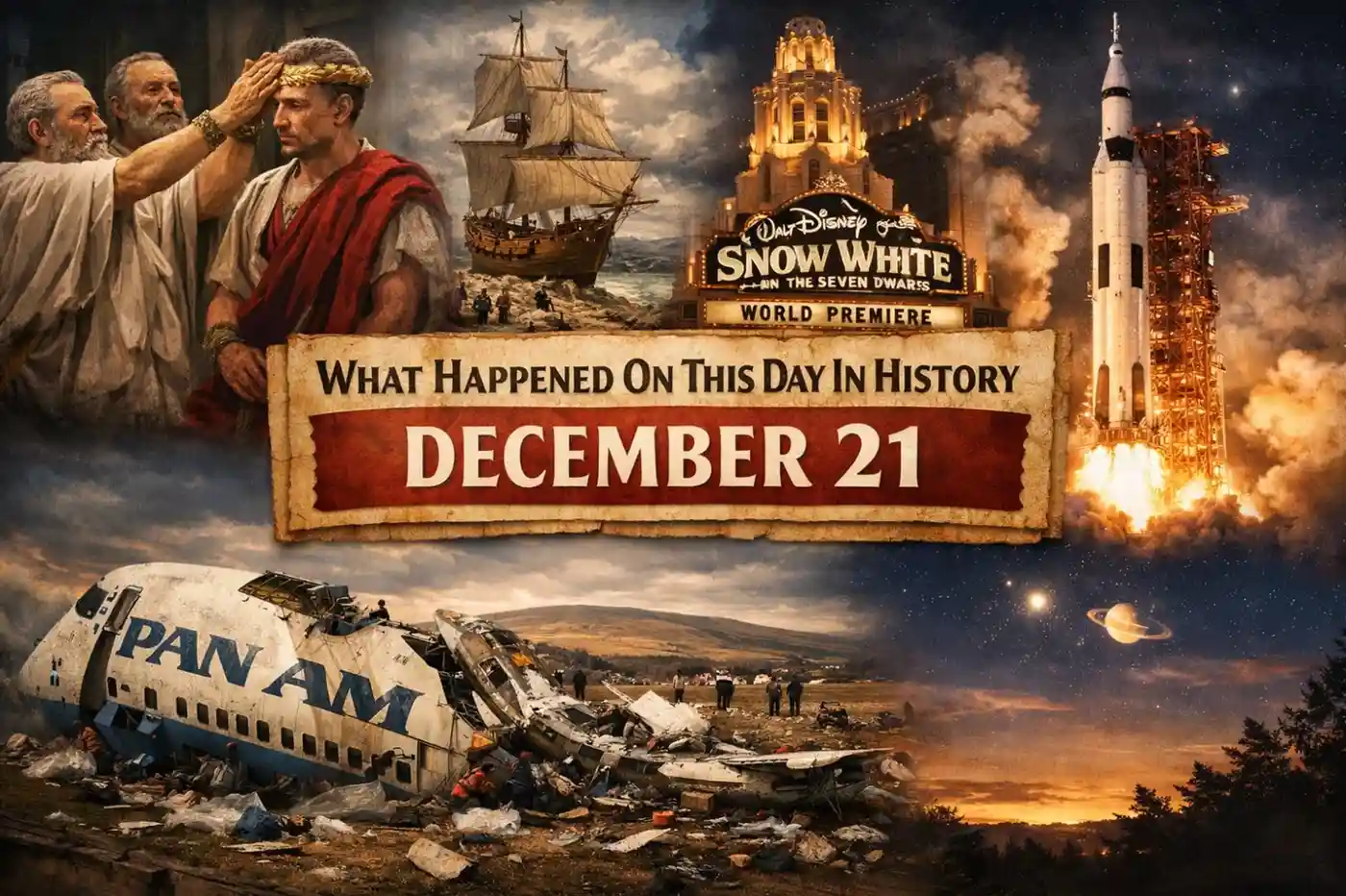
December 21 has played host to some of the most pivotal moments in the human story, ranging from the arrival of the Pilgrims in America to the first human journey toward the Moon. By looking back at what happened on this day in history December 21, we see a day defined by exploration, political upheaval, and scientific breakthroughs.
Important Events That Happened On December 21 In History
AD 69 – Vespasian Becomes Emperor of Rome
Following a year of brutal civil war known as the Year of the Four Emperors, the Roman Senate officially declared Vespasian the ruler of Rome. His ascent brought much-needed stability to the empire and marked the beginning of the Flavian dynasty. This transition of power effectively ended the chaos that had followed the death of Nero.
1124 – The Consecration of Pope Honorius II
Pope Honorius II was formally consecrated on this day, taking the throne after a deeply contentious election process. His rise was controversial because it followed the forced dethroning of Pope Celestine II, who had been elected just days earlier. The event highlighted the intense political maneuvering often found within the medieval papacy.
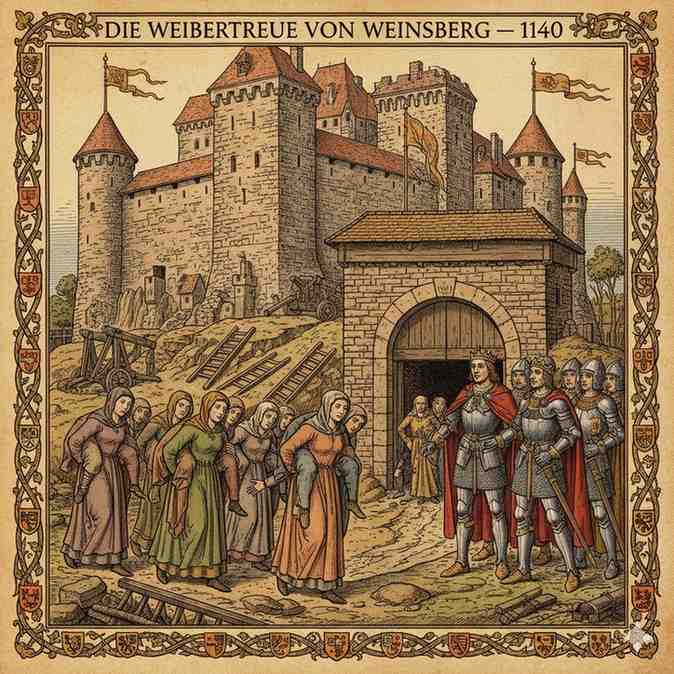
1140 – The Surrender of Weinsberg
After a grueling siege that lasted several weeks, the city of Weinsberg and its castle finally surrendered to Conrad III of Germany. According to legend, the King allowed the women to leave with whatever they could carry on their backs, and they famously carried out their husbands. This act of cleverness and mercy remains a celebrated tale of medieval chivalry.
1237 – The Sack of Ryazan by Mongol Forces
The Mongol army, led by Batu Khan, completely sacked the Russian city of Ryazan after a fierce resistance. This brutal conquest was part of the wider Mongol invasion of Kievan Rus’, which fundamentally altered the course of Russian history. The city was so thoroughly destroyed that it was eventually rebuilt in a different location.
1361 – The Battle of Linuesa
During the Spanish Reconquista, the forces of the Emirate of Granada clashed with the combined armies of the Kingdom of Castile and Jaén. The battle resulted in a decisive victory for the Castilians, further shifting the balance of power in the Iberian Peninsula. This conflict was a significant step in the long-term effort to reclaim territory from Moorish rule.
1598 – The Mapuche Defeat Spanish Troops at Curalaba
In a major blow to Spanish colonial efforts in southern Chile, the revolting Mapuche people, led by cacique Pelentaru, inflicted a massive defeat on Spanish troops. The Battle of Curalaba sparked a general uprising that forced the Spanish to abandon many of their settlements. It established the Mapuche as a formidable force that would resist European conquest for centuries.
1620 – The Mayflower Pilgrims Land at Plymouth Rock
The course of American history changed forever when William Bradford and the Mayflower Pilgrims landed near what is now known as Plymouth Rock. This arrival marked the establishment of Plymouth Colony, the first permanent European settlement in New England. Despite a devastating first winter, the colony became a foundational part of the cultural identity of the United States.
1826 – The Start of the Fredonian Rebellion
American settlers in Nacogdoches, located in what was then Mexican Texas, took a bold step by declaring their independence. This uprising, known as the Fredonian Rebellion, was the first attempt by Anglo settlers to secede from Mexico. Although the rebellion was short-lived, it heightened tensions that eventually led to the Texas Revolution.
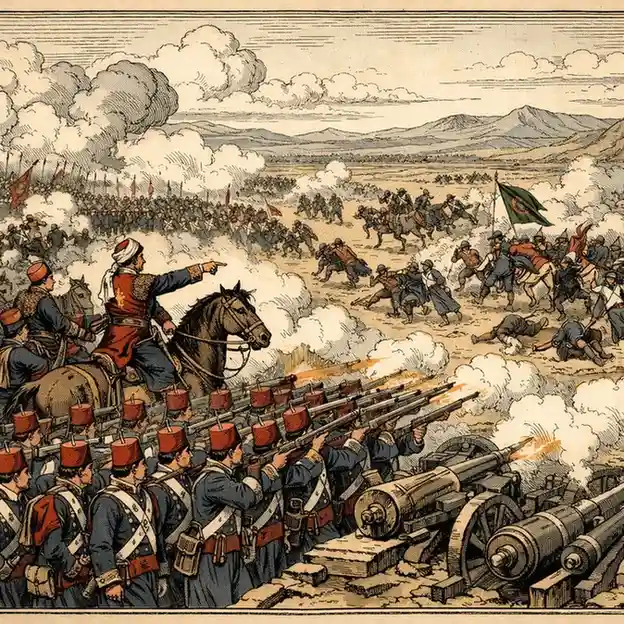
1832 – Egyptian Victory at the Battle of Konya
In a significant engagement of the Egyptian–Ottoman War, Egyptian forces secured a decisive victory over the Ottoman army at Konya. This defeat was so absolute that it opened the path for the Egyptian army to march toward the Ottoman capital, Constantinople. The battle showcased the modernizing military reforms of Muhammad Ali Pasha.
1844 – The Birth of the Cooperative Movement
The Rochdale Society of Equitable Pioneers officially opened its doors for business in Rochdale, England. By establishing a cooperative store governed by fair principles, they laid the groundwork for the modern global cooperative movement. Their “Rochdale Principles” focused on honest weights, fair prices, and member ownership, which are still used by cooperatives today.
1845 – The Battle of Firoz Shah Commences
The first day of the Battle of Firoz Shah saw intense fighting between British and Sikh forces during the First Anglo-Sikh War. It was one of the most difficult battles the British had ever fought in India, with the Sikh army proving to be a highly disciplined and effective force. The engagement lasted into the next day and resulted in heavy casualties for both sides.
1861 – Lincoln Signs the Navy Medal of Valor into Law
President Abraham Lincoln signed Public Resolution 82, which included a provision for a Navy Medal of Valor, now known as the Medal of Honor. This was the first formal recognition of heroic service by enlisted men in the United States military. It remains the highest and most prestigious military decoration awarded to those who distinguish themselves through gallantry.
1872 – The Challenger Expedition Sets Sail
Setting out from Portsmouth, England, HMS Challenger began a historic scientific expedition to explore the world’s oceans. Commanded by Captain George Nares, the mission laid the foundations for the modern science of oceanography. Over the next few years, the crew discovered thousands of new species and mapped the deep-sea floor.
1879 – A Doll’s House Premieres in Copenhagen
Henrik Ibsen’s groundbreaking play, A Doll’s House, had its world premiere at the Royal Theatre in Copenhagen. The story, which famously concludes with a wife leaving her husband and children to find herself, was highly controversial for its time. It is now considered a masterpiece of modern drama and a pivotal work in the feminist movement.
1883 – Formation of Canada’s First Permanent Regiments
The Canadian Army took a major step in its professionalization with the formation of the Royal Canadian Dragoons and The Royal Canadian Regiment. These were the first Permanent Force cavalry and infantry regiments in Canada’s history. They have since served with distinction in numerous conflicts and peacekeeping missions around the world.
1891 – The First Game of Basketball is Played
In a school gym in Springfield, Massachusetts, James Naismith organized the very first game of basketball using two peach baskets and a soccer ball. The game was initially chaotic and even led to a small fight, which prompted Naismith to quickly draft the sport’s thirteen original rules. From these humble beginnings, basketball grew into a massive global phenomenon.
1907 – The Santa Maria School Massacre in Chile
The Chilean Army carried out a horrific massacre of at least 2,000 saltpeter miners and their families in Iquique, Chile. The workers had been striking for better wages and safer conditions, but the government responded with overwhelming lethal force. This event remains one of the darkest chapters in Chile’s labor history and a symbol of industrial struggle.
1910 – The Hulton Bank Colliery Disaster
A massive underground explosion at the Hulton Bank Colliery in Westhoughton, England, resulted in the deaths of 344 miners. It was one of the deadliest mining accidents in British history, leaving the local community in deep mourning. The disaster led to increased pressure for better safety regulations and ventilation in coal mines.
1913 – The First Crossword Puzzle is Published
The New York World newspaper published Arthur Wynne’s “word-cross,” which is widely recognized as the first modern crossword puzzle. Wynne’s diamond-shaped grid was an instant hit with readers who enjoyed the mental challenge. This simple addition to the Sunday paper sparked a worldwide obsession with word games that persists to this day.
1919 – Anarchist Emma Goldman is Deported
In the midst of the “Red Scare,” the United States government deported the prominent anarchist and activist Emma Goldman to Russia. Goldman had been a vocal critic of the government and an advocate for workers’ rights and birth control. Her deportation signaled a period of intense government crackdowns on radical political movements in America.
1923 – The Nepal–Britain Treaty is Signed
The United Kingdom and Nepal signed a formal agreement of friendship, known as the Nepal–Britain Treaty of 1923. This document was significant because it explicitly recognized Nepal as an independent and sovereign nation. It superseded the earlier Treaty of Sugauli and strengthened the long-standing diplomatic ties between the two countries.
1934 – Premiere of Sergei Prokofiev’s Lieutenant Kijé
The film score for Lieutenant Kijé, composed by Sergei Prokofiev, premiered and quickly became one of his most celebrated works. Originally written for a Soviet film, the suite derived from the score is famous for its bright, satirical, and melodic quality. Pieces like the “Troika” movement remain staples of classical music repertoire, especially during the winter season.
1936 – First Flight of the Junkers Ju 88
The Junkers Ju 88, a multi-role combat aircraft, successfully completed its first flight in Germany. It became one of the most versatile and widely produced aircraft for the Luftwaffe during World War II, serving as a bomber, dive bomber, and night fighter. Its speed and adaptability made it a critical component of German aerial strategy.
1937 – Snow White and the Seven Dwarfs Premieres
Walt Disney’s Snow White and the Seven Dwarfs made history as the world’s first full-length animated feature when it premiered at the Carthay Circle Theatre. Many in the industry had predicted the film would be a failure, but it was a massive critical and commercial success. It revolutionized the film industry and established Disney as a leader in animation.
1941 – A Thai-Japanese Alliance is Formed
During the early years of World War II, Thailand signed a formal Pact of Alliance with Japan. This agreement allowed Japanese troops to pass through Thai territory and eventually led to Thailand declaring war on the Allied powers. The alliance was a strategic necessity for Thailand as it attempted to maintain its sovereignty while being surrounded by Japanese forces.
1946 – Nankaidō Earthquake and Tsunami Devastate Japan
A powerful 8.1 magnitude earthquake struck the Nankaidō region of Japan, followed by a massive and destructive tsunami. The disaster claimed the lives of over 1,300 people and destroyed more than 38,000 homes. This tragic event highlighted the extreme seismic risks faced by Japan’s coastal communities and led to advancements in tsunami warning systems.
1963 – “Bloody Christmas” Begins in Cyprus
A period of intense intercommunal violence known as “Bloody Christmas” erupted in Cyprus between Greek and Turkish Cypriot communities. The conflict resulted in the displacement of tens of thousands of Turkish Cypriots and the destruction of over 100 villages. This tragic event was a major turning point that led to the long-term division of the island.
1965 – Adoption of the Convention on the Elimination of Racial Discrimination
The United Nations General Assembly officially adopted the International Convention on the Elimination of All Forms of Racial Discrimination. This landmark treaty committed signatory nations to outlawing racial discrimination and promoting understanding between all races. It remains a cornerstone of international human rights law today.
1967 – The Death of Louis Washkansky
Louis Washkansky, the first person to ever receive a human-to-human heart transplant, passed away in Cape Town, South Africa. He had lived for 18 days after the historic surgery performed by Dr. Christiaan Barnard. While his life ended due to pneumonia, the procedure proved that heart transplantation was a medically viable possibility.
1968 – Apollo 8 Launches for the Moon
NASA’s Apollo 8 mission launched from the Kennedy Space Center, carrying astronauts Frank Borman, James Lovell, and William Anders. This was the first time humans had ever left Earth’s orbit to travel toward another celestial body. The mission was a daring success, paving the way for the lunar landing just seven months later.
1970 – First Flight of the F-14 Tomcat
The Grumman F-14 Tomcat, a supersonic, twin-engine fighter aircraft, made its very first flight. Designed with variable-sweep wings, the F-14 became the primary air superiority fighter for the U.S. Navy for decades. Its advanced radar and long-range missile capabilities made it one of the most iconic military jets of the late 20th century.
1973 – The Geneva Conference on the Arab–Israeli Conflict Opens
Following the Yom Kippur War, international diplomats gathered in Geneva to discuss a peaceful resolution to the Arab–Israeli conflict. The conference brought together representatives from Israel, Egypt, and Jordan, along with the U.S. and the Soviet Union. Although it did not produce an immediate peace treaty, it was a vital step in the diplomatic process.
1979 – Signing of the Lancaster House Agreement
In London, leaders signed the Lancaster House Agreement, which paved the way for the independence of Zimbabwe (formerly Rhodesia). The agreement brought an end to the brutal bush war and established a framework for democratic elections. It was a major diplomatic victory that concluded years of white minority rule and international sanctions.
1988 – The Pan Am Flight 103 Bombing over Lockerbie
A bomb exploded on board Pan Am Flight 103 while it was flying over the town of Lockerbie, Scotland, killing all 259 people on the plane and 11 on the ground. It remains the deadliest aviation disaster to occur on British soil and was later determined to be an act of state-sponsored terrorism. The tragedy left a lasting impact on global aviation security.
1988 – The Antonov An-225 Mriya Makes its First Flight
The Antonov An-225 Mriya, the largest and heaviest aircraft ever built, took to the skies for the first time. Originally designed to carry the Soviet Union’s space shuttle, the “Mriya” (meaning “Dream”) became a legendary cargo plane capable of transporting massive loads that no other aircraft could handle. It remained a marvel of engineering until its destruction in 2022.
1991 – The Alma-Ata Protocol and the Dissolution of the USSR
Leaders from 11 Soviet republics signed the Alma-Ata Protocol, officially establishing the Commonwealth of Independent States (CIS). This move effectively confirmed the dissolution of the Soviet Union and the emergence of independent nations. It was the formal end of the Cold War superpower that had dominated global politics for decades.
1992 – Martinair Flight 495 Crash in Portugal
A Dutch DC-10, operating as Martinair Flight 495, crashed during a landing attempt at Faro Airport in Portugal during heavy thunderstorms. The accident resulted in the deaths of 56 people and left many others injured. Investigators determined that severe wind shear and pilot error during the difficult weather conditions were primary factors in the crash.
1995 – Bethlehem is Transferred to Palestinian Control
In accordance with the Oslo Accords, the city of Bethlehem was officially transferred from Israeli military control to the Palestinian Authority. This was a highly symbolic moment, as the birthplace of Jesus came under Palestinian administration just days before Christmas. The move was seen as a hopeful step in the ongoing peace process at the time.
1999 – Spanish Authorities Intercept ETA Explosives
The Spanish Civil Guard successfully intercepted a van loaded with 950 kg of explosives belonging to the separatist group ETA. The group had intended to use the massive bomb to blow up the Torre Picasso, one of the tallest buildings in Madrid. The timely intervention likely saved hundreds of lives and prevented a major national catastrophe.
1999 – Cubana de Aviación Flight 1216 Crash
A Cubana de Aviación Flight overshot the runway while attempting to land at La Aurora International Airport in Guatemala City. The plane crashed into a nearby residential area, resulting in 18 fatalities, including people on the ground. The tragedy was attributed to wet runway conditions and technical issues during the landing.
2004 – The Mosul Suicide Bombing
In the single deadliest suicide attack on American soldiers during the Iraq War, a bomber struck a mess tent at a forward operating base in Mosul. The blast killed 22 people, including 14 U.S. service members, and injured many more. The attack highlighted the ongoing danger faced by military personnel during the reconstruction efforts in Iraq.
2006 – Establishment of the Juraj Dobrila University of Pula
The Juraj Dobrila University of Pula was officially established in Croatia, bringing together several existing faculties and higher education institutions. Named after a famous bishop and benefactor, the university has since become a vital center for academic and cultural life in the Istrian region. It serves thousands of students in a wide variety of disciplines.
2012 – The Conclusion of the Maya Long Count Cycle
People around the world marked the conclusion of b’ak’tun 13, a cycle in the Mesoamerican Long Count calendar that had lasted over 5,000 years. While some New Age spiritualists had predicted cataclysmic events, the date was celebrated by many as a time of spiritual transformation and cultural pride. In Mesoamerica, traditional ceremonies were held to honor the beginning of a new era.
2020 – The Great Conjunction of Jupiter and Saturn
Astronomers and skywatchers were treated to a “Great Conjunction” where Jupiter and Saturn appeared just 0.1 degrees apart in the night sky. This was the closest these two gas giants had been to each other from Earth’s perspective since 1623. The rare alignment created a bright “double planet” effect that was visible to the naked eye globally.
2023 – Mass Shooting at Charles University in Prague
A tragic mass shooting occurred at Charles University in Prague, where a student killed 14 people and injured 25 others before taking his own life. It was the deadliest mass shooting in the history of the Czech Republic, plunging the nation into mourning. The event sparked immediate debates over gun control and mental health support within the country.
Read Also: What Happened On This Day In History December 20: Defining Conflicts
Famous People Born On December 21
| Name | Role / short description | Dates |
|---|---|---|
| Kurt Waldheim | Austrian diplomat; UN Secretary-General & president of Austria | December 21, 1918 – June 14, 2007 |
| Heinrich Böll | German novelist; Nobel Prize in Literature (1972) | December 21, 1917 – July 16, 1985 |
| Maud Gonne | Irish patriot, actress & feminist | December 21, 1866 – April 27, 1953 |
| Josh Gibson | American baseball catcher (Negro leagues) | December 21, 1911 – January 20, 1947 |
| Walter Hagen | American professional golfer | December 21, 1892 – October 5, 1969 |
| Rebecca West | British writer, critic & journalist | December 21, 1892 – March 15, 1983 |
| Anthony Powell | British novelist (A Dance to the Music of Time) | December 21, 1905 – March 28, 2000 |
| Hermann J. Muller | American geneticist; X-ray mutation research | December 21, 1890 – April 5, 1967 |
| John III | King of Sweden | December 21, 1537 – November 17, 1592 |
| Sewall Wright | American geneticist; population genetics founder | December 21, 1889 – March 3, 1988 |
| Alicia Alonso | Cuban prima ballerina & choreographer | December 21, 1920 – October 17, 2019 |
| John W. McCormack | U.S. politician; Speaker of the House | December 21, 1891 – November 22, 1980 |
| Michael Tilson Thomas | American conductor & composer | December 21, 1944 – |
| Laura Dewey Bridgman | Educator; first blind-deaf person to learn language | December 21, 1829 – May 24, 1889 |
| Sir Joseph Whitworth, Bt. | British engineer & toolmaker | December 21, 1803 – January 22, 1887 |
| Francis T. Bacon | British engineer (fuel cell pioneer) | December 21, 1904 – May 24, 1992 |
| George Finlay | British historian of Greece & Byzantium | December 21, 1799 – January 26, 1875 |
| Karrie Webb | Australian professional golfer | December 21, 1974 – |
| Dorothy Kamenshek | American baseball player (AAGPBL star) | December 21, 1925 – May 17, 2010 |
| Henrietta Szold | American Zionist leader; founder of Hadassah | December 21, 1860 – February 13, 1945 |
| Albert Payson Terhune | American author (dog stories) | December 21, 1872 – February 18, 1942 |
| Arthur Lee | American diplomat (Revolutionary era) | December 21, 1740 – December 12, 1792 |
| Thomas Couture | French painter | December 21, 1815 – March 30, 1879 |
| Alfredo Lim | Philippine politician; mayor of Manila | December 21, 1929 – August 8, 2020 |
| Lawrence Roberts | American computer scientist (ARPANET) | December 21, 1937 – December 26, 2018 |
| Archibald C. Tait | Archbishop of Canterbury | December 21, 1811 – December 3, 1882 |
| Charles Homer Haskins | American medievalist & educator | December 21, 1870 – May 14, 1937 |
| J. B. Danquah | Ghanaian politician, lawyer & writer | December 21, 1895 – February 4, 1965 |
| Morton Prince | American psychologist; abnormal psychology | December 21, 1854 – August 31, 1929 |
| Gustave Kahn | French poet & literary theorist (vers libre) | December 21, 1859 – September 5, 1936 |
Famous People Died On December 21
| Name | Role / short description | Dates |
|---|---|---|
| Giovanni Boccaccio | Italian poet & humanist (The Decameron) | 1313 – December 21, 1375 |
| Albert King | American blues guitarist & singer | April 25, 1923 – December 21, 1992 |
| Kelly Johnson | American aeronautical engineer (Lockheed) | February 27, 1910 – December 21, 1990 |
| Robert Solow | American economist; Nobel laureate (1987) | August 23, 1924 – December 21, 2023 |
| Paul Hausser | German military officer (WWII) | October 7, 1880 – December 21, 1972 |
| Carl Van Vechten | American writer, critic & photographer | June 17, 1880 – December 21, 1964 |
| Niko Tinbergen | Dutch-British zoologist; ethologist; Nobel laureate | April 15, 1907 – December 21, 1988 |
| Lewis Terman | American psychologist (Stanford-Binet) | January 15, 1877 – December 21, 1956 |
| Bruce McCandless II | U.S. naval aviator & astronaut | June 8, 1937 – December 21, 2017 |
| P. B. S. Pinchback | American politician; Reconstruction governor | May 10, 1837 – December 21, 1921 |
| Sayyid Maxamed Cabdulle Xasan | Somali religious & nationalist leader | April 7, 1864 – December 21, 1920 |
| Paul de Man | Belgian-born literary critic & theorist | December 6, 1919 – December 21, 1983 |
| Sir Jack Hobbs | English cricketer (world-class batsman) | December 16, 1882 – December 21, 1963 |
| Margaret of Angoulême | French queen consort, patron & poet | April 11, 1492 – December 21, 1549 |
| Lion Feuchtwanger | German novelist & playwright | July 7, 1884 – December 21, 1958 |
| Jasper Tudor | Welsh noble; Lancastrian leader | c.1430 – December 21, 1495 |
| Knud Rasmussen | Greenlandic explorer & ethnologist | June 7, 1879 – December 21, 1933 |
| Eric Temple Bell | American mathematician & writer | February 7, 1883 – December 21, 1960 |
| Frank B. Kellogg | U.S. statesman; Nobel Peace Prize (Kellogg-Briand) | December 22, 1856 – December 21, 1937 |
| Nathan Milstein | Ukrainian-American violinist | December 31, 1903 – December 21, 1992 |
| Kurt Tucholsky | German satirist & writer | January 9, 1890 – December 21, 1935 |
| Luigi Cadorna | Italian general (WWI) | September 4, 1850 – December 21, 1928 |
| Ralph Nelson | American film & TV director | August 12, 1916 – December 21, 1987 |
| Niels Gade | Danish composer & conductor | February 22, 1817 – December 21, 1890 |
| John Chamberlain | American sculptor & artist | April 16, 1927 – December 21, 2011 |
| Georges Catroux | French general & diplomat | January 29, 1877 – December 21, 1969 |
| Francis Garnier | French naval officer & explorer | July 25, 1839 – December 21, 1873 |
| Edwin G. Krebs | American biochemist; Nobel laureate | June 6, 1918 – December 21, 2009 |
| Marc Connelly | American playwright & author | December 13, 1890 – December 21, 1980 |
| Franco Harris | American NFL running back | March 7, 1950 – December 21, 2022 |
Observances & Institutional Dates
- Forefathers’ Day (Plymouth, Massachusetts): Celebrated in Plymouth, it honors the landing of the Mayflower Pilgrims in 1620. Residents often commemorate the day with traditional dinners and historical re-enactments.
- São Tomé Day (São Tomé and Príncipe): This day marks the discovery of the island of São Tomé by Portuguese explorers in 1470. It serves as a significant cultural and historical milestone for the nation of São Tomé and Príncipe.
- Armed Forces Day (Philippines): This date honors the service and dedication of the military personnel in the Philippines. It was established to commemorate the official founding of the country’s armed forces in 1935.
Frequently Asked Questions
What major American landing happened on December 21?
The Mayflower Pilgrims landed at Plymouth Rock on December 21, 1620, establishing one of the first permanent European colonies in North America.
When was the first basketball game played?
James Naismith organized the first-ever game of basketball on December 21, 1891, at a YMCA in Springfield, Massachusetts.
What was the significance of the 2012 “end of the world” date?
December 21, 2012, marked the end of the 13th b’ak’tun in the Maya Long Count calendar, which many modern people misinterpreted as an apocalypse prophecy.
What two major aviation events occurred on this day in 1988?
The Lockerbie bombing and the first flight of the massive Antonov An-225 Mriya aircraft both occurred on December 21, 1988.