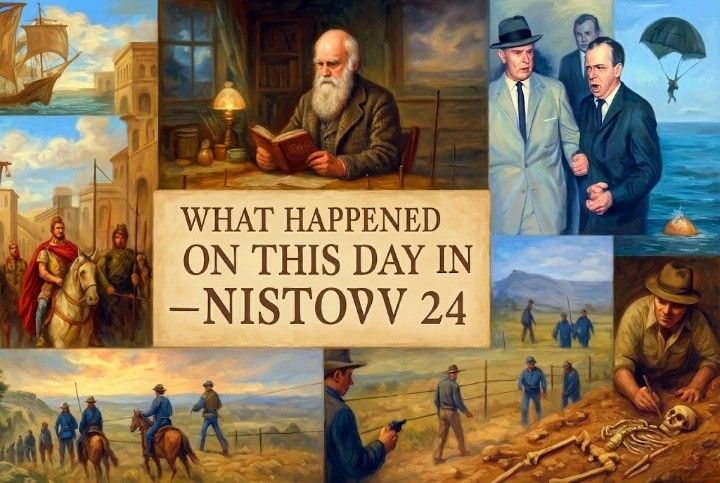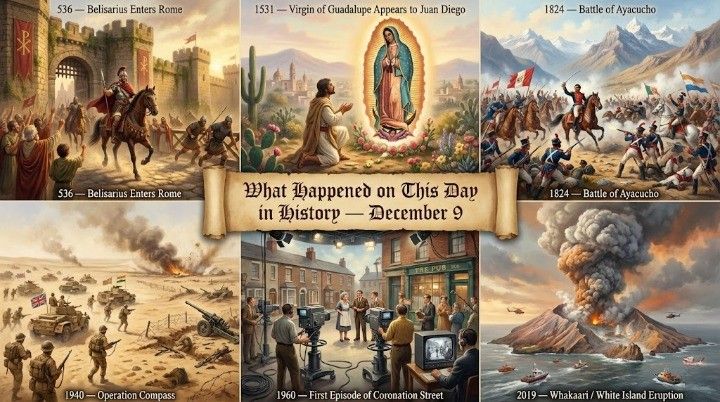
The passage of time often reveals how a single day can alter the course of entire civilizations. In this look at what happened on this day in history January 23, we observe the rise of the Ming Dynasty and the tragic power of nature’s deadliest earthquake. From groundbreaking medical achievements to the birth of iconic cultural institutions, this date serves as a reminder of our shared human journey.
Important Events That Happened On January 23 In History
393 – Honorius Proclaimed Co-Emperor
In a move to secure the future of the Roman lineage, Emperor Theodosius I officially proclaimed his eight-year-old son, Honorius, as co-emperor. This elevation to the rank of Augustus was intended to stabilize the empire’s succession during a period of rising external threats. Young Honorius would eventually go on to rule the Western Roman Empire during some of its most turbulent final decades.
971 – Victory of the Crossbow over War Elephants
The Song Dynasty military achieved a stunning tactical victory against the Southern Han at the Battle of Shao. By utilizing advanced crossbow technology, the Song troops were able to soundly defeat a formidable war elephant corps. The precision and power of the bolts terrified the animals, causing them to retreat and trample their own lines, leading to a decisive Song triumph.
1229 – The Founding of Turku
Pope Gregory IX granted permission for the episcopal seat to be moved from Nousiainen to Koroinen, near what is now the center of Turku, Finland. This administrative shift is widely regarded as the foundational moment for the city of Turku. Over the centuries, this location grew into one of Finland’s most important cultural and historical hubs.
1264 – The Mise of Amiens
King Louis IX of France issued a one-sided legal decision known as the Mise of Amiens to settle a dispute between King Henry III of England and his rebellious barons. Louis IX ruled entirely in favor of Henry III, effectively annulling the Provisions of Oxford that limited royal power. This decision failed to bring peace and instead directly triggered the Second Barons’ War led by Simon de Montfort.
1368 – The Birth of the Ming Dynasty
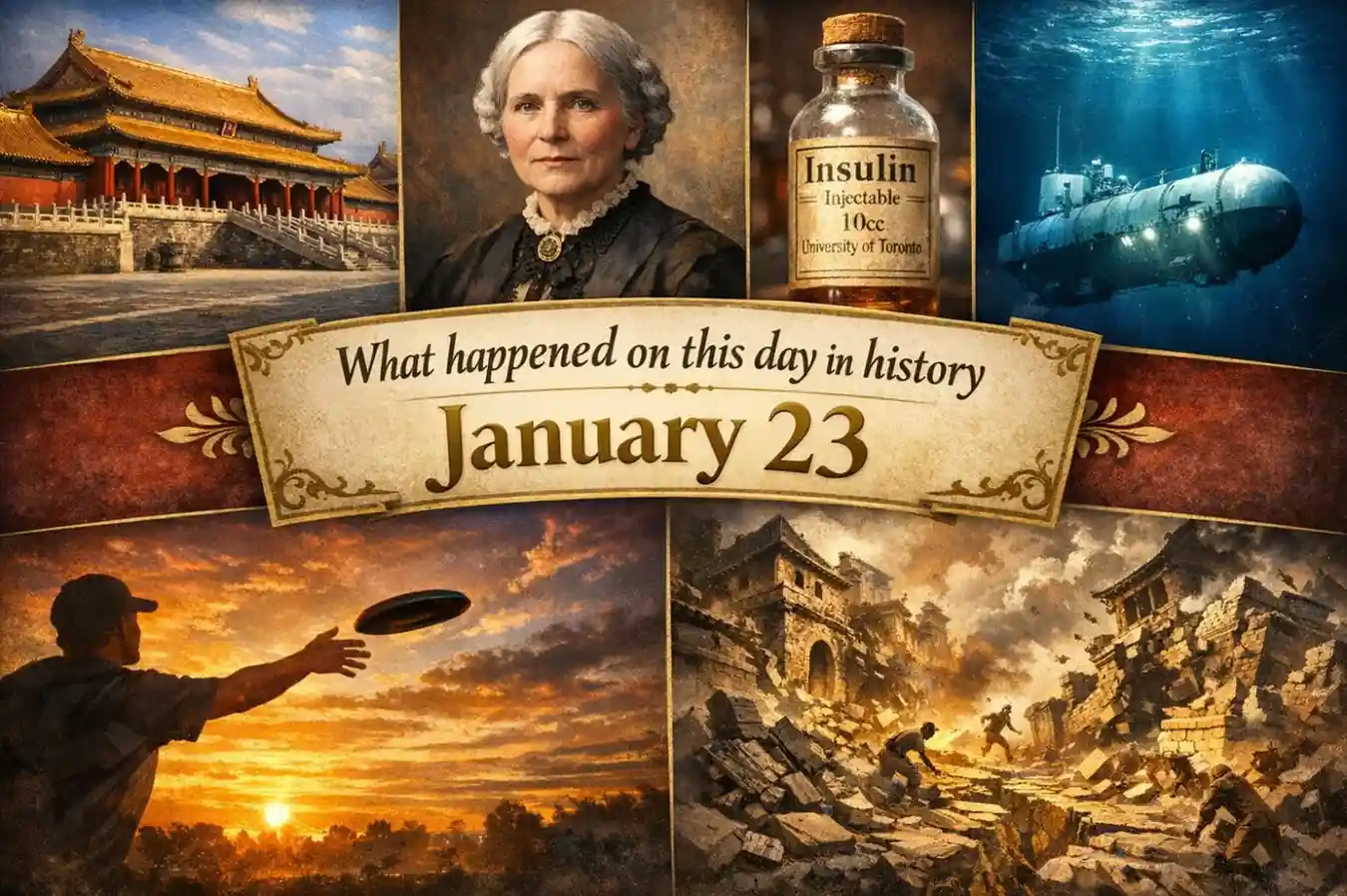
Zhu Yuanzhang officially proclaimed himself the Hongwu Emperor, marking the formal beginning of the Ming Dynasty in China. Rising from humble beginnings, he led a successful rebellion against the Mongol-led Yuan Dynasty. His reign focused on consolidating power, rebuilding the Chinese economy, and establishing a period of significant cultural and architectural growth.
1546 – Rabelais Returns with the Tiers Livre
After an eleven-year hiatus from publishing, the famous French writer François Rabelais released the Tiers Livre. This work served as the highly anticipated sequel to his satirical masterpieces Gargantua and Pantagruel. The book continued his tradition of using grotesque humor and philosophical inquiry to critique the social and religious institutions of his time.
1556 – The Great Shaanxi Earthquake
The deadliest earthquake in recorded human history struck Shaanxi province, China, with catastrophic force. Historical records suggest the death toll may have reached as high as 830,000 people, as the quake flattened buildings and triggered massive landslides. Many residents lived in artificial caves called yaodongs, which collapsed during the tremors, contributing to the staggering loss of life.
1565 – The Battle of Talikota
The Deccan Sultanates joined forces to defeat Rama Raya of the Vijayanagara Empire in a massive clash at Talikota. The battle resulted in over 100,000 casualties and the subsequent destruction and looting of the capital city, Vijayanagara. This defeat marked the beginning of the end for one of the last great Hindu empires in Southern India.
1570 – The First Firearm Assassination
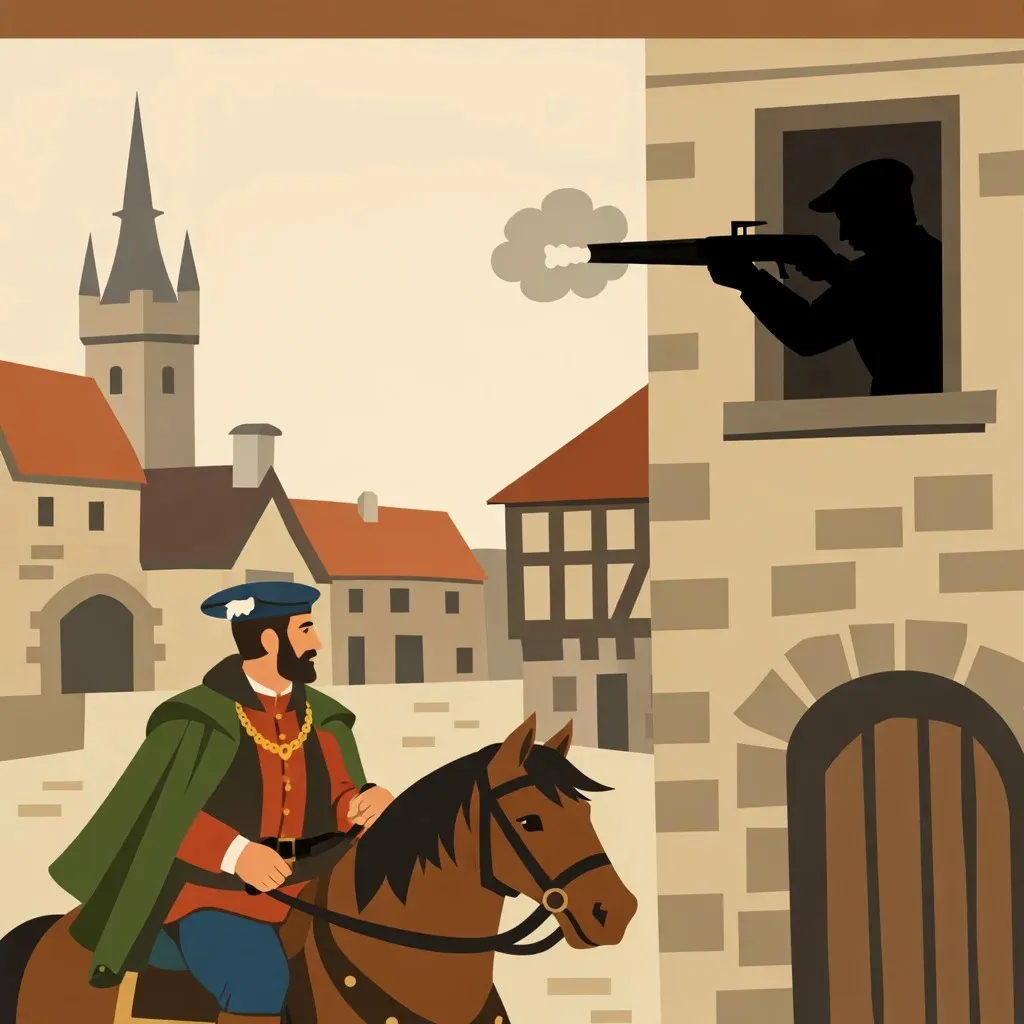
James Stewart, the 1st Earl of Moray and regent for King James VI of Scotland, was assassinated in the streets of Linlithgow. This event is historically significant as the first recorded instance of a head of government being assassinated with a firearm. The killer, James Hamilton of Bothwellhaugh, fired from a window, changing the nature of political violence forever.
1571 – Opening of the Royal Exchange
Queen Elizabeth I officially opened the Royal Exchange in London, providing a dedicated space for the city’s merchants and traders to conduct business. Modeled after the bourse in Antwerp, it became the commercial heart of London’s growing financial district. The institution helped solidify London’s position as a global center for trade and international finance.
1579 – The Union of Utrecht
A group of northern Dutch provinces signed the Union of Utrecht, forming a defensive alliance against the rule of Philip II of Spain. This agreement effectively created a Protestant republic in the Netherlands and laid the political foundations for the Dutch Republic. It was a crucial turning point in the Eighty Years’ War and the struggle for Dutch independence.
1656 – Pascal’s Provincial Letters
Blaise Pascal published the first of his Lettres provinciales, a series of witty and influential letters defending Jansenism against the Jesuits. The letters were written under a pseudonym and used sharp irony to criticize the moral theology of the time. They are considered a masterpiece of French prose and had a profound impact on religious thought and literature.
1719 – Creation of the Principality of Liechtenstein
The Principality of Liechtenstein was officially created within the Holy Roman Empire through the elevation of the estates of Vaduz and Schellenberg. Emperor Charles VI granted the new status to the House of Liechtenstein in recognition of their service. This small Alpine nation has since maintained its sovereignty and unique political identity for over three centuries.
1755 – Moscow University Established
Moscow State University was founded, becoming the first and most prestigious institution of higher learning in Russia. The university was established under the patronage of Empress Elizabeth Petrovna and the guidance of polymath Mikhail Lomonosov. It quickly became a center for scientific research, academic excellence, and the development of Russian intellectual life.
1789 – Foundation of Georgetown College
Georgetown College, the first Catholic university in the United States, was founded in what is now Washington, D.C. Bishop John Carroll and his colleagues purchased the land to create an academy for the education of youth regardless of their religious background. Today, Georgetown University remains a world-renowned Jesuit institution known for its focus on global affairs and law.
1793 – The Second Partition of Poland
The geopolitical map of Europe was redrawn as Prussia and the Russian Empire signed a treaty for the Second Partition of Poland. This agreement stripped the Polish-Lithuanian Commonwealth of nearly half its remaining territory and population. The partition was a devastating blow to Polish sovereignty and served as a precursor to the nation’s total disappearance from the map two years later.
1795 – Cavalry Captures a Fleet
In a rare and remarkable military event, French cavalry units captured 14 Dutch ships and 850 guns after crossing the frozen Zuiderzee. The Dutch fleet had been trapped in the ice, allowing the land forces to surround and demand their surrender. It remains one of the few instances in history where a naval fleet was captured by a cavalry charge on ice.
1846 – Abolition of Slavery in Tunisia
Tunisia made a historic humanitarian leap by officially abolishing slavery throughout the country. Ahmed I Bey issued the decree, making Tunisia one of the first Muslim-majority nations to take such a significant step toward universal human rights. This move followed years of gradual reforms aimed at ending the slave trade within Tunisian borders.
1849 – First Female Doctor in the US
Elizabeth Blackwell was awarded her M.D. by the Geneva Medical College in New York, becoming the first woman to earn a medical degree in the United States. Despite facing significant social and professional prejudice, she graduated at the top of her class. Her achievement paved the way for future generations of women to enter the medical profession.
1870 – The Marias Massacre
In a tragic and violent encounter in Montana, U.S. cavalrymen attacked a camp of Piegan Blackfeet, killing 173 people. The majority of the victims were women, children, and elderly men suffering from smallpox. The event, known as the Marias Massacre, remains one of the most egregious examples of the violence inflicted upon Native Americans during the Western Indian Wars.
1879 – Conclusion of the Battle of Rorke’s Drift
The legendary Battle of Rorke’s Drift ended after a long night of intense hand-to-hand combat between British soldiers and Zulu warriors. The small British garrison successfully held their position against overwhelming numbers, resulting in the awarding of 11 Victoria Crosses. This victory provided a much-needed morale boost for the British Empire following the disaster at Isandlwana.
1899 – The First Philippine Republic
The Malolos Constitution was officially inaugurated, marking the birth of the First Philippine Republic. Emilio Aguinaldo was sworn in as the republic’s first president, leading a new government intended to secure independence from colonial rule. While the republic’s existence was cut short by the Philippine-American War, it remains a vital symbol of Filipino nationalism.
1900 – Defeat at Spion Kop
The Battle of Spion Kop ended in a significant British defeat during the Second Boer War. British forces attempted to seize a high ridge to break the Siege of Ladysmith but were met with devastating Boer artillery and rifle fire. The high casualties and tactical errors on the hill made it one of the most famous and grim engagements of the entire war.
1904 – The Great Ålesund Fire
A devastating fire tore through the Norwegian coastal town of Ålesund, destroying hundreds of wooden buildings and leaving 10,000 people homeless. Remarkably, only one person died in the blaze, but the town was virtually leveled. Kaiser Wilhelm II of Germany helped fund a massive rebuilding effort, resulting in the town’s unique Jugendstil (Art Nouveau) architectural style.
1909 – First Use of the CQD Distress Signal
The RMS Republic became the first ship in history to use the CQD wireless distress signal after colliding with the SS Florida off the coast of Massachusetts. The signal alerted nearby vessels, allowing for the successful rescue of nearly all passengers before the Republic sank. This event proved the life-saving potential of wireless telegraphy at sea.
1912 – International Opium Convention
The first International Opium Convention was signed at The Hague, representing the first international treaty focused on drug control. The agreement required participating nations to regulate the manufacture and trade of opium, morphine, and cocaine. This convention served as the foundation for modern international drug laws and enforcement agencies.
1919 – Congress of the Makhnovshchina
The First Regional Congress of Peasants, Workers, and Insurgents was held in Velykomykhailivka by the anarchist movement known as the Makhnovshchina. Led by Nestor Makhno, the congress aimed to organize social and military life in the region based on anarchist principles. It was a significant moment for the “Black Army” during the chaos of the Russian Civil War.
1920 – The Exile of Kaiser Wilhelm II
The Netherlands officially refused to surrender the exiled Kaiser Wilhelm II to the Allied powers, who wanted to try him for war crimes. The Dutch government cited the traditional right of asylum and its own neutrality as reasons for protecting the former German leader. Wilhelm lived out the rest of his life in a manor in the town of Doorn.
1922 – The First Successful Insulin Treatment
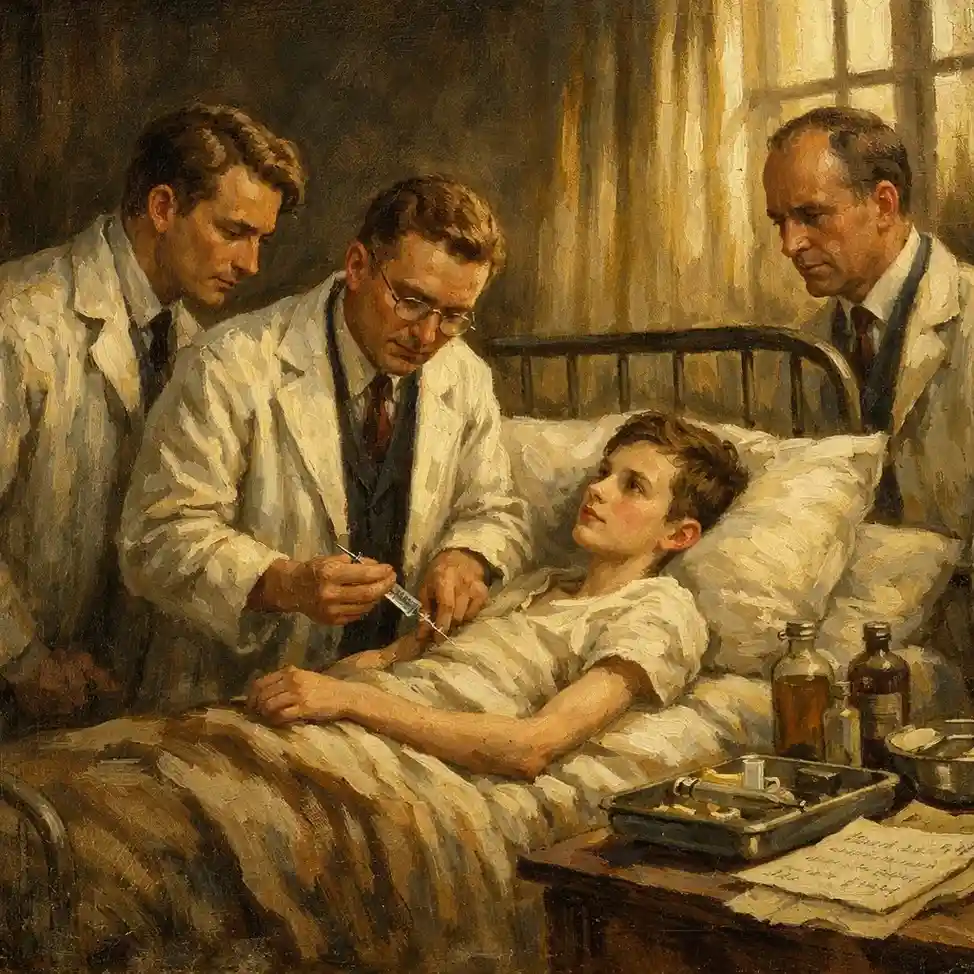
In a medical breakthrough, 14-year-old diabetic Leonard Thompson became the first human to receive a successful treatment of insulin. Before this discovery by Banting, Best, and Collip, a diagnosis of Type 1 diabetes was essentially a death sentence. The treatment allowed Thompson to recover quickly, transforming diabetes from a fatal disease into a manageable condition.
1937 – Trial of the Anti-Soviet Trotskyist Center
Seventeen mid-level Communist officials were put on trial in the Soviet Union, accused of being part of an “anti-Soviet Trotskyist center.” The defendants were charged with plotting to overthrow Joseph Stalin’s regime and engaging in sabotage. These show trials were a key part of the Great Purge, leading to mass executions and the consolidation of Stalin’s absolute power.
1941 – Lindbergh Testifies for Neutrality
Famed aviator Charles Lindbergh appeared before the U.S. Congress to testify against American involvement in World War II. He recommended that the United States remain neutral and even suggested negotiating a peace pact with Adolf Hitler. His isolationist stance was highly controversial and reflected the deep divisions in American public opinion at the time.
1942 – Invasion of New Guinea Begins
The Battle of Rabaul commenced as Japanese forces launched an invasion of Australia’s Territory of New Guinea. The Japanese captured the strategic harbor and airfield at Rabaul, turning it into a massive military base for their operations in the South Pacific. This move placed Japanese forces within striking distance of the Australian mainland.
1943 – British Troops Capture Tripoli
Troops of the British Eighth Army, under the command of General Montgomery, captured the city of Tripoli from German and Italian forces. The fall of the Libyan capital was a major strategic victory that effectively ended Axis rule in the region. This success allowed the Allies to continue their push toward Tunisia and the eventual liberation of North Africa.
1945 – Operation Hannibal Launched
German Admiral Karl Dönitz ordered the commencement of Operation Hannibal, one of the largest naval evacuations in history. The goal was to rescue German troops and civilians from East Prussia as the Red Army advanced. Over the course of several months, millions of people were transported across the Baltic Sea to safety in the West.
1950 – Jerusalem Named Capital of Israel
The Knesset, Israel’s parliament, passed a resolution officially declaring that Jerusalem is the capital of the state of Israel. This move followed the 1948 Arab-Israeli War and centralized the country’s government institutions in the holy city. The status of Jerusalem has remained one of the most complex and contested issues in international diplomacy ever since.
1957 – The Birth of the Frisbee
Inventor Walter Frederick Morrison sold the rights to his “Pluto Platter” flying disc to the Wham-O toy company. Wham-O later renamed the product the “Frisbee,” inspired by the pie tins from the Frisbie Pie Company that college students used to toss around. The toy became a global sensation, leading to the development of various sports like Ultimate Frisbee.
1958 – Uprising in Venezuela
President Marcos Pérez Jiménez was forced to flee Venezuela after a general uprising and violent street riots. The military-civilian movement sought to end his dictatorial rule and restore democratic processes. His departure marked the end of a decade of military dominance and the beginning of a period of democratic governance in the country.
1960 – Deepest Ocean Descent
The bathyscaphe USS Trieste made history by descending to a record-breaking depth of 10,911 meters (35,797 ft) in the Mariana Trench. Piloted by Jacques Piccard and Don Walsh, the vessel reached the deepest part of the world’s oceans, known as the Challenger Deep. The mission proved that life could exist even under the extreme pressure of the ocean’s floor.
1963 – Guinea-Bissau Independence War
The Guinea-Bissau War of Independence officially began when PAIGC guerrilla fighters launched an attack on the Portuguese Army in Tite. This conflict was part of a broader surge of nationalist movements across Portuguese colonies in Africa. The war lasted over a decade, eventually leading to the independence of Guinea-Bissau in 1974.
1964 – Ratification of the 24th Amendment
The 24th Amendment to the United States Constitution was officially ratified, prohibiting the use of poll taxes in federal elections. These taxes had been used, particularly in Southern states, to disenfranchise African American and low-income voters. The amendment was a major victory for the Civil Rights Movement and the protection of voting rights.
1967 – Founding of Milton Keynes
The town of Milton Keynes was formally established in England by an Order in Council. Designed as a “new town” to relieve housing pressure in London, the project aimed to create a city of 250,000 people. It incorporated several existing villages and towns, using a unique grid system and extensive green spaces that remain its defining characteristics today.
1968 – Seizure of the USS Pueblo
The USS Pueblo, an American environmental research ship (functioning as an intelligence vessel), was attacked and seized by the North Korean Navy in international waters. The crew was held captive for 11 months, during which they were tortured and used for propaganda. This incident caused a major diplomatic crisis and heightened Cold War tensions in Asia.
1982 – Crash of World Airways Flight 30
A World Airways DC-10 overshot the runway at Boston’s Logan International Airport and plunged into the icy waters of Boston Harbor. While most of the passengers and crew were rescued, two people remained missing and were eventually presumed dead. The accident led to renewed discussions about runway safety and ice management at airports.
1986 – First Rock and Roll Hall of Fame Inductees
The Rock and Roll Hall of Fame inducted its inaugural class during a ceremony in New York City. The legends honored included Elvis Presley, Chuck Berry, James Brown, Ray Charles, and Little Richard, among others. This event established the Hall of Fame as the preeminent institution for celebrating the history and impact of rock music.
1987 – The “Letter of Death” in Somalia
General Mohammed Said Hersi Morgan sent a secret proposal, later known as the “letter of death,” to Somali President Siad Barre. The letter detailed plans for the systematic persecution and genocide of the Isaaq people in Northern Somalia. This document is a key piece of evidence regarding the state-sponsored violence that led to the Somali Civil War.
1997 – First Female Secretary of State
Madeleine Albright made history when she was sworn in as the 64th United States Secretary of State. Appointed by President Bill Clinton, she became the first woman to hold the position and the highest-ranking woman in the history of the U.S. government at that time. Her tenure was marked by her firm stance on human rights and NATO expansion.
1998 – The Birth of Mozilla
Netscape Communications Corp. announced its intention to release the source code of its Communicator software as open source, giving birth to the Mozilla project. This revolutionary move was aimed at harnessing the power of the global developer community to improve web browser technology. It eventually led to the creation of the popular Firefox browser.
2001 – Tiananmen Square Self-Immolation Incident
Five people reportedly attempted to set themselves on fire in Beijing’s Tiananmen Square. While the Chinese government claimed they were practitioners of Falun Gong, many international observers and human rights groups argued the event was staged to justify the persecution of the movement. The incident remains a deeply controversial and debated moment in modern Chinese history.
2002 – Kidnapping of Daniel Pearl
Wall Street Journal reporter Daniel Pearl was kidnapped in Karachi, Pakistan, while investigating links between Al-Qaeda and international militants. His capture and subsequent horrific murder drew worldwide condemnation and highlighted the extreme dangers faced by journalists in conflict zones. His legacy continues through the Daniel Pearl Foundation, which promotes cross-cultural understanding.
2003 – Final Signal from Pioneer 10
NASA detected a very weak signal from the Pioneer 10 spacecraft for the last time as it traveled through the outer reaches of the solar system. Launched in 1972, Pioneer 10 was the first mission to transit the asteroid belt and visit Jupiter. Although no usable data could be extracted from this final transmission, the mission remains a milestone in space exploration.
2018 – Major Gulf of Alaska Earthquake
A powerful 7.9 magnitude earthquake occurred in the Gulf of Alaska, sending shockwaves across the region and triggering tsunami warnings along the Pacific coast. Despite being one of the largest earthquakes ever recorded in the United States, there were no reports of major damage or fatalities. The quake’s location far offshore mitigated its impact on populated areas.
2018 – Benghazi Car Bombing
At least 33 people were killed and dozens more wounded in a double car bombing in the Libyan city of Benghazi. The attack targeted a mosque as worshippers were leaving evening prayers, claiming the lives of both civilians and military personnel. The violence underscored the ongoing instability and security challenges facing Libya following the 2011 revolution.
2018 – Beginning of the China–US Trade War
The trade war between the United States and China officially began when President Donald Trump placed significant tariffs on imported Chinese solar panels and washing machines. This move was intended to protect American manufacturers but led to a series of retaliatory tariffs from Beijing. It marked the start of a prolonged period of economic tension between the world’s two largest economies.
2022 – Military Coup in Burkina Faso
Mutinying soldiers led by Paul-Henri Sandaogo Damiba deposed and detained President Roch Marc Christian Kaboré in Burkina Faso. The coup followed weeks of widespread anti-government protests regarding the administration’s failure to contain Islamist violence. This event added to a series of recent military takeovers across the West African region.
2024 – Northwestern Air Flight 738 Crash
A Northwestern Air Jetstream passenger plane crashed shortly after takeoff from the Fort Smith Airport in Canada’s Northwest Territories. The accident resulted in the deaths of six people on board, including mine workers heading to a remote site. Authorities immediately launched an investigation into the cause of the fatal crash in the harsh northern environment.
Famous People Born On January 23
| Name | Role / Description | Birth – Death |
|---|---|---|
| David Hilbert | German mathematician | January 23, 1862 – February 14, 1943 |
| Derek Walcott | West Indian poet & playwright | January 23, 1930 – March 17, 2017 |
| John Moses Browning | American gun designer | January 23, 1855 – November 26, 1926 |
| Bal Thackeray | Indian journalist & politician | January 23, 1926 – November 17, 2012 |
| Chita Rivera | American actress & dancer | January 23, 1933 – January 30, 2024 |
| Stendhal | French author | January 23, 1783 – March 23, 1842 |
| Antonio Villaraigosa | American politician | January 23, 1953 – |
| Potter Stewart | U.S. Supreme Court justice | January 23, 1915 – December 7, 1985 |
| Muzio Clementi | Italian-born British composer | January 23, 1752 – March 10, 1832 |
| Georg Baselitz | German artist | January 23, 1938 – |
| Ulrika Eleonora | Queen of Sweden | January 23, 1688 – November 24, 1741 |
| Mike Harris | Canadian politician | January 23, 1945 – |
| Naim Süleymanoğlu | Turkish weightlifter | January 23, 1967 – November 18, 2017 |
| Yukawa Hideki | Japanese physicist, Nobel laureate | January 23, 1907 – September 8, 1981 |
| Sir Arthur Lewis | Saint Lucian economist, Nobel laureate | January 23, 1915 – June 15, 1991 |
| Donald Wexler | American architect | January 23, 1926 – June 26, 2015 |
| John C. Polanyi | Canadian chemist, Nobel laureate | January 23, 1929 – |
| Lester Horton | American dancer & choreographer | January 23, 1906 – November 2, 1953 |
| Andrija Mohorovičić | Croatian geophysicist | January 23, 1857 – December 18, 1936 |
| J. G. Farrell | British novelist | January 23, 1935 – August 12, 1979 |
| Leon Golub | American artist | January 23, 1922 – August 8, 2004 |
| Gottfried Böhm | German architect | January 23, 1920 – June 9, 2021 |
| Jean-Lambert Tallien | French revolutionary | January 23, 1767 – November 16, 1820 |
| Herbert David Croly | American author & editor | January 23, 1869 – May 17, 1930 |
| Ivan Galamian | Violinist & music teacher | January 23, 1903 – April 14, 1981 |
| Sir James Lighthill | British mathematician | January 23, 1924 – July 17, 1998 |
| Louis Zukofsky | American poet | January 23, 1904 – May 12, 1978 |
| Otto Paul Hermann Diels | German chemist, Nobel laureate | January 23, 1876 – March 7, 1954 |
| Katharine Tynan | Irish poet & novelist | January 23, 1861 – April 2, 1931 |
| Camilla Collett | Norwegian author | January 23, 1813 – March 6, 1895 |
Famous People Died On January 23
| Name | Role / Description | Birth – Death |
|---|---|---|
| Bob Keeshan | American television entertainer | June 27, 1927 – January 23, 2004 |
| Gustave Doré | French illustrator | January 6, 1832 – January 23, 1883 |
| Anna Pavlova | Russian ballerina | February 12, 1881 – January 23, 1931 |
| Jack LaLanne | American fitness personality | September 26, 1914 – January 23, 2011 |
| Samuel Barber | American composer | March 9, 1910 – January 23, 1981 |
| Joseph Beuys | German sculptor & performance artist | May 12, 1921 – January 23, 1986 |
| Ernie Banks | American baseball player | January 31, 1931 – January 23, 2015 |
| Pierre Bonnard | French painter | October 3, 1867 – January 23, 1947 |
| Hugh Masekela | South African musician | April 4, 1939 – January 23, 2018 |
| Giambattista Vico | Italian philosopher | June 23, 1668 – January 23, 1744 |
| Northrop Frye | Canadian literary critic | July 14, 1912 – January 23, 1991 |
| Otto III | Holy Roman emperor | July 980 – January 23, 1002 |
| Sir Alexander Korda | British film producer | September 16, 1893 – January 23, 1956 |
| Claude Chappe | French engineer, telegraph inventor | December 25, 1763 – January 23, 1805 |
| Freddie Bartholomew | British-American actor | March 28, 1924 – January 23, 1992 |
| Charles Kingsley | British clergyman & writer | June 12, 1819 – January 23, 1875 |
| Phillips Brooks | American clergyman | December 13, 1835 – January 23, 1893 |
| John Field | Irish composer | July 26, 1782 – January 23, 1837 |
| Thomas Andrew Dorsey | American gospel musician | July 1, 1899 – January 23, 1993 |
| Edward MacDowell | American composer | December 18, 1860 – January 23, 1908 |
| Alexander Woollcott | American author & critic | January 19, 1887 – January 23, 1943 |
| Ferdinand Verbiest | Jesuit missionary & astronomer | October 9, 1623 – January 23, 1688 |
| Jim Lehrer | American journalist | May 19, 1934 – January 23, 2020 |
| Kid Ory | American jazz musician | December 25, 1886 – January 23, 1973 |
| William Caslon | English typefounder | 1692 – January 23, 1766 |
| Johann Wilhelm Ritter | German physicist | December 16, 1776 – January 23, 1810 |
| Max Nordau | Physician & writer | July 29, 1849 – January 23, 1923 |
| Nicanor Parra | Chilean poet | September 5, 1914 – January 23, 2018 |
| George Perle | American composer | May 6, 1915 – January 23, 2009 |
| Norman MacCaig | Scottish poet | November 14, 1910 – January 23, 1996 |
Observances & Institutional Dates
- Bounty Day (Pitcairn Islands): Commemorating the burning of the HMS Bounty by the mutineers in 1790.
- World Freedom Day (Taiwan and South Korea): Originally marking the return of POWs from the Korean War, now celebrating general democratic values.
- Netaji Subhas Chandra Bose’s Jayanti: A significant day in India (Assam, Orissa, Tripura, and West Bengal) honoring the birth of the famous independence leader.
Frequently Asked Questions
- What was the deadliest earthquake in history?
- The Shaanxi earthquake in China on January 23, 1556, is considered the deadliest, with an estimated 830,000 fatalities.
- Who was the first female US Secretary of State?
- Madeleine Albright became the first woman to hold the position on January 23, 1997.
- When was insulin first successfully used on a human?
- The first successful insulin treatment for diabetes was given to 14-year-old Leonard Thompson on January 23, 1922.
- What iconic toy was first sold on this day?
- The flying disc that would eventually be known as the Frisbee was sold to Wham-O on January 23, 1957.