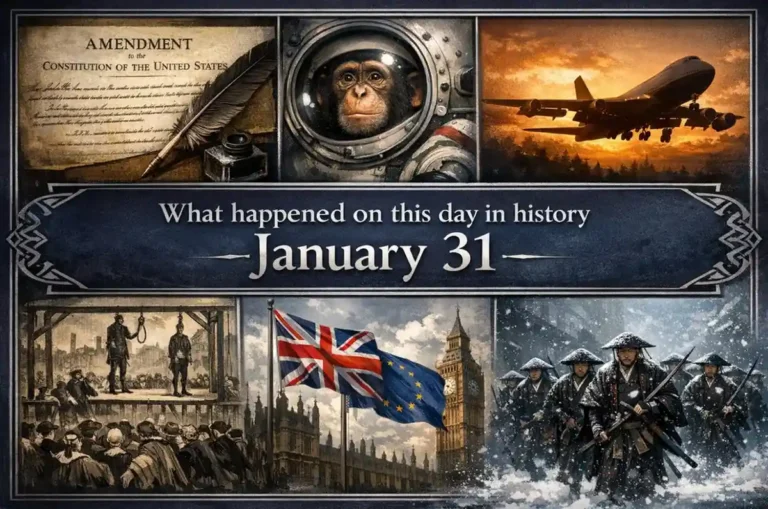
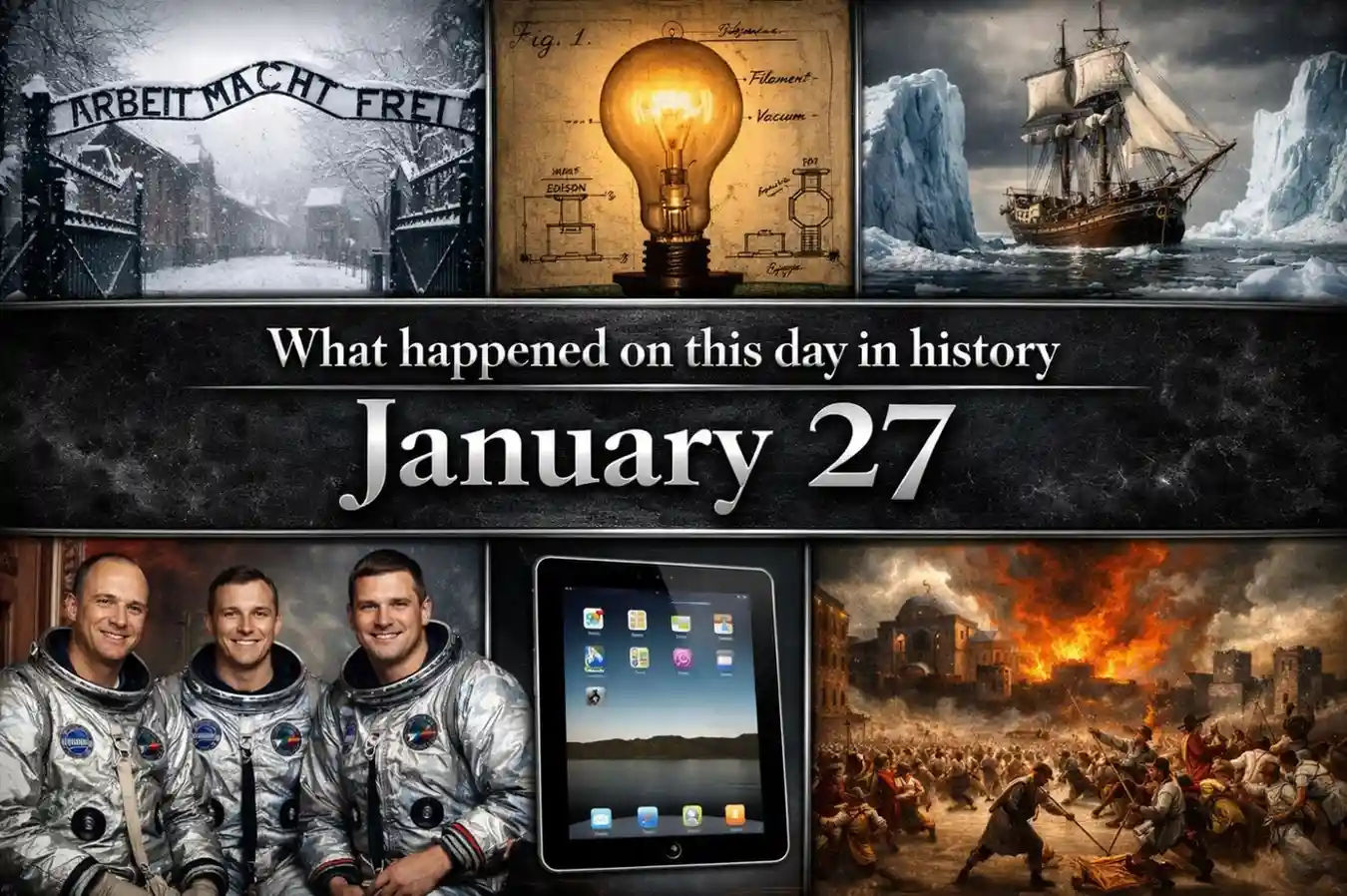
The corridor of time is paved with both the light of human achievement and the shadows of our deepest tragedies. When we look at what happened on this day in history January 27, we find a date defined by liberation and loss. It is the day the world first caught sight of the Antarctic continent and the day the gates of Auschwitz were finally opened. From the patenting of the lightbulb to the birth of the modern tablet computer, this date bridges the gap between the ancient world and the digital frontier.
Important Events That Happened On January 27 In History
98 – Trajan Succeeds Nerva
Following the death of his adoptive father Nerva, Trajan became the Emperor of the Roman Empire. His reign would eventually be characterized by the greatest territorial expansion in Roman history, as well as extensive public building programs and social welfare policies. He is remembered by history as the second of the “Five Good Emperors,” presiding over an era of relative peace and prosperity.
417 – Excommunication of Pelagius
Pope Innocent I officially declared the excommunication of the theologian Pelagius and his follower Caelestius. The Pope took this drastic step because Pelagius denied the doctrine of original sin, arguing instead that humans could achieve salvation through their own free will and effort. The excommunication remained in effect unless the two returned to what the Church defined as orthodoxy, marking a major moment in early Christian doctrinal development.
532 – Nika Riots Fail in Constantinople
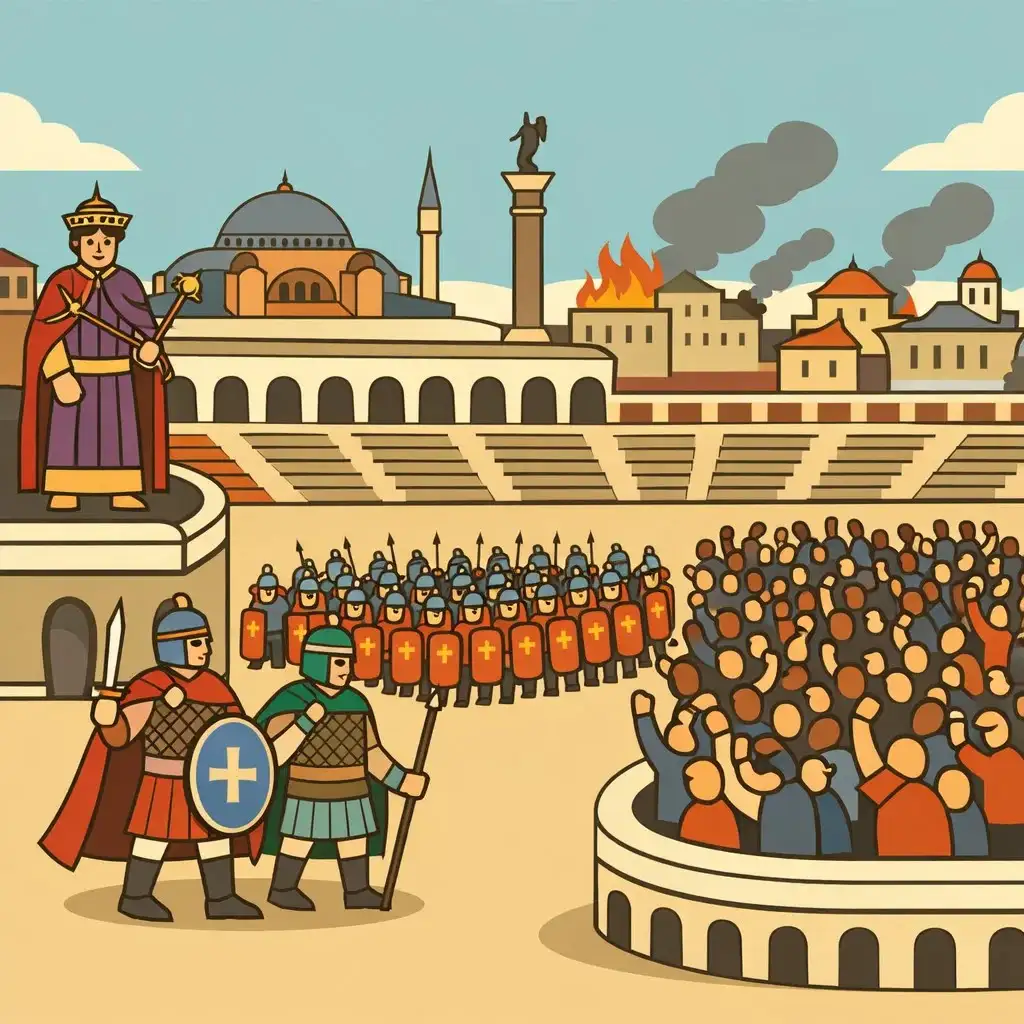
The Nika riots, the most violent riots in the history of Constantinople, came to a bloody end. After days of destruction that saw half the city burned, the Byzantine Emperor Justinian I cornered the rebels in the Hippodrome. His generals, Belisarius and Mundus, led imperial troops in a massacre that killed approximately 30,000 rioters, effectively securing Justinian’s throne and allowing him to rebuild the city.
945 – Overthrow of Byzantine Co-emperors
Byzantine co-emperors Stephen and Constantine were forcefully removed from power and compelled to take monastic vows. This coup was orchestrated by Constantine VII, who finally asserted his authority as the sole emperor of the Byzantine Empire after decades of being sidelined. His reign would eventually be noted for a resurgence in Byzantine scholarship and the preservation of imperial administrative records.
1186 – Marriage of Henry VI and Constance
Henry VI, the son and heir of Holy Roman Emperor Frederick I, married Constance of Sicily in Milan. This union was a masterstroke of medieval diplomacy, as it eventually brought the Kingdom of Sicily under the control of the Hohenstaufen dynasty. The marriage significantly altered the balance of power in Italy and led to decades of conflict between the empire and the papacy.
1302 – Dante Alighieri Exiled
The poet Dante Alighieri was condemned in absentia and permanently exiled from his beloved city of Florence. Caught on the losing side of a factional struggle between the “Black” and “White” Guelphs, Dante was accused of corruption and financial malfeasance. He would spend the rest of his life in exile, during which time he wrote his masterpiece, The Divine Comedy.
1343 – Papal Bull Unigenitus
Pope Clement VI issued the papal bull Unigenitus, which provided the official scriptural justification for the sale of indulgences. The document stated that the Pope and the episcopate held the keys to a “treasury of merit” accumulated by Christ and the saints. It also established that a Holy Jubilee year would be celebrated every fifty years, encouraging pilgrims to visit Rome to seek spiritual benefits.
1606 – Trial of the Gunpowder Plot Conspirators
The trial of Guy Fawkes and his fellow conspirators began in Westminster Hall following their failed attempt to blow up the British Parliament. The men were charged with high treason for their plot to assassinate King James I and restore a Catholic monarch. The trial moved swiftly, and by January 31, the conspirators were executed, cementing the “Fifth of November” in British cultural history.
1695 – Mustafa II Becomes Ottoman Sultan
Upon the death of Ahmed II, Mustafa II ascended the throne as the Ottoman Sultan and Caliph of Islam in Istanbul. He attempted to halt the decline of the empire by personally leading his armies in the Great Turkish War, but he met with a crushing defeat at the Battle of Zenta. His reign eventually ended with his abdication in 1703 following a military revolt.
1726 – J. S. Bach Leads Alles nur nach Gottes Willen
Johann Sebastian Bach directed the first performance of his cantata Alles nur nach Gottes Willen, BWV 72, in Leipzig. This performance concluded his third Christmas season as the Thomaskantor, falling on the Third Sunday after Epiphany. The work remains a significant example of Bach’s liturgical mastery and his ability to weave complex theology into choral music.
1759 – Battle of Río Bueno
Spanish colonial forces clashed with the indigenous Huilliche people of southern Chile in a fierce battle at the Río Bueno. The conflict arose from Spanish attempts to expand their influence and mission system into Mapuche-controlled territories. The Huilliches managed to repel the Spanish advance, maintaining their independence and demonstrating the continued resistance of native groups in the southern cone.
1776 – Arrival of Knox’s Artillery
During the American Revolutionary War, Henry Knox successfully completed a monumental logistical feat by delivering a “noble train of artillery” to Cambridge, Massachusetts. The cannons had been captured from Fort Ticonderoga and hauled over 300 miles across frozen terrain and mountains. This heavy weaponry was crucial in forcing the British to evacuate Boston a few months later.
1785 – University of Georgia Founded
The University of Georgia was officially chartered by the state legislature, making it the first state-chartered public university in the United States. Abraham Baldwin, who wrote the charter, believed that education was a duty of the state and essential for a free society. The founding of UGA established a model for the American public university system that would spread across the nation.
1820 – Discovery of Antarctica
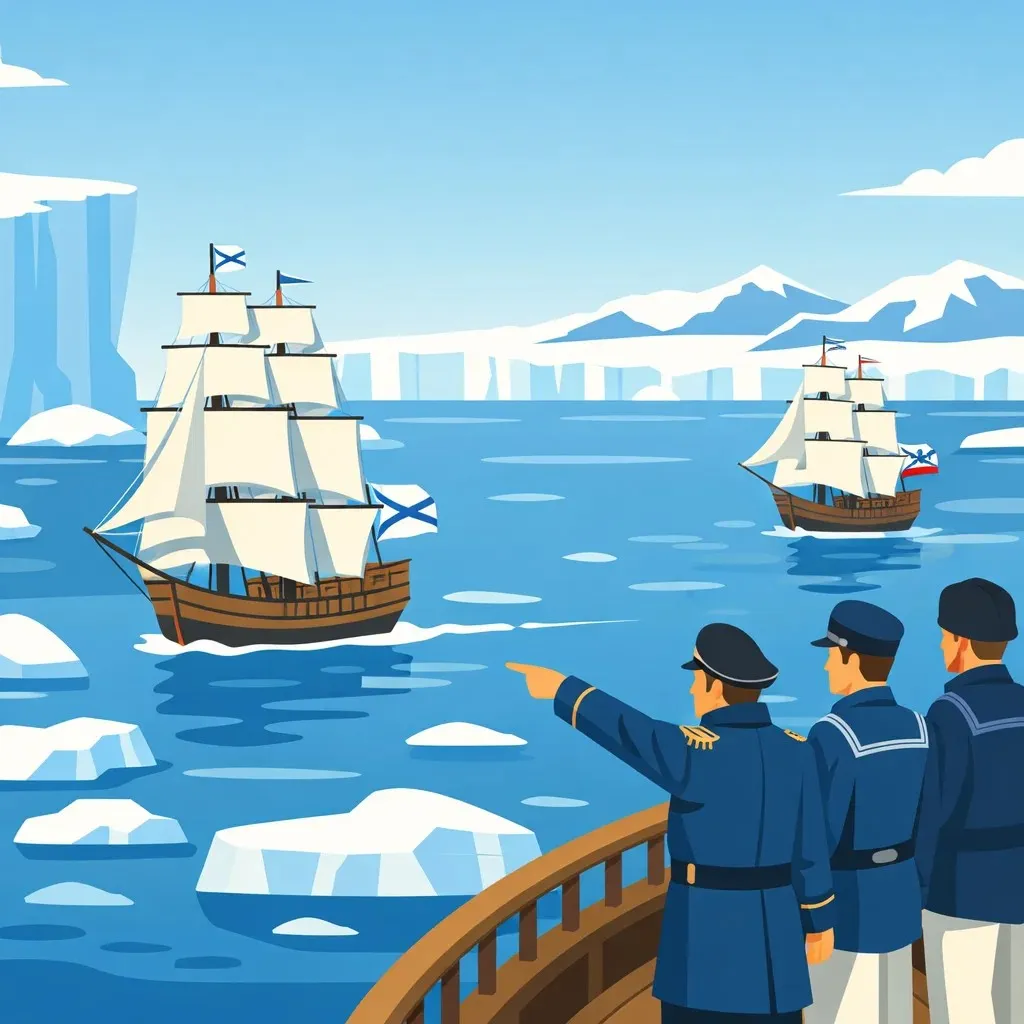
A Russian naval expedition led by Fabian Gottlieb von Bellingshausen and Mikhail Petrovich Lazarev made the first recorded sighting of the Antarctic continent. Their ships, the Vostok and Mirny, approached within 20 miles of the coast of what is now Princess Martha Coast. This sighting shattered the long-standing mystery of the “Southern Land” and began the era of Antarctic exploration.
1825 – Creation of Indian Territory
The U.S. Congress officially approved the establishment of “Indian Territory” in what is present-day Oklahoma. This legislative move was a key step in the government’s plan for the forced relocation of the Five Civilized Tribes from the American Southeast. This policy eventually led to the “Trail of Tears,” a series of forced marches that resulted in the deaths of thousands of Indigenous people.
1868 – Battle of Toba–Fushimi Begins
The Battle of Toba–Fushimi broke out near Kyoto, marking the start of the Boshin War between the Tokugawa shogunate and pro-Imperial factions. Although the Shogunate forces significantly outnumbered the Imperial troops, the latter possessed modern Western weaponry that proved decisive. This battle was a pivotal turning point that led to the collapse of the Shogunate and the Meiji Restoration.
1869 – Establishment of the Ezo Republic
Following their defeat in the Boshin War, a group of Tokugawa rebels fled to Hokkaidō and established the Ezo Republic. Led by Admiral Enomoto Takeaki, this short-lived state was notable for being the first to attempt to implement a democratic system in Japan. However, it was quickly suppressed by Imperial forces, leading to the full unification of Japan under the Emperor.
1874 – Premiere of Boris Godunov
Modest Mussorgsky’s monumental opera Boris Godunov premiered at the Mariinsky Theatre in St. Petersburg. The work, which explores the psychological and political turmoil of a Russian Tsar, was revolutionary for its realistic portrayal of the Russian people and its unconventional musical structure. Despite initial criticism, it is now considered the greatest of all Russian nationalist operas.
1880 – Edison Patents the Incandescent Lamp
Thomas Edison received U.S. Patent No. 223,898 for his version of the incandescent electric lamp. While others had experimented with electric light, Edison’s use of a high-resistance carbon filament in a vacuum made the bulb practical and commercially viable. This patent served as the cornerstone of the modern electrical industry and fundamentally changed human life by conquering the darkness of night.
1916 – Military Service Act Passed
Faced with the staggering casualties of World War I, the British government passed the Military Service Act, introducing conscription for the first time in United Kingdom history. Initially targeting single men aged 18 to 41, the act was later expanded to include married men and older age groups. The introduction of the draft was a controversial move that reflected the total-war nature of the conflict.
1918 – Start of the Finnish Civil War
The Finnish Civil War began between the socialist “Reds” and the conservative “Whites.” The conflict was sparked by deep social divisions and the power vacuum left by the collapse of the Russian Empire. The war was characterized by brutal urban fighting and “Red” and “White” terror, eventually ending in a White victory that shaped the politics of independent Finland for decades.
1924 – Lenin Placed in Mausoleum
Six days after his death, the body of Vladimir Lenin was carried into a specially constructed mausoleum in Moscow’s Red Square. Despite his own wish to be buried, the Soviet government decided to embalm his body for permanent public display. Lenin’s Tomb became a central shrine of the Soviet Union and remains a controversial landmark in modern Russia.
1927 – Ibn Saud Named King of Nejd
Ibn Saud officially took the title of King of Nejd, adding to his existing title of King of Hejaz. This consolidation of power was a major step toward the unification of the various tribes and territories of the Arabian Peninsula. Five years later, these regions were formally merged to create the modern Kingdom of Saudi Arabia.
1928 – The Bundaberg Tragedy
In the Australian town of Bundaberg, a tragic medical accident occurred when a batch of diphtheria vaccine became contaminated with Staphylococcus aureus. The contamination resulted in the deaths of twelve children shortly after they were inoculated. This tragedy led to a massive overhaul of vaccine manufacturing and storage protocols, eventually resulting in the use of multi-dose vials containing preservatives.
1939 – First Flight of the P-38 Lightning
The Lockheed P-38 Lightning, a revolutionary twin-engine fighter aircraft, made its maiden flight. Designed by Clarence “Kelly” Johnson, the P-38 featured a unique twin-boom design and became one of the most successful American combat aircraft of World War II. It was famous for its speed, range, and versatility, serving in every theater of the war.
1943 – First American Bombing of Germany
During World War II, the U.S. Eighth Air Force conducted its first bombing raid on German soil, targeting the U-boat construction yards at Wilhelmshaven. Ninety-one B-17 and B-24 bombers participated in the daylight mission, marking the beginning of the American strategic bombing campaign against the Third Reich. This mission proved that the Americans could strike deep into German territory despite heavy anti-aircraft fire.
1944 – Siege of Leningrad Lifted
After 900 days of starvation, cold, and constant bombardment, the Siege of Leningrad was officially lifted by the Soviet Red Army. The German blockade had claimed the lives of over a million civilians, most of whom died from hunger. The liberation of the city was a monumental victory for the Soviet Union and remains a symbol of incredible human endurance and resilience.
1945 – Liberation of Auschwitz
Soviet troops of the 322nd Rifle Division entered the Auschwitz-Birkenau concentration camp complex, liberating the few thousand remaining inmates. The soldiers discovered horrifying evidence of the Holocaust, including gas chambers, crematoria, and the belongings of hundreds of thousands of victims. This date is now observed internationally as a day to remember the six million Jews and millions of others murdered by the Nazi regime.
1951 – Nuclear Testing at Nevada Begins
The United States began a series of nuclear tests at the Nevada Test Site with Operation Ranger. The first blast, a one-kiloton airburst dropped from a B-50 bomber, was the first nuclear detonation in the continental United States since the Trinity test in 1945. The Nevada site would go on to host over 900 nuclear tests, leaving a lasting environmental and health legacy in the American West.
1961 – Sinking of the S-80
The Soviet Whiskey-class submarine S-80 sank in the Barents Sea after a snorkel malfunctioned, causing the vessel to flood while it was operating on diesel engines. All 68 crew members on board were killed in the disaster. The wreckage remained lost for seven years until it was located and eventually raised by the Soviet Navy in a secret recovery operation.
1965 – Overthrow of Trần Văn Hương
In the midst of the political instability of the Vietnam War, South Vietnamese Prime Minister Trần Văn Hương was removed from power by a military junta led by Nguyễn Khánh. This coup was one of many that plagued the South Vietnamese government following the assassination of Ngô Đình Diệm. The constant leadership changes hindered the effort to build a stable and effective civilian government in Saigon.
1967 – Apollo 1 Fire
Tragedy struck the American space program when a flash fire broke out inside the Apollo 1 command module during a pre-launch test. Astronauts Gus Grissom, Ed White, and Roger Chaffee were killed instantly in the pure-oxygen environment. The disaster led to major design changes in the Apollo capsule and a complete overhaul of NASA’s safety procedures, which ultimately made the later moon landings possible.
1967 – Signing of the Outer Space Treaty
The Soviet Union, the United States, and the United Kingdom signed the Outer Space Treaty in Washington, D.C. The landmark agreement established that space is the “province of all mankind” and banned the deployment of nuclear weapons in Earth’s orbit or on celestial bodies. It also mandated that the Moon and other celestial bodies be used exclusively for peaceful purposes, preventing a Cold War arms race in space.
1973 – Paris Peace Accords Signed
The Paris Peace Accords were officially signed, intended to end the Vietnam War and restore peace to the region. The agreement called for a ceasefire, the withdrawal of all U.S. troops, and the release of prisoners of war. On the same day, Colonel William Nolde was killed in action, becoming the last recorded American combat casualty of the conflict. While the accords ended direct U.S. involvement, fighting between North and South Vietnam continued until 1975.
1980 – Conclusion of the “Canadian Caper”
Six American diplomats who had been hiding in the Canadian embassy in Tehran successfully escaped Iran using fake Canadian passports. This daring rescue, known as the “Canadian Caper,” was a joint operation between the U.S. and Canadian governments and the CIA. The diplomats posed as a film crew scouting locations for a science fiction movie called Argo, a story that later became a major motion picture.
1983 – Seikan Tunnel Breakthrough
The pilot shaft of the Seikan Tunnel in Japan successfully broke through, connecting the islands of Honshū and Hokkaidō. At 53.85 kilometers long, it became the world’s longest and deepest sub-aqueous tunnel. The project was a massive engineering undertaking that took decades to complete, providing a vital all-weather rail link that transformed Japanese domestic travel.
1996 – Military Coup in Niger
Colonel Ibrahim Baré Maïnassara led a military coup in Niger, deposing Mahamane Ousmane, the country’s first democratically elected president. Maïnassara justified the takeover by citing political gridlock that had paralyzed the government. The coup was widely condemned by the international community and resulted in the suspension of foreign aid to the West African nation.
1996 – First Holocaust Remembrance Day in Germany
Germany officially observed International Holocaust Remembrance Day for the first time, marking the anniversary of the liberation of Auschwitz. President Roman Herzog established the day to ensure that the memory of the Nazi crimes would be preserved for future generations. The observance emphasizes education and the warning that such atrocities must never be allowed to happen again.
2002 – Lagos Armory Explosion
A series of massive explosions rocked a military storage facility in Lagos, Nigeria, after a fire spread to a munitions depot. The blasts sent rockets and shells flying into surrounding residential areas, causing widespread panic. At least 1,100 people were killed, many of whom drowned in a canal while trying to flee the chaos, and over 20,000 others were displaced from their homes.
2003 – National Recording Registry Announced
The Library of Congress announced the first selections for the National Recording Registry, a collection of sound recordings deemed culturally, historically, or aesthetically significant. The initial list included 50 recordings, ranging from the earliest Edison cylinder recordings to the speeches of Martin Luther King Jr. and the music of Miles Davis. The registry ensures the long-term preservation of America’s audio heritage.
2010 – End of Honduran Constitutional Crisis
The 2009 Honduran constitutional crisis officially came to an end as Porfirio Lobo Sosa was sworn in as the new President of Honduras. The crisis had begun a year earlier with the military ousting of President Manuel Zelaya. Lobo’s inauguration was seen as a step toward restoring democratic order, although the country remained deeply polarized by the preceding events.
2010 – Apple Announces the iPad
Steve Jobs took the stage in San Francisco to officially announce the iPad, Apple’s first tablet computer. While initial reactions were mixed, the iPad quickly revolutionized the mobile computing market, filling the gap between smartphones and laptops. It transformed how people consume media, browse the web, and work, selling millions of units within its first year.
2011 – Yemeni Revolution Begins
In one of the major events of the Arab Spring, over 16,000 protestors gathered in Sanaa to demand the resignation of Yemen’s long-time president, Ali Abdullah Saleh. The demonstrators were inspired by the recent revolutions in Tunisia and Egypt, citing government corruption, poverty, and unemployment. The protests eventually led to a year-long struggle that resulted in Saleh’s departure from power.
2011 – Hottest Star Documented
Astronomers documented a white dwarf star named H1504+65, located in the constellation Ursa Minor, which possesses the hottest known surface temperature in the universe. With a temperature of 200,000 K, the star is so hot that it is primarily composed of carbon and oxygen rather than hydrogen or helium. This discovery provided new insights into the final stages of stellar evolution for stars like our Sun.
2013 – Santa Maria Nightclub Fire
A devastating fire broke out at the Kiss nightclub in the Brazilian city of Santa Maria, killing 242 people and injuring hundreds more. The fire was caused by the illegal use of pyrotechnics by a band performing on stage, which ignited flammable acoustic foam on the ceiling. The tragedy led to a massive overhaul of safety regulations and fire codes in public venues across Brazil.
2014 – Kobanî Canton Declares Autonomy
During the ongoing Rojava conflict in Syria, the Kobanî Canton officially declared its autonomy from the Syrian Arab Republic. This declaration was part of a larger movement by Kurdish forces to establish self-governing regions in Northern Syria based on principles of direct democracy and gender equality. The region would soon become the site of a historic battle against the Islamic State.
2017 – Naming of Tennessine
A formal naming ceremony was held for the chemical element tennessine (atomic number 117) at Oak Ridge National Laboratory in the United States. The element was named in honor of the state of Tennessee, recognizing the contributions of its research institutions to the discovery of superheavy elements. Tennessine is a highly unstable, man-made element that exists for only fractions of a second.
2023 – Tyre Nichols Videos Released
The Memphis Police Department released multiple videos showing officers brutally beating Tyre Nichols during a traffic stop on January 7. The footage sparked nationwide protests and public outrage over police brutality and the need for systemic reform. Nichols had died in the hospital three days after the incident, and the five officers involved were subsequently charged with second-degree murder.
2023 – Neve Yaakov Synagogue Shooting
A Palestinian gunman opened fire on worshippers outside a synagogue in the Neve Yaakov neighborhood of East Jerusalem. The attack killed seven people and injured three others, marking one of the deadliest shootings in the city in years. The incident occurred during a period of heightened tensions in the region and was widely condemned by international leaders as a heinous act of terrorism.
2023 – Azerbaijan Embassy Attack
An armed gunman attacked the embassy of Azerbaijan in Tehran, Iran, killing the head of the embassy’s security service and injuring three others. The attacker was reportedly motivated by personal grievances, but the incident led to a significant diplomatic rift between Azerbaijan and Iran. Azerbaijan subsequently evacuated its diplomatic staff from Tehran and suspended embassy operations.
Famous People Born On January 27
| Name | Role / Description | Birth – Death |
|---|---|---|
| Keith Olbermann | American journalist & commentator | January 27, 1959 – |
| Samuel Gompers | American labor leader (AFL founder) | January 27, 1850 – December 13, 1924 |
| Bobby Bland | American R&B singer | January 27, 1930 – June 23, 2013 |
| Hyman G. Rickover | U.S. admiral, nuclear navy pioneer | January 27, 1900 – July 8, 1986 |
| ʿAbbās I | Ṣafavid shah of Persia | January 27, 1571 – January 19, 1629 |
| Elmore James | American blues musician | January 27, 1918 – May 24, 1963 |
| Learned Hand | United States jurist | January 27, 1872 – August 18, 1961 |
| Friedrich W. J. Schelling | German philosopher | January 27, 1775 – August 20, 1854 |
| Tōgō Heihachirō | Japanese admiral | January 27, 1848 – May 30, 1934 |
| Mordecai Richler | Canadian novelist | January 27, 1931 – July 3, 2001 |
| James J. Gibson | American psychologist | January 27, 1904 – December 11, 1979 |
| Ilya Ehrenburg | Soviet author & journalist | January 27, 1891 – August 31, 1967 |
| Gottfried Feder | German economist | January 27, 1883 – September 24, 1941 |
| Doc Pomus | American songwriter | January 27, 1925 – March 14, 1991 |
| Samuel Palmer | British painter | January 27, 1805 – May 24, 1881 |
| Edvard Kardelj | Yugoslav revolutionary | January 27, 1910 – February 10, 1979 |
| Clement IX | Pope of the Catholic Church | January 27, 1600 – December 9, 1669 |
| David Friedrich Strauss | German philosopher | January 27, 1808 – February 8, 1874 |
| Fritz Pollard | American football pioneer | January 27, 1894 – May 11, 1986 |
| Édouard Lalo | French composer | January 27, 1823 – April 22, 1892 |
| Máiread Maguire | Northern Irish peace activist | January 27, 1944 – |
| Samuel C. C. Ting | American physicist, Nobel laureate | January 27, 1936 – |
| Sir John Carew Eccles | Australian physiologist | January 27, 1903 – May 2, 1997 |
| Edith Cresson | French prime minister | January 27, 1934 – |
| Pavel Milyukov | Russian statesman | January 27, 1859 – March 3, 1943 |
| Felix Candela | Spanish architect | January 27, 1910 – December 7, 1997 |
| Thomas Willis | British physician | January 27, 1621 – November 11, 1675 |
| Peter Akinola | Nigerian Anglican archbishop | January 27, 1944 – |
| Juan Crisóstomo Arriaga | Spanish composer | January 27, 1806 – January 17, 1826 |
| Hester Lynch Piozzi | English writer | January 27, 1740 – May 2, 1821 |
Famous People Died On January 27
| Name | Role / Description | Birth – Death |
|---|---|---|
| John Updike | American author | March 18, 1932 – January 27, 2009 |
| Carl Gustaf Mannerheim | President of Finland | June 4, 1867 – January 27, 1951 |
| John James Audubon | American artist & naturalist | April 26, 1785 – January 27, 1851 |
| Jack Paar | American television host | May 1, 1918 – January 27, 2004 |
| Edward H. White II | American astronaut | November 14, 1930 – January 27, 1967 |
| James G. Blaine | American politician | January 31, 1830 – January 27, 1893 |
| Johann Gottlieb Fichte | German philosopher | May 19, 1762 – January 27, 1814 |
| Yue Fei | Chinese general & national hero | 1103 – January 27, 1142 |
| Jacobo Arbenz | President of Guatemala | September 14, 1913 – January 27, 1971 |
| Ramaswamy Venkataraman | President of India | December 4, 1910 – January 27, 2009 |
| John Farrow | Film director & writer | February 10, 1904 – January 27, 1963 |
| Gordon B. Hinckley | Mormon church president | June 23, 1910 – January 27, 2008 |
| Roger B. Chaffee | American astronaut | February 15, 1935 – January 27, 1967 |
| Charles Hard Townes | American physicist | July 28, 1915 – January 27, 2015 |
| Isaac Babel | Russian author | July 12, 1894 – January 27, 1940 |
| Erich Heckel | German expressionist artist | July 31, 1883 – January 27, 1970 |
| Richard Courant | American mathematician | January 8, 1888 – January 27, 1972 |
| Alphonse Juin | French general | December 16, 1888 – January 27, 1967 |
| János Bolyai | Hungarian mathematician | December 15, 1802 – January 27, 1860 |
| Adam Sedgwick | British geologist | March 22, 1785 – January 27, 1873 |
| Oscar Homolka | Austrian actor | August 12, 1898 – January 27, 1978 |
| Giovanni Verga | Italian novelist | September 2, 1840 – January 27, 1922 |
| Endre Ady | Hungarian poet | November 22, 1877 – January 27, 1919 |
| Saint Vitalian | Pope of the Catholic Church | – January 27, 672 |
| Georges Bidault | Prime minister of France | October 5, 1899 – January 27, 1983 |
| Yves Chauvin | French chemist, Nobel laureate | October 10, 1930 – January 27, 2015 |
| Leo von Klenze | German architect | February 28, 1784 – January 27, 1864 |
| Erich Kleiber | Austrian conductor | August 5, 1890 – January 27, 1956 |
| Ashikaga Yoshimasa | Japanese shogun | January 20, 1436 – January 27, 1490 |
| Andrew Bell | Scottish educator | March 27, 1753 – January 27, 1832 |
Observances & Institutional Dates
- International Holocaust Remembrance Day: Commemorating the anniversary of the 1945 liberation of Auschwitz-Birkenau.
- Holocaust Memorial Day (UK): A national day of remembrance for the victims of the Holocaust and other genocides.
- Day of the Lifting of the Siege of Leningrad (Russia): A military honor day celebrating the 1944 liberation of the city.
Frequently Asked Questions
- What major invention was patented on January 27?
- Thomas Edison received the patent for his incandescent electric lamp on January 27, 1880.
- Why is January 27 International Holocaust Remembrance Day?
- It marks the date in 1945 when the Soviet Red Army liberated the Auschwitz-Birkenau concentration camp.
- What happened to the Apollo 1 crew on this day?
- Astronauts Gus Grissom, Ed White, and Roger Chaffee were killed in a cockpit fire during a test in 1967.
- Which continent was discovered on January 27, 1820?
- A Russian expedition led by Bellingshausen and Lazarev discovered the Antarctic continent.