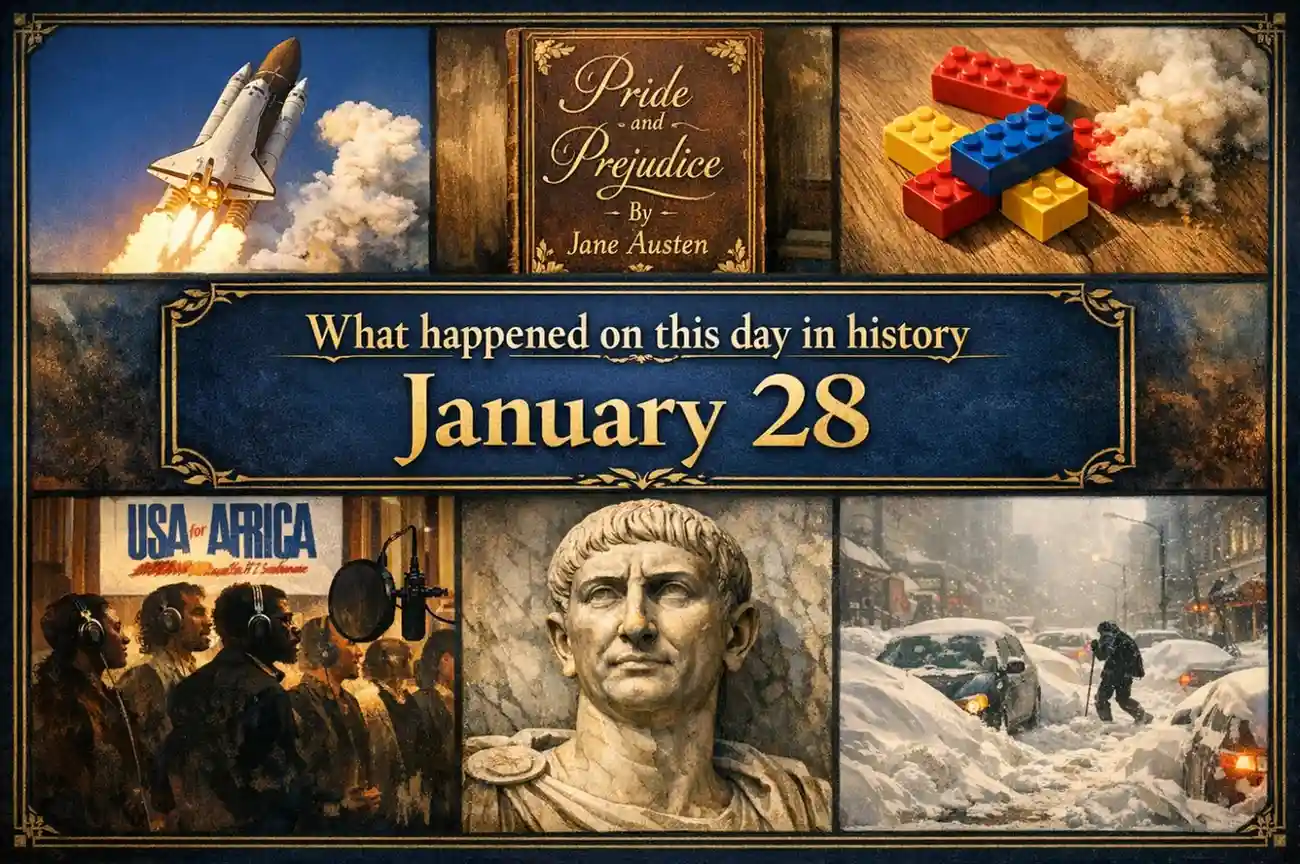
History is a tapestry of innovation and sudden, world-altering events. When examining what happened on this day in history January 28, we find a date that spans from the ancient declaration of a Roman Emperor to the modern silence of a fallen space shuttle. It is the day the design for the Lego brick was perfected and the day a supergroup of artists joined voices to heal a continent.
Important Events That Happened On January 28 In History
98 – Trajan Declared Roman Emperor
Following the death of Nerva, Trajan was officially declared Roman Emperor while stationed in Cologne. This transition was significant as Trajan was the first emperor born outside of Italy (in Roman Spain), signaling a shift in the empire’s power dynamics. His reign would later be remembered for its vast territorial expansion and his reputation as a benevolent ruler, earning him the title Optimus Princeps or “Best Ruler.”
814 – Accession of Louis the Pious
The death of Charlemagne, the first Holy Roman Emperor, brought an end to an era of Carolingian unification and led to the accession of his son, Louis the Pious. Louis inherited the vast Frankish Empire, but his reign was quickly challenged by internal family conflicts and the difficulties of maintaining such a massive territory. His leadership was marked by a deep commitment to religious reform and the eventual fragmentation of the empire among his heirs.
1069 – The Killing of Robert de Comines
Robert de Comines, newly appointed as the Earl of Northumbria by William the Conqueror, entered Durham with a force of several hundred men. However, local Northumbrian rebels ambushed and killed him along with his entire retinue. This defiant act of resistance directly provoked William the Conqueror’s brutal retaliatory campaign known as the “Harrying of the North,” which devastated Northern England for years.
1077 – The Walk to Canossa
In a dramatic display of papal authority over secular power, Holy Roman Emperor Henry IV waited for three days in the snow outside the gates of Canossa Castle. He sought the lifting of his excommunication by Pope Gregory VII, humbling himself as a penitent. The Pope eventually granted him absolution, marking a pivotal moment in the Investiture Controversy and the struggle for supremacy between the church and the state.
1393 – The Bal des Ardents (Ball of the Burning Men)
King Charles VI of France narrowly escaped death during a masquerade ball in Paris when a torch accidentally ignited the highly flammable costumes of several dancers. The “wild man” costumes, made of linen and pitch, turned into human torches, resulting in the deaths of four noblemen. The trauma of the event further exacerbated the King’s declining mental health and led to a period of instability in the French court.
1521 – The Diet of Worms Begins
The Diet of Worms, a formal imperial assembly of the Holy Roman Empire, officially commenced under the presidency of Emperor Charles V. The assembly was called primarily to address the teachings of Martin Luther and the burgeoning Protestant Reformation. Luther’s subsequent appearance and refusal to recant his writings led to the Edict of Worms, which declared him an outlaw and a heretic.
1547 – Edward VI Becomes King
Following the death of the formidable Henry VIII, his nine-year-old son Edward VI ascended the throne of England. Due to his young age, the country was governed by a Regency Council led by his uncle, Edward Seymour. Despite his short reign and childhood, Edward VI’s era saw the significant acceleration of the English Reformation and the introduction of the first Book of Common Prayer.
1568 – The Edict of Torda
In a landmark moment for religious liberty, the Edict of Torda was issued in the Eastern Hungarian Kingdom under John Sigismund Zápolya. The decree prohibited the persecution of individuals on religious grounds and granted ministers the right to preach their own interpretation of the faith. This act was one of the earliest official recognitions of religious pluralism in early modern Europe.
1573 – Articles of the Warsaw Confederation
The Articles of the Warsaw Confederation were signed, establishing a formal system of religious freedom and tolerance within the Polish–Lithuanian Commonwealth. This document made Poland one of the most tolerant countries in Europe at a time when other nations were embroiled in violent religious wars. It ensured that no citizen could be persecuted or imprisoned for their religious beliefs.
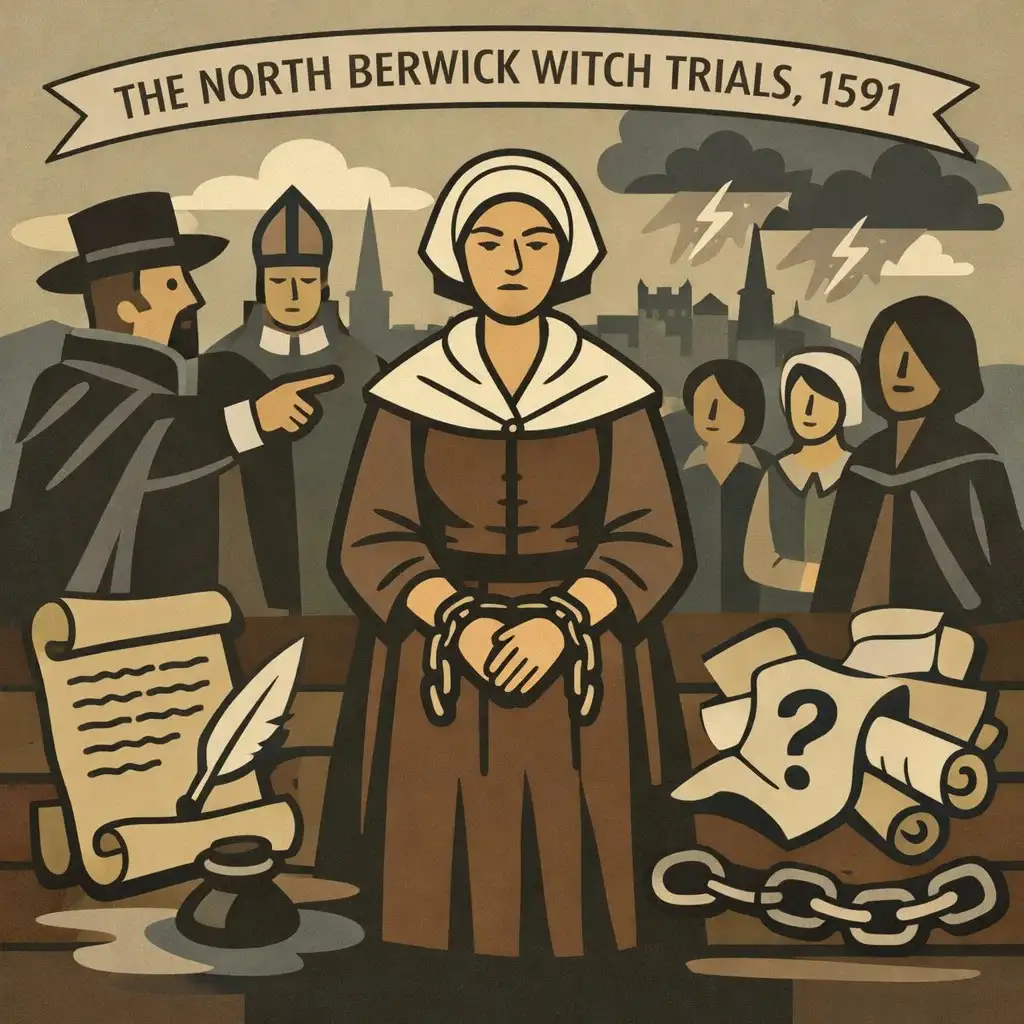
1591 – Execution of Agnes Sampson
Agnes Sampson, a Scottish healer and midwife, was executed in Edinburgh after being accused of witchcraft during the North Berwick witch trials. She was subjected to brutal torture and allegedly confessed to conspiring with the devil to sink the ships of King James VI. Her execution reflected the intense period of witch-hunting fervor that gripped Scotland and the personal anxieties of the monarch.
1624 – First British Caribbean Colony Founded
Sir Thomas Warner founded the first permanent British colony in the Caribbean on the island of Saint Kitts. This settlement served as a strategic foothold for British expansion in the West Indies and became a major producer of tobacco and sugar. The founding of the colony also led to violent conflicts with the indigenous Carib people and the eventual establishment of the plantation system.
1671 – Destruction of Panama City
The original city of Panama, founded in 1519, was sacked and destroyed by a fire during an attack by the famous privateer Henry Morgan. Morgan’s forces captured the city to seize its immense wealth, and the ensuing blaze left the settlement in ruins. Rather than rebuilding on the same site, the Spanish moved the city to a more defensible location nearby, leaving “Panama Viejo” as a permanent ruin.
1724 – Russian Academy of Sciences Founded
Peter the Great established the Russian Academy of Sciences in St. Petersburg by a Senate decree to modernize Russian science and education. The Academy was designed to integrate research and teaching, bringing in renowned European scholars to foster a new generation of Russian intellectuals. It remained the primary center for scientific advancement in Russia for nearly two centuries.
1754 – Coinage of the word “Serendipity”
Author Sir Horace Walpole coined the word “serendipity” in a letter to his friend Horace Mann. He derived the term from a Persian fairy tale, The Three Princes of Serendip, whose heroes were always making discoveries by accidents and sagacity. The word has since become a staple of the English language, describing the faculty of making fortunate discoveries by chance.
1813 – Pride and Prejudice Published
Jane Austen’s beloved novel Pride and Prejudice was first published in the United Kingdom by Thomas Egerton. Originally titled First Impressions, the book follows the lively Elizabeth Bennet as she navigates the complexities of manners, upbringing, and marriage in the British regency. The novel was an immediate success and remains one of the most popular and studied works of English literature.
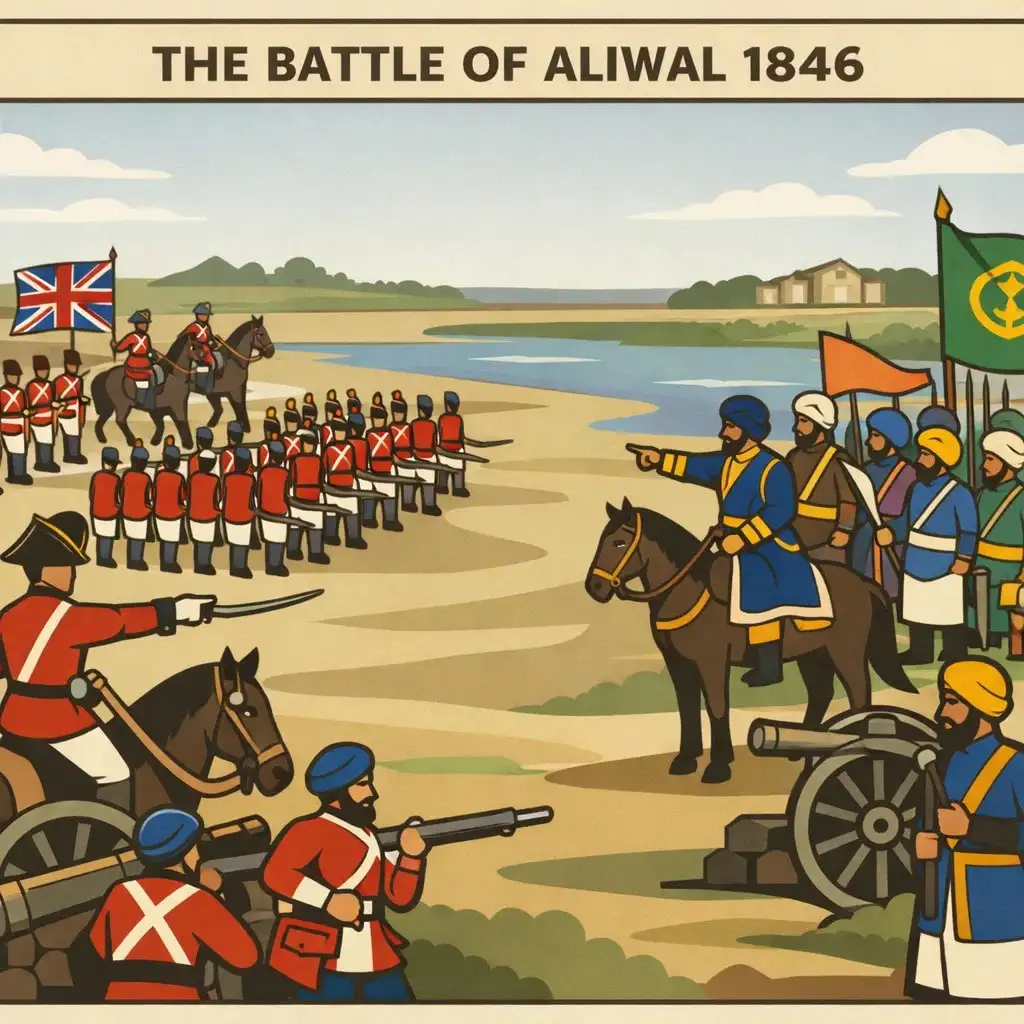
1846 – Battle of Aliwal
British troops commanded by Sir Harry Smith achieved a decisive victory over the Sikh forces of the Ranjit Singh Empire at the Battle of Aliwal in India. This engagement was a major turning point in the First Anglo-Sikh War, showcasing the effectiveness of British military tactics against a formidable opponent. The victory allowed the British to secure their control over the Punjab region.
1851 – Northwestern University Chartered
Northwestern University was officially chartered by the Illinois General Assembly, becoming the first chartered university in the state. Founded by a group of Methodist business leaders, the institution was intended to serve the educational needs of the Northwest Territory. Today, it has grown into one of the world’s leading private research universities with a global reputation for academic excellence.
1855 – First Trans-isthmian Train Run
A locomotive on the Panama Canal Railway successfully ran from the Atlantic Ocean to the Pacific Ocean for the first time. This marked the completion of the first transcontinental railroad in the world, dramatically shortening the travel time for passengers and cargo between the two oceans. The railroad played a vital role in global trade and the eventual construction of the Panama Canal.
1871 – Siege of Paris Ends
The Siege of Paris came to a close after four months of starvation and bombardment during the Franco-Prussian War. The French government signed an armistice with the Prussian forces, signaling a humiliating defeat for France and the fall of the Second French Empire. The surrender led to the proclamation of the German Empire and seeded the resentment that would contribute to future European conflicts.
1878 – Yale Daily News Founded
The Yale Daily News became the first independent daily college newspaper in the United States. Founded by a group of students, the paper provided a platform for campus news, editorial debate, and investigative reporting. It has since served as a training ground for many prominent journalists and remains the oldest daily college newspaper in the country.
1896 – World’s First Speeding Conviction
Walter Arnold of Kent, England, became the first person in history to be convicted of a speeding offense. He was caught traveling at 8 mph, which was four times the contemporary legal speed limit of 2 mph. A police officer on a bicycle pursued Arnold for five miles before apprehending him, and he was subsequently fined one shilling plus costs.
1902 – Carnegie Institution of Washington Founded
Philanthropist Andrew Carnegie established the Carnegie Institution of Washington with a massive $10 million gift. The institution was founded to support “discovery and the application of knowledge to the improvement of mankind,” focusing on research in fields like astronomy, biology, and physics. It continues to function as an independent research organization dedicated to fundamental scientific exploration.
1909 – US Troops Leave Cuba
The last United States troops departed from Cuba, with the exception of the personnel at the Guantanamo Bay Naval Base. The withdrawal marked the end of the second occupation of Cuba following the Spanish-American War and the establishment of the Cuban Republic. However, the U.S. maintained a significant degree of influence over Cuban affairs through the Platt Amendment.
1915 – US Coast Guard Created
The United States Congress passed an act merging the Revenue Cutter Service and the Life-Saving Service to create the United States Coast Guard. This new organization was established as a branch of the U.S. Armed Forces, responsible for maritime safety, security, and stewardship. The Coast Guard has since played a critical role in both peacetime search and rescue and wartime naval operations.
1916 – Manitoba Grants Women the Vote
The Canadian province of Manitoba became the first in the country to grant women the right to vote and hold provincial office. This milestone was the culmination of years of tireless work by suffragists like Nellie McClung and the Political Equality League. While it excluded Indigenous and Asian women at the time, it set a precedent that was soon followed by other provinces and the federal government.
1918 – Red Guard Seizes Helsinki
During the early days of the Finnish Civil War, the socialist Red Guard successfully seized control of the capital city, Helsinki. The members of the Senate of Finland were forced to go underground as the city fell into revolutionary hands. This event marked the beginning of a brutal conflict that would tear the newly independent nation apart before a “White” victory was eventually achieved.
1919 – Order of the White Rose of Finland Established
Baron Gustaf Mannerheim, serving as the regent of Finland, established the Order of the White Rose of Finland. This order of merit was created to recognize outstanding civil and military service to the nation. It remains one of the highest honors in Finland, awarded to citizens and foreigners alike for their contributions to Finnish society.
1920 – Foundation of the Spanish Legion
The Spanish Legion, originally known as the Tercio de Extranjeros, was officially founded by royal decree. Modeled after the French Foreign Legion, it was created as an elite force for Spain’s colonial wars in North Africa. The Legion earned a reputation for fierce bravery and a strict code of honor, playing a significant role in Spanish military history throughout the 20th century.
1922 – The Knickerbocker Theatre Disaster
A massive blizzard, known as the “Knickerbocker Storm,” dropped over two feet of snow on Washington, D.C., leading to a catastrophic structural failure. The weight of the snow caused the roof of the Knickerbocker Theatre to collapse during a movie screening, killing 98 people and injuring 133 others. It remains the deadliest building collapse in the history of the District of Columbia.
1932 – Japanese Attack on Shanghai
In an escalation of tensions in East Asia, Japanese forces launched a major military offensive against the city of Shanghai. The attack was ostensibly to protect Japanese citizens following anti-Japanese protests, but it led to weeks of brutal urban warfare and thousands of casualties. The “January 28 Incident” further strained Japan’s relations with the West and presaged the wider Second Sino-Japanese War.
1933 – The Name “Pakistan” Coined
The name “Pakistan” was first coined by Choudhry Rahmat Ali Khan in a pamphlet titled Now or Never. He envisioned the name as an acronym representing the Muslim-majority regions of the Indian subcontinent (Punjab, Afghania, Kashmir, Indus-Sindh, and Baluchistan). The term was quickly adopted by the Pakistan Movement, eventually leading to the creation of the independent state in 1947.
1935 – Iceland Legalizes Therapeutic Abortion
Iceland became the first Western nation to legalize therapeutic abortion, allowing the procedure in cases where the mother’s health was at risk. This progressive legislation was part of a broader trend of social and medical reform in the country. It established a legal framework for reproductive healthcare that was decades ahead of many other European and North American nations.
1938 – World Land Speed Record on Public Road
Rudolf Caracciola set a new World Land Speed Record for a public road, driving a Mercedes-Benz W125 Rekordwagen on the Autobahn between Frankfurt and Darmstadt. He reached a staggering speed of 432.7 km/h (268.9 mph). This record remained unbroken for public roads for nearly 80 years, highlighting the incredible engineering of the “Silver Arrows” era.
1945 – Reopening of the Burma Road
During the final stages of World War II, the first Allied supply convoy reached China over the newly reopened Burma Road. The road had been closed by Japanese forces in 1942, cutting off a vital lifeline for the Chinese military. The reopening of this land route allowed for a massive influx of supplies and equipment, strengthening China’s resistance against Japanese occupation.
1956 – Elvis Presley’s First National TV Appearance
Elvis Presley made his first national television appearance on Stage Show, a variety program hosted by Tommy and Jimmy Dorsey. He performed “Shake, Rattle and Roll” and “I Got a Woman,” introducing his energetic style and rebellious persona to a massive American audience. The performance was a pivotal moment in the birth of the rock and roll era and the rise of “The King.”
1958 – Lego Bricks Patented
The Lego company officially patented the design of its iconic plastic building bricks. The patent covered the “stud-and-tube” coupling system, which ensured that the bricks remained securely connected while still being easy for a child to pull apart. This design is still used today, meaning that Lego bricks produced in 1958 are still fully compatible with those made in the 21st century.
1960 – NFL Expansion Announced
The National Football League announced the addition of two expansion teams: one for Dallas to begin play in 1960 and one for Minneapolis-St. Paul to start in 1961. These teams became the Dallas Cowboys and the Minnesota Vikings, respectively. The expansion was a strategic move by the NFL to counter the emergence of the rival American Football League (AFL) and broaden the league’s national footprint.
1965 – Current Canadian Flag Chosen
The current “Maple Leaf” design of the Flag of Canada was officially chosen by an act of the Canadian Parliament. This decision followed a long and often heated national debate over whether to replace the old Canadian Red Ensign. The new flag, featuring a stylized red maple leaf on a white field with red borders, has since become one of the most recognized and beloved national symbols in the world.
1977 – The Great Lakes Blizzard
One of the most severe winter storms in American history, the Great Lakes Blizzard of 1977, began its first day of impact. The storm dumped up to 10 feet of snow in a single day in parts of Upstate New York, with Buffalo and Syracuse being hit the hardest. Sustained winds of 45 mph created massive snowdrifts that buried entire houses and paralyzed the region for over a week.
1980 – Collision of the USCGC Blackthorn
The United States Coast Guard Cutter Blackthorn collided with the oil tanker Capricorn while leaving Tampa Bay, Florida. The collision caused the Blackthorn to capsize and sink in minutes, resulting in the deaths of 23 Coast Guard crewmembers. It remains the worst peacetime tragedy in the history of the U.S. Coast Guard, leading to significant changes in navigational safety and training.
1981 – Reagan Lifts Oil Price Controls
In a major shift toward economic deregulation, President Ronald Reagan signed an executive order lifting all remaining domestic petroleum price and allocation controls. This move was intended to stimulate domestic oil production and allow the market to determine prices. The deregulation contributed to the end of the 1979 energy crisis and the beginning of the 1980s oil glut, leading to a long-term drop in fuel prices.
1982 – Rescue of General James L. Dozier
U.S. Army General James L. Dozier was successfully rescued by an elite Italian anti-terrorism unit, the NOCS, after being held captive for 42 days by the Red Brigades. Dozier had been kidnapped from his apartment in Verona, making him the only high-ranking American officer ever abducted by a terrorist group. The successful rescue was a major blow to the Red Brigades and a triumph for international counter-terrorism cooperation.
1984 – Tropical Storm Domoina Landfall
Tropical Storm Domoina made a devastating landfall in southern Mozambique and Swaziland, causing catastrophic flooding and high winds. The storm resulted in the deaths of at least 214 people and caused widespread destruction of infrastructure and agriculture. The flooding was some of the most severe ever recorded in the region, leading to a long-term humanitarian crisis.
1985 – Recording of “We Are the World”
The musical supergroup “USA for Africa” gathered in a Los Angeles studio to record the hit single “We Are the World.” Written by Michael Jackson and Lionel Richie and produced by Quincy Jones, the song featured a legendary lineup of 45 artists, including Bruce Springsteen, Bob Dylan, and Diana Ross. The project raised over $60 million for famine relief in Ethiopia and became a global anthem for humanitarian aid.
1986 – The Space Shuttle Challenger Disaster
In one of the most tragic moments in the history of space exploration, the Space Shuttle Challenger exploded just 73 seconds after liftoff from Kennedy Space Center. All seven crew members were killed, including Christa McAuliffe, who was to be the first teacher in space. The disaster was caused by the failure of an O-ring seal in a solid rocket booster and led to a multi-year suspension of the shuttle program.
1988 – Canadian Abortion Laws Struck Down
In the landmark case R v Morgentaler, the Supreme Court of Canada struck down all existing anti-abortion laws, ruling that they violated the right to “life, liberty and security of the person” guaranteed by the Charter of Rights and Freedoms. This decision effectively decriminalized abortion in Canada, making it a medical procedure regulated by provincial health authorities rather than the criminal code.
2002 – Crash of TAME Flight 120
TAME Flight 120, a Boeing 727-100, crashed into the side of the Cumbal Volcano in the Andes mountains of southern Colombia. All 94 passengers and crew on board were killed in the accident. The crash was attributed to pilot error during a heavy fog, as the crew failed to maintain the required altitude during their approach to the nearby Tulcán airport.
2006 – Katowice Exhibition Hall Collapse
The roof of one of the buildings at the Katowice International Fair in Poland collapsed under the weight of heavy snow, trapping hundreds of people inside. The disaster resulted in the deaths of 65 people and injured more than 170 others. Investigations revealed that the building had significant design flaws and that management had failed to clear the accumulated snow from the roof.
2021 – Gainesville Nitrogen Leak
A liquid nitrogen leak at a poultry food processing facility in Gainesville, Georgia, resulted in the deaths of six workers and injured at least ten others. The leak occurred in a freezer room, causing an oxygen-deficient atmosphere that overwhelmed the staff. The incident led to multiple federal investigations into safety protocols and chemical handling at the plant.
2023 – Tyre Nichols Protests
Massive protests broke out across several major American cities following the release of police body camera footage showing the brutal beating of Tyre Nichols in Memphis. The footage, which showed officers punching and kicking Nichols during a traffic stop, led to widespread outrage and calls for systemic police reform. Five officers were subsequently fired and charged with second-degree murder in connection with his death.
Take a Look At January 27 Facts
Famous People Born On January 28
| Name | Role / Description | Birth – Death |
|---|---|---|
| Jessica Ennis-Hill | British Olympic heptathlete | January 28, 1986 – |
| Artur Rubinstein | Polish-American concert pianist | January 28, 1887 – December 20, 1982 |
| Rick Warren | American evangelical pastor & author | January 28, 1954 – |
| Claes Oldenburg | American Pop Art sculptor | January 28, 1929 – July 18, 2022 |
| Tomas Lindahl | Swedish biochemist, Nobel laureate | January 28, 1938 – |
| Ismail Kadare | Albanian novelist & poet | January 28, 1936 – July 1, 2024 |
| Jeanne Shaheen | U.S. senator (New Hampshire) | January 28, 1947 – |
| Alexander Mackenzie | Prime minister of Canada | January 28, 1822 – April 17, 1892 |
| Auguste Piccard | Swiss-Belgian physicist & explorer | January 28, 1884 – March 24, 1962 |
| Mustafa III | Ottoman sultan | January 28, 1717 – January 21, 1774 |
| Tim Flannery | Australian zoologist & environmentalist | January 28, 1956 – |
| Raja Ramanna | Indian nuclear physicist | January 28, 1925 – September 24, 2004 |
| Ronnie Scott | British jazz musician & club owner | January 28, 1927 – December 23, 1996 |
| Alice Neel | American realist painter | January 28, 1900 – October 13, 1984 |
| Nick Price | Zimbabwean-born professional golfer | January 28, 1957 – |
| John Baskerville | English printer & typographer | January 28, 1706 – January 8, 1775 |
| Eugène Dubois | Dutch anthropologist | January 28, 1858 – December 16, 1940 |
| Mike Moore | Prime minister of New Zealand | January 28, 1949 – February 2, 2020 |
| Marcel Broodthaers | Belgian conceptual artist | January 28, 1924 – January 28, 1976 |
| George Sewall Boutwell | American politician | January 28, 1818 – February 27, 1905 |
| Libby Trickett | Australian Olympic swimmer | January 28, 1985 – |
| Otto Braun | Prime minister of Prussia | January 28, 1872 – December 14, 1955 |
| Robert William Holley | American biochemist, Nobel laureate | January 28, 1922 – February 11, 1993 |
| Jean-Felix Piccard | American chemical engineer | January 28, 1884 – January 28, 1963 |
| Kaarlo Juho Ståhlberg | First president of Finland | January 28, 1865 – September 22, 1952 |
| Dame Kathleen Lonsdale | British chemist & crystallographer | January 28, 1903 – April 1, 1971 |
| Parry O’Brien | American Olympic shot putter | January 28, 1932 – April 21, 2007 |
| Edward M. Liddy | American business executive | January 28, 1946 – |
| Joseph Bédier | French medieval scholar | January 28, 1864 – August 29, 1938 |
| Valentin Katayev | Soviet novelist & playwright | January 28, 1897 – April 12, 1986 |
Famous People Died On January 28
| Name | Role / Description | Birth – Death |
|---|---|---|
| Joseph Brodsky | American poet, Nobel laureate | May 24, 1940 – January 28, 1996 |
| Ronald McNair | American astronaut & physicist | October 21, 1950 – January 28, 1986 |
| Red Grange | American football legend | June 13, 1903 – January 28, 1991 |
| Paul V | Pope of the Catholic Church | September 17, 1552 – January 28, 1621 |
| James Nicholas Gray | Computer scientist, Turing Award winner | January 12, 1944 – January 28, 2007 |
| Reynaldo Hahn | French composer | August 9, 1874 – January 28, 1947 |
| Maxime Weygand | French general | January 21, 1867 – January 28, 1965 |
| Elroy Hirsch | American football player | June 17, 1923 – January 28, 2004 |
| Ludvig Holberg | Scandinavian Enlightenment author | December 3, 1684 – January 28, 1754 |
| Bharati Mukherjee | American novelist | July 27, 1940 – January 28, 2017 |
| Johannes Hevelius | Polish astronomer | January 28, 1611 – January 28, 1687 |
| William (King of Germany) | German king | 1228 – January 28, 1256 |
| Dino Buzzati | Italian novelist & journalist | October 16, 1906 – January 28, 1972 |
| William H. Prescott | American historian | May 4, 1796 – January 28, 1859 |
| Francis Michael Forde | Prime minister of Australia | July 18, 1890 – January 28, 1983 |
| Adalbert Stifter | Austrian writer | October 23, 1805 – January 28, 1868 |
| Ferenc Deák | Hungarian statesman | October 17, 1803 – January 28, 1876 |
| Antonín Novotný | President of Czechoslovakia | December 10, 1904 – January 28, 1975 |
| Bernd Rosemeyer | German race-car driver | October 14, 1909 – January 28, 1938 |
| Vicente Blasco Ibáñez | Spanish novelist | January 29, 1867 – January 28, 1928 |
| James Henry Scullin | Prime minister of Australia | September 18, 1876 – January 28, 1953 |
| Frederick John Robinson | Prime minister of Great Britain | November 1, 1782 – January 28, 1859 |
| Johannes van den Bosch | Dutch statesman | February 2, 1780 – January 28, 1844 |
| Katō Takaaki | Prime minister of Japan | January 25, 1860 – January 28, 1926 |
| Glenn Davis | Olympic track athlete | September 12, 1934 – January 28, 2009 |
| Franz Mehring | German historian & Marxist theorist | February 27, 1846 – January 28, 1919 |
| Sir Michael Foster | British physiologist | March 8, 1836 – January 28, 1907 |
| Pierre Séguier | Chancellor of France | May 28, 1588 – January 28, 1672 |
| Teófilo Braga | President of Portugal | February 24, 1843 – January 28, 1924 |
| Giuseppe Fiorelli | Italian archaeologist | June 8, 1823 – January 28, 1896 |
Observances & Institutional Dates
- Army Day (Armenia): Celebrating the formation of the Armenian Armed Forces.
- Data Privacy Day: An international effort to empower individuals and businesses to respect privacy and safeguard data.
- Anniversary of the Space Shuttle Challenger disaster: A day of remembrance for the lost crew and the risks of exploration.
Frequently Asked Questions
- What happened to the Space Shuttle Challenger?
- On January 28, 1986, the shuttle exploded 73 seconds after launch due to an O-ring failure, killing all seven crew members.
- Who was the first speeding convict on this day?
- Walter Arnold was convicted in 1896 for driving 8 mph in a 2 mph zone in Kent, England.
- What famous novel was published on January 28, 1813?
- Jane Austen’s Pride and Prejudice was first published on this day.
- Why is January 28 important for the name “Pakistan”?
- It is the day in 1933 when Choudhry Rahmat Ali Khan first coined the name in a pamphlet.