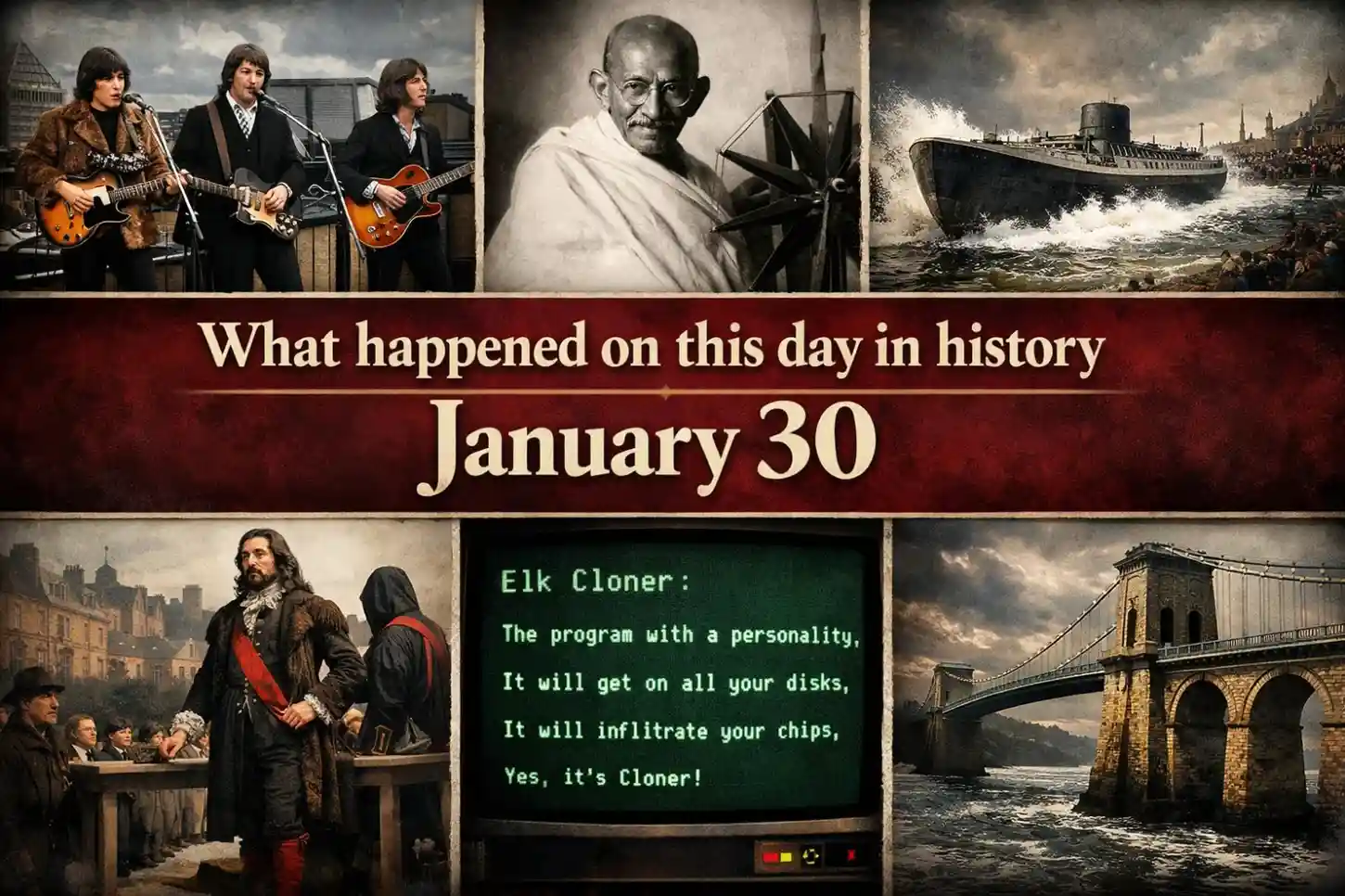
The passage of time often reveals a stark contrast between the end of old regimes and the birth of new eras. When we look at what happened on this day in history January 30, we encounter a timeline that moves from the scaffold of a British king to the rooftop of a London studio. It is a date defined by the struggle for sovereignty, the rise of powerful ideologies, and the relentless march of technological progress. From the naming of a legendary American city to the global declaration of a modern health crisis, this day serves as a powerful mirror for the triumphs and tragedies of our shared past.
Important Events That Happened On January 30 In History
1018 – The Peace of Bautzen
The Holy Roman Empire and Poland concluded the Peace of Bautzen, ending a long series of wars between Emperor Henry II and Bolesław I the Brave of Poland. The treaty allowed Bolesław to retain control over the territories of Lusatia and Milzenerland as imperial fiefs. This agreement solidified Poland’s status as a rising power in Central Europe and secured a period of stability along the empire’s eastern borders.
1287 – Foundation of the Hanthawaddy Kingdom
King Wareru officially founded the Hanthawaddy Kingdom, proclaiming its independence from the Pagan Kingdom. Establishing his capital at Martaban, Wareru successfully consolidated power among the Mon people in lower Burma. This move signaled the fragmentation of the central Pagan authority and the beginning of a new political era for the region that would last for centuries.
1607 – Massive Flooding in Bristol Channel
A catastrophic flood struck the coasts of the Bristol Channel and Severn Estuary in England, destroying an estimated 200 square miles of land. The disaster resulted in the deaths of approximately 2,000 people and decimated local livestock and agriculture. Modern researchers debate whether the event was caused by an exceptionally high storm surge or a rare tsunami, but it remains one of the UK’s deadliest natural disasters.
1648 – Treaty of Münster Signed
As part of the Peace of Westphalia, the Treaty of Münster was signed to end the Eighty Years’ War between the Netherlands and Spain. The treaty officially recognized the independence of the Dutch Republic, marking the end of Spanish rule over the territory. This diplomatic milestone not only reshaped the map of Europe but also established the modern principle of national sovereignty.
1649 – Execution of King Charles I
In one of the most shocking events in British history, King Charles I was executed outside the Banqueting House at Whitehall, London. Following his defeat in the English Civil War, he was tried and convicted of high treason by a special court. His death led to the temporary abolition of the monarchy and the establishment of a republic known as the Commonwealth of England under Oliver Cromwell.
1661 – Ritual Execution of Oliver Cromwell
More than two years after his actual death, the body of Oliver Cromwell was exhumed for a ritual execution on the 12th anniversary of King Charles I’s death. The restored monarchy under Charles II ordered this posthumous act as a symbolic punishment for the man who had led the regicides. His head was placed on a spike at Westminster Hall, where it remained for decades.
1667 – Truce of Andrusovo
The Russian-Polish War of 1654–1667 came to an end with the signing of the Truce of Andrusovo. The agreement forced the Polish–Lithuanian Commonwealth to cede vast territories, including Smolensk and Left-bank Ukraine, to the Tsardom of Russia. This shift in territory marked the beginning of Russia’s rise as a dominant European power and the gradual decline of the Commonwealth.
1789 – Liberation of Thăng Long
Vietnamese forces of the Tây Sơn dynasty, led by Emperor Quang Trung, achieved a decisive victory against the Qing Chinese armies at the Battle of Ngọc Hồi-Đống Đa. The victory resulted in the liberation of the capital city, Thăng Long (modern-day Hanoi). This military triumph is celebrated as a major milestone in the defense of Vietnamese national independence.
1806 – Opening of the Lower Trenton Bridge
The original Lower Trenton Bridge, which spans the Delaware River between Morrisville, Pennsylvania, and Trenton, New Jersey, was officially opened. Later famous for its “Trenton Makes The World Takes” neon sign, the bridge was a vital infrastructure link for the growing industrial region. It remains an iconic symbol of the area’s manufacturing heritage.
1820 – Edward Bransfield Sights Antarctica
British naval officer Edward Bransfield sighted the Trinity Peninsula, the northernmost point of the Antarctic mainland. While other explorers had seen ice shelves or nearby islands, Bransfield is credited with the first confirmed sighting of the continent itself. He claimed the territory for the British Crown, opening a new chapter in polar exploration.
1826 – Opening of the Menai Suspension Bridge
The Menai Suspension Bridge, designed by Thomas Telford, opened to connect the Isle of Anglesey to the mainland of Wales. At the time, it was considered the world’s first modern suspension bridge, utilizing massive iron chains to support the span. The bridge allowed for much faster travel for the mail coaches running between London and Holyhead.
1835 – Assassination Attempt on Andrew Jackson
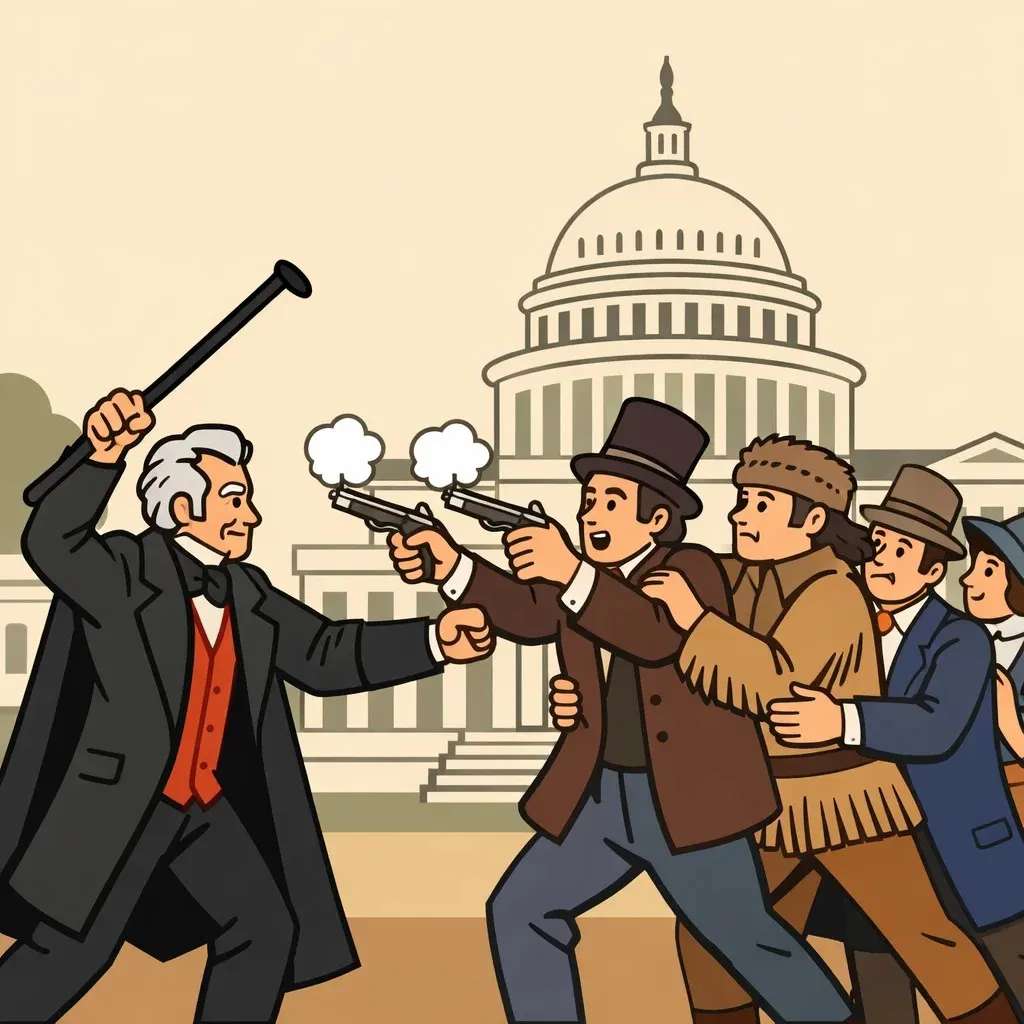
In the first attempted assassination of a U.S. President, Richard Lawrence approached Andrew Jackson outside the U.S. Capitol. Lawrence pulled two pistols, both of which misfired due to the humid weather. The 67-year-old Jackson famously attacked the gunman with his cane before the crowd, which included Davy Crockett, subdued the attacker.
1847 – Yerba Buena Renamed San Francisco
The small settlement of Yerba Buena in Alta California was officially renamed San Francisco. The name change was pushed by local leaders to match the name of the bay and the nearby mission, and to prevent a rival town from claiming the prestigious title. Within a year, the California Gold Rush would transform the town into a world-class city.
1858 – First Hallé Concert in Manchester
The Hallé orchestra gave its first performance in Manchester, England, under the direction of its founder, Charles Hallé. This marked the official establishment of the group as a full-time, professional orchestra. It is one of the oldest professional symphonic ensembles in the world and continues to be a cornerstone of British musical culture.
1862 – Launch of the USS Monitor
During the American Civil War, the Union launched the USS Monitor, its first ironclad warship. Designed by John Ericsson, the ship featured a revolutionary revolving turret and a low-profile hull armored in thick iron plates. Its subsequent battle with the CSS Virginia would forever change the nature of naval warfare, making wooden ships obsolete.
1889 – The Mayerling Incident
Archduke Crown Prince Rudolf of Austria, the heir to the Austro-Hungarian throne, was found dead alongside his young mistress, Baroness Mary Vetsera, at his hunting lodge in Mayerling. The official report concluded it was a joint suicide pact. The tragedy left the empire without a direct heir, setting off a chain of succession that ultimately led to the assassination of Archduke Franz Ferdinand in 1914.
1902 – Anglo-Japanese Alliance Signed
The first Anglo-Japanese Alliance was signed in London, marking a major shift in international diplomacy. The treaty committed Britain and Japan to assist each other if either was attacked by more than one power. For Britain, it was an end to “splendid isolation,” and for Japan, it was a recognition of its status as a burgeoning world power.
1908 – Release of Mahatma Gandhi
Jan C. Smuts ordered the release of Mohandas Karamchand Gandhi from prison in South Africa. Gandhi had been sentenced to two months for his role in organizing passive resistance against discriminatory registration laws. The negotiation between the two men was an early test of Gandhi’s Satyagraha (non-violent resistance) philosophy.
1911 – First Airplane Rescue at Sea
The destroyer USS Terry performed the world’s first airplane rescue at sea when it saved the life of pilot Douglas McCurdy. McCurdy had been forced to ditch his biplane in the water about 10 miles from Havana, Cuba, during an attempted flight from Florida. The event highlighted the potential for naval cooperation in the burgeoning field of aviation.
1920 – Foundation of Mazda
The Japanese company Mazda was founded in Hiroshima, initially under the name Toyo Cork Kogyo Co., Ltd. As the name suggests, the company started as a manufacturer of cork products before transitioning to industrial machinery and eventually vehicles. Today, it is recognized globally as a major automotive manufacturer known for its engineering innovation.
1925 – Expulsion of Patriarch Constantine VI
The Turkish government expelled Patriarch Constantine VI, the spiritual leader of the Orthodox Christian world, from Istanbul. The expulsion was part of the strained post-war relations between Turkey and Greece and the secularization policies of the new Turkish Republic. The move caused an international diplomatic outcry and highlighted the ongoing religious tensions in the region.
1930 – Campaign of Dekulakization
The Politburo of the Communist Party of the Soviet Union ordered the systematic confiscation of lands belonging to the “Kulaks,” or relatively wealthy peasants. This campaign of “Dekulakization” was part of Joseph Stalin’s forced collectivization policy. It resulted in the execution of tens of thousands and the forced deportation of millions to labor camps, contributing to a massive famine.
1933 – Adolf Hitler Becomes Chancellor
In a move that would lead to the collapse of the Weimar Republic, President Paul von Hindenburg appointed Adolf Hitler as the Chancellor of Germany. Although the Nazi Party did not have a majority, Hitler’s appointment followed months of political maneuvering. Once in office, he quickly moved to dismantle democratic institutions and establish a totalitarian dictatorship.
1939 – Hitler’s Reichstag Speech
During a speech in the Reichstag, Adolf Hitler made a chilling and public “prediction” that if international Jewish financiers plunged nations into another world war, the result would be the “annihilation of the Jewish race in Europe.” This speech is often cited by historians as a clear precursor to the Holocaust and the radicalization of Nazi racial policy.
1942 – Invasion of Ambon Island
During World War II, Japanese forces invaded the island of Ambon in the Dutch East Indies. After the Allied surrender, approximately 300 captured troops were summarily executed by the Japanese. The brutality of the campaign was staggering; of those who were taken as prisoners of war, only about one-quarter survived to see the end of the conflict in 1945.
1944 – Battle of Cisterna
As part of Operation Shingle during the Italian Campaign of World War II, the Battle of Cisterna began. The engagement saw a daring but ill-fated attempt by U.S. Army Rangers to infiltrate German lines. The Rangers were ambushed and almost entirely wiped out or captured, marking one of the most significant losses for the elite unit during the war.
1945 – Sinking of the Wilhelm Gustloff
The German transport ship Wilhelm Gustloff, overfilled with refugees fleeing the advancing Red Army, was torpedoed by a Soviet submarine in the Baltic Sea. The ship sank in cold waters, leading to the deaths of approximately 9,500 people, the vast majority of whom were civilians. It remains the deadliest maritime disaster in recorded history.
1945 – Raid at Cabanatuan
In a brilliant special operations mission, 126 American Rangers and Filipino resistance fighters conducted a raid on the Japanese-controlled Cabanatuan POW camp. They successfully liberated over 500 Allied prisoners who had survived the Bataan Death March. The raid is celebrated for its precise execution and the minimal casualties suffered by the liberating force.
1948 – Disappearance of the Star Tiger
A British South American Airways Tudor IV aircraft, the Star Tiger, disappeared while flying between the Azores and Bermuda. No wreckage or survivors were ever found, and the plane’s disappearance contributed to the growing legends surrounding the “Bermuda Triangle.” The loss of the 31 people on board remains an unsolved mystery of aviation.
1948 – Assassination of Mahatma Gandhi
Mahatma Gandhi, the leader of the Indian independence movement, was assassinated by a Hindu extremist in his home compound in New Delhi. Prime Minister Jawaharlal Nehru announced the news in a somber radio broadcast, stating, “The light has gone out of our lives.” The date is now observed in India as Martyrs’ Day to honor Gandhi’s commitment to non-violence.
1956 – Bombing of Martin Luther King Jr.’s Home
During the Montgomery bus boycott, a bomb was thrown onto the porch of Civil Rights leader Martin Luther King Jr.’s home. While King’s wife and daughter were home at the time, no one was injured. King responded with a call for non-violence, urging his supporters to remain peaceful despite the direct attack on his family.
1959 – End of the Jebel Akhdar War
The forces of the Sultanate of Muscat, supported by the British SAS, occupied the last strongholds of the Imamate of Oman in the Jebel Akhdar mountains. The capture of the villages of Saiq and Shuraijah marked the end of the conflict and the unification of the Sultanate. The war was significant for its use of modern mountain warfare tactics.
1959 – Sinking of the MS Hans Hedtoft
The Danish ship MS Hans Hedtoft, which had been specifically designed with an extra-strong hull to navigate ice-bound seas, struck an iceberg during its maiden voyage. The vessel sank off the coast of Greenland, and all 95 people on board were killed. Despite an intensive search, the only piece of wreckage ever found was a single lifebuoy.
1960 – Foundation of the African National Party
In the country of Chad, several traditionalist and regional parties merged to form the African National Party (PNA). This political consolidation was part of the nation’s struggle for stability as it moved toward independence from France later that year. The party aimed to create a unified national voice in a diverse and fragmented political landscape.
1964 – Coup in South Vietnam
General Nguyễn Khánh led a bloodless coup to overthrow the military junta of General Dương Văn Minh in South Vietnam. Khánh claimed that the previous leadership was too soft on the communist insurgency and was considering a neutralist solution to the war. This was one of several leadership changes that plagued the South Vietnamese government during the 1960s.
1968 – Launch of the Tet Offensive
During the Vietnam War, forces of the Viet Cong and the North Vietnamese Army launched the Tet Offensive, a massive series of coordinated surprise attacks against cities and outposts throughout South Vietnam. While the offensive was a tactical defeat for the communists, it was a major psychological turning point that eroded American public support for the war.
1969 – The Beatles’ Rooftop Concert
In what would be their final public performance, The Beatles played an unannounced concert on the roof of the Apple Records building in London. The set included songs like “Get Back” and “Don’t Let Me Down.” The performance caused a massive traffic jam and was eventually broken up by the police, providing a legendary conclusion to the band’s live career.
1972 – Bloody Sunday in Northern Ireland
During a period of intense civil unrest known as “The Troubles,” British paratroopers opened fire on unarmed anti-internment marchers in Derry. Thirteen people were killed instantly, and a fourteenth died later from his wounds. The event, known as Bloody Sunday, caused an international outcry and led to a massive surge in recruitment for the IRA.
1972 – Pakistan Leaves the Commonwealth
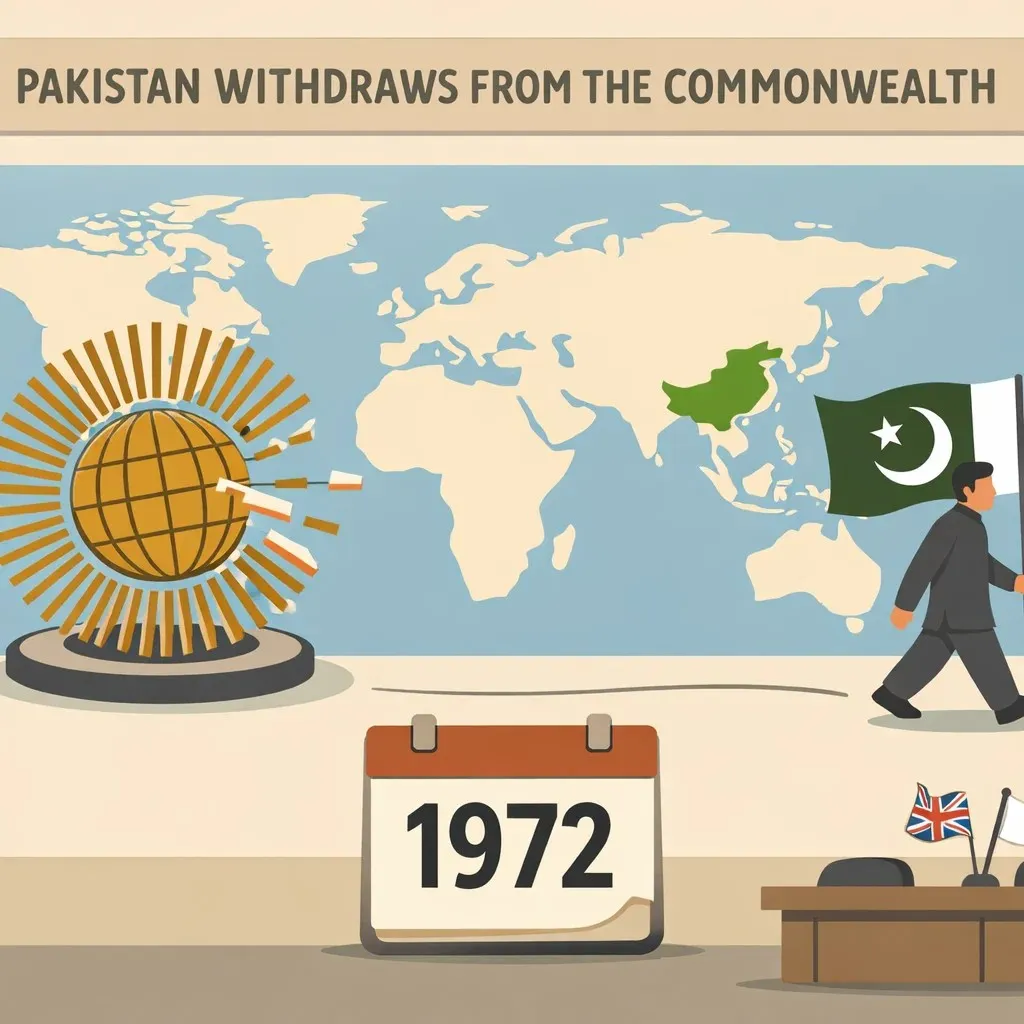
Pakistan officially withdrew from the Commonwealth of Nations. The move was a direct protest against the Commonwealth’s decision to recognize Bangladesh, which had successfully broken away from Pakistan following a brutal war of independence. Pakistan eventually rejoined the organization in 1989.
1974 – Pan Am Flight 806 Crash
A Pan American World Airways Boeing 707 crashed while on its final approach to Pago Pago International Airport in American Samoa. The accident resulted in the deaths of 97 people, with only four passengers and one crew member surviving. The investigation concluded that the pilots failed to properly monitor their altitude during a heavy rainstorm.
1975 – Establishment of the Monitor National Marine Sanctuary
The site of the wreck of the USS Monitor, located off the coast of North Carolina, was designated as the first United States National Marine Sanctuary. This designation was intended to protect the historic ironclad from salvagers and to facilitate archaeological research. It set the precedent for the protection of underwater cultural resources in American waters.
1975 – Turkish Airlines Flight 345 Crash
A Turkish Airlines Fokker F28 Fellowship crashed into the Sea of Marmara while attempting to land at Istanbul’s Yeşilköy Airport during a power outage. All 42 people on board were killed. The wreckage of the aircraft was not located until years later, making it one of the most difficult recovery operations in Turkish aviation history.
1979 – Disappearance of Varig Flight 967
A Varig Boeing 707 freighter disappeared over the Pacific Ocean just 30 minutes after taking off from Tokyo. The aircraft was carrying a cargo of valuable paintings, and despite an extensive search, no trace of the plane or its six crew members was ever found. Curiously, the flight commander had survived another famous crash, Varig Flight 820, years earlier.
1982 – The First PC Virus Code
Richard Skrenta, then a 15-year-old student, wrote the first “in the wild” virus code for a personal computer. The program, known as “Elk Cloner,” was 400 lines long and was disguised as an Apple boot program. When a disk was infected, it would display a short poem on the user’s screen every 50th time the computer was started.
1989 – US Embassy in Kabul Closes
The United States officially closed its embassy in Kabul, Afghanistan, due to safety concerns during the final stages of the Soviet withdrawal. The closure marked a long period of diplomatic absence as the country descended into civil war between various mujahideen factions. The embassy would not reopen until after the fall of the Taliban in 2002.
1995 – Breakthrough in Sickle Cell Treatment
The drug hydroxycarbamide (also known as hydroxyurea) became the first treatment approved by the FDA for the prevention of painful crises in patients with sickle cell disease. By increasing the production of fetal hemoglobin, the drug helps prevent red blood cells from sickling. This was a major medical milestone for a condition that had lacked effective preventive options.
2000 – Kenya Airways Flight 431 Crash
An Airbus A310 operated by Kenya Airways crashed into the Atlantic Ocean shortly after taking off from Abidjan, Ivory Coast. Of the 179 people on board, 169 were killed. The investigation revealed that a false stall warning had confused the pilots, who responded by pushing the nose of the plane down into the water.
2006 – Goleta Postal Facility Shootings
A former postal employee opened fire at a mail processing facility in Goleta, California. The perpetrator killed six people before taking her own life, resulting in a total of seven deaths. The event was one of the deadliest incidents of workplace violence in American history and prompted renewed discussions about mental health and employee screening.
2007 – Release of Windows Vista
Microsoft Corporation officially released Windows Vista to the general public. As a major update to the Windows NT operating system, it introduced the “Aero” user interface and significant changes to system security. While it sold millions of copies, it was also criticized by many users for its high system requirements and aggressive security prompts.
2013 – Launch of Naro-1
South Korea successfully launched the Naro-1 carrier rocket from the Naro Space Center. This was the country’s first successful launch of a satellite-carrying rocket into space, making South Korea the 11th nation to achieve independent space launch capability. The success followed two previous failed attempts in 2009 and 2010.
2020 – WHO Declares COVID-19 Emergency
The World Health Organization (WHO) officially declared the outbreak of COVID-19 to be a Public Health Emergency of International Concern (PHEIC). At the time, the virus had spread rapidly beyond China to several other countries. This declaration was a formal warning to all nations to prepare for a potential pandemic and to coordinate international response efforts.
2024 – Artemis Program Timeline Updates
NASA announced significant refinements to the timeline for the Artemis program, its ambitious effort to return humans to the Moon. The updates adjusted the dates for the Artemis II (crewed flyby) and Artemis III (crewed landing) missions to allow more time for testing and safety checks. The program aims to establish a long-term human presence on the lunar surface.
Famous People Born On January 30
| Name | Role / Description | Birth – Death |
|---|---|---|
| Boris III | King of Bulgaria | January 30, 1894 – August 28, 1943 |
| Richard Brautigan | American novelist and poet | January 30, 1935 – October 25, 1984 |
| Barbara Tuchman | American historian and author | January 30, 1912 – February 6, 1989 |
| Sir Nikolaus Pevsner | British art historian | January 30, 1902 – August 18, 1983 |
| Nathaniel P. Banks | U.S. politician and Civil War general | January 30, 1816 – September 1, 1894 |
| Peter Agre | American physician, Nobel laureate | January 30, 1949 – |
| Roy Eldridge | American jazz trumpeter | January 30, 1911 – February 26, 1989 |
| George Villiers, 2nd Duke of Buckingham | English politician | January 30, 1628 – April 16, 1687 |
| Rudolf Caracciola | German race-car driver | January 30, 1901 – September 28, 1959 |
| Adelbert von Chamisso | German poet and writer | January 30, 1781 – August 21, 1838 |
| Emilio Segrè | Italian-American physicist, Nobel laureate | January 30, 1905 – April 22, 1989 |
| Bernardo Bellotto | Italian painter (vedute) | January 30, 1720 – October 17, 1780 |
| Ion Luca Caragiale | Romanian playwright and satirist | January 30, 1852 – June 10, 1912 |
| Walter Savage Landor | English poet and essayist | January 30, 1775 – September 17, 1864 |
| George Bass | British explorer of Australia | January 30, 1771 – 1803 |
| Delbert Mann | American film and TV director | January 30, 1920 – November 11, 2007 |
| Johann Joachim Quantz | German composer and flutist | January 30, 1697 – July 12, 1773 |
| Sam Loyd | American puzzle creator | January 30, 1841 – April 10, 1911 |
| G. Evelyn Hutchinson | American ecologist | January 30, 1903 – May 17, 1991 |
| F. H. Bradley | British philosopher | January 30, 1846 – September 18, 1924 |
| Linda Nochlin | American art historian | January 30, 1931 – October 29, 2017 |
| Roger Shepard | American cognitive scientist | January 30, 1929 – May 30, 2022 |
| Walter Damrosch | American conductor and composer | January 30, 1862 – December 22, 1950 |
| Gelett Burgess | American humorist and illustrator | January 30, 1866 – September 17, 1951 |
| Shirley Hazzard | Australian-American novelist | January 30, 1931 – December 12, 2016 |
| Artúr Görgey | Hungarian revolutionary general | January 30, 1818 – May 20, 1916 |
| Tyla | South African singer | January 30, 2002 – |
| Olivia Colman | British actress | January 30, 1974 – |
| Christian Bale | British actor | January 30, 1974 – |
| Phil Collins | British musician and singer | January 30, 1951 – |
Famous People Died On January 30
| Name | Role / Description | Birth – Death |
|---|---|---|
| John Barry | British film composer | November 3, 1933 – January 30, 2011 |
| Bobby Hull | Canadian ice hockey player | January 3, 1939 – January 30, 2023 |
| John Bardeen | American physicist, Nobel laureate | May 23, 1908 – January 30, 1991 |
| Professor Longhair | American R&B musician | December 19, 1918 – January 30, 1980 |
| Francis Poulenc | French composer | January 7, 1899 – January 30, 1963 |
| Chita Rivera | American actress and dancer | January 23, 1933 – January 30, 2024 |
| Kalākaua | King of Hawaii | November 16, 1836 – January 30, 1891 |
| Dick Button | American figure skater | July 18, 1929 – January 30, 2025 |
| Ingemar Johansson | Swedish heavyweight boxer | September 22, 1932 – January 30, 2009 |
| Georges de La Tour | French Baroque painter | March 19, 1593 – January 30, 1652 |
| Pierre Boulle | French novelist | February 20, 1912 – January 30, 1994 |
| Joseph Jacobs | English folklorist and scholar | August 29, 1854 – January 30, 1916 |
| Charles Bradlaugh | British political radical | September 26, 1833 – January 30, 1891 |
| Dominique Pire | Belgian cleric, Nobel laureate | February 10, 1910 – January 30, 1969 |
| Fred Silverman | American television executive | September 13, 1937 – January 30, 2020 |
| Wendy Wasserstein | American playwright | October 18, 1950 – January 30, 2006 |
| Arthur O’Shaughnessy | British poet | March 14, 1844 – January 30, 1881 |
| Ernst Heinrich Heinkel | German aircraft engineer | January 24, 1888 – January 30, 1958 |
| Carlo Maderno | Italian Baroque architect | 1556 – January 30, 1629 |
| Zhelyu Zhelev | President of Bulgaria | March 3, 1935 – January 30, 2015 |
| Sir Alan Gordon Cunningham | British army officer | May 1, 1887 – January 30, 1983 |
| Boris Blacher | German composer | January 19, 1903 – January 30, 1975 |
| Damião de Góis | Portuguese humanist | February 2, 1502 – January 30, 1574 |
| Johannes Fibiger | Danish pathologist, Nobel laureate | April 23, 1867 – January 30, 1928 |
| Paul Déroulède | French politician and poet | September 2, 1846 – January 30, 1914 |
| Louis II | Count of Flanders | November 29, 1330 – January 30, 1384 |
| Herbert Eugene Bolton | American historian | July 20, 1870 – January 30, 1953 |
| Orville Wright | American aviation pioneer | August 19, 1871 – January 30, 1948 |
| Coretta Scott King | American civil-rights activist | April 27, 1927 – January 30, 2006 |
| Ferdinand Porsche | Austrian automotive engineer | September 3, 1875 – January 30, 1951 |
Observances & Institutional Dates
- Martyrs’ Day (India): Commemorating the anniversary of Mahatma Gandhi’s assassination in 1948.
- Fred Korematsu Day: Observed in several U.S. states to honor the civil rights activist who challenged Japanese American internment.
- Day of Saudade (Brazil): A day dedicated to the unique Portuguese and Brazilian feeling of nostalgic longing or “saudade.”
- Day of Azerbaijani Customs: Honoring the establishment of the national customs service in Azerbaijan.
Frequently Asked Questions
- What happened to the Beatles on January 30, 1969?
- They performed their final public concert on the roof of their Apple Records building in London.
- Why is January 30 “Martyrs’ Day” in India?
- It marks the day in 1948 when Mahatma Gandhi was assassinated by a Hindu extremist.
- Which major maritime disaster occurred on this day in 1945?
The sinking of the German ship Wilhelm Gustloff by a Soviet submarine, killing about 9,500 people. - What was the “Elk Cloner” created on this day in 1982?
- It was the first “in the wild” computer virus code created for a personal computer by Richard Skrenta.