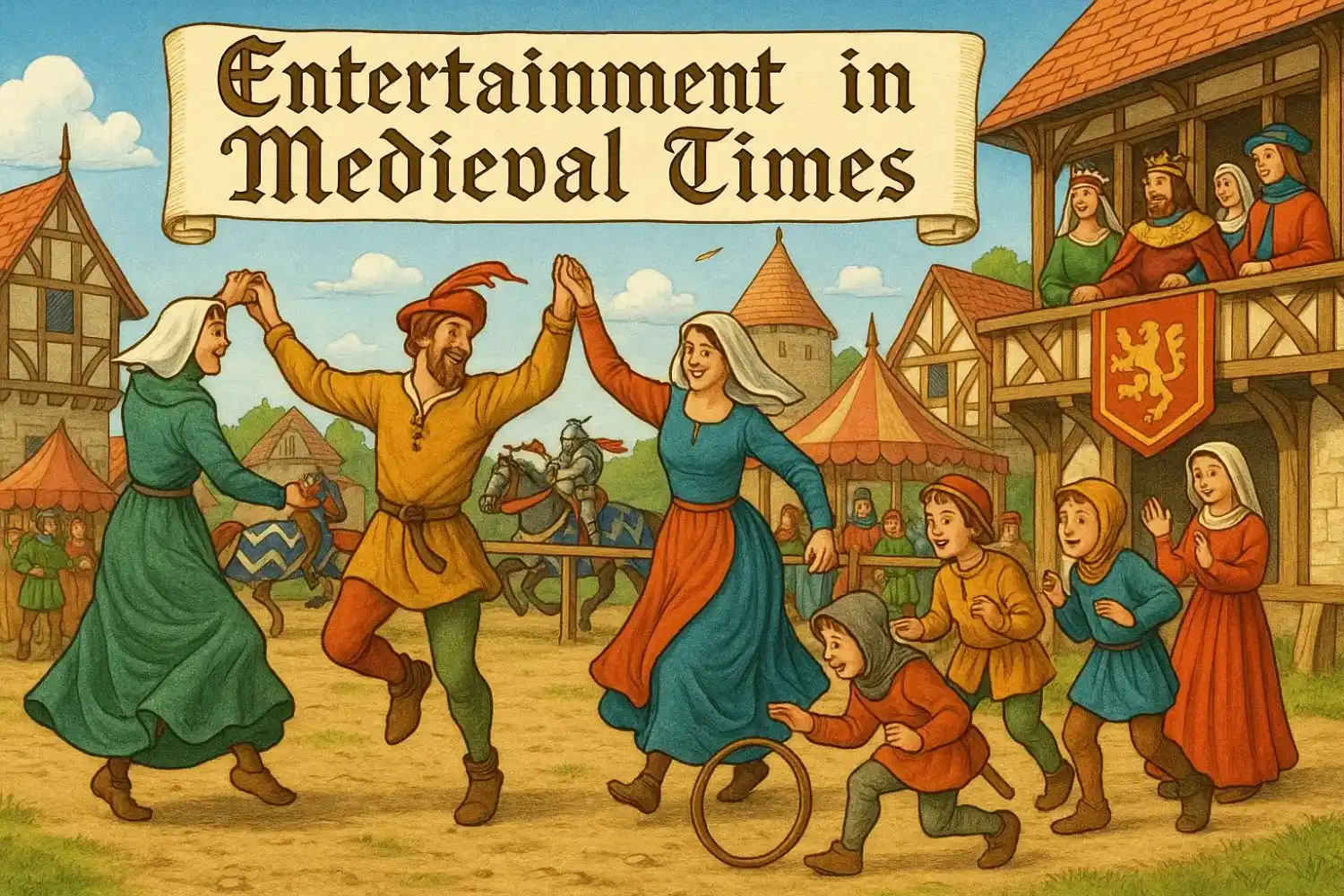
Picture a medieval village. If you imagine a silent, grey place where life was only about survival, you’re missing most of the story. The truth is, the Middle Ages were filled with noise, color, and a relentless pursuit of fun. The desire for entertainment in medieval times was a powerful force, shaping holidays, defining social status, and providing a crucial escape from the rigors of daily life.
This was a world where a king could lose a fortune on a chess match, a peasant could become a local hero in a chaotic football game, and entire towns would shut down for a week to watch religious plays. Let’s pull back the curtain on a bustling, vibrant past and explore the games, spectacles, and stories that filled the hearts of our ancestors with joy.
Festivals and Fairs — The Biggest Days of the Year
For most people, a festival or fair was the year’s high point. These events mixed trade, food, religion, and play. Market fairs drew merchants who sold cloth, spices, tools, and novelty items. When a fair arrived, towns filled with arrivals: carts, animals, and musicians.
Religious feast days also turned into celebrations. Saints’ days and harvest festivals combined worship with entertainment. People attended mass in the morning, then watched plays or joined processions. Vendors sold roasted meat, honey cakes, and spiced wine. Street performers—jugglers, acrobats, and story-tellers—moved through the crowds. For many villagers, fairs were one of the few chances to see exotic goods or hear new songs.
These gatherings mattered because they were social and practical. Farmers could sell produce and buy needed tools. Families could meet, dance, and swap news. For the poor, a fair was a welcome break from routine work.
Jesters, Minstrels, and Troubadours — The Professional Entertainers
Castles and great houses kept entertainers who traveled or lived at court. Jesters were trained to make people laugh. They used jokes, mimicry, and physical comedy. A good jester could speak truth to power through a joke—something others could not do openly. Jesters wore bright clothes and used props, but they often had sharp minds behind the act.
Minstrels and troubadours were musicians and poets. They sang ballads about love, battles, and famous heroes. A troubadour’s song could travel across regions and shape a people’s view of history. These performers carried stories orally when most people could not read. Their songs were entertainment and news all at once.
Minstrels were common at both noble tables and town festivals. Their music was simple and direct. A single tune might be played on a lute, a harp, or a small pipe. These musicians set the mood of any gathering.
Tournaments, Jousts, and Sports — Games With Danger
Medieval sport mixed skill with spectacle. For nobles, tournaments displayed skill and courage. The joust put two armored knights on horseback facing each other with long lances. The crowd watched as riders tried to unseat one another. Jousts tested armor, horsemanship, and bravery.
Large melees—mock battles—offered chaotic entertainment. These events looked dangerous, and sometimes injuries happened. But they were important: they trained knights and served political ends. Lords showed their wealth and strength by hosting grand tournaments.
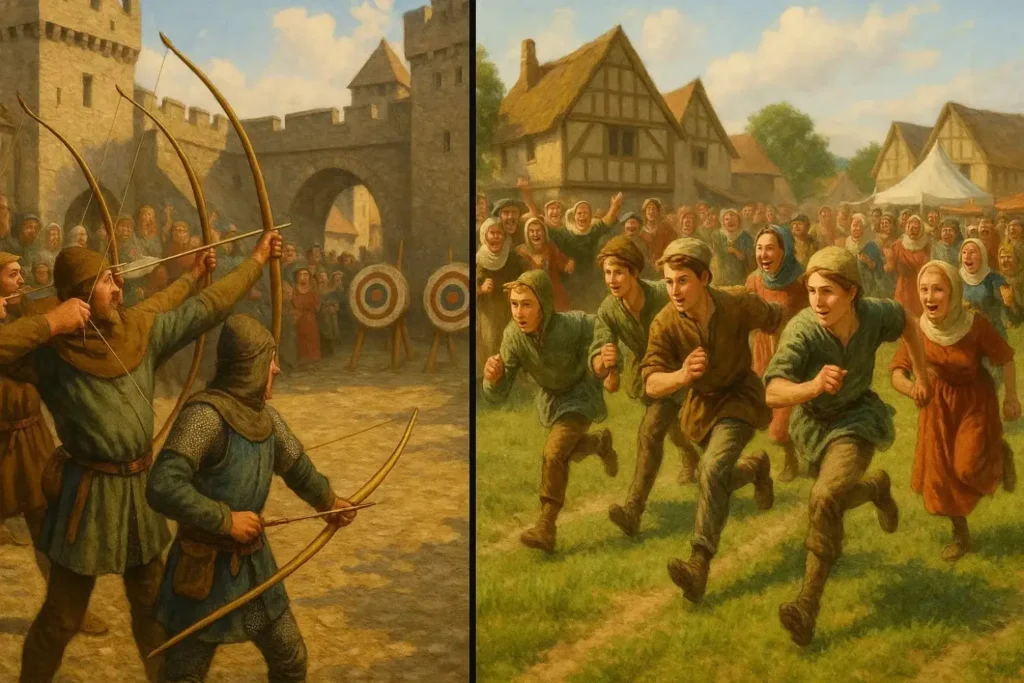
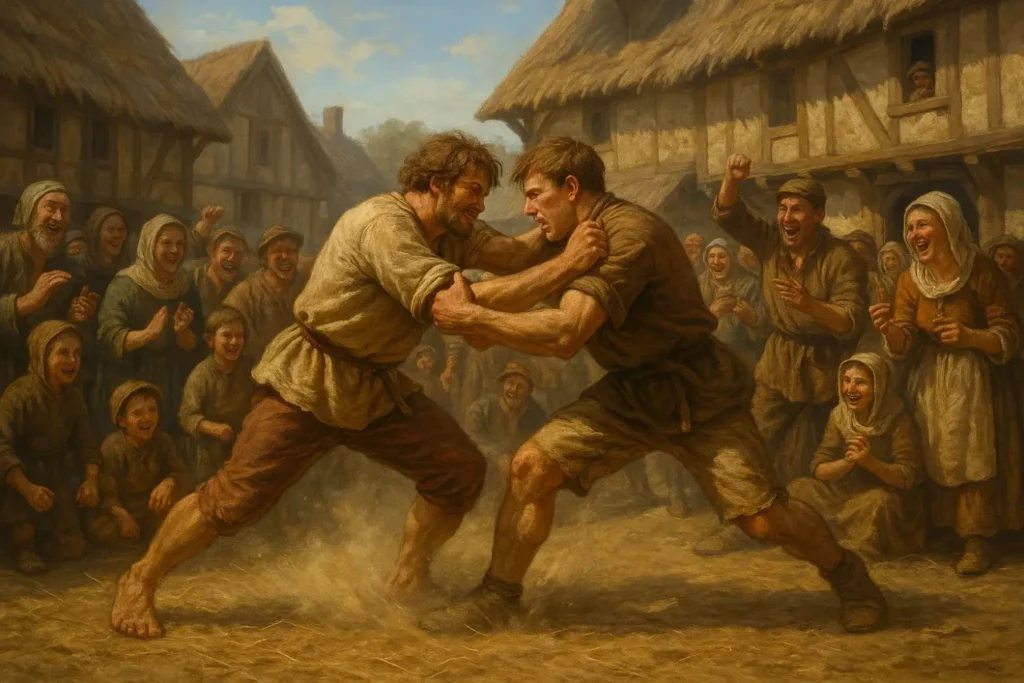
Commoners had rougher sports. Early forms of football involved whole villages and no fixed rules. People threw and kicked leather balls across fields. Archery contests were common, since skill with a bow had military value. Wrestling, staff-fighting, and running races were regular pastimes in villages and towns.
Gambling also appeared across classes. Dice and simple card-like games were played in taverns and inns. Gambling brought excitement — and trouble — to many gatherings.
Games for Rich and Poor
The types of medieval games and pastimes often depended on your station, but the competitive spirit was universal. For the nobility, chess was the ultimate game of strategy — a mental simulation of warfare. In castle chambers, lords and ladies also played Tables, a precursor to backgammon, often for high stakes.
Peasants had their own entertainments too. In homes and taverns they crowded around dice games like Hazard, despite frequent bans from authorities who hated the gambling and the fights that followed. Outside the village green you’d find skittles (an early nine-pin bowling) or a brutal, no-rules version of football played with a pig’s bladder. These games released pent-up energy and reinforced community ties — entertainment, training, and social life all rolled into one.
Feasts, Banquets, and Table Entertainment
Feasts in great houses were more than meals. They were staged events. The table itself became a theatrical backdrop. Food came in courses, and between dishes came performances. Musicians, dancers, and storytellers entertained nobles while servants moved platters.
Food at a noble banquet could include roasted birds, pies with hidden meats, and sweetmeats. Spices and sugar were costly and showed status. Performers used the feast to flatter rulers or retell heroic stories. A banquet reinforced social bonds and displayed wealth.
For ordinary people, feasts were simpler but still festive. Weddings, harvest dinners, and holy days meant extra food, songs, and dancing. Even a small feast fed the soul as much as the body.
Village Life — Simple Joys and Local Traditions
Peasant entertainment was practical and community-based. After work, families sang, told local stories, and danced. Instrumental music came from simple fiddles, pipes, and homemade drums. Dancing often took the form of group steps or circle dances that everyone could join.
Mystery plays and morality plays were popular in towns. These short dramas told Bible stories or moral lessons. Guilds organized performances and made simple sets. Plays could be funny or serious, and they gave a public stage to local talent.
Taverns also played a big role. They were places to drink, argue, trade news, and play quick games. For many, the inn provided social life that the fields and workshops did not.
The Church, Restrictions, and Exceptions
The Church shaped much of public life, and it sometimes tried to limit entertainment. Religious leaders worried about sin, excess, and disorder. Certain dances and songs were declared inappropriate. Gambling and drunkenness were often condemned.
At the same time, the Church sponsored many public entertainments. Miracle plays and processions were tools to teach the Bible and to gather people. The Church often adapted older pagan customs into Christian forms so communities could hold festivals under a religious banner. This blend allowed people to keep their traditions within acceptable limits.
Children’s Play and Everyday Toys
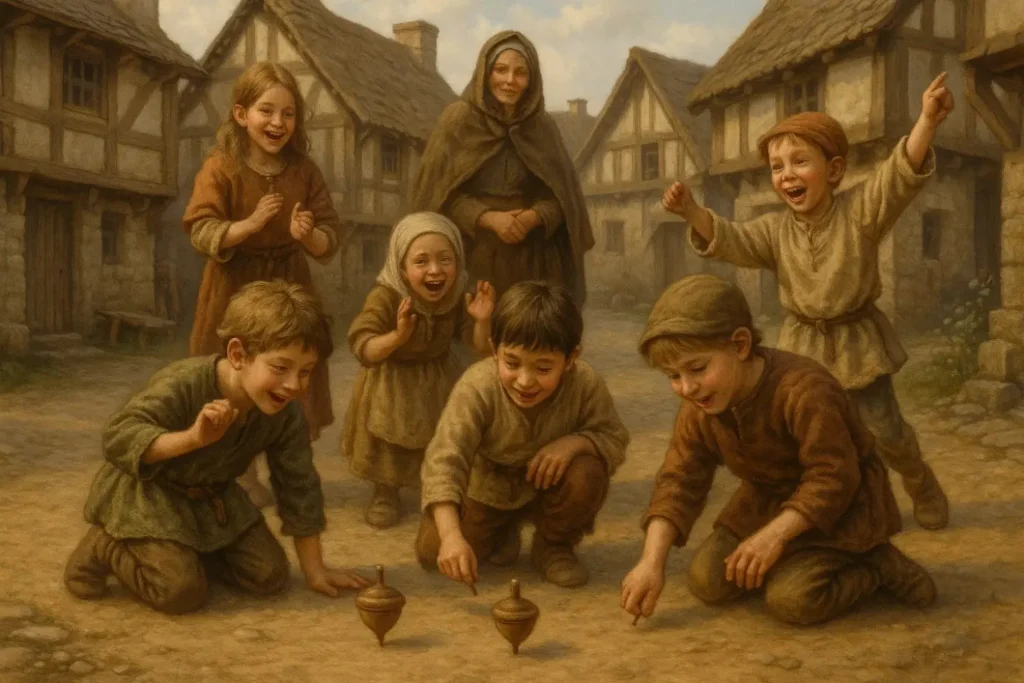
Children had their games too. They played with wooden tops, dolls, hoops, and simple animal figures. They re-enacted adult roles and practiced skills that would serve them later. Street games taught coordination, strategy, and social rules. These small, daily entertainments shaped the next generation.
Entertainment That Survived — Echoes in Today’s World
Many modern traditions trace back to medieval pastimes. Renaissance fairs revive market stalls, musicians, and costumed performers. Jousting displays appear at historical shows. Folk songs and dances from the medieval era influenced later musical forms. Even modern public holidays often began as medieval religious or civic festivals.
Understanding entertainment in medieval times helps explain why people keep gathering, singing, and playing together. The methods change, but the reasons do not. People still want company, story, and celebration.
Conclusion
Entertainment in medieval times was about more than passing the time — it was about celebrating life itself. Whether through the laughter of a jester, the melody of a minstrel, or the excitement of a joust, people of all classes sought joy amid hardship.
Despite the centuries that separate us, one truth remains unchanged: humans have always needed laughter, music, and stories to make life richer. The Middle Ages may be gone, but their spirit of celebration still lives on — in every festival, performance, and song we enjoy today.
Frequently Asked Questions
What entertainment was there in medieval times?
Entertainment was diverse, including jousting tournaments, mystery plays, music, dancing, board games like chess, dice games, and seasonal festivals and fairs.
Was entertainment different for nobles and peasants?
Yes. Nobles enjoyed expensive pastimes like falconry, tournaments, and private feasts. Peasants had community-based fun like folk football, tavern games, and village fairs.
Were there any forms of medieval entertainment that are still around today?
Absolutely. Football, rugby, and bowling evolved from medieval games. Chess, backgammon, and live theatre are also direct descendants from the period.
What role did the Church play in medieval entertainment?
The Church provided holy days off work and sponsored religious plays (Mystery Plays). It also often disapproved of rowdy festivals and gambling.
What activities did they do in medieval times?
People enjoyed sports like jousting and football, watched plays, listened to minstrels, played games of skill and chance, attended large festivals, and participated in communal feasts and dances.
What did they play in medieval times?
Popular games included chess and backgammon for the upper class, and dice, skittles (bowling), and folk football for the common people.
What were the 5 main types of entertainment in the olden days?
While not a strict list, five major categories were: 1. Tournaments & Sports, 2. Theatre & Performance, 3. Music & Dance, 4. Games & Gambling, and 5. Festivals & Fairs.
What was the most popular medieval play?
The most popular plays were the Mystery Plays, specifically cycles like the York or Chester plays, which depicted Bible stories for the public.
How did they say “I love you” in medieval times?
While they might say “I love thee,” love was often expressed through poetic words in songs and romances, symbolic gifts (like a ring or sleeve), and acts of chivalry or devotion.
What did teenagers do for fun in medieval times?
Teenagers would join in village games, dances, and festivals. Apprentices in towns had their own social groups and recreations. Those of noble birth trained in courtly pastimes like hunting, music, and chess.
What did kings do for fun in medieval times?
Kings enjoyed hunting (especially with hawks), hosting lavish tournaments and feasts, playing strategic board games, listening to personal minstrels, and collecting exotic animals for their menageries.