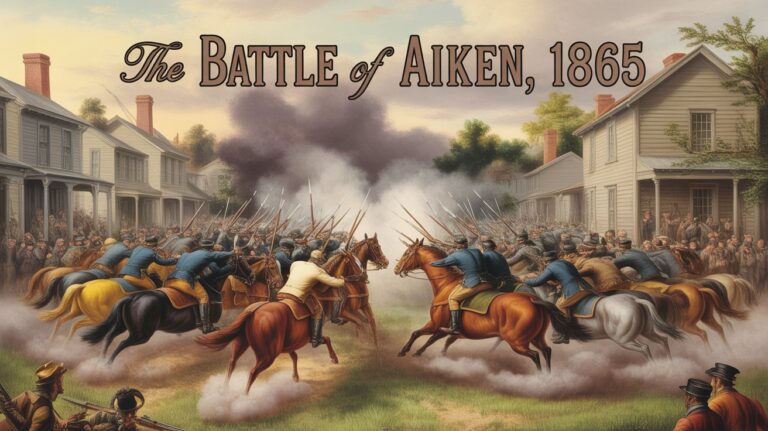

Nestled on the banks of the Rhine River, the German town of Andernach is a picture of tranquility today. But centuries ago, its soil witnessed two of the most critical—and often overlooked—battles in European history. The Battle of Andernach is not one, but two separate clashes that proved pivotal in carving the political map of the Middle Ages.
Fought over sixty years apart, these conflicts were turning points. The first Battle of Andernach in 876 cemented a new political reality after Charlemagne’s empire had shattered. The second Battle of Andernach in 939 secured the rise of a new dynasty that would birth the Holy Roman Empire. For anyone fascinated by where history turns, the story of Andernach is essential.
Why the Battle of Andernach Matters in History
Most historical sites are known for a single event. Andernach is unique because it was the stage for two decisive engagements that bookended a transformative period. The recurring theme of the Battle of Andernach is the struggle for control over the strategic heartland of Europe—the lands between the Rhine and Meuse rivers, known as Lotharingia.
In the 9th and 10th centuries, control of this region meant control of trade, wealth, and military mobility. The outcomes of the battles here didn’t just change a ruler’s name on a charter; they determined the cultural and political orientation of Western Europe for centuries to come, influencing the division between what would become France and Germany.
Key Facts at a Glance: The Battle of Andernach
- Location: Andernach, Rhineland-Palatinate, Germany.
- The First Battle: 8 October 876 AD.
- The Second Battle: 2 October 939 AD.
- Key Figures:
- 876: Louis the Younger (East Francia) vs. Charles the Bald (West Francia).
- 939: Otto I (Loyalist Forces) vs. Eberhard of Franconia & Gilbert of Lorraine (Rebels).
- Outcome: Both battles resulted in decisive victories for the Eastern forces, halting western expansion and crushing internal dissent to lay the groundwork for the Holy Roman Empire.
The Strategic Crossroads: Why Andernach?
To understand why the Battle of Andernach occurred here twice, one must look at a map. Andernach was far more than a simple river village. It was a strategic linchpin, commanding a vital crossing point on the Rhine. Controlling this spot meant controlling the flow of armies, goods, and information between East and West.
In an era of fractured kingdoms, the ruler who held Andernach could project power deep into the contested Middle Kingdom of Lotharingia. Its value as a choke point made it a recurring flashpoint for conflict, a geographic destiny that led two separate generations of warriors to decide Europe’s fate on the same ground.
The First Battle of Andernach (876 AD): The Carolingian Showdown
The Political Stage After Charlemagne
Charlemagne’s vast empire did not long survive him. His grandsons divided the territory, and the central portion, Lotharingia, became a coveted prize. By 876, Charles the Bald, King of West Francia (roughly modern France), saw an opportunity to expand his influence eastward.
He was met by his nephew, Louis the Younger, who ruled a portion of East Francia (roughly modern Germany). Louis was determined to defend his claim and prevent Charles from unifying the western and middle Frankish lands.
The Clash and Its Immediate Aftermath
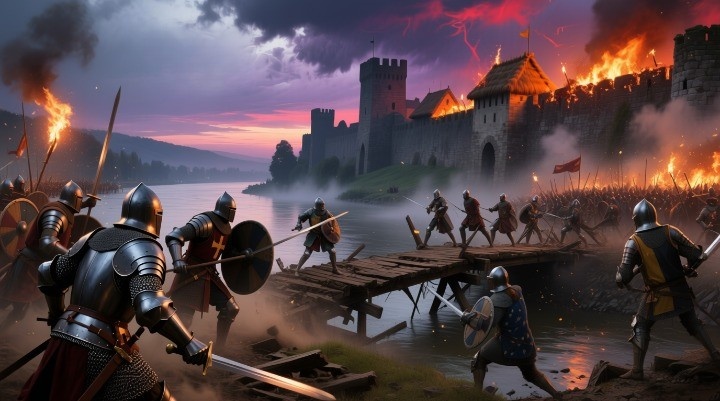
On October 8, 876, the armies of uncle and nephew met near Andernach. While contemporary chronicles lack detailed tactical descriptions, they are clear on the result: Louis the Younger won a decisive victory.
The defeat was a humiliating and final setback for the ambitious Charles the Bald. His dream of absorbing Lotharingia died on the banks of the Rhine. The outcome of this first Battle of Andernach affirmed East Frankish hegemony over the region, creating a political boundary that would have lasting repercussions, effectively drawing a line between French and German spheres of influence.
The Second Battle of Andernach (939 AD): Otto the Great’s Gamble
A New Kingdom, A New Challenge
By the 10th century, the Carolingian dynasty was fading. In East Francia, a new Saxon dynasty came to power, and its most formidable king, Otto I, sought to centralize authority and tame the powerful regional dukes. This push for a stronger monarchy provoked a major rebellion in 939.
A coalition of powerful nobles, led by Eberhard of Franconia (the brother of a former king) and Gilbert, Duke of Lorraine, sought to overthrow Otto and preserve their own autonomy.
A Surprise Attack and a Kingdom Secured
Otto’s loyalists, led by his trusted commanders, caught the rebel army by surprise near Andernach on October 2, 939. The rebels were reportedly dispersed and engaged in plundering, making them vulnerable. The loyal forces seized the moment, and the engagement was a brutal rout.
In a stunning conclusion, both rebel leaders, Eberhard and Gilbert, were killed on the battlefield. With their death, the rebellion instantly collapsed.
The consequence of this second Battle of Andernach cannot be overstated. It was the definitive end of the great revolts against Otto’s rule. By eliminating his most powerful rivals, Otto consolidated his power like no German king before him. This victory provided the stable foundation from which he could later march into Italy and be crowned Holy Roman Emperor in 962, an event that reshaped the medieval world.
Frequently Asked Questions
Were the two Battles of Andernach part of the same war?
No. They were distinct conflicts separated by 63 years and driven by different causes. The 876 battle was an international war between two Carolingian kingdoms. The 939 battle was an internal civil war within the German kingdom (East Francia) over the nature of royal power.
Did the Battle of Andernach create the border between France and Germany?
Not directly, but it was a major step in that process. The 876 victory ensured that Lotharingia (the Alsace-Lorraine region) fell under German influence for centuries, establishing a political and cultural fault line that would be contested right up to the World Wars.
What were the armies like at the Battle of Andernach?
These were not the large, professional armies of a later age. Forces were composed of the personal military households (retinues) of kings and nobles, supplemented by local levies. Victory often depended on the quality of this core retinue, the skill of the commander, and, as at Andernach, the advantage of terrain and surprise.
Conclusion:
The Battle of Andernach reminds us that a single geographic point can carry recurring strategic significance across generations. This small town on the Rhine was destined by its location to be a place where futures were decided. The two clashes fought near this Rhine crossing — one resolving a Carolingian-era claim, the other suppressing a noble revolt — together illuminate how military events, local geography, and dynastic politics intertwined to shape early medieval Europe.
The first defined a border. The second secured an empire. To understand the journey from Charlemagne to Otto the Great, one must make a stop at the Battle of Andernach.