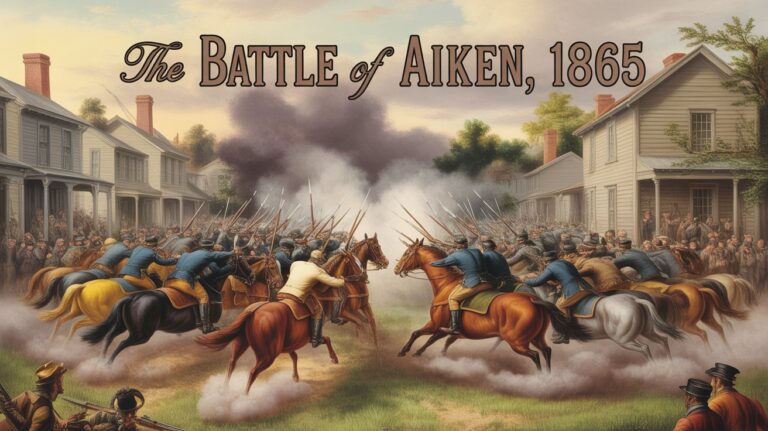
When people talk about Civil War battles, they usually picture huge armies clashing for days on end. But the Battle of Aiken, fought on February 11, 1865, was something different. It wasn’t about massive troop numbers—it was about brains over brawn.
And the man with the brains that day? Confederate cavalry commander Joseph Wheeler.
A Town Caught in the Crossfire
By early 1865, the Civil War was nearly over. Union General William T. Sherman was tearing through the Carolinas, and his cavalry, led by the bold (and sometimes reckless) Hugh Judson Kilpatrick, was riding toward Aiken, South Carolina.
Kilpatrick had a plan: hit Wheeler’s forces hard, push through, and keep moving north. But Wheeler had no intention of making it that easy.
The “V” Formation: Joseph Wheeler Secret Weapon
Instead of meeting Kilpatrick head-on, Joseph Wheeler pulled off a classic cavalry trick—and did it so well that it’s still talked about today.
Here’s how it worked:
Joseph Wheeler’s men positioned themselves in a V-shaped formation, with the open end facing Kilpatrick’s advancing troops.
It looked like the Confederates were split apart—an easy target.
Kilpatrick took the bait and charged straight into the open “V.”
The moment Union soldiers pushed deeper into the formation, Wheeler’s men closed in from both sides. Suddenly, Kilpatrick’s cavalry went from attackers to trapped prey.
Chaos in the Streets
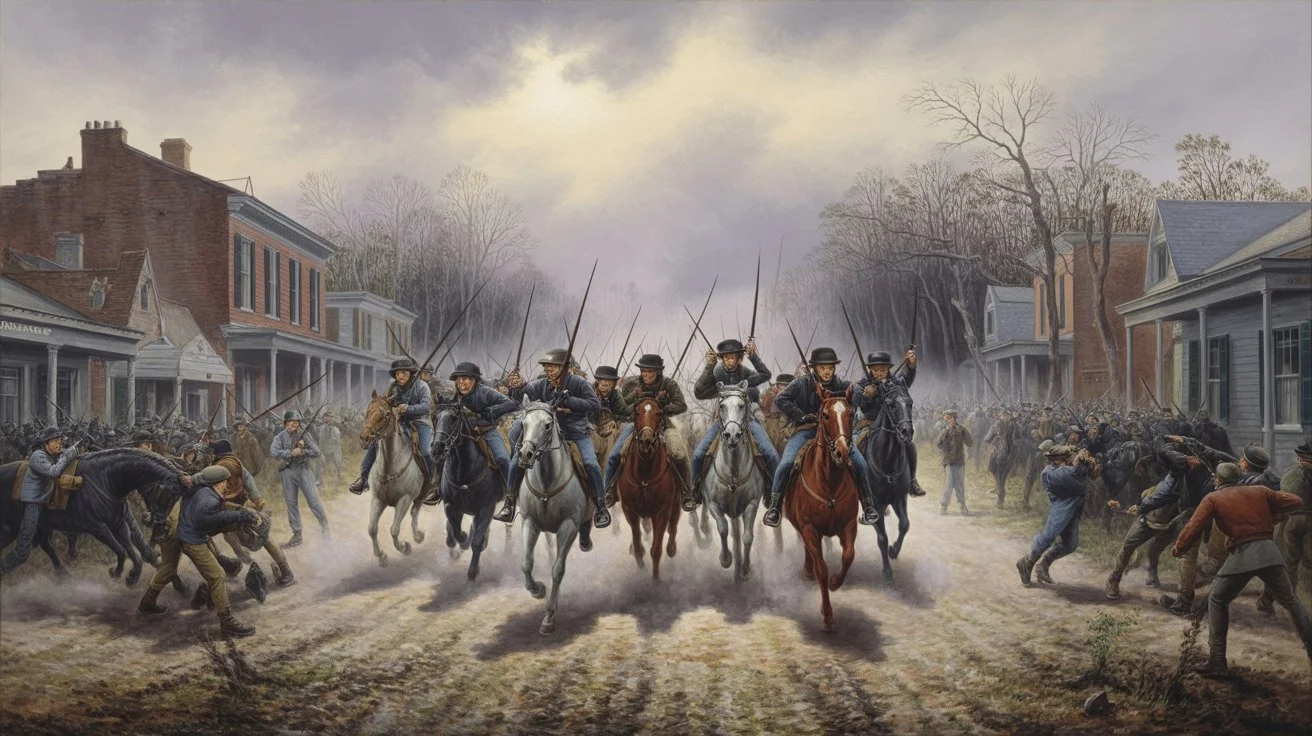
Once the trap was sprung, the battle turned fierce and personal. There wasn’t much long-range gunfire—this was up-close combat. Horses reared, sabers flashed, and the sound of revolvers cracked through Aiken’s streets.
For residents peeking from their windows, it must have been terrifying—cavalry battles are fast, loud, and unpredictable. One wrong turn, and a rider could crash right through your front yard.
Why the Trap Worked So Well
Wheeler’s tactic succeeded for a few reasons:
Overconfidence
Kilpatrick underestimated Wheeler’s skill and the Confederate cavalry’s mobility.
Use of Terrain
The streets and open fields of Aiken gave Wheeler perfect spots to hide troops until the right moment.
Speed
The Confederate cavalry moved quickly enough to close the trap before the Union forces could pull back.
By the end of the fight, Wheeler’s men had pushed the Union cavalry out of Aiken—a rare Confederate victory so late in the war.
A Small Win in a Losing War
Here’s the twist:
even though the Battle of Aiken was a win for Wheeler, it didn’t stop Sherman’s campaign. The Union army kept marching, and within months, the Confederacy surrendered.
But for the people of Aiken, Wheeler’s clever trap became a point of local pride. It showed that even in the war’s closing days, a smart strategy could outmatch a stronger force.
Remembering the Trap Today
Every February, during the Battle of Aiken Reenactment Festival, you can watch Wheeler’s famous “V” formation come to life. Cannons boom, cavalry charges, and you can almost hear the shouts of soldiers as the trap closes in—just like it did in 1865.
Lessons from the Clever Trap That Won the Battle of Aiken
The Battle of Aiken teaches us how strategy can sometimes outweigh sheer numbers. Confederate General Joseph Wheeler used deception to lure Union cavalry under General Hugh Judson Kilpatrick into a vulnerable position. By pretending to retreat, Wheeler tricked Kilpatrick’s men into pursuing recklessly, only to be ambushed by Confederate forces waiting in a carefully planned trap.
The lesson is simple but powerful: in warfare, overconfidence can be dangerous, and a well-executed plan can turn the tide of battle even against stronger opponents. The clever trap at Aiken showed the importance of patience, discipline, and reading the enemy’s weaknesses—tactics that remain valuable in both military and strategic thinking today.
Frequently Asked Questions
How many people died in the Battle of Aiken?
Estimates of casualties at the Battle of Aiken vary widely. Some reports suggest Union losses were around 45 killed and wounded, while Confederate General Joseph Wheeler claimed the Union suffered as many as 495 casualties—including 53 killed, 270 wounded, and 172 captured. Confederate losses are also debated, ranging anywhere from 50 to 251 men, depending on the source.
What is the history of Aiken?
Aiken, South Carolina, was founded in the 1830s as a railroad town. By the Civil War, it had become a small but important community that found itself in the path of Sherman’s march.
Where was the Battle of Aiken fought?
The battle took place in and around the town of Aiken, South Carolina, on February 11, 1865.
Who were the commanders in the Battle of Aiken?
Union General Hugh Judson Kilpatrick and Confederate General Joseph Wheeler led the opposing forces.
What strategy did Joseph Wheeler use to win the battle?
He used a V-shaped cavalry formation to lure Kilpatrick’s men into a trap, surrounding and forcing them back.
Why is the Battle of Aiken still remembered today?
It’s remembered as a rare Confederate victory in the final months of the Civil War and is reenacted every February as part of a popular local festival.