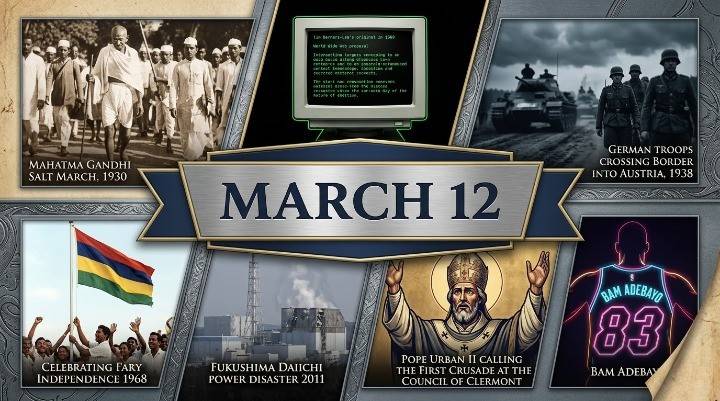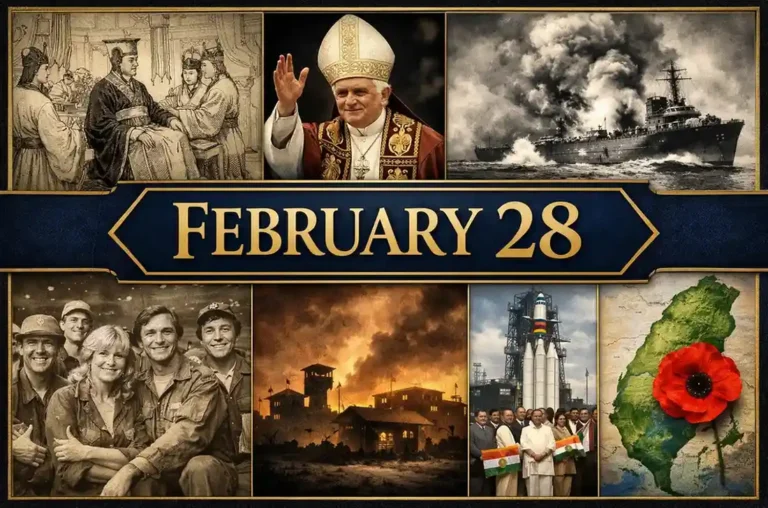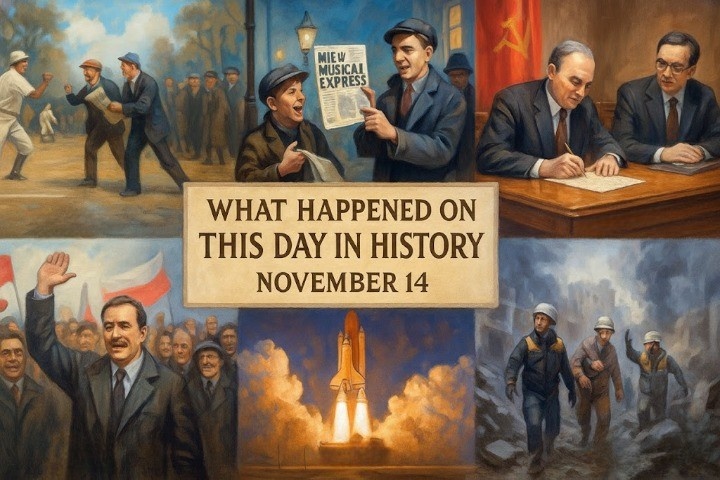
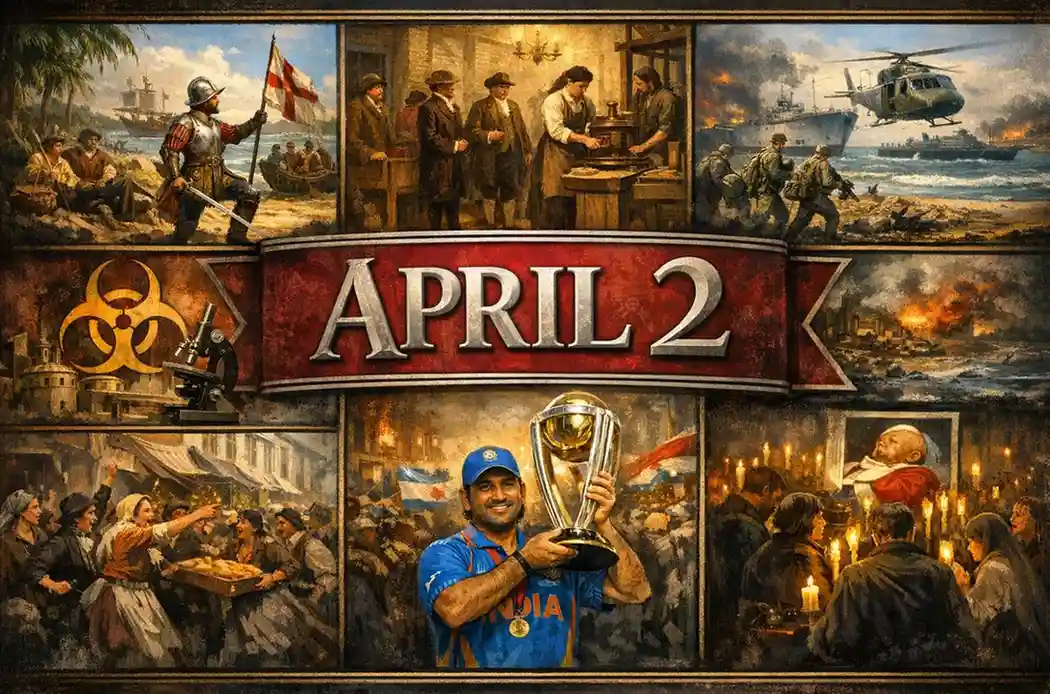
Reflecting on this day in history April 2, we see a date that bridges the gap between the age of exploration and the birth of modern economic systems. From the 1513 arrival of Ponce de León in Florida to the 1792 establishment of the U.S. Mint, it marks the formalization of national institutions.
Important Events That Happened On April 2 In History
1107 – Siege of Shahdiz Begins
Seljuq Sultan Muhammad I Tapar initiated the siege of Shahdiz, a mountain fortress held by the Nizari Ismailis near Isfahan. The campaign was part of a broader Seljuq effort to suppress the influence of the Ismaili state within their territories.
1285 – Election of Pope Honorius IV
Following the death of Pope Martin IV, the Catholic Church elected Pope Honorius IV. His papacy was notable for his efforts to manage the complex political situation in Sicily and his support for the mendicant orders and the University of Paris.
1513 – Juan Ponce de León Lands in Florida
Spanish explorer Juan Ponce de León came ashore on what is now the U.S. state of Florida. Having first spotted land on March 27, he landed between modern-day St. Augustine and the mouth of the St. Johns River, marking the first recorded European landing on the peninsula.
1725 – Premiere of J. S. Bach’s BWV 6
Johann Sebastian Bach’s cantata Bleib bei uns, denn es will Abend werden (Abide with us, for it is nearly evening) was first performed in Leipzig on Easter Monday. The work is one of many liturgical pieces composed during his tenure as Thomaskantor.
1755 – Capture of Suvarnadurg
Commodore William James successfully captured the Maratha fortress of Suvarnadurg on the west coast of India. Leading a British East India Company fleet, James took the strategic island stronghold, which had been a base for Maratha naval operations.
1792 – Passage of the Coinage Act
The United States Congress passed the Coinage Act, officially establishing the United States Mint. This legislation regulated the coins of the United States and authorized the construction of a mint building in Philadelphia, the nation’s capital at the time.
1800 – Premiere of Beethoven’s First Symphony
Ludwig van Beethoven led the premiere of his First Symphony in Vienna. The performance marked a significant milestone in the composer’s career, signaling his emergence as a major symphonic voice in the tradition of Haydn and Mozart.
1801 – Battle of Copenhagen
During the French Revolutionary Wars, a British Royal Navy squadron defeated a Dano-Norwegian fleet at the Battle of Copenhagen. The victory came at a high cost but successfully forced Denmark out of the Second League of Armed Neutrality.
1863 – Richmond Bread Riot
Driven by high food prices and shortages during the American Civil War, the largest in a series of Southern bread riots occurred in Richmond, Virginia. A mob, primarily of women, looted shops before being dispersed by Confederate officials.
1865 – Evacuation of Richmond
A decisive defeat at the Third Battle of Petersburg forced the Army of Northern Virginia and the Confederate government to abandon their capital, Richmond, Virginia. This retreat was a final blow to the Confederate cause in the Civil War.
1885 – Frog Lake Massacre
During the North-West Rebellion in Canada, Cree warriors attacked the village of Frog Lake. Nine settlers were killed in the incident, which heightened tensions between the Canadian government and indigenous groups in the region.
1902 – Assassination of Dmitry Sipyagin
Dmitry Sipyagin, the Minister of Interior of the Russian Empire, was assassinated at the Mariinsky Palace in Saint Petersburg. The attack was carried out by a member of the Socialist Revolutionary Party during a period of rising political unrest.
1902 – Opening of the “Electric Theatre”
The first full-time movie theater in the United States, the “Electric Theatre,” opened in Los Angeles. Established by Thomas Tally, it provided a dedicated venue for the public to view motion pictures.
1911 – First Australian National Census
The Australian Bureau of Statistics conducted the country’s first national census. This massive logistical undertaking provided the first comprehensive demographic snapshot of the recently federated Australian nation.
1912 – Sea Trials of the RMS Titanic
The ill-fated RMS Titanic began her sea trials in Belfast. The tests were designed to ensure the ship’s readiness for her maiden voyage, which would end in tragedy just two weeks later in the North Atlantic.
1917 – Wilson Asks for War Declaration
U.S. President Woodrow Wilson appeared before Congress to request a declaration of war against Germany. This marked the official entry of the United States into World War I, shifting the country from neutrality to active combat.
1921 – Autonomous Government of Khorasan
A military government known as the Autonomous Government of Khorasan was established in the modern state of Iran. Led by Colonel Peshian, the movement sought regional autonomy during a time of national political transition.
1930 – Haile Selassie Proclaimed Emperor
Following the mysterious death of Empress Zewditu, Haile Selassie was proclaimed Emperor of Ethiopia. His reign would last for decades and make him a global symbol of African sovereignty.
1954 – Tragedy by the Sea Photograph
A 19-month-old infant was swept up by ocean tides at Hermosa Beach, California. Local photographer John L. Gaunt captured the harrowing moment, resulting in the 1955 Pulitzer Prize-winning photo titled Tragedy by the Sea.
1956 – Premiere of 30-Minute Soap Operas
The daytime dramas As the World Turns and The Edge of Night premiered on CBS. They were the first soap operas to debut in a 30-minute format, doubling the standard 15-minute runtime of the era.
1964 – Launch of Zond 1
The Soviet Union launched Zond 1, a space probe intended for a flyby of Venus. While the mission suffered communication failures later on, it was part of the early Soviet efforts to explore the inner solar system.
1969 – LOT Flight 165 Crash
LOT Polish Airlines Flight 165 crashed into the Polica mountain near Zawoja, Poland. All 53 people on board were killed in what remains one of the deadliest aviation accidents in Polish history.
1972 – Charlie Chaplin Returns to the U.S.
Famed actor Charlie Chaplin returned to the United States for the first time since being labeled a communist during the Red Scare. His return was celebrated with an honorary award from the Academy of Motion Picture Arts and Sciences.
1973 – Launch of LexisNexis
The LexisNexis computerized legal research service was officially launched. This technological milestone transformed how legal professionals searched for case law and statutes, moving research from physical books to digital databases.
1975 – Refugees Flee Quảng Ngãi
During the final stages of the Vietnam War, thousands of civilian refugees fled Quảng Ngãi Province. The exodus occurred as North Vietnamese troops advanced toward the south, leading to the eventual fall of Saigon.
1976 – Resignation of Prince Norodom Sihanouk
Prince Norodom Sihanouk resigned as the leader of Cambodia and was subsequently placed under house arrest by the Khmer Rouge. This signaled a hardening of the regime’s control over the country.
1979 – Sverdlovsk Anthrax Leak
A biological warfare laboratory in Sverdlovsk, Soviet Union, accidentally released airborne anthrax spores. The incident killed at least 66 people and an unknown number of livestock, though the government initially blamed tainted meat.
1980 – Crude Oil Windfall Profits Tax Act
U.S. President Jimmy Carter signed the Crude Oil Windfall Profits Tax Act into law. The legislation was designed to tax the excess profits of oil companies following the deregulation of domestic oil prices.
1982 – Invasion of the Falkland Islands
Argentina launched an invasion of the British-held Falkland Islands. The military action sparked the Falklands War, as the United Kingdom dispatched a task force to reclaim the South Atlantic archipelago.
1986 – Retirement of George Wallace
Alabama Governor George Wallace announced he would not seek a fifth term and would retire from public life. Once a staunch segregationist, Wallace had apologized for his past views later in his political career.
1989 – Gorbachev Visits Havana
Soviet leader Mikhail Gorbachev arrived in Havana, Cuba, to meet with Fidel Castro. The visit was an attempt to mend relations that had been strained by Gorbachev’s “glasnost” and “perestroika” reforms in the USSR.
1991 – First Female Premier in Canada
Rita Johnston became the first female Premier of a Canadian province. She succeeded William Vander Zalm as the Premier of British Columbia following his resignation from office.
1992 – Conviction of John Gotti
In New York, Mafia boss John Gotti was convicted of murder and racketeering. Known as the “Teflon Don” for his previous acquittals, Gotti was eventually sentenced to life in prison without the possibility of parole.
1992 – Bijeljina Massacre
During the Bosnian War, forty-two civilians were massacred in the town of Bijeljina in Bosnia and Herzegovina. The killings were part of the early ethnic cleansing campaigns carried out by paramilitary forces.
2002 – Siege of the Church of the Nativity
Israeli forces surrounded the Church of the Nativity in Bethlehem after armed Palestinians retreated into the holy site. The standoff lasted for weeks, drawing intense international attention to the sacred location.
2004 – Thwarted High-Speed Train Bombing
Islamist terrorists involved in the Madrid train attacks attempted to bomb the Spanish high-speed train (AVE) near Madrid. The attack was thwarted when the bomb was discovered on the tracks before it could be detonated.
2006 – Tennessee Tornado Outbreak
A massive tornado outbreak occurred in the United States, with over 60 tornadoes reported. Tennessee was hit the hardest, where 29 people lost their lives due to the severe storms.
2011 – India Wins Cricket World Cup
Under the captaincy of MS Dhoni, India defeated Sri Lanka to win the Cricket World Cup for the second time in its history. The victory was celebrated by millions across the country and the global Indian diaspora.
2012 – Oikos University Shooting
A mass shooting at Oikos University, a private Christian college in Oakland, California, left seven people dead. The gunman, a former student, was later apprehended by authorities.
2012 – UTair Flight 120 Crash
UTair Flight 120 crashed shortly after takeoff from Roshchino International Airport in Russia. The accident killed 33 people and left 10 others injured, with investigators citing ice buildup on the wings as a factor.
2014 – Fort Hood Shooting
A second spree shooting occurred at the Fort Hood army base in Texas. The incident resulted in four deaths, including the gunman, and 16 injuries, occurring just five years after a previous mass shooting at the same base.
2015 – Garissa University College Attack
Gunmen from the al-Shabaab militant group attacked Garissa University College in Kenya. At least 148 people were killed, mostly students, in what was the deadliest terrorist attack in Kenya in nearly two decades.
2015 – Hatton Garden Burglary
Four men carried out a massive heist at an underground safe deposit facility in London’s Hatton Garden. Stealing items worth up to £200 million, the event was described as the “largest burglary in English legal history.”
2020 – COVID-19 Cases Reach One Million
The total number of confirmed COVID-19 cases worldwide surpassed one million. This milestone underscored the rapid global spread of the pandemic and the unprecedented challenge to global public health.
2021 – Taiwan Train Derailment
At least 49 people were killed in a train derailment in Hualien County, Taiwan. The accident was caused when a construction truck accidentally rolled down a slope and onto the tracks, striking the passing Express train.
2021 – U.S. Capitol Barricade Attack
A Capitol Police officer was killed and another injured when an attacker rammed a car into a security barricade outside the U.S. Capitol. The suspect was shot and killed by police after exiting the vehicle with a knife.
2024 – Viertola School Shooting
A 12-year-old pupil was killed and two others were injured during a shooting at the Viertola school in Vantaa, Finland. The suspect, also a 12-year-old student, was detained shortly after the incident.
2025 – Liberation Day Tariffs
U.S. President Donald Trump announced sweeping worldwide tariffs on “Liberation Day.” The policy change signaled a major shift in American trade relations and global economic strategy.
Famous People Born on April 2
| Name | Description | Date |
|---|---|---|
| Eugen Sandow | German bodybuilder, “father of modern bodybuilding” | April 2, 1867 – October 14, 1925 |
| William Holman Hunt | British painter, co-founder of the Pre-Raphaelite Brotherhood | April 2, 1827 – September 7, 1910 |
| Walter P. Chrysler | American engineer, founder of Chrysler Corporation | April 2, 1875 – August 18, 1940 |
| Nicholas Murray Butler | American educator, Nobel Peace Prize winner, president of Columbia University | April 2, 1862 – December 7, 1947 |
| Marvin Gaye | American soul singer-songwriter | April 2, 1939 – April 1, 1984 |
| Max Ernst | German artist, pioneer of Surrealism and Dada | April 2, 1891 – April 1, 1976 |
| Alec Guinness | British actor, star of Bridge on the River Kwai, Star Wars | April 2, 1914 – August 5, 2000 |
| Alexandre Sabès Pétion | Haitian independence leader and president | April 2, 1770 – March 29, 1818 |
| Carmen Basilio | American boxer, world welterweight and middleweight champion | April 2, 1927 – November 7, 2012 |
| Jan Tschichold | German typographer, seminal figure in 20th-century graphic design | April 2, 1902 – August 11, 1974 |
| Paul Joseph Cohen | American mathematician, Fields Medal winner (continuum hypothesis) | April 2, 1934 – March 23, 2007 |
| Emmylou Harris | American singer and songwriter | April 2, 1947 – Present |
| George MacDonald Fraser | British writer, creator of the Flashman series | April 2, 1925 – January 2, 2008 |
| George II | Duke of Saxe-Meiningen, pioneer of modern stage design | April 2, 1826 – June 25, 1914 |
| August Heinrich Hoffmann von Fallersleben | German poet, wrote “Deutschlandlied” (German national anthem) | April 2, 1798 – January 19, 1874 |
| Pedro Pascal | Chilean-born American actor | April 2, 1975 – Present |
| Camille Paglia | American academic and cultural critic | April 2, 1947 – Present |
| Catharine Macaulay | British historian and radical political writer | April 2, 1731 – June 22, 1791 |
| Michael Fassbender | German-born Irish actor | April 2, 1977 – Present |
| Serge Lifar | Ukrainian-born French dancer and choreographer | April 2, 1905 – December 15, 1986 |
| Cardinal Joseph Bernardin | American Roman Catholic prelate | April 2, 1928 – November 14, 1996 |
| Jack Brabham | Australian race-car driver, three-time Formula One champion | April 2, 1926 – May 19, 2014 |
| Leon Russell | American songwriter, producer, and musician | April 2, 1942 – November 13, 2016 |
| Jesse Plemons | American actor | April 2, 1988 – Present |
| Robert Arlt | Argentine novelist and playwright | April 2, 1900 – July 26, 1942 |
| Dr. Demento | American disc jockey, host of The Dr. Demento Show | April 2, 1941 – Present |
| María de Agreda | Spanish mystic and abbess | April 2, 1602 – May 24, 1665 |
| János Corvin | Illegitimate son of King Matthias I of Hungary | April 2, 1473 – October 12, 1504 |
| Sir J. C. Squire | English journalist, poet, and critic | April 2, 1882 – December 20, 1958 |
| John Forster | British writer and biographer of Charles Dickens | April 2, 1812 – February 2, 1876 |
Famous People Died on April 2
| Name | Description | Date |
|---|---|---|
| St. John Paul II | Pope (1978–2005), first non-Italian pope in 455 years | May 18, 1920 – April 2, 2005 |
| Honoré-Gabriel Riqueti, comte de Mirabeau | French revolutionary orator and statesman | March 9, 1749 – April 2, 1791 |
| Franz Halder | German general, chief of army general staff (1938–1942) | June 30, 1884 – April 2, 1972 |
| Baldwin I | King of Jerusalem (1100–1118), Crusader leader | c.1058 – April 2, 1118 |
| John Barth | American postmodern novelist | May 27, 1930 – April 2, 2024 |
| Winnie Madikizela-Mandela | South African anti-apartheid activist, wife of Nelson Mandela | September 26, 1936 – April 2, 2018 |
| Ferdinand III | Holy Roman emperor (1637–1657), ended Thirty Years’ War | July 13, 1608 – April 2, 1657 |
| C.S. Forester | British novelist, creator of Horatio Hornblower | August 27, 1899 – April 2, 1966 |
| Georges Pompidou | President of France (1969–1974) | July 5, 1911 – April 2, 1974 |
| Manoel de Oliveira | Portuguese film director, career spanned nearly a century | December 11, 1908 – April 2, 2015 |
| Richard Cobden | British politician, leader of free trade movement | June 3, 1804 – April 2, 1865 |
| Hannes Alfvén | Swedish astrophysicist, Nobel Prize winner (plasma physics) | May 30, 1908 – April 2, 1995 |
| A. P. Hill | Confederate general in the American Civil War | November 9, 1825 – April 2, 1865 |
| Buddy Rich | American jazz drum virtuoso | June 30, 1917 – April 2, 1987 |
| Paul Johann Ludwig von Heyse | German writer, Nobel Prize in Literature | March 15, 1830 – April 2, 1914 |
| Elizabeth Catlett | American-born Mexican sculptor and printmaker | April 15, 1915 – April 2, 2012 |
| Theodore William Richards | American chemist, Nobel Prize winner (atomic weights) | January 31, 1868 – April 2, 1928 |
| Hermann Rorschach | Swiss psychiatrist, creator of the Rorschach inkblot test | November 8, 1884 – April 2, 1922 |
| Richard | King of the Romans (1256–1271), claimant to Holy Roman Empire | January 6, 1209 – April 2, 1272 |
| Ferdinand I | King of Aragon (1412–1416) | c.1379 – April 2, 1416 |
| Joan I | Queen of Navarre (1274–1305), consort of Philip IV of France | January 14, 1273 – April 2, 1305 |
| Zhang Daqian | Chinese painter, one of most renowned 20th-century Chinese artists | May 10, 1899 – April 2, 1983 |
| Rama III | King of Siam (1824–1851) | March 31, 1788 – April 2, 1851 |
| Maryse Condé | Guadeloupian author | February 11, 1934 – April 2, 2024 |
| John Robinson Pierce | American communications engineer, “father of the communications satellite” | March 27, 1910 – April 2, 2002 |
| Justo Rufino Barrios | President of Guatemala (1873–1885) | 1835 – April 2, 1885 |
| Jean-Jacques Olier | French Roman Catholic priest, founder of the Sulpicians | September 20, 1608 – April 2, 1657 |
| Hugo Sperrle | German Luftwaffe field marshal during World War II | February 7, 1885 – April 2, 1953 |
| Johannes Eugenius Bülow Warming | Danish botanist, founder of plant ecology | November 3, 1841 – April 2, 1924 |
| Hezekiah Niles | American newspaper editor, founder of Niles’ Weekly Register | October 10, 1777 – April 2, 1839 |
Observances & Institutional Dates
- World Autism Awareness Day: An international observance to raise awareness and support for people with autism spectrum disorder.
- International Children’s Book Day: Celebrated on Hans Christian Andersen’s birthday to inspire a love of reading in children.
- Malvinas Day (Argentina): Honoring the veterans and the fallen of the 1982 Falklands War.
- Thai Heritage Conservation Day: A day dedicated to the preservation of Thailand’s rich cultural and historical heritage.
Frequently Asked Questions
- Who discovered Florida on April 2? Juan Ponce de León landed on the Florida coast on April 2, 1513, naming the region for its lush vegetation and the Easter season.
- What happened at the Battle of Copenhagen? In 1801, the British Navy defeated a Dano-Norwegian fleet, forcing Denmark to break its alliance with France.
- When did the Falklands War begin? The war began on April 2, 1982, when Argentine forces invaded the islands.
- What is the significance of the 1792 Coinage Act? It established the U.S. Mint and created the U.S. dollar as the country’s official currency.