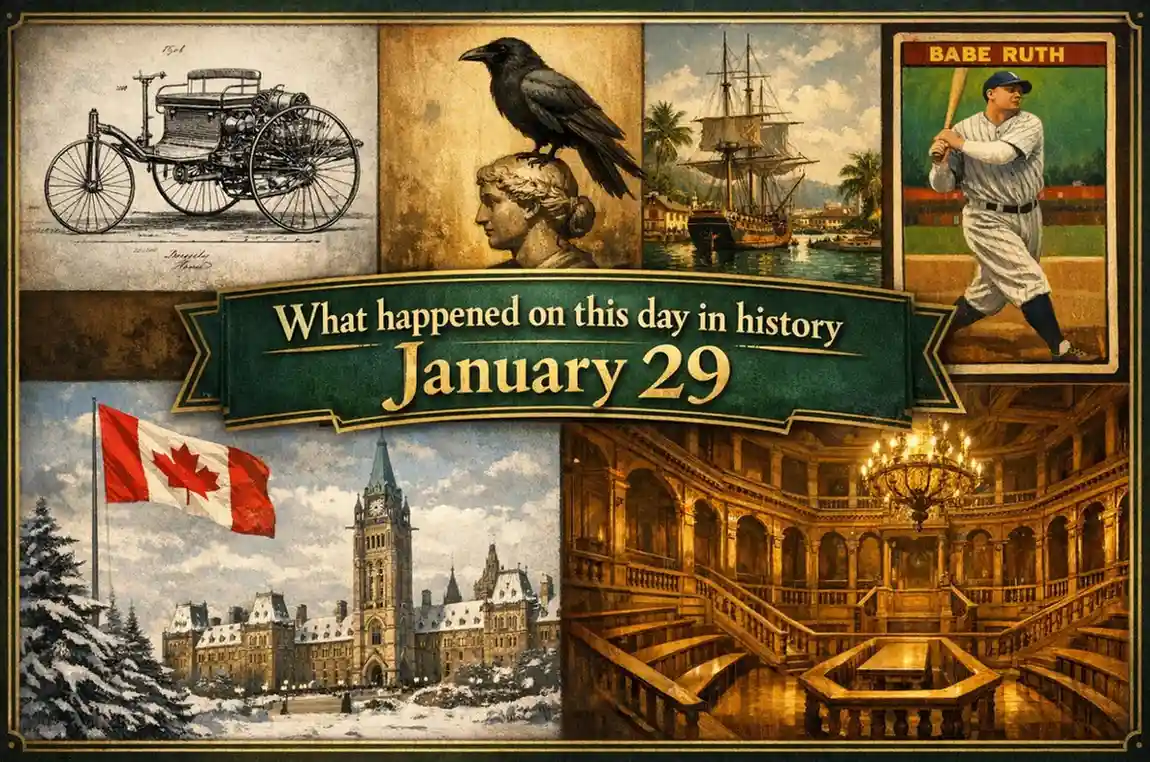
The flow of time often brings us to a crossroads where the arts, politics, and technology collide. When investigating what happened on this day in history January 29, we find a day that gave voice to a literary masterpiece and movement to the first modern car. It is a date marked by the rise of queens and senators, the tragic echoes of conflict, and the constant reshaping of our global identity.
Important Events That Happened On January 29 In History
904 – Election of Pope Sergius III
In a period of significant turmoil for the papacy, Sergius III was elected as the 121st Pope. Coming out of retirement to reclaim the throne, he took over following the deposition of the antipope Christopher. His papacy is often viewed through the lens of the “Saeculum obscurum,” a time of heavy political influence over the church, but his return to power solidified a new era of Roman administration within the Vatican.
946 – Deposition of Caliph al-Mustakfi
The Abbasid Caliphate faced a dramatic shift in power when Caliph al-Mustakfi was blinded and deposed by Mu’izz al-Dawla, the ruler of the Buyid Empire. This act symbolized the waning influence of the Caliphs and the rising dominance of the Buyid dynasty over Baghdad. Al-Muti was随后 installed as the new caliph, though the office remained largely ceremonial under the control of the Buyid military rulers.
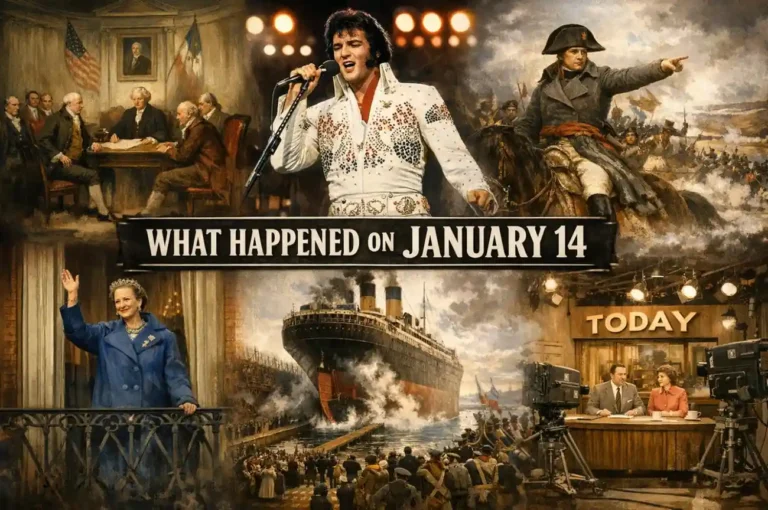
1814 – Battle of Brienne
As part of the War of the Sixth Coalition, French forces led by Napoleon Bonaparte engaged a combined army of Russians and Prussians at Brienne-le-Château. While Napoleon achieved a tactical victory, pushing the coalition forces back, the battle was a grim reminder of the encroaching allied armies on French soil. It was one of the final attempts by the French Emperor to defend his crumbling empire against the overwhelming forces of the coalition.
1819 – Founding of the Port of Singapore
Sir Stamford Raffles, an administrator for the British East India Company, officially established a trading post at Singapore. Recognizing its strategic location along the spice trade routes, Raffles envisioned a free port that would challenge Dutch influence in the region. This single decision laid the groundwork for Singapore’s transformation from a small fishing village into one of the world’s most prosperous maritime hubs.
1845 – Publication of “The Raven”
The Evening Mirror in New York published “The Raven,” the poem that would immortalize Edgar Allan Poe. This was the first time the work appeared with Poe’s name attached to it. The poem’s rhythmic narrative of a grieving lover and a mysterious bird became an overnight sensation, making Poe a household name and providing the literary world with one of its most enduring examples of dark romanticism.
1850 – Compromise of 1850 Introduced
In an attempt to defuse the growing sectional tensions over slavery between the North and South, Senator Henry Clay introduced a series of resolutions to the U.S. Congress. Known as the Compromise of 1850, the package included the admission of California as a free state and a stricter Fugitive Slave Act. While it temporarily staved off civil war, it ultimately deepened the divide that would tear the nation apart a decade later.
1856 – Establishment of the Victoria Cross
Queen Victoria signed a Royal Warrant establishing the Victoria Cross, the highest and most prestigious military decoration for valour in the British armed forces. Created during the Crimean War, the medal was designed to recognize acts of extreme bravery “in the presence of the enemy” by any rank, regardless of social status. To this day, the medals are traditionally cast from the bronze of Russian cannons captured at the Siege of Sevastopol.
1861 – Kansas Becomes a State
After years of violent conflict between pro-slavery and anti-slavery settlers—an era known as “Bleeding Kansas”—the territory was officially admitted to the Union as the 34th U.S. state. Kansas entered as a free state, a victory for the abolitionist movement and a significant shift in the balance of power leading up to the American Civil War.
1863 – The Bear River Massacre
In Washington Territory, a detachment of California Volunteers led by Colonel Patrick Edward Connor attacked a Shoshone winter encampment at Bear River. The assault turned into a brutal massacre, resulting in the deaths of hundreds of Shoshone men, women, and children. It remains one of the deadliest interactions between the U.S. military and Native Americans in the history of the American West.
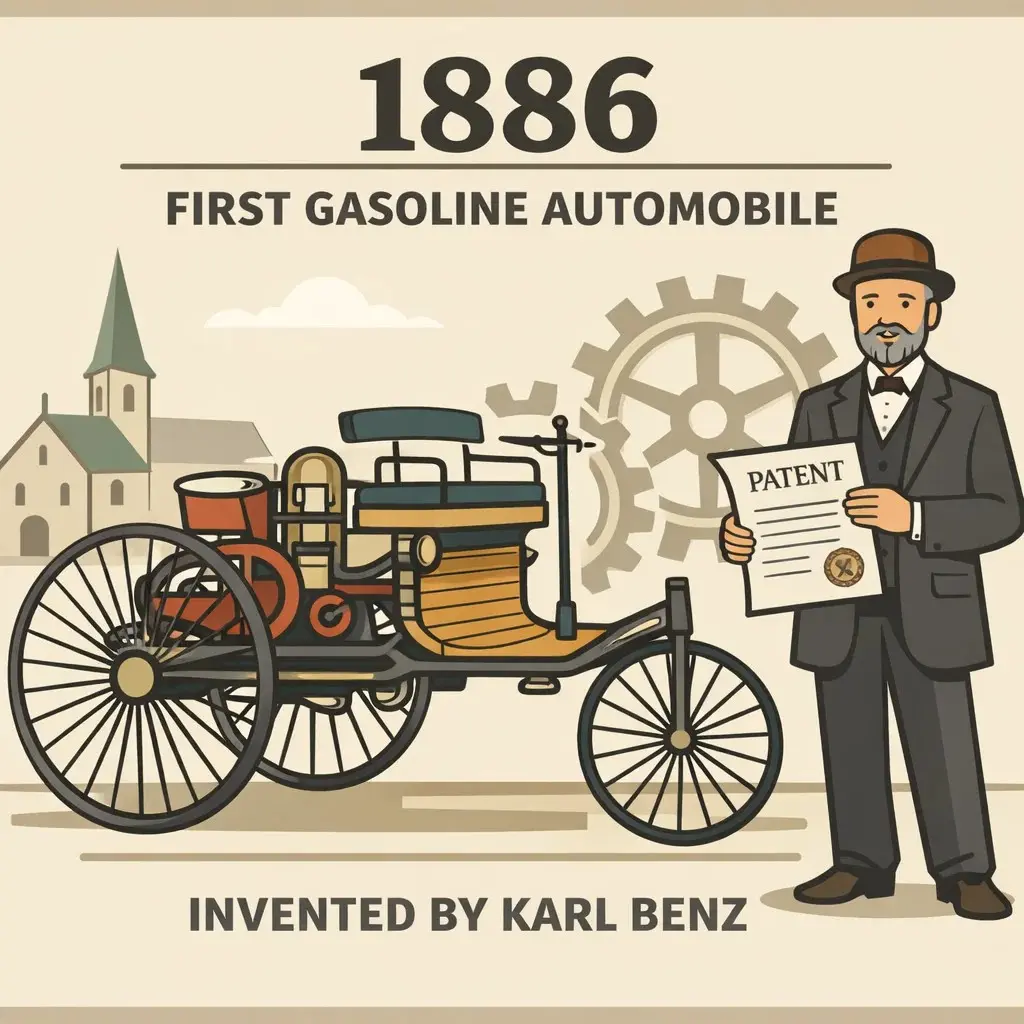
1886 – Patent for the First Gasoline Automobile
Karl Benz changed the course of human history by filing a patent for his “vehicle powered by a gas engine.” The Benz Patent-Motorwagen is widely regarded as the world’s first successful gasoline-driven automobile. With its internal combustion engine and three-wheeled design, it laid the technological foundation for the entire modern automotive industry.
1891 – Liliʻuokalani Proclaimed Queen
Liliʻuokalani was officially proclaimed the monarch of the Kingdom of Hawaii following the death of her brother, King Kalākaua. She would become the kingdom’s last sovereign monarch and only queen regnant. Her reign was defined by her efforts to restore power to the monarchy and her people, a struggle that eventually led to the controversial overthrow of the Hawaiian government by American-backed interests.
1907 – First Native American U.S. Senator
Charles Curtis of Kansas made history by becoming the first person of Native American descent to be seated in the United States Senate. A member of the Kaw Nation, Curtis was a prominent Republican who would later go on to serve as the Vice President of the United States under Herbert Hoover, marking a significant milestone for indigenous representation in high federal office.
1911 – Capture of Mexicali
During the Mexican Revolution, the Mexican Liberal Party successfully captured the city of Mexicali. This victory ignited the Magonista rebellion of 1911, an anarchist-led uprising aimed at social and land reform in Baja California. The movement highlighted the radical ideological shifts occurring within the broader revolutionary struggle against the dictatorship of Porfirio Díaz.
1918 – The Battle of Kruty
In a legendary moment of the Ukrainian–Soviet War, a small force of about 400 Ukrainian military students and cadets met the advancing Bolshevik Red Army at the Kruty railway station. Though vastly outnumbered and eventually defeated, their brave stand delayed the Bolshevik advance on Kyiv, allowing the Ukrainian People’s Republic to sign a vital peace treaty with the Central Powers.
1918 – The Kiev Arsenal Uprising
Simultaneously with the Battle of Kruty, a Bolshevik-organized armed uprising began at the Kiev Arsenal factory. The workers and soldiers revolted in anticipation of the arrival of the Red Army, attempting to destabilize the Ukrainian government from within. After six days of intense urban combat, the uprising was suppressed by Ukrainian forces, though it highlighted the deep internal divisions of the era.
1936 – First Baseball Hall of Fame Inductees
The Baseball Writers’ Association of America announced the inaugural class for the newly created National Baseball Hall of Fame. The five legends chosen were Ty Cobb, Babe Ruth, Honus Wagner, Christy Mathewson, and Walter Johnson. Their induction established a permanent home for the history of America’s pastime in Cooperstown, New York.
1940 – Ajikawaguchi Station Train Collision
A horrific disaster occurred in Osaka, Japan, when three trains on the Nishinari Line collided and exploded near Ajikawaguchi Station. The crash was caused by a signal error, leading to a massive fire fueled by the gasoline being transported. One hundred and eighty-one people lost their lives in the tragedy, making it one of the deadliest rail accidents in Japanese history.
1943 – Battle of Rennell Island Begins
During the Solomon Islands campaign of World War II, Japanese land-based bombers attacked a U.S. task force guarding a troop convoy. On the first day of the Battle of Rennell Island, the heavy cruiser USS Chicago (CA-29) was torpedoed and severely damaged. The engagement forced the U.S. to withdraw its air cover, illustrating the continued threat of Japanese air power in the Pacific.
1944 – Attack on Koniuchy
During World War II, the Polish village of Koniuchy (now in modern-day Lithuania) was attacked by Soviet partisan units. Approximately 38 residents were killed and a dozen more injured during the raid. The incident has remained a subject of historical debate and investigation regarding the conduct of partisan warfare and the targeting of civilian populations during the conflict.
1944 – Destruction of the Archiginnasio Anatomical Theatre
In an Allied air raid on Bologna, Italy, the historic Anatomical Theatre of the Archiginnasio was completely destroyed. Built in 1637, the ornate wooden theater was a masterpiece of Renaissance architecture and a central site for the study of medicine. While the theater was later meticulously reconstructed using original salvaged pieces, the loss was a blow to European cultural heritage.
1959 – First Melodifestivalen Held
Sweden held its very first Melodifestivalen at the Cirkus in Stockholm to select its entry for the Eurovision Song Contest. The competition was won by Siw Malmkvist, though the song “Augustin” was later performed at Eurovision by Brita Borg. This event launched what would become one of the most popular and influential annual television events in Swedish culture.
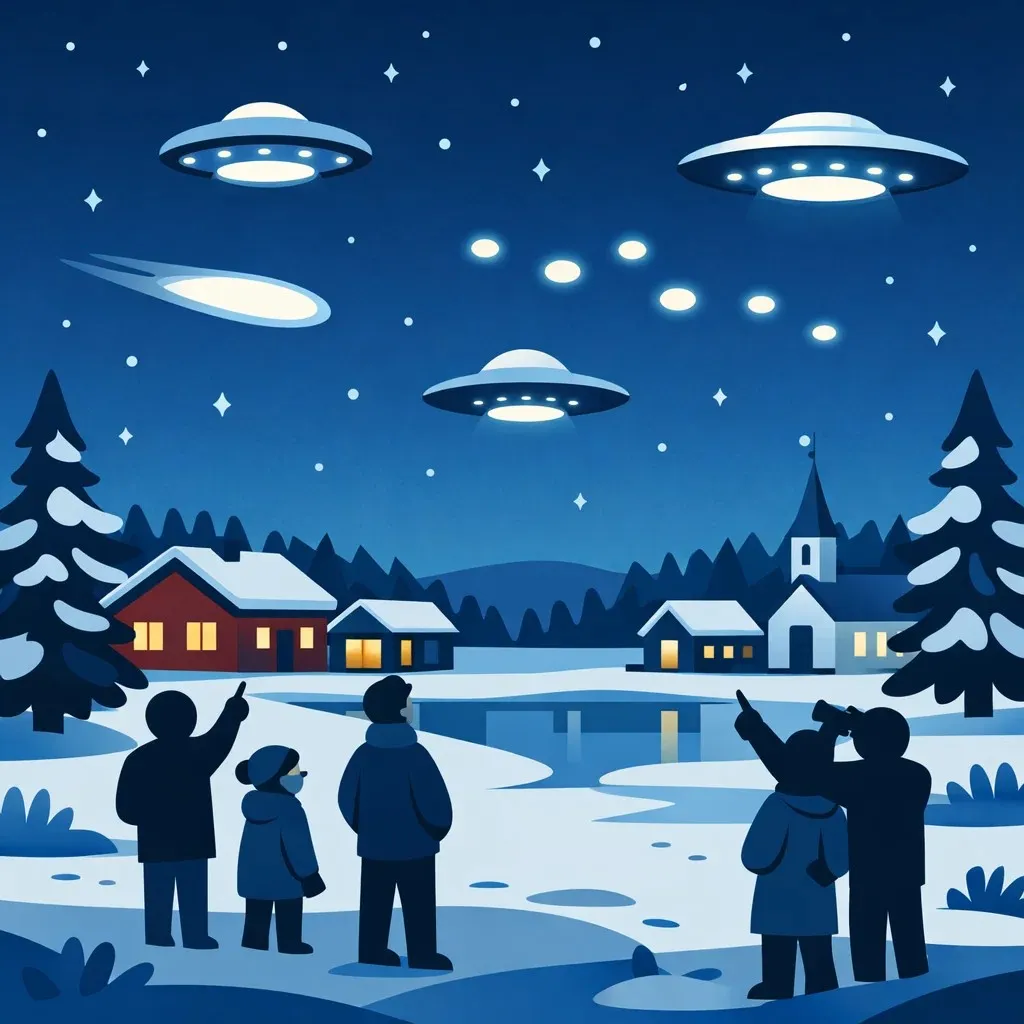
1971 – UFO Sightings at Pudasjärvi
The town of Pudasjärvi, Finland, recorded the last of a famous series of UFO sightings that had gripped the region for years. Throughout the late 1960s and early 70s, residents and investigators reported numerous unidentified lights and aerial phenomena. These events made the area a hub for Nordic ufology and led to several scientific and amateur studies of the Finnish night sky.
1973 – EgyptAir Flight 741 Crash
An EgyptAir Ilyushin Il-18 crashed into the Kyrenia Mountains in Cyprus while on its approach to Nicosia. All 37 people on board were killed in the accident. The crash was attributed to the pilots becoming disoriented in the dark while attempting to navigate the mountainous terrain, a tragedy that led to renewed calls for improved navigation aids in the region.
1983 – Singapore Cable Car Disaster
A Panamanian-registered oil rig, the Eniwetok, struck the cables of the Singapore Cable Car system as it was being towed through the Keppel Harbour. The impact caused two cabins to plunge into the sea, killing seven people. Thirteen others remained trapped in swaying cabins for hours until they were rescued by military helicopters in a daring night operation.
1989 – Hungary Recognizes South Korea
In a significant break from Eastern Bloc policy, Hungary officially established diplomatic relations with South Korea. This move made Hungary the first communist nation in Europe to do so, signaling the beginning of the end of the Cold War’s rigid diplomatic lines. It paved the way for other Eastern European nations to seek economic and political ties with Seoul.
1991 – Battle of Khafji Begins
The first major ground engagement of the Gulf War began when Iraqi forces crossed the border into Saudi Arabia and occupied the town of Khafji. The resulting Battle of Khafji was the deadliest ground fight of the war, as Saudi and Qatari forces, supported by Allied air power, fought to retake the town. The Iraqi defeat demonstrated the tactical superiority of the coalition forces.
1996 – France Ends Nuclear Testing
President Jacques Chirac officially announced a “definitive end” to French nuclear weapons testing. The decision followed a controversial final series of tests in the South Pacific that had drawn worldwide condemnation and protests. The move was seen as a major step toward France’s commitment to the Comprehensive Nuclear-Test-Ban Treaty and a shift in its defense policy.
2001 – Student Protests in Indonesia
Thousands of student protesters stormed the Indonesian parliament building in Jakarta, demanding the resignation of President Abdurrahman Wahid. The protests were fueled by allegations of his involvement in corruption scandals known as “Buloggate” and “Bruneigate.” The unrest was a key moment in the political crisis that eventually led to his impeachment later that year.
2002 – President Bush’s “Axis of Evil” Speech
During his State of the Union address, U.S. President George W. Bush famously used the phrase “axis of evil” to describe Iraq, Iran, and North Korea. He accused these nations of attempting to develop weapons of mass destruction and supporting international terrorism. The speech set the stage for the preemptive strike doctrine and the eventual 2003 invasion of Iraq.
2005 – Direct Flights Between China and Taiwan
In a historic diplomatic thaw, the first direct commercial flights from mainland China to Taiwan since the end of the Chinese Civil War in 1949 landed in Taipei. Shortly after the arrival of the flight from Guangzhou, a China Airlines plane from Taiwan landed in Beijing. These “Lunar New Year Charters” were a symbolic breakthrough in cross-strait relations.
2008 – Egyptian Ruling on Identity Documents
An Egyptian court issued a landmark ruling allowing citizens who do not follow one of the three government-recognized religions (Islam, Christianity, or Judaism) to receive identity documents. While they still could not list their specific faith—such as Baháʼí—they were permitted to leave the religion field blank or use a dash. This was a significant win for civil rights and religious freedom in Egypt.
2009 – Removal of Rod Blagojevich
The Governor of Illinois, Rod Blagojevich, was removed from office by a unanimous vote of the Illinois State Senate. He had been convicted of multiple corruption charges, most notably attempting to sell the U.S. Senate seat vacated by President-elect Barack Obama for personal gain. He became the first Illinois governor to be impeached and removed from office.
2013 – SCAT Airlines Flight 760 Crash
A SCAT Airlines Bombardier CRJ200 crashed in heavy fog near the city of Almaty, Kazakhstan, killing all 21 people on board. The flight was domestic, traveling from Kokshetau. The investigation eventually pointed to the crew’s failure to follow proper landing procedures in low-visibility conditions, resulting in a controlled flight into terrain.
2014 – Afrin Canton Declares Autonomy
Following the path of other Kurdish-majority regions in Northern Syria, the Afrin Canton officially declared its autonomy from the Syrian Arab Republic. This move was part of the establishment of the Democratic Federation of Northern Syria (Rojava), emphasizing local self-governance amid the chaos of the Syrian Civil War. Afrin would later become a focal point of intense regional conflict.
2017 – Quebec City Mosque Shooting
A gunman opened fire at the Islamic Cultural Centre of Quebec City during evening prayers, killing six worshippers and wounding 19 others. The act of terror was widely condemned by leaders globally and sparked a national conversation in Canada about Islamophobia and the rise of far-right extremism. It remains one of the deadliest mass shootings in modern Canadian history.
2022 – Freedom Convoy Protests in Ottawa
A massive rally of truck drivers and pedestrians, known as the “Freedom Convoy,” gathered on Parliament Hill in Ottawa to protest COVID-19 mandates and restrictions. The protest caused significant traffic closures and disruptions throughout the city’s downtown core. The event became a focal point for global debates regarding public health measures and individual liberties during the pandemic.
2025 – Potomac River Mid-air Collision
In a devastating aviation accident, American Eagle Flight 5342 collided mid-air with a U.S. Army Sikorsky UH-60 Black Hawk over the Potomac River. The commercial aircraft and the military helicopter both crashed into the water, resulting in the loss of all 67 people on board both aircraft. The tragedy spurred an immediate and comprehensive investigation into air traffic control protocols in the restricted airspace over Washington, D.C.
2025 – South Sudan Plane Crash
A chartered Beechcraft 1900 crashed shortly after takeoff near the Unity oilfield in South Sudan. The accident killed all 20 people on board, including several petroleum engineers and local workers. The crash highlighted the ongoing challenges with aviation safety and infrastructure in the war-torn and developing regions of East Africa.
You Can Also Read About January 28 Tales
Famous People Born On January 29
| Name | Role / Description | Birth – Death |
|---|---|---|
| Christian VII | King of Denmark and Norway | January 29, 1749 – March 13, 1808 |
| W. C. Fields | American actor and comedian | January 29, 1880 – December 25, 1946 |
| Edward Abbey | American author and environmentalist | January 29, 1927 – March 14, 1989 |
| Henry Lee | American Revolutionary War officer | January 29, 1756 – March 25, 1818 |
| Barnett Newman | American abstract expressionist painter | January 29, 1905 – July 3, 1970 |
| Dominik Hašek | Czech ice hockey goaltender | January 29, 1965 – |
| Albert Gallatin | U.S. Secretary of the Treasury | January 29, 1761 – August 12, 1849 |
| Paddy Chayefsky | American playwright and screenwriter | January 29, 1923 – August 1, 1981 |
| Romain Rolland | French writer and Nobel laureate | January 29, 1866 – December 30, 1944 |
| Frederick Delius | English composer | January 29, 1862 – June 10, 1934 |
| Cristina Saralegui | Cuban American TV host | January 29, 1948 – |
| Jeffery Amherst | British army commander | January 29, 1717 – August 3, 1797 |
| Sir Ebenezer Howard | British urban planner | January 29, 1850 – May 1, 1928 |
| Rajyavardhan Singh Rathore | Indian Olympic shooter | January 29, 1970 – |
| Barney Oldfield | American race-car driver | January 29, 1878 – October 4, 1946 |
| Andy Roberts | West Indian cricketer | January 29, 1951 – |
| Anne-Louis Girodet | French Romantic painter | January 29, 1767 – December 9, 1824 |
| Frederick Henry of Orange | Dutch stadtholder | January 29, 1584 – March 14, 1647 |
| Luigi Nono | Italian avant-garde composer | January 29, 1924 – May 8, 1990 |
| Arnaldo Tamayo Méndez | Cuban cosmonaut | January 29, 1942 – |
| Daniel-François-Esprit Auber | French opera composer | January 29, 1782 – May 12, 1871 |
| John Callcott Horsley | British painter | January 29, 1817 – October 18, 1903 |
| Linda B. Buck | American Nobel-winning scientist | January 29, 1947 – |
| Ernst Eduard Kummer | German mathematician | January 29, 1810 – May 14, 1893 |
| Lawrence Hargrave | Aviation pioneer | January 29, 1850 – July 6, 1915 |
| Elio Petri | Italian film director | January 29, 1929 – November 10, 1982 |
| Havergal Brian | British composer | January 29, 1876 – November 28, 1972 |
| Kitasato Shibasaburō | Japanese bacteriologist | January 29, 1853 – June 13, 1931 |
| Allen B. DuMont | American television inventor | January 29, 1901 – November 15, 1965 |
| Sydney Chapman | British physicist | January 29, 1888 – June 16, 1970 |
Famous People Died On January 29
| Name | Role / Description | Birth – Death |
|---|---|---|
| Allen W. Dulles | CIA director | April 7, 1893 – January 29, 1969 |
| Christian IX | King of Denmark | April 8, 1818 – January 29, 1906 |
| Douglas Haig | British field marshal | June 19, 1861 – January 29, 1928 |
| Willie Dixon | American blues musician | July 1, 1915 – January 29, 1992 |
| Dick Lane | American NFL player | April 16, 1928 – January 29, 2002 |
| Colleen McCullough | Australian novelist | June 1, 1937 – January 29, 2015 |
| Edward Lear | English poet and artist | May 12, 1812 – January 29, 1888 |
| Jacques Rivette | French film director | March 1, 1928 – January 29, 2016 |
| Nam June Paik | Video art pioneer | July 20, 1932 – January 29, 2006 |
| Alfred Sisley | French Impressionist painter | October 30, 1839 – January 29, 1899 |
| Fritz Kreisler | Violinist and composer | February 2, 1875 – January 29, 1962 |
| Harry L. Hopkins | U.S. New Deal administrator | August 17, 1890 – January 29, 1946 |
| Ioannis Metaxas | Greek statesman | April 12, 1871 – January 29, 1941 |
| Milton Babbitt | American composer | May 10, 1916 – January 29, 2011 |
| Sara Teasdale | American poet | August 8, 1884 – January 29, 1933 |
| Sir Basil Liddell Hart | Military historian | October 31, 1895 – January 29, 1970 |
| Ernest I | Duke of Saxe-Coburg-Gotha | January 2, 1784 – January 29, 1844 |
| Paul Barras | French revolutionary leader | June 30, 1755 – January 29, 1829 |
| Fujita Tsuguharu | Japanese painter | November 27, 1886 – January 29, 1968 |
| Timothy Pickering | American statesman | July 17, 1745 – January 29, 1829 |
| Anne Tracy Morgan | American philanthropist | July 25, 1873 – January 29, 1952 |
| Leslie A. Fiedler | Literary critic | March 8, 1917 – January 29, 2003 |
| William Allen White | American journalist | February 10, 1868 – January 29, 1944 |
| Ernst Moritz Arndt | German writer | December 26, 1769 – January 29, 1860 |
| Oscar Luigi Scalfaro | President of Italy | September 9, 1918 – January 29, 2012 |
| Cozy Cole | American jazz drummer | October 17, 1909 – January 29, 1981 |
| Seth Thomas | American clockmaker | August 19, 1785 – January 29, 1859 |
| André-Hercule de Fleury | French statesman | June 22, 1653 – January 29, 1743 |
| Herman Bang | Danish novelist | April 21, 1857 – January 29, 1912 |
| Gelasius II | Pope of the Catholic Church | – January 29, 1119 |
Observances & Institutional Dates
- Kansas Day: Commemorating the admission of Kansas to the Union in 1861.
- Fat Thursday (Earliest possible): A traditional Christian feast marking the last Thursday before Lent.
- Anniversary of the Quebec City Mosque Shooting: A day of remembrance and reflection on religious tolerance in Canada.
Frequently Asked Questions
- What was the first car patented on January 29?
- Karl Benz received the patent for the first gasoline-powered automobile, the Benz Patent-Motorwagen, in 1886.
- Who published “The Raven” on this day?
- Edgar Allan Poe’s famous poem was first published with his name in the New York Evening Mirror in 1845.
- What is “Kansas Day”?
- It is a celebration held every January 29 to honor the date Kansas became the 34th state in 1861.
- What was the “Axis of Evil” speech?
- A 2002 address by George W. Bush where he identified Iraq, Iran, and North Korea as major threats to global security.