
Have you ever wondered what did people eat in the 1800s?? Before supermarkets or fridges, meals depended entirely on the seasons, the land, and the hands that prepared them. From freshly baked bread to hearty soups and roasted meats, every bite told a story of labor, family, and survival. Let’s step back in time and taste the flavors that shaped daily life in that remarkable century.
Quick Summary
People in the 1800s ate very different diets depending on class, region, and occupation. Working-class and rural families relied on bread, porridge, salted meat, legumes, seasonal vegetables and dairy; urban and wealthy households added fresh meat, imported spices, sugar, pastries, and multi-course dinners prepared by servants.
Cowboys and pioneers ate preserved staples (hardtack, salted pork, beans, coffee), sailors lived on hardtack and salted meat, and enslaved people were typically given basic rations (cornmeal, pork, molasses) supplemented by foraging and garden produce. Food preservation relied on drying, smoking, salting, pickling, cellars, icehouses, and — from 1809 onward — early canning.
How many meals a day did people eat in the 1800s?
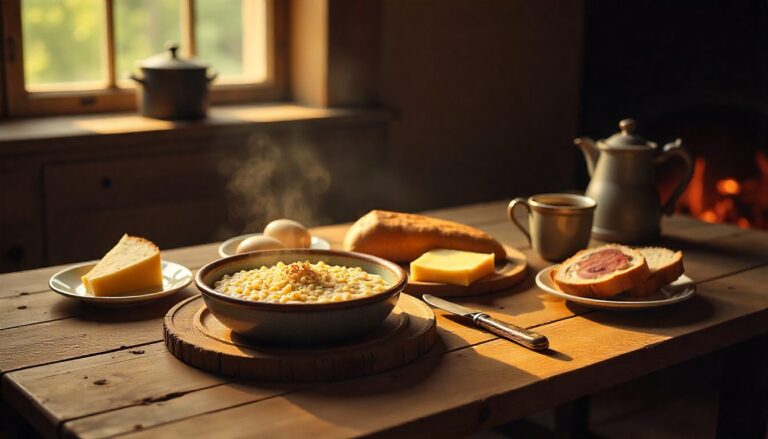
This might surprise you, but the three-meals-a-day pattern we know today wasn’t universal. For much of the century, and especially for the working class and rural families, the standard was two main meals:
- Breakfast: A hearty meal to start the day, often taken early, around 6 or 7 AM.
- Dinner: The largest meal of the day, eaten around noon or early afternoon. This was when the family would gather after a morning of labor.
A lighter, third meal, called supper, was eaten in the evening, usually consisting of leftovers from the large noon dinner.
However, this began to shift, particularly in urban areas and among the middle and upper classes. As the century progressed and work moved from fields to factories, the main meal “dinner” was pushed later in the day, to accommodate work schedules. By the late 1800s, the pattern of breakfast, a lighter lunch (the new noon meal), and dinner in the evening was becoming more established for city dwellers.
What did they eat for dinner in the 1800s?
“Dinner” was the cornerstone of the day. What was on the plate varied enormously based on wealth and location.
- For a Farming Family: A typical dinner might be a large pot of stew bubbling over the hearth, containing root vegetables like carrots and turnips, maybe some onions, and a small amount of salted pork for flavor. This would be served with dense, homemade bread or cornbread.
- For a Middle-Class Urban Family: Dinner could be a roast of beef or mutton, served with boiled potatoes, gravy, and a seasonal vegetable like peas or cabbage.
- For the Wealthy: A Victorian-era dinner party was a spectacle. Multiple courses were served, including soups, fish courses, roasted meats, game birds, intricate jellies, puddings, and finally, fruit and cheese. The goal was to display wealth and sophistication.
What did pioneers eat for breakfast?
For a pioneer family on the Oregon Trail or settling a new homestead, breakfast was fuel for a day of backbreaking work. There was no time for dainty meals. It was often a one-pot affair, cooked over an open fire.
A typical pioneer breakfast might include:
- Cornmeal Mush: A thick porridge made from boiled cornmeal, often eaten with molasses, honey, or a bit of fat if available. Leftover mush could be fried up for the next meal.
- Salt Pork: A staple of the pioneer diet. Thin slices of salted and cured pork were fried, and the rendered fat was used for cooking.
- Coffee: A precious commodity. If real coffee beans were unavailable, settlers made “coffee” from roasted chicory root, dandelion roots, or even burnt corn.
- Sourdough Biscuits: Pioneers maintained a sourdough starter, using it to make breads and biscuits without commercial yeast.
1800s Recipes: A Taste of the Past
Want to bring a bit of the 19th century into your own kitchen? Here are two classic, simple recipes you can try.
1. Classic Cornbread (A Frontier Staple)
This is a no-frills, savory cornbread that was a cornerstone of American meals.
- Ingredients: 2 cups cornmeal, 1 teaspoon salt, 1 teaspoon baking soda (if available; otherwise, it would be dense), 1 cup buttermilk (or sour milk), 1 egg, 2 tablespoons melted bacon fat or lard.
- Instructions: Preheat your oven to 425°F (220°C). Mix the dry ingredients. Beat the egg into the buttermilk and then stir into the dry mix. Add the melted fat. Pour into a greased cast-iron skillet and bake for 20-25 minutes until golden brown and a toothpick comes out clean.
2. Apple Pan Dowdy (A Simple Farmhouse Dessert)
A humble, comforting dessert that makes the most of seasonal apples.
- Ingredients: 6-8 apples, peeled and sliced; 1/2 cup molasses or maple syrup; 1 teaspoon cinnamon; 1/4 teaspoon nutmeg; a pinch of salt; and a simple pie crust or biscuit dough for the top.
- Instructions: Place the sliced apples in a buttered baking dish. Mix the molasses and spices and pour over the apples. Cover the top with your rolled-out dough, cutting a few slits to let steam escape. Bake at 375°F (190°C) for about 45 minutes, until the apples are tender and the crust is golden. The name “dowdy” comes from the practice of breaking up the crust and pushing it down into the fruity juices before serving—making it look “dowdy” but taste delicious!
Holiday Recipes of the 1800s
Holidays were a time for special treats, often involving ingredients that were expensive or hard to come by.
Christmas/Thanksgiving Mincemeat Pie: The original mincemeat pie from this era often contained actual meat (usually beef or venison) along with suet, apples, raisins, spices, and brandy. The meat acted as a preservative, and the pies could be kept for months. Over the century, the proportion of meat decreased, evolving into the fruit-based mincemeat we know today.
Plum Pudding: A must-have for a Victorian Christmas in England and America. This was a steamed pudding packed with dried fruits (prunes or “plums” were just one type), suet, breadcrumbs, spices, and soaked in brandy. It was a dense, rich, and celebratory dish.
The 1800s Kitchen: The Heart of the Home
The 1800s kitchen transformed dramatically. At the start of the century, the heart of nearly every home was the hearth—a large, open fireplace used for all cooking, heating, and light. Cooking involved heavy cast-iron pots, kettles, and Dutch ovens, which were suspended over the fire with trammels or placed directly in the coals.
The invention of the cast-iron cookstove around the mid-century was a revolution. Stoves were more fuel-efficient, safer, and gave cooks much more control over heat. They freed women from bending over a smoky fire and made it possible to boil, bake, and simmer simultaneously. By the 1890s, wealthier homes even had iceboxes to keep food fresh a little longer.
1800s Kid Cooking: Chores and Treats
Children in the 1800s had responsibilities from a very young age. In the kitchen, their jobs might include:
- Churning butter in a wooden churn.
- Shelling peas or peeling potatoes.
- Stoking the fire in the stove or hearth.
- Turning the crank on the ice cream maker (a special treat in the later part of the century).
- For older girls, learning to cook and bake was an essential part of their education for future homemaking.
A common treat for a rural child might be a piece of rock candy, a homemade gingerbread man, or a slice of apple pie.
The 1800s Butcher: From Local Artisan to Industrial Supplier
At the beginning of the century, most people got their meat from a local butcher who sourced animals from nearby farms. The relationship was personal. You’d tell the butcher what you wanted, and he would cut it for you on the spot. There was no plastic wrapping! Meat was seasonal; fresh pork was most common in the autumn after pigs were slaughtered, while beef was available at other times.
With the rise of cities and the development of railroads and refrigeration in the later 1800s, the meat industry began to industrialize. The opening of massive slaughterhouses and packing plants in cities like Chicago meant that meat could be processed on an unprecedented scale and shipped across the country, changing the way Americans ate forever.
Cowboys and trail food (what did cowboys eat in the 1800s?)
The cowboy’s diet was monotonous, tough, and built for survival. The cook, or “cookie,” was a vital member of the cattle drive crew, operating from a chuckwagon.
The staples were known as the “Three Bs”:
- Beans: A constant source of protein, cooked for hours with salt pork.
- Bacon: Salt-cured bacon that could survive long journeys without spoiling.
- Bread: Not loaf bread, but sourdough biscuits or “hardtack”—a rock-hard, durable cracker made from just flour and water.
Coffee was the lifeblood of the camp, strong enough to “float a horseshoe.” On rare occasions, there might be a “son-of-a-gun stew,” made from the less desirable parts of a freshly slaughtered cow (like the heart, liver, and brains).
Sailors food in the 1800s
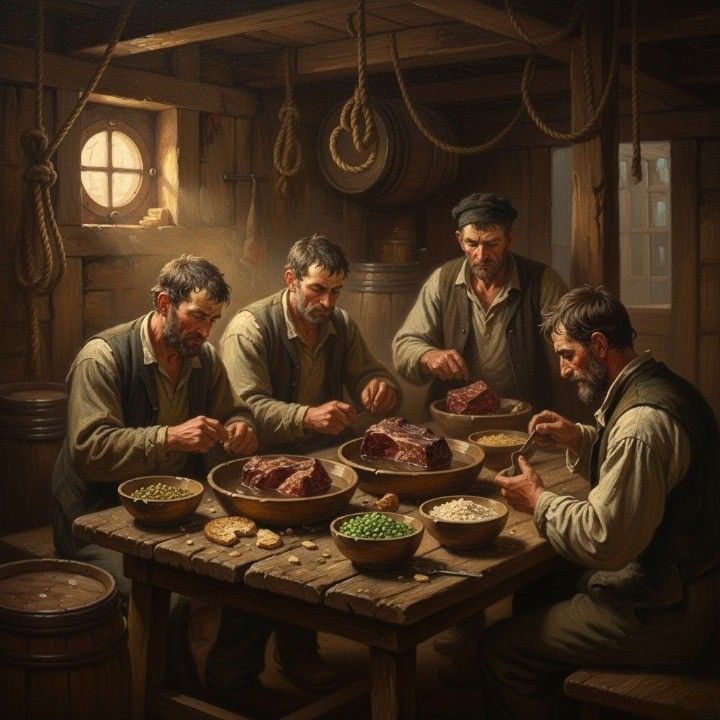
A sailor’s diet was infamous for being bland and often rotten. The core of their diet was hardtack (a hard cracker often full of weevils), salted beef or pork (soaked in water to make it edible), dried peas, and oatmeal. A lack of fresh fruits and vegetables led to scurvy, a deadly disease caused by Vitamin C deficiency, until lime/lemon juice was regularly issued by the British Navy (hence the nickname “limey”).
How was food preserved in the 1800s?
Without electricity, people were masters of preservation. Methods included:
- Salting & Curing: For meats like pork and fish.
- Smoking: To add flavor and further preserve meats.
- Drying: For fruits, vegetables, and herbs.
- Pickling: In a brine of vinegar, salt, and spices for vegetables.
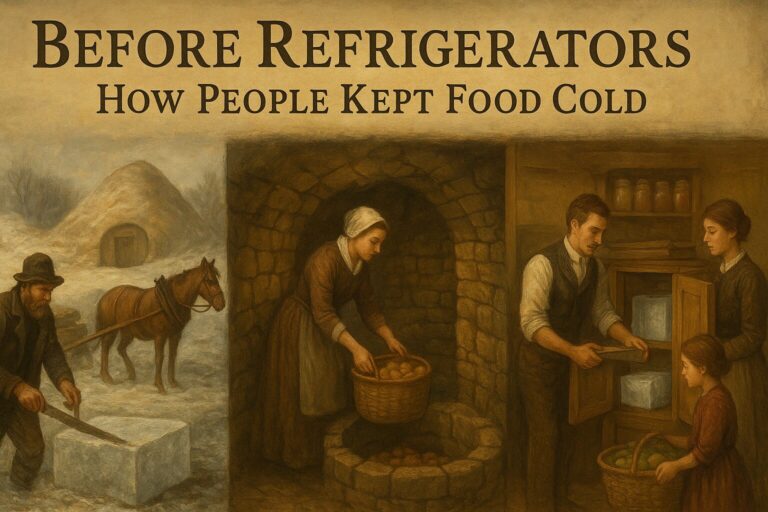
- Root Cellaring: Storing root vegetables, apples, and cabbages in cool, dark, earthen cellars.
- Canning: This method was invented in the early 1800s and became more widespread as the century went on.
If you want to read details on this, check this: How People Kept Food Cold Before Refrigerators
Frequently Asked Questions About 1800s Food
Did they eat lunch in the 1800s?
Not by that name, initially. The main noon meal was “dinner.” The concept of “lunch” emerged as dinner shifted to the evening.
What were common meals in the 1800s?
Common meals revolved around starches and preserved foods: cornmeal, wheat flour, potatoes, salt pork, dried beans, and seasonal vegetables from a kitchen garden. Stews, soups, and porridges were the most common preparations as they were efficient and stretched ingredients.
what kind of food did they eat in the colonial times?
Colonial diets (pre-1800s) were heavily influenced by Native American crops. Corn was the absolute king, eaten as porridge (hasty pudding), bread (johnnycakes), and hominy. Beans, squash, and wild game were also central, alongside English staples like wheat (for the wealthy) and dairy in the northern colonies.
What did slaves eat in the 1800s?
They were given minimal rations of cornmeal and salt pork, which they supplemented with foods they grew themselves, like okra, black-eyed peas, and sweet potatoes, creating the foundations of Southern cuisine.
What did Texans eat in the 1800s?
A fusion of Mexican, Native American, and European influences, including beef dishes like chili con carne, tortillas, beans, and later, German-style sausages.
What did rich people eat in the 1800s?
The wealthy enjoyed fresh meat, imported luxuries, and multi-course meals with elaborate dishes like turtle soup, roasted game, and intricate desserts.
What did sailors eat in the 1800s?
A monotonous and often spoiled diet of hardtack, salted beef, dried peas, and oatmeal, leading to widespread scurvy before the adoption of citrus juice.
What did they eat for breakfast in the 1800s?
A hearty meal to start the day. For farmers and pioneers, this was often cornmeal mush, salt pork, and coffee. The middle class might have eggs, steak, or pancakes.
How was food preserved in the 1800s?
Through salting, smoking, drying, pickling, root cellaring, and later, canning. There were no refrigerators.
How many calories did people eat in the 1800s?
A laborer or farmer could easily consume 3,500-4,500 calories per day due to immense physical exertion. Sedentary city dwellers ate less, but their diet was often poorer in quality.
What is the oldest known cookbook?
One of the most influential early American cookbooks was Miss Beecher’s Domestic Receipt Book (1846). Globally, De re coquinaria by Apicius is one of the oldest.
What did poor people eat in the 1800s?
A sparse diet of staple foods like cornmeal, potatoes, bread, and small amounts of salt pork, with little variety, especially in winter.
What were the popular snacks in the 1800s?
Fresh fruit, nuts, popcorn, gingerbread, and pickles were common simple treats.
What did aristocrats eat in the 1800s?
They indulged in extravagant, multi-course feasts with oysters, multiple roasts, game, elaborate desserts, and fine wines.
Did people eat healthier in the 1800s?
It was a mixed bag. Food was natural but lacked variety in winter, was high in salt/fat from preservation, and was prone to spoilage and contamination.
How did people in the 1800s keep food cold?
They used springhouses, wells, and later, iceboxes—insulated cabinets cooled by large blocks of ice delivered by an iceman.
What did kids eat for lunch in the 1800s?
Often an informal meal of a piece of bread, a cold potato, or a leftover biscuit. In cities, a packed pail with a simple sandwich became more common.
How did women cook in the early 1800s?
Over an open hearth, which was physically demanding and dangerous, involving heavy cast-iron pots, constant fire management, and long hours.
What did cowboys eat on the trail?
A monotonous diet built for survival: beans, bacon, sourdough biscuits, hardtack, and strong coffee, occasionally supplemented with fresh game in “son-of-a-gun stew.”
How did people cook in the 1800s?
People in the 1800s cooked over open hearths or on wood- and coal-burning stoves using cast-iron pots, skillets, and Dutch ovens. Meals were made from scratch with simple tools, often baked, boiled, or roasted over fire. As the century progressed, cast-iron stoves made cooking easier, allowing better heat control and more varied recipes.
What did poor people eat in the 1800s in America?
Poor Americans lived mostly on bread, cornmeal, beans, potatoes, and salted pork or bacon when available. Many grew small gardens or foraged to supplement their diet.
What did poor people eat in the 1800s in Australia?
Poor settlers and convicts in Australia ate basic rations like salted meat, bread, tea, and flour-based meals such as damper. Fresh vegetables and meat were rare outside farms.
What did poor people eat in the 1800s in England?
The poor in England survived on bread, potatoes, porridge, and cheap stews. Meat was scarce, and tea with bread or dripping was a common meal.
What is the oldest recipe in the world?
The oldest known recipes come from ancient Mesopotamia, over 4,000 years ago, including instructions for making beer and a meat stew written on cuneiform tablets.