
When we ask what happened on this day in history December 11, we uncover a date where history’s deep currents rise to the surface. It is a day of stark conclusions and daring beginnings, from the fall of ancient dynasties and the last stand of princes to the first whispers across an ocean and the final footsteps on the Moon.
Important Events That Happened On December 11 In History
220 – The End of the Han Dynasty
A four-hundred-year epoch of Chinese history closed when Emperor Xian was compelled to relinquish the throne. This forced abdication to Cao Pi, son of the paramount warlord Cao Cao, formally dissolved the venerable Han dynasty and plunged the realm into the fractious Three Kingdoms period, reshaping East Asia’s political landscape.
361 – An Apostate Emperor Assumes Power
Julian, known to posterity for rejecting Christianity, marched into Constantinople as the uncontested Roman Emperor. His reign became a brief, deliberate, and controversial experiment in reviving traditional pagan rites, challenging the religious transformation that had taken root within the empire.
861 – A Caliph Falls, Unleashing Anarchy
The assassination of Abbasid Caliph al-Mutawakkil by his own Turkish guards marked a descent into chaos. The plotters installed his son al-Muntasir, but this regicide triggered the devastating “Anarchy at Samarra,” a decade of internal violence that crippled the caliphate’s central authority from within.
969 – Imperial Murder in Byzantium
The Byzantine Emperor Nikephoros II Phokas, a formidable general, met a brutal end in his own palace. The conspiracy was led by his wife Theophano and her lover, John Tzimiskes, who seized the throne. This act of intimate treachery underscored the lethal volatility of court politics in Constantinople.
1041 – A Short-Reigned Emperor is Crowned
Following the death of Michael IV, his adoptive nephew was raised to power as Emperor Michael V. His proclamation, backed by Empress Zoë, would lead to a brief and tumultuous rule, ultimately ending in a popular uprising that demonstrated the formidable power of the Byzantine capital’s populace.
1239 – A Kingdom Consolidated
Through the Treaty of Benavente, the rightful heiresses to the Kingdom of León formally renounced their claim in favor of King Ferdinand III of Castile. This pivotal diplomatic act was a major step toward the permanent union of the two crowns, forging a stronger Christian realm on the Iberian Peninsula.
1282 – The Last Prince of Wales Falls
The hope for an independent Wales died at the Battle of Orewin Bridge, where Llywelyn ap Gruffudd, the last native Prince of Wales, was killed. His death cleared the path for King Edward I of England’s final conquest and annexation of Wales, ending an era of Welsh sovereignty.
1602 – Geneva’s Defiant Stand
In a dramatic nighttime assault known as the Escalade, Savoyard forces attempted to scale Geneva’s walls and capture the city. The attack was repelled by the vigilant citizens, a legendary victory for the Republic of Geneva that is still celebrated annually as a testament to its independence.
1640 – A Petition Against Bishops
The Root and Branch petition, bearing the signatures of 15,000 Londoners, was formally presented to Parliament. This document vociferously called for the complete abolition of the episcopal system of church governance, fueling the radical religious and political fervor that would define the English Civil War.
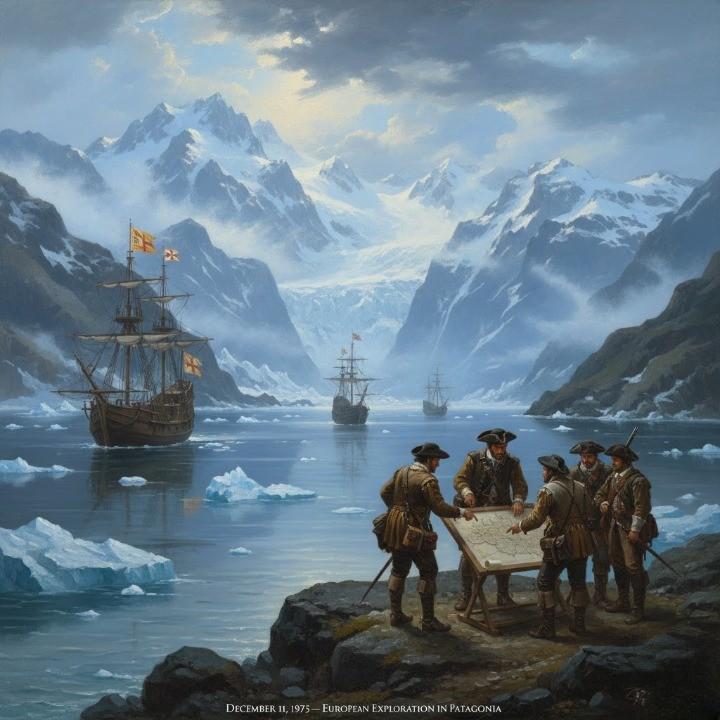
1675 – European Exploration in Patagonia
The Antonio de Vea expedition navigated into the remote waters of San Rafael Lake in western Patagonia. This journey represented one of the deepest European penetrations into the region at the time, mapping unknown territories in the service of the Spanish crown.
1688 – A King Discards the Great Seal
As he attempted to flee England during the Glorious Revolution, the deposed King James II threw the Great Seal of the Realm into the River Thames. This desperate, symbolic act aimed to paralyze the government he was leaving behind, but failed to halt the political revolution that installed William and Mary.
1792 – A King Stands Trial
The French National Convention placed the deposed King Louis XVI on trial for treason against the state. This unprecedented legal proceeding put the very institution of monarchy itself in the dock, marking a point of no return in the radical phase of the French Revolution.
1815 – Foundations of U.S. Finance
Recognizing the need for fiscal order after the War of 1812, the U.S. Senate established a select committee dedicated to matters of finance and a uniform national currency. This body would evolve into the powerful permanent Senate Committee on Finance, a cornerstone of American economic governance.
1816 – Indiana Joins the Union
Admitted as the 19th state, Indiana’s entry marked the continued westward expansion of the young American nation. Its transition from frontier territory to statehood reflected the dynamic growth and settlement patterns shaping the early United States.
1868 – A Decisive South American Battle
During the brutal Paraguayan War, Brazilian forces scored a significant victory over the Paraguayan Army at the Battle of Avay. This defeat further weakened the besieged nation of Paraguay, hastening the tragic conclusion of a conflict that would devastate its population.
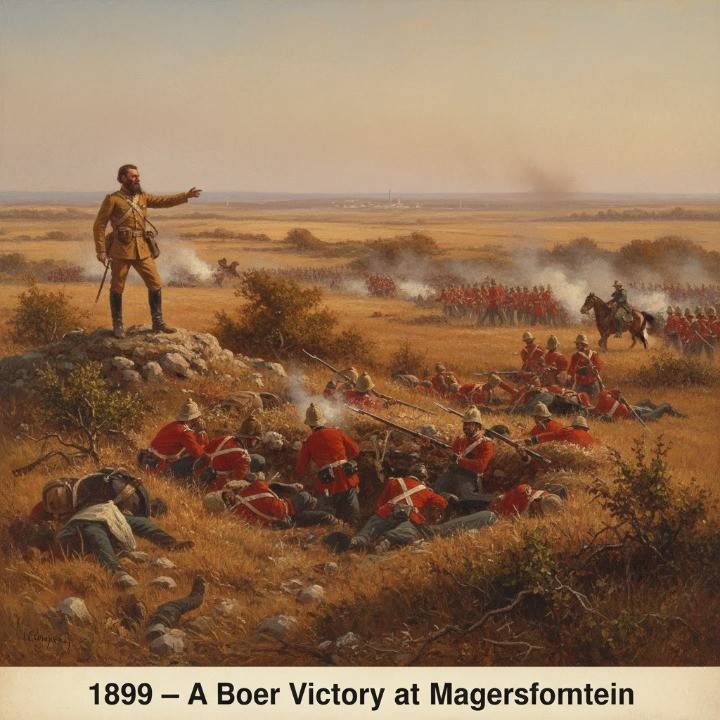
1899 – A Boer Victory at Magersfontein
In a masterful display of tactical defense during the Second Boer War, Boer commander Piet Cronjé repelled a British assault led by Lord Methuen at the Battle of Magersfontein. The defeat delayed British relief efforts for the besieged town of Kimberley and proved the formidable capabilities of the Boer forces.
1901 – The Airwaves Bridge an Ocean
From a station in Cornwall, Guglielmo Marconi successfully transmitted the first transatlantic radio signal, receiving it in Newfoundland. This leap in wireless technology shattered perceived geographical limits and heralded a new era of instantaneous global communication.
1905 – The Shuliavka Republic Rises
A spontaneous workers’ uprising erupted in Kyiv, then under Russian imperial rule. The rebels established the short-lived Shuliavka Republic, an autonomous zone that stood for several days as a bold, if ultimately crushed, challenge to Tsarist authority amidst the revolutionary turmoil of 1905.
1907 – New Zealand’s Parliament Burns
A catastrophic fire nearly completely destroyed the Parliament Buildings in Wellington. This disaster prompted the construction of a new, more permanent parliamentary complex, altering the architectural and political face of New Zealand’s capital.
1913 – The Mona Lisa Returns
Over two years after its sensational theft from the Louvre, Leonardo da Vinci’s masterpiece was recovered in Florence. The thief, Vincenzo Peruggia, was captured after attempting to sell the painting. The recovery ended an international mystery and elevated the artwork to a new level of global fame.
1917 – A General Enters the Holy City
In a carefully staged moment during World War I, British General Edmund Allenby entered Jerusalem on foot, out of respect for its religious significance, and declared martial law. The capture was a major strategic and symbolic victory for the Allies against the Ottoman Empire.
1920 – The Burning of Cork
In a severe reprisal during the Irish War of Independence, British forces systematically burned and looted the center of Cork city, including its City Hall and library. This act of collective punishment inflamed the conflict and became an enduring symbol of the struggle for Irish independence.
1925 – A New Feast for the Church
Pope Pius XI issued the encyclical Quas primas, which instituted the Feast of Christ the King across the Roman Catholic Church. This was a doctrinal and liturgical affirmation of Christ’s sovereignty, issued in response to the rising secularism and political instability of the era.
1927 – The Guangzhou Commune
Communist Red Guards launched a major uprising in the city of Guangzhou (Canton), seizing control and proclaiming a short-lived Soviet. The swift and bloody suppression of the “Guangzhou Commune” was a significant, though failed, early chapter in the Chinese Communist revolutionary movement.
1931 – The Statute of Westminster
This act of the British Parliament established full legislative equality between the United Kingdom and its Dominions—Australia, Canada, the Irish Free State, Newfoundland, New Zealand, and South Africa. It is considered the founding statute of the modern Commonwealth, granting de facto sovereignty.
1934 – A Foundational Moment for Recovery
Bill Wilson, co-founder of Alcoholics Anonymous, took his last drink and entered medical treatment for the final time. This personal milestone preceded his fateful meeting with Dr. Bob Smith, leading directly to the creation of the global mutual aid fellowship that would transform addiction recovery.
1936 – A Throne Voluntarily Vacated
The abdication of King Edward VIII, driven by his determination to marry Wallis Simpson, became legally effective. His brother’s accession as George VI averted a constitutional crisis and reshaped the public face of the British monarchy in the 20th century.
1937 – Italy Quits the League
Following its conquest of Abyssinia (Ethiopia) and facing condemnation, Fascist Italy formally withdrew from the League of Nations. This move underscored the failure of the League to maintain collective security and marked another step toward the unimpeded aggression that would lead to World War II.
1941 – War Truly Becomes Global
Nazi Germany and Fascist Italy declared war on the United States, solidifying the global alignment of World War II. The U.S. Congress immediately reciprocated, transforming the war in the Pacific into a single, interconnected worldwide conflict fought across two oceans and multiple continents.
1941 – Poland’s Stand
The Polish government-in-exile, already fighting a war of annihilation against Germany and the Soviet Union, declared war on the Empire of Japan. This symbolic act affirmed Poland’s stance within the Allied coalition, despite its own occupied and devastated territory.
1941 – A Setback at Wake Island
In the early stages of the Pacific War, the Imperial Japanese Navy suffered its first loss of surface warships during the ferocious Battle of Wake Island. While the atoll would eventually fall, this initial resistance provided a morale boost to the Allies.
1946 – UNICEF is Founded
The United Nations created the International Children’s Emergency Fund (UNICEF) to provide urgent food and healthcare to children in the shattered post-war world. It has since grown into a permanent UN agency advocating for the rights and well-being of children globally.
1948 – A U.N. Resolution on Palestine
The United Nations General Assembly passed Resolution 194, which addressed the Palestinian refugee crisis arising from the Arab-Israeli War and established a Conciliation Commission. Its principles, particularly regarding refugee rights, have remained central to decades of diplomatic efforts in the region.
1958 – New Republics in West Africa
French Upper Volta (now Burkina Faso) and French Dahomey (now Benin) gained self-government as autonomous republics within the French Community. This critical step on their path to full independence reflected the accelerating wave of decolonization across Africa.
1960 – Crackdown in Algiers
During a visit by President Charles de Gaulle, French forces violently clashed with pro-independence demonstrators in Algiers. The confrontation highlighted the intense and bloody struggle over Algeria’s future and the deep divisions within France itself.
1962 – Canada’s Last Execution
Arthur Lucas was executed in Toronto for murder, marking the final use of the death penalty in Canada. His execution preceded the formal abolition of capital punishment and remains a point of reference in the nation’s ongoing debate about justice.
1964 – Guevara Addresses the World
Argentine revolutionary Che Guevara delivered a fiery speech before the United Nations General Assembly, condemning imperialism and apartheid. His appearance, in military fatigues, was a dramatic moment of Cold War theater that highlighted the growing political voice of the Third World.
1972 – Humanity’s Last Lunar Steps
Apollo 17 astronauts Eugene Cernan and Harrison Schmitt concluded their final moonwalk. As Cernan climbed back into the lunar module, he became the last human—to this day—to leave footprints on the Moon’s surface, closing an epoch of manned lunar exploration.
1978 – The Lufthansa Heist
In one of the most infamous robberies in American history, a crew associated with the Lucchese crime family stole approximately $5 million in cash and jewels from a Lufthansa Airlines vault at JFK Airport. The heist, later marred by multiple murders, became a legend of organized crime.
1980 – Superfund Becomes Law
The U.S. Congress enacted the Comprehensive Environmental Response, Compensation, and Liability Act, known as “Superfund.” This landmark law created a federal program to clean up uncontrolled hazardous waste sites, fundamentally shaping American environmental policy.
1981 – The El Mozote Massacre
Salvadoran army troops, trained and funded by the United States, massacred an estimated 900 men, women, and children in the village of El Mozote. This atrocity, during the nation’s civil war, became a symbol of the human cost of Cold War proxy conflicts and state terror.
1988 – A Relief Mission Ends in Tragedy
A Soviet Il-76 transport plane, engaged in humanitarian aid flights following the devastating Armenian earthquake, crashed near the city of Leninakan, killing all 78 people on board. The disaster compounded the national tragedy unfolding in the region.
1990 – Albania’s Protests Begin
Widespread student demonstrations erupted in Tirana and spread across Albania. These protests, demanding political freedoms, signaled the beginning of the end for Europe’s last hardline Stalinist regime, ultimately triggering the fall of communism in the isolated country.
1990 – Deadly Fog on Interstate 75
A chain-reaction collision involving dozens of vehicles occurred in dense fog on Interstate 75 in Tennessee. The disaster, which killed 12 people and injured 42, led to major improvements in highway fog-warning systems and traffic management.
1993 – The Highland Towers Collapse
A landslide triggered by construction work and heavy rains caused one block of the Highland Towers condominium complex near Kuala Lumpur to collapse. The catastrophe killed 48 residents and led to major reforms in Malaysian building codes and hillside development regulations.
1994 – Troops Enter Chechnya
Russian President Boris Yeltsin ordered military forces into the breakaway republic of Chechnya, launching the First Chechen War. The brutal conflict announced Russia’s determination to resist separatist movements by force in the post-Soviet era, with devastating consequences.
1994 – A Bomb on Flight 434
A terrorist’s bomb, a test run for a larger plot, exploded aboard Philippine Airlines Flight 434, killing one passenger. The heroic efforts of the flight crew enabled a safe emergency landing, and the investigation provided critical intelligence that helped prevent a subsequent, more catastrophic attack.
1997 – The Kyoto Protocol Opens
The landmark international treaty on climate change, the Kyoto Protocol, opened for signature in Japan. It was the first global agreement to set binding targets for industrialized nations to reduce greenhouse gas emissions, framing the diplomatic battle against climate change for a generation.
1998 – A Crash in Thailand
Thai Airways Flight 261 crashed on approach to Surat Thani Airport during a storm, killing 101 people. Investigators concluded the probable cause was spatial disorientation suffered by the pilot, highlighting the persistent dangers of adverse weather in aviation.
1999 – Tragedy in the Azores
SATA Air Açores Flight 530M crashed into the Pico da Esperança mountain on São Jorge Island, killing all 35 people on board. The accident in harsh Atlantic weather conditions underscored the challenges of regional aviation in remote archipelagos.
2001 – China Enters the WTO
After 15 years of negotiations, the People’s Republic of China formally joined the World Trade Organization. This accession integrated the world’s most populous nation fully into the global trading system, unleashing economic forces that reshaped the 21st-century world economy.
2005 – The Buncefield Fire
A massive explosion and subsequent fire erupted at the Buncefield oil storage depot in England, creating one of the largest blazes in peacetime Europe. While causing astonishingly few casualties, the disaster led to a complete overhaul of safety regulations for fuel storage sites in the UK.
2005 – The Cronulla Riots
Tensions over beachfront violence in Sydney erupted, as thousands of white Australians gathered at Cronulla beach and attacked individuals perceived to be of Middle Eastern background. The riots and retaliatory attacks that followed sparked a national debate on race, integration, and policing in Australia.
2006 – A Controversial Conference in Tehran
The Iranian government opened an international conference titled “Review of the Holocaust: Global Vision,” drawing widespread condemnation from Western and other nations. The event, seen as an attempt to question historical facts, significantly heightened international tensions.
2006 – The Mexican Drug War Begins
Newly inaugurated President Felipe Calderón ordered a major deployment of federal military forces to his home state of Michoacán to combat drug cartels. This military offensive is widely cited as the formal start of the protracted and devastating conflict known as the Mexican Drug War.
2007 – Twin Bombings in Algiers
In a major attack during the North African insurgency, two coordinated car bombs detonated in Algiers. One struck near the Supreme Constitutional Court and the other near UN offices, killing dozens and signaling the brutal reach of terrorist networks in the region.
2008 – Madoff’s Arrest
Financier Bernard Madoff was arrested and charged with operating the largest Ponzi scheme in history, with estimated losses of $65 billion. The collapse of his firm shattered thousands of lives and exposed catastrophic failures in financial regulation and due diligence.
2009 – Angry Birds Takes Flight
Finnish developer Rovio Entertainment released its mobile game Angry Birds on iOS. The deceptively simple puzzle game became a global cultural and commercial phenomenon, exemplifying the explosive potential of the smartphone app market.
2012 – Massacre in Aqrab, Syria
Forces loyal to the Syrian government stormed the predominantly Alawite village of Aqrab, which had been seized by opposition fighters. The ensuing bombardment and killings left at least 125 people dead, reflecting the increasingly sectarian brutality of the Syrian Civil War.
2017 – Attempted Subway Bombing in NYC
A pipe bomb partially detonated in an underground passageway near Times Square and the Port Authority Bus Terminal. The attacker and three others were injured in what was characterized as a terrorist incident, leading to heightened security alerts in New York City.
2019 – Bougainville Chooses Independence
The results of a long-awaited referendum were announced, showing over 98% of voters in Bougainville, an autonomous region of Papua New Guinea, had chosen independence. This overwhelming result set the stage for complex negotiations to create the world’s potential newest nation.
2020 – A Vaccine Lights the Way
The U.S. Food and Drug Administration granted an Emergency Use Authorization for the Pfizer-BioNTech COVID-19 vaccine, the first such authorization in the fight against the global pandemic. This decision launched the largest and most rapid vaccination campaign in American history, a turning point in a global crisis.
Curious about what came before? Take a look on December 10
Famous People Born On December 11
| Name | Role / Short Description | Dates |
|---|---|---|
| Hector Berlioz | French composer | December 11, 1803 – March 8, 1869 |
| Robert Koch | German bacteriologist | December 11, 1843 – May 27, 1910 |
| Max Born | German physicist | December 11, 1882 – January 5, 1970 |
| Naguib Mahfouz | Egyptian writer (Nobel) | December 11, 1911 – August 30, 2006 |
| Fiorello La Guardia | Mayor of New York City | December 11, 1882 – September 20, 1947 |
| Carlos Gardel | Argentine singer & actor | December 11, 1890 – June 24, 1935 |
| Qian Xuesen | Chinese scientist (aerospace) | December 11, 1911 – October 31, 2009 |
| Emmanuelle Charpentier | French microbiologist (CRISPR) | December 11, 1968 – |
| Annie Jump Cannon | American astronomer (stellar classification) | December 11, 1863 – April 13, 1941 |
| Alfred de Musset | French poet & dramatist | December 11, 1810 – May 2, 1857 |
| McCoy Tyner | American jazz pianist | December 11, 1938 – March 6, 2020 |
| Jean-Louis Trintignant | French actor | December 11, 1930 – June 17, 2022 |
| Manoel de Oliveira | Portuguese film director | December 11, 1908 – April 2, 2015 |
| Maurice Leblanc | French author (Arsène Lupin) | December 11, 1864 – November 6, 1941 |
| Grace Paley | American short-story writer & activist | December 11, 1922 – August 22, 2007 |
| Prachanda | Prime minister of Nepal | December 11, 1954 – |
| Charles Bachman | American computer scientist | December 11, 1924 – July 13, 2017 |
| Paul Greengard | American neurobiologist (Nobel) | December 11, 1925 – April 13, 2019 |
| Hailee Steinfeld | American actress & singer | December 11, 1996 – |
| Tomás Gutiérrez Alea | Cuban filmmaker | December 11, 1928 – April 16, 1996 |
| Elliott Carter | American composer | December 11, 1908 – November 5, 2012 |
| Mark Tobey | American painter | December 11, 1890 – April 24, 1976 |
| Sir David Brewster | Scottish physicist (optics) | December 11, 1781 – February 10, 1868 |
| Birago Diop | Senegalese poet & folklorist | December 11, 1906 – November 25, 1989 |
| Emil Rathenau | German industrialist (electrical industry) | December 11, 1838 – June 20, 1915 |
| Eberhard I | Duke of Württemberg | December 11, 1445 – February 24, 1496 |
| Mildred Cleghorn | Apache leader & cultural advocate | December 11, 1910 – April 15, 1997 |
| Francesco Algarotti | Italian Enlightenment connoisseur | December 11, 1712 – May 3, 1764 |
| Jacob Wackernagel | Swiss linguist | December 11, 1853 – May 22, 1938 |
| Charles-Émile Picard | French mathematician | December 11, 1941 |
Famous People Died On December 11
| Name | Role / Short Description | Dates |
|---|---|---|
| Kamehameha V | King of Hawaii | December 11, 1830 – December 11, 1872 |
| Alma Mahler | Composer’s wife / social figure | August 31, 1879 – December 11, 1964 |
| Henry IV | King of Castile | January 25, 1425 – December 11, 1474 |
| Louis II de Bourbon, Prince de Condé | French general & prince | September 8, 1621 – December 11, 1686 |
| Fernando Álvarez de Toledo, Duke of Alba | Spanish soldier & statesman | October 29, 1507 – December 11, 1582 |
| James J. Gibson | American psychologist (perception) | January 27, 1904 – December 11, 1979 |
| Olive Schreiner | South African novelist & feminist | March 24, 1855 – December 11, 1920 |
| Charles Fabry | French physicist (ozone research) | June 11, 1867 – December 11, 1945 |
| Anne Rice | American author (supernatural fiction) | October 4, 1941 – December 11, 2021 |
| Ravi Shankar | Indian sitarist & composer | April 7, 1920 – December 11, 2012 |
| M. S. Subbulakshmi | Indian Carnatic vocalist | September 16, 1916 – December 11, 2004 |
| Harold S. Black | Electrical engineer (negative feedback) | April 14, 1898 – December 11, 1983 |
| Frank Dow Merrill | U.S. Army officer (Merrill’s Marauders) | December 4, 1903 – December 11, 1955 |
| Adam Elsheimer | German painter (early Baroque) | March 18, 1578 – December 11, 1610 |
| Musidora | French silent-film actress & director | February 23, 1889 – December 11, 1957 |
| Ivan Cankar | Slovene writer & dramatist | May 10, 1876 – December 11, 1918 |
| Ahmadou Kourouma | Ivorian novelist | November 1927 – December 11, 2003 |
| Ludwig Mond | Chemist & industrialist | March 7, 1839 – December 11, 1909 |
| Ron Carey | American labor leader (Teamsters) | March 22, 1936 – December 11, 2008 |
| Frank Conrad | Electrical engineer & radio pioneer | May 4, 1874 – December 11, 1941 |
| Richard Doyle | British illustrator & artist | September 1824 – December 11, 1883 |
| Christopher Addison, 1st Viscount Addison | British surgeon & statesman | June 19, 1869 – December 11, 1951 |
| E. Georg von Kleist | Discoverer of the Leyden jar | c.1700 – December 11, 1748 |
| George Harold Brown | Radio & broadcast engineer | October 14, 1908 – December 11, 1987 |
| George Washington Harris | American humorist & storyteller | March 20, 1814 – December 11, 1869 |
| Johann Daniel Titius | Astronomer (Titius-Bode law) | January 2, 1729 – December 11, 1796 |
| Charles-Émile Picard | French mathematician | July 24, 1856 – December 11, 1941 |
| Benjamin Edes | American publisher (Boston Gazette) | October 14, 1732 – December 11, 1803 |
| Thomas Ball | American sculptor | June 3, 1819 – December 11, 1911 |
| Albert Hoyt Taylor | Physicist & radio engineer | January 1, 1874 – December 11, 1961 |
Observances & Institutional Dates – December 11
International Mountain Day (UN): A day dedicated to celebrating the importance of mountains for life, highlighting the opportunities and constraints in mountain development, and building alliances for positive change.
Indiana Day (United States): Recognizes the anniversary of Indiana’s admission into the Union as the 19th state in 1816.
Republic Day (Burkina Faso): Commemorates the achievement of self-governing republic status within the French Community in 1958, a key step toward full independence.
National Tango Day (Argentina): Celebrates Argentina’s iconic cultural export, coinciding with the birthday of legendary tango singer Carlos Gardel.
Pampanga Day (Pampanga, Philippines): Marks the founding anniversary of the province.
Establishment of Kurdish Women’s Union (Iraqi Kurdistan): Honors the founding of this important organization dedicated to the rights and empowerment of Kurdish women.
Frequently Asked Questions
Why is December 11 considered a day of major political endings and beginnings?
This date has repeatedly served as a pivot point for states and empires. It witnessed the end of China’s Han Dynasty (220) and Wales’s native principality (1282), the effective legislative independence of major Commonwealth nations (1931), and the vote for Bougainville’s potential independence (2019). It also marks the start of the Mexican Drug War (2006).
What connects December 11 to advancements in communication and exploration?
The day bridges vast distances, from Guglielmo Marconi’s first transatlantic radio signal (1901) that shrank the world, to the final human moonwalk of Apollo 17 (1972) that marked a pause in our physical exploration of space. It also includes China’s entry into the rules-based global trading system via the WTO (2001).
How does December 11 reflect both human conflict and the response to humanitarian crisis?
The day holds profound darkness, including the El Mozote Massacre (1981), the start of the Chechen Wars (1994), and urban riots in Cronulla (2005). Yet it also marks the founding of UNICEF (1946), a beacon for child welfare, the creation of the U.S. Superfund for environmental cleanup (1980), and the emergency authorization of a pivotal COVID-19 vaccine (2020).