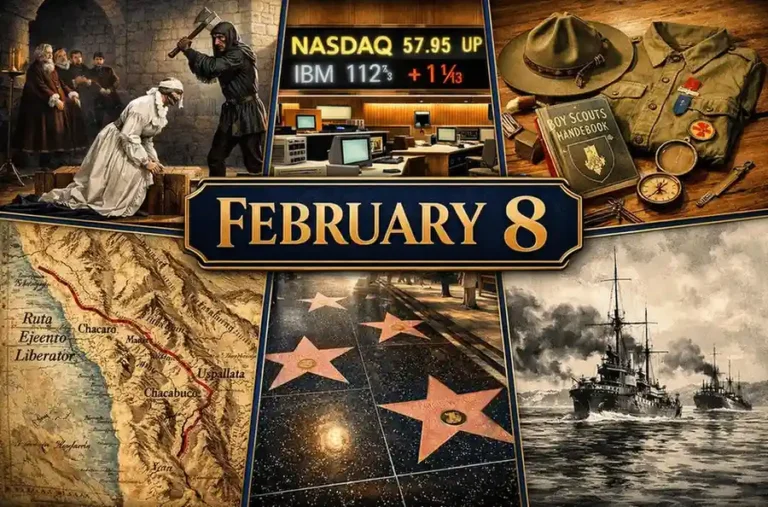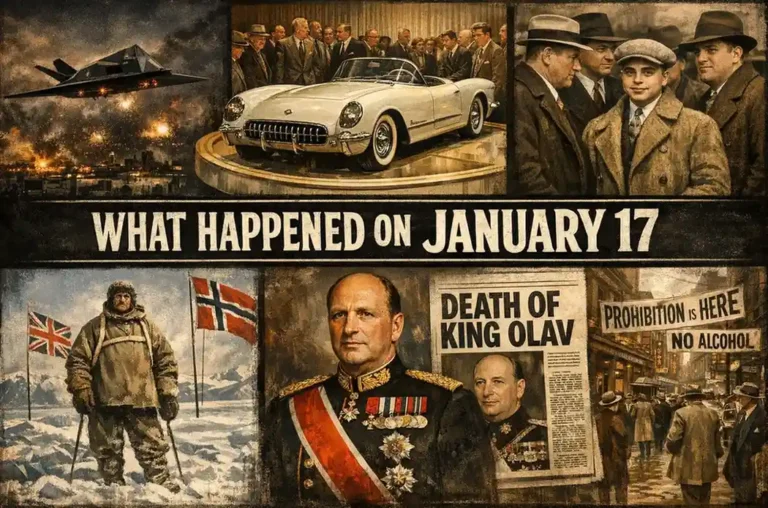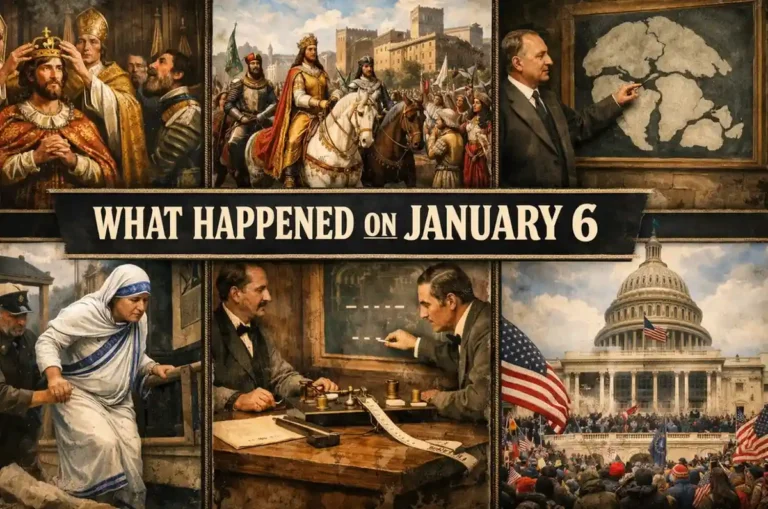

December 12 holds profound climaxes and sudden cataclysms. What happened on this day in history December 12? It reveals Heraclius’s ancient victory at Nineveh, the ratification of the U.S. Constitution, Hitler’s genocidal declaration, Kenya’s independence, and the Paris Climate Agreement—a timeline where human ambition meets both tragedy and triumph.
Important Events That Happened On December 12 In History
627 – Byzantine Triumph at Nineveh
In a decisive climax to a long and draining war, the Byzantine Emperor Heraclius achieved a stunning victory over the Persian forces of the Sassanian Empire at the Battle of Nineveh. Despite being outnumbered, his tactical genius prevailed, leading to the eventual restoration of the True Cross to Jerusalem and a pivotal shift in the ancient balance of power.
1388 – A Lordship Changes Hands
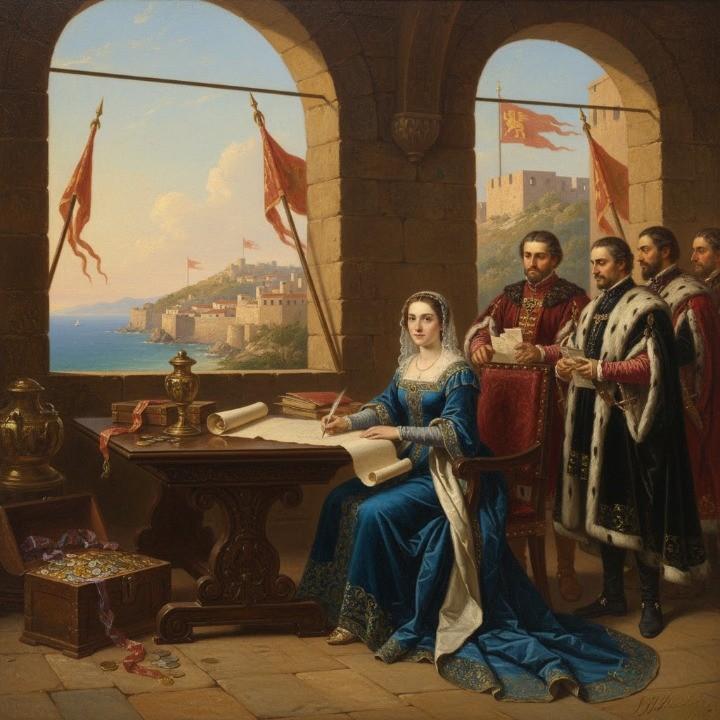
Maria of Enghien completed the sale of the strategic lordship of Argos and Nauplia in Greece to the Republic of Venice. This transaction significantly expanded Venetian influence in the Peloponnese, weaving the region more tightly into the maritime republic’s commercial and political sphere during the late medieval period.
1787 – Pennsylvania Ratifies the Constitution
Following Delaware’s lead, Pennsylvania became the second state to ratify the new U.S. Constitution. The vote, passed by a comfortable margin in a convention at the Pennsylvania State House, was a critical early step toward forming “a more perfect union” and bringing the revolutionary framework into reality.
1862 – The Sinking of the USS Cairo
During the American Civil War, the Union ironclad gunboat USS Cairo struck a Confederate “torpedo” (a naval mine) on the Yazoo River. It became the first armored warship in history to be sunk by an electronically detonated mine, a somber milestone in the evolution of naval warfare.
1866 – The Oaks Colliery Disaster
A series of devastating explosions ripped through the Oaks Colliery in Barnsley, England. The catastrophe, which killed 361 miners and rescuers—including those who bravely entered the wreckage to save others—stands as the worst mining disaster in English history, a stark testament to the perils of Victorian industry.
1870 – Joseph Rainey Enters Congress
Joseph Hayne Rainey was sworn into the U.S. House of Representatives, becoming the first African American to serve in that chamber. Representing South Carolina during Reconstruction, his presence was a powerful, if contested, symbol of a transformed political landscape following the Civil War.
1901 – Marconi Receives the Transatlantic Signal
At Signal Hill in St. John’s, Newfoundland, Guglielmo Marconi and his assistants heard the faint three clicks of the Morse code letter “S” transmitted from across the Atlantic. This successful reception of the first transatlantic radio signal definitively proved that wireless communication could bridge vast oceans, irrevocably shrinking the world.
1915 – The Empire of China is Proclaimed
Yuan Shikai, the powerful president of the Republic of China, dramatically reversed course and declared the establishment of a new Empire of China, with himself as the Hongxian Emperor. The move, met with universal opposition, triggered widespread rebellion and rapidly collapsed, cementing the republican ideal in China.
1917 – Founding of Boys Town
Moved by compassion for homeless and troubled youth, Father Edward J. Flanagan founded Boys Town just outside Omaha, Nebraska. Starting as a simple farmhouse, his vision of a community where “he ain’t heavy, Father, he’s m’brother” would grow into a world-renowned model for child and family care.
1935 – The Lebensborn Project Begins
Heinrich Himmler formally established the Lebensborn (“Fount of Life”) program, a state-sponsored Nazi initiative designed to racially engineer a “master race” by encouraging births from Aryan parents and sequestering “racially valuable” children from occupied territories. It stands as one of history’s most chilling attempts at state eugenics.
1936 – The Xi’an Incident Begins
In a stunning turn of events, Nationalist Chinese Generalissimo Chiang Kai-shek was captured by his own subordinate commanders in Xi’an. This political kidnapping forced Chiang to seriously consider a united front with the Chinese Communists against the invading Japanese, altering the course of the Sino-Japanese conflict.
1937 – The USS Panay Incident
Japanese warplanes deliberately attacked, bombed, and sank the clearly marked U.S. Navy gunboat USS Panay on the Yangtze River in China. The sinking, which killed three and wounded dozens, brought the United States and Japan to the brink of war years before Pearl Harbor and fueled American anti-Japanese sentiment.
1939 – HMS Duchess Sinks in Collision
Off the coast of Scotland in heavy weather, the British destroyer HMS Duchess tragically collided with the battleship HMS Barham and sank almost immediately. The accident claimed the lives of 124 sailors, a severe and sudden loss for the Royal Navy in the early months of World War II.
1939 – A Finnish Victory at Tolvajärvi
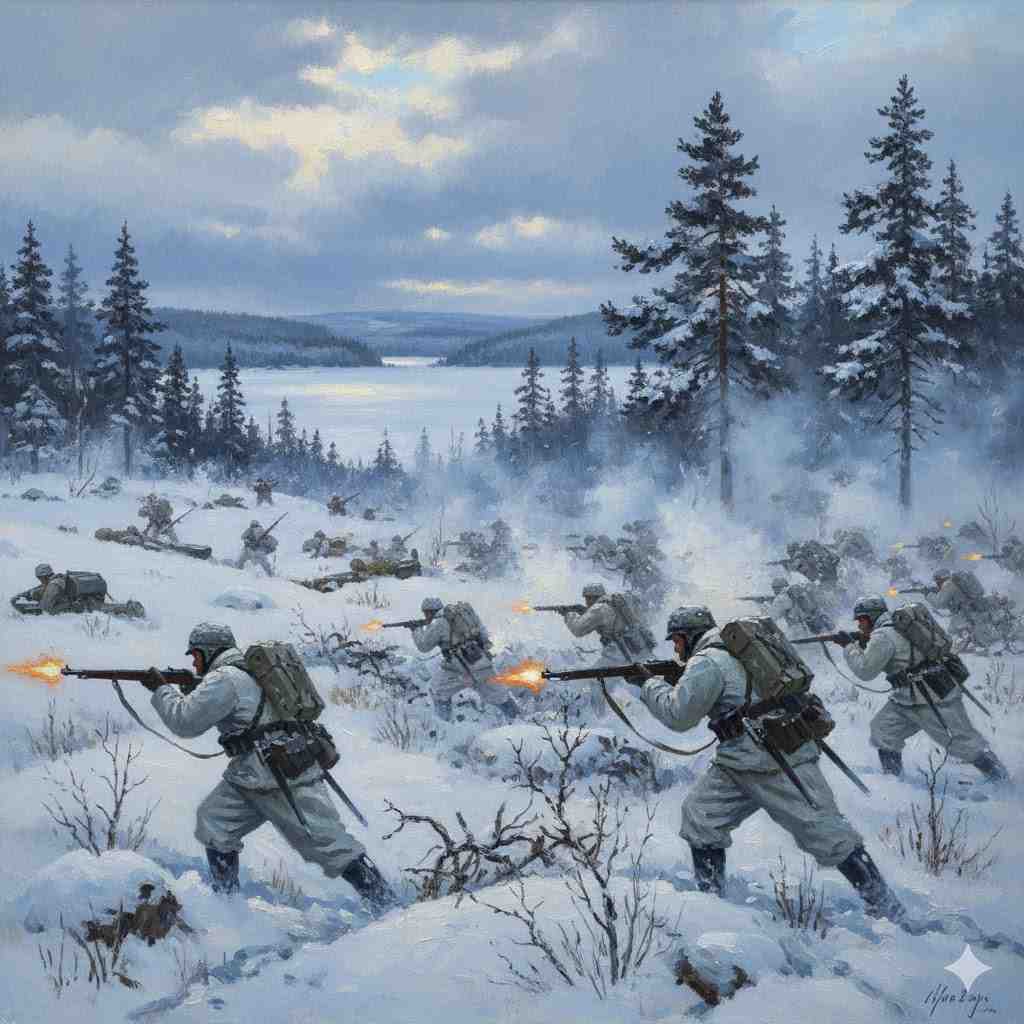
In the frozen forests of eastern Finland, the Battle of Tolvajärvi commenced. In this first major Finnish counter-offensive of the Winter War, vastly outnumbered Finnish forces used superior mobility and local knowledge to rout a Soviet division, providing a crucial morale boost for the defending nation.
1941 – Filipino Pilots Mount a Daring Defense
As Japanese Zero fighters raided Batangas Field in the Philippines, a brave group of Filipino pilots led by Captain Jesús Villamor scrambled to intercept them. In a fierce aerial engagement, they managed to disrupt the attack, though Lieutenant César Basa was shot down and killed, becoming one of the first Filipino aerial heroes of the war.
1941 – Hitler’s Chilling Declaration
At a meeting with senior Nazi officials in the Reich Chancellery, Adolf Hitler explicitly stated his intention to exterminate the Jews of Europe. This private declaration, coming just as the war turned global, marked a decisive point in the transition from persecution to systematic, industrialized genocide—the Holocaust.
1945 – Outlawing the People’s Republic of Korea
The United States Army Military Government in Korea issued a decree outlawing the People’s Republic of Korea. This grassroots government, formed by activists after Japanese surrender, was suppressed in the south in favor of a U.S.-administered transition, hardening the political divide that would lead to the creation of two separate Korean states.
1963 – Kenya Claims Its Independence
The Union Jack was lowered for the last time in Nairobi as Kenya formally attained independence from British colonial rule. Jomo Kenyatta became its first prime minister, marking the triumphant culmination of a long and often bloody struggle for self-determination in East Africa.
1969 – The Piazza Fontana Bombing
A powerful bomb exploded inside the National Agricultural Bank in Milan’s Piazza Fontana, killing 17 and wounding 88. This act of right-wing terrorism, part of a coordinated attack that day, initiated Italy’s dark period of the Anni di Piombo (Years of Lead), decades of political violence and instability.
1979 – The Tumaco Earthquake and Tsunami
A massive undersea earthquake struck the border region of Colombia and Ecuador, generating a destructive tsunami. The combined disaster devastated coastal towns, killing between 300 and 600 people. It remains one of the most severe natural catastrophes in the region’s modern history.
1979 – The Coup d’état of December Twelfth
In a swift and brutal seizure of power, Major General Chun Doo-hwan and his military faction launched a coup within the South Korean army, cementing his control over the country’s security apparatus. This act set the stage for his assumption of the presidency and a period of authoritarian rule.
1985 – The Gander Air Disaster
Shortly after takeoff from Gander, Newfoundland, Arrow Air Flight 1285, a DC-8 carrying 248 U.S. soldiers from the 101st Airborne Division home for Christmas, crashed and burned. All 256 people on board perished in what remains one of the deadliest aviation accidents in Canadian history and a profound tragedy for the U.S. Army.
1988 – The Clapham Junction Rail Crash
In one of Britain’s worst peacetime rail disasters, a packed commuter train missed a red signal and collided with a stationary train just outside Clapham Junction station in London. A third train then plowed into the wreckage. The collisions killed 35 people and injured nearly 500, leading to major reforms in British rail signaling and safety practices.
1999 – A Major Earthquake Strikes Luzon
A powerful magnitude 7.3 quake shook the Philippine island of Luzon, its epicenter near the capital, Manila. While damage was significant and power was knocked out across the metro region, the relatively low death toll of six was attributed to the earthquake’s depth and the region’s strict building codes enacted after earlier quakes.
2000 – Bush v. Gore Decision
The U.S. Supreme Court, in a controversial and landmark 5–4 ruling, reversed the Florida Supreme Court’s order for a manual recount in the contested 2000 presidential election. The decision effectively awarded Florida’s electoral votes, and thus the presidency, to George W. Bush, concluding one of the most dramatic political and legal showdowns in American history.
2012 – North Korea’s Satellite Launch
Defying international warnings, North Korea successfully launched the *Kwangmyŏngsŏng-3 Unit 2* satellite into orbit, marking a significant technological milestone for the isolated regime. The launch, widely condemned as a test of ballistic missile technology, significantly heightened tensions on the Korean Peninsula and triggered new rounds of UN sanctions.
2015 – The Paris Climate Agreement is Adopted
After intense negotiations, representatives from 195 countries meeting at the UN Climate Change Conference (COP21) adopted the historic Paris Agreement. The accord set a universal framework to limit global warming, effectively succeeding the Kyoto Protocol and representing the world’s most concerted collective effort to address the climate crisis.
2021 – Verstappen’s Controversial Championship
In an almost unfathomable finale to the Formula One season, Max Verstappen overtook Lewis Hamilton on the very last lap of the Abu Dhabi Grand Prix to claim his first World Championship. The victory, enabled by a controversial safety car procedure, ended Hamilton’s four-year reign and sparked intense debate about sporting regulations, making it one of the most dramatic moments in F1 history.
2024 – A New Chess Prodigy is Crowned
Indian Grandmaster Dommaraju Gukesh made history in Singapore by becoming the undisputed World Chess Champion. At 18 years old, he broke Garry Kasparov’s long-standing record to become the youngest champion in the history of the game, heralding a new era in the ancient sport and igniting a wave of celebration across India and the chess world.
Read Also: What Happened On This Day In History December 11: Shocking Stories
Famous People Born On December 12
| Name | Role / Short Description | Dates |
|---|---|---|
| Frank Sinatra | American singer & actor | December 12, 1915 – May 14, 1998 |
| Robert Noyce | American engineer (integrated circuit co-inventor) | December 12, 1927 – June 3, 1990 |
| Ed Koch | American politician, NYC mayor | December 12, 1924 – February 1, 2013 |
| Sharad Pawar | Indian politician | December 12, 1940 – |
| Gerd von Rundstedt | German field marshal | December 12, 1875 – February 24, 1953 |
| Ozu Yasujirō | Japanese film director | December 12, 1903 – December 12, 1963 |
| J. Bruce Ismay | British businessman (White Star Line) | December 12, 1862 – October 17, 1937 |
| Stand Watie | Cherokee chief & Confederate general | December 12, 1806 – September 9, 1871 |
| Bob Pettit | American basketball player | December 12, 1932 – |
| Helen Frankenthaler | American painter | December 12, 1928 – December 27, 2011 |
| Erasmus Darwin | British physician, poet & natural philosopher | December 12, 1731 – April 18, 1802 |
| John Osborne | British playwright (Angry Young Men) | December 12, 1929 – December 24, 1994 |
| Henry Armstrong | American boxer (multi-division champion) | December 12, 1912 – October 24, 1988 |
| Alfred Werner | Swiss chemist (Nobel) | December 12, 1866 – November 15, 1919 |
| Will Carling | British rugby player & captain | December 12, 1965 – |
| Chingiz Aytmatov | Kyrgyz author | December 12, 1928 – June 10, 2008 |
| Miguel de la Madrid | President of Mexico (1982–88) | December 12, 1934 – April 1, 2012 |
| Eric S. Maskin | American economist (Nobel) | December 12, 1950 – |
| Iftikhar Muhammad Chaudhry | Pakistani judge, Chief Justice | December 12, 1948 – |
| José Sarria | American performer & activist | December 12, 1922 – August 19, 2013 |
| Robert Lepage | Canadian theatre director & playwright | December 12, 1957 – |
| William L. Marcy | American politician & statesman | December 12, 1786 – July 4, 1857 |
| William Henry | British chemist (Henry’s law) | December 12, 1775 – September 2, 1836 |
| Anna Seward | English poet & critic | December 12, 1742 – March 25, 1809 |
| Paul Elmer More | American scholar & critic | December 12, 1864 – March 9, 1937 |
| Alvin Kraenzlein | American Olympic athlete | December 12, 1876 – January 6, 1928 |
| Iolanda Balaș | Romanian high-jumper (Olympic champion) | December 12, 1936 – March 11, 2016 |
| John Sandfield Macdonald | First premier of Ontario | December 12, 1812 – June 1, 1872 |
| Arthur Brisbane | American newspaper editor | December 12, 1864 – December 25, 1936 |
| Rachel Crothers | American playwright | December 12, 1878 – July 5, 1958 |
Famous People Died On December 12
| Name | Role / Short Description | Dates |
|---|---|---|
| Robert Browning | British poet (Victorian dramatics) | May 7, 1812 – December 12, 1889 |
| Joseph Heller | American novelist (Catch-22) | May 1, 1923 – December 12, 1999 |
| Ozu Yasujirō | Japanese film director | December 12, 1903 – December 12, 1963 |
| David Sarnoff | American broadcasting pioneer | February 27, 1891 – December 12, 1971 |
| Jack Steinberger | German-American physicist (Nobel) | May 25, 1921 – December 12, 2020 |
| John Wanamaker | American merchant & department-store pioneer | July 11, 1838 – December 12, 1922 |
| Theodor Heuss | First President of West Germany | January 31, 1884 – December 12, 1963 |
| Charles Goodnight | American cattleman & pioneer | March 5, 1836 – December 12, 1929 |
| Joel R. Poinsett | U.S. statesman & diplomat | March 2, 1779 – December 12, 1851 |
| Mildred Bailey | American jazz singer | February 27, 1907 – December 12, 1951 |
| David Saul Marshall | Chief minister of Singapore | March 12, 1908 – December 12, 1995 |
| Jean-Étienne-Dominique Esquirol | French psychiatrist | February 3, 1772 – December 12, 1840 |
| Paul Cadmus | American painter & illustrator | December 17, 1904 – December 12, 1999 |
| Andrew Taylor Still | Founder of osteopathy | August 6, 1828 – December 12, 1917 |
| Henry St John, 1st Viscount Bolingbroke | British politician & polemicist | September 16, 1678 – December 12, 1751 |
| Stephen Báthory | King of Poland & prince of Transylvania | September 27, 1533 – December 12, 1586 |
| Luitpold | Prince regent of Bavaria | March 12, 1821 – December 12, 1912 |
| Sir John Thompson | Prime minister of Canada | November 10, 1845 – December 12, 1894 |
| Sir Marc Isambard Brunel | Engineer & inventor | April 25, 1769 – December 12, 1849 |
| Peter Snell | New Zealand Olympic runner | December 17, 1938 – December 12, 2019 |
| Gaston Means | American con man & operative | July 11, 1879 – December 12, 1938 |
| Huda Shaarawi | Egyptian feminist & nationalist | June 23, 1879 – December 12, 1947 |
| Raymond Radiguet | French novelist & poet | June 18, 1903 – December 12, 1923 |
| José de Alencar | Brazilian novelist & dramatist | May 1, 1829 – December 12, 1877 |
| József Antall | Prime minister of Hungary | April 8, 1932 – December 12, 1993 |
| Slobodan Jovanović | Serbian jurist & statesman | December 3, 1869 – December 12, 1958 |
| Edwin Forrest | American actor | March 9, 1806 – December 12, 1872 |
| Tassos Papadopoulos | President of Cyprus | January 7, 1934 – December 12, 2008 |
| Ndabaningi Sithole | Zimbabwean nationalist leader | July 31, 1920 – December 12, 2000 |
| Thorleif Haug | Norwegian Olympic skier | September 28, 1894 – December 12, 1934 |
Observances & Institutional Dates – December 12
Constitution Day (Russia): Commemorates the adoption of the current Russian Constitution by referendum in 1993, establishing the Russian Federation as a democratic, federal, rule-based state.
Day of Neutrality (Turkmenistan): A national holiday celebrating the country’s official status of permanent neutrality, which was recognized by the United Nations General Assembly in 1995.
Feast of Our Lady of Guadalupe (Mexico, parts of the U.S.): A major Catholic celebration honoring the Virgin Mary as she is believed to have appeared in Mexico in 1531. While not listed, its occurrence on this date is culturally pivotal across the Americas.
Frequently Asked Questions
Why is December 12 significant in terms of technological and geopolitical milestones?
The day marks critical leaps in communication and space, from Marconi receiving the first transatlantic signal (1901) to North Korea launching its first satellite (2012). It also frames geopolitical shocks like the Panay Incident (1937) that precipitated wider war, the South Korean coup (1979), and the U.S. Supreme Court’s decisive intervention in a presidential election (2000).
How does December 12 reflect both human tragedy and humanitarian progress?
The date is marked by profound disasters like the Oaks mining explosion (1866), the Gander air crash (1985), and the Clapham rail crash (1988). In contrast, it also commemorates the founding of Boys Town (1917), a beacon of child welfare, and the adoption of the landmark Paris Climate Agreement (2015), a pinnacle of global cooperative effort for humanity’s future.
What pivotal moments of political transition and conflict occurred on December 12?
From the ancient Battle of Nineveh (627) to the birth of the Kenyan nation (1963), the day is ripe with political climax. It includes the ratification of the U.S. Constitution (1787), the failed imperial proclamation of Yuan Shikai (1915), the kidnapping that reshaped China’s war (1936), and the terrorist bombing that began Italy’s Years of Lead (1969).