
A day where legal foundations are laid and empires are shaken by rebellion, December 16 moves from ancient Roman law to the defiant Boston Tea Party. To grasp what happened on this day in history December 16 is to witness humanity’s relentless push against boundaries—and the profound consequences that follow.
Important Events That Happened On December 16 In History
533 – The Cornerstone of Roman Law is Issued
Emperor Justinian I promulgated the Digest (or Pandects), a monumental compilation of centuries of Roman juristic wisdom, alongside the Institutes, a new standard textbook. This codification preserved and systematized Roman law, forming a legal bedrock that would influence countless legal systems for millennia.
714 – A Frankish Power Shift
Upon the death of Pepin of Herstal, the powerful mayor of the Merovingian palace, authority passed to his infant grandson, Theudoald. Actual power was wielded by Pepin’s widow, Plectrude, creating a fragile regency that sparked a succession crisis and led to the rise of Charles Martel.
755 – The An Lushan Rebellion Erupts
General An Lushan turned his massive army against the Tang Dynasty court, initiating a catastrophic rebellion. This devastating conflict, sparked by political intrigue and imperial weakness, would last for eight years, claiming millions of lives and irreparably weakening one of China’s golden ages.
1431 – A Boy King Crowned in Paris
During the Hundred Years’ War, the ten-year-old Henry VI of England was crowned King of France at Notre Dame Cathedral. This ceremony, enforced by his occupying Burgundian allies, was a direct challenge to the Valois claimant Charles VII and a bold assertion of English legitimacy on French soil.
1497 – Da Gama Passes the Point of No Return
Portuguese explorer Vasco da Gama sailed past the Great Fish River on the coast of South Africa. This critical point was where Bartolomeu Dias had earlier turned back; da Gama’s decision to press onward opened the final sea route to India.
1575 – A Seismic Catastrophe in Chile
A tremendous earthquake, estimated at a magnitude of 8.5, struck the city of Valdivia. The seismic event caused widespread destruction across south-central Chile, altering landscapes and leaving a deep mark on the region’s historical memory.
1598 – The Final Naval Battle of the Imjin War
At the Battle of Noryang, a combined Korean and Chinese fleet under Admiral Yi Sun-sin and Chen Lin clashed with the retreating Japanese navy. The allied victory was decisive but costly; Admiral Yi was fatally wounded in his final triumph, effectively ending the seven-year conflict.
1631 – Vesuvius Unleashes a Deadly Eruption
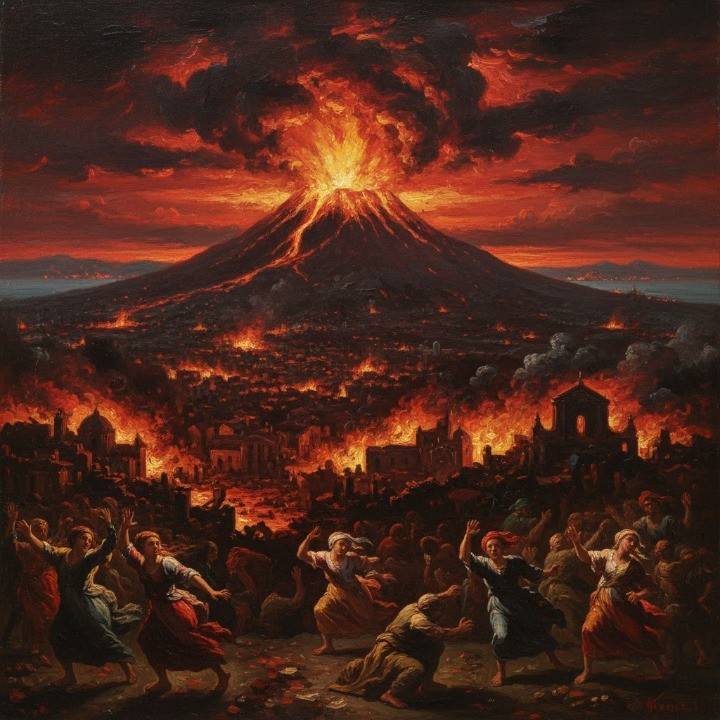
Mount Vesuvius erupted with ferocious violence, sending pyroclastic flows and ash over surrounding towns. The disaster killed over 3,000 people and marked one of the volcano’s most destructive episodes since the famous burial of Pompeii, a stark reminder of the region’s volatile geology.
1653 – Cromwell Becomes Lord Protector
Following the dissolution of the Rump Parliament, Oliver Cromwell was installed as Lord Protector of the Commonwealth of England, Scotland, and Ireland. This formalized his military and political rule, transitioning the republic into a Protectorate—a period of de facto monarchical power without the title of king.
1689 – The Bill of Rights is Embodied
Following the Glorious Revolution, England’s Convention Parliament enacted the Bill of Rights, formally embedding the Declaration of Right into law. This cornerstone document limited monarchical power, established parliamentary supremacy, and laid out key civil liberties.
1707 – The Last Blast of Mount Fuji
Mount Fuji experienced its most recent confirmed eruption. The event, known as the Hōei Eruption, lasted for weeks, scattering ash over Edo (Tokyo) and significantly altering the mountain’s landscape, creating the secondary peak known as Hōei-zan.
1761 – The Fall of Kolberg
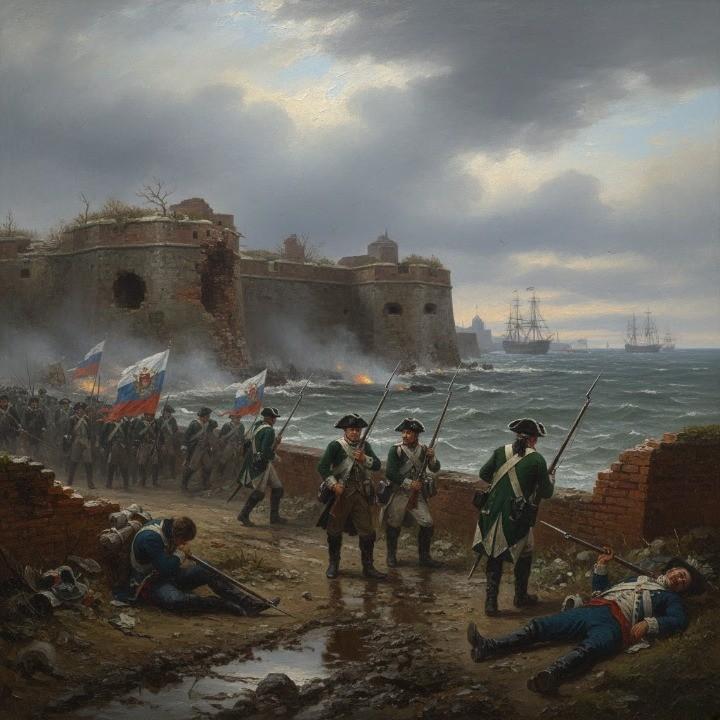
In the final stages of the Seven Years’ War in Europe, Russian forces under Pyotr Rumyantsev captured the Prussian fortress of Kolberg after a grueling four-month siege. This victory gave Russia a vital strategic port on the Baltic, though the overall war’s outcome negated its long-term gains.
1773 – The Boston Tea Party
In a defiant act of protest against British taxation without representation, members of the Sons of Liberty, disguised as Mohawk Indians, boarded three ships in Boston Harbor. They dumped 342 chests of valuable East India Company tea into the water, an iconic event that escalated tensions toward the American Revolution.
1777 – Virginia Ratifies the Articles
Virginia became the first state to ratify the Articles of Confederation, the first constitution of the United States. This act set a hesitant but vital precedent for the union of the former colonies under a central, if weak, governing framework.
1782 – The Muharram Rebellion in Sylhet
In a bold early challenge to British rule in the subcontinent, Hada and Mada Miah led a rebellion in Sylhet (now Bangladesh) during the holy month of Muharram. The uprising targeted East India Company officials, including Robert Lindsay, and was a significant, if ultimately suppressed, act of resistance.
1811 – The New Madrid Earthquakes Begin
The first of four massive intraplate earthquakes struck near New Madrid, Missouri. This seismic series, among the most powerful in recorded U.S. history, violently shook the central Mississippi Valley, ringing church bells in Boston and temporarily reversing the flow of the Mississippi River.
1826 – The Fredonia Rebellion is Declared
In Mexican Texas, empresario Haden Edwards’s brother, Benjamin W. Edwards, rode into Nacogdoches, seized the old stone fort, and proclaimed the independent Republic of Fredonia. This short-lived revolt highlighted the growing tensions between Anglo settlers and Mexican authorities.
1838 – The Battle of Blood River
Voortrekkers, led by Andries Pretorius, formed a defensive laager and repelled a massive attack by Zulu impis at the Ncome River. The battle, which resulted in heavy Zulu casualties and few Voortrekker losses, became a foundational myth of Afrikaner nationalism, commemorated for generations.
1850 – Canterbury Pilgrims Arrive in New Zealand
The ships Charlotte Jane and Randolph arrived at Lyttelton Harbour, bringing the first organized group of English settlers for the Canterbury Association. These “Canterbury Pilgrims” established Christchurch and began the systematic colonization of New Zealand’s South Island.
1863 – A New Commander for the Army of Tennessee
Confederate President Jefferson Davis appointed General Joseph E. Johnston to lead the Army of Tennessee, replacing the discredited General Braxton Bragg. This command change came too late to reverse the army’s declining fortunes in the Western Theater.
1864 – The Army of Tennessee is Destroyed
The two-day Battle of Nashville concluded with the total rout of General John Bell Hood’s Confederate Army of Tennessee by Union forces under George H. Thomas. The shattered Confederate army ceased to be an effective fighting force, marking the end of major Confederate operations in the Western Theater.
1880 – The First Boer War Begins
Hostilities formally commenced between the Boer South African Republic and the British Empire after a failure to negotiate taxes and sovereignty. This conflict introduced the world to the formidable marksmanship and guerrilla tactics of the Boer commandos.
1882 – The First Home Nations Rugby Match
The first rugby union international between England and Wales was played at Blackheath in London, marking the beginning of what would become the Six Nations Championship. Wales was defeated, but the fixture ignited a passionate sporting rivalry.
1883 – Capture of the Sơn Tây Citadel
French colonial forces captured the Sơn Tây citadel in northern Vietnam from Liu Yongfu’s Black Flag Army and Qing troops. This victory during the Tonkin Campaign consolidated France’s grip on the region, pushing forward its colonial control of Indochina.
1905 – Rugby’s “Match of the Century”
In an iconic clash at Cardiff Arms Park, Wales narrowly defeated the original New Zealand All Blacks, 3–0. The legendary match, decided by a single penalty try, entered sporting folklore and cemented rugby’s central place in Welsh culture.
1912 – A Naval Victory at Elli
In the First Balkan War, the Greek cruiser Georgios Averof, under Admiral Pavlos Kountouriotis, outmaneuvered and defeated the larger Ottoman fleet in the Battle of Elli. This victory secured Greek naval dominance in the Aegean Sea.
1914 – German Raid on Scarborough
The German battlecruiser squadron under Admiral Franz von Hipper bombarded the English coastal towns of Scarborough, Hartlepool, and Whitby. The attack, which killed over 130 civilians, caused widespread outrage and was used for British propaganda as an example of “Hun” brutality.
1920 – The Catastrophic Haiyuan Earthquake
A devastating magnitude 8.5 earthquake struck the Haiyuan county in China’s Gansu province. Triggering massive landslides and ground fissures, it destroyed entire towns and killed approximately 200,000 people, ranking it as one of the deadliest earthquakes in human history.
1942 – Himmler Orders Deportation of Roma
SS chief Heinrich Himmler issued a decree ordering the deportation of Roma and Sinti peoples to the Auschwitz concentration camp. This formalized the systematic attempt to include the Roma in the Nazi regime’s “Final Solution.”
1944 – The Battle of the Bulge Begins
In a last-ditch surprise offensive, three German armies plunged into the densely forested Ardennes region of Belgium and Luxembourg. This desperate counter-attack, intended to split the Allied lines, initiated the largest and bloodiest single battle fought by the United States in World War II.
1951 – Miami Airlines Crash in New Jersey
A Miami Airlines Curtiss C-46 Commando crashed shortly after takeoff from Newark Airport, plunging into the frozen Elizabeth River. All 58 aboard perished, including Broadway dancer Doris Ruby, in one of New Jersey’s worst air disasters.
1960 – The Staten Island Mid-Air Collision
A United Air Lines DC-8 and a TWA Super Constellation collided over Staten Island, New York. Both aircraft crashed, killing all 128 people aboard and six on the ground, in one of the deadliest aviation disasters in U.S. history at the time and prompting major reforms in air traffic control.
1968 – Revocation of the Edict of Expulsion
The Second Vatican Council formally revoked the 1492 Edict of Expulsion that had banished Jews from Spain. This symbolic act, part of the Nostra aetate declaration, represented a significant step in Catholic-Jewish reconciliation.
1971 – Victory in Bangladesh
Pakistani forces in East Pakistan surrendered to the joint command of the Indian Army and the Bangladeshi Mukti Bahini in Dhaka. This day marked the liberation of Bangladesh and the end of the Indo-Pakistani War of 1971, commemorated annually as Victory Day in Bangladesh and Vijay Diwas in India.
1972 – Bangladesh’s Constitution Enacted
The Constitution of the People’s Republic of Bangladesh was formally adopted, providing the new nation with a democratic, secular, and socialist framework for governance in the wake of its liberation.
1973 – Aeroflot Crash Near Moscow
Aeroflot Flight 2022, an Antonov An-24, crashed while attempting to land in poor visibility near Moscow. All 51 people on board were killed, including a delegation of four respected Lithuanian doctors, in a tragic loss for the Soviet republic.
1986 – The Jeltoqsan Protests Erupt
In Alma-Ata (now Almaty, Kazakhstan), mass demonstrations broke out in response to Moscow’s removal of the popular Kazakh leader Dinmukhamed Kunaev. The protests, brutally suppressed by Soviet militia, were a significant early sign of rising nationalist unrest within the Soviet republics.
1989 – The Romanian Revolution Ignites
A protest erupted in Timișoara to defend Hungarian Reformed pastor László Tőkés from eviction and government persecution. This local act of defiance quickly snowballed into mass anti-government demonstrations, sparking the violent and revolutionary overthrow of Nicolae Ceaușescu’s communist regime.
1992 – Hamas Deportations to Lebanon
Israel initiated the mass deportation of over 400 Palestinian activists, alleged members of Hamas and Islamic Jihad, across the border into Lebanon. The move drew widespread international condemnation and left the deportees stranded in a makeshift camp for over a year.
2009 – “Avatar” Premieres Worldwide
James Cameron’s groundbreaking science-fiction epic Avatar was released internationally. The film’s revolutionary visual effects and record-shattering box office success, eventually earning over $2.7 billion, redefined cinematic spectacle and spawned a multimedia franchise.
2011 – Zhanaozen Massacre in Kazakhstan
In the oil town of Zhanaozen, Kazakh security forces opened fire on striking oil workers and their supporters, killing at least 16 and injuring around 100. The violence exposed deep social tensions and labor unrest in the resource-rich nation.
2013 – Manila Bus Plunge
A bus veered off an elevated highway in Manila, Philippines, crashing onto the street below. The accident killed 18 people and injured 20, highlighting persistent concerns about road safety and regulatory enforcement in the country.
2014 – The Peshawar School Massacre
Militants from the Tehrik-i-Taliban Pakistan stormed the Army Public School in Peshawar. In a horrific attack lasting hours, they killed 150 people, including 132 schoolchildren, an act of brutality that shocked the world and galvanized Pakistan’s resolve against extremist groups.
2022 – The Batang Kali Landslide
A catastrophic landslide buried a campsite at an organic farm near Batang Kali, Malaysia. The disaster trapped 92 people, most of them city dwellers on a holiday retreat, and resulted in 31 fatalities, highlighting the dangers of uncontrolled development on unstable terrain.
Read Also: What Happened On This Day In History December 15: Shock Waves
Famous People Born On December 16
| Name | Role / short description | Dates |
|---|---|---|
| George Santayana | Spanish-American philosopher & poet | December 16, 1863 – September 26, 1952 |
| Leopold I | King of Belgium | December 16, 1790 – December 10, 1865 |
| Gebhard Leberecht von Blücher | Prussian field marshal | December 16, 1742 – September 12, 1819 |
| René Redzepi | Danish chef & restaurateur | December 16, 1977 – |
| Lei Jun | Chinese entrepreneur (Xiaomi) | December 16, 1969 – |
| Steven Bochco | Television writer & producer | December 16, 1943 – April 1, 2018 |
| Ed Ruscha | American artist | December 16, 1937 – |
| Zoltán Kodály | Hungarian composer & educator | December 16, 1882 – March 6, 1967 |
| Donovan Bailey | Sprinter (Olympic gold) | December 16, 1967 – |
| Joel Garner | West Indian cricketer | December 16, 1952 – |
| Sir John Berry Hobbs (Jack Hobbs) | Cricket batsman | December 16, 1882 – December 21, 1963 |
| Anton Ivanovich Denikin | Russian general (White movement) | December 16, 1872 – August 8, 1947 |
| Adam Riess | Astronomer (Nobel, dark energy) | December 16, 1969 – |
| V. S. Pritchett | Writer & critic | December 16, 1900 – March 20, 1997 |
| Alphonse Juin | French general | December 16, 1888 – January 27, 1967 |
| Johann Wilhelm Ritter | Physicist (UV discovery) | December 16, 1776 – January 23, 1810 |
| Michelle Smith | Irish swimmer & lawyer | December 16, 1969 – |
| Rafael Alberti | Spanish poet & playwright | December 16, 1902 – October 28, 1999 |
| Murray Kempton | Journalist & columnist | December 16, 1917 – May 5, 1997 |
| John Selden | Jurist, scholar & antiquarian | December 16, 1584 – November 30, 1654 |
| Ralph Adams Cram | Architect (Gothic revival) | December 16, 1863 – September 22, 1942 |
| Edward Emerson Barnard | Astronomer | December 16, 1857 – February 6, 1923 |
| François-Adrien Boieldieu | Composer (French opera) | December 16, 1775 – October 8, 1834 |
| Ernst von Bergmann | Surgeon | December 16, 1836 – March 25, 1907 |
| Abbott Lawrence | Merchant & philanthropist | December 16, 1792 – August 18, 1855 |
| Charles Cressent | French cabinetmaker | December 16, 1685 – January 10, 1768 |
| Horace W. S. Cleveland | Landscape architect | December 16, 1814 – December 5, 1900 |
| Kálmán Tisza | Hungarian statesman & premier | December 16, 1830 – March 23, 1902 |
| Josephine Shaw Lowell | Social reformer & charity worker | December 16, 1843 – October 12, 1905 |
| Benny Andersson | Musician & songwriter (ABBA) | December 16, 1946 – |
Famous People Died On December 16
| Name | Role / short description | Dates |
|---|---|---|
| Konoe Fumimaro | Prime minister of Japan | October 12, 1891 – December 16, 1945 |
| Agnes Martin | Painter | March 22, 1912 – December 16, 2004 |
| Pippin II | Carolingian mayor of the palace | – – December 16, 714 |
| Sir William Petty | Political economist & statistician | May 26, 1623 – December 16, 1687 |
| François Quesnay | Economist (physiocrats) | June 4, 1694 – December 16, 1774 |
| Frank Gotch | Wrestler | April 27, 1878 – December 16, 1917 |
| Alphonse Daudet | French novelist & short-story writer | May 13, 1840 – December 16, 1897 |
| Giovanni Agnelli | Industrialist (Fiat founder) | August 13, 1866 – December 16, 1945 |
| John II Casimir Vasa | King of Poland | March 22, 1609 – December 16, 1672 |
| St. Adelaide | Empress of Italy (regent) | c.931 – December 16, 999 |
| John VIII | Pope | – – December 16, 882 |
| Tanaka Kakuei | Prime minister of Japan | May 4, 1918 – December 16, 1993 |
| William Gaddis | Novelist | December 29, 1922 – December 16, 1998 |
| Hugo Münsterberg | Psychologist & philosopher | June 1, 1863 – December 16, 1916 |
| Eugène Dubois | Anthropologist (Java man) | January 28, 1858 – December 16, 1940 |
| Yoshio Taniguchi | Architect (MoMA redesign) | October 17, 1937 – December 16, 2024 |
| Mama Cax | Model & disability advocate | November 20, 1989 – December 16, 2019 |
| Ray Price | Musician (country) | January 12, 1926 – December 16, 2013 |
| Paul Castellano | Organized-crime boss | June 26, 1915 – December 16, 1985 |
| Harland Sanders | Businessman (KFC founder) | September 9, 1890 – December 16, 1980 |
| W. Somerset Maugham | Novelist & playwright | January 25, 1874 – December 16, 1965 |
| Glenn Miller | Big-band leader & musician | March 1, 1904 – December 16, 1944 |
| Jean-Baptiste Carrier | French revolutionary | March 16, 1756 – December 16, 1794 |
| Ranulf de Gernons, 4th Earl of Chester | English noble & military leader | c.1100 – December 16, 1153 |
| Öljeitü | Il-Khanid ruler of Iran | 1280 – December 16, 1316 |
| Kang Sheng | Chinese Communist official | 1898 – December 16, 1975 |
| Robert L. Stanfield | Canadian politician | April 11, 1914 – December 16, 2003 |
| Anna Jean Ayres | Occupational therapist & psychologist | 1920 – December 16, 1988 |
| Frederick G. Donnan | Chemist | September 5, 1870 – December 16, 1956 |
| Richard Bright | Physician (Bright’s disease) | September 28, 1789 – December 16, 1858 |
Observances & Institutional Dates – December 16
Victory Day (Bangladesh) / Vijay Diwas (India): Commemorates the surrender of Pakistani forces on December 16, 1971, marking the liberation of Bangladesh and the end of the Indo-Pakistani War.
Independence Day (Kazakhstan): Celebrates the declaration of sovereignty and independence from the Soviet Union in 1991.
National Day (Bahrain): Marks the anniversary of independence from British protection in 1971.
Day of Reconciliation (South Africa): A public holiday promoting national unity, evolved from the Day of the Vow which commemorated the Battle of Blood River.
National Sports Day (Thailand): Honors the birthday of King Rama IX and promotes athletic activity and sportsmanship across the nation.
Beginning of Las Posadas (Mexico & Latin America) & Simbang Gabi (Philippines): The start of traditional nine-day Catholic devotional celebrations leading to Christmas, reenacting Mary and Joseph’s search for shelter.
Frequently Asked Questions
Why is December 16 a landmark day for legal and political systems?
It marks the issuance of Justinian’s Digest (533), the foundational text of Western law, and the adoption of the Bill of Rights in England (1689). It also saw the establishment of Cromwell’s Protectorate (1653) and the enactment of Bangladesh’s Constitution (1972), reflecting the constant evolution of governance.
What major conflicts began or ended on December 16?
The date is a pivot point in war: the An Lushan Rebellion began (755), the First Boer War started (1880), the Battle of the Bulge was launched (1944), and the Bangladesh Liberation War ended (1971). It also saw the decisive destruction of the Confederate Army of Tennessee (1864).
How does December 16 reflect both human triumph and tragedy?
The day holds the joyous victory of Bangladeshi independence (1971) alongside profound tragedies like the Haiyuan earthquake (1920), the Staten Island air collision (1960), and the Peshawar school massacre (2014). It embodies our capacity for both liberation and devastation.