
Today, December 19, marks a complex date in world history, featuring foundational moments like the departure of the settlers bound for Jamestown, the rise of powerful political figures, and multiple global conflicts. By exploring what happened on this day in history December 19, we uncover everything from early American colonial ventures and a young William Pitt’s ascent to Prime Minister to the impeachment of a US President and the final flight of the Apollo missions.
Important Events That Happened On December 19 In History
653 – A Pope Stands Trial for Religious Disagreement
In a shocking move by Byzantine authorities, Pope Martin I was brought to trial in Constantinople. His abduction from Rome stemmed from his firm opposition to Monothelitism, a Christological doctrine favored by the Byzantine government. This event stands as a stark example of the struggle for supremacy between the Church in Rome and the Imperial power in the East.
1154 – Henry II is Crowned King of England
The reign of the first Plantagenet monarch officially began when Henry II was crowned at Westminster Abbey. His ascent to the throne marked the end of a turbulent period known as The Anarchy, and his reign would see significant legal and administrative reforms that fundamentally shaped the English common law system.
1187 – The Election of Pope Clement III
The papal conclave selected Pope Clement III on this date. His papacy was notable for successfully brokering peace with the Roman Senate and encouraging the launch of the Third Crusade following the fall of Jerusalem.
1490 – A Marriage By Proxy Ties Two Powerful Houses
In a significant political maneuver, Anne, Duchess of Brittany, was married by proxy to Maximilian I, Holy Roman Emperor. Although later annulled, this union was intended to secure Brittany’s independence from France and unite it with the Habsburg dynasty.
1562 – The Battle of Dreux During the French Wars of Religion
A pivotal and brutal confrontation took place near Dreux during the tumultuous French Wars of Religion. The battle saw Catholic Royalist forces clash with the Huguenot (Protestant) army, resulting in heavy casualties on both sides and securing a narrow but important tactical victory for the Catholics.
1606 – The Journey to Jamestown Begins
Three ships—the Susan Constant, Godspeed, and Discovery—departed England, carrying the hopeful settlers who would eventually establish the Jamestown settlement in Virginia. This voyage initiated the foundation of the first permanent English colony in North America, which would grow to become one of the thirteen original colonies.
1675 – The Great Swamp Fight Ends a Bitter Conflict
A decisive and bloody engagement in King Philip’s War, the Great Swamp Fight resulted in a bitterly won victory for the English settlers over the Narragansett tribe in Rhode Island. The devastating loss crippled the tribe and significantly shifted the balance of power in favor of the English in New England.
1688 – The Glorious Revolution Sees James II Flee
As part of the Glorious Revolution, the Williamite forces secured a victory against the Jacobites at the Battle of Reading. This defeat was one of the final blows leading to James II fleeing England, paving the way for William of Orange and Mary II to assume the throne.
1776 – Thomas Paine Publishes “The American Crisis”
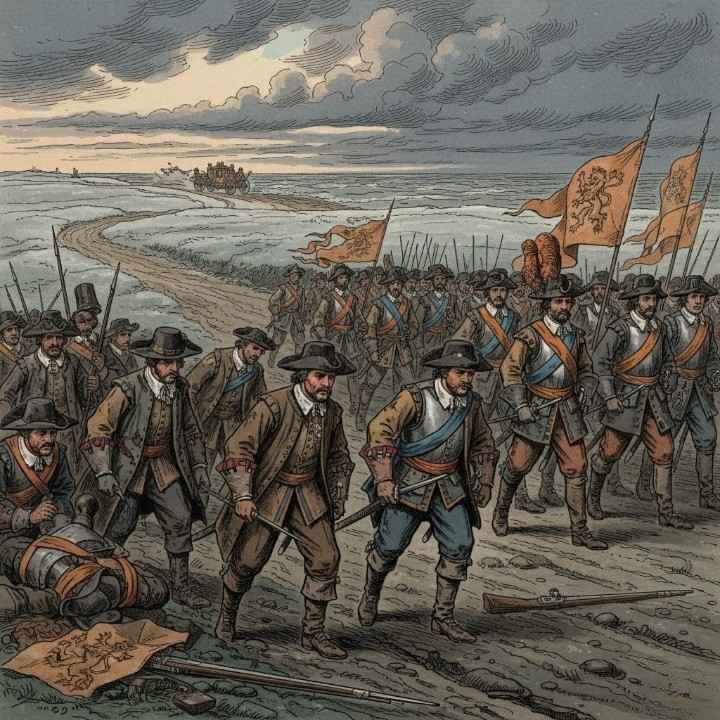
During the lowest ebb of the American Revolution, Thomas Paine published one of his most influential pamphlets in The Pennsylvania Journal, titled “The American Crisis.” The opening line, “These are the times that try men’s souls,” was a powerful call to arms that helped inspire Washington’s troops and the broader public to continue the fight for independence.
1777 – The Continental Army Settles at Valley Forge
General George Washington led his approximately 11,000 Continental Army regulars to establish winter quarters at Valley Forge, a site near Philadelphia, which was then occupied by the British. This harsh encampment would become a legendary symbol of the American Army’s perseverance and suffering during the Revolution.
1783 – William Pitt the Younger Becomes Britain’s Youngest Prime Minister
In a remarkable political feat, William Pitt the Younger became the youngest Prime Minister of the United Kingdom at the age of just 24. His tenure, characterized by financial reforms and leadership through the Napoleonic Wars, proved to be one of the most consequential in British history.
1793 – Napoleon’s Artillery Secures the Siege of Toulon
The Siege of Toulon concluded when French artillery forces, largely credited to the ingenuity of a young artillery commander named Napoleon Bonaparte, forced the British to abandon the city. This victory was crucial, securing southern France from invasion during the War of the First Coalition.
1796 – Horatio Nelson Engages Spanish Frigates Off Murcia
During the French Revolutionary Wars, two British frigates under the command of Commodore Horatio Nelson engaged two Spanish frigates off the coast of Murcia. This early naval action highlighted the escalating conflict between Britain and Spain at sea.
1828 – John C. Calhoun Sparks the Nullification Crisis
The Vice President of the United States, John C. Calhoun, anonymously published the South Carolina Exposition and Protest. This document vehemently protested the Tariff of 1828 and articulated the controversial doctrine of nullification, setting the stage for the major constitutional crisis of the 1830s.
1843 – Charles Dickens Publishes A Christmas Carol
The timeless classic, A Christmas Carol by Charles Dickens, was published for the first time. The story of Ebenezer Scrooge’s redemption and the Cratchit family’s spirit instantly resonated with the public and has since become one of the most enduring and beloved holiday tales.
1900 – Hopetoun Blunder Ends in Resignation
Australia’s first Governor-General, John Hope, 7th Earl of Hopetoun, made a political miscalculation known as the Hopetoun Blunder by appointing Sir William Lyne as premier of the new state of New South Wales. Lyne was unable to form a government supported by other colonial politicians and was forced to resign shortly after.
1900 – Dreyfus Affair Receives Parliamentary Amnesty
The French parliament voted to grant amnesty to all individuals involved in the highly controversial army treason trial known as the Dreyfus affair. This step was taken to finally close the scandalous and deeply divisive chapter in French society, though it did not undo the injustices served.
1907 – Darr Mine Disaster Claims Many Lives
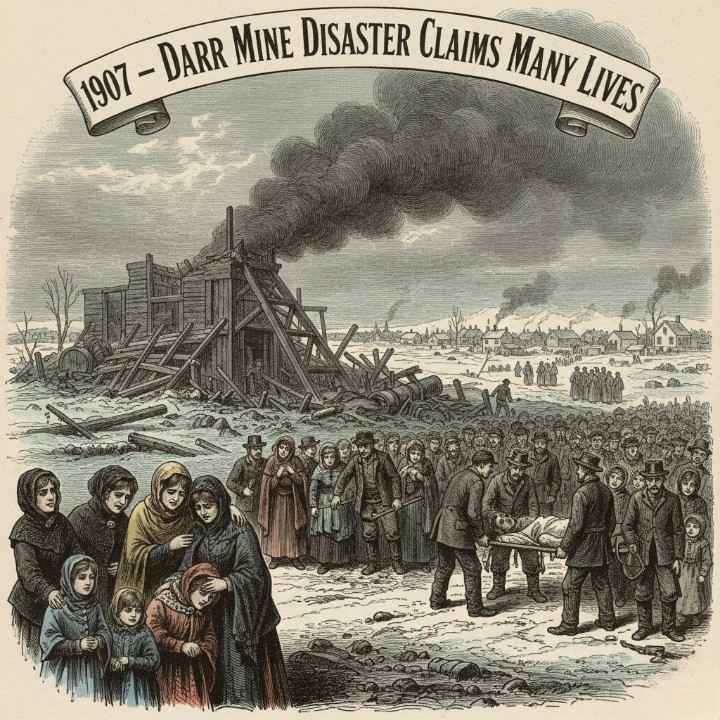
A devastating coal mining accident, the Darr Mine Disaster, occurred in Jacobs Creek, Pennsylvania, killing 239 coal miners. It remains one of the deadliest mine disasters in American history.
1912 – Captain of the General Slocum is Pardoned
William Van Schaick, the captain of the steamship General Slocum which suffered a catastrophic fire in 1904 killing over a thousand people, was pardoned by U.S. President William Howard Taft after serving three and a half years in Sing Sing prison.
1920 – King Constantine I Restored to the Greek Throne
Following the death of his son Alexander, King Constantine I was restored as King of the Hellenes after a plebiscite. His return temporarily brought stability to Greece but was followed by continued political and military turmoil.
1924 – The End of an Automotive Era
The last Rolls-Royce Silver Ghost—the model that helped establish Rolls-Royce’s reputation for engineering excellence and quality—was sold in London, marking the end of a long and successful production run.
1924 – Fritz Haarmann Receives Death Sentence
German serial killer Fritz Haarmann was sentenced to death for a horrific series of murders committed in Hannover, Germany, bringing an end to the terror he inflicted on the city.
1927 – Indian Revolutionaries Executed for Kakori Conspiracy
Three Indian revolutionaries—Ram Prasad Bismil, Roshan Singh, and Ashfaqulla Khan—were executed by the British Raj for their participation in the Kakori conspiracy, a train robbery aimed at funding the Indian independence movement. Their deaths fueled further anti-British sentiment.
1929 – Indian National Congress Declares Independence
The Indian National Congress formally promulgated the Purna Swaraj (Declaration of the Independence of India). This declaration was a pivotal moment in the struggle against British rule, stating the goal of complete self-rule.
1932 – BBC World Service Begins Broadcasting
The BBC World Service (originally the BBC Empire Service) began its first broadcasts. Intended to link English-speaking people across the Empire, it would evolve into one of the world’s most trusted international news sources.
1940 – Risto Ryti Elected President of Finland
Risto Ryti, who was serving as Prime Minister, was elected President of the Republic of Finland. Due to the wartime circumstances, the election was exceptionally held by the existing 1937 electoral college.
1941 – Adolf Hitler Assumes Direct Command of the Army
In a major shift in the German military command during World War II, Adolf Hitler appointed himself as head of the Oberkommando des Heeres (OKH, the Army High Command), effectively taking direct control of the ground forces.
1941 – Italian Divers Cripple British Battleships in Alexandria
World War II saw an audacious and successful raid by Italian divers using human torpedoes, placing limpet mines that heavily damaged the British battleships HMS Valiant and HMS Queen Elizabeth while they were docked in Alexandria harbour.
1941 – German Submarine U-574 is Destroyed
Twenty-eight German sailors died when the submarine U-574 was sunk off Punta Delgada. It was struck by HMS Stork (L81), commanded by Captain Frederic John Walker of the Royal Navy, and subsequently finished off by depth charges.
1945 – British Fascist John Amery Executed for Treason
John Amery, a British fascist who collaborated with Nazi Germany during World War II, was executed by the British Government for treason at the age of 33.
1946 – The First Indochina War Commences
The First Indochina War officially began, pitting the French Far East Expeditionary Corps against the Việt Minh, led by Ho Chi Minh. This conflict for control of French Indochina set the stage for decades of turmoil in Southeast Asia.
1956 – Dr. John Bodkin Adams Arrested for Patient Deaths
Irish-born physician John Bodkin Adams was arrested in connection with the suspicious deaths of over 160 patients. His trial became a sensational case, though he was ultimately convicted only of minor charges related to prescription offenses.
1961 – India Annexes Daman and Diu
Continuing the process of integrating former Portuguese territories, India annexed Daman and Diu, which were part of Portuguese India. This action followed the military operation that led to the earlier annexation of Goa.
1967 – Australian Prime Minister Harold Holt Presumed Dead
After disappearing while swimming off the coast of Victoria, Harold Holt, the Prime Minister of Australia, was officially presumed dead. His disappearance and the subsequent search captivated and saddened the nation.
1972 – Apollo 17 Returns to Earth
The Apollo Program concluded its final crewed lunar mission as Apollo 17, carrying astronauts Eugene Cernan, Ronald Evans, and Harrison Schmitt, successfully returned to Earth. Cernan remains the last human to walk on the Moon.
1974 – Nelson Rockefeller Sworn in as Vice President
Under the provisions of the Twenty-fifth Amendment, Nelson Rockefeller was sworn in as Vice President of the United States under President Gerald Ford. He was nominated and confirmed following the resignation of Richard Nixon and the subsequent ascension of Ford.
1977 – Bob–Tangol Earthquake Strikes Iran
A powerful $M_s\ 5.8$ Bob–Tangol earthquake struck Kerman Province in Iran. The natural disaster destroyed numerous villages and tragically resulted in the deaths of 665 people.
1981 – Penlee Lifeboat Disaster Claims Sixteen Lives
A heroic but tragic event occurred when the Penlee lifeboat went out in heavy seas to aid the stricken coaster Union Star. Sixteen lives were lost, including all eight crew members of the lifeboat, in one of the worst lifeboat disasters in British history.
1983 – The Jules Rimet Trophy is Stolen
The original FIFA World Cup trophy, the iconic Jules Rimet Trophy, was stolen from the headquarters of the Brazilian Football Confederation in Rio de Janeiro, Brazil. It has never been recovered.
1984 – Sino-British Joint Declaration Signed
The Sino-British Joint Declaration was signed in Beijing by Deng Xiaoping and Margaret Thatcher. This historic agreement stipulated that China would resume sovereignty over Hong Kong and the United Kingdom would restore Hong Kong to China on July 1, 1997.
1985 – Aeroflot Flight 101/435 is Hijacked
Aeroflot Flight 101/435 was hijacked by its first officer, who forced the plane to fly to China. The incident highlighted internal tensions within the Soviet Union.
1986 – Mikhail Gorbachev Releases Andrei Sakharov
Mikhail Gorbachev, the leader of the Soviet Union, personally released physicist and dissident Andrei Sakharov and his wife from internal exile in Gorky. This act was a major symbol of the political liberalization occurring under perestroika.
1995 – Nottawaseppi Huron Band of Potawatomi Restored Federal Recognition
The United States Government restored federal recognition to the Nottawaseppi Huron Band of Potawatomi Native American tribe. This act legally acknowledged the tribe’s sovereign status and right to self-governance.
1997 – SilkAir Flight 185 Crashes
SilkAir Flight 185 crashed into the Musi River near Palembang in Indonesia, resulting in the deaths of all 104 people aboard. The investigation into the cause remains controversial.
1998 – President Bill Clinton Impeached by the House
The United States House of Representatives voted to impeach President Bill Clinton, making him the second president in US history to be impeached. The charges stemmed from perjury and obstruction of justice related to the Paula Jones lawsuit and the Monica Lewinsky scandal.
1999 – Space Shuttle Discovery Launches for Hubble Service
Space Shuttle Discovery was launched on STS-103, which was the third mission dedicated to servicing and upgrading the Hubble Space Telescope.
2000 – Communist Labour Party Attack in Istanbul
The Leninist Guerrilla Units wing of the Communist Labour Party of Turkey/Leninist carried out an attack on a Nationalist Movement Party office in Istanbul, Turkey, tragically killing one person and injuring three.
2001 – Record High Barometric Pressure Recorded in Mongolia
A world record high barometric pressure of $1,085.6$ hectopascals (or $32.06$ inHg) was recorded at Tosontsengel, Khövsgöl, Mongolia.
2001 – Riots Erupt During Argentine Economic Crisis
Amidst a severe financial collapse and political instability, riots erupted in Buenos Aires, Argentina, as part of the deepening Argentine economic crisis (December riots).
2005 – Chalk’s Ocean Airways Flight 101 Crash
Chalk’s Ocean Airways Flight 101 crashed into the Government Cut channel immediately after takeoff from Miami Seaplane Base, resulting in the loss of 20 lives.
2005 – Controlled Collision Stops Runaway Train in Poland
A passenger train traveling from Sucha Beskidzka to Żywiec in Poland lost its brakes while on a steep downhill section. To prevent a catastrophic accident, the train was stopped in a controlled collision with a train traveling in the opposite direction in Świnna, injuring eight people.
2012 – Park Geun-hye Elected First Female President of South Korea
Park Geun-hye was elected as the first female president of South Korea. Her election marked a significant political milestone for the nation.
2013 – Spacecraft Gaia is Launched
The European Space Agency launched the Gaia spacecraft. Its mission is to compile the largest and most precise three-dimensional map of the Milky Way galaxy.
2016 – Russian Ambassador to Turkey Assassinated
The Russian ambassador to Turkey, Andrei Karlov, was tragically assassinated while attending an art exhibition in Ankara. The perpetrator was a Turkish police officer who was subsequently shot and killed.
2016 – Vehicular Attack at Berlin Christmas Market
A devastating vehicular attack occurred at a Christmas market in Berlin, Germany, resulting in 12 deaths and 56 injuries. The incident was a major act of terror in Europe.
Read Also: What Happened On This Day In History December 18: Authority & Proclamation
Famous People Born On December 19
| Name | Role / short description | Dates |
|---|---|---|
| Phil Ochs | American folksinger & songwriter | December 19, 1940 – April 9, 1976 |
| Henry Clay Frick | American industrialist & philanthropist | December 19, 1849 – December 2, 1919 |
| Professor Longhair (Henry R. Byrd) | American singer & pianist | December 19, 1918 – January 30, 1980 |
| Thomas P. O’Neill, Jr. (Tip O’Neill) | American politician (Speaker) | December 19, 1912 – January 5, 1994 |
| Al Kaline | American baseball player | December 19, 1934 – April 6, 2020 |
| Rob Portman | United States senator | December 19, 1955 – |
| Richard Leakey | Kenyan anthropologist & paleontologist | December 19, 1944 – January 2, 2022 |
| A. A. Michelson | German-born American physicist | December 19, 1852 – May 9, 1931 |
| Carter G. Woodson | American historian (Black studies pioneer) | December 19, 1875 – April 3, 1950 |
| Eric A. Cornell | American physicist (Nobel laureate) | December 19, 1961 – |
| Italo Svevo | Italian novelist | December 19, 1861 – September 13, 1928 |
| Fritz Reiner | Hungarian-American conductor | December 19, 1888 – November 15, 1963 |
| Ford Frick | American baseball executive & journalist | December 19, 1894 – April 8, 1978 |
| Eleanor H. Porter | American novelist (Pollyanna) | December 19, 1868 – May 21, 1920 |
| David Susskind | American TV producer & host | December 19, 1920 – February 22, 1987 |
| Kim Woo Choong | South Korean businessman (Daewoo founder) | December 19, 1936 – December 9, 2019 |
| José Lezama Lima | Cuban author & poet | December 19, 1910 – August 9, 1976 |
| Oliver La Farge | American author & anthropologist | December 19, 1901 – August 2, 1963 |
| Pierre-Joseph van Beneden | Belgian zoologist & parasitologist | December 19, 1809 – January 8, 1894 |
| Thomas Andrews | Irish chemist & physicist | December 19, 1813 – November 26, 1885 |
| John Taylor | American politician & philosopher | December 19, 1753? – August 21, 1824 |
| Guido Gozzano | Italian poet | December 19, 1883 – August 9, 1916 |
| Tankred Dorst | German playwright & novelist | December 19, 1925 – June 1, 2017 |
| Sally Fitzgibbons | Australian professional surfer | December 19, 1990 – |
| Horatius Bonar | Scottish minister & hymn-writer | December 19, 1808 – July 31, 1889 |
| Louis-Nicholas Clérambault | French composer & organist | December 19, 1676 – October 26, 1749 |
| William W. Rubey | American geologist | December 19, 1898 – April 12, 1974 |
| Hermann Hirt | German linguist | December 19, 1865 – September 12, 1936 |
| Maria Louise Sanford | American educator | December 19, 1836 – April 21, 1920 |
| Charles-Julien Brianchon | French mathematician | December 19, 1783 – April 29, 1864 |
Famous People Died On December 19
| Name | Role / short description | Dates |
|---|---|---|
| Stella Gibbons | British novelist | January 5, 1902 – December 19, 1989 |
| Robert H. Bork | United States jurist & scholar | March 1, 1927 – December 19, 2012 |
| Robert Millikan | American physicist (Nobel) | March 22, 1868 – December 19, 1953 |
| Vitus Bering | Danish explorer | 1681 – December 19, 1741 |
| Mirabeau B. Lamar | President, Republic of Texas | August 16, 1798 – December 19, 1859 |
| James Luther Bevel | American minister & civil-rights activist | October 19, 1936 – December 19, 2008 |
| H. L. A. Hart | English legal & political philosopher | July 18, 1907 – December 19, 1992 |
| Renata Tebaldi | Italian operatic soprano | February 1, 1922 – December 19, 2004 |
| James A. B. Ramsay, Marquess of Dalhousie | Governor-General of India | April 22, 1812 – December 19, 1860 |
| Norman Thomas | American socialist leader & reformer | November 20, 1884 – December 19, 1968 |
| Blessed Urban V | Pope | c.1310 – December 19, 1370 |
| Robert H. Grubbs | American chemist (Nobel) | February 27, 1942 – December 19, 2021 |
| Jacques Tourneur | French-American film director | November 12, 1904 – December 19, 1977 |
| Saint Anastasius I | Pope | – December 19, 401 |
| Yuly B. Khariton | Russian physicist (nuclear program leader) | February 27, 1904 – December 19, 1996 |
| James McGill | Scottish-Canadian merchant & philanthropist (McGill Univ.) | October 6, 1744 – December 19, 1813 |
| Qian Zhongshu | Chinese scholar & author | November 21, 1910 – December 19, 1998 |
| Herbert C. Brown | American chemist (Nobel) | May 22, 1912 – December 19, 2004 |
| Johnny Isakson | United States senator | December 28, 1944 – December 19, 2021 |
| Kurt Masur | German conductor | July 18, 1927 – December 19, 2015 |
| Marcello Mastroianni | Italian film actor | September 26, 1924 – December 19, 1996 |
| Michael Clarke | American musician (The Byrds) | June 3, 1944 – December 19, 1993 |
| Milt Hinton | American jazz bassist | June 23, 1910 – December 19, 2000 |
| Rubem Braga | Brazilian journalist & writer | January 12, 1913 – December 19, 1990 |
| Tomás Carrasquilla | Colombian novelist | January 17, 1858 – December 19, 1940 |
| Herbert A. Blaize | Prime Minister of Grenada | February 26, 1918 – December 19, 1989 |
| André Jolivet | French composer | August 8, 1905 – December 19/20, 1974 |
| Frederic W. Maitland | British jurist & legal historian | May 28, 1850 – December 19, 1906 |
| Balfour Stewart | British meteorologist & physicist | November 1, 1828 – December 19, 1887 |
| Jacques d’Albon, seigneur de Saint-André | French court official & marshal | c.1505 – December 19, 1562 |
Observances & Institutional Dates- December 19
National Heroes and Heroines Day (Anguilla): This national holiday honors the contributions and sacrifices of Anguillan individuals who played pivotal roles in the island’s struggle for self-determination and nationhood.
Goa Liberation Day (Goa, India): This day commemorates the Indian armed forces’ success in freeing Goa from 450 years of Portuguese rule in 1961, marking the territory’s complete integration into India.
Frequently Asked Questions
What major American historical events happened on December 19?
December 19 saw key events in American history, including the 1606 departure of the ships carrying the Jamestown settlers, George Washington moving the Continental Army into Valley Forge in 1777, and the 1998 impeachment of President Bill Clinton.
What is the significance of the Sino-British Joint Declaration?
The declaration, signed on this day in 1984, formally set the terms for the transfer of sovereignty over Hong Kong from the United Kingdom back to China on July 1, 1997.
What was the last crewed mission to the Moon?
Apollo 17, the final crewed lunar flight, returned to Earth on December 19, 1972.
Which political crises happened on December 19?
Examples include Clinton’s 1998 impeachment, Argentina’s 2001 riots, and diplomatic shock from the 2016 assassination of Russia’s ambassador in Ankara.