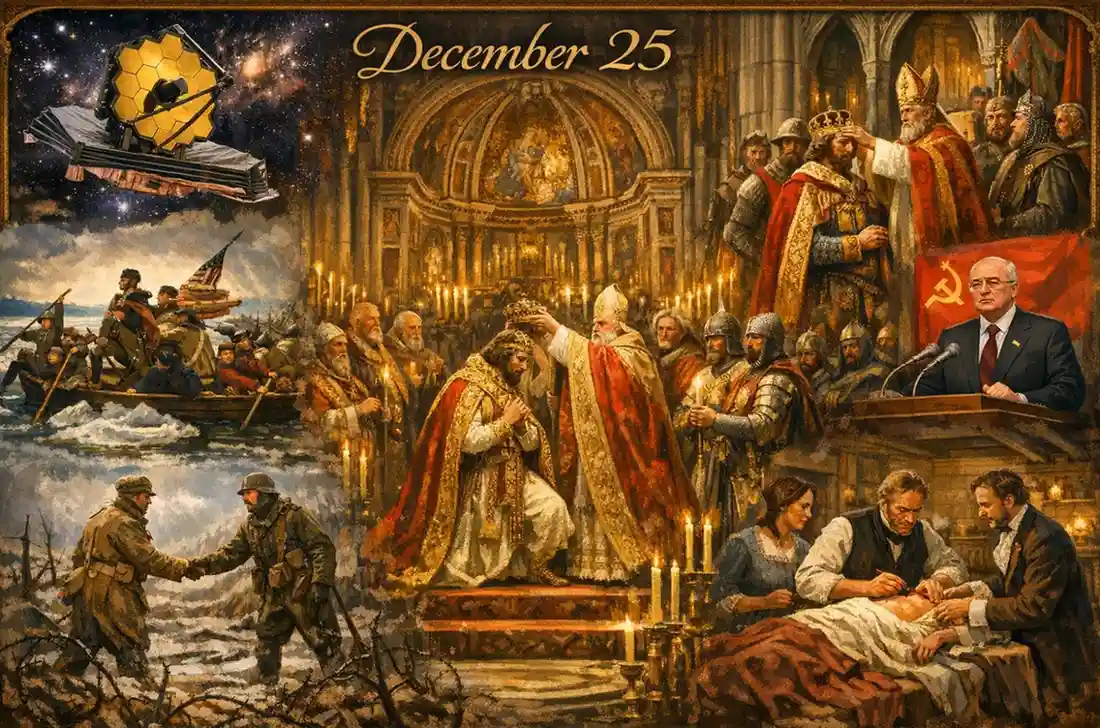
While billions celebrate Christmas as a day of peace, history reveals that December 25 has been a titan of political transformation and scientific breakthrough. By exploring what happened on this day in history December 25, we uncover the rise of empires from Charlemagne to Hungary, the quiet brilliance of Halley’s Comet, and the dawn of a new era in space with the James Webb Telescope.
Important Events That Happened On December 25 In History
36 – The Reunification of China
In a decisive military victory, the forces of Emperor Guangwu of the Eastern Han, led by the capable commander Wu Han, successfully conquered the separatist Chengjia empire. This conquest effectively brought an end to a period of internal division and restored central authority over the vast Chinese territories. The reunification under the Eastern Han Dynasty marked the beginning of a stabilized era for Chinese administration and culture.
274 – The Temple of Sol Invictus
Emperor Aurelian officially dedicated a grand temple to Sol Invictus, the “Unconquered Sun,” in the heart of Rome. By establishing this cult as a primary state religion, Aurelian aimed to unify the diverse subjects of the empire under a single, powerful deity associated with the emperor himself. This dedication reinforced the importance of the winter solstice period in the Roman religious and political calendar.
333 – Constans is Elevated to Caesar
Roman Emperor Constantine the Great officially raised his youngest son, Constans, to the prestigious rank of Caesar. This appointment was part of Constantine’s broader plan to secure the succession of his dynasty and distribute the administration of the vast Roman territories among his heirs. Despite his youth, Constans was tasked with representing the imperial authority in the Mediterranean provinces.
336 – The First Documented Christmas
History records the first documented sign of a Christmas celebration in Rome on this day in the year 336. While the exact date of Jesus’s birth had been debated by early theologians, this entry in a Roman chronographer’s calendar marked the formal integration of the holiday into the city’s liturgical year. It set a precedent that would eventually spread across the entire Christian world.
350 – The Abdication of Vetranio
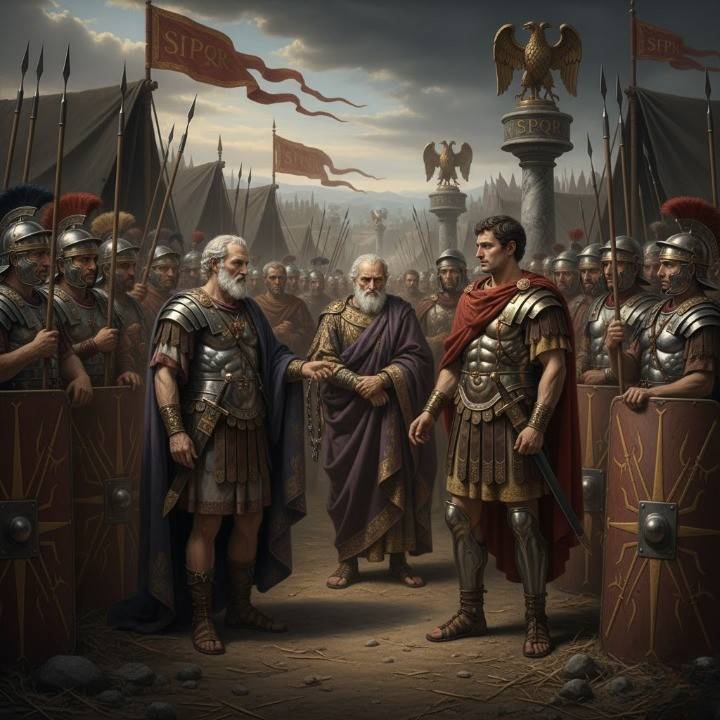
In a tense political standoff at Naissus, Vetranio met with Emperor Constantius II and was ultimately forced to abdicate his imperial title. Rather than facing execution, Vetranio was remarkably permitted to live out the remainder of his life as a private citizen on a generous state pension. This peaceful resolution was a rare instance of mercy in the often-bloody game of Roman imperial succession.
352 – The First Official Christmas Mass
Pope Liberius celebrated the first official Christmas mass in Rome, a moment that cemented December 25th’s place in the Roman Catholic calendar. While the Nativity had been observed informally for some time, this high-profile papal mass standardized the celebration for the Western Church. It transformed a local observation into a cornerstone of the global Christian liturgical tradition.
508 – The Baptism of Clovis I
Clovis I, the formidable King of the Franks, was baptized into the Catholic faith at Reims by Saint Remigius. This conversion was a watershed moment for European history, as it aligned the Frankish monarchy with the Roman Church rather than the Arian sect favored by other Germanic tribes. The baptism laid the spiritual and political foundation for what would eventually become the nation of France.
597 – Mass Baptism in Kent
Following the arrival of the Gregorian mission, Augustine of Canterbury and his fellow laborers baptized more than 10,000 Anglo-Saxons in the Kingdom of Kent. This mass conversion marked a significant victory for the Roman mission to re-Christianize the British Isles after the fall of Roman administration. It established Canterbury as a primary center of religious authority in England, a status it maintains to this day.
800 – Charlemagne Becomes Emperor
In one of the most iconic moments of the Middle Ages, Charlemagne, King of the Franks, was crowned Emperor of the Romans by Pope Leo III at St. Peter’s Basilica. This coronation effectively revived the title of Emperor in the West and birthed the Holy Roman Empire, a political entity that would dominate Central Europe for a millennium. The event symbolized the union of Germanic military power and Roman ecclesiastical authority.
820 – The Murder of Leo V
Eastern Roman Emperor Leo V was brutally murdered in a church within the Great Palace of Constantinople by followers of his former friend, Michael II. The assassins, disguised as a choir of monks, struck the emperor down during the Christmas morning service. This violent transition of power allowed Michael II to ascend the throne, ending the Amorian dynasty’s predecessor’s reign in blood.
1000 – The Founding of Hungary
Stephen I was officially crowned as the first King of Hungary, marking the establishment of the Kingdom of Hungary as a Christian state. This event transitioned the Hungarian people from a nomadic confederation into a settled, European monarchy recognized by the Pope and the Holy Roman Emperor. Stephen’s reign was dedicated to the Christianization and administrative modernization of his new kingdom.
1013 – Sweyn Forkbeard Takes the English Throne
The Danish king Sweyn Forkbeard successfully took control of the Danelaw and was proclaimed King of England after a series of brutal military campaigns. His victory forced the Anglo-Saxon king, Ethelred the Unready, into exile in Normandy. Although Sweyn would only rule for a few weeks before his death, his conquest paved the way for the later reign of his son, Cnut the Great.
1025 – Mieszko II Lambert is Crowned
Mieszko II Lambert was crowned King of Poland, succeeding his father, Bolesław the Brave, during a period of significant regional tension. His coronation was an attempt to maintain Poland’s status as an independent kingdom amidst pressure from the Holy Roman Empire and Kievan Rus’. Mieszko II was a highly educated ruler, though his reign would later be plagued by internal revolt and external invasion.
1046 – Henry III Becomes Holy Roman Emperor
Henry III was crowned Holy Roman Emperor by Pope Clement II, a pope whom Henry himself had helped install to resolve a chaotic papal schism. This event represented the height of imperial power over the Church, as the Emperor exerted direct influence over the selection of the papacy. Henry’s reign was marked by his efforts to reform the clergy and promote the “Peace and Truce of God.”
1066 – William the Conqueror’s Coronation
Following his victory at the Battle of Hastings, William, Duke of Normandy, was crowned King of England at Westminster Abbey. The ceremony was famously chaotic; the cheers of the Normans were mistaken by the guards outside for a riot, leading them to set fire to surrounding houses. This coronation officially began the Norman era in England, fundamentally reshaping the nation’s culture, law, and language.
1076 – Bolesław II the Generous is Crowned
Bolesław II the Generous was crowned King of Poland, successfully restoring the royal title that had been lost by his predecessor. His reign was characterized by assertive military campaigns and a deep-seated conflict with the Polish nobility and the Bishop of Kraków. While he initially strengthened Poland’s regional standing, his clashes with the church eventually led to his downfall and exile.
1100 – Baldwin I of Jerusalem
Baldwin of Boulogne was crowned the first King of Jerusalem in the Church of the Nativity in Bethlehem, following the death of his brother Godfrey. Unlike Godfrey, who refused the title of king in the city where Christ wore thorns, Baldwin embraced the monarchy to stabilize the newly won Crusader state. His leadership was essential in defending the kingdom from surrounding Fatimid and Seljuk pressures.
1130 – Roger II, First King of Sicily
Count Roger II of Sicily was crowned the first King of Sicily, uniting the Norman territories of southern Italy and Sicily into a single, powerful Mediterranean kingdom. His court became a legendary center of multiculturalism, blending Norman, Greek, and Arabic influences in art, science, and governance. Roger’s coronation transformed Sicily into one of the wealthiest and most sophisticated states in medieval Europe.
1261 – The Blinding of John IV Laskaris
In a ruthless consolidation of power, the eleven-year-old John IV Laskaris, the rightful heir of the restored Eastern Roman Empire, was deposed and blinded. The order was given by his co-ruler and regent, Michael VIII Palaiologos, on the boy’s birthday. This act removed the last of the Laskaris line from power and allowed the Palaiologos dynasty to rule the Byzantine Empire until its final fall in 1453.
1492 – The Wreck of the Santa María
Christopher Columbus’s flagship, the carrack Santa María, ran aground on a reef off the coast of Haiti due to the negligence of a cabin boy left at the helm. With the ship beyond repair, Columbus was forced to use its timbers to build a small fort named La Navidad, the first European settlement in the New World. This disaster significantly altered the logistics of Columbus’s return journey and his subsequent reports to the Spanish crown.
1553 – The Battle of Tucapel
Mapuche rebels under the brilliant leadership of Lautaro achieved a stunning victory over Spanish conquistadors at the Battle of Tucapel. During the engagement, the Spanish Governor of Chile, Pedro de Valdivia, was captured and subsequently executed by the Mapuche forces. This victory was a major blow to Spanish colonial ambitions in the region and demonstrated the effective military resistance of the indigenous population.
1559 – The Election of Pope Pius IV
Following a four-month vacancy and a contentious conclave, Giovanni Angelo Medici was elected as Pope Pius IV. His papacy was notable for reconvening and finally concluding the Council of Trent, which defined the Catholic Counter-Reformation. Pius IV was seen as a more diplomatic and moderate figure than his predecessor, working to heal the rifts within the European political and religious landscape.
1724 & 1725 – J.S. Bach’s Christmas Cantatas
In back-to-back years in Leipzig, Johann Sebastian Bach led the first performances of two of his most celebrated Christmas works. In 1724, he debuted Gelobet seist du, Jesu Christ, based on a Lutheran hymn, and in 1725, he performed Unser Mund sei voll Lachens. These compositions are famous for their intricate vocal arrangements and Bach’s ability to make the “sound of laughter” audible through musical phrasing.
1758 – Sighting of Halley’s Comet
German amateur astronomer Johann Georg Palitzsch became the first person to sight Halley’s Comet during its 1758 return, confirming Edmund Halley’s posthumous prediction. This was a monumental moment for science, as it was the first time a comet’s return had been successfully predicted using the laws of physics. The sighting proved that comets were orbiting bodies within our solar system rather than random atmospheric phenomena.
1766 – The Mapuche Uprising
The Mapuche people of Chile launched a series of coordinated surprise attacks against Spanish frontier outposts, marking the beginning of the major uprising of 1766. The rebellion was a response to Spanish attempts to consolidate control over Mapuche territories and enforce colonial labor systems. The conflict forced the Spanish to abandon several settlements and reinforced the Mapuche’s reputation as a fiercely independent nation.
1776 – Washington Crosses the Delaware
In a daring and desperate gamble during the American Revolutionary War, General George Washington led the Continental Army across the icy Delaware River at night. This perilous crossing allowed the American forces to surprise and defeat a garrison of Hessian mercenaries at Trenton the following morning. The victory provided a much-needed boost to American morale and saved the revolutionary cause from the brink of collapse.
1793 – Finding the Site of St. Clair’s Defeat
During the Northwest Indian War, General “Mad Anthony” Wayne and a detachment of 300 men arrived at the site of General Arthur St. Clair’s disastrous 1791 defeat. They were met with the grim sight of hundreds of unburied human remains scattered across the landscape, which they eventually gathered and buried. Wayne subsequently built Fort Recovery on the site, symbolizing the American military’s intent to reclaim the territory.
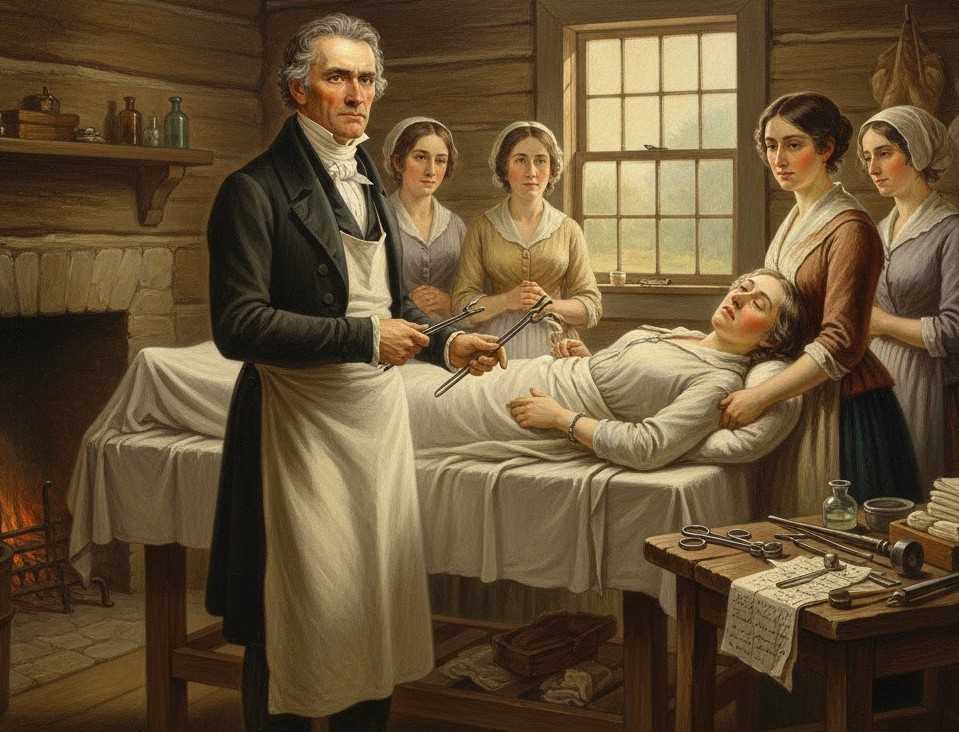
1809 – The First Ovariotomy
Dr. Ephraim McDowell performed a pioneering medical feat in Kentucky by removing a 22-pound ovarian tumor from a patient named Jane Todd Crawford. This was the first successful ovariotomy in history, performed without the benefit of anesthesia or modern antiseptic techniques. Crawford survived the surgery and lived for another 32 years, marking a massive breakthrough in the field of abdominal surgery.
1814 – First Christian Service in New Zealand
Reverend Samuel Marsden held the first documented Christian service on New Zealand soil at Rangihoua Bay in the Bay of Islands. Marsden preached to a crowd of Māori and Europeans, using a text from the Gospel of Luke to introduce the Christian faith to the region. This event is regarded as the symbolic beginning of the Christian mission in New Zealand and a key moment in the nation’s colonial history.
1815 – The Handel and Haydn Society Debut
The Handel and Haydn Society, now the oldest continually performing arts organization in the United States, gave its very first performance at King’s Chapel in Boston. The debut featured a massive choir and orchestral accompaniment, bringing the works of European masters to the American public. The society played a crucial role in establishing a high standard for choral and orchestral music in the early United States.
1826 – Conclusion of the Eggnog Riot
The infamous “Eggnog Riot” at the United States Military Academy at West Point finally concluded after nearly 24 hours of drunken chaos. The riot had seen cadets smuggle large quantities of whiskey into the barracks to make festive eggnog, leading to assaults on officers and widespread property damage. In the aftermath, twenty cadets were court-martialed, and the academy implemented much stricter disciplinary codes for holiday observances.
1831 – The Great Jamaican Slave Revolt
Up to 20% of Jamaica’s enslaved population mobilized in a massive uprising for freedom known as the Baptist War or the Great Jamaican Slave Revolt. Led by Samuel Sharpe, the rebels used non-violent strikes that eventually escalated into armed conflict with British colonial forces. Although the revolt was brutally suppressed, it accelerated the British government’s move toward the total abolition of slavery throughout its empire.
1837 – The Battle of Lake Okeechobee
In one of the major engagements of the Second Seminole War, American General Zachary Taylor led 1,100 troops against a well-fortified Seminole position near Lake Okeechobee, Florida. The battle was a tactical victory for the U.S. forces, but they suffered heavy casualties while the Seminoles successfully retreated further into the Everglades. The engagement highlighted the extreme difficulties of fighting in the swampy Florida interior.
1868 – Unconditional Pardon for Confederates
In a controversial move aimed at national reconciliation after the Civil War, President Andrew Johnson granted an unconditional pardon to all Confederate veterans. This decree restored the civil rights of those who had fought against the Union, allowing them to participate in the political life of the reconstructed South. Johnson’s decision was met with significant criticism from Radical Republicans who believed the move was too lenient toward former rebels.
1870 – Premiere of the Siegfried Idyll
Richard Wagner conducted the first performance of his Siegfried Idyll as a surprise birthday gift for his wife, Cosima, on the stairs of their villa at Tribschen. The symphonic poem was performed by a small ensemble of 13 musicians and remains one of Wagner’s most intimate and tender compositions. It was a rare departure from his typically massive operatic works, celebrating the birth of their son, Siegfried.
1876 – The Birth of Muhammad Ali Jinnah
In 1876, the future founder of Pakistan, Muhammad Ali Jinnah, was born in Karachi, then part of British India. Known as Quaid-e-Azam or “Great Leader,” he was a brilliant lawyer and statesman whose unwavering commitment to a separate Muslim homeland reshaped the entire geopolitical map of South Asia. His leadership and constitutional advocacy were the driving forces behind the creation of Pakistan in 1947, and his legacy is still celebrated today through his birthday, which is a major national holiday across the country.
1914 – The World War I Christmas Truce
Along the trenches of the Western Front, soldiers from both the Allied and Central Powers engaged in a series of spontaneous, unofficial truces. Men who had been enemies just hours before exchanged gifts, sang carols, and even played football in the mud of No Man’s Land. While high commands on both sides quickly worked to end the fraternization, the truce became a lasting symbol of humanity’s shared desire for peace.
1915 – The National Protection War
Military leaders Cai E and Tang Jiyao proclaimed the independence of Yunnan province, triggering the National Protection War against the Empire of China. The uprising was a direct response to Yuan Shikai’s attempt to restore the monarchy and declare himself emperor. The campaign eventually forced Yuan to abandon his imperial ambitions and played a major role in the preservation of the Chinese Republic.
1927 – Ambedkar Burns the Manusmriti
Dr. B.R. Ambedkar and thousands of his followers publicly burned copies of the Manusmriti in Mahad, Maharashtra, as a protest against the text’s promotion of caste-based discrimination. This act was a defining moment in the Dalit rights movement, symbolizing a rejection of traditional social hierarchies and a demand for human dignity. Ambedkar’s bold gesture continues to be commemorated as a day of liberation by the Dalit community.
1932 – The Gansu Earthquake
A massive magnitude 7.6 earthquake struck Gansu Province in northwestern China, causing widespread destruction in a region already struggling with poverty. The disaster resulted in the deaths of approximately 275 people and left thousands more injured or homeless in the freezing winter conditions. The quake caused significant damage to ancient structures and local infrastructure, requiring a long and difficult recovery effort.
1941 – Military Shifts in WWII
On Christmas Day 1941, Admiral Chester W. Nimitz arrived at Pearl Harbor to take command of the U.S. Pacific Fleet following the devastating Japanese attack. Meanwhile, across the globe, the Battle of Hong Kong ended with a British surrender, marking the start of a brutal three-year Japanese occupation. Additionally, Free French forces under Admiral Émile Muselier seized the islands of Saint Pierre and Miquelon, liberating the first piece of French territory.
1946 – First Soviet Nuclear Chain Reaction
Scientists in the Soviet Union successfully initiated the first self-sustaining nuclear chain reaction in Europe within the F-1 nuclear reactor. Led by physicist Igor Kurchatov, this achievement was a critical milestone in the development of the Soviet atomic bomb project. The success of the F-1 reactor proved that the USSR had the technical capability to compete with the United States in the burgeoning nuclear arms race.
1950 – The Theft of the Stone of Scone
Four Scottish nationalist students successfully removed the Stone of Scone, the traditional coronation stone of British monarchs, from Westminster Abbey. The stone, which had been taken from Scotland by King Edward I in 1296, was smuggled back across the border as a protest for Scottish home rule. It was eventually recovered in April 1951, but the incident sparked a renewed debate over Scottish national identity and heritage.
1951 – The Bombing of Harry T. Moore
Tragedy struck the Civil Rights Movement when a bomb exploded at the home of activists Harry T. Moore and his wife, Harriette, in Mims, Florida. Harry was killed instantly in the blast, and Harriette died from her injuries several days later. The Moores were early leaders in the NAACP and had been targeted for their work in voter registration and investigating lynchings, making them among the first martyrs of the modern movement.
1962 – Final Soviet Above-Ground Nuclear Test
The Soviet Union conducted its final atmospheric nuclear weapon test in anticipation of the 1963 Partial Nuclear Test Ban Treaty. This test concluded a period of intense and dangerous nuclear testing that had significantly increased global radiation levels. The move toward underground testing was a small but significant step in international efforts to limit the environmental impact and escalation of nuclear weaponry.
1963 – The Launch of Bayrak Radio
In the midst of intercommunal violence in Cyprus, Turkish Cypriot technicians established Bayrak Radio to provide a voice for their community. This occurred after Turkish Cypriots were forcibly excluded from the national Cyprus Broadcasting Corporation. The station began transmitting from a small, improvised studio and eventually grew into a major broadcasting institution for Northern Cyprus.
1968 – Apollo 8 Returns Home
The crew of Apollo 8 performed a critical “Trans-Earth Injection” maneuver, successfully firing their engine to break out of lunar orbit and head back to Earth. This maneuver was a nail-biting moment for NASA, as it happened on the far side of the moon without direct communication with Ground Control. The success of the burn ensured that Frank Borman, Jim Lovell, and Bill Anders would return safely after their historic lunar mission.
1968 – The Kilvenmani Massacre
In the village of Kizhavenmani, Tamil Nadu, 44 Dalit laborers were brutally murdered after being locked in a hut that was set on fire. The massacre was a retaliation by local landlords against the Dalit community’s campaign for higher wages and better working conditions. This horrific event remains one of the darkest chapters in the history of caste-based violence and labor struggles in modern India.
1976 – EgyptAir Flight 864 Crash
EgyptAir Flight 864, a Boeing 707, crashed while on approach to Don Mueang International Airport in Bangkok, Thailand. The aircraft struck an industrial building, resulting in the deaths of all 52 people on board and an additional 19 people on the ground. The investigation attributed the crash to pilot error during the final descent in poor visibility, marking a tragic day for the Egyptian national carrier.
1977 – Begin and Sadat Meet in Egypt
In a historic step toward peace in the Middle East, Israeli Prime Minister Menachem Begin met with Egyptian President Anwar Sadat in Ismailia, Egypt. This meeting followed Sadat’s ground-breaking visit to Jerusalem and served as a crucial negotiation session for what would eventually become the Camp David Accords. The dialogue between the two leaders was a rare moment of diplomatic optimism in a region defined by decades of war.
1977 – The Death of Charlie Chaplin
The world lost one of its greatest cinematic icons when Charlie Chaplin died at the age of 88 in Switzerland. Known globally for his “Little Tramp” character, Chaplin was a pioneer of the silent film era and a masterful director who blended slapstick comedy with deep social commentary. His influence on the development of motion pictures is immeasurable, leaving behind a legacy of films that remain timeless classics.
1986 – The Crash of Iraqi Airways Flight 163
Iraqi Airways Flight 163 was hijacked by four gunmen while traveling from Baghdad to Amman. During an attempted emergency landing in Arar, Saudi Arabia, the aircraft crashed and broke apart, resulting in the deaths of 63 of the 106 people on board. The incident was part of a larger wave of aviation-related terrorism in the 1980s and led to further tightening of airport security in the Middle East.
1989 – The Execution of Nicolae Ceaușescu
Following the rapid collapse of the communist regime in Romania, deposed President Nicolae Ceaușescu and his wife, Elena, were executed by a firing squad. Their death came after a summary military trial where they were convicted of genocide and illegal gathering of wealth. The televised images of their execution marked the definitive end of decades of totalitarian rule in Romania and were a dramatic climax to the Revolutions of 1989.
1991 – Gorbachev Resigns and the USSR Dissolves
Mikhail Gorbachev officially resigned as the President of the Soviet Union, marking the end of the superpower that had dominated the 20th century. During his televised address, he handed over the nuclear codes to Boris Yeltsin, signaling a peaceful transition of power to the new Russian Federation. Simultaneously, Ukraine finalized its independence referendum, effectively sealing the fate of the union, which was formally dissolved the following day.
1996 – The Murder of JonBenét Ramsey
The body of six-year-old child beauty queen JonBenét Ramsey was discovered in the basement of her family’s home in Boulder, Colorado. The case, which featured a bizarre ransom note and a crime scene that was quickly compromised, became a national media sensation. Despite decades of investigation and intense public speculation, the murder remains one of America’s most famous unsolved mysteries.
1999 – Cubana de Aviación Flight 310 Crash
A Cubana de Aviación Yakovlev Yak-42 crashed into a mountainside near Bejuma, Venezuela, while on approach to Arturo Michelena International Airport. All 22 people on board were killed in the accident, which occurred during heavy rain and low cloud cover. The crash was attributed to the pilots’ failure to follow the prescribed approach path in mountainous terrain, highlighting the dangers of landing in adverse weather.
2003 – UTA Flight 141 Disaster
Shortly after taking off from Cotonou, Benin, UTA Flight 141 crashed into the Bight of Benin, killing 141 of the 163 people on board. The aircraft, a Boeing 727, was significantly overloaded with passengers and cargo, which prevented it from gaining enough altitude to clear a building at the end of the runway. It remains one of the deadliest aviation accidents in African history, sparking calls for stricter regulation of charter airlines.
2003 – The Loss of Beagle 2
The British Mars probe Beagle 2, which had been released from the Mars Express spacecraft on December 19, failed to transmit its “landing signal” as scheduled. For years, the probe was considered a total loss until it was spotted in 2015 by the Mars Reconnaissance Orbiter, showing that it had successfully landed but failed to deploy its solar panels correctly. The failure was a significant disappointment for the European space community.
2004 – Cassini Releases the Huygens Probe
In a landmark moment for planetary exploration, the Cassini orbiter successfully released the Huygens probe toward Saturn’s largest moon, Titan. This release began a 20-day coast for the probe before its historic landing on January 14, 2005. The mission provided humanity with its first-ever look beneath the thick orange haze of Titan’s atmosphere, revealing a world of methane lakes and icy mountains.
2007 – The San Francisco Zoo Tiger Attack
A 350-pound Siberian tiger named Tatiana escaped her exhibit at the San Francisco Zoo and attacked three visitors. The tiger killed 17-year-old Carlos Sousa Jr. and seriously injured two other men before being shot and killed by police officers. The incident led to a massive overhaul of safety standards at the zoo and a nationwide review of animal enclosure heights in zoological parks.
2012 – Two Deadly Aviation Crashes
On Christmas Day 2012, two separate aviation tragedies occurred. In Kazakhstan, a military Antonov An-72 crashed near Shymkent, killing all 27 high-ranking border patrol officials on board. In Myanmar, an Air Bagan Fokker 100 crashed while attempting an emergency landing on a road near Heho Airport, resulting in the deaths of two people and injuring several others, including foreign tourists.
2016 – Alexandrov Ensemble Plane Crash
A Russian Ministry of Defense Tupolev Tu-154, carrying 64 members of the world-renowned Alexandrov Ensemble (Red Army Choir), crashed into the Black Sea shortly after takeoff from Sochi. All 92 people on board, including the choir members and several journalists, were killed. The ensemble was traveling to Syria to perform for Russian troops, and their loss was felt as a major cultural tragedy in Russia.
2019 – Typhoon Phanfone Strikes the Philippines
On Christmas Day, Typhoon Phanfone (locally known as Ursula) tore through the central Philippines with destructive winds and torrential rain. The storm killed at least 20 people and displaced thousands as it destroyed homes and flooded coastal communities. The timing of the typhoon was particularly devastating, as it struck during one of the country’s most important religious and family holidays.
2020 – The Nashville Christmas Bombing
A powerful explosion rocked downtown Nashville, Tennessee, after a recreational vehicle parked on Second Avenue detonated early in the morning. The blast caused significant damage to dozens of buildings, including a major AT&T communications hub, and sent three people to the hospital. The perpetrator, who died in the blast, had broadcast a recorded warning before the explosion, which helped authorities clear the area and prevent higher casualties.
2021 – Launch of the James Webb Space Telescope
In a monumental achievement for modern astronomy, the James Webb Space Telescope (JWST) was successfully launched aboard an Ariane 5 rocket from French Guiana. As the successor to the Hubble Space Telescope, JWST was designed to peer back to the dawn of the universe and study the formation of the first stars and galaxies. Its launch began a complex, month-long deployment process in deep space that captivated the world.
2024 – Azerbaijan Airlines Flight 8243 Crash
Tragedy struck the Caspian region when Azerbaijan Airlines Flight 8243 crashed near Aktau, Kazakhstan, resulting in the deaths of 38 people. The aircraft encountered severe technical difficulties shortly before its scheduled landing, leading to a loss of control. The accident prompted an international investigation into regional flight safety protocols and maintenance standards for the aging fleet utilized in Central Asian corridors.
See Also: What Happened On This Day In History December 24: Silent Nights and Lunar Sunrises
Famous People Born On December 24
| Name | Role / short description | Dates |
|---|---|---|
| Mohammad Rafi | Indian playback singer | December 24, 1924 – July 31, 1980 |
| James Prescott Joule | English physicist (energy, Joule) | December 24, 1818 – October 11, 1889 |
| Emanuel Lasker | German chess champion | December 24, 1868 – January 11, 1941 |
| Joseph Cornell | American assemblage artist & filmmaker | December 24, 1903 – December 29, 1972 |
| Juan Ramón Jiménez | Spanish poet; Nobel laureate | December 24, 1881 – May 29, 1958 |
| Fritz Leiber | American author (fantasy & SF) | December 24, 1910 – September 5, 1992 |
| Harry Warren | American songwriter & composer | December 24, 1893 – September 22, 1981 |
| Ad Reinhardt | American abstract painter | December 24, 1913 – August 30, 1967 |
| Charles Hermite | French mathematician | December 24, 1822 – January 14, 1901 |
| Carl O. Sauer | American geographer | December 24, 1889 – July 18, 1975 |
| I. F. Stone | American investigative journalist | December 24, 1907 – June 18, 1989 |
| Andrew Chi-Chih Yao | Computer scientist; Turing Award laureate | December 24, 1946 – |
| Georges-Marie Guynemer | French WWI flying ace | December 24, 1894 – September 11, 1917 |
| Silas Deane | American diplomat (Revolutionary era) | December 24, 1737 – September 23, 1789 |
| Louis Jouvet | French actor & theatre director | December 24, 1887 – August 16, 1951 |
| Robert Joffrey | American choreographer; Joffrey Ballet founder | December 24, 1930 – March 25, 1988 |
| Joseph R. Smallwood | Newfoundland politician; premier | December 24, 1900 – December 17, 1991 |
| Stipe Mesić | President of Croatia | December 24, 1934 – |
| William Paterson | U.S. jurist; Constitutional framer | December 24, 1745 – September 9, 1806 |
| Charles Wakefield Cadman | American composer (inc. Native American themes) | December 24, 1881 – December 30, 1946 |
| Sir Horace Curzon Plunkett | Irish agricultural reformer | December 24, 1854 – March 26, 1932 |
| William Hayward Pickering | Engineer; led Explorer 1 mission | December 24, 1910 – March 15, 2004 |
| Juan Linz | Political scientist (democracy & authoritarianism) | December 24, 1926 – October 1, 2013 |
| Tevfik Fikret | Turkish modernist poet | December 24, 1867 – August 18, 1915 |
| Adam Rapacki | Polish politician & economist | December 24, 1909 – October 10, 1970 |
| Pietro Carnesecchi | Italian humanist & reformer | December 24, 1508 – October 1, 1567 |
| Otto Ender | Chancellor of Austria | December 24, 1875 – June 25, 1960 |
| John V, Duke of Brittany | Medieval duke of Brittany | December 24, 1389 – August 28, 1442 |
| Walter Abish | Austrian-born American experimental writer | December 24, 1931 – May 28, 2022 |
| Dana Gioia | American poet & arts advocate | December 24, 1950 – |
Famous People Died On December 24
| Name | Role / short description | Dates |
|---|---|---|
| Harold Pinter | British playwright & Nobel laureate | October 10, 1930 – December 24, 2008 |
| Samuel P. Huntington | American political scientist | April 18, 1927 – December 24, 2008 |
| William Makepeace Thackeray | British novelist (Vanity Fair) | July 18, 1811 – December 24, 1863 |
| Bernard Herrmann | American composer (film scores) | June 29, 1911 – December 24, 1975 |
| Alban Berg | Austrian composer (atonal/12-tone) | February 9, 1885 – December 24, 1935 |
| Johns Hopkins | American philanthropist (university & hospital) | May 19, 1795 – December 24, 1873 |
| Charles Atlas | Italian-American bodybuilder & fitness icon | October 30, 1892 – December 24, 1972 |
| Frédéric Bastiat | French economist & free-trade advocate | June 30, 1801 – December 24, 1850 |
| John Osborne | British playwright (Look Back in Anger) | December 12, 1929 – December 24, 1994 |
| Richard Adams | British author (Watership Down) | May 9, 1920 – December 24, 2016 |
| William John Macquorn Rankine | Scottish engineer & thermodynamicist | July 5, 1820 – December 24, 1872 |
| Joel Barlow | American poet, diplomat & statesman | March 24, 1754 – December 24, 1812 |
| Lev Ivanov | Russian ballet choreographer | February 18, 1834 – December 24, 1901 |
| Ian Barbour | Theologian & physicist (science-religion dialogue) | October 5, 1923 – December 24, 2013 |
| Nguyễn Hữu Thọ | Vietnamese political leader (NLF chairman) | July 10, 1910 – December 24, 1996 |
| Jean, sire de Joinville | Medieval chronicler (life of St. Louis) | c.1224 – December 24, 1317 |
| Hugh Miller | Scottish geologist & writer | October 10, 1802 – December 24, 1856 |
| Frank Stanton | CBS executive & broadcasting innovator | March 20, 1908 – December 24, 2006 |
| Maurice Couve de Murville | French foreign minister & prime minister | January 24, 1907 – December 24, 1999 |
| João Baptista de Oliveira Figueiredo | President of Brazil | January 15, 1918 – December 24, 1999 |
| Juan Velasco Alvarado | President of Peru | June 16, 1910 – December 24, 1977 |
| Pushmataha | Choctaw chief & leader | c.1765 – December 24, 1824 |
| Robert Parker Parrott | Inventor (Parrott rifle cannon) | October 5, 1804 – December 24, 1877 |
| Vladimir Bekhterev | Russian neurologist & psychiatrist | February 1, 1857 – December 24, 1927 |
| Noël Coypel | French Baroque painter | December 25, 1628 – December 24, 1707 |
| Philip Henry Stanhope, 5th Earl Stanhope | Politician & founder (National Portrait Gallery) | January 30, 1805 – December 24, 1875 |
| George of Cappadocia | Controversial Arian bishop of Alexandria | – December 24, 361 |
| Mikhail Loris-Melikov | Russian statesman & reformer | January 1, 1826 – December 24, 1888 |
| Kathy Whitworth | American golf champion | September 27, 1939 – December 24, 2022 |
| Marcantonio Franceschini | Italian Baroque painter | April 5, 1648 – December 24, 1729 |
Observances & Institutional Dates
- Christmas Day (International): A major Christian festival commemorating the birth of Jesus, celebrated globally with religious services and family gatherings.
- Quaid-e-Azam’s Day (Pakistan): A public holiday in Pakistan honoring the birth anniversary of Muhammad Ali Jinnah, the nation’s founder and first Governor-General.
- Good Governance Day (India): Observed on the birth anniversary of former Prime Minister Atal Bihari Vajpayee to promote transparency and accountability in government.
- Constitution Day (Taiwan): Commemorates the 1947 adoption of the Constitution of the Republic of China, which remains the fundamental law of the land.
- Tulsi Pujan Diwas (India): A Hindu festival established in 2014 dedicated to the worship of the Tulsi (holy basil) plant, considered sacred in Vedic tradition.
- Takanakuy (Peru): A traditional festival in the Chumbivilcas Province where community members engage in ritual fighting to settle grievances from the past year.
Frequently Asked Questions
Why is Charlemagne’s coronation significant?
In 800 AD, it revived the title of “Emperor of the Romans” in the West and effectively birthed the Holy Roman Empire, changing European politics for 1,000 years.
What scientific breakthrough happened on December 25, 1758?
The sighting of Halley’s Comet on this day proved for the first time that comets follow predictable orbital paths based on the laws of physics.
When was the James Webb Space Telescope launched?
The James Webb Space Telescope was launched into space on December 25, 2021, to serve as the premier observatory for the next decade of space exploration.