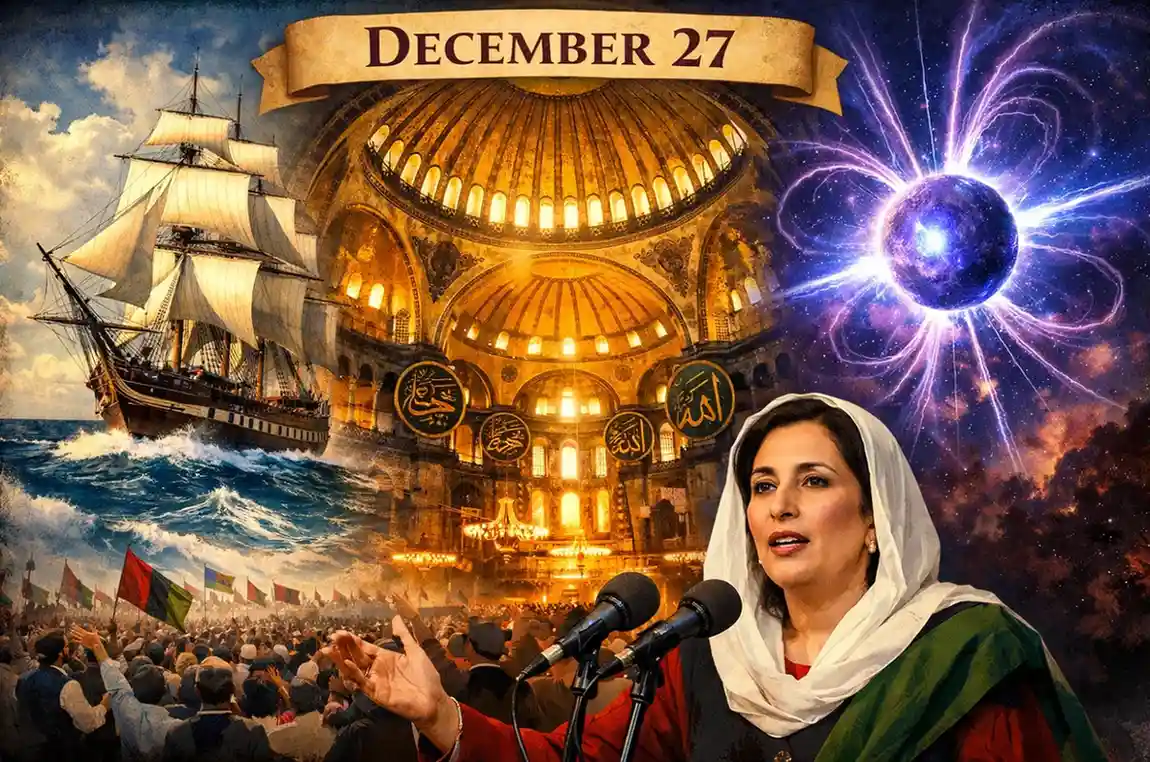
History often moves in waves, and December 27 is a date that captures the rising tide of human thought and the sudden impact of cosmic energy. By looking at what happened on this day in history December 27, we find a day where a great cathedral rose in the East, a young scientist set sail on a voyage that would explain our origins, and a distant star sent a pulse of light that rattled our very atmosphere.
Important Events That Happened On December 27 In History
537 – The Consecration of the Hagia Sophia
In Constantinople, the second Hagia Sophia was officially consecrated. Emperor Justinian I famously exclaimed that he had outdone King Solomon with this architectural masterpiece. Its massive, floating dome and intricate mosaics became the spiritual center of the Byzantine Empire and a benchmark for engineering for the next millennium.
1512 – The Issuance of the Laws of Burgos
The Spanish Crown issued the Laws of Burgos, the first codified set of regulations for Spanish settlers in the New World. While intended to protect indigenous people from abuse and regulate their conversion to Christianity, the laws often struggled with enforcement on the ground. However, they remain a significant early attempt to address human rights within a colonial framework.
1521 – The Arrival of the Zwickau Prophets
Three radical reformers known as the Zwickau prophets arrived in Wittenberg, claiming to receive direct revelations from the Holy Spirit. Their apocalyptic preaching and rejection of infant baptism caused significant unrest during the early years of the Reformation, eventually prompting Martin Luther to emerge from hiding to restore order to the city.
1655 – The Defense of Jasna Góra
During the “Deluge,” a pivotal period in the Second Northern War, monks at the Jasna Góra Monastery in Częstochowa successfully repelled a month-long Swedish siege. This victory was seen as a miracle by the Polish people, boosting national morale and turning the tide of the war in favor of the Polish-Lithuanian Commonwealth.
1657 – The Flushing Remonstrance
In a bold stand for civil liberties, citizens of Flushing (in modern-day Queens, New York) signed the Flushing Remonstrance. They protested a ban on Quaker worship imposed by Governor Peter Stuyvesant, arguing that freedom of religion was a fundamental right. This document is now celebrated as a foundational ancestor of the United States Bill of Rights.
1703 – The Methuen Treaty
Portugal and England signed the Methuen Treaty, a commercial agreement that allowed Portuguese wines to be exported to England at a lower tax rate than French wines. In exchange, English woolen cloths were admitted to Portugal duty-free. This treaty significantly shaped the trade relationship between the two nations for over a century.
1814 – The Sinking of the USS Carolina
During the War of 1812, the British destroyed the American schooner USS Carolina using heated “hot shot” during the Battle of New Orleans campaign. Despite its loss, the vessel had successfully delayed British advances for days, providing General Andrew Jackson with the vital time needed to fortify his defenses and ultimately win the decisive battle.
1831 – Darwin Sets Sail on the HMS Beagle
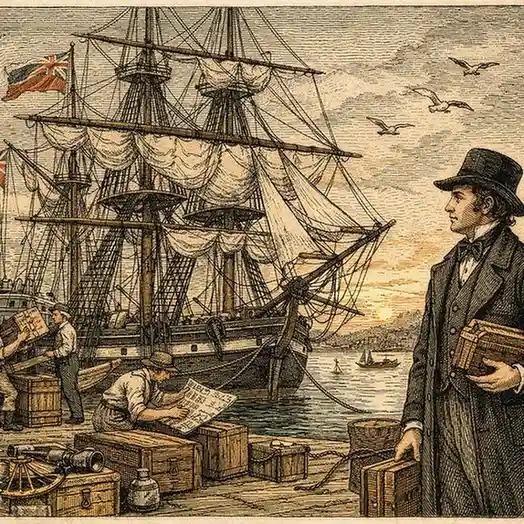
Charles Darwin embarked on his historic five-year journey aboard the HMS Beagle, departing from Plymouth, England. This voyage across the Southern Hemisphere allowed Darwin to collect the biological and geological specimens that would lead to his groundbreaking theory of evolution by natural selection. It remains one of the most influential scientific expeditions in history.
1845 – The First Use of Ether in Childbirth
Dr. Crawford Long of Jefferson, Georgia, became the first physician to use ether as an anesthetic during childbirth. This was a revolutionary moment in medical history, providing a path toward pain management during labor. Long’s work contributed to the broader “Anesthesia Revolution,” which transformed surgery from a brutal ordeal into a controlled medical procedure.
1836 – The Lewes Avalanche
England’s deadliest avalanche occurred in the town of Lewes, Sussex, when a massive buildup of snow on a cliff collapsed onto a row of cottages. The disaster killed eight people and remains a rare and tragic example of extreme winter weather in the British Isles.
1845 – Ether and Manifest Destiny
This date saw two major shifts in the United States. In Georgia, Dr. Crawford Long used ether anesthetic for childbirth for the first time, revolutionizing pain management. Meanwhile, journalist John L. O’Sullivan used his newspaper to argue that the U.S. had a “manifest destiny” to claim the entire Oregon Country, fueling westward expansion.
1911 – “Jana Gana Mana” Is First Sung
The national anthem of India, “Jana Gana Mana,” written by the poet Rabindranath Tagore, was sung for the first time during the Calcutta Session of the Indian National Congress. The song’s message of unity and diverse cultural identity eventually made it the official anthem of the independent Republic of India in 1950.
1918 – Uprisings in Poland and Ukraine
In a day of revolutionary fervor, the Great Poland Uprising against German rule began, while in Ukraine, the Revolutionary Insurgent Army occupied Yekaterinoslav. These movements were part of the chaotic restructuring of Eastern Europe following the end of the First World War and the collapse of empires.
1922 – The Commissioning of the Hōshō
The Japanese aircraft carrier Hōshō was commissioned, becoming the first ship in the world designed and built specifically as an aircraft carrier from the keel up. This milestone fundamentally changed naval warfare, shifting the focus of sea power away from heavy battleships toward the mobile airbases that would dominate the Pacific theater in World War II.
1927 – The Premiere of Show Boat
The musical play Show Boat, with music by Jerome Kern and lyrics by Oscar Hammerstein II, opened on Broadway. It is widely considered the first “true” American musical because it integrated a serious plot with music and dance, tackling complex themes of racial prejudice and tragic love.
1929 – Stalin Orders the Liquidation of Kulaks
Soviet leader Joseph Stalin issued a brutal decree calling for the “liquidation of the kulaks as a class.” This policy of dekulakization involved the mass arrest, deportation, and execution of relatively affluent peasants. It was a key part of his forced collectivization plan, which led to widespread famine and the deaths of millions of people across the Soviet Union.
1932 – Opening of Radio City Music Hall
New York City’s Radio City Music Hall opened its doors to the public. Known as the “Showplace of the Nation,” it became an icon of Art Deco design and a premier venue for entertainment, famously home to the high-kicking precision dance troupe, the Rockettes.
1935 – First Female Rabbi Ordained
Regina Jonas was ordained as a rabbi in Berlin, making her the first female rabbi in the history of Judaism. Despite the immense challenges of the era, she served her community with dedication before her tragic death at Auschwitz in 1944. Her legacy remains a pillar for women in religious leadership.
1939 – The Great Erzincan Earthquake
A massive magnitude 7.8 earthquake struck eastern Turkey, occurring along the North Anatolian Fault. The disaster claimed at least 32,700 lives and destroyed tens of thousands of buildings. It remains the most powerful earthquake in Turkish history, leading to significant changes in seismic research and the development of modern building codes in the region.
1945 – The Creation of the IMF
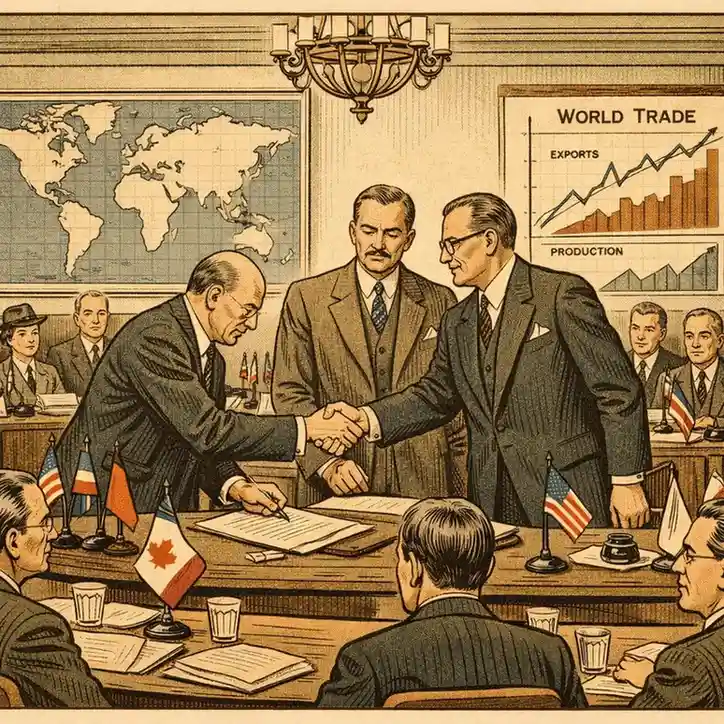
Representatives from 29 nations signed the Bretton Woods Agreement, officially creating the International Monetary Fund (IMF). The organization was designed to stabilize international exchange rates and provide financial assistance to countries in economic distress. Its formation was a cornerstone of the post-WWII global economic order.
1949 – The Independence of Indonesia
The Netherlands officially recognized Indonesian independence, bringing an end to over 300 years of Dutch colonial rule. This followed a four-year diplomatic and military struggle known as the Indonesian National Revolution. The transfer of sovereignty marked the birth of a new sovereign nation and the effective end of the Dutch East Indies.
1966 – Discovery of the Cave of Swallows
Explorers in Mexico discovered the Cave of Swallows, the largest known cave shaft in the world. With a depth of over 1,000 feet, the pit is so deep that it could easily contain a skyscraper, and it has since become a world-renowned site for BASE jumping and bird watching.
1968 – Apollo 8 Splashdown and Airline Tragedy
The Apollo 8 mission ended with a successful splashdown in the Pacific Ocean after humans orbited the Moon for the first time. However, the day was also marked by tragedy on Earth when North Central Airlines Flight 458 crashed at O’Hare International Airport, claiming 28 lives.
1978 – Spain Becomes a Democracy
Following 40 years of fascist rule under Francisco Franco, Spain officially transitioned to a democracy with the ratification of its new constitution. This peaceful “Transition” was a rare example of a country dismantling an authoritarian regime from within, leading to Spain’s integration into the modern European political community.
1983 – Pope John Paul II Forgives His Attacker
In a powerful display of mercy, Pope John Paul II visited Mehmet Ali Ağca in prison. Two years earlier, Ağca had shot and nearly killed the Pope in St. Peter’s Square. The image of the two men talking in the prison cell became a global symbol of the power of forgiveness and reconciliation.
1985 – The Rome and Vienna Airport Attacks
Palestinian guerrillas launched coordinated attacks at the Leonardo da Vinci–Fiumicino Airport in Rome and the Schwechat Airport in Vienna. The gunmen opened fire on passengers at check-in counters, killing 18 people and wounding scores more in a tragic act of international terrorism.
1989 – The Romanian Revolution Concludes
The violent clashes of the Romanian Revolution finally came to an end in Bucharest. Following the execution of Nicolae Ceaușescu two days prior, the last pockets of pro-regime resistance faded away, leaving the nation to begin the difficult transition from communism to democracy.
1991 – The “Miracle in Gottröra”
Scandinavian Airlines System Flight 751 crashed shortly after takeoff from Stockholm. Despite the aircraft breaking into three pieces upon impact in a field in Gottröra, all 129 people on board survived. The lack of fatalities earned the crash a place in aviation history as a remarkable survival story.
1996 – Taliban Retake Bagram Airfield
Taliban forces successfully retook the strategic Bagram Airfield in Afghanistan. This victory solidified their control over the regions surrounding Kabul and marked a critical phase in the Afghan Civil War, which had long-lasting implications for regional and global security.
1999 – The Poké Ball Recall
In a notable consumer safety event, Burger King and the U.S. Consumer Product Safety Commission issued a massive recall of plastic Poké Ball containers. The toys, distributed with kids’ meals, were determined to be a choking hazard after being linked to the tragic deaths of two children.
2002 – Grozny Government Headquarters Bombing
Two truck bombs were detonated at the pro-Moscow headquarters of the Chechen government in Grozny. The massive explosions killed 72 people and wounded hundreds more, representing one of the deadliest insurgent attacks during the Second Chechen War.
2004 – The Magnetar Flare Hits Earth
Radiation from a massive explosion on a magnetar (a highly magnetic neutron star) named SGR 1806-20 reached Earth. Although the star was 50,000 light-years away, the blast was so powerful it briefly saturated satellite detectors and physically affected Earth’s upper atmosphere. It remains the brightest extrasolar event ever witnessed from our planet.
2007 – The Assassination of Benazir Bhutto
Benazir Bhutto, the first female prime minister of a Muslim-majority nation, was assassinated during a campaign rally in Rawalpindi, Pakistan. Her death triggered a wave of mourning and civil unrest across the country. Bhutto was a central figure in Pakistani politics, known for her advocacy of democracy and secularism in a deeply divided region.
2007 – The Kenyan Election Crisis
Following the official declaration of Mwai Kibaki as the winner of the presidential election, violent riots erupted in the coastal city of Mombasa and quickly spread across Kenya. The disputed election results triggered a profound political and humanitarian crisis, leading to weeks of ethnic conflict and displacement. The unrest eventually forced a historic power-sharing agreement, but the events of that December remain a somber turning point in Kenya’s modern democratic history.
2008 – Launch of Operation Cast Lead
Israel initiated a major military campaign in the Gaza Strip known as Operation Cast Lead. The offensive began with a series of intense airstrikes followed by a ground invasion, aimed at stopping rocket fire from the territory. The three-week conflict resulted in a significant humanitarian crisis and drew intense global attention to the complexities of the regional struggle, leading to renewed international calls for a long-term ceasefire.
2024 – Discovery of Asteroid 2024 YR4
Astronomers discovered Asteroid 2024 YR4, which briefly caused concern among scientists due to a projected remote possibility of an Earth impact in 2032. However, follow-up calculations eventually confirmed that the asteroid would pass safely by our planet, serving as a reminder of the importance of global asteroid tracking.
Take A Look At: December 26 Stories
Famous People Born On December 27
| Name | Role / short description | Dates |
|---|---|---|
| Mīrzā Asadullāh Khān G̱ẖālib | Indian poet (Urdu & Persian) | December 27, 1797 – February 15, 1869 |
| George Whitefield | British clergyman & evangelist | December 27, 1714 – September 30, 1770 |
| William H. Masters | American physician (human sexuality researcher) | December 27, 1915 – February 16, 2001 |
| Sir George Cayley | British inventor & aeronautical engineer | December 27, 1773 – December 8, 1854 |
| Manuela Sáenz | Latin American revolutionary | December 27, 1797 – November 23, 1856 |
| Bob Brown | Australian politician (leader, Greens) | December 27, 1944 – |
| Larisa Latynina | Soviet gymnast (Olympic champion) | December 27, 1934 – |
| Mary Jo White | American attorney (former SEC chair) | December 27, 1947 – |
| Juan Felipe Herrera | American poet & author (US Poet Laureate) | December 27, 1948 – |
| Charles Hodge | American theologian & scholar | December 27, 1797 – June 19, 1878 |
| Sir Mackenzie Bowell | Prime minister of Canada | December 27, 1823 – December 10, 1917 |
| Mina Loy | British modernist poet | December 27, 1882 – September 25, 1966 |
| Charles Olson | American poet & literary theorist | December 27, 1910 – January 10, 1970 |
| Hinton Rowan Helper | American author (anti-slavery polemicist) | December 27, 1829 – March 9, 1909 |
| Louis Bromfield | American novelist & conservationist | December 27, 1896 – March 18, 1956 |
| Andreas Feininger | Photographer & author | December 27, 1906 – February 18, 1999 |
| Peyton Conway March | U.S. Army officer, Chief of Staff | December 27, 1864 – April 13, 1955 |
| Johann Arndt | German Lutheran theologian | December 27, 1555 – May 11, 1621 |
| Stanley William Hayter | British printmaker & founder of Atelier 17 | December 27, 1901 – May 4, 1988 |
| John I (King of Aragon) | King of Aragon | December 27, 1350 – May 16, 1395 |
| Carl Zuckmayer | German playwright | December 27, 1896 – January 18, 1977 |
| Alexander Gordon Laing | Scottish explorer (Timbuktu) | December 27, 1793 – September 26, 1826 |
| Jean Étienne de Boré | American agriculturalist (sugar industry, Louisiana) | December 27, 1741 – February 2, 1820 |
| Ramón Cabrera | Spanish Carlist general & political leader | December 27, 1806 – May 24, 1877 |
| David Hendricks Bergey | Bacteriologist (Bergey’s Manual) | December 27, 1860 – September 5, 1937 |
| Serafín Estébanez Calderón | Spanish writer (costumbrista) | December 27, 1799 – February 5, 1867 |
| Percy Gilchrist | British metallurgist (Gilchrist–Thomas process) | December 27, 1851 – December 16, 1935 |
| Zhang Junxiang | Chinese playwright & director | December 27, 1910 – November 14, 1996 |
| Brock Purdy | American football player (NFL) | December 27, 1999 – |
Famous People Died On December 27
| Name | Role / short description | Dates |
|---|---|---|
| Meadowlark Lemon | American basketball player (Harlem Globetrotters) | April 25, 1932 – December 27, 2015 |
| Stephen Austin | American pioneer (Texas colonization) | November 3, 1793 – December 27, 1836 |
| Don Imus | American radio talk-show host | July 23, 1940 – December 27, 2019 |
| Hafizullah Amin | President of Afghanistan | August 1, 1929 – December 27, 1979 |
| Helen Frankenthaler | American painter (Abstract Expressionist) | December 12, 1928 – December 27, 2011 |
| Hal Ashby | American film director | September 2, 1929 – December 27, 1988 |
| Osip Emilyevich Mandelshtam | Russian poet | January 15, 1891 – December 27, 1938? |
| Charles Lamb | British essayist & critic | February 10, 1775 – December 27, 1834 |
| Sergey Yesenin | Russian poet | October 3, 1895 – December 27, 1925 |
| Max Beckmann | German painter & printmaker | February 12, 1884 – December 27, 1950 |
| Houari Boumédiène | President of Algeria | August 23, 1927 – December 27, 1978 |
| Amy Marcy Beach | American composer & pianist | September 5, 1867 – December 27, 1944 |
| Hans von Seeckt | German general (Reichswehr reformer) | April 22, 1866 – December 27, 1936 |
| Jacques Delors | French statesman (former EC/European Commission president) | July 20, 1925 – December 27, 2023 |
| Sir Michael A. E. Dummett | British philosopher | June 27, 1925 – December 27, 2011 |
| William George Armstrong, Baron Armstrong | British engineer & industrialist | November 26, 1810 – December 27, 1900 |
| Pierre de Ronsard | French Renaissance poet | September 11, 1524 – December 27, 1585 |
| Francis II (King of the Two Sicilies) | Last Bourbon king of the Two Sicilies | January 16, 1836 – December 27, 1894 |
| Iskandar Muda | Sultan of Aceh | 1590 – December 27, 1636 |
| Vladimir Aleksandrovich Fock | Russian mathematical physicist | December 22, 1898 – December 27, 1974 |
| Julian Tuwim | Polish poet | September 13, 1894 – December 27, 1953 |
| Kay Boyle | American author & political activist | February 19, 1902 – December 27, 1992 |
| Keri Hulme | New Zealand author (Booker Prize winner) | March 9, 1947 – December 27, 2021 |
| Carrie Fisher | American actress & writer | October 22, 1956 – December 27, 2016 |
| Haskell Wexler | American cinematographer & director | February 6, 1922 – December 27, 2015 |
| Ellsworth Kelly | American painter & sculptor | May 31, 1923 – December 27, 2015 |
| Norman Schwarzkopf | U.S. Army general (Desert Storm) | August 22, 1934 – December 27, 2012 |
| Benazir Bhutto | Prime minister of Pakistan | June 21, 1953 – December 27, 2007 |
| George Roy Hill | American film director | December 20, 1921 – December 27, 2002 |
| Mbongeni Ngema | South African playwright & composer | 1955 – December 27, 2023 |
Observances & Institutional Dates
- Saint Stephen’s Day (Eastern Orthodox): A significant religious holiday in Romania and other Eastern Orthodox nations, honoring the first Christian martyr.
- Constitution Day (North Korea): A national holiday marking the adoption of the socialist constitution in 1972.
- The Third Day of Christmas: Part of the traditional Western “Twelve Days of Christmas” celebration.
- Emergency Rescuer’s Day (Russia): A day dedicated to the men and women working in emergency and disaster response services.
Frequently Asked Questions
Why was Charles Darwin’s 1831 voyage so important?
The voyage of the HMS Beagle, which began on December 27, 1831, allowed Darwin to observe the unique wildlife of the Galapagos and other regions, providing the evidence he needed for the theory of evolution.
What happened to the Soviet Union on December 27, 1929?
Joseph Stalin initiated the “liquidation of the kulaks,” a violent campaign of forced collectivization that led to the death and displacement of millions of rural peasants.
What was the SGR 1806-20 event in 2004?
It was a “giant flare” from a distant magnetar. The energy released in one-tenth of a second was more than the sun produces in 150,000 years, making it a landmark event in astrophysics.