A brief sweep of turning points shaped by leadership, risk and unexpected change. What happened on this day in history December 4 sits within this flow, linking political decisions, bold maneuvers and public moments that left lasting marks on institutions and everyday life.
Important Events That Happened On December 4 In History
771 — Death of Carloman I; Charlemagne becomes sole king
Carloman’s death handed sole rule of the Frankish domains to his brother Charlemagne, consolidating political authority. This consolidation removed a major rival and allowed Charlemagne to pursue broader campaigns and administrative reforms. The shift set the stage for the Carolingian expansion that reshaped western Europe.
963 — Leo VIII elected pope
A lay papal protonotary was elevated amid factional conflict in Rome, illustrating sharp tensions between secular and ecclesiastical power. Leo VIII’s election underlined how political forces influenced the papacy in this era. His pontificate reflects the messy overlap of military, noble and clerical interests.
1110 — Capture of Sidon by Baldwin I and Sigurd the Crusader
Sidon’s fall strengthened Crusader coastal control and secured an important trading and military point for the Kingdom of Jerusalem. The operation involved a mix of Latin and northern European seafaring forces, showing the international character of Crusader campaigns. It also tightened the coastal network that sustained the Latin states.
1154 — Election of Pope Adrian IV (the only English pope)
Nicholas Breakspear’s elevation as Adrian IV placed an English cleric at the papal helm, a rare geographical turn for the papacy. His tenure intersected with larger disputes over authority and reform across Christendom. Adrian’s papacy is notable for its political entanglements and diplomatic initiatives.
1259 — Treaty of Paris between Louis IX and Henry III
The treaty settled rival claims by having Henry III renounce certain continental rights, easing one strain of Anglo-French conflict. It marked a negotiated recalibration of medieval territorial politics and helped stabilize relations for a time. The accord demonstrated diplomacy’s role alongside warfare in shaping medieval frontiers.
1533 — Ivan the Terrible proclaimed Grand Prince of Moscow
Ivan IV was proclaimed grand prince as a child, with regents ruling in his stead; these early years shaped his later autocratic rule. The precariousness of his minority and the court factionalism of the period influenced the development of Muscovite power. The episode marks the start of a life that would dramatically transform Russian governance.
1563 — Final session of the Council of Trent
The Council’s closing codified Catholic doctrine and disciplinary reforms in response to Protestantism, reshaping church life and practice. Its decrees standardized liturgy, clerical education and sacramental theology across Catholic Europe. The Council of Trent became a cornerstone of the Counter-Reformation.
1619 — Berkeley Hundred colonists arrive (chartered thanksgiving)
Colonists at Berkeley Hundred observed a chartered day of thanksgiving, an early example of ritualized public observance in colonial America. The instruction to keep the day annually reflects evolving practices of communal commemoration among settlers. It contributes to the long history of ceremonial thanksgiving in North America.
1623 — Great Martyrdom of Edo (executions of Christians)
Fifty Christians were executed in Edo, part of broader Tokugawa-era persecution that severely restricted Christian practice. The massacre marked the severity of the regime’s anti-Christian policy and helped trigger centuries of isolation from Western missionary influence. It profoundly affected religious life in early modern Japan.
1676 — Battle of Lund
The Battle of Lund, extremely bloody for its size, left deep scars in Scandinavian memory and altered regional military balances. The heavy casualties and ferocious fighting made it one of the most notorious battles in northern European history. Its brutality fed the period’s cycle of retribution and political realignment.
1745 — Jacobite advance reaches Derby (furthest point)
Charles Edward Stuart’s army reached Derby, its high-water mark in England, before strategic concerns forced a retreat. The failure to secure wider English support and the subsequent withdrawal doomed the rising’s aims. The episode remains emblematic of the limits of insurgent momentum without broad logistic or political backing.
1783 — Washington’s farewell at Fraunces Tavern
George Washington’s farewell to his officers at Fraunces Tavern symbolized the transition from military leadership to civilian government after the Revolution. His voluntary relinquishing of military command bolstered republican norms and set an influential precedent. The moment is often invoked as a foundational gesture of American civic restraint.
1786 — Mission Santa Barbara dedication
The mission’s dedication reflected Spain’s colonial mission system in California, blending conversion, agriculture and imperial control. Santa Barbara later became a lasting cultural and architectural landmark, central to regional memory. Missions like it reshaped indigenous life and colonial settlement patterns.
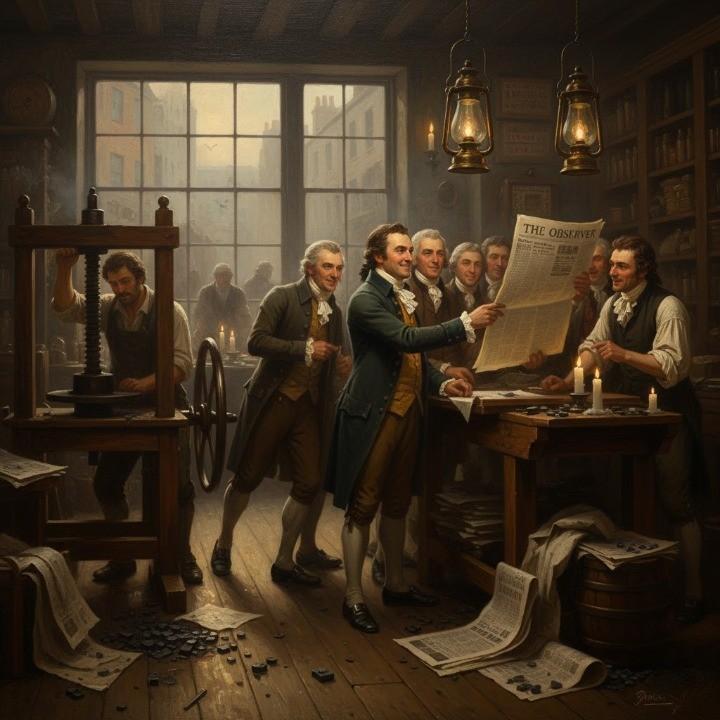
1791 — First edition of The Observer published
The Observer pioneered Sunday journalism and expanded public discourse by providing weekly news and commentary. Its establishment signals growing literacy and the press’s rising role in shaping opinion. The paper helped formalize Sunday as a day for public reading and reflection.
1804 — House adopts articles of impeachment against Justice Samuel Chase
The attempt to impeach Justice Chase raised early constitutional questions about judicial independence and political accountability. Although Chase was acquitted by the Senate, the proceedings tested the constitutional checks on high officials. The episode influenced later debates about the scope of impeachment.
1808 — Madrid surrenders to Napoleon after siege
Madrid’s fall represented a dramatic moment in the Peninsular War, illustrating Napoleon’s temporary penetration into Spanish institutions. The occupation provoked widespread resistance and guerrilla warfare that undercut French control. The event intensified the conflict that would erode Napoleonic influence on the peninsula.
1829 — Bentinck’s regulation against abetment of sati in Bengal
Lord William Bentinck outlawed aiding or abetting sati, treating such abetment as culpable homicide and intervening in a contested social practice. The measure reflected colonial legal reformers’ efforts to alter customs they judged harmful, and it provoked debates over cultural authority and reform. It stands as a landmark in social legislation in British India.
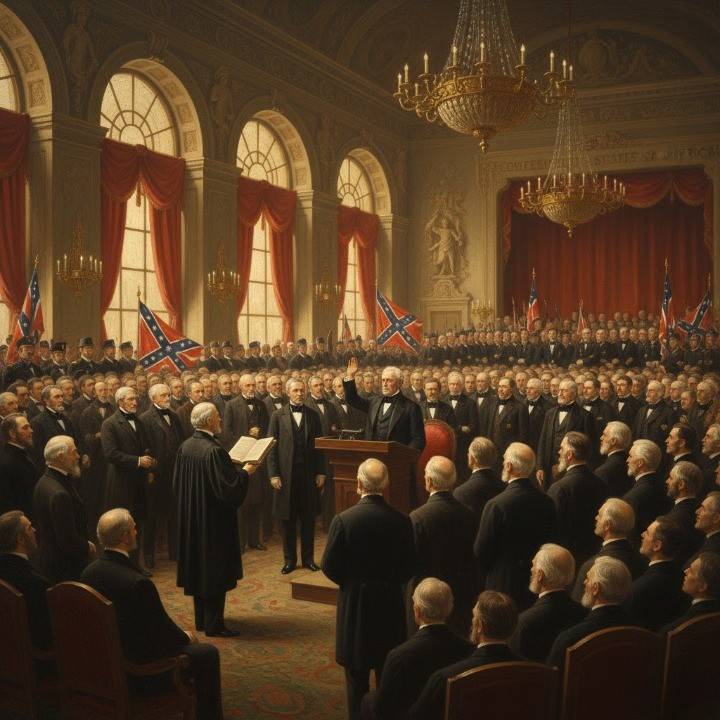
1861 — Jefferson Davis elected President of the Confederate States
The Confederate States formalized their executive leadership by electing Jefferson Davis, consolidating their parallel national structure. Davis’s selection centralized civil-military authority as the Confederacy entered full-scale war. His presidency would be defined by the persistent strains of resources, diplomacy and military setbacks.
1863 — Longstreet lifts siege of Knoxville (Civil War)
Longstreet’s withdrawal ended a Confederate attempt to dislodge Union defenders at Knoxville, preserving a strategic Union position in eastern Tennessee. The episode was one of several regional campaigns that shaped control over railways and supply routes. Knoxville’s defense helped maintain a Union foothold in the region.
1864 — Battle of Waynesboro opens path for Sherman’s approach to the coast
Union cavalry success at Waynesboro removed one obstacle to Sherman’s movements and contributed to the campaign’s broader strategic objective. It was a tactical action that fed into Sherman’s wider strategy of crippling Confederate infrastructure. These maneuvers accelerated the Confederacy’s military unraveling.
1865 — North Carolina ratifies the 13th Amendment
Ratification by North Carolina brought the 13th Amendment nearer to nationwide enforcement, legally abolishing slavery where it had persisted. The amendment’s adoption represented a constitutional transformation of American civic life and recast citizenship and labor relations across the former Confederacy. It set the legal basis for Reconstruction-era change.
1867 — Oliver Hudson Kelley founds the Grange
Kelley established the Patrons of Husbandry to aid rural farmers through cooperation and political advocacy. The Grange became an influential agrarian organization addressing economic hardship and rural modernization. It shaped late-19th-century agricultural policy and local civic economies.
1872 — Mary Celeste discovered abandoned at sea
The derelict Mary Celeste was found afloat without her crew, sparking enduring speculation. The vessel’s intact cargo and abandoned condition made the case one of maritime mystery rather than clear catastrophe. The incident remains a famous unsolved seafaring puzzle.
1875 — Boss Tweed escapes prison (later recaptured)
William M. Tweed’s escape underscored the reach and corruption of political machines in 19th-century urban America. His later recapture and prosecution illustrated shifting public pressure for reform and accountability. The episode figures centrally in narratives about graft and municipal power.
1881 — First edition of the Los Angeles Times published
The paper’s founding contributed to the growth of a major regional press organ that would shape public life and civic identity in Southern California. Over time the Times would play a consequential role in regional politics, business and culture. Its emergence tracks urban and population changes in the American West.
1893 — Shangani River ambush (First Matabele War)
A small British South Africa Company patrol was overwhelmed by a large Matabele force, a dramatic and deadly clash in colonial southern Africa. The ambush highlighted the ferocity of resistance to colonial expansion and the limits of under-resourced columns in hostile terrain. The incident fed the conflict’s violent legacy.
1906 — Alpha Phi Alpha founded (first intercollegiate African-American fraternity)
At Cornell, Alpha Phi Alpha established an enduring African-American collegiate fraternity, creating networks for leadership, scholarship and social uplift. It became an important institution for Black college students, promoting civic engagement and professional development. The fraternity’s founding marks a milestone in Black collegiate life.
1909 — First Grey Cup (Canadian football)
The inaugural Grey Cup match inaugurated what would become a longstanding Canadian sporting tradition and national championship. The game helped popularize organized football across Canada and contributed to shared cultural rituals around sport. The Grey Cup grew into an important national event.
1909 — Montreal Canadiens founded
The Canadiens’ founding launched a franchise that would become one of the world’s most storied hockey clubs. It played a central role in shaping professional ice hockey and francophone cultural identity in Quebec. The team’s endurance and success made it a sporting institution.
1917 — Finnish Senate submits form of government (move toward independence)
In the wake of collapsing imperial structures, Finland’s senate advanced proposals for national governance, a decisive step toward full independence. The move responded to shifting power after World War I and the Russian revolutions. It set the stage for Finland’s later sovereign trajectory.
1918 — President Wilson sails to Paris for peace talks
Wilson’s transatlantic travel marked the first time a sitting U.S. president crossed to Europe on official business, signaling America’s emerging global role. His presence at the peace negotiations embodied the U.S. stake in postwar settlement and international order-building. The trip transformed expectations about presidential diplomacy.
1919 — Polonsky conspiracy in Ukraine (assassination attempt)
The Polonsky plot raised tensions during a chaotic postwar moment amid competing national and revolutionary forces. The conspiracy reflected the violent instability that punctuated the Ukrainian War of Independence. It is one episode among many that shaped short-lived national experiments in the region.
1928 — Cosmo Gordon Lang enthroned as Archbishop of Canterbury
Lang’s enthronement brought a prominent church leader into the headship of the Church of England during an era of social and political change. His tenure would engage public debates over society and faith. The ceremony affirmed ecclesiastical continuity amid interwar transformation.
1939 — HMS Nelson struck by a mine
A mine strike damaged HMS Nelson, sidelining a major capital ship and reminding wartime Britain of naval vulnerabilities even near home waters. The incident required significant repairs and reflected the hazards of maritime warfare. It tempered naval operations during the early war period.
1942 — Carlson’s patrol ends in Guadalcanal campaign
Carlson’s long-range mission concluded as part of the island campaign that would determine control of the Solomons. The patrol exemplified the small-unit, high-risk operations crucial to Pacific theater tactics. Such missions tested endurance and coordination under severe conditions.
1943 — Tito proclaims provisional democratic Yugoslav government in exile
Tito’s proclamation consolidated partisan political organization and anticipated postwar governance arrangements in Yugoslavia. It signalled partisan claims to legitimate authority against both Axis occupiers and rival factions. The move helped shape the postwar map of Balkan politics.
1943 — Roosevelt closes the Works Progress Administration
With wartime employment reducing the need for large-scale relief, Roosevelt ordered the WPA closed as the wartime economy absorbed labor. The decision marked a transition from Depression-era relief to wartime mobilization. It changed the federal role in social programs as priorities shifted.
1945 — U.S. Senate votes to join the United Nations (65–7)
Senate approval committed the United States to the new international organization and a multilateral postwar order. The vote reflected bipartisan recognition of the UN’s role in preventing future global conflict. It was a foundational act in twentieth-century international diplomacy.
1948 — SS Kiangya explosion carrying Nationalist refugees
The Kiangya disaster, while carrying refugees in chaotic postwar China, underscored the human cost of civil conflict and mass displacement. The explosion compounded suffering amid the Nationalists’ retreat. It became one tragic episode in the larger upheaval of the Chinese civil war.
1949 — Sir Duncan Stewart assassinated in Sarawak
The fatal stabbing of Sarawak’s governor highlighted the violent tensions in colonial Southeast Asia and the stakes of political agitation. The event reverberated through the administration and local politics. It is an example of how anti-colonial and clandestine violence could strike officials.
1950 — Jesse L. Brown killed in Korean War (first African-American naval aviator)
Brown’s death marked a poignant wartime loss and underscored his role as a trailblazer in U.S. military integration. His service and sacrifice became a symbol of the changing racial dynamics within the armed forces. The episode is remembered both for valor and for shifting social barriers.
1950 — Max Desfor’s photo of refugees (Pulitzer-winning image)
Desfor’s photograph captured the human toll of the Korean conflict and became an iconic image of displacement and survival. The picture conveyed war’s civilian consequences to a global audience and shaped public perception. It remains a powerful record of the refugee experience.
1956 — Million Dollar Quartet session at Sun Studio
The impromptu gathering of Elvis Presley, Jerry Lee Lewis, Carl Perkins and Johnny Cash became a legendary meeting of early rock and roll figures. The session captured a key cultural moment in American popular music and has been mythologized in rock history. It marks the convergence of influential artists at a single moment.
1964 — Free Speech Movement arrests at UC Berkeley
Mass arrests during the student movement crystallized dispute over campus protest rights and academic freedom. The crackdown and subsequent activism catalyzed nationwide student movements and debates on civil liberties. The episode helped shape the era’s protest culture and university governance.
1965 — Launch of Gemini 7; rendezvous first with Gemini 6A planned
Gemini 7’s long-duration mission and its role in the first crewed rendezvous experiments were crucial steps toward Apollo-era rendezvous and docking capabilities. The mission tested life-support and orbital endurance necessary for lunar missions. Its success fed the technical path to Moon landings.
1969 — Fred Hampton and Mark Clark killed in raid on Black Panther offices
The deaths of Hampton and Clark in a police raid provoked controversy over law enforcement tactics and political repression of Black activism. Hampton’s role as an organizer and his death galvanized civil-rights and community defense debates. The incident remains a contentious chapter in 20th-century U.S. politics.
1971 — PNS Ghazi sinks during the Indo-Pakistani Naval War
The sinking of PNS Ghazi during the 1971 conflict was a significant naval loss and a dramatic episode in maritime operations between India and Pakistan. The event influenced naval narratives and wartime accounts on both sides. It highlights the maritime dimension of the 1971 war.
1971 — Montreux Casino fire (inspiration for “Smoke on the Water”)
A concert fire that destroyed the Montreux Casino became the subject of a famous rock song and a reminder of concert safety hazards. The catastrophe prompted reflection on venue preparedness and inspired cultural response through music. It became an emblem of an event’s imprint on popular culture.
1974 — Martinair Flight 138 crash in Sri Lanka
The crash into Saptha Kanya killed 191 passengers, a devastating aviation disaster with wide loss. The event prompted investigations into flight safety and operational protocols. It remains among Sri Lanka’s worst aviation tragedies.
1977 — Bokassa crowns himself Emperor Bokassa I
Jean-Bédel Bokassa’s self-coronation transformed his rule into an ostentatious monarchy and exemplified personalist power in postcolonial Africa. The spectacle drew international criticism and underscored governance excesses. It became a notorious instance of authoritarian performativity.
1977 — Malaysian Airline System Flight 653 hijacked and crashes
The hijacking and crash killed all aboard, a grim reminder of the era’s airline security vulnerabilities. The disaster fed evolving international efforts to prevent and respond to aviation terrorism. It registered as one of the deadliest regional airline attacks.
1978 — Dianne Feinstein becomes San Francisco’s first female mayor
Following Mayor Moscone’s murder, Feinstein’s elevation marked a historic municipal transition and introduced a long-serving civic leader. Her ascent reflected immediate crisis governance and later sustained local and national political roles. The event marked a change in city leadership under tragic circumstances.
1979 — Hastie fire in Hull leads to later criminal investigation
A deadly house fire prompted a complex investigation and later legal actions, emblematic of social and policing issues that followed such tragedies. The case raised questions about oversight, community safety and justice following mass-casualty incidents. It shaped subsequent local criminal proceedings.
1981 — Ciskei nominal independence under apartheid South Africa
Ciskei’s granted independence formed part of apartheid’s policy of creating separate homelands, a move rejected internationally and unrecognized by most states. The status entrenched segregationist policies and curtailed rights for Black South Africans. It remains a stark example of apartheid-era institutional racism.
1982 — People’s Republic of China adopts current constitution
The adoption formalized a legal framework for governance in China during a period of reform and consolidation after the Mao years. The constitution framed state institutions amid economic opening and political centralization. It established legal foundations that persist in contemporary Chinese governance.
1983 — U.S. attacks Syrian missile sites in Lebanon; aircraft losses reported
U.S. strikes and aircraft losses during the Lebanon conflict reflected the complexities and dangers of Middle East military involvement. The actions and their costs underscored the risks of regional intervention and air combat limitations. They contributed to the fraught calculus of Lebanese operations.
1984 — Mannar killings in Sri Lanka (civilian deaths)
The reported mass killings in Mannar were part of wider cycles of violence during Sri Lanka’s long internal conflict, with deep human consequences. Such incidents exacerbated communal tensions and fed protracted cycles of retaliation. They remain part of the war’s tragic record.
1986 — MV Amazon Venture oil spill at Savannah
An oil leak from the tanker produced a major local environmental disaster, prompting cleanup operations and regulatory scrutiny. The spill highlighted vulnerabilities in port oil handling and ecological costs of maritime commerce. It spurred attention to maritime environmental protections.
1991 — Terry A. Anderson released after seven years as a Beirut hostage
Anderson’s release ended a long, traumatic chapter for a journalist and underscored the dangers faced by foreign correspondents in conflict zones. His captivity became emblematic of the risks of reporting from volatile theaters. The release prompted public relief and reflection on hostage diplomacy.
1991 — Pan Am ceases operations
The end of Pan Am signalled the passing of a once-iconic global airline and a shift in commercial aviation economics and branding. Its dissolution reflected industry consolidation, financial pressures and changing travel markets. The loss marked the end of an era in international air travel.
1992 — U.S. deploys troops to Somalia (Jan-Feb humanitarian/military intervention)
The deployment responded to humanitarian crisis and state collapse, combining aid and security tasks in a complex environment. The intervention highlighted the challenges of stabilizing fractured states and protecting relief operations. It spawned long debates about mission scope and risk.
1998 — Unity Module (ISS) launched
Unity’s launch represented a significant step in assembling an international space station, enabling cooperative orbital infrastructure. The module linked U.S. and international segments, marking practical progress for long-term human presence in low Earth orbit. It exemplified post-Cold War space collaboration.
2005 — Pro-democracy protests in Hong Kong (large-scale mobilization)
Mass demonstrations reflected widespread public demands for political reform and electoral rights, becoming a major moment in Hong Kong civic life. The protests highlighted tensions over governance, autonomy and democratic aspirations under the “one country, two systems” framework. The mobilization had enduring political impact.
2006 — Jena, Louisiana incident (racial assault)
The assault and its aftermath exposed deep racial tensions in a small Southern town and attracted national attention to patterns of violence, justice and community response. The case sparked broader debates about race, policing and social inequality in the U.S. It became a flashpoint for civil-rights advocacy.
2014 — Grozny insurgent fighting and casualties
Violent clashes and insurgent actions in Grozny produced significant casualties and underscored the localized intensity of conflict in the region. The events formed part of a broader pattern of unrest and state response. They contributed to the long arc of instability in certain areas of the Caucasus.
2015 — Cairo restaurant firebomb kills 17
The attack on a civilian site in Cairo was a tragic act of violence that underscored ongoing security challenges in the region. The incident prompted condemnation and highlighted the vulnerability of public spaces to extremist attack. It contributed to concerns about public safety in urban centers.
2017 — Thomas Fire begins (California)
The Thomas Fire grew into one of modern California’s largest wildfires, consuming vast acreage and damaging communities. It emphasized climate-linked risk, urban-wildland interface vulnerabilities, and the human toll of extreme fire events. The disaster informed discussions on preparedness and resilience.
2021 — Semeru eruption in Indonesia
Mount Semeru’s eruption caused deadly ash flows and fatalities, illustrating the hazards of volcanic activity in densely settled regions. The catastrophe prompted emergency response and highlighted the vulnerability of communities living near active volcanoes. It added to Indonesia’s history of powerful eruptive events.
Famous People Born On December 4
| Name | Role / Short Description | Dates |
|---|---|---|
| Rainer Maria Rilke | Austrian-German poet | Dec 4, 1875 – Dec 29, 1926 |
| Pappy Boyington | American WWII flying ace | Dec 4, 1912 – Jan 11, 1988 |
| Inder Kumar Gujral | Prime minister of India | Dec 4, 1919 – |
| Edith Cavell | English nurse, WWI heroine | Dec 4, 1865 – Oct 12, 1915 |
| Philip Hammond | British politician | Dec 4, 1955 – |
| Cassandra Wilson | American musician | Dec 4, 1955 – |
| Ramaswamy Venkataraman | President of India | Dec 4, 1910 – Jan 27, 2009 |
| Roberta Bondar | Canadian neurologist & astronaut | Dec 4, 1945 – |
| Alex North | American film composer | Dec 4, 1910 – Sep 8, 1991 |
| Samuel Butler | English author | Dec 4, 1835 – Jun 18, 1902 |
| Roh Tae-Woo | President of South Korea | Dec 4, 1932 – Oct 26, 2021 |
| Robert L. Vesco | American financier (fugitive) | Dec 4, 1935 – Nov 23, 2007 |
| Lillian Russell | American actress & singer | Dec 4, 1861 – Jun 6, 1922 |
| Sir Herbert Read | British art critic & poet | Dec 4, 1893 – Jun 12, 1968 |
| Gérard Philipe | French actor | Dec 4, 1922 – Nov 25, 1959 |
| Madame de Récamier | French salonnière / patroness | Dec 4, 1777 – May 11, 1849 |
| T.V. Soong | Chinese financier & official | Dec 4, 1894 – Apr 24, 1971 |
| Mark Robson | Film director | Dec 4, 1913 – Jun 20, 1978 |
| John Cotton | New England Puritan leader | Dec 4, 1585 – Dec 23, 1652 |
| Henri Grégoire | French prelate & reformer | Dec 4, 1750 – May 20, 1831 |
| Aaron Siskind | American photographer | Dec 4, 1903 – Feb 8, 1991 |
| Frank Dow Merrill | U.S. Army officer (Merrill’s Marauders) | Dec 4, 1903 – Dec 11, 1955 |
| A.L. Rowse | British historian & writer | Dec 4, 1903 – Oct 3, 1997 |
| Robert Ettinger | Cryonics pioneer | Dec 4, 1918 – Jul 23, 2011 |
| Jeff Bridges | American actor | Dec 4, 1949 – |
| Gary Gilmore | Notorious American criminal | Dec 4, 1940 – Jan 17, 1977 |
| Horst Buchholz | German actor | Dec 4, 1933 – Mar 3, 2003 |
| Albert Bandura | Psychologist (social cognitive theory) | Dec 4, 1925 – Jul 26, 2021 |
| Charles H. Keating | Businessman (S&L crisis figure) | Dec 4, 1923 – Mar 31, 2014 |
| Elfriede Lohse-Wächtler | German artist | Dec 4, 1899 – Jul 31, 1940 |
Famous People Died On December 4
| Name | Role / Short Description | Dates |
|---|---|---|
| Benjamin Britten | British composer | Nov 22, 1913 – Dec 4, 1976 |
| Bert Lahr | American actor (Cowardly Lion) | Aug 13, 1895 – Dec 4, 1967 |
| Karen Horney | German-American psychoanalyst | Sep 16, 1885 – Dec 4, 1952 |
| Luigi Galvani | Italian physician & physicist | Sep 9, 1737 – Dec 4, 1798 |
| John Gay | English poet & dramatist | Jun 30, 1685 – Dec 4, 1732 |
| William I (the Lion) | King of Scotland | 1143 – Dec 4, 1214 |
| Robert Banks Jenkinson, 2nd Earl of Liverpool | British prime minister | Jun 7, 1770 – Dec 4, 1828 |
| John XXII | Pope (Avignon papacy) | – Dec 4, 1334 |
| Charles H. Dow | Journalist, Dow Jones cofounder | Nov 6, 1851 – Dec 4, 1902 |
| Stephen Toulmin | British philosopher | Mar 25, 1922 – Dec 4, 2009 |
| Stefan George | German poet | Jul 12, 1868 – Dec 4, 1933 |
| William Sturgeon | British electrical engineer | May 22, 1783 – Dec 4, 1850 |
| Rouben Mamoulian | Film & theatre director | Oct 8, 1897 – Dec 4, 1987 |
| Glenn L. Martin | Aircraft pioneer | Jan 17, 1886 – Dec 4, 1955 |
| Richard Boyle, 3rd Earl of Burlington | Architect & patron | Apr 25, 1694 – Dec 4, 1753 |
| Charles Richet | French physiologist (Nobel) | Aug 26, 1850 – Dec 4, 1935 |
| Sir Horace Lamb | English mathematician | Nov 27, 1849 – Dec 4, 1934 |
| Cipriano Castro | Venezuelan leader/dictator | Oct 12, 1858 – Dec 4, 1924 |
| Rose Elizabeth Bird | Chief justice (California) | Nov 2, 1936 – Dec 4, 1999 |
| Wu Peifu | Chinese warlord | Apr 22, 1874 – Dec 4, 1939 |
| Samuel A. Goudsmit | Physicist (electron spin co-discoverer) | Jul 11, 1902 – Dec 4, 1978 |
| Thomas Hobbes | English philosopher (Leviathan) | Apr 5, 1588 – Dec 4, 1679 |
| Cardinal Richelieu | French cardinal & statesman | Sep 9, 1585 – Dec 4, 1642 |
| Omar Khayyam | Persian poet, mathematician, astronomer | May 18, 1048 – Dec 4, 1131 |
| St. John of Damascus | Christian monk & theologian | c.675 – Dec 4, 749 |
| Fred Hampton | American activist (Black Panther) | Aug 30, 1948 – Dec 4, 1969 |
| John Tyndall | Irish physicist & science populariser | Aug 2, 1820 – Dec 4, 1893 |
| Thomas Bartholin | Danish anatomist (lymphatic system) | Oct 20, 1616 – Dec 4, 1680 |
| Stanisława Walasiewicz (Stella Walsh) | Athlete (Olympic champion) | Apr 3, 1911 – Dec 4, 1980 |
| Mary Frances Clarke | Irish-American religious leader & educator | Mar 2, 1803 – Dec 4, 1887 |
Observances & Institutional Dates — December 4
Thai Environment Day (Thailand) — Marked each year to encourage national awareness, community action and policy focus on environmental protection. Schools, agencies and civic groups hold clean-ups, tree-planting drives and public campaigns.
Navy Day (India) — A day honoring the Indian Navy’s service, traditions and major operations, with 1971’s Operation Trident at its core. Coastal cities host demonstrations, ship visits and tributes to naval personnel.
Tupou I Day (Tonga) — Commemorates King George Tupou I, whose 19th-century reforms shaped Tonga’s constitutional and cultural foundations. The day is observed with ceremonies, remembrance events and community gatherings.
Frequently Asked Questions
What are the standout events on December 4?
Dec 4 spans medieval successions, crucial battles, landmark legal reforms and modern tragedies—from Charlemagne’s consolidation to twentieth-century protests and space missions.
Why is December 4 important in U.S. history?
Key moments include Washington’s farewell to officers (1783), early civil-war and Reconstruction acts, and episodes that tested U.S. institutions like the Samuel Chase impeachment move (1804).
Which major cultural firsts occurred on this day?
The first edition of The Observer (1791) and the Million Dollar Quartet session (1956) are notable cultural milestones tied to Dec 4.
Were there important scientific or space events on December 4?
Yes — dates on Dec 4 include space-era events such as Gemini and other program developments; the day recurrently hosts technological milestones.