On December 9, history turns with battles, breakthroughs, and moments that reshaped nations. As we look at what happened on this day in history December 9, the date brings together stories of independence, conflict, scientific insight, and resilience that continue to echo through the world today.
Important Events That Happened On December 9 In History
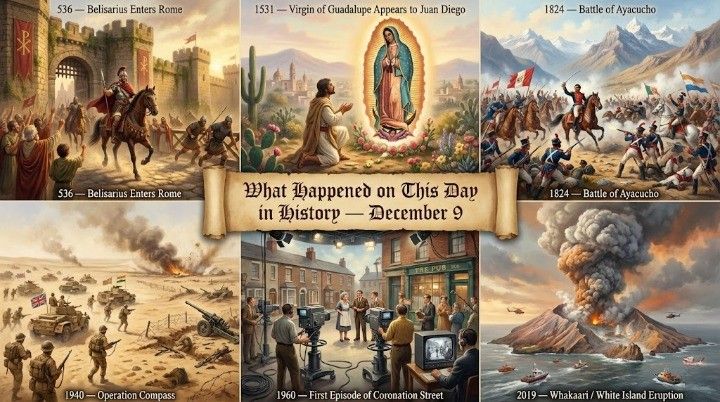
536 — Belisarius enters Rome
Byzantine general Belisarius walks into Rome without a fight as Gothic defenders abandon the city. His entry marks a dramatic phase in the Gothic War and a brief restoration of imperial authority. The scene underlines how military fortunes could reverse swiftly in the late antique Mediterranean.
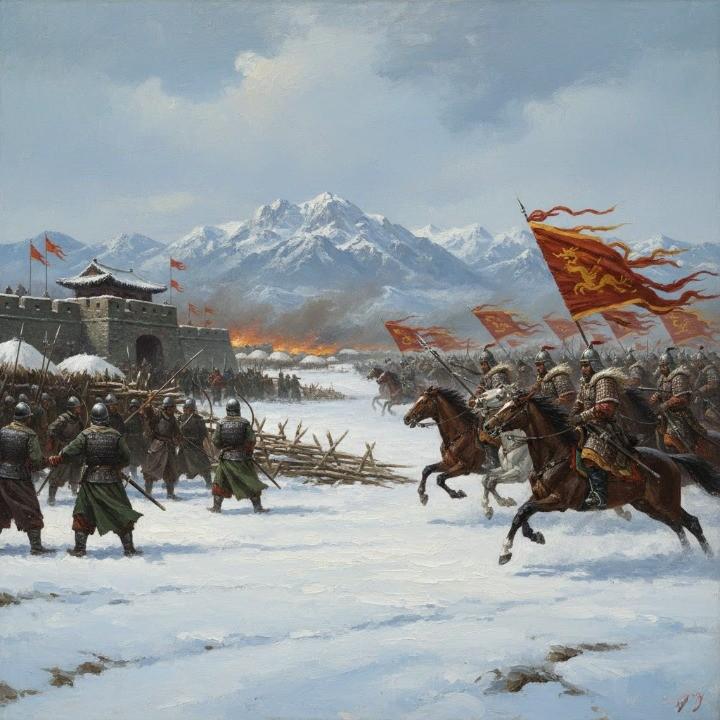
730 — Battle of Marj Ardabil
Khazar forces crush an Umayyad army and kill its commander al-Jarrah ibn Abdallah al-Hakami. The defeat weakens Umayyad influence in the Caucasus and highlights the shifting balance between steppe powers and Islamic caliphates. It was a stark reminder of frontier volatility in the early medieval period.
1432 — First battle of Oszmiana
Forces of Švitrigaila and Sigismund Kęstutaitis clash near Oszmiana, opening the most active phase of the Lithuanian Civil War. The fight deepens divisions among Lithuania’s nobles and shapes the region’s political alignments for years. Local power struggles here had wide ramifications for Polish–Lithuanian affairs.
1531 — Virgin of Guadalupe apparition
Juan Diego reports an appearance of the Virgin at Tepeyac, an event that will become central to Mexican religious life. The vision gathers popular devotion and later influences the identity of Catholicism in New Spain. Over time Guadalupe becomes a unifying symbol across Mexican society.
1636 — Qing invasion of Joseon
Under Emperor Hong Taiji, Qing forces mount an assault on Joseon Korea, underscoring the era’s East Asian power struggles. The campaign reflects the Qing’s expanding ambitions as they consolidate authority on the Chinese frontier. The episode strains Joseon’s defenses and reshapes regional diplomacy.
1688 — Battle of Reading (Glorious Revolution)
Williamite troops defeat Jacobite forces at Reading, prompting James II’s flight from England. The clash is one moment in the wider Glorious Revolution that reconfigured monarchy and parliamentary authority. Its outcome helped settle succession and constitutional questions for generations.
1775 — Battle of Great Bridge
British troops and Loyalists are routed at Great Bridge in Virginia after misjudging Patriot strength. The victory ends effective British rule in that colony and boosts revolutionary morale. It stands as a key early success in the American War of Independence.
1822 — Fresnel coins polarization terms
Augustin-Jean Fresnel presents experiments and names linear, circular and elliptical polarization in a memoir to the Academy of Sciences. His work clarifies light’s wave properties and lays vital groundwork for modern optics. Fresnel’s ideas transform both theory and later optical technologies.
1824 — Battle of Ayacucho
Antonio José de Sucre leads Patriot forces to victory over Royalists, effectively ending Spanish rule in Peru. The battle secures independence movements across South America and consolidates republican governance. Its consequences ripple through the continent’s political map.
1835 — Siege of Béxar / San Antonio captured
Texian forces take San Antonio after the Siege of Béxar, a turning point in the Texas Revolution. The victory removes Mexican garrisons and energizes the independence movement. It sets the stage for later clashes and the broader struggle for Texan statehood.
1851 — First YMCA in North America
Montreal sees the establishment of the continent’s first YMCA, introducing a model of social and moral reform. The organization quickly spreads and influences community life, recreation and charity in growing urban centers. Its founding reflects 19th-century civic initiatives.
1856 — Bushehr surrenders to the British
The Iranian port city of Bushehr yields to occupying British forces amid regional contestation. The event illustrates imperial pressure on Persian Gulf access and local sovereignty. Control of southern ports remains strategically important for global trade and politics.
1861 — Joint Committee on the Conduct of the War
The U.S. Congress forms the Joint Committee to oversee Civil War strategy and policy. It becomes a powerful political body, scrutinizing military leadership and shaping wartime priorities. The committee’s work reflects how legislatures assert influence during national emergency.
1868 — First traffic lights in London
Semaphore arms and red-and-green gas lamps are installed outside the Palace of Westminster, an early attempt to regulate growing urban traffic. Though primitive, these signals mark the start of modern traffic control as cities industrialize. They respond to new challenges of 19th-century transport.
1872 — P. B. S. Pinchback becomes governor of Louisiana
Following political turbulence and an impeachment, Pinchback serves as the first African American governor of a U.S. state. His brief tenure is a milestone in Reconstruction politics and African American civic participation. It also shows how fragile those gains could be.
1893 — National Assembly bombing (Auguste Vaillant)
Auguste Vaillant’s attack during the era of anarchist violence shocks Paris and intensifies debates over security and radicalism. The bombing is one episode in broader social unrest at the turn of the century. Authorities respond with tightened policing and political measures.
1905 — Separation of church and state law in France
France passes a landmark law formally separating church and state, reshaping the secular character of the republic. The legislation curtails clerical power in public affairs and anchors French laïcité in law. It becomes a defining principle of modern French polity.
1911 — Briceville mine explosion
A mine blast near Briceville, Tennessee kills 84 miners despite rescue efforts led by federal agencies. The disaster highlights the human cost of industrial extraction and spurs calls for better safety. Mining tragedies like this accelerate reform movements around labor and regulation.
1917 — Allenby captures Jerusalem
Field Marshal Allenby’s forces seize Jerusalem from Ottoman control, a significant Allied advance in the Sinai–Palestine campaign. The occupation alters wartime geopolitics and raises complex questions about postwar administration. It becomes a moment of deep symbolic as well as military importance.
1917 — Romania signs Armistice of Focșani
Romania formally agrees armistice terms with the Central Powers, suspending hostilities on the Eastern Front. The armistice reflects the shifting fortunes of smaller states during World War I and affects postwar settlement. It is part of the wider unraveling of empires that year.
1922 — Gabriel Narutowicz elected president of Poland
Poland elects Gabriel Narutowicz as its first president, a landmark in the newly independent state’s political life. His brief presidency occurs amid intense factionalism and public controversy. The election underscores fragilities as new nations form after World War I.
1931 — Second Spanish Republic constitution approved (Cortes)
The Constituent Cortes ratify a republican constitution, formalizing Spain’s Second Republic and sweeping reforms. The new order seeks to modernize institutions, provoke fierce opposition, and reshape Spanish society. Its passage marks a turning point before the later civil conflict.
1935 — Student protests in Tiananmen Square
Chinese students demonstrate in Tiananmen Square and are dispersed by authorities, an early episode in modern political activism in Beijing. The protests reflect nationalist and reformist pressures in 1930s China. They foreshadow persistent civic mobilization in the square’s history.
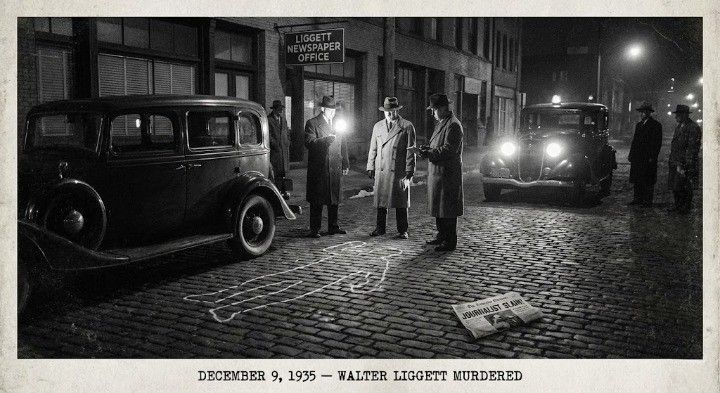
1935 — Walter Liggett murdered
American muckraking journalist Walter Liggett is killed in a gangland-style slaying, a grim outcome of his exposés and political fights. The murder underscores risks faced by investigative reporters challenging entrenched interests. It reverberates in debates about press freedom and corruption.
1937 — Battle of Nanking assault begins
Japanese forces under Lt. Gen. Yasuhiko Asaka launch a major assault on Nanking, initiating a campaign that will result in mass atrocities. The offensive presages the catastrophic human toll of the Sino–Japanese War. Its aftermath leaves deep scars on China and international opinion.
1940 — Operation Compass: Sidi Barrani attack
British and Indian troops strike Italian positions near Sidi Barrani, scoring an early success in North Africa. The offensive disrupts Italian plans and demonstrates Allied initiative in the desert war. It shapes the early course of the North African campaign.
1941 — Multiple states declare war in WWII
China, Cuba, Guatemala and the Philippine Commonwealth declare war on Germany and Japan, broadening global alignments. These declarations reflect how regional commitments converted into worldwide conflict. They mark the growing international consensus against Axis aggression.
1941 — American 19th Bombardment Group attacks off Vigan
The U.S. 19th Bombardment Group engages Japanese ships near Vigan, Luzon, an early American response in the Pacific theatre. Such strikes show how isolated actions quickly multiplied into broader naval and air campaigns. They foreshadow the long Pacific conflict to come.
1946 — Doctors’ Trial at Nuremberg begins
The Nuremberg proceedings open a major trial prosecuting physicians for medical experiments and crimes against humanity. The case forces a legal reckoning with wartime abuses and leads to modern ethics standards. It becomes a foundation for later human-rights jurisprudence.
1946 — Constituent Assembly of India meets
India’s Constituent Assembly convenes to draft a constitution, a foundational step in the subcontinent’s postwar transition. The assembly’s debates shape the democratic and legal architecture of independent India. Its work culminates in a lasting republican framework.
1948 — Genocide Convention adopted
The United Nations adopts the Genocide Convention, creating a legal basis to punish and prevent mass atrocities. The treaty establishes genocide as an international crime and frames later human-rights law. Its adoption responds to wartime horrors and a demand for legal accountability.
1950 — Harry Gold sentenced for espionage assistance
Harry Gold receives a 30-year sentence for aiding Klaus Fuchs in passing Manhattan Project secrets to the Soviet Union. His testimony later helps prosecute Julius and Ethel Rosenberg. The case reveals the Cold War’s high-stakes espionage and domestic anxieties.
1953 — GE announces dismissals of communist employees
General Electric declares it will discharge employees identified as communists, reflecting Red Scare pressures in corporate America. The move reveals how anti-communist sentiment reshaped employment and civil liberties during the era. It contributes to broader debates on political loyalty and labor rights.
1956 — Trans-Canada Air Lines Flight 810 crash
A Canadair North Star crashes near Hope, British Columbia, killing all 62 aboard in a national air tragedy. The disaster prompts reviews of airline safety and search-and-rescue responses. It remains a sombre chapter in Canadian aviation history.
1956 — Aeroflot Li-2 crash near Anadyr
An Aeroflot Lisunov Li-2 goes down near Anadyr, killing all 12 passengers and crew. The accident adds to mid-century concerns about aviation safety in harsh northern environments. Each such crash spurred incremental improvements in procedures and equipment.
1960 — Coronation Street debuts
The BBC airs the first episode of Coronation Street, launching what will become the world’s longest-running TV soap. The show quickly becomes a cultural touchstone for British working-class life and popular storytelling. Its debut changes the rhythm of daily viewing for generations.
1961 — Tanganyika gains independence
Tanganyika (later Tanzania) becomes independent from Britain, a key step in Africa’s mid-20th-century decolonization. Independence begins nation-building, regional diplomacy, and new domestic challenges. It signals shifting global orders after empire.
1965 — Kecksburg fireball / UFO incident
Witnesses report a fireball streaking over multiple states and an alleged crash near Kecksburg, Pennsylvania. The episode spawns enduring local mystery and UFO lore. It remains part of popular and skeptical debates about unexplained aerial phenomena.
1968 — Engelbart’s “Mother of All Demos”
Douglas Engelbart showcases the computer mouse, hypertext and a graphical interface in a landmark public demonstration. The presentation anticipates modern personal computing and networked collaboration. It’s widely cited as a formative moment in digital innovation.
1969 — Rogers proposes ceasefire in War of Attrition
U.S. Secretary of State William P. Rogers sets out a ceasefire plan accepted by Egypt and Jordan but opposed by the PLO. The initiative aims to reduce hostilities along Israel’s borders but also intensifies internal Arab disputes. It illustrates the diplomatic complexity of Middle Eastern peacemaking.
1971 — Indian airdrop operation (Indo-Pak War)
The Indian Air Force carries out a major airdrop of army units, bypassing Pakistani defenses and altering operational dynamics. The maneuver contributes to India’s campaign success in the 1971 conflict. It highlights the strategic role of air mobility in modern warfare.
1973 — Sunningdale Agreement signed
British and Irish authorities reach the Sunningdale Agreement to establish a power-sharing executive in Northern Ireland. The accord is an early attempt to manage competing constitutional claims and violence. Though short-lived, it influences later peace efforts.
1979 — Smallpox eradication certified
Global health authorities certify the eradication of smallpox, the first infectious disease eliminated by human action. The achievement follows coordinated vaccination campaigns and international cooperation. It stands as one of public health’s greatest triumphs.
1987 — First Intifada begins
Widespread Palestinian uprisings erupt across the Gaza Strip and West Bank, marking the start of the First Intifada. The unrest alters Israeli-Palestinian relations and draws intense international attention. Its social and political effects reverberate for years.
1990 — Lech Wałęsa wins Poland’s presidential election
Solidarity leader Lech Wałęsa secures a decisive victory in Poland’s first direct presidential election, symbolizing democratic transition. His win reflects the collapse of communist rule and the rise of post-communist governance in Central Europe. It’s a landmark in the region’s political transformation.
1992 — U.S. troops land in Somalia (Operation Restore Hope)
American forces deploy to Somalia in a multinational mission to secure relief operations amid civil war and famine. The intervention aims to protect aid delivery but later faces controversy and danger. It highlights the limits and complexities of humanitarian military operations.
1996 — Gwen Jacob topless rights case (Ontario)
A court acquits Gwen Jacob of indecent behavior, effectively allowing women to be topless in public in Ontario. The ruling becomes a legal touchstone for gender equality and public-decency law. It reshapes debates over body autonomy and social norms.
2003 — Moscow center blast
An explosion in central Moscow kills and wounds several people, a grim reminder of urban terrorism risks. The attack produces shock and renewed security measures in Russia’s cities. It feeds broader anxieties about instability and violent politicization.
2006 — STS-116 launches (Discovery)
Space Shuttle Discovery lifts off with the P5 truss segment bound for the International Space Station, continuing station assembly. The mission advances long-term collaboration in orbit and construction of a permanent outpost. It’s a step in multinational space engineering.
2008 — Rod Blagojevich arrested
The Illinois governor is taken into federal custody accused of corruption, including attempting to sell a Senate seat. The arrest triggers political upheaval and prosecution that dominate state politics. It becomes a high-profile example of political corruption cases.
2012 — Jenni Rivera plane crash
A small aircraft crash in Mexico kills singer Jenni Rivera and six others, shocking fans across the Spanish-speaking world. Rivera’s death prompts widespread mourning and reflections on celebrity, travel safety and cultural loss. The tragedy marks the sudden end of a prominent career.
2013 — Bintaro train accident (Indonesia)
A commuter train collision near Bintaro kills at least seven and injures many more, exposing systemic railway safety issues. The accident sparks investigations and calls for improvements in infrastructure and oversight. It’s a painful reminder of transport vulnerabilities in rapidly urbanizing regions.
2016 — Park Geun-hye impeachment (South Korea)
South Korea’s president is impeached by the National Assembly amid a sweeping corruption scandal, precipitating political crisis and mass protests. The move sets in motion judicial review and eventual removal from office. It reveals the potency of civic mobilization against corruption.
2016 — Madagali suicide bombings (Nigeria)
Twin suicide bomb attacks at a market in Madagali kill dozens and wound many more, reflecting the persistent threat of extremist violence. The assaults deepen humanitarian and security challenges in northeastern Nigeria. They underline the long human toll of asymmetric conflict.
2017 — Marriage Amendment Bill becomes law (Australia)
Australia enacts the Marriage Amendment, legalizing same-sex marriage after national debate and a postal survey. The change extends civil rights and alters family law across the country. It marks a major social policy shift in Australia’s legal landscape.
2019 — Whakaari / White Island eruption
An unexpected volcanic eruption on Whakaari kills 22 visitors and dozens are injured, highlighting hazards of tourism in active volcanic zones. The disaster prompts scrutiny of risk management and emergency response for natural-sites tourism. It becomes a national trauma in New Zealand.
2021 — Chiapas migrant truck overturns (Mexico)
A truck carrying around 160 migrants overturns in Chiapas, killing 55 and injuring over 100, one of the deadliest migrant transport disasters in recent years. The incident exposes desperate migration routes and exploitative transport conditions. It renews calls for humane migration policies and stronger safeguards.
Explore key events from December 9
Famous People Born On December 9
| Name | Role / Short Description | Dates |
|---|---|---|
| Sonia Gandhi | Indian politician | December 9, 1946 – |
| Joshua Bell | American violinist | December 9, 1967 – |
| Masako | Empress of Japan | December 9, 1963 – |
| Donald Byrd | American jazz trumpeter | December 9, 1932 – February 4, 2013 |
| Robert Hawke | Prime minister of Australia | December 9, 1929 – May 16, 2019 |
| Deacon Jones | American football player | December 9, 1938 – June 3, 2013 |
| Tom Daschle | United States senator | December 9, 1947 – |
| Johann Winckelmann | German art historian | December 9, 1717 – June 8, 1768 |
| Dame Elisabeth Schwarzkopf | German soprano | December 9, 1915 – August 3, 2006 |
| Carl Wilhelm Scheele | Swedish chemist | December 9, 1742 – May 21, 1786 |
| Joseph Needham | British biochemist & historian of science | December 9, 1900 – March 24, 1995 |
| Dolores Ibárruri | Spanish political leader | December 9, 1895 – November 12, 1989 |
| Steven Holl | American architect & artist | December 9, 1947 – |
| R. A. Butler, Baron Butler | British statesman | December 9, 1902 – March 8, 1982 |
| Joel Chandler Harris | American author | December 9, 1848 – July 3, 1908 |
| Dominguín | Spanish matador | December 9, 1926 – May 8, 1996 |
| Alexandros Papagos | Greek statesman & general | December 9, 1883 – October 4, 1955 |
| Clarence Birdseye | American inventor & businessman | December 9, 1886 – October 7, 1956 |
| Emil Waldteufel | French (Alsatian) composer | December 9, 1837 – February 12, 1915 |
| George Grossmith | British comedian & performer | December 9, 1847 – March 1, 1912 |
| Pedro, 1st Duke of Coimbra | Portuguese prince & regent | December 9, 1392 – May 20, 1449 |
| Hannes Kolehmainen | Finnish long-distance runner | December 9, 1889 – January 11, 1966 |
| Joaquín Turina | Spanish composer | December 9, 1882 – January 14, 1949 |
| William Whiston | Anglican priest & mathematician | December 9, 1667 – August 22, 1752 |
| Henry Way Kendall | American physicist (Nobel) | December 9, 1926 – February 15, 1999 |
| James Rainwater | American physicist (Nobel) | December 9, 1917 – May 31, 1986 |
| Esther Peterson | American consumer advocate | December 9, 1906 – December 20, 1997 |
| Claude-Louis Berthollet | French chemist | December 9, 1748 – November 6, 1822 |
| William N. Lipscomb, Jr. | American chemist (Nobel) | December 9, 1919 – April 14, 2011 |
| Roy DeCarava | American photographer | December 9, 1919 – October 27, 2009 |
Famous People Died On December 9
| Name | Role / Short Description | Dates |
|---|---|---|
| Nucky Johnson | American political boss | January 20, 1883 – December 9, 1968 |
| Anthony van Dyck | Flemish Baroque painter | March 22, 1599 – December 9, 1641 |
| Archie Moore | American boxer | December 13, 1913 – December 9, 1998 |
| Karl Barth | Swiss theologian | May 10, 1886 – December 9, 1968 |
| Karl Blossfeldt | German photographer | June 13, 1865 – December 9, 1932 |
| Branch Rickey | American baseball executive | December 20, 1881 – December 9, 1965 |
| Saʿdī | Persian poet | c.1213 – December 9, 1291 |
| Clarice Lispector | Brazilian novelist | December 10, 1920 – December 9, 1977 |
| Louella Parsons | American movie columnist | August 6, 1881? – December 9, 1972 |
| Nikki Giovanni | American poet | June 7, 1943 – December 9, 2024 |
| Natsume Sōseki | Japanese novelist | February 9, 1867 – December 9, 1916 |
| Ralph Bunche | American diplomat (Nobel) | August 7, 1904 – December 9, 1971 |
| Ezra Cornell | American businessman & university founder | January 11, 1807 – December 9, 1874 |
| Pius IV | Pope (Council of Trent concluser) | March 31, 1499 – December 9, 1565 |
| Malcolm IV | King of Scotland | 1141? – December 9, 1165 |
| Edith Sitwell | British poet | September 7, 1887 – December 9, 1964 |
| Edward Hyde, 1st Earl of Clarendon | English statesman & historian | February 18, 1609 – December 9, 1674 |
| Lina Wertmüller | Italian film director | August 14, 1928 – December 9, 2021 |
| Max Bill | Swiss artist & designer | December 22, 1908 – December 9, 1994 |
| Anne-Louis Girodet | French painter (Romanticism) | January 29, 1767 – December 9, 1824 |
| William Wellman | American film director | February 29, 1896 – December 9, 1975 |
| Clement IX | Pope | January 27, 1600? – December 9, 1669 |
| William H. Carney | American Civil War soldier (Medal of Honor) | February 29, 1840 – December 9, 1908 |
| Al Unser | American race-car driver | May 29, 1939 – December 9, 2021 |
| Leon Jaworski | American lawyer & Watergate prosecutor | September 19, 1905 – December 9, 1982 |
| Robert Baldwin | Canadian statesman | May 12, 1804 – December 9, 1858 |
| Rube Foster | American baseball pioneer (Negro Leagues) | September 17, 1879 – December 9, 1930 |
| Kim Woo Choong | South Korean businessman (Daewoo) | December 19, 1936 – December 9, 2019 |
| Toni Cade Bambara | American author & activist | March 25, 1939 – December 9, 1995 |
| Peter II | King of Portugal | April 26, 1648 – December 9, 1706 |
Observances & Institutional Dates – December 9
Fatherland’s Heroes Day (Russia) — A day honoring veterans and those who served the nation, observed with ceremonies and public commemorations. It reinforces national memory of sacrifice and service.
International Anti-Corruption Day (United Nations) — Marked by awareness campaigns and policy discussions, the day highlights global efforts to combat graft and strengthen transparency. It serves as a focal point for advocacy and institutional reform.
National Heroes Day (formerly V.C. Bird Day) — Commemorates national heroes and historical figures with civic events and remembrance, reinforcing national identity and public service.
Independence Day (Tanganyika / Tanzania) — Marks Tanganyika’s independence from British rule in 1961 and is observed with official ceremonies celebrating nationhood and the path to independence.
Frequently Asked Questions
Why is December 9 significant in world history?
December 9 marks major turning points across eras — from decisive battles like Ayacucho and Great Bridge to landmark political, scientific, and legal milestones. It’s a date tied to independence struggles, constitutional shifts, wartime decisions, and global justice efforts such as the adoption of the Genocide Convention.
What religious or cultural events are linked to December 9?
The date includes the first reported apparition of the Virgin of Guadalupe in 1531, a cornerstone event for Catholic devotion in the Americas. It also aligns with observances like International Anti-Corruption Day and national hero commemorations in several countries.
How does December 9 relate to technological and scientific progress?
Events like Douglas Engelbart’s 1968 demonstration — which introduced the mouse, hypertext, and early graphical interfaces — mark December 9 as a major moment in computing history. Fresnel’s 1822 polarization findings also shaped the foundations of modern optics.
Which modern events on December 9 had global impact?
Incidents such as the Whakaari / White Island volcanic eruption (2019), the First Intifada’s outbreak (1987), and South Korea’s presidential impeachment (2016) highlight how December 9 continues to influence global politics, society, and safety.