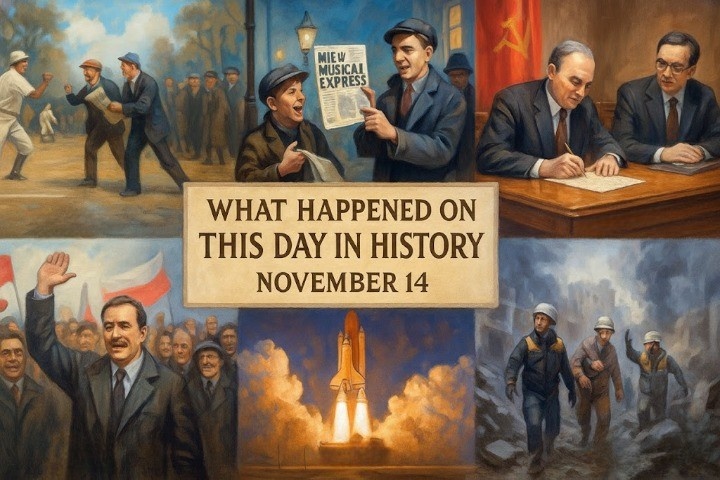
Through centuries of invention, conflict, and reform, the world has turned many times on this date — and what happened on this day in history November 14, captures moments of courage, creativity, and transformation that shaped nations, inspired progress, and deepened humanity’s pursuit of knowledge and justice.
Important Events That Happened On November 14 In History
332 BC — Alexander crowned pharaoh of Egypt
When Alexander the Great entered Egypt he was acclaimed and crowned pharaoh, a symbolic act that fused Macedonian conquest with Egyptian royal tradition. This investiture secured local cooperation and allowed Alexander to present himself as a legitimate ruler to Egyptian priests and people.
The crown in Egypt also provided Alexander a base for his wider policy in the eastern Mediterranean, including the founding of Alexandria, a city that would become a major center of Hellenistic learning and commerce.
1680 — Great Comet of 1680 discovered by Gottfried Kirch
German astronomer Gottfried Kirch sighted the bright comet that became known across Europe, the first comet discovered by telescope. Its dramatic appearance stimulated observational astronomy and helped refine early celestial mechanics.
The comet’s recorded path and brightness fed into debates about cometary orbits and celestial order, years before Newtonian gravity provided a comprehensive explanation.
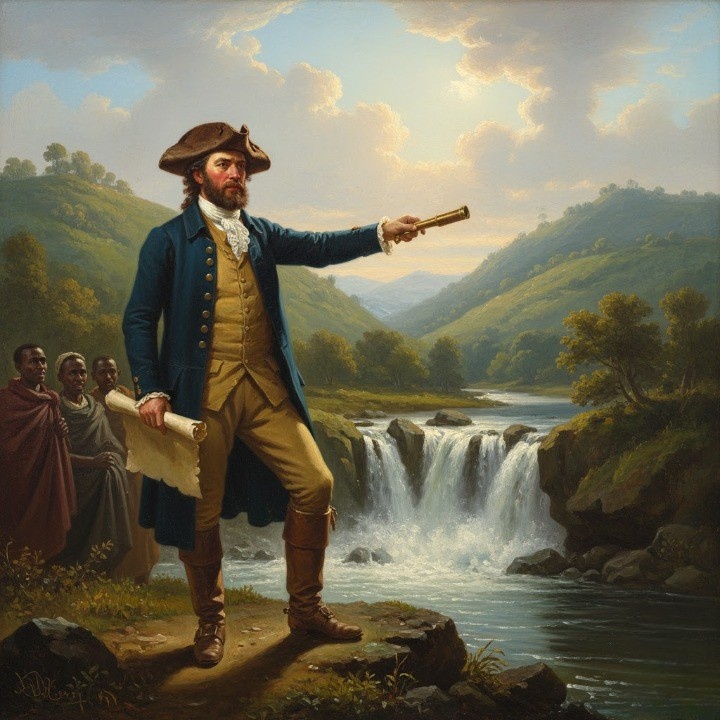
1770 — James Bruce claims Nile source
Explorer James Bruce reported reaching what he believed to be the Nile’s source after travels in Ethiopia; his account stirred both excitement and scepticism in Europe. Bruce’s narrative fed a long-running European fascination with Africa’s rivers and geography. Though later expeditions refined the details, Bruce’s journey helped open Victorian-era interest and scientific inquiry into African inland hydrology
1812 — Battle of Smoliani — French checked by Russians
During the Napoleonic campaigns in Russia, French marshals Victor and Oudinot clashed with Russian forces under General Peter Wittgenstein near Smoliani. The Russian resistance checked the French advance and contributed to the broader strategic difficulties Napoleon faced during the 1812 campaign.
Tactical setbacks such as Smoliani sapped French momentum and foreshadowed the larger disasters that would follow in the Russian campaign.
1851 — Herman Melville’s Moby-Dick is published (USA)
Herman Melville’s epic novel Moby-Dick first reached American readers in 1851. Initially met with mixed reviews and limited sales, the novel’s dense symbolism and seafaring realism later secured its place as an American classic and a central work in world literature.
Moby-Dick’s long-term influence extends across literary criticism, maritime history and cultural debates about obsession, nature and narrative form.
1889 — Nellie Bly begins her around-the-world run
Journalist Nellie Bly (Elizabeth Cochrane) set out to beat the fictional 80-day circumnavigation; she completed the trip in 72 days. Her journey combined stunt journalism with serious reporting and highlighted both the era’s transport advances and the possibilities for women in the press.
Bly’s feat boosted her career and helped popularize investigative and immersive reporting as a force in modern journalism.
1910 — Eugene Ely performs first shipboard takeoff
Aviation pioneer Eugene Burton Ely made the first recorded aircraft takeoff from a ship’s improvised deck at Hampton Roads, Virginia, flying a Curtiss pusher from the USS Birmingham. The short flight demonstrated the strategic promise of shipborne aviation.
Ely’s experiment foreshadowed the development of aircraft carriers and transformed naval doctrine in the decades that followed.
1918 — Czechoslovakia’s Provisional National Assembly meets
As the Austro-Hungarian Empire dissolved, delegates convened to draft a constitution for Czechoslovakia’s new republic. That first assembly set the political foundations for the modern Czech and Slovak states and institutionalized parliamentary governance after imperial collapse.
The gathering was a landmark in Central European reordering after World War I and a crucial step toward recognized national self-determination.
1921 — Communist Party of Spain Founded
On this day, left-wing activists established the Communist Party of Spain, marking a new phase in Spanish political life. The party issued the first edition of Mundo Obrero, its official publication, advocating workers’ rights and socialist principles during a period of growing unrest and class struggle in Europe.
1922 — British Broadcasting Company begins UK radio service
The British Broadcasting Company (later the BBC) started regular radio broadcasts, laying the groundwork for a national public broadcaster. Early programming mixed news, music and educational content, and the BBC would evolve into a major cultural institution shaping public life and media standards.
National radio changed how citizens received information and helped create a shared broadcast culture across the UK.
1938 — Lions Gate Bridge opens (Vancouver)
The suspension span linking Vancouver to its North Shore opened to traffic, easing transport and stimulating regional development. The bridge became an engineering landmark and a symbol of Vancouver’s expanding urban footprint in the 20th century.
As a permanent transport link, the Lions Gate Bridge influenced land use, commuting patterns and tourism in the region.
1940 — Coventry heavily bombed in WWII (Coventry Blitz)
German Luftwaffe raids devastated Coventry, destroying much of the city and leaving Coventry Cathedral in ruins. The attack shocked the British public and strengthened resolve for the war effort, while prompting debates about bombing strategy and civilian defence.
The ruins later became a powerful symbol of wartime suffering and postwar reconciliation efforts.
1941 — HMS Ark Royal damaged; sinks next day
The Royal Navy aircraft carrier HMS Ark Royal suffered fatal torpedo damage after an attack by U-81 and sank the following day. The loss was a blow to British naval power during a critical period in the Atlantic and Mediterranean theatres.
The sinking underlined the growing menace of submarine warfare and the strategic vulnerability of capital ships to torpedo attacks.
1941 — Słonim Ghetto massacre
German units with local auxiliaries murdered thousands of Jewish residents in the Słonim Ghetto in a single day, a horrific episode in the Holocaust. The massacre exemplified the speed and scale of Nazi mass killing in Eastern Europe.
Remembering such atrocities is essential to honoring victims and understanding the mechanisms and collaboration that enabled genocide.
1952 — New Musical Express Publishes the First UK Singles Chart
The British magazine New Musical Express introduced the world’s first regular singles chart, transforming how popular music was tracked and celebrated. This innovation soon became a cultural institution, defining success in the music industry and paving the way for future charts worldwide.
1957 — Apalachin meeting raided, exposing Mafia networks
A police raid on a secretive gathering of organized-crime figures in Apalachin, New York, led to numerous arrests and public confirmation of a national Mafia network. The operation shifted law-enforcement attention and legislative responses to organized crime in the United States.
The fallout increased federal investigations and changed how prosecutors and police approached transregional criminal organizations.
1960 — Ruby Bridges integrates an elementary school
Six-year-old Ruby Bridges walked into an all-white school in New Orleans amid protests; her lonely, brave attendance became an iconic moment in the U.S. civil-rights movement. Federal marshals escorted her, and her story illustrated both the courage of young pioneers and the intense resistance to desegregation.
Ruby’s experience informed national debates about schooling, justice and the federal role in civil rights enforcement.
1965 — Battle of Ia Drang begins — first large US-NVA engagement
The Battle of Ia Drang marked the first sustained large-scale clash between U.S. forces and North Vietnamese regulars. The ferocity and tactical lessons of Ia Drang reverberated through subsequent Vietnam War strategy and doctrine, shaping air mobility and close-combat tactics.
The battle also had heavy casualties on both sides and influenced public perceptions of the conflict back home.
1969 — Apollo 12 launches — second crewed lunar landing mission
NASA’s Apollo 12 lifted off as the follow-up to Apollo 11, testing precision landing techniques and expanding scientific exploration of the Moon. The mission reinforced human capability for complex space operations and increased returns of lunar samples and data.
Apollo 12 demonstrated both technical refinement and the ongoing political-scientific significance of lunar exploration.
1970 — Soviet Union Joins the International Civil Aviation Organization
The Soviet Union formally entered the ICAO, making Russian the organization’s fourth official language. The move reflected both Cold War diplomacy and a practical step toward safer, more standardized international aviation—a sign of cooperation amid global rivalry.
1971 — Mariner 9 enters orbit around Mars
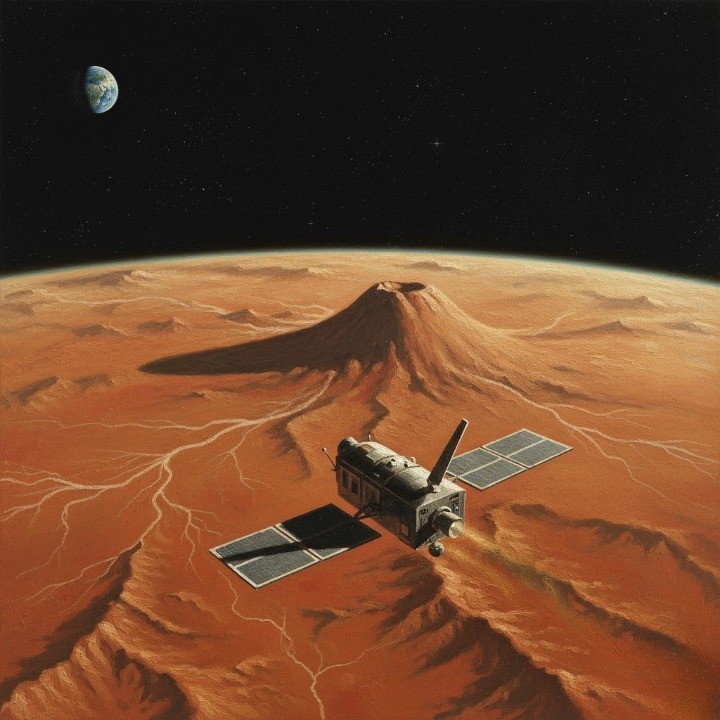
Mariner 9 became the first spacecraft to orbit another planet, arriving at Mars and mapping nearly the entire surface. Its images revealed volcanoes, canyons and evidence of ancient water flow, radically improving scientific understanding of Martian geology. Mariner 9 set the stage for subsequent robotic exploration and long-term planetary science on Mars. write a prompt for this
1973 — Athens Polytechnic uprising begins (Greece)
Students and citizens rose up in a massive protest against Greece’s military junta, occupying the Athens Polytechnic. The uprising became a moral focal point of resistance, culminating in a brutal crackdown that nevertheless helped erode the junta’s legitimacy and hasten its eventual collapse.
The Polytechnic remains a potent symbol of civic resistance and the struggle for democratic rights in modern Greece.
1975 — Madrid Accords: Spain abandons Western Sahara
Spain signed the Madrid Accords, relinquishing administrative control over Western Sahara and leaving the territory’s future contested. The decision precipitated a prolonged conflict and unresolved claims involving Morocco, the Polisario Front and regional actors.
The accords marked an important moment in late-colonial transition with long-lasting regional consequences.
1978 — France Conducts the Aphrodite Nuclear Test
France carried out the “Aphrodite” underground nuclear test, one of a series conducted between 1975 and 1978. The event underscored France’s commitment to maintaining an independent nuclear deterrent and its place among global nuclear powers, despite growing international opposition to such testing.
1979 — U.S. Freezes Iranian Assets During Hostage Crisis
Amid the Tehran hostage crisis, President Jimmy Carter signed Executive Order 12170, freezing all Iranian government assets held in the United States. The move escalated tensions between the two countries and marked a turning point in U.S.–Iran relations, with repercussions lasting decades.
1982 — Lech Wałęsa Released from Internment in Poland
Lech Wałęsa, leader of the banned Solidarity movement, was freed after eleven months of internment near the Soviet border. His release symbolized the growing pressure on communist authorities in Eastern Europe and foreshadowed the democratic revolutions that would follow later in the decade.
1984 — Philippine Mayor Cesar Climaco Assassinated
Zamboanga City’s outspoken mayor, Cesar Climaco, was shot dead in broad daylight. A vocal critic of President Ferdinand Marcos’s regime, Climaco had become a symbol of courage and dissent during the martial law era. His death shocked the nation and intensified opposition to authoritarian rule.
1990 — Germany and Poland Confirm Postwar Border
After German reunification, the Federal Republic of Germany and Poland signed a treaty affirming the Oder–Neisse line as their permanent border. This agreement sealed one of postwar Europe’s most sensitive territorial issues and strengthened stability in the new European order.
1990 — Alitalia Flight 404 Crashes Near Zurich
While approaching Zurich Airport, Alitalia Flight 404 struck Stadlerberg Mountain, killing all 46 on board. Investigations later pointed to a combination of instrument failure and human error, leading to improved safety protocols for cockpit navigation and communication.
1991 — Libyan Agents Indicted in Pan Am Flight 103 Bombing
American and British authorities jointly charged two Libyan intelligence officers for the 1988 Lockerbie bombing that destroyed Pan Am Flight 103. The indictments marked a major step toward international justice and intensified diplomatic pressure on Libya over state-sponsored terrorism.
1991 — Prince Norodom Sihanouk Returns to Cambodia
After thirteen years in exile, Cambodian leader Norodom Sihanouk returned to Phnom Penh. His arrival symbolized national reconciliation and the fragile peace emerging after decades of civil war, paving the way for political reconstruction under UN supervision.
1992 — Vietnam Airlines Flight 474 Disaster
Cyclone Forrest’s fierce winds and poor visibility caused Vietnam Airlines Flight 474 to crash near Nha Trang, killing thirty people. The tragedy highlighted the dangers of tropical weather to aviation and prompted renewed focus on regional air safety standards.
1995 — U.S. Government Shutdown Over Budget Deadlock
A bitter funding standoff between President Bill Clinton and congressional Republicans forced a partial shutdown of the federal government. National parks, museums, and agencies closed temporarily, foreshadowing future partisan battles over fiscal policy.
2001 — Northern Alliance Captures Kabul
During the U.S.-led war in Afghanistan, Northern Alliance forces seized control of Kabul, ending Taliban rule in the capital. The rapid advance marked a major early success in the campaign to dismantle al-Qaeda’s network and reshape Afghanistan’s political landscape.
2001 — Supershear Earthquake Strikes Tibetan Plateau
A powerful magnitude 7.8 earthquake hit a remote part of Tibet, producing a record-breaking 400 km surface rupture. Scientists identified it as a rare “supershear” event, advancing seismic understanding and reinforcing the region’s geological volatility.
2002 — Nancy Pelosi Becomes First Woman to Lead a U.S. Party in Congress
California congresswoman Nancy Pelosi was elected leader of the Democratic Party in the U.S. House of Representatives. Her appointment made her the first woman to lead a major party in either chamber, marking a milestone in American political history.
2003 — Astronomers Discover Sedna, a Distant Dwarf Planet
Astronomers announced the discovery of Sedna, a reddish, icy body orbiting far beyond Pluto. The find expanded knowledge of the solar system’s outer reaches and reignited debates over the classification of planets and dwarf planets.
2008 — First G20 Economic Summit Opens in Washington
World leaders gathered for the inaugural G20 summit to address the global financial crisis. The meeting marked a shift toward more inclusive international economic governance and laid the groundwork for coordinated recovery policies among developed and emerging economies.
2008 — Space Shuttle Endeavour Launches on STS-126
NASA’s Endeavour lifted off on mission STS-126 to deliver supplies and equipment for expanding the International Space Station. The mission advanced human habitation in space and highlighted international cooperation in orbital research.
2012 — Israel Launches Major Gaza Operation
Responding to escalating rocket fire, Israel began air strikes on Gaza, initiating Operation Pillar of Defense. The campaign targeted militant infrastructure but drew international concern over civilian casualties and regional instability.
2016 — New Zealand’s Kaikōura Earthquake
A 7.8-magnitude earthquake struck near Kaikōura, New Zealand, killing two people and causing widespread damage. The seismic event triggered landslides, coastal uplift, and infrastructure collapse, spurring new resilience and reconstruction efforts.
2017 — Rancho Tehama Shooting Spree
A gunman carried out a deadly rampage in Rancho Tehama, California, killing five people—including his wife—and wounding several others. The tragedy reignited national debate over gun control and rural policing challenges in the United States.
2019 — Saugus High School Shooting in California
A teenage gunman opened fire at Saugus High School in Santa Clarita, killing two students and wounding three others before taking his own life. The event shocked the community and added urgency to ongoing discussions on school safety and firearm reform.
2024 — Heavy Fighting in the Israel–Lebanon Theatre
Reports from November 14, 2024, detailed intense clashes in the Beqaa Valley and a deadly airstrike on the Regional Civil Defence Centre’s headquarters in Baalbek. The strike killed multiple rescue workers, underscoring the escalating regional tensions and humanitarian toll.
Read Here: What Happened On This Day In History November 13: Remarkable Facts
Famous People Born On November 14
Robert Fulton — American inventor and engineer (Nov 14, 1765 – Feb 24, 1815).
Louise Brooks — American actress (Nov 14, 1906 – Aug 8, 1985).
Karen Armstrong — English author and religious historian (Nov 14, 1944 – ).
Charles Lyell — Scottish geologist (Nov 14, 1797 – Feb 22, 1875).
Sir Frederick Grant Banting — Canadian physician, co-discoverer of insulin (Nov 14, 1891 – Feb 21, 1941).
Johann Nepomuk Hummel — Austrian composer and pianist (Nov 14, 1778 – Oct 17, 1837).
Walter Jackson Freeman II — American neurologist (Nov 14, 1895 – May 31, 1972).
Ṭāhā Ḥusayn — Egyptian author and scholar (Nov 14, 1889 – Oct 28, 1973).
Dominique de Villepin — French politician, former prime minister (Nov 14, 1953 – ).
Leo Baekeland — Chemist, inventor of Bakelite (Nov 14, 1863 – Feb 23, 1944).
Pavlik Morozov — Soviet youth figure (Nov 14, 1918 – Sep 3, 1932).
Paul Ricca — American organized-crime figure (Nov 14, 1897 – Oct 11, 1972).
James B. McPherson — Union general (Nov 14, 1828 – Jul 22, 1864).
Michael Ramsey, Baron Ramsey of Canterbury — Archbishop of Canterbury (Nov 14, 1904 – Apr 23, 1988).
John Steuart Curry — American painter (Nov 14, 1897 – Aug 29, 1946).
Gaspare Spontini — Italian composer (Nov 14, 1774 – Jan 24, 1851).
Roy Medvedev — Soviet historian and dissident (Nov 14, 1925 – ).
Zhores Medvedev — Biologist and dissident (Nov 14, 1925 – Nov 15, 2018).
Carlo Emilio Gadda — Italian writer (Nov 14, 1893 – May 21, 1973).
Jacob Abbott — American author (Nov 14, 1803 – Oct 31, 1879).
Famous People Died On November 14
Tony Richardson — British film director and producer (Jun 5, 1928 – Nov 14, 1991).
Saki (H. H. Munro) — British short-story writer (Dec 18, 1870 – Nov 14, 1916).
Saint Alexander Nevsky — Russian prince and saint (c.1220 – Nov 14, 1263).
Guangxu — Emperor of the Qing dynasty (Aug 14, 1871 – Nov 14, 1908).
A. C. Bhaktivedanta (Bhaktivedanta Swami Prabhupada) — Religious leader (Sep 1, 1896 – Nov 14, 1977).
John Amos Comenius — Czech educator (Mar 28, 1592 – Nov 14, 1670).
Charles Carroll — American statesman and signer of the Declaration of Independence (Sep 19, 1737 – Nov 14, 1832).
Manuel de Falla — Spanish composer (Nov 23, 1876 – Nov 14, 1946).
Nell Gwyn — English actress and royal mistress (Feb 2, 1650 – Nov 14, 1687).
Frederick Sleigh Roberts, 1st Earl Roberts — British field marshal (Sep 30, 1832 – Nov 14, 1914).
Taizu (Song dynasty founder) — Emperor of the Song (927 – Nov 14, 976).
Trafford Leigh-Mallory — British air marshal (Jul 11, 1892 – Nov 14, 1944).
Theodor Leschetizky — Pianist and teacher (Jun 22, 1830 – Nov 14, 1915).
Cyrus Edwin Dallin — American sculptor (Nov 22, 1861 – Nov 14, 1944).
Orhan Veli Kanık — Turkish poet (1914 – Nov 14, 1950).
May Sinclair — British novelist and suffragist (Aug 24, 1863 – Nov 14, 1946).
Ramón Menéndez Pidal — Spanish philologist and historian (Mar 13, 1869 – Nov 14, 1968).
Robert Bradford — Northern Irish politician (Jun 8, 1941 – Nov 14, 1981).
Nathan Pusey — American educator (Apr 4, 1907 – Nov 14, 2001).
Rudolf Kjellén — Swedish political scientist (Jun 13, 1864 – Nov 14, 1922).
Observances & Institutional Dates — November 14
Day of the Colombian Woman (Colombia)
A national day recognizing women’s contributions and commemorating Policarpa Salavarrieta; often marked by civic events and cultural programmes that highlight women’s historical and contemporary roles.
Mobile Brigade Day (Indonesia)
Commemorates the formation and service of the Indonesian Mobile Brigade (Brimob); official ceremonies honour police service, public security work and the unit’s role in national stability.
Dobruja Day (Romania)
Observes the historical and cultural ties of the Dobruja region to Romania, marked by local celebrations, exhibitions and events that recognise regional identity and heritage.
World Diabetes Day (International)
An annual global awareness day focused on diabetes prevention, treatment and care; activities include health campaigns, screenings and advocacy to improve access to treatment.
Anniversary of the Movement of Readjustment (Guinea-Bissau)
National observance marking a key political movement in the country’s history; public commemorations often include reflections on national development and political change.
Frequently Asked Questions
What happened on this day in history — November 14?
November 14 witnessed historic developments including Nancy Pelosi becoming the first woman to lead a U.S. congressional party in 2002, France’s 1978 nuclear test, and Afghanistan’s Northern Alliance capturing Kabul in 2001, among many others.
Why was November 14, 2001, important for Afghanistan?
On this date, Northern Alliance forces entered Kabul, marking a turning point in the U.S.-led campaign against the Taliban during the early phase of the War in Afghanistan.
What is Pesäpallo and why is it significant?
Pesäpallo, often called Finnish baseball, was first played on November 14, 1920. Created by Lauri Pihkala, it blends baseball-style batting with fast-paced running and has become Finland’s national sport.
When did Nancy Pelosi make U.S. history?
On November 14, 2002, Nancy Pelosi became the first woman ever to lead a major party in either chamber of the U.S. Congress when she succeeded Richard Gephardt as House Democratic Leader.
What happened between Germany and Poland in 1990?
After reunification, Germany and Poland signed a treaty on November 14, 1990, officially confirming the Oder–Neisse line as their permanent border, strengthening post–Cold War European diplomacy.