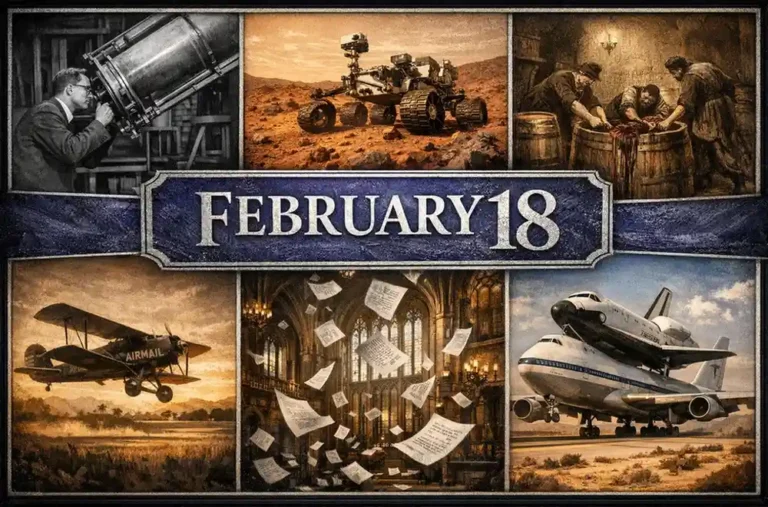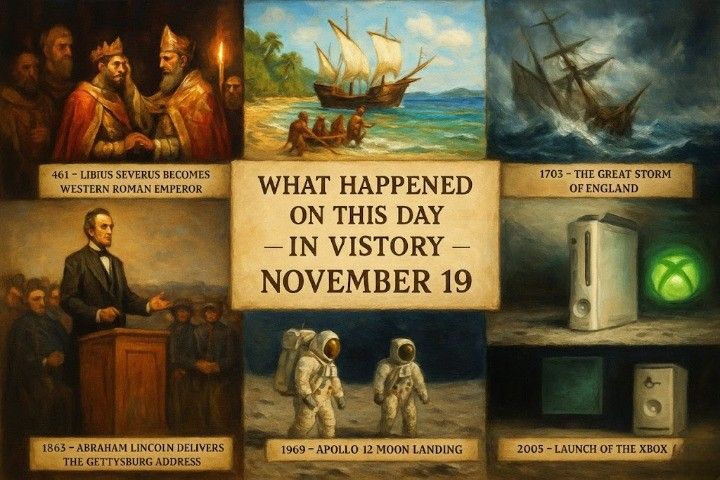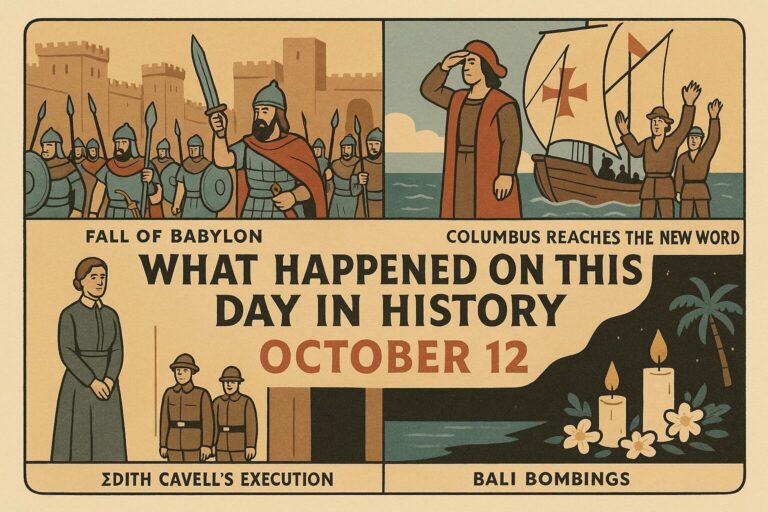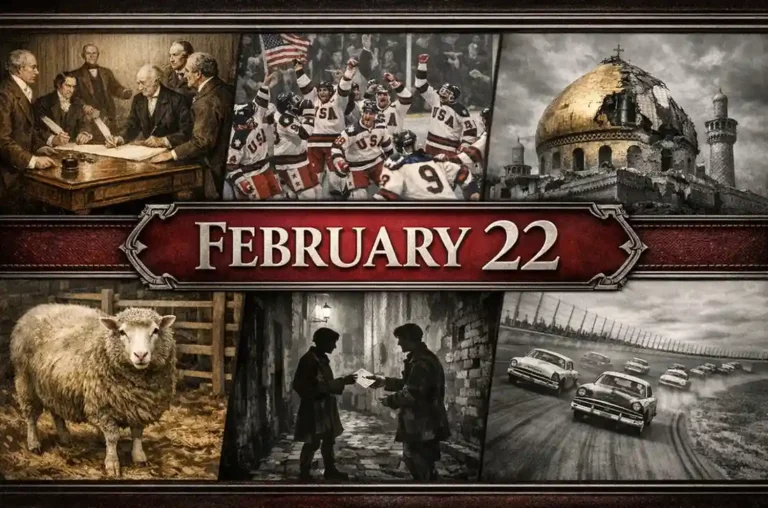

History often turns on moments that seem ordinary until we look back and see their impact unfold. What happened on this day in history November 22 sits at the crossroads of empire, conflict, innovation and culture. From ancient disputes to modern turning points, today’s date carries stories that shaped entire eras.
Important Events That Happened On November 21 In History
498 — Dual papal elections: Symmachus and Laurentius
After Anastasius II’s death rival factions elected two popes on the same day: Symmachus at the Lateran and Laurentius at Santa Maria Maggiore. The double election opened a turbulent chapter of factional conflict in the Roman church, with secular authorities repeatedly drawn in. The dispute around legitimacy and support set precedents for later struggles over papal authority.
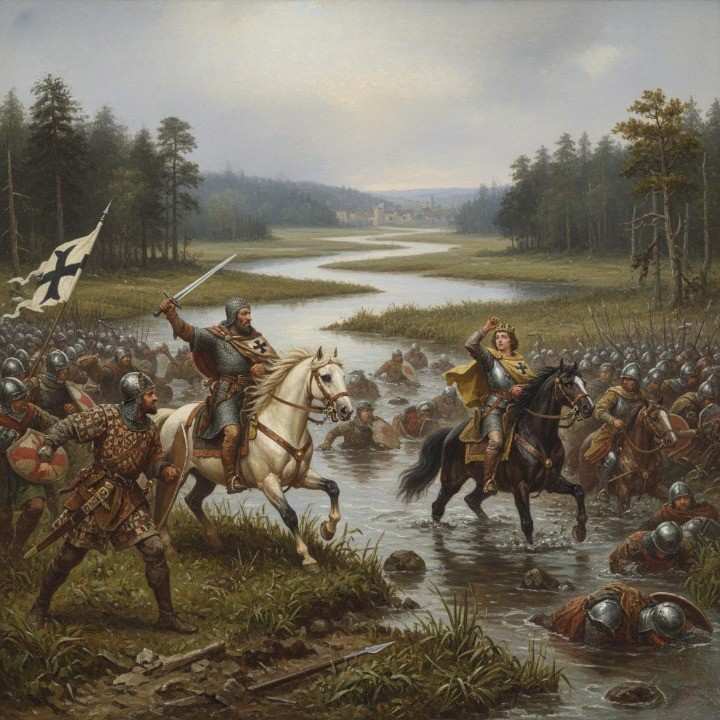
845 — Nominoe defeats Charles the Bald at Ballon
Nominoe, the rising Breton duke, routed King Charles the Bald’s forces near Redon, securing greater autonomy for Brittany. The victory strengthened Breton political identity and checked Frankish attempts to impose direct control. It marked a turning point in the region’s relationship with the West Frankish crown.
1210 — Fall of Termes in the Albigensian Crusade
After a four-month siege the Castle of Termes surrendered to Simon de Montfort, weakening organized resistance in that region of Languedoc. The fall tightened crusader control and accelerated the suppression of Cathar strongholds. Local governance and landholdings were soon reshaped by the crusader victors.
1220 — Frederick II crowned Holy Roman Emperor
Pope Honorius III crowned Frederick II in Rome, cementing his formal imperial authority. Frederick’s reign would be notable for its cultural patronage and for ongoing tensions between imperial and papal power. The coronation reinforced medieval patterns in which religious ritual legitimized secular rule.
1307 — Papal bull orders arrest of the Templars
Pope Clement V issued Pastoralis Praeeminentiae, instructing Christian monarchs to arrest Knights Templar and seize their assets. This papal directive triggered coordinated suppression across Europe and began the legal and financial dismantling of one of medieval Christendom’s most powerful military orders. The episode exposed the fraught intersection of piety, politics and royal finances.
1574 — Juan Fernández discovers the island group off Chile
Spanish navigator Juan Fernández sighted the islands now bearing his name, expanding European coastal knowledge of the South Pacific. These islands later played roles in navigation, provision stops and occasional exile. The sighting fits the broader pattern of Iberian maritime expansion.
1635 — Dutch pacification campaign in Taiwan
Dutch colonial forces moved decisively against several native settlements, consolidating control over central and southern Taiwan. The campaign reshaped local power relations and laid a colonial administrative foundation that would endure until later challenges. It stands as an early example of European imperial projection in East Asia.
1718 — Robert Maynard defeats Blackbeard
Lieutenant Robert Maynard led Royal Navy boats in an attack that resulted in the death of the pirate Edward “Blackbeard” Teach off North Carolina. The action ended one of the most notorious episodes of early-eighteenth-century piracy and underscored growing naval enforcement of maritime order. Maynard’s victory became part of the era’s anti-piracy mythology.
1837 — William Lyon Mackenzie calls for rebellion in Upper Canada
In an influential essay printed in The Constitution, Mackenzie urged reformers toward open revolt against colonial administration. His agitation helped spark the 1837–38 Rebellions in Upper and Lower Canada that pressured British authorities to reconsider colonial governance. The episode contributed to the longer arc toward responsible government in British North America.
1855 — Foundation stone of the Birmingham and Midland Institute laid
Prince Albert laid the institute’s foundation stone, marking civic investment in adult education and the arts in Birmingham. The institute became a lasting institution for scientific and cultural education, reflecting Victorian faith in improvement through learning. Its founding embodied industrial-era civic pride and reformist energy.
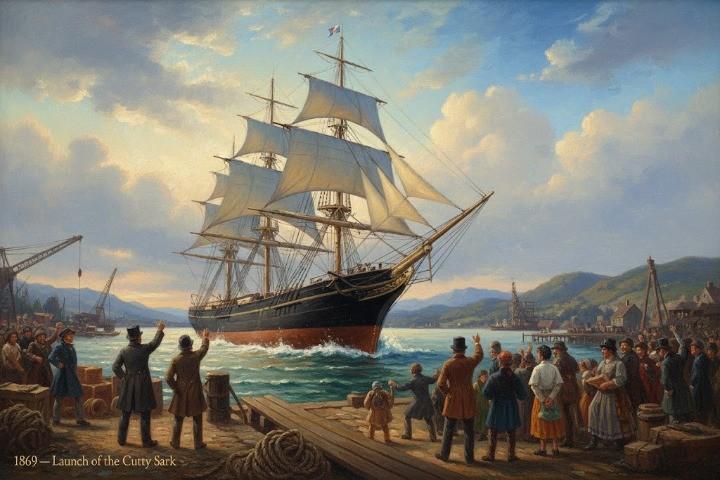
1869 — Launch of the Cutty Sark
The clipper Cutty Sark was launched at Dumbarton; she would become famed for speed in the tea and wool trades and survive into preservation as an iconic ship. The launch signalled the high point of sailing-ship design before steam dominance. The vessel later became a tangible link to maritime trade history.
1873 — Sinking of SS Ville du Havre
The French steamer Ville du Havre collided with the Scottish clipper Loch Earn and sank within minutes, with heavy loss of life (226). The disaster shocked transatlantic shipping circles and prompted renewed attention to navigation rules and safety at sea. Contemporary accounts emphasised the suddenness of the catastrophe and the limits of rescue.
1908 — Congress of Manastir establishes the Albanian alphabet
Delegates standardized an Albanian script, a decisive cultural step for national identity and education. The alphabet unbound literary life from competing scripts and helped modernize schooling and print culture among Albanians. It remains a milestone in nation-building through language reform.
1921 — Bloody day in Belfast during the Troubles (1920–22)
Twenty-two Irish Nationalists were killed in a single day of sectarian violence in Belfast, deepening divisions and fueling further unrest. The killings illustrated how partition and contested sovereignty fed cycles of communal retaliation. The episode left a grim imprint on Northern Ireland’s fraught early twentieth-century history.
1935 — China Clipper inaugurates first commercial transpacific air service
Pan American’s China Clipper began scheduled airmail/passenger links across the Pacific, connecting California and Manila and shrinking global distances. The service signalled the growing viability of long-range commercial aviation and helped knit together colonial, commercial and diplomatic networks. It also foreshadowed the later mass air travel era.
1940 — Greek counterattack captures Korytsa during Greco-Italian fighting
Following Italy’s invasion, Greek forces pushed into Italian-occupied Albania and took Korytsa (Korçë), shifting momentum in that theatre. The counteroffensive mobilized regional resistance and complicated Axis strategic plans. It stands as a striking early Allied success in a Mediterranean front.
1942 — Battle of Stalingrad: Paulus reports encirclement
General Friedrich Paulus sent a telegram to Hitler reporting that the German Sixth Army was surrounded at Stalingrad. That message presaged one of World War II’s decisive turning points: the eventual Soviet encirclement and collapse of German forces in the city. Stalingrad’s outcome marked the strategic reversal of German initiative on the Eastern Front.
1943 — Cairo Conference convenes Allied leaders
Roosevelt, Churchill and Chiang Kai-shek met in Cairo to coordinate plans against Japan and to discuss postwar Asia. The conference framed Allied war aims in East Asia and projected early ideas about postwar settlements. It helped align strategic thinking across the three major wartime coalitions.
1943 — Lebanon proclaims independence from France (formalized later)
Lebanon declared independence amid shifting postwar colonial arrangements, though full autonomy followed in subsequent years. The step inaugurated a new path toward sovereign Lebanese governance after the French mandate. It reshaped political configurations in the Levant.
1952 — C-124 Globemaster II crashes into Mount Gannett, Alaska
A transport aircraft crashed with total loss of 52 lives, a grim reminder of aviation hazards in extreme environments. The accident prompted searches and reviews of Arctic and sub-Arctic flight safety. For families and military communities the crash was a sudden and lasting tragedy.
1955 — Soviet thermonuclear test RDS-37 is detonated
The USSR tested RDS-37, a two-stage hydrogen bomb, demonstrating a significant advance in nuclear yield and design. The explosion further escalated the thermonuclear arms competition and deepened Cold War stakes. The test also influenced arms-control thinking in later decades.
1963 — Assassination of U.S. President John F. Kennedy
President John F. Kennedy was assassinated in Dallas; Governor John Connally was wounded, and Lee Harvey Oswald was accused of the killing. Vice President Lyndon B. Johnson was sworn in as the 36th U.S. president aboard Air Force One, and the assassination reverberated globally. The event triggered waves of mourning, intense investigation, and enduring political debates.
1963 — Five Indian generals killed in helicopter crash
A transport collision with telegraph lines took the lives of five senior Indian generals, an unusual and destabilizing single incident for military leadership. The loss prompted rapid reorganization and highlighted risks to flight operations in difficult terrain. It was a stark moment for the Indian armed forces.
1967 — UN Security Council Resolution 242 adopted
Resolution 242 set out principles for negotiating peace after the 1967 Arab–Israeli war, including withdrawal and territorial considerations. The text became a recurring reference point in Middle East diplomacy and peace negotiations. Its deliberately measured language has allowed divergent parties to read differing implications into its clauses.
1968 — Japan Air Lines Flight 2 ditches safely in San Francisco Bay
An accidental ditching occurred on approach to SFO; miraculously, there were no injuries. The incident demonstrated both the risks of aviation and the capacity for effective emergency response in urban waterways. It became a case study in crew decision-making and passenger survivability.
1971 — Cairngorm Plateau Disaster, Britain’s worst mountaineering tragedy
Six people (five children and a leader) died of exposure after becoming lost in the Scottish mountains, provoking national soul-searching about youth groups, preparedness and mountain safety. The disaster led to recommendations and changes in outdoor supervision and emergency procedures. It remains a sobering reference for outdoor education.
1975 — Juan Carlos declared King of Spain
Following Francisco Franco’s death, Juan Carlos was proclaimed king, formally ushering in a new constitutional path for Spain. His early reign would oversee the country’s transition from authoritarianism to parliamentary democracy. The declaration closed a dictatorial chapter and opened a complex political transition.
1986 — Mike Tyson becomes the youngest heavyweight champion
At age 20 Tyson knocked out Trevor Berbick to claim the world heavyweight title, an achievement that stunned the boxing world. Tyson’s rise symbolized both the spectacle and the social narratives of sport in the late twentieth century. His reign would later provoke broader debates about sport, celebrity and conduct.
1987 — Max Headroom signal hijacking incident
An unidentified pirate broadcast interrupted television signals in a bizarre and still-unresolved stunt that spoofed the Max Headroom character. The hijacking exposed vulnerabilities in broadcast infrastructure and became an odd footnote in media-security history. It also fed urban folklore about television culture.
1989 — Space Shuttle Discovery launches on STS-33 (classified mission)
NASA’s launch of Discovery for a Department of Defense flight underscored the shuttle’s mixed civil-military roles during the late Cold War. The mission highlighted the modularity of shuttle tasks beyond pure scientific exploration. Classified payloads and secrecy made the flight notable within the program’s operational history.
1990 — Margaret Thatcher withdraws from Conservative leadership contest
Facing internal revolt, Prime Minister Margaret Thatcher announced her withdrawal, ending her decade-long premiership and altering the Conservative Party’s direction. The political rupture illustrated how leadership survival depends on party confidence as much as public approval. Thatcher’s departure reshaped British politics into the 1990s.
1994 — Runway collision at St. Louis Lambert International Airport
A TWA MD-80 and a Cessna collided on the runway at Bridgeton, Missouri, killing two and injuring others, prompting renewed attention to ground-control protocols. The accident led to investigations and safety adjustments meant to reduce runway incursions. It remains on the record as a preventable tragedy.
1995 — Release of Toy Story by Pixar
Toy Story, the first feature-length film made entirely with computer animation, premiered and became both a critical and commercial milestone. The film inaugurated a new era in animated storytelling and established Pixar as a major creative studio. Its success altered industry economics and aesthetics for family entertainment.
2003 — DHL cargo plane struck by missile near Baghdad (attempted shootdown)
A DHL freighter was hit by a surface-to-air missile on takeoff, forcing a harrowing emergency landing. The incident highlighted risks to civil aviation in conflict zones and prompted operational reviews of air corridors and protective measures. It was one of several wartime aviation hazards in the region.
2004 — Orange Revolution begins in Ukraine
Large-scale protests erupted over disputed presidential election results, initiating a months-long movement that demanded greater transparency and political reform. The Orange Revolution reshaped Ukraine’s political landscape and demonstrated the power of mass civic mobilization. The events reverberated through post-Soviet politics.
2005 — Angela Merkel sworn in as Germany’s chancellor
Angela Merkel became Germany’s first woman chancellor, a landmark for gender and political leadership in Europe. Her arrival initiated a long era of stable leadership and continental influence, with Merkel playing a central role in EU affairs. The swearing-in marked a modernizing moment in German governance.
2010 — Koh Pich stampede during Cambodian water festival
A catastrophic stampede in Phnom Penh on the Koh Pich bridge killed 347 people during a crowded festival and exposed failures in crowd control and event planning. The tragedy led to investigations and calls for improved public-safety measures in mass events. For victims’ families and planners alike it was a human catastrophe with lasting repercussions.
2014 — Tamir Rice killed while playing with a toy gun in Cleveland
A 12-year-old African American boy, Tamir Rice, was shot by police while holding a toy gun; the incident intensified national debates about policing, race and the use of force. The event became emblematic of larger questions about law enforcement practices in the United States. Its legal and social aftershocks continued in public conversation and reform efforts.
2022 — Walmart shooting in Chesapeake, Virginia
A gunman killed seven workers in an overnight shooting at a Walmart distribution center, then died at the scene; the massacre added to discussions about workplace violence and gun policy. The event prompted local grief and national attention to security and prevention measures in large workplaces. Investigations focused on motive and response protocols.
2022 — Global news roundups (Nov 22, 2022) focused on Russia–Ukraine war fallout
On this date media summaries emphasized the war’s regional disruptions and international political, economic consequences. Reporting tied battlefield developments to supply, energy and diplomatic strains across Europe. The itemized coverage underscored how a single conflict can dominate global headlines.
2023 — Israel–Hamas diplomatic and hostage-release developments (Nov 22, 2023)
News on this day highlighted negotiations and international diplomatic manoeuvres related to hostages and regional security. The coverage reflected ongoing, fast-moving diplomatic efforts to manage both immediate humanitarian concerns and longer political fallout. These items sat within a wider, volatile regional environment.
Read This: What Happened On This Day In History November 21: Unforgettable Stories
Famous People Born On November 22
Mark Ruffalo — American actor. (Nov 22, 1967 – )
Benjamin Britten — British composer. (Nov 22, 1913 – Dec 4, 1976)
René-Robert Cavelier, sieur de La Salle — French explorer. (Nov 22, 1643 – Mar 19, 1687)
Richard Neville, 16th earl of Warwick — English noble (“the Kingmaker”). (Nov 22, 1428 – Apr 14, 1471)
John Nance Garner — 32nd vice president of the United States. (Nov 22, 1868 – Nov 7, 1967)
Geraldine Page — American actress. (Nov 22, 1924 – Jun 13, 1987)
André Gide — French writer, Nobel laureate. (Nov 22, 1869 – Feb 19, 1951)
Thomas Cook — British businessman, modern tourism pioneer. (Nov 22, 1808 – Jul 18, 1892)
Lazar Moiseyevich Kaganovich — Soviet official. (Nov 22, 1893 – Jul 25, 1991)
Sumi Jo — South Korean opera singer. (Nov 22, 1962 – )
Joaquín Rodrigo — Spanish composer. (Nov 22, 1901 – Jul 6, 1999)
Joe Adonis — American crime boss. (Nov 22, 1902 – Nov 26, 1971)
Owen Garriott — American astronaut. (Nov 22, 1930 – Apr 15, 2019)
Wiley Post — American pilot, record-setter. (Nov 22, 1898 – Aug 15, 1935)
George Gissing — English novelist. (Nov 22, 1857 – Dec 28, 1903)
Sir Andrew Fielding Huxley — British physiologist, Nobel laureate. (Nov 22, 1917 – May 30, 2012)
Viktor Pelevin — Russian author. (Nov 22, 1962 – )
Wilhelm Friedemann Bach — German composer. (Nov 22, 1710 – Jul 1, 1784)
Harley Jefferson Earl — American industrial designer. (Nov 22, 1893 – Apr 10, 1969)
Joseph Olbrich — German architect (Wiener Sezession cofounder). (Nov 22, 1867 – Aug 8, 1908)
Glen Clark — Canadian politician, former BC premier. (Nov 22, 1957 – )
Fritz Mauthner — German theatre critic and philosopher. (Nov 22, 1849 – Jun 29, 1923)
Idei Nobuyuki — Japanese businessman (Sony executive). (Nov 22, 1937 – )
Harry Pollitt — British Communist leader. (Nov 22, 1890 – Jun 27, 1960)
Andreas Hofer — Tirolean leader and patriot. (Nov 22, 1767 – Feb 20, 1810)
Justin M’Carthy — Irish historian and politician. (Nov 22, 1830 – Apr 24, 1912)
Matteo Giulio Bartoli — Italian linguist. (Nov 22, 1873 – Jan 23, 1946)
Cyrus Edwin Dallin — American sculptor. (Nov 22, 1861 – Nov 14, 1944)
Paul-Henri-Benjamin d’Estournelles de Constant — French diplomat, Nobel Peace co-winner. (Nov 22, 1852 – May 15, 1924)
José María de Heredia — French poet. (Nov 22, 1842 – Oct 2, 1905)
Famous People Died On November 22
Ahmed I — Ottoman sultan. (Apr 18, 1590 – Nov 22, 1617)
Svetlana Alliluyeva — Russian writer, daughter of Joseph Stalin. (Feb 28, 1926 – Nov 22, 2011)
Robert Clive — British colonial administrator (Clive of India). (Sep 29, 1725 – Nov 22, 1774)
John Hanson — American Revolutionary leader (Articles of Confederation president). (Apr 13, 1721 – Nov 22, 1783)
Arthur Eddington — British astronomer and physicist. (Dec 28, 1882 – Nov 22, 1944)
Lynn Margulis — American biologist (endosymbiotic theory). (Mar 5, 1938 – Nov 22, 2011)
Arthur Sullivan — British composer (Gilbert & Sullivan). (May 13, 1842 – Nov 22, 1900)
Sir Martin Frobisher — English explorer. (c.1535 – Nov 22, 1594)
Luis Barragán — Mexican architect, Pritzker Prize winner. (Mar 9, 1902 – Nov 22, 1988)
Emil Zátopek — Czech long-distance runner. (Sep 19, 1922 – Nov 22, 2000)
Lin Zexu — Chinese official known for role before the Opium War. (Aug 30, 1785 – Nov 22, 1850)
Sir Hans Adolf Krebs — Biochemist, Krebs cycle discoverer, Nobel laureate. (Aug 25, 1900 – Nov 22, 1981)
Paul Motian — American jazz drummer and composer. (Mar 25, 1931 – Nov 22, 2011)
John W. McCormack — U.S. Speaker of the House. (Dec 21, 1891 – Nov 22, 1980)
Mary Boykin Chesnut — American diarist and author. (Mar 31, 1823 – Nov 22, 1886)
René Coty — President of France (last of the Fourth Republic). (Mar 20, 1882 – Nov 22, 1962)
Maurice Béjart — French choreographer and dancer. (Jan 1, 1927 – Nov 22, 2007)
Kurt Koffka — German psychologist, Gestalt school cofounder. (Mar 18, 1886 – Nov 22, 1941)
Raymond A. Dart — Anthropologist (fossil hominins). (Feb 4, 1893 – Nov 22, 1988)
Jean Batten — New Zealand record-breaking aviator. (Sep 15, 1909 – Nov 22, 1982)
Erik V — King of Denmark. (c.1249 – Nov 22, 1286)
Asaph Hall — American astronomer (discovered Mars’s moons). (Oct 15, 1829 – Nov 22, 1907)
Aleksandr Onufriyevich Kovalevsky — Russian embryologist. (Nov 19, 1840 – Nov 22, 1901)
Paolo Frisi — Italian physicist and mathematician. (Apr 13, 1728 – Nov 22, 1784)
Salomon Maimon — Jewish philosopher and Kant critic. (c.1754 – Nov 22, 1800)
Ann Bailey — American frontier scout. (1742 – Nov 22, 1825)
Lothar — King of Italy (post-Carolingian era). (c.926/928 – Nov 22, 950)
Henry Mayers Hyndman — British Marxist leader. (Mar 7, 1842 – Nov 22, 1921)
Thurlow Weed — American journalist and political boss. (Nov 15, 1797 – Nov 22, 1882)
Joseph Caillaux — French statesman. (Mar 30, 1863 – Nov 22, 1944)
Observances & Institutional Dates — November 22
Good Spouses Day (Japan)
A Japanese observance encouraging gratitude between spouses; many couples mark the day with small gifts or shared meals. The date is promoted in popular media as a moment to strengthen domestic bonds.
Day of the Albanian Alphabet (Albania & ethnic Albanians)
Commemorates the 1908 congress that standardized the Albanian alphabet, celebrated with cultural events and educational programming. The observance highlights language’s role in national identity and literacy campaigns.
Independence Day (Lebanon)
Marks the 1943 declaration of independence from French mandate authorities; celebrations include official ceremonies and public commemorations. The day is both a national holiday and a reminder of Lebanon’s fraught path to full sovereignty.
Frequently Asked Questions
Why are there so many unrelated events on the same date?
Dates accumulate diverse events over centuries because calendars recur annually; political, scientific and cultural moments simply share the same day across different years.
What was the immediate global impact of JFK’s assassination on November 22, 1963?
The assassination produced a sudden constitutional transition (LBJ’s swearing-in), global mourning, and long-term political reverberations in U.S. domestic policy, foreign posture, and public trust.
How did the Orange Revolution of 2004 begin?
Mass protests erupted after contested presidential election results; demonstrators demanded recounts and fair processes, triggering large-scale civic action that ultimately forced political remedies.