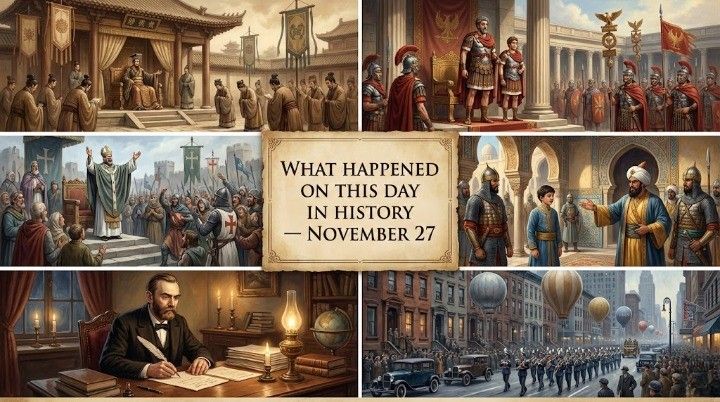
A compact sweep of moments where power, exploration and civic life collide across centuries, with What happened on this day in history November 27 woven into the flow of the reflection. Each era leaves its own imprint, from imperial shifts and spiritual calls to bold experiments and public turning points.
Important Events That Happened On November 27 In History
AD 25 — Luoyang declared capital of the Eastern Han
Emperor Guangwu names Luoyang the imperial seat, shifting the dynasty’s administrative and cultural centre eastward. The designation established a long-term political hub where court life, bureaucracy and ritual consolidated. Luoyang’s new status shaped regional economic growth and elite patronage.
176 — Commodus made Imperator and supreme commander
Marcus Aurelius elevates his son Commodus, giving him the title “Imperator” and command of the legions, an explicit preparation for succession. The promotion raised Commodus’s public military profile and fed tensions about dynastic rule. This moment foreshadowed controversies that would mark his reign.
395 — Murder of Rufinus by Gothic mercenaries
Rufinus, praetorian prefect of the East, is killed amid court intrigue and Gothic unrest under Gainas. His assassination exposed the fragile balance between Roman civil authority and military power in the late empire. The episode accelerated factional instability in Constantinople and shaped later political realignments.
511 — Death and burial of King Clovis I
Clovis I dies at Lutetia and is buried at the Abbey of St Genevieve, closing a decisive phase in Frankish consolidation. His reign had united large parts of Gaul and established Merovingian prestige tied to conversion and law. Clovis’s death left a legacy of territorial division and dynastic succession issues for his descendants.
602 — Maurice executed after witnessing his sons’ deaths
Usurper Phocas forces Emperor Maurice to witness the execution of his five sons, then has Maurice beheaded — a brutal transfer of power. The spectacle marked a catastrophic collapse of legitimacy for the previous regime and inaugurated a violent, unstable period. The episode intensified unrest across the empire and invited external threats.
1095 — First Crusade proclaimed at the Council of Clermont
Pope Urban II’s call to arms at Clermont sets in motion the First Crusade, promising spiritual reward for those who take the cross. The proclamation mobilized thousands across Europe and reordered Christendom’s approach to war, pilgrimage and conquest. Its long-term effects remade Mediterranean and Near Eastern politics, religion and culture.
1382 — Barquq deposes Al-Salih Hajji, begins Burji Mamluk rule
Barquq’s removal of Al-Salih Hajji ends the Qalawunid line and inaugurates the Circassian (Burji) Mamluk dynasty in Egypt. The transition signalled a shift in military and courtly elites and restructured governance in Cairo. Barquq’s ascent set patterns of Mamluk military-political rule that lasted into the 16th century
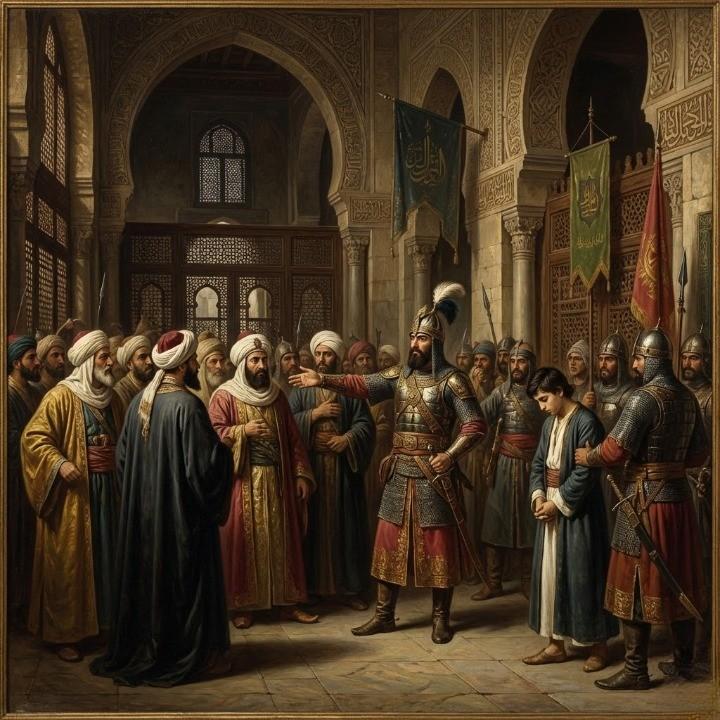
1542 — Palace plot in Ming China foiled; women executed
A failed assassination attempt on the Jiajing Emperor by palace women is uncovered; the conspirators are executed by slow-slicing. The plot and its brutal suppression revealed the lethal stakes of palace politics and the precariousness of court factions. The incident intensified surveillance and punitive measures within the imperial household.
1727 — Foundation stone laid for the Jerusalem Church (Berlin)
The ceremonial laying of the foundation stone marks the start of a notable religious building project in Berlin. The Jerusalem Church would become part of the city’s ecclesiastical and civic fabric, reflecting Protestant church-building and urban growth. The event ties local religious life to broader European architectural trends.
1755 — Major earthquake devastates Fes and Meknes (Morocco)
A powerful quake ravages northern Morocco, causing extensive destruction in Fes and Meknes and great loss of life. The catastrophe reshaped urban landscapes and prompted local and regional responses to reconstruction and relief. It remains one of the region’s most severe recorded seismic disasters.
1809 — Berners Street hoax in London
The elaborate practical joke by Theodore Hook floods Berners Street with unwanted visitors, creating a public spectacle and media sensation. The hoax exploited social networks and newspaper interest, telling us about early-19th-century urban culture and publicity. It endures in accounts of mischievous social engineering and early mass communications.
1815 — Constitution of the Kingdom of Poland adopted
Following Napoleonic upheavals, a new constitution frames the Kingdom of Poland’s legal structure within a changing European order. The document sought to balance autonomy with the pressures of great-power arrangements after 1815. Its adoption shaped Polish political life in the post-Napoleonic era.
1830 — Marian apparition to Saint Catherine Labouré
Catherine Labouré reports a vision of the Virgin Mary, an event that would nourish a wide popular devotion and produce religious iconography in 19th-century Catholicism. Her visions later inspired the Miraculous Medal and strengthened devotional currents in France. The apparition contributed to grassroots piety and institutional interest alike.
1835 — Last executions for sodomy in England
James Pratt and John Smith are hanged in London — historically recorded as the final executions in England for sodomy. The case is a grim marker of legal and moral attitudes of the era and later became a reference point in debates about criminal law and social reform. Their deaths highlight how laws criminalized private lives.
1839 — American Statistical Association founded in Boston
The establishment of the ASA organizes a community for applied statistics and the study of social and scientific data in the United States. The society promoted standards, methods and the professionalisation of statistical practice. Its founding helped embed quantitative approaches in government, business and research.
1856 — Coup of 1856 and Luxembourg’s reactionary constitution
A political coup leads Luxembourg to adopt a more conservative, unilateral constitution, reshaping its governance and civil rights framework. The event reflects mid-century tensions between liberal movements and conservative restorations across Europe. Luxembourg’s constitutional change had lasting implications for its parliamentary development.
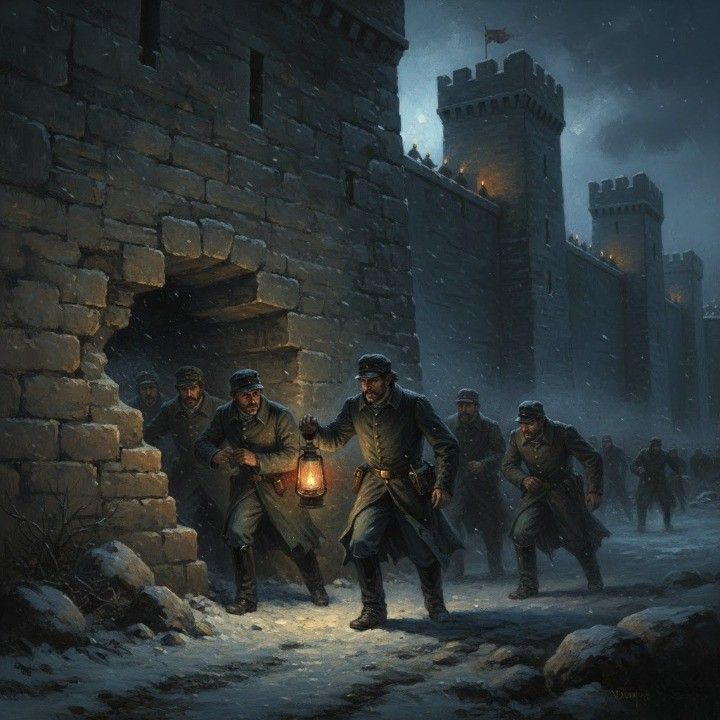
1863 — John Hunt Morgan escapes the Ohio Penitentiary
Confederate cavalryman John Hunt Morgan’s dramatic prison break captures public attention and demonstrates bold cavalry daring during the Civil War. His return to Confederate territory became a celebrated Confederate narrative and an embarrassment for Union authorities. The episode exemplifies mobility and irregular operations on the Civil War frontier.
1863 — Battle of Mine Run: Meade’s positions against Lee
Union General George Meade positions forces at Mine Run facing Lee’s army in a Virginia campaign that ends without decisive battle. The cautious engagement illustrates command dilemmas and trench operations late in 1863. The campaign’s outcome left both sides awaiting the next campaign season.
1868 — Battle of Washita River: Custer attacks Cheyenne
Lt. Col. George Custer’s raid on Cheyenne encampments at Washita River resulted in deaths and captures; the assault is controversial in its conduct and consequences. It was part of the broader US Indian Wars and reflected policies of punitive expeditions against Indigenous communities. Historians debate its military aims and moral implications.
1879 — Battle of Tarapacá (War of the Pacific)
Fierce fighting at Tarapacá leads to a Peruvian tactical victory despite wider Chilean advances; commanders on both sides suffer heavy losses. The battle influenced the course of the War of the Pacific, shaping territorial and political outcomes. Its human cost and strategic shifts mark a pivotal campaign moment in the region.
1895 — Alfred Nobel signs his last will and testament
Alfred Nobel’s decision in Paris to bequeath his fortune to found prizes for physics, chemistry, peace and literature set a durable mechanism for recognising achievement. The will surprised relatives and launched long legal and administrative work to turn private funds into international awards. Nobel’s legacy reshaped the incentives and public prestige of science and letters worldwide.
1896 — Premiere of Also sprach Zarathustra by Richard Strauss
Strauss’s tone poem debuts, immediately signalling a new kind of orchestral modernity with its bold harmonies and philosophical sweep. The work later gained broad cultural currency — famously used in film — and became a touchstone for discussions about music’s intellectual ambitions. Its premiere marks a notable moment in turn-of-the-century musical life.
1901 — U.S. Army War College established
The foundation of the War College formalised advanced professional military education in the United States, training officers in strategy, planning and higher command. It professionalised staff work and helped institutionalise doctrine for modern industrialised war. The college became a central forum for civil–military thinking and policy influence.
1912 — Spain declares a protectorate over northern Morocco
Spain’s move formalised colonial control over Morocco’s northern littoral, reshaping the region’s geopolitics and sowing tensions that would affect twentieth-century North African politics. The protectorate arrangement altered local governance, economic exploitation and European rivalry in the Maghreb. It also became a flashpoint for later decolonisation struggles.
1917 — P. E. Svinhufvud becomes chairman of his first senate (Finland)
Svinhufvud’s leadership marks a step in Finland’s development toward full statehood and parliamentary governance after the upheavals of World War I and Russian collapse. His role helped stabilise a fragile polity during early independence and set institutional precedents. The appointment is part of Finland’s broader state-building story.
1918 — Makhnovshchina established
The anarchist movement associated with Nestor Makhno consolidates territorial control in parts of Ukraine, advocating self-organised peasant and worker rule amid civil war. Its experiment in bottom-up governance met fierce opposition from Bolshevik forces and competing armies, illustrating revolutionary-era contests over political models. The Makhnovshchina remains a study in insurgent social organisation and its limits.
1919 — Treaty of Neuilly signed (post-World War I terms for Bulgaria)
The treaty imposed territorial losses, reparations and political constraints on Bulgaria after World War I, reshaping Balkan borders and political grievances. Its terms contributed to interwar instability and narratives of national humiliation that affected regional politics. The accord is a reminder of how settlement terms seeded later tensions.
1924 — First Macy’s Thanksgiving Day Parade (New York City)
What began as a promotional holiday spectacle soon became an American civic ritual, blending commerce, pageantry and seasonal culture. The parade popularised giant character balloons, floats and televised spectacle, embedding itself in national Thanksgiving traditions. Its endurance reflects the interplay of retail, media and public celebration.
1940 — Iron Guard killings in Romania
The ruling fascist Iron Guard’s violent purge of political opponents consolidated a brutal brand of political violence within Romania’s wartime politics. The episode deepened political polarisation and contributed to the destabilisation that marked Eastern Europe during the era. It remains a stark example of extremist violence in state affairs.
1940 — Battle of Cape Spartivento (Mediterranean naval action)
A naval engagement in the Mediterranean saw Royal Navy and Regia Marina forces clash as Italy and Britain vied for sea control early in World War II. Though not decisive strategically, the battle reflected the contest for maritime supply lines and influence in the central Mediterranean. Such actions shaped naval deployments and wartime logistics in the theatre.
1942 — Scuttling of the French fleet at Toulon
French naval commanders deliberately sank ships to prevent their capture by occupying forces, an act intended to deny Axis powers added maritime strength. The scuttling affirmed complex loyalties under occupation and reduced Axis opportunities to augment their fleets. It remains a dramatic illustration of wartime naval policy under duress.
1944 — RAF Fauld explosion kills seventy at an ammunition dump
A catastrophic detonation at an RAF ordnance depot caused significant loss of life and widespread damage, underlining the risks of munitions storage during wartime. The explosion disrupted local communities and raised questions about safety, oversight and wartime logistics. It is remembered as one of Britain’s largest non-combat explosions of the period.
1945 — CARE founded to send relief to postwar Europe
CARE began as a civilian relief effort shipping food packages to populations devastated by World War II, pioneering large-scale international humanitarian logistics. The organisation’s early efforts helped stabilise war-torn communities and influenced postwar relief norms. CARE’s creation marked a move toward organised global civil society responses to crises.
1954 — Alger Hiss released from prison after 44 months
Hiss’s release followed a high-profile espionage and perjury case that became a Cold War touchstone in U.S. domestic politics, fuelling anxieties about loyalty and communist infiltration. The affair helped accelerate partisan anti-communist politics and shaped public discourse on national security and due process. Its reverberations influenced mid-century American political culture.
1965 — Pentagon urges LBJ to increase U.S. troop levels in Vietnam
Senior military assessments recommended a substantial escalation of U.S. forces to pursue planned operations, framing debates over strategy, resources and political will. The advice was a critical input into decisions that expanded American involvement and intensified the conflict’s scale. The moment illustrates how military counsel shaped policy escalation.
1968 — Penny Ann Early becomes first woman to play in a major pro men’s basketball league (ABA)
Early’s brief appearance in an ABA game for the Kentucky Colonels symbolised early challenges to gender boundaries in professional sports and provoked strong public reactions. While not a sustained breakthrough, the event highlighted questions about access, publicity and the business of modern sports. It stands as an early episode in the longer story of women in athletics.
1971 — Mars 2 descent module becomes first object to reach Mars’ surface (malfunctioning)
The Soviet Mars 2 lander’s descent module impacted the Martian surface after a malfunction, nevertheless marking the first human-made object to reach Mars. Though it failed to return usable data, the achievement signalled growing planetary ambitions and the hazards of interplanetary missions. It sits in the history of robotic space exploration as a tentative, costly milestone.
1973 — U.S. Senate confirms Gerald Ford as Vice President under the 25th Amendment
The Senate’s near-unanimous vote ratified Ford’s elevation following Spiro Agnew’s resignation, putting constitutional succession procedures into practice. The confirmation stabilised executive functioning and tested the 25th Amendment’s political mechanisms. Ford’s new role would soon lead to the presidency after Nixon’s resignation.
1975 — Ross McWhirter assassinated by the Provisional IRA
McWhirter’s killing after his public reward for information marked a violent escalation in the IRA’s campaign and reverberated across British media and policing debates. The murder highlighted the reach of paramilitary tactics into public life and the perils faced by outspoken civilians. It formed part of a grim sequence in the Troubles.
1978 — Assassination of Harvey Milk
The killing of Harvey Milk — an openly gay elected official — was a shock to U.S. politics and LGBT communities, galvanising activism and shifting public attention to gay rights and political representation. Milk’s murder, and the flawed legal aftermath, intensified debates over justice, prejudice and political violence. His legacy endures in commemorations and rights struggles.
1978 — Founding of the Kurdistan Workers’ Party (PKK)
The PKK’s creation began an insurgent trajectory that would profoundly affect Turkish domestic politics and regional security, centred on Kurdish autonomy, identity and armed struggle. The organisation’s emergence set decades of conflict and counterinsurgency in motion, with significant humanitarian and geopolitical consequences. It remains central to contemporary questions of minority rights and state responses.
1983 — Avianca Flight 011 crashes near Madrid, killing 181
The fatal airliner accident was among the deadliest aviation disasters of the period and prompted inquiries into air safety, navigation and operational protocols. The tragedy affected international aviation policy and spurred improvements in flight procedures and oversight. It remains a somber benchmark in commercial flight safety history.
1983 — Revised Code of Canon Law takes effect (Pope John Paul II)
The updated Code modernised and clarified Catholic canonical regulations, reflecting theological, pastoral and institutional developments since the Second Vatican Council. Its implementation shaped church governance, sacramental practice and clerical discipline worldwide. The revision balanced tradition with efforts at canonical coherence for modern contexts.
1984 — Brussels Agreement opens dialogue over Gibraltar
The accord committed the UK to discussions with Spain about Gibraltar’s status, initiating a diplomatic process over sovereignty and local rights. The agreement acknowledged the complexity of territorial disputes involving historical claims, local inhabitants and European politics. It began a fraught, ongoing negotiation over a sensitive border issue.
1985 — Space Shuttle Atlantis launches STS-61-B; Rodolfo Neri Vela becomes first Mexican astronaut
Atlantis’s mission combined technical objectives with symbolic milestones: Neri Vela’s flight marked Mexico’s human presence in space. The launch illustrated growing international participation in space programmes and the Shuttle’s role in cooperative missions. The flight expanded public interest and national pride in participating countries.
1989 — Avianca Flight 203 bombing kills 107 in mid-air (Medellín Cartel)
The terrorist bombing of the airliner exemplified the extreme violence of drug-cartel conflict in Colombia and its deadly spillover into civilian life. The attack deepened international concern about narco-terrorism and prompted security and legal responses across aviation and law-enforcement sectors. Its impact lingered in regional counter-narcotics efforts.
1992 — Second military coup attempt against Carlos Andrés Pérez (Venezuela)
Repeated coup attempts underscored persistent instability during Perez’s presidency, reflecting economic pressures and political polarisation in Venezuela. The events foreshadowed later crises and shifts in Venezuelan governance and public trust. They highlight how recurrent insurrectionary politics can reshape national trajectories.
1997 — Souhane massacre claims 25 lives (Algeria)
The brutal attack on civilians in Souhane exemplified the violence that afflicted Algeria in the 1990s, during a period of insurgency and counterinsurgency. The massacre contributed to the country’s deep social trauma and raised urgent questions about security, justice and reconciliation. It remains part of the painful record of Algeria’s civil conflict.
1999 — Labour’s Helen Clark becomes New Zealand’s first elected female prime minister
Clark’s electoral victory represented a milestone in New Zealand politics and gender representation, bringing a seasoned centre-left leader to national office. Her government pursued social and economic policies that re-shaped policy debates and administrative practices. The event marked a turning point for female leadership in the country.
2001 — Hydrogen atmosphere discovered on exoplanet Osiris (HD 209458 b)
Using the Hubble Space Telescope, astronomers detected a hydrogen envelope around an extrasolar planet, the first atmosphere identified beyond the solar system. The finding opened new avenues for exoplanet characterisation and the study of planetary composition and evolution. It was an early, exciting advance in observational exoplanetary science.
2004 — Pope John Paul II returns relics of John Chrysostom to Eastern Orthodox Church
The gesture was a notable act of ecumenical reconciliation, addressing historic schisms and symbolically mending ties between Roman Catholic and Eastern Orthodox traditions. Returning relics helped foster dialogue and mutual recognition after centuries of ecclesiastical separation. It was a sensitive act of religious diplomacy.
2004 — Blackwater 61 crash in Afghanistan kills six
The military aircraft accident underscored the dangers of aviation operations in rugged, conflict-era environments and raised scrutiny over contractor flights and safety standards. The loss affected operational planning and highlighted the risks faced by both military and civilian aviation providers in theatres of conflict. It prompted reviews of flight protocols in hostile regions.
2006 — Canadian House of Commons recognizes Québécois as a nation within Canada
The parliamentary motion acknowledged the Québécois as a distinct nation operating within the Canadian federation, a symbolic recognition intended to affirm cultural and political identity. The vote sought to balance national unity with respect for Quebec’s unique character, stirring debate across political lines. The motion has ongoing resonance in Canadian federalism debates.
2008 — XL Airways Germany Flight 888T crashes during test flight, seven dead
The fatal crash during a test flight raised operational and regulatory questions about flight testing, maintenance and safety procedures for aircraft undergoing certification. Investigations informed industry practices and underscored the stakes of rigorous oversight during non-commercial flights. The tragedy was felt across the aviation community.
2009 — Nevsky Express bombing kills 28 and injures 96 (Russia)
The train bombing, a major act of terror, disrupted national transport and security, prompting heightened counterterrorism measures and public grief. The attack illustrated vulnerabilities in rail infrastructure and the broader challenges of preventing mass-casualty incidents. It triggered both investigations and policy responses.
2015 — Planned Parenthood shooting in Colorado Springs
An active shooter at a clinic resulted in multiple deaths and injuries, producing a national debate over violence, political rhetoric and clinic safety. The incident intensified discussions on domestic security, health-care protection and the polarised context in which such attacks occur. It was part of a wider pattern of politically charged violence.
2020 — Assassination of Iran’s top nuclear scientist Mohsen Fakhrizadeh
The killing of a high-profile scientist in Iran provoked international attention, heightening regional tensions and prompting diplomatic condemnation and speculation over attribution. The incident fed into broader concerns about covert operations, escalation and the security of key personnel. It had significant implications for geopolitics and nuclear diplomacy.
2020 — Utah monolith removed days after discovery
A mysterious metal monolith that had attracted rapid public attention and media curiosity was removed by visitors, ending a brief global viral phenomenon. The episode reflected the speed of modern social-media-driven phenomena and raised questions about public art, preservation and spontaneous tourism. It became a quirky footnote to late-2020 cultural life.
2024 — Syrian rebel ground offensive led by HTS reported
Reports of a major rebel-led offensive marked another violent flare-up in Syria’s protracted civil war, with implications for humanitarian access, displacement and regional security. The developments underscored the persistence of armed contestation and the complex array of local and international actors shaping the conflict’s course. The situation remained dynamically evolving and of broad concern.
Read Also: What Happened On This Day In History November 26: Unforgettable Facts
Famous People Born On November 27
| Name | Role / short note | Dates |
|---|---|---|
| Bat Masterson | American lawman, gambler & newspaperman | Nov 27, 1853 – Oct 25, 1921 |
| Tommy Dorsey | American bandleader & trombonist (swing era) | Nov 27, 1905 – Nov 26, 1956 |
| Hilary Hahn | American violinist | Nov 27, 1979 – |
| Chaim Weizmann | Israeli statesman & chemist; 1st President of Israel | Nov 27, 1874 – Nov 9, 1952 |
| Anders Celsius | Swedish astronomer; Celsius temperature scale | Nov 27, 1701 – Apr 25, 1744 |
| Maria Schneider | American composer & conductor (big band) | Nov 27, 1960 – |
| Tim Pawlenty | American politician; governor of Minnesota (2003–11) | Nov 27, 1960 – |
| James Agee | American writer and film critic | Nov 27, 1909 – May 16, 1955 |
| Claude Lanzmann | French filmmaker & writer (Shoah) | Nov 27, 1925 – Jul 5, 2018 |
| Charles A. Beard | American historian (economic interpretation) | Nov 27, 1874 – Sep 1, 1948 |
| Robert R. Livingston | U.S. statesman & diplomat | Nov 27, 1746 – Feb 26, 1813 |
| Sir Charles Scott Sherrington | British physiologist; Nobel laureate | Nov 27, 1857 – Mar 4, 1952 |
| Homma Masaharu | Japanese general (Philippine campaign commander) | Nov 27, 1887 – Apr 3, 1946 |
| Matsushita Konosuke | Japanese industrialist; founder of Matsushita (Panasonic) | Nov 27, 1894 – Apr 27, 1989 |
| Fujita Tsuguharu (Foujita) | Japanese painter (School of Paris) | Nov 27, 1886 – Jan 29, 1968 |
| David Merrick | American theatrical producer | Nov 27, 1911 – Apr 25, 2000 |
| Lars Onsager | Norwegian-American chemist; Nobel laureate | Nov 27, 1903 – Oct 5, 1976 |
| José Asunción Silva | Colombian poet | Nov 27, 1865 – May 23, 1896 |
| Pedro Salinas | Spanish poet (Generation of ’27) | Nov 27, 1891 – Dec 4, 1951 |
| Władysław Orkan | Polish writer & poet | Nov 27, 1875 – May 14, 1930 |
| Adonias Filho | Brazilian novelist & critic | Nov 27, 1915 – Aug 2, 1990 |
| Prince Devawongse Varoprakar | Siamese foreign minister (long-serving) | Nov 27, 1858 – Jun 28, 1923 |
| Sir Ralph Freeman | British engineer (Sydney Harbour Bridge) | Nov 27, 1880 – Mar 11, 1950 |
| Friedrich Rudolf von Canitz | German poet and diplomat | Nov 27, 1654 – Aug 11, 1699 |
| José María Gil Robles | Spanish statesman | Nov 27, 1898 – Sep 14, 1980 |
| Joel Lehtonen | Finnish author | Nov 27, 1881 – 1934 |
| Katharine Anthony | American biographer | Nov 27, 1877 – Nov 20, 1965 |
| Murray Krieger | American literary critic | Nov 27, 1923 – Aug 5, 2000 |
| Cesare, Count Balbo | Piedmontese statesman; early Italian prime minister | Nov 27, 1789 – Jun 3, 1853 |
Famous People Died On November 27
| Name | Role / short note | Dates |
|---|---|---|
| Baby Face Nelson | American gangster and bank robber | 1908 – Nov 27, 1934 |
| V. P. Singh | Prime minister of India (1989–90) | Jun 25, 1931 – Nov 27, 2008 |
| Ken Russell | British film director | Jul 3, 1927 – Nov 27, 2011 |
| P. D. James | British mystery novelist | Aug 3, 1920 – Nov 27, 2014 |
| Lotte Lenya | Austrian actress & singer | Oct 18, 1898 – Nov 27, 1981 |
| Alexandre Dumas, fils | French novelist & playwright | Jul 27, 1824 – Nov 27, 1895 |
| Athanasius Kircher | German Jesuit scholar (encyclopedic polymath) | May 2, 1601 – Nov 27, 1680 |
| Abraham de Moivre | French mathematician (probability theory) | May 26, 1667 – Nov 27, 1754 |
| Jonathan Miller | British theatre director, physician & polymath | Jul 21, 1934 – Nov 27, 2019 |
| Arthur Honegger | Swiss-French composer (Les Six) | Mar 10, 1892 – Nov 27, 1955 |
| Carlos Arias Navarro | Prime minister of Spain (Franco era & transition) | Dec 11, 1908 – Nov 27, 1989 |
| Sir Basil Zaharoff | International armaments dealer (industrialist) | Oct 6, 1849 – Nov 27, 1936 |
| Eugène Schneider | French industrialist & statesman | Mar 29, 1805 – Nov 27, 1875 |
| Buck Leonard | American Negro-leagues baseball star | Sep 8, 1907 – Nov 27, 1997 |
| Roger de La Fresnaye | French painter (Cubist-influenced) | Jul 11, 1885 – Nov 27, 1925 |
| James Braid | British golfer (Open champion) | Feb 6, 1870 – Nov 27, 1950 |
| Richard C. Carrington | British astronomer (sunspot observations) | May 26, 1826 – Nov 27, 1875 |
| Gunder Hägg | Swedish middle-distance runner, world-record setter | Dec 31, 1918 – Nov 27, 2004 |
| Alice Meynell | British poet & essayist | Oct 11, 1847 – Nov 27, 1922 |
| Fanny Elssler | Austrian ballerina | Jun 23, 1810 – Nov 27, 1884 |
| Andrew Meikle | Scottish millwright; inventor (threshing machine) | 1719 – Nov 27, 1811 |
| Josep Maria Sert | Catalan muralist & painter | Dec 21, 1874 – Nov 27, 1945 |
| Manuel Scorza | Peruvian novelist & activist | 1928 – Nov 27, 1983 |
| Ruan Yuan | Chinese scholar-official & bibliophile | Feb 21, 1764 – Nov 27, 1849 |
| Helene Madison | American Olympic swimmer | Jun 19, 1913 – Nov 27, 1970 |
| Hans Denck | German Reformation theologian (Anabaptist) | c.1495 – Nov 27, 1527 |
| Rufinus | Eastern Roman official and minister | – Nov 27, 395 |
| Clement Studebaker | American manufacturer (Studebaker wagons/cars) | Mar 12, 1831 – Nov 27, 1901 |
| T. F. Powys | English novelist & short-story writer | Dec 20, 1875 – Nov 27, 1953 |
| Carleton Washburne | American educator (Winnetka Plan) | Dec 2, 1889 – Nov 27, 1968 |
Observances & Institutional Dates
Naval Infantry Day (Russia)
A day honoring Russia’s naval infantry traditions with ceremonies, parades and veteran commemorations. It highlights amphibious forces’ role in national defence and historic naval operations.
Lancashire Day (United Kingdom)
A county observance celebrating Lancashire’s local history, culture and civic identity with events and heritage activities. It’s a focal date for regional pride and historical reflection.
Teacher’s Day (Spain)
An annual day to recognise educators with school events, awards and public acknowledgements across Spain. It underscores the social value placed on teaching and learning.
Maaveerar Day (Tamil Eelam)
A day of remembrance for those who died fighting for the Tamil cause; communities hold memorials and ceremonies to honour the fallen. The observance remains emotionally and politically significant among diaspora and local groups.
Frequently Asked Questions
What kinds of events dominate November 27 in this list?
Political succession, military actions and acts of state appear frequently, joined by scientific, cultural and disaster-related moments — a mix typical of long chronological records.
Which exploration and science moments are on the date?
Notable items include early exploratory advances and later space/marine science events in the continued list; I can expand the science items when I continue.
Were there important cultural firsts on this date?
Yes — for example, the founding of professional societies and early public spectacles (the Berners Street hoax) appear; later entries include premieres and innovations.