
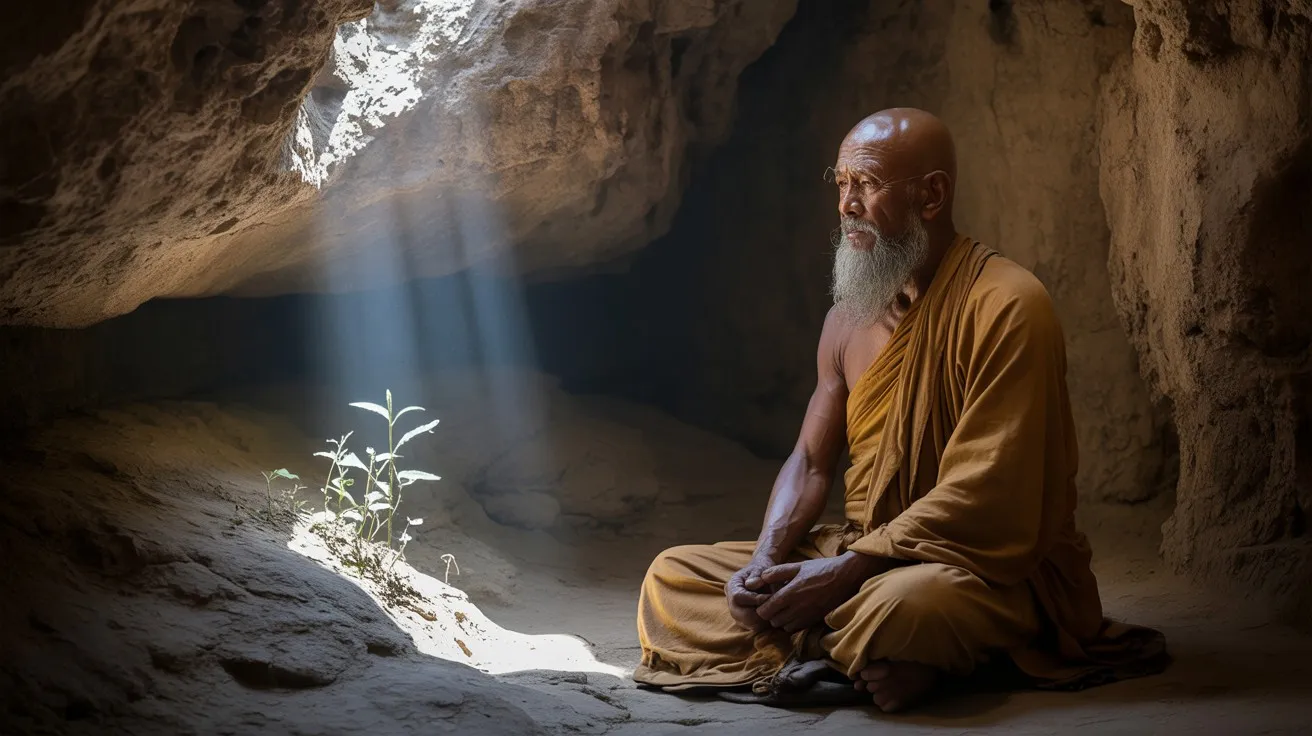
There’s a ritual that plays out in millions of Indian homes every single day. The kettle whistles, the aroma of ginger and cardamom fills the air, and the first sip of masala chai brings a familiar, comforting warmth. If you search for what is the Indian legend regarding the discovery of tea, the tale you’ll meet most often is at once dramatic and oddly intimate — the story of Bodhidharma and the eyelids.
Tea, or chai, is more than just a beverage in India; it’s a welcome gesture, a reason for a break, and a thread in the fabric of daily life. But have you ever paused, cup in hand, and wondered… where did it all begin? How was this magical leaf discovered?
While historical records point to China, India has its own incredible, mythical answer—a tale not of emperors, but of intense spiritual devotion. This is the legend of Bodhidharma and the dramatic discovery of tea.
The Legend of Bodhidharma: Meditation & The Birth Of Tea
The legend of Bodhidharma is deeply tied to tea in East Asian tradition. It is said that after traveling from India to China, Bodhidharma devoted himself to long, unbroken meditation. According to one famous story, during his nine years of wall-gazing practice, he once grew so weary that he began to fall asleep.
Angered at his own weakness, he tore off his eyelids and threw them to the ground. From the soil where they fell, the first tea plants sprouted. When the leaves were brewed, their refreshing qualities helped keep meditators awake and alert during long hours of practice.
This tale explains why tea became so closely linked with Zen Buddhism and monastic discipline. More than just a drink, tea was regarded as a natural aid for mindfulness, clarity, and endurance. Over time, tea drinking spread from monasteries into Chinese culture, and later to Japan, where Zen monks carried both Bodhidharma’s teachings and the practice of tea preparation.
Thus, in legend and history alike, Bodhidharma is remembered not only as the father of Zen, but also as the spiritual figure who gifted humanity the use of tea to awaken body and mind.
More Than a Myth: What actually happened!
The story of Bodhidharma and the birth of tea is less a historical record and more a symbolic tale about discipline and awakening. In truth, tea plants (Camellia sinensis) are native to East and Southeast Asia, with the earliest reliable evidence pointing to southwestern China, especially Yunnan, as the cradle of tea cultivation and use. From there, tea culture spread widely, long before it became common in India.
That said, India wasn’t entirely absent from the story. In the northeast, especially Assam, a wild variety of tea (Camellia assamica) grew naturally, and local communities knew of it for centuries. But large-scale cultivation and the “tea culture” we now associate with India—chai brewed with milk, sugar, and spices—emerged much later.
It was shaped in the 19th century under British colonial rule, when plantations were developed in Assam, Darjeeling, and the Nilgiris to break China’s monopoly and supply British markets.
The Bodhidharma eyelid legend, then, is not about botany but about meaning. It explains why tea came to be seen as more than a drink: it became a tool for alertness in meditation, clarity in practice, and steadiness on the spiritual path. Monks and seekers across Asia embraced tea as a silent companion during long hours of sitting, where the mind needed both calmness and wakefulness.
The myth anchors tea to India by linking it to an Indian monk, even though its roots as a cultivated beverage lie in China. And perhaps that’s the real gift of the story—it binds history, spirituality, and culture into one unforgettable tradition.
From Myth to Reality: Tea’s Documented Journey in India
While the legend of Bodhidharma is captivating, the documented history of tea in India is equally fascinating. Wild tea plants have always grown indigenously in the Assam region. However, it was under the British East India Company in the 19th century that large-scale commercial tea cultivation began.
The British, seeking to break China’s monopoly on tea, identified Assam as perfect tea-growing territory. They used both indigenous Assamica plants and varieties from China to establish the vast tea gardens we know today. This commercial push is what truly integrated tea into the everyday life of the Indian subcontinent, transforming it from a regional curiosity to a national obsession.
So, the next time you enjoy a steaming cup of chai, remember the two stories: the mythical fury of an Indian monk that gave us the leaf, and the historical enterprise that brought it to our cups. It’s a drink with a past as rich and complex as its flavor.
Final thought
Legends often do something that hard facts cannot: they give objects — a plant, a drink — a moral and cultural life. The Indian legend regarding the discovery of tea (Bodhidharma’s eyelids) doesn’t replace botanical history; it enriches the cultural story. It reminds us that tea arrived in human lives not only as a crop but as a companion to ritual, focus, and hospitality.
Frequently Asked Questions
What are two legends about tea?
Two main legends dominate: the Chinese tale of Emperor Shen Nong, who accidentally brewed tea when leaves fell into his boiling water, and the Indian legend of Bodhidharma, the monk whose discarded eyelids supposedly grew into tea plants that he brewed to stay awake during long meditations. Both stories connect tea with health, clarity, and ritual.
What’s the most famous Indian tea legend?
The most famous Indian legend attributes tea’s discovery to Bodhidharma. According to the story, the monk plucked out his eyelids to avoid sleep and where they fell a plant grew; its leaves brewed into tea that kept him alert. It’s the version most commonly referenced when people ask specifically about India’s role in tea lore.
How was tea discovered in India?
From a historical perspective, tea was not “discovered” in India in the traditional sense but was developed into a commercial industry. Indigenous tea plants were found growing wild in Assam. The British, aiming to create their own tea supply, established large-scale plantations in the early 1800s using these native plants and imported Chinese seeds.
This commercial cultivation is what led to tea becoming a widespread daily beverage across India. The legendary discovery, however, is attributed to Bodhidharma centuries earlier.
Which tea legend is the most popular?
The most popular tea legend worldwide is the story of Emperor Shennong of China. According to tradition, around 2737 BCE, he discovered tea when fresh leaves accidentally fell into his pot of boiling water. Curious about the aroma, he tasted the brew and found it refreshing and invigorating.
This simple moment is celebrated as the legendary beginning of tea drinking, making Shennong’s tale the most widely known origin story of tea across the world.