
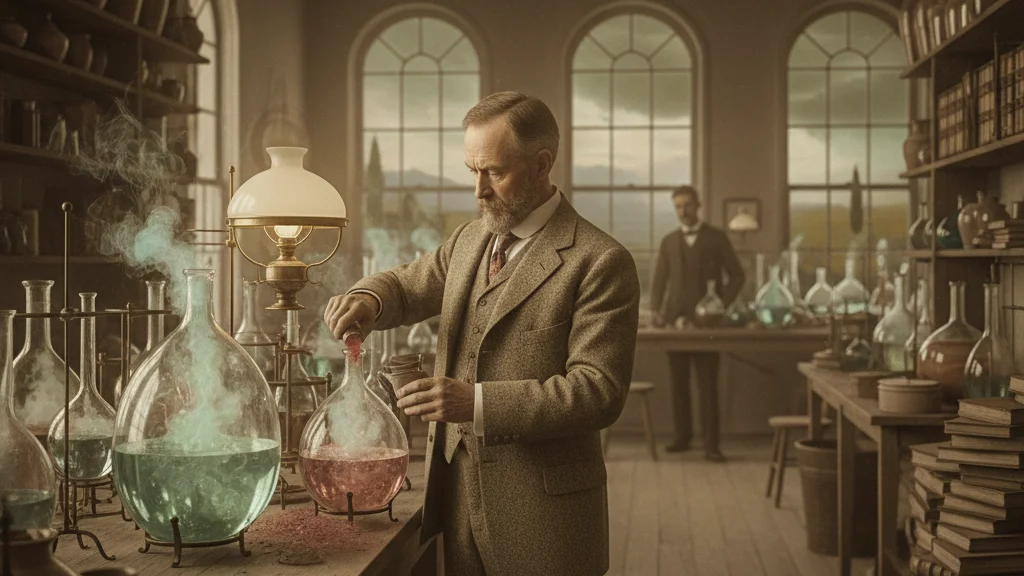
Of all the strange chapters in the history of American folklore, few are as compelling and perplexing as that of Charles Hatfield. He is remembered by a single, spectacular epithet: “The Rainmaker.” For a brief period in the early 20th century, Charles Hatfield was a national celebrity, a man who claimed to have harnessed the secrets of the atmosphere and could, for a price, coax moisture from a stubborn sky.
His story is a quintessential American drama, sitting at the crossroads of ambition, science, spectacle, and the timeless human desire to control the uncontrollable. This is the story of the man who promised rain, the city that desperately needed it, and the deluge that may have sealed his fate.
Who Was Charles Hatfield?
To understand the legend, we must first meet the man. Charles Mallory Hatfield was born on July 15, 1875, in Fort Scott, Kansas. His destiny, however, was shaped by a move to Southern California in 1886, a land of boom times and arid landscapes. By his adult years, he was a successful and persuasive salesman for the New Home Sewing Machine Company.
This career is crucial to his story; he was not a trained scientist but a master of persuasion, a man who knew how to sell an idea. It was this skillset he would apply to his true, lifelong obsession: making rain.
The young Hatfield found his inspiration in an unlikely place: his mother’s kitchen. He was fascinated by the way steam from a boiling kettle seemed to attract water vapor, a simple observation that ignited a passion for what he would call “pluviculture” – the culture of rain.
The Secret Formula Of Rain Making
By 1902, Hatfield had developed his method. He claimed it was a secret mixture of 23 chemicals, which he would brew in large, galvanized evaporating tanks perched on tall towers, allowing the fumes to rise into the atmosphere.
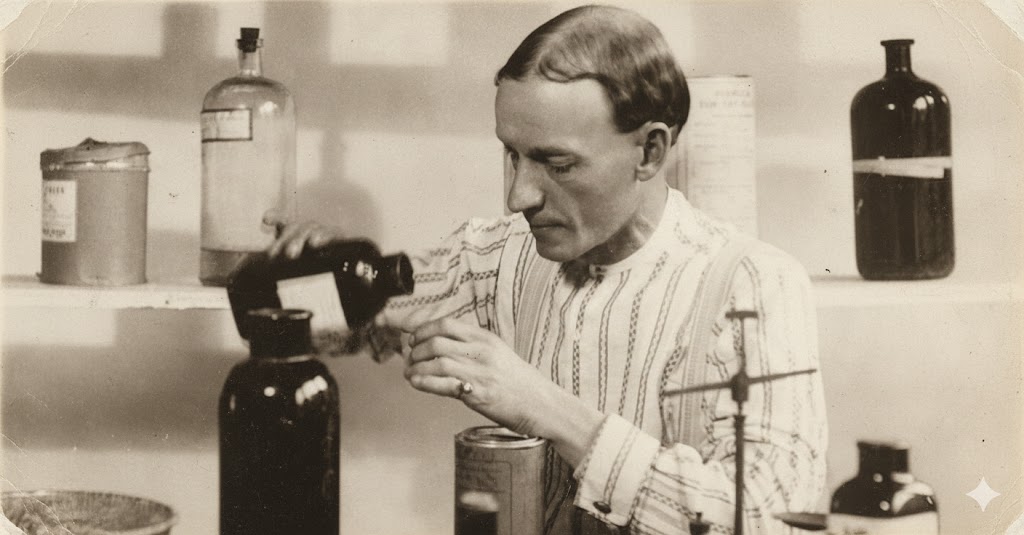
Hatfield shrewdly rebranded himself not as a “rainmaker,” a term associated with traveling charlatans, but as a “moisture accelerator” or “pluviculturist.” He presented himself as a serious professional conducting atmospheric research. He kept meticulous records of his “successes,” though these were, of course, subject to confirmation bias. If it rained after his chemical release, he took credit. If it didn’t, the conditions simply weren’t “favorable.”
His early contracts read like a map of drought-stricken Western America: lumber companies needing to float logs downriver, ranchers with parched fields, small towns with dwindling reservoirs. With each purported success, his confidence and his prices grew. He was written up in newspapers, a figure of both awe and skepticism. Was he a genius or a gifted opportunist, a man simply skilled at predicting the weather and taking credit for it?
The stage was set for his magnum opus, the contract that would define his legacy and ultimately break him.
Building a Reputation on a Cloud of Vapor
Hatfield’s big break came in 1904, thanks to a promoter. After ads were placed in Los Angeles newspapers, a group of ranchers offered him $50 to produce rain. Hatfield and his brother, Paul, built a tower and released his mixture. When rain followed, the ranchers were so impressed they paid him double.
The contemporary U.S. Weather Bureau often noted that the rain was simply part of a storm that was already approaching, but Hatfield’s supporters, and a hungry press, dismissed this. Momentum built. He promised the city of Los Angeles 18 inches of rain, collected a $1,000 fee after a downpour, and his legend grew. Not every venture was a success, but his failures were easily forgotten in the wake of his dramatic, publicized successes.
Read Also About: How the Battle of Civetot (1096) Crushed the First Crusade’s Peasant Army
The San Diego Contract: A Faustian Bargain
By 1915, the growing city of San Diego was facing a crisis. The massive Morena Reservoir was dangerously low. Bowing to public pressure, the City Council approached Charles Hatfield. The deal they struck was audacious: he would fill the reservoir to overflowing for a fee of $10,000. Crucially, and with monumental legal consequences, a formal contract was never signed. The agreement was a verbal understanding, a handshake deal with the sky itself.
In December 1915, Charles and Paul Hatfield built their tower beside Lake Morena and began their work. On January 5, 1916, the rains began.
The Great Flood of 1916
It started as a heavy downpour and escalated into a cataclysm. For weeks, Southern California was hammered by a series of storms of biblical proportions. Bridges and railways were destroyed. The Sweetwater and Lower Otay dams overflowed. Then, on January 27, the Lower Otay Dam catastrophically broke, unleashing a wall of water that caused devastating destruction and claimed an estimated 20 lives.
The Morena Reservoir didn’t just fill; it overflowed spectacularly. Charles Hatfield had, by the strictest terms, fulfilled his promise.
The Aftermath: Act of God or Act of Man?
In the sodden wreckage, Hatfield found himself at the center of a firestorm. He was simultaneously a hero and a villain. The San Diego City Council refused to pay the $10,000 unless Hatfield accepted liability for the millions of dollars in flood damages.
It was an impossible offer. Hatfield sued the city. The legal battle dragged on until 1938, when the courts delivered a final, ironic verdict: the rains were an “act of God.” This absolved Hatfield of financial liability for the destruction but also meant the city had no legal obligation to pay his fee. He never received a dime from San Diego.
The Science and the Skepticism
From a modern perspective, the story of Charles Hatfield is a fascinating case study in the psychology of belief. Meteorologists now understand that the torrential rains of 1916 were the result of a “Pineapple Express,” a powerful atmospheric river that channeled immense moisture from the tropics to the California coast. It was a massive, natural weather event that Hatfield had the incredible luck—or misfortune—to coincide with.
His method, while scientifically dubious, was not entirely without a theoretical basis. Modern cloud seeding uses particles of silver iodide or dry ice to provide a surface for water vapor to condense around, precipitating rain. Hatfield’s chemical fumes may have acted as primitive cloud-seeding agents, but they could not create a storm system out of nothing. They required pre-existing atmospheric moisture. At best, he might have marginally increased rainfall from a storm that was already on its way.
The Real Skill of the Rainmaker
As later commentators concluded, Hatfield’s true skill was not chemistry, but meteorology and timing. He was a brilliant student of weather patterns who carefully selected locations and times where the probability of rain was already high. He was a master showman who understood human psychology—the tendency to see causation in correlation, especially when desperate for a miracle.
The Legacy of the Rainmaker
Charles Hatfield continued his work for decades after the San Diego flood, but his star had faded. The age of unquestioning wonder was giving way to a more scientific and skeptical era. He died in 1958, largely forgotten by the public, though he never renounced his claims.
His story, however, refused to die. The story of Charles Hatfield is too powerful to be confined to history books. It has seeped into the fabric of American culture:
It has been featured in books, television shows, and continues to be a reference point in discussions about California’s climate.
It inspired the 1956 film The Rainmaker, starring Burt Lancaster.
It is the subject of the song “Hatfield” by the band Widespread Panic.
The tale of Charles Hatfield endures because it is more than a historical curiosity. It is a powerful allegory. It speaks to our enduring battle with nature and our desire to master our environment. It is a cautionary tale about the perils of ambition and the fine line between faith and folly. In an era now defined by the profound challenges of climate change and geoengineering debates, Hatfield’s story feels remarkably relevant. He was a pioneer, however flawed, in the ultimate human endeavor: the attempt to command the weather.
He remains a permanent fixture in the American imagination—not as a scientist, not quite as a conman, but as Charles Hatfield, The Rainmaker, a man who stood beneath the sky, raised his vats to the heavens, and for one brief, flood-soaked moment, made the world believe he could perform miracles.
Further reading & sources:
Primary and well-researched secondary accounts include the San Diego History Center’s Hatfield retrospective, contemporary analyses of the 1916 floods, and historical summaries that place Hatfield’s work in the context of early weather-modification experiments. For a concise debunking and legal summary see Snopes’ article on the Hatfield contract and the San Diego floods.
Frequently asked questions
What did Charles Hatfield do?
Charles Hatfield was a self-proclaimed rainmaker who claimed he could produce rain using a secret chemical formula and evaporation towers.
Who was the man who could make it rain?
Charles Hatfield, an early 20th-century “moisture accelerator,” was famous for claiming he could make it rain on demand.
Who invented The Rainmaker?
Charles Hatfield is considered the inspiration for the “Rainmaker” story due to his experiments in artificially inducing rain.
Who made it rain?
Charles Hatfield was credited with causing rain in several places, most famously in San Diego in early 1916, though the effect may have been coincidental with natural weather patterns.
Who is known as The Rainmaker?
Charles Hatfield earned the nickname “The Rainmaker” for his claimed ability to produce rainfall using secret techniques.
What movie is about Charles Hatfield?
“The Rainmaker” (1956), starring Burt Lancaster and Katharine Hepburn, is loosely inspired by Hatfield’s life and exploits.
What was the worst flood in San Diego?
The 1916 flood, linked to Hatfield’s rainmaking efforts, is considered one of the worst floods in San Diego history due to its widespread destruction and fatalities.
