
December 3 traces moments where politics, invention and public life collide across eras, from early military signals to bold medical and scientific advances. What happened on this day in history December 3 shapes this sweep of stories. Together they show how choices, crises and discoveries have influenced institutions and everyday life.
Important Events That Happened On December 3 In History
915 — John X crowns Berengar I of Italy as Holy Roman Emperor
Berengar’s coronation marks a concluding chapter in the fragmented politics of early medieval Italy, where regional rulers sought imperial legitimacy. Crowning ceremonies like this were as much about symbolic authority as immediate power. The event reflects shifting alliances among Italian magnates, the papacy and outside rulers.
1775 — USS Alfred flies the Continental Union Flag; John Paul Jones hoists it
On one of the first naval ventures of the American Revolution, the Alfred’s flag signalled a budding national identity at sea. John Paul Jones’s role ties the flag directly to early American naval tradition. This moment helped set the visual language for the emerging United States during wartime.
1799 — Battle of Wiesloch: Austrian victory over the French
The clash at Wiesloch was part of the War of the Second Coalition, where Austria pushed back French Revolutionary forces in southern Germany. Tactical Austrian success like this helped blunt French advances temporarily and influenced armistice talks. Military fortunes on such fronts continually reshaped the map of post-revolutionary Europe.
1800 — Battle of Hohenlinden: French victory near Munich
General Moreau’s decisive win at Hohenlinden crippled Austrian field operations and, combined with other French successes, forced Austria toward an armistice. The defeat shortened the Second Coalition’s resistance and consolidated French gains in Central Europe. The battle is noted for its winter fighting and rapid maneuvers through wooded terrain.
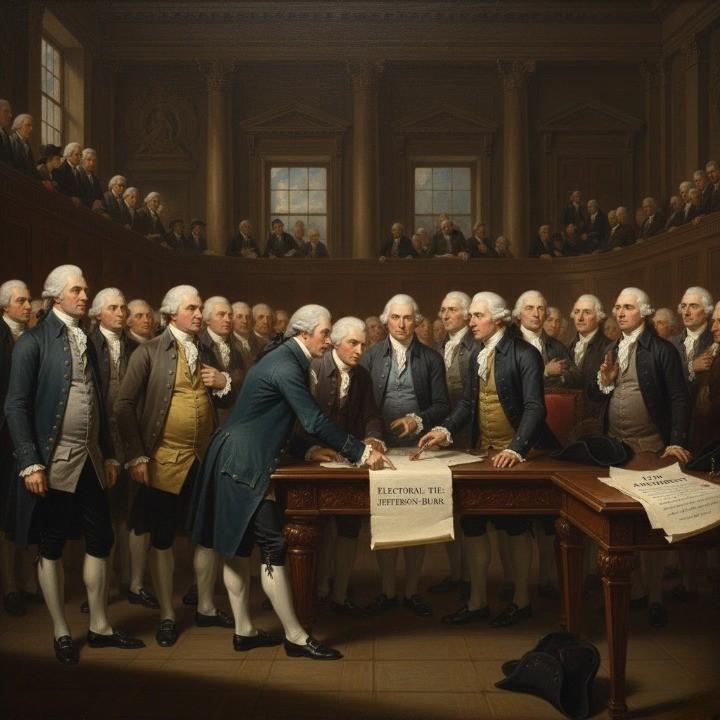
1800 — Electoral tie between Thomas Jefferson and Aaron Burr in the U.S. presidential election
When the Electoral College produced a tie, the decision shifted to the House of Representatives and exposed limits in the original electoral system. The crisis prompted the 12th Amendment, changing how president and vice president are elected. Politically, it revealed deep partisan divisions as Federalists and Republicans jockeyed for influence.
1818 — Illinois admitted as the 21st U.S. state
Statehood for Illinois marked another step in American westward expansion and the organization of new political communities. Admission brought new representation to Congress and accelerated settlement, infrastructure and legal institutions across the Midwest. Illinois would later become agriculturally and politically significant.
1834 — The Zollverein begins Germany’s first regular census
The customs union’s census effort reflects early modern attempts to quantify populations for taxation, conscription and economic planning. Collecting demographic data helped modernize administration across German states and supported unified economic policy. The move signalled a shift toward more systematic state governance.
1854 — Battle of the Eureka Stockade, Ballarat, Australia
Miners protesting mining licence enforcement clashed with colonial authorities; the violent suppression and deaths catalyzed political reform. The Eureka episode is remembered as a touchstone of Australian democratic development, influencing franchise debates and miners’ rights. It left a long cultural legacy as a symbol of resistance.
1859 — Nigeria’s first newspaper, Iwe Irohin, published by Henry Townsend
The appearance of the missionary-run paper marks an early printing and public-information milestone in what would become Nigeria. Newspapers provided forums for news, religious instruction and debate, shaping literate publics and later anti-colonial discourse. This small press step prefigured a lively press culture across West Africa.
1881 — First issue of the Tampere daily Aamulehti is published
The launch of Aamulehti represents the growth of regional press in Finland and the expansion of daily journalism in Europe. Local papers like this fostered civic debate, national culture and language politics during a period of growing national consciousness. Aamulehti would remain influential in Finnish public life.
1898 — Duquesne Country and Athletic Club defeats an early all-star football team (first all-star pro game)
This match is an early milestone in organized professional American football and the idea of all-star exhibitions. Such contests helped popularize the professional game and test competitive formats that would evolve into modern leagues. The match also reflects early commercialization and regional rivalries in sport.
1901 — President Theodore Roosevelt asks Congress to curb trusts in a written message
Roosevelt’s long, reform-minded State of the Union message set a progressive agenda to rein in corporate monopolies “within reasonable limits.” The speech framed antitrust as a national policy issue and foreshadowed regulatory reforms. It positioned the federal government as an active arbiter of economic power.
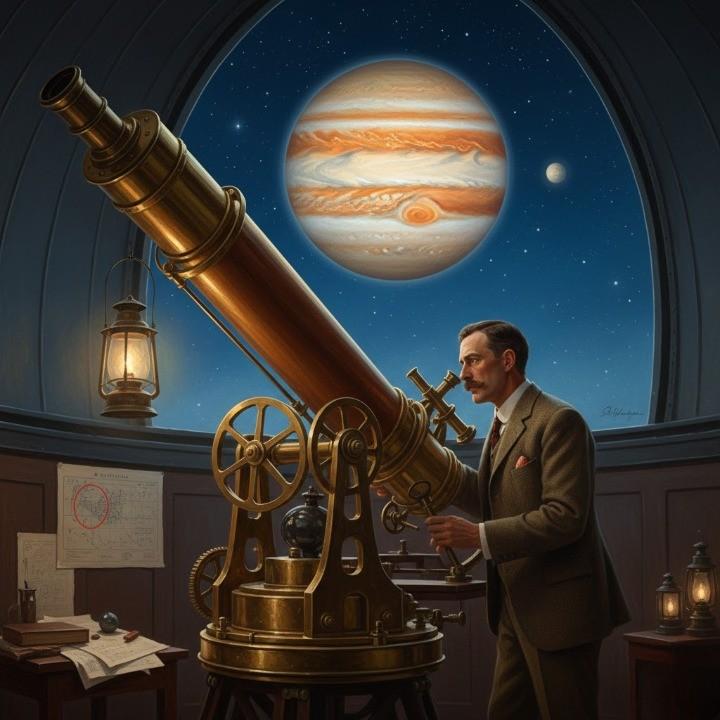
1904 — Discovery of Jupiter’s moon Himalia by Charles Dillon Perrine
Finding Himalia expanded astronomical knowledge of the Jovian system and added to the catalog of irregular satellites around gas giants. Observational advances at Lick Observatory reflected growing capabilities in telescopic astronomy. Each new moon helped astronomers refine models of planetary formation and orbital dynamics.
1910 — Georges Claude demonstrates modern neon lighting at the Paris Motor Show
Claude’s neon display introduced a luminous technology that would transform signage, advertising and urban nightscapes worldwide. Neon’s vivid glow became a modern visual shorthand for nightlife and commerce. Technologically, the demonstration showcased electric-discharge lighting as commercially viable.
1912 — Balkan League signs armistice with the Ottoman Empire during the First Balkan War
The armistice paused intense fighting among Balkan states and the Ottoman government, reshaping territorial control in southeastern Europe. Temporary halts like this created conditions for later peace talks and territorial realignments. The conflict’s aftermath would redraw borders and inflame regional nationalism.
1919 — Quebec Bridge opens after prolonged construction and tragedy
The long-delayed bridge finally linked regions after collapses and many lives lost during construction, a stark reminder of industrial risk. Its opening represented an engineering milestone and boosted regional transport and commerce. The bridge’s troubled history underscored the human costs of grand infrastructure projects.
1920 — Treaty of Alexandropol concludes Turkish–Armenian War under Turkish terms
The Turkish-dictated settlement imposed severe terms on Armenia, reflecting the chaotic postwar rearrangements in the Near East. Treaties like Alexandropol exemplify how local conflicts were subsumed into the collapse and redrawing of empires after World War I. The accord had lasting humanitarian and territorial implications.
1925 — Final agreement formalizes Partition of Ireland
The pact between the Irish Free State, Northern Ireland and the UK formalized a partition that would shape politics, identity and conflict for decades. Partition institutionalized differing citizenship and governance arrangements on the island and set the stage for future disputes. The agreement remains central to Irish and British 20th-century history.
1929 — Herbert Hoover presents his first written State of the Union message
Hoover’s written approach continued an older congressional practice and delivered a detailed policy agenda near the onset of the Great Depression. The presentation reflected both procedural choices and the wide policy challenges of the era. It came at a moment when economic policy would soon dominate presidential agendas.
1938 — Nazi Decree on the Utilization of Jewish Property (Aryanization)
This decree formalized state seizure and forced sale of Jewish property at below-market values, intensifying economic marginalization and dispossession. It was a legal tool of persecution that accelerated emigration barriers and poverty before the larger horrors to come. The measure is a stark example of how law was used to normalize discrimination.
1944 — Fighting breaks out in Athens in the Greek Civil War
Clashes in the capital followed occupation and liberation, pitting leftist resistance groups against government forces and British-backed units. Urban fighting in Athens foreshadowed a wider postwar civil conflict that shaped Greece’s politics for years. The events underscored how wartime divisions could erupt into domestic struggles.
1954 — Publication of Väinö Linna’s The Unknown Soldier
Linna’s novel offered a stark, human portrayal of Finnish soldiers in WWII and quickly became a cultural touchstone. Its realism and moral complexity shaped national memory and literary discourse about war and society. The book influenced film, theatre and public reflection about sacrifice and conflict.
1959 — Singapore adopts its current flag
The flag’s adoption came as Singapore moved toward self-government and then full independence, embodying new national symbols. Flags often crystallize identity during political transitions, and Singapore’s banner would accompany its rapid post-colonial transformation. The choice of design signalled unity and a forward-looking civic image.
1960 — Camelot debuts on Broadway
The musical’s launch brought a romanticized vision of Arthurian idealism into popular culture and later became entwined with the Kennedy era’s public image. Songs and theatrical spectacle fused with contemporary politics to make Camelot a lasting cultural reference. Its popularity reflected mid-20th-century tastes for grand, optimistic musicals.
1965 — Luna 8 launches but crashes on the Moon
Part of the Soviet Luna program, Luna 8 aimed to soft-land on the Moon but failed on approach, illustrating the technical challenges of lunar missions. Missions like these pushed engineering boundaries and informed later successful landings. Each attempt—success or failure—advanced knowledge crucial to space exploration.
1967 — First human heart transplant performed by Christiaan Barnard in Cape Town
Barnard’s operation on Louis Washkansky was a medical milestone that pushed the limits of surgery and ethics, sparking global debate and hope. While the patient’s survival was short, the procedure opened pathways for organ transplantation science, immunosuppression development, and complex post-operative care. It changed possibilities in medicine.
1971 — Indo-Pakistani War begins after Pakistan’s pre-emptive strike on India
The outbreak of full-scale war escalated regional tensions and would culminate in Bangladesh’s independence later that year. Military operations reshaped South Asia’s political map and created a massive humanitarian crisis with millions displaced. The conflict altered regional alliances and long-term geopolitics.
1972 — Spantax Flight 275 crashes during takeoff from Tenerife North, killing all aboard
The disaster underscored the persistent risks of commercial aviation and prompted investigations into safety and operational procedures. Air tragedies like this led to improvements in aircraft maintenance, crew training and airport safety protocols over time. Each crash spurred regulatory and technical responses.
1973 — Pioneer 10 returns first close-up images of Jupiter
Pioneer 10’s imagery transformed our view of the solar system, revealing Jupiter’s cloud tops and magnetosphere and paving the way for later, more detailed missions. The probe’s data expanded planetary science and inspired public awe about deep-space exploration. It also demonstrated long-distance spacecraft communication.
1979 — Tragic crush at Riverfront Coliseum in Cincinnati kills 11 fans
The fatal crowd crush outside a concert venue highlighted stadium safety shortcomings and the urgent need for improved crowd management and venue design. Such incidents influenced later regulations, emergency planning and public-event protocols. The tragedy is part of a longer history of managing mass gatherings safely.
1979 — Ayatollah Khomeini becomes Iran’s Supreme Leader after the revolution
Khomeini’s elevation institutionalized a new theocratic order in Iran following the revolution, reshaping regional politics and U.S.–Iran relations for decades. The role centralized religious and political authority and set the terms of Iran’s domestic governance and foreign policy. The change continues to have long-term consequences.
1982 — Times Beach dioxin sample reveals massive contamination
The discovery of extreme dioxin levels led to the town’s evacuation and eventual disincorporation, illustrating the grave public-health consequences of industrial pollutants. The incident reshaped environmental policy, hazardous-waste regulation, and community remediation practices in the U.S. It became a landmark case in environmental justice.
1984 — Bhopal disaster: methyl isocyanate leak kills thousands in India
One of the worst industrial catastrophes in history, the Bhopal leak caused immediate mass fatalities and long-term health and environmental damage. The event exposed corporate negligence, weak safety enforcement and the vulnerability of nearby communities. Its aftermath pushed international debates on industrial regulation, corporate accountability and survivors’ rights.
1989 — Bush and Gorbachev signal the Cold War’s possible end at Malta meeting
The leaders’ statements in Malta symbolized thawing tensions and acted as a diplomatic marker of the Soviet bloc’s weakening. While not a formal treaty, the encounter reflected the rapid political shifts that would produce the Eastern Bloc’s dissolution. It captured a hopeful moment in superpower relations.
1992 — Greek oil tanker Aegean Sea runs aground and spills crude oil off Spain
The grounding caused a major ecological disaster, threatening coastlines and marine life and sparking large-scale cleanup and legal responses. Environmental damage from such spills reverberates economically and socially for years, prompting stricter shipping controls and contingency planning. The incident remains part of maritime environmental history.
1992 — First SMS (text message) sent by a Sema Group test engineer over Vodafone
This early experiment presaged a communication revolution: the humble first text would grow into a dominant mode of mobile interaction worldwide. The moment highlights how small technical tests can seed huge social change. SMS later reshaped personal, business and public communication patterns.
1994 — Taiwan’s first full local elections mark democratic deepening
Direct local elections represented a major democratic reform, empowering voters and altering Taiwan’s political landscape. The new local leadership dynamics would feed into broader debates about identity and sovereignty. The elections were a milestone in Taiwan’s transition from authoritarian rule to electoral democracy.
1994 — Sony releases the PlayStation in Japan
Sony’s PlayStation changed the economics and aesthetics of home entertainment, raising standards for 3D graphics, game design and multimedia convergence. The console helped transform gaming into a mass-market cultural industry and shaped generations of interactive media. Its release marked a turning point in consumer electronics.
1995 — Cameroon Airlines Flight 3701 crashes near Douala, killing most aboard
The crash was another aviation tragedy that underscored the human cost of flight accidents and the need for improved air safety standards. Investigations and subsequent reforms aimed to prevent similar errors and to strengthen emergency response capacity. The loss weighed heavily on national aviation policy.
1997 — Ottawa Treaty signed by representatives of 121 countries to ban landmines
The Ottawa Treaty represented an international humanitarian effort to eliminate antipersonnel mines and reduce civilian casualties. While major powers did not all sign, the accord established a strong international norm and catalyzed demining and victim-assistance programs. It stands as a rare post-Cold War humanitarian convention.
1999 — NASA loses contact with Mars Polar Lander before atmospheric entry
The loss of the lander was a setback for Mars exploration and a reminder of the risks of interplanetary missions. Engineers analyzed telemetry and mission design for lessons that informed later successful landings. Each failure contributed to improved planetary-entry, descent and landing techniques.
1999 — Worcester Cold Storage fire kills six firefighters
The fatal blaze highlighted dangers firefighters face in industrial facilities—complex layouts, hidden hazards and limited visibility. The tragedy prompted reviews of training, building safety codes and strategies for urban firefighting. The event has been memorialized in firefighting circles as a cautionary tale.
2005 — XCOR Aerospace performs first crewed rocket-aircraft U.S. Mail delivery in Kern County
This experimental flight blended private aerospace activity with practical demonstration of rapid, point-to-point delivery. It exemplified early commercial spaceflight ventures exploring novel uses for rocket planes. Small steps like this foreshadowed broader interest in new aerospace business models.
2007 — Winter storms flood Chehalis River and close Interstate 5 in Washington state
Severe flooding caused fatalities, major property damage and long transportation disruption, revealing vulnerabilities in regional infrastructure. Events like this have spurred floodplain management, emergency planning improvements and resilience investment across affected communities. The economic toll was extensive.
2009 — Suicide bombing at a Mogadishu hotel kills 25, including government ministers
The attack underscored the fragile security environment in Somalia and the ongoing threat posed by militant groups targeting civic institutions. Such violence disrupted governance, humanitarian operations and public life. The bombing contributed to a pattern of instability complicating international responses.
2012 — Typhoon Bopha kills at least 475 people in the Philippines
Bopha’s rapid intensification and landfall produced catastrophic flooding and landslides in vulnerable regions, with long-term displacement and recovery needs. The disaster highlighted climate-related risks for island nations and the importance of early-warning systems, resilient infrastructure and urgent humanitarian response.
2014 — JAXA launches Hayabusa2 to collect asteroid samples
The mission to an asteroid signalled advanced planetary-sample-return ambitions and a maturing of robotic exploration capability. Hayabusa2’s eventual success would provide pristine material for understanding early solar-system chemistry and the building blocks of planets. It reinforced Japan’s role in high-precision space science.
2022 — Massive Moore County power outage after substation attack leaves 45,000 without power
The deliberate sabotage that caused a prolonged outage highlighted critical infrastructure vulnerabilities and the potential for cascading effects across communities. The event led to federal investigations and renewed attention to grid security, cyber-physical risks and emergency preparedness planning.
2023 — Mount Marapi in West Sumatra begins eruptions; dozens killed and injured
The renewed volcanic activity brought immediate danger to nearby populations and demonstrated the continuing human exposure to natural hazards in Indonesia. Response required evacuation, medical care and monitoring; the event underscored the interplay of geography and disaster preparedness in volcanic regions.
2024 — Martial law declared in South Korea
This declaration marks a moment of exceptional state response, invoking emergency powers with wide political and civil implications. Martial law affects governance, civil liberties and security — and is a decisive measure that reshapes public life while it remains in force.
Read Also: What Happened On This Day In History December 2: Shocking Facts
Famous People Born On December 3
| Name | Role / Short Description | Dates |
|---|---|---|
| Anton Webern | Austrian composer | Dec 3, 1883 – Sep 15, 1945 |
| Anna Freud | Austrian-British psychoanalyst | Dec 3, 1895 – Oct 9, 1982 |
| Nino Rota | Italian composer | Dec 3, 1911 – Apr 10, 1979 |
| Fedor von Bock | German military officer | Dec 3, 1880 – May 1945 |
| Bobby Allison | American stock-car racer | Dec 3, 1937 – Nov 9, 2024 |
| John Warner Backus | American mathematician & computer scientist | Dec 3, 1924 – Mar 17, 2007 |
| Ewa Kopacz | Prime minister of Poland | Dec 3, 1956 – |
| Frederic Leighton | British painter | Dec 3, 1830 – Jan 25, 1896 |
| Samuel Crompton | British inventor | Dec 3, 1753 – Jun 26, 1827 |
| Ellen Swallow Richards | American chemist | Dec 3, 1842 – Mar 30, 1911 |
| Walton H. Walker | American military officer | Dec 3, 1889 – Dec 23, 1950 |
| Sven Nykvist | Swedish cinematographer | Dec 3, 1922 – Sep 20, 2006 |
| Ludvig Holberg | Scandinavian author | Dec 3, 1684 – Jan 28, 1754 |
| Paul Crutzen | Dutch chemist | Dec 3, 1933 – |
| France Prešeren | Slovene poet | Dec 3, 1800 – Feb 8, 1849 |
| Octavia Hill | British philanthropist | Dec 3, 1838 – Aug 13, 1912 |
| Franz Klammer | Austrian skier | Dec 3, 1953 – |
| Margaret Eaton | American socialite | Dec 3, 1799 – Nov 8, 1879 |
| Carlos J. Finlay | Cuban physician | Dec 3, 1833 – Aug 20, 1915 |
| Richard Kuhn | German scientist | Dec 3, 1900 – Aug 1, 1967 |
| Mary Ann Lamb | British author | Dec 3, 1764 – May 20, 1847 |
| Sir Rowland Hill | English administrator & educator | Dec 3, 1795 – Aug 27, 1879 |
| Ikeda Hayato | Prime minister of Japan | Dec 3, 1899 – Aug 13, 1965 |
| Karl Manne Georg Siegbahn | Swedish physicist | Dec 3, 1886 – Sep 26, 1978 |
| Newton D. Baker | American politician | Dec 3, 1871 – Dec 25, 1937 |
| Alberto Juantorena | Cuban athlete | Dec 3, 1950 – |
| Tiffany Haddish | American comedian | Dec 3, 1979 – |
| Sean Parker | American entrepreneur | Dec 3, 1979 – |
| Brendan Fraser | American-Canadian actor | Dec 3, 1968 – |
| Katarina Witt | German figure skater | Dec 3, 1965 – |
Famous People Died On December 3
| Name | Role / Short Description | Dates |
|---|---|---|
| Mary Baker Eddy | American religious leader | Jul 16, 1821 – Dec 3, 1910 |
| Carl Zeiss | German industrialist | Sep 11, 1816 – Dec 3, 1888 |
| Babrak Karmal | President of Afghanistan | Jan 6, 1929 – Dec 3, 1996 |
| Aleksandr Rodchenko | Russian artist | Dec 5, 1891 – Dec 3, 1956 |
| Shiing-shen Chern | American mathematician | Oct 26, 1911 – Dec 3, 2004 |
| William Grant Still | American composer | May 11, 1895 – Dec 3, 1978 |
| Joseph Vernet | French painter | Aug 14, 1714 – Dec 3, 1789 |
| Giovanni Battista Belzoni | Italian archaeologist | Nov 5, 1778 – Dec 3, 1823 |
| John Carroll | American bishop | Jan 8, 1735 – Dec 3, 1815 |
| Lewis Thomas | American physician & author | Nov 25, 1913 – Dec 3, 1993 |
| Alison Lurie | American author | Sep 3, 1926 – Dec 3, 2020 |
| Zhang Guotao | Chinese political leader | Nov 26, 1897 – Dec 3, 1979 |
| Sergey Nechayev | Russian revolutionary | Oct 2, 1847 – Dec 3, 1882 |
| Rudolf Slánský | Czech communist leader | Jul 31, 1901 – Dec 3, 1952 |
| Georges Duby | French scholar | Oct 7, 1919 – Dec 3, 1996 |
| Alessandro Farnese | Regent of the Netherlands | Aug 27, 1545 – Dec 3, 1592 |
| Thomas Basin | French bishop & historian | 1412 – Dec 3, 1491 |
| Zilpah Polly Grant | American educator | May 30, 1794 – Dec 3, 1874 |
| Frederick VI | King of Denmark & Norway | Jan 28, 1768 – Dec 3, 1839 |
| John B. Anderson | American politician | Feb 15, 1922 – Dec 3, 2017 |
| Gwendolyn Brooks | American poet | Jun 7, 1917 – Dec 3, 2000 |
| Madeline Kahn | American actress | Sep 29, 1942 – Dec 3, 1999 |
| Dhyan Chand | Indian hockey player | Aug 29, 1905 – Dec 3, 1979 |
| Charles Wilfred Butler | American industrial designer | Aug 10, 1914 – Dec 3, 1973 |
| Attila József | Hungarian poet | Apr 11, 1905 – Dec 3, 1937 |
| Nikolay Dukhonin | Russian commander | Dec 13, 1876 – Dec 3, 1917 |
| Jack Beresford | British athlete | Jan 1, 1899 – Dec 3, 1977 |
| John Bartlett | American editor | Jun 14, 1820 – Dec 3, 1905 |
| Hermann Götz | Swiss composer | Dec 7, 1840 – Dec 3, 1876 |
| Archibald Campbell Tait | Archbishop of Canterbury | Dec 21, 1811 – Dec 3, 1882 |
Observances & Institutional Dates — December 3
- International Day of Persons with Disabilities — UN observance promoting rights and inclusion.
- Doctors’ Day (Cuba) — national professional observance honoring physicians.
Frequently Asked Questions
What are the most notable events tied to December 3?
Key moments include early naval symbols of American independence, major Napoleonic battles, the first human heart transplant, the Bhopal industrial disaster, and space milestones like Pioneer 10 and Hayabusa2. These events span warfare, medicine, environment and exploration.
Which medical milestone occurred on December 3?
On December 3, 1967, Christiaan Barnard performed the first human heart transplant in Cape Town — a landmark that launched modern transplant medicine and intense ethical debate.
Why is the Bhopal disaster frequently remembered?
Bhopal (1984) killed thousands and injured many more, exposing gaps in industrial safety, corporate responsibility and long-term environmental health — its scale and human suffering make it a reference point for industrial-risk policy.
Which space achievements happened on this date?
Notable space events include Pioneer 10 returning Jupiter close-ups (1973), Luna 8’s 1965 lunar attempt, and JAXA’s Hayabusa2 launch (2014), marking steady advances in planetary exploration.