The chronicles of human defiance and strategic brilliance are often best understood through specific anniversaries, and reflecting on this day in history April 18 provides a unique perspective on the daring feats that have altered our trajectory. From the urgent gallop of Paul Revere to the ambitious aerial strikes of the Doolittle Raid, these instances of individual bravery and large-scale military planning serve as essential markers for the evolution of modern liberty and national identity.
Important Events That Happened On April 18 In History
796 – Murder of King Æthelred I
King Æthelred I of Northumbria was murdered in the town of Corbridge by a conspiratorial group led by his own ealdormen, Ealdred and Wada. In the immediate aftermath of the assassination, the patrician Osbald was crowned as the new ruler of the kingdom. However, his reign was incredibly short-lived, as he was forced to abdicate his throne within only 27 days of his coronation. This violent transition of power reflected the deep-seated political instability and internal strife that plagued the early medieval kingdoms of Northern England.
1428 – Peace of Ferrara Signed
The Peace of Ferrara was signed between the Republic of Venice, the Duchy of Milan, the Republic of Florence, and the House of Gonzaga. This agreement marked the conclusion of the second major campaign of the Wars in Lombardy, a series of conflicts that had drained regional resources. By establishing a period of relative stability, it helped pave the way for the eventual Treaty of Lodi in 1454. These diplomatic settlements provided the necessary peaceful conditions that allowed for the flourishing development of the Italian Renaissance.
1506 – St. Peter’s Basilica Cornerstone
The official cornerstone of the current St. Peter’s Basilica was laid in Rome, marking the start of one of the most ambitious building projects in history. This massive undertaking was commissioned by Pope Julius II to replace the aging Old St. Peter’s Basilica that had stood since the fourth century. The construction process spanned over 120 years and involved the creative talents of legendary architects and artists like Michelangelo and Bernini. Today, the basilica remains a central masterpiece of Renaissance architecture and a primary spiritual home for millions within the Catholic faith.
1518 – Coronation of Bona Sforza
Bona Sforza was officially crowned as the queen consort of Poland following her marriage to King Sigismund I the Old. A member of the powerful Italian House of Sforza, she brought a significant infusion of Renaissance culture and political savvy to the Polish court. She was known for her active role in state administration and her efforts to increase the financial independence of the Polish monarchy. Her influence helped foster artistic growth and modern administrative practices that benefited the kingdom throughout the sixteenth century.
1521 – Martin Luther Refuses to Recant
The trial of Martin Luther entered its second day during the assembly of the Diet of Worms as he faced the imperial authorities. Despite the severe threat of excommunication and being declared an outlaw, he famously refused to recant his theological teachings and writings. He argued that his conscience was captive to the Word of God and that he could not act against it. This act of defiance solidified the religious schism in Europe and became a foundational moment for the Protestant Reformation movement.
1689 – Bostonian Uprising
The citizens of Boston rose up in a determined rebellion against the unpopular rule of the colonial governor, Sir Edmund Andros. The uprising was fueled by resentment over the Dominion of New England, which had consolidated power and revoked local colonial charters. The rebels successfully captured the governor and other high-ranking officials, eventually leading to the collapse of the centralized administration. This event demonstrated the early American colonial commitment to representative government and local autonomy over authoritarian British rule.
1738 – Royal Academy of History Founded
The Real Academia de la Historia, or the Royal Academy of History, was officially founded in Madrid under the protection of King Philip V. The institution was established to ensure the accurate preservation and study of the history of Spain and its vast overseas territories. It focused on compiling historical documents, identifying archaeological sites, and maintaining a high standard of historical scholarship within the kingdom. The academy continues to serve as a vital repository of Spanish heritage and a respected authority on the nation’s past.
1775 – Paul Revere’s Midnight Ride
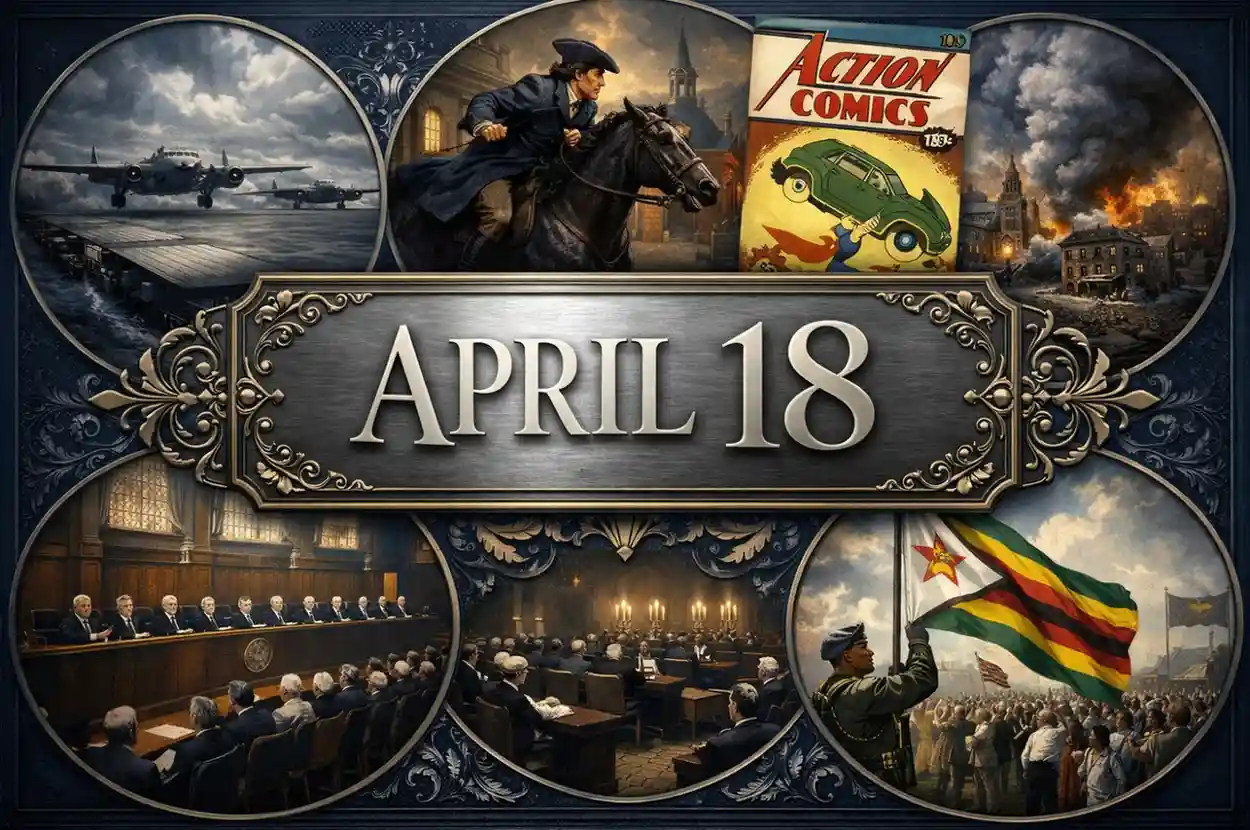
The British Army began an advance up the Charles River in Massachusetts to seize and destroy the military supplies of local American militias. As the troops moved toward Concord, Paul Revere and other riders galloped through the countryside to warn the colonial population. This rapid communication allowed the Minutemen to mobilize and prepare for the armed confrontations that would take place the following morning. This event is immortalized as a catalyst for the American Revolutionary War and a symbol of patriotic vigilance.
1783 – Three-Fifths Compromise Resolution
The Congress of the Confederation passed a resolution that marked the first instance of counting black slaves as three-fifths of a person for taxation. This controversial formula aimed to resolve a dispute between Northern and Southern states regarding the calculation of national wealth and tax burdens. While the resolution did not immediately take effect under the Articles of Confederation, the concept was later adopted into the 1787 United States Constitution. This compromise highlighted the deep-seated tensions regarding slavery that would shape American political history for decades.
1797 – Peace of Leoben Signed
Napoleon Bonaparte and Count Maximilian of Merveldt signed the Peace of Leoben, establishing an armistice between the French Republic and the Austrian Empire. This preliminary agreement brought a temporary end to the hostilities of the War of the First Coalition on the Italian front. The terms set the stage for the more comprehensive Treaty of Campo Formio, which would later redraw the map of Central Europe. This diplomatic success demonstrated Napoleon’s growing skill as a negotiator and his ability to dictate terms to major European powers.
1831 – University of Alabama Founded
The University of Alabama was officially founded in Tuscaloosa, serving as the first public university established within the state. The institution was created to provide higher education opportunities for the growing population and to foster intellectual development in the region. Since its inception, the university has expanded into a major research center with a significant impact on the state’s culture and economy. Its founding was a key milestone in the development of the educational infrastructure of the American South during the nineteenth century.
1847 – Battle of Cerro Gordo
American forces achieved a decisive victory over the Mexican army during the Battle of Cerro Gordo during the Mexican-American War. General Winfield Scott utilized a successful flanking maneuver through difficult terrain to overwhelm the defensive positions held by General Santa Anna. This victory cleared the primary mountain passes and opened the path for the American invasion to proceed toward Mexico City. The loss at Cerro Gordo was a significant psychological and military blow to the Mexican defense of their central heartland.
1857 – Publication of “The Spirits Book”
The publication of “The Spirits Book” by Allan Kardec marked the official birth of the Spiritualism movement in France. The text was structured as a series of questions and answers that aimed to explain the nature of spirits and their relationship with the physical world. Kardec’s work gained a significant following and established a systematic framework for understanding mediumship and the afterlife. This publication influenced social and religious thought in Europe and the Americas, leading to the creation of numerous spiritualist societies.
1864 – Battle of Dybbøl
A combined Prussian and Austrian army defeated Danish forces during the Battle of Dybbøl, a critical engagement of the Second Schleswig War. The victory gave the invading Germanic forces control over the strategic province of Schleswig and forced Denmark into a defensive retreat. In the subsequent peace settlement, Denmark was compelled to surrender the province, resulting in a significant loss of territory and population. This battle remains a somber and important event in Danish history, marking a shift in the regional balance of power.
1897 – Greco-Turkish War Declared
The Greco-Turkish War was officially declared between the Kingdom of Greece and the Ottoman Empire following tensions over the status of Crete. The conflict, also known as the “Thirty Days’ War,” saw the Ottoman military launch a rapid and successful offensive against the Greek positions. Despite the brevity of the fighting, the war resulted in a clear Ottoman victory and required international intervention to establish a peace treaty. The outcome highlighted the military modernization of the Ottoman Empire and the ongoing volatility of the Balkan region.
1899 – Royal Charter for St. Andrew’s
The St. Andrew’s Ambulance Association was officially granted a royal charter by Queen Victoria in recognition of its vital first aid work. Founded in Scotland, the organization provided essential medical training and ambulance services to the public long before the creation of the National Health Service. The royal charter provided the association with increased prestige and a formal legal status that helped expand its charitable operations. It remains a leading provider of first aid education and event medical cover throughout Scotland and the United Kingdom.
1902 – Guatemala Earthquake
A powerful 7.5 Mw earthquake struck Guatemala, resulting in widespread destruction and the deaths of between 800 and 2,000 people. The seismic event reached a maximum Mercalli intensity of VIII, causing many buildings and homes to collapse across the western highlands. In addition to the direct casualties, the earthquake triggered landslides and fires that further complicated the rescue and recovery efforts for the local population. This tragedy remains one of the deadliest seismic events in the history of Central America, highlighting the region’s vulnerability.
1906 – San Francisco Earthquake and Fire
A massive 7.9 Mw earthquake and subsequent uncontrollable fires destroyed a vast majority of the city of San Francisco, California. The disaster resulted in the deaths of more than 3,000 people and left nearly half of the city’s population homeless. The fires, fueled by ruptured gas lines and a lack of water, burned for three days and caused more damage than the initial tremors themselves. It is remembered as one of the worst natural disasters in American history and led to a total rebuilding of the city.
1909 – Beatification of Joan of Arc
Joan of Arc was officially beatified in Rome by Pope Pius X, a major step toward her eventual canonization as a saint. The ceremony honored her life of devotion and her role as a visionary leader for France during the Hundred Years’ War. Her story of faith and military leadership had long made her a symbol of French national identity and religious perseverance. This act by the Church helped formalize her status as a revered figure in both the spiritual and secular history of the Western world.
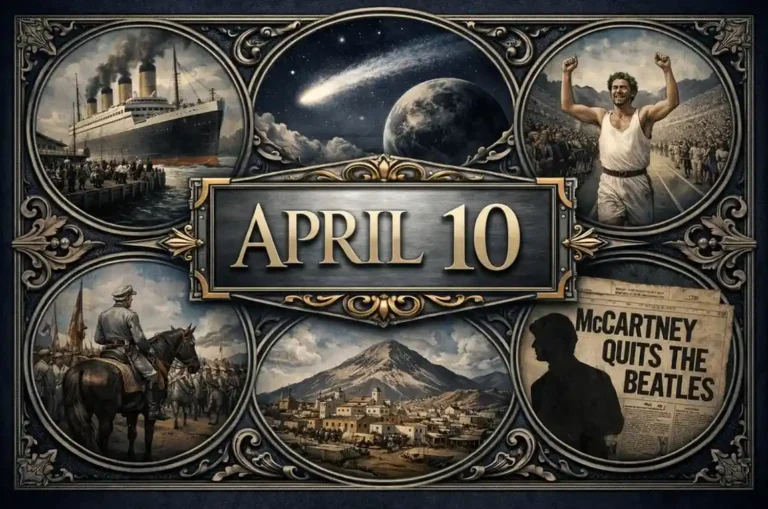
1912 – RMS Carpathia Arrives
The Cunard liner RMS Carpathia arrived in New York City carrying 705 survivors from the tragic sinking of the RMS Titanic. The ship had been the first to respond to the Titanic‘s distress calls and had spent hours rescuing passengers from lifeboats in the North Atlantic. Thousands of people gathered at the docks in the rain to provide assistance and to hear the first direct accounts of the disaster. The arrival of the Carpathia brought a somber end to the initial rescue efforts and began a period of global mourning.
1915 – Roland Garros Shot Down
During the early stages of World War I, the pioneering French pilot Roland Garros was shot down by German ground fire. He was forced to glide his damaged aircraft to a landing behind enemy lines on the German side of the Western Front. Garros had recently gained fame for being the first pilot to successfully utilize a forward-firing machine gun synchronized with his propeller. His capture provided the German military with the opportunity to evaluate this revolutionary technology, leading to rapid advancements in aerial combat capabilities.
1916 – Capture of Col di Lana
Italian troops successfully conquered the summit of Col di Lana, a strategic peak in the Dolomites that had been held by the Austrian army. The victory was achieved following an intense period of high-altitude mine warfare, where the Italians detonated a massive underground explosive to shatter the defenses. The mountain was a key observation post that had allowed the Austrians to dominate the surrounding valleys during the mountain war. This difficult engagement demonstrated the brutal and innovative nature of combat in the extreme conditions of the Alpine front.
1930 – Costești Church Fire
A tragic fire broke out during Good Friday services at a small wooden church in the Romanian town of Costești, killing 118 people. Most of the victims were schoolchildren who were trapped inside the building when the blaze spread rapidly through the dry timber structure. The disaster remains one of the deadliest fires in Romanian history and led to a national period of mourning for the lost lives. This tragedy highlighted the immense risks associated with fire safety in traditional rural religious buildings across Eastern Europe.
1938 – Debut of Superman
Superman made his historic first appearance in Action Comics #1, marking the birth of the modern superhero genre in American literature. Created by Jerry Siegel and Joe Shuster, the character introduced the concept of an alien being with god-like powers dedicated to protecting humanity. The issue, which is cover-dated June 1938, became an instant success and sparked a massive expansion of the comic book industry. This debut fundamentally changed global popular culture and established one of the most recognizable fictional icons in human history.
1939 – Robert Menzies Elected Leader
Robert Menzies was elected as the leader of the United Australia Party following the sudden death of Prime Minister Joseph Lyons. This election eventually led to his first term as Prime Minister, a role he would later hold for a record-breaking period. Menzies became Australia’s longest-serving prime minister, presiding over significant economic growth and the nation’s involvement in the Second World War. His leadership helped define the political landscape of mid-twentieth-century Australia and established the modern Liberal Party that followed his tenure.
1942 – The Doolittle Raid
In a daring and symbolic military operation, sixteen B-25 bombers led by Lieutenant Colonel James Doolittle launched an air raid against Japan. The mission targeted industrial and military sites in Tokyo, Yokohama, Kobe, and Nagoya after launching from the aircraft carrier USS Hornet. While the physical damage was relatively minor, the raid provided a massive boost to American morale following the attack on Pearl Harbor. It also forced the Japanese high command to divert resources to home defense, significantly altering their strategic planning for the war.
1942 – Pierre Laval Named Prime Minister
Pierre Laval was officially appointed as the Prime Minister of Vichy France, marking a significant shift toward deeper collaboration with the Nazi German occupiers. Laval had previously served in the government and was known for his advocacy of closer ties between France and the Third Reich. During his tenure, he oversaw policies that included the deportation of French Jews and the forced labor of French citizens in German industry. His leadership remains a highly controversial and somber chapter in the history of France during the Second World War.
1943 – Operation Vengeance
United States P-38 fighter aircraft successfully intercepted and shot down the plane carrying Japanese Admiral Isoroku Yamamoto over Bougainville Island. Known as Operation Vengeance, the mission was a targeted strike authorized by the highest levels of the American military and intelligence services. Yamamoto was the primary architect of the Pearl Harbor attack and his death was a major psychological and strategic blow to the Japanese Navy. This successful operation demonstrated the growing American capability to utilize decoded enemy communications for decisive military action.
1945 – Attack on Heligoland
A massive formation of over 1,000 Allied bombers launched a devastating attack on the small German island of Heligoland in the North Sea. The mission targeted the extensive underground bunkers, submarine pens, and military installations that had made the island a vital defensive post. The sheer scale of the bombardment resulted in the near-total destruction of the island’s infrastructure and the forced evacuation of its remaining population. This air raid was part of the final offensive to eliminate German military strongholds in the weeks before the war’s end.
1945 – Turin Pre-Insurrectional Strike
A massive pre-insurrectional strike began in the city of Turin as part of the broader Italian resistance movement against Nazi-fascist occupation. Despite the threat of harsh repressive measures from the occupying forces, thousands of industrial workers and citizens participated in the coordinated work stoppage. This action was designed to disrupt German logistics and signal the beginning of the final liberation of Northern Italy. The strike demonstrated the strength of the resistance and its ability to mobilize the urban population against the failing Axis regime.
1946 – ICJ Inaugural Meeting
The International Court of Justice (ICJ) held its inaugural meeting in The Hague, Netherlands, serving as the primary judicial organ of the United Nations. The court was established to settle legal disputes between sovereign states and provide advisory opinions on international legal issues. It replaced the previous Permanent Court of International Justice and became a central pillar of the post-war international legal order. This meeting marked the beginning of the court’s ongoing efforts to promote the rule of law and the peaceful resolution of conflicts on a global scale.
1946 – Jackie Robinson’s Royals Debut
Jackie Robinson made his regular-season debut for the Montreal Royals of the International League, a minor league affiliate of the Brooklyn Dodgers. This appearance made the Royals the first integrated modern professional baseball team in the United States and Canada. Robinson performed exceptionally well in his debut, proving his athletic talent and resilience in the face of immense social pressure and racial scrutiny. This event was a critical precursor to his historic entry into Major League Baseball the following year, which would break the sport’s color line.
1947 – Operation Big Bang
British military engineers carried out Operation Big Bang, the largest non-nuclear man-made explosion to that date, on the island of Heligoland. The detonation utilized nearly 6,700 tons of explosives to destroy the extensive network of military bunkers, tunnels, and submarine pens built by Nazi Germany. The blast was so powerful that it permanently altered the topography of the island but failed to completely destroy it as some had predicted. This operation aimed to ensure that the strategic island could never again be used as a military fortress in future conflicts.
1949 – Republic of Ireland Act
The Republic of Ireland Act officially came into force, declaring Éire to be a sovereign republic and severing its remaining ties with the British Commonwealth. This legislative change fulfilled a long-standing goal of Irish nationalists to achieve full independence from the United Kingdom. The transition to a republic was marked by celebrations across the nation and signaled a new era for Ireland’s international relations. The act finalized the country’s journey from a dominion to a fully independent state with its own president as the head of state.
1954 – Nasser Seizes Power
Gamal Abdel Nasser officially seized power in Egypt, becoming the leading figure of the revolutionary government after the removal of the monarchy. Nasser was a central member of the Free Officers Movement and had previously served as a deputy leader before taking full control of the state. His leadership was characterized by a push for pan-Arab nationalism, social reform, and the nationalization of critical infrastructure like the Suez Canal. His rise to power fundamentally changed the political landscape of the Middle East and the broader post-colonial world.
1955 – Bandung Conference Begins
Leaders from twenty-nine Asian and African nations met in Bandung, Indonesia, for the first-ever Asian-African Conference. The gathering aimed to promote economic and cultural cooperation and to oppose colonialism and neocolonialism in all its forms. This historic meeting represented the collective voice of the developing world during the height of the Cold War and led to the creation of the Non-Aligned Movement. The principles established at Bandung highlighted the importance of national sovereignty, equality, and the peaceful coexistence of different nations.
1972 – East African Airways Crash
An East African Airways Flight 720 crashed during a rejected takeoff from Addis Ababa Bole International Airport in Ethiopia, resulting in the deaths of 43 people. The aircraft suffered a tire burst and was unable to stop before reaching the end of the runway, eventually catching fire in a nearby ravine. The tragedy highlighted the ongoing challenges of aviation safety and the need for improved emergency procedures during critical phases of flight. This accident was a somber event for the regional airline and led to renewed focus on pilot training and aircraft maintenance.
1980 – Independence of Zimbabwe
The Republic of Zimbabwe was officially established, marking the end of British colonial rule and the transition from the unrecognized state of Rhodesia. Canaan Banana was sworn in as the country’s first President, while Robert Mugabe took office as the first Prime Minister following a long period of liberation struggle. The Zimbabwean dollar was introduced as the official currency, replacing the Rhodesian dollar as a symbol of the new national identity. This independence was celebrated globally as a victory for self-determination and majority rule in Southern Africa.
1980 – Elmore City’s First Dance
The town of Elmore City, Oklahoma, held the first legal dance in its history after a long-standing ban on public dancing was officially overturned. The prohibition had been in place for decades due to the influence of local religious leaders who viewed dancing as morally questionable. The successful effort by local students to allow a prom inspired the storyline for the popular 1984 film Footloose. This event became a symbol of cultural change and the generational shift in social attitudes toward tradition and youth expression in small-town America.
1988 – Operation Praying Mantis
The United States launched Operation Praying Mantis against Iranian naval forces in response to an Iranian mine strike on an American warship in the Persian Gulf. This engagement became the largest naval battle involving the United States since the end of the Second World War. American forces destroyed several Iranian oil platforms, two frigates, and numerous smaller vessels during the day-long conflict. The operation demonstrated the American commitment to protecting international shipping lanes and its willingness to use overwhelming force in regional conflicts.
1988 – Sentencing of John Demjanjuk
An Israeli court sentenced John Demjanjuk to death for war crimes and crimes against humanity committed during the Second World War. He was accused of being “Ivan the Terrible,” a notoriously brutal guard at the Treblinka extermination camp. However, the verdict was later overturned by the Israeli Supreme Court after new evidence suggested that another individual may have been the guard in question. This high-profile legal case highlighted the ongoing challenges and complexities of seeking justice for the atrocities of the Holocaust decades after the events occurred.
1996 – Qana Massacre
The Israeli military carried out a deliberate shelling of a United Nations compound near the village of Qana in southern Lebanon during an offensive against Hezbollah. The strike resulted in the deaths of 106 Lebanese civilians who had been taking shelter in the compound to escape the ongoing violence. Over 100 others were wounded in the attack, which drew immediate and widespread international condemnation of the Israeli military’s actions. This tragic event remains a focal point of grievance in the region and a somber reminder of the civilian cost of military conflict.
2018 – Swaziland Becomes Eswatini
King Mswati III of Swaziland officially announced that the country’s name would be changed to the Kingdom of Eswatini. The change was made to mark the 50th anniversary of the nation’s independence and to move away from the colonial-era name. The new name, which means “land of the Swazis,” was intended to reflect the country’s indigenous identity and to avoid confusion with the nation of Switzerland. This administrative shift required a comprehensive update of official documents, currency, and international records to recognize the new national designation.
2018 – Nicaragua Protests Begin
A wave of anti-government protests began in Nicaragua, sparked by proposed changes to the nation’s social security system that would increase taxes and reduce benefits. The demonstrations quickly expanded into a broader movement calling for democratic reforms and the resignation of President Daniel Ortega. The government responded with a significant crackdown, leading to violent clashes between protesters and state security forces. This period of unrest resulted in hundreds of deaths and a significant political crisis that has continued to impact the nation’s stability and human rights situation.
2019 – Mueller Report Released
A redacted version of the Mueller report was officially released to the United States Congress and the public by the Department of Justice. The report summarized the findings of Special Counsel Robert Mueller’s investigation into Russian interference in the 2016 presidential election. It detailed various contacts between the Trump campaign and Russian individuals, as well as the president’s actions regarding the investigation itself. The release sparked intense political debate and led to varying interpretations of the findings regarding collusion and the obstruction of justice.
Read Also” April 17: Unforgettable Facts
Famous People Born On April 18
| Name | Description | Date |
|---|---|---|
| Ahmed I | Ottoman sultan (1603–17), built the Blue Mosque | April 18, 1590 – November 22, 1617 |
| Philip Wharton, 4th Baron Wharton | English reforming peer from Civil Wars to Glorious Revolution | April 18, 1613 – February 4, 1696 |
| Charles Townshend, 2nd Viscount Townshend | British Whig statesman, directed foreign policy (1721–30) | April 18, 1675 – June 21, 1738 |
| Gaétan Vestris | French ballet dancer, finest male dancer of his time | April 18, 1729 – September 23, 1808 |
| Sir Francis Baring, 1st Baronet | British financier, founded Baring Brothers bank | April 18, 1740 – September 11, 1810 |
| Thomas Thorild | Swedish poet and critic, opposed French classicism | April 18, 1759 – October 1, 1808 |
| Jean-Baptiste Debret | French painter, known for images of Brazil | April 18, 1768 – June 28, 1848 |
| David Ricardo | British economist, classical economics theorist | April 18, 1772 – September 11, 1823 |
| Adolphe Thiers | French statesman, first president of the Third Republic | April 18, 1797 – September 3, 1877 |
| Henry Louis Vivian Derozio | Indian poet and educator, radical thinker | April 18, 1809 – December 26, 1831 |
| George Henry Lewes | English philosopher and critic, partner of George Eliot | April 18, 1817 – November 28, 1878 |
| Franz von Suppé | Austrian composer of light operas | April 18, 1819 – May 21, 1895 |
| Carlos Manuel de Céspedes | Cuban revolutionary, started Ten Years’ War | April 18, 1819 – February 27, 1874 |
| Henry Kendall | Australian poet | April 18, 1839 – August 1, 1882 |
| Antero Tarquínio de Quental | Portuguese poet, leader of Generation of Coimbra | April 18, 1842 – September 11, 1891 |
| Adolf Slaby | German physicist, pioneer of wireless telegraphy | April 18, 1849 – April 6, 1913 |
| Dhondo Keshav Karve | Indian social reformer, advocated women’s education | April 18, 1858 – November 9, 1962 |
| Fernand-Gustave-Gaston Labori | French lawyer, defense counsel in Dreyfus affair | April 18, 1860 – March 14, 1917 |
| Leopold, Graf von Berchtold | Austro-Hungarian foreign minister, issued 1914 ultimatum to Serbia | April 18, 1863 – November 21, 1942 |
| Richard Harding Davis | American author and war reporter | April 18, 1864 – April 11, 1916 |
| Max Weber | Russian-born American painter, introduced Cubism to U.S. | April 18, 1881 – October 4, 1961 |
| José Bento Monteiro Lobato | Brazilian writer, forerunner of Modernism | April 18, 1882 – July 4, 1948 |
| Ludwig Meidner | German Expressionist painter and writer | April 18, 1884 – May 14, 1966 |
| Sir Arnold Lunn | British skier, introduced slalom gates | April 18, 1888 – June 2, 1974 |
| Bolesław Bierut | Polish Communist statesman, “Stalin of Poland” | April 18, 1892 – March 12, 1956 |
| Clark McConachy | New Zealand billiards player, world champion (1951–68) | April 18, 1895 – April 12, 1980 |
| Wynn Bullock | American photographer of psychological realism | April 18, 1902 – November 16, 1975 |
| George Herbert Hitchings | American pharmacologist, Nobel Prize for drug development | April 18, 1905 – February 27, 1998 |
| Lars Valerian Ahlfors | Finnish mathematician, Fields Medal (1936) | April 18, 1907 – October 11, 1996 |
| Samuel P. Huntington | American political scientist, Clash of Civilizations | April 18, 1927 – December 24, 2008 |
Famous People Died On April 18
| Name | Description | Date |
|---|---|---|
| John Leland | English antiquarian, librarian to Henry VIII | c.1506 – April 18, 1552 |
| Polydore Vergil | Italian-born Humanist, wrote influential English history | c.1470 – April 18, 1555 |
| Wilhelm von Grumbach | German knight and adventurer | June 1, 1503 – April 18, 1567 |
| John Graunt | English statistician, founder of demography | April 24, 1620 – April 18, 1674 |
| Christian Hofmann von Hofmannswaldau | German Baroque poet, Second Silesian School | December 25, 1617 – April 18, 1679 |
| George Jeffreys, 1st Baron Jeffreys | English judge, “Bloody Assizes” | May 15, 1645? – April 18, 1689 |
| Charles IV Leopold | Duke of Lorraine, Austrian field marshal | April 5, 1643 – April 18, 1690 |
| Theobald | Archbishop of Canterbury (1138–61) | c.1090 – April 18, 1161 |
| John Foxe | English Puritan author of The Book of Martyrs | 1516 – April 18, 1587 |
| Sir Richard Hawkins | English seaman and adventurer | c.1560 – April 18, 1622 |
| James Blair | Scottish clergyman, founder of College of William & Mary | May 1656 – April 18, 1743 |
| Charles Pratt, 1st Earl Camden | English jurist, opposed general warrants | March 21, 1714 – April 18, 1794 |
| Erasmus Darwin | British physician and poet, grandfather of Charles Darwin | December 12, 1731 – April 18, 1802 |
| George Cabot | American Federalist Party leader | January 16, 1752 – April 18, 1823 |
| Vladimir Lukich Borovikovsky | Russian portraitist of sentimentalist era | August 4, 1757 – April 18, 1825 |
| Franz Anton Bustelli | German porcelain sculptor, Rococo master | April 12, 1723 – April 18, 1763 |
| Nicolas-Théodore de Saussure | Swiss chemist, pioneer of plant biochemistry | October 14, 1767 – April 18, 1845 |
| Ann Preston | American physician and educator, women’s medical rights | December 1, 1813 – April 18, 1872 |
| Sir Henry Cole | English art patron, pioneer of industrial design | July 15, 1808 – April 18, 1882 |
| Roscoe Conkling | U.S. Republican leader, post-Civil War | October 30, 1829 – April 18, 1888 |
| Lester Frank Ward | American sociologist, founded U.S. academic sociology | June 18, 1841 – April 18, 1913 |
| Cécile Chaminade | French composer and pianist | August 8, 1857 – April 18, 1944 |
| Ernie Pyle | American war correspondent, World War II | August 3, 1900 – April 18, 1945 |
| Sir John Ambrose Fleming | English engineer, invented vacuum tube diode | November 29, 1849 – April 18, 1945 |
| Benny Leonard | American world lightweight boxing champion | April 7, 1896 – April 18, 1947 |
| Leonard Bloomfield | American linguist, Language (1933) | April 1, 1887 – April 18, 1949 |
| António Oscar de Fragoso Carmona | Portuguese president (1928–51) | November 24, 1869 – April 18, 1951 |
| Arthur H. Vandenberg | U.S. Republican senator, bipartisan foreign policy | March 22, 1884 – April 18, 1951 |
| Maurice Gamelin | French army commander in chief at start of WWII | September 20, 1872 – April 18, 1958 |
| Ottorino Respighi | Italian composer, The Pines of Rome | July 9, 1879 – April 18, 1936 |
Observances & Institutional Dates
- Independence Day (Zimbabwe): A national holiday celebrating the formal recognition of Zimbabwe’s sovereignty and the end of colonial rule in 1980.
- Army Day (Iran): An annual holiday featuring military parades to honor the national armed forces and their role in protecting the country.
- International Day For Monuments and Sites: A global awareness day also known as World Heritage Day, dedicated to the preservation of cultural heritage and historical sites.
- World Amateur Radio Day: A celebration of the contributions made by amateur radio operators to communication technology and emergency services worldwide.
Frequently Asked Questions
- What was the Doolittle Raid? It was a daring 1942 air strike against Japan led by James Doolittle that provided a massive morale boost to the United States.
- When did Zimbabwe gain independence? Zimbabwe officially became an independent republic on April 18, 1980, with Canaan Banana as its first president.
- Why is Paul Revere’s ride significant? His midnight ride on April 18, 1775, warned American militias that the British army was advancing, triggering the start of the Revolution.
- What happened in San Francisco on this day in 1906? A massive 7.9 Mw earthquake and subsequent fires destroyed much of the city, killing over 3,000 people.